Here’s something the top ten listicles about home EV chargers don’t tell you.
Half of those “best charger” recommendations were written by someone who never installed one. The rankings are based on spec sheets and affiliate commission rates, not real ownership experience. The “winner” in most of those guides is whichever charger pays the highest referral fee, not whichever one actually works best in a real US home over 18 months of daily use.
This guide is different. The best home EV chargers 2026 US comparison is built on actual specs, real installation requirements, verified user feedback from owner communities, and honest assessments of where each charger falls short — not just where it shines.
We’ve compared ten of the most widely available home EV chargers for US homeowners in 2026, covering everything from budget-friendly basics to premium smart chargers. The goal is simple: help you make a confident buying decision the first time, without the post-purchase regret that comes from buying the wrong unit for your home.
Before the Rankings — What Actually Makes a Home EV Charger Good in 2026
Most comparison guides jump straight to the list. This one doesn’t, because best home EV chargers 2026 US rankings mean nothing without context.
Here’s what actually separates a genuinely good home EV charger from a mediocre one in the current US market:
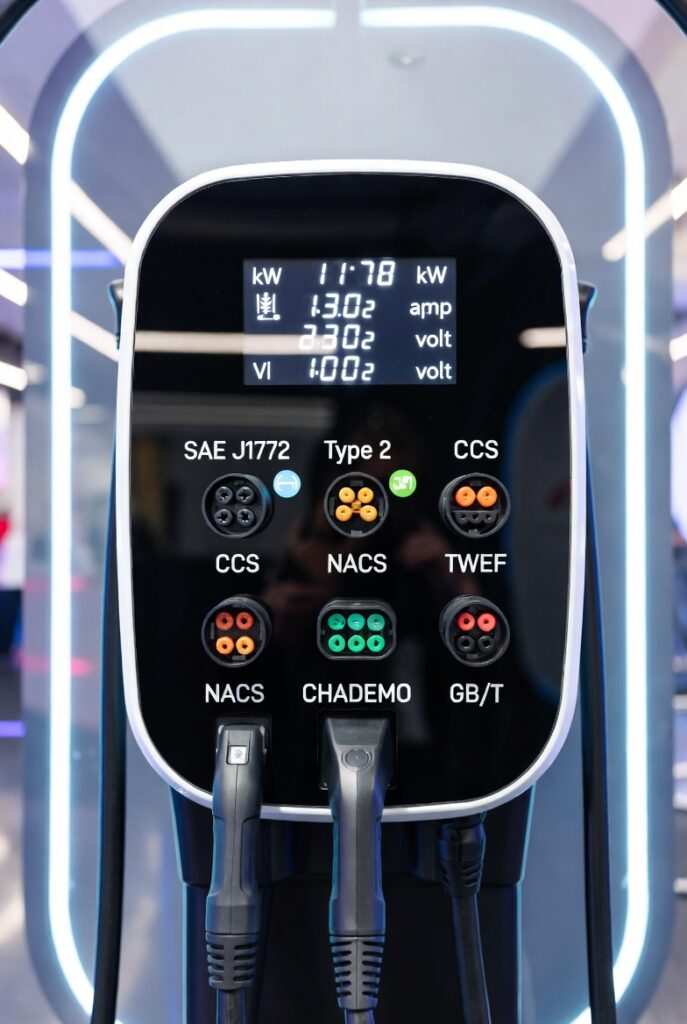
Connector compatibility: The US market is mid-transition from J1772 to NACS. The best chargers in 2026 either offer NACS natively, include both connector options, or have a clear adapter solution. A charger that only works with an increasingly obsolete connector standard is a bad buy in 2026 regardless of its other specs.
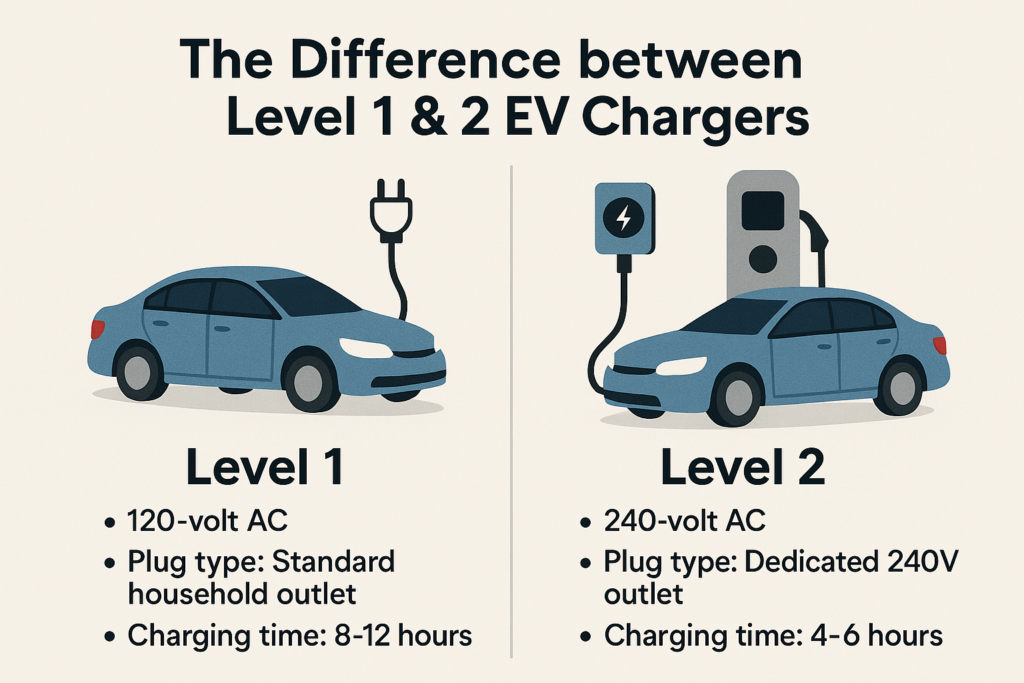
Actual delivered power vs rated power: A charger rated at 48A sounds better than one rated at 32A. But if your car only accepts 32A, the 48A charger charges your car at exactly the same speed. The best charger is the one that matches your car’s ceiling, not the one with the highest spec sheet number.
Installation footprint: Some chargers require professional hardwiring. Others work on a NEMA 14-50 outlet. Some need a dedicated 60A breaker. The best charger for your home is the one your electrical panel can actually support — not the one with the best Amazon reviews.
Smart features that have real value: Scheduled charging, energy monitoring, and load balancing aren’t marketing fluff in 2026. With TOU tariffs becoming available in more US states, a charger that can’t schedule off-peak charging is leaving money on the table over a 5-7 year ownership period.
Real warranty support: A 3-year warranty from a brand with one customer support rep handling the entire US market is worth less than a 2-year warranty from ChargePoint or Tesla. We’ll be specific about this in each review.
With that context, here are the ten best home EV chargers 2026 US homeowners should actually consider.
#1 Tesla Wall Connector (Gen 3) — Best Overall for Tesla and NACS Owners
Price: $425 (unit only, installation extra) Connector: NACS Max Power: 11.5 kW (48A, 240V) Installation: Hardwired, requires 60A dedicated breaker Smart Features: App control, scheduled charging, energy monitoring, load sharing between multiple units Warranty: 4 years
If you drive a Tesla — or any of the growing list of NACS-native vehicles from Ford, GM, Rivian, or Honda — the Tesla Wall Connector is the most straightforward answer to the best home EV chargers 2026 US question.
The Gen 3 Wall Connector delivers 11.5 kW on a 48A circuit — the practical maximum for home AC charging in the US. Installation is hardwired only, which means you need an electrician, but the unit itself is one of the cleanest-looking and most reliable home chargers on the market. The cable is 24 feet long, which is more generous than most competitors and covers awkward parking configurations without an extension.
The load sharing feature is worth highlighting specifically. If you have two EVs and install two Wall Connectors, they automatically share the available circuit capacity between them — no additional hardware required. For two-EV households this is a genuinely useful feature that most competing chargers don’t offer natively.
Where it falls short: It only works natively with NACS vehicles. J1772 vehicles need an adapter — Tesla sells one but it adds cost and a physical connection point that can wear over time. If your household has a mix of NACS and J1772 vehicles, a dual-compatible charger like the ChargePoint Home Flex is more practical.
Verdict: The best home EV charger in 2026 for pure NACS households. Hard to beat on reliability, features, and cable length at this price point.
#2 ChargePoint Home Flex — Best for Mixed Households and J1772 Owners
Price: $699 (unit only) Connector: J1772 (NACS adapter available) Max Power: 11.5 kW (48A, 240V) — adjustable down to 16A Installation: Hardwired or NEMA 14-50 plug Smart Features: App control, scheduled charging, energy monitoring, ChargePoint network integration Warranty: 3 years
The ChargePoint Home Flex is the most versatile home EV charger in the best home EV chargers 2026 US lineup. Its adjustable amperage — settable from 16A to 48A during installation — means it works with virtually any home electrical panel capacity. If you have a 100-amp panel with limited headroom, set it to 32A. If you have a 200-amp panel with capacity to spare, set it to 48A. No separate hardware required.
ChargePoint’s app is one of the best in the segment. Energy tracking, TOU scheduling, and integration with Amazon Alexa and Google Home are all included. ChargePoint’s network integration means your home charger logs appear in the same app as your public charging history — useful for expense tracking if your employer reimburses EV charging costs.
Where it falls short: At $699, the Home Flex is the most expensive pure J1772 unit on this list. The NACS adapter is sold separately, which adds cost and feels like a stopgap rather than a genuine solution for households transitioning to NACS vehicles. Build quality is solid but the unit is bulkier than the Tesla Wall Connector or Grizzl-E.
Verdict: The best home EV charger for households with J1772 vehicles, mixed connector households, or anyone who values flexibility in installation and amperage. Worth the price premium over budget alternatives if you plan to own this charger for 7+ years.
#3 Grizzl-E Classic — Best Budget Option That Doesn’t Feel Budget
Price: $229 (unit only) Connector: J1772 Max Power: 9.6 kW (40A, 240V) Installation: Hardwired or NEMA 14-50 plug Smart Features: None — this is a dumb charger Warranty: 3 years
The Grizzl-E Classic is the answer to the question every cost-conscious buyer is actually asking: what’s the best home EV charger 2026 US that doesn’t have a $600+ price tag and actually works reliably?
At $229, the Grizzl-E Classic is roughly a third of the price of the ChargePoint Home Flex. It delivers 40A (9.6 kW) — enough to charge a 75 kWh battery fully in about 8 hours. It’s rated IP67 — fully dustproof and waterproof, better than most competitors at any price. The build quality is genuinely impressive for the price — a metal enclosure rather than the plastic housing most budget chargers use, rated for temperatures from -40°C to +50°C.
What it doesn’t have: any smart features whatsoever. No app. No scheduling. No energy monitoring. No WiFi. You plug in, it charges, it stops when the car is full.
Where it falls short: No smart features is a real limitation in 2026. If TOU tariffs come to your utility during the Grizzl-E’s lifespan, you can’t schedule off-peak charging without a smart plug workaround. No NACS option exists.
Verdict: The best budget home EV charger for US homeowners who want reliable, no-fuss charging at the lowest possible cost. If smart features aren’t a priority and you have a J1772 vehicle, nothing at this price comes close.
#4 Emporia EV Charger — Best Smart Charger Under $400
Price: $349 (unit only) Connector: NACS or J1772 (both versions available) Max Power: 11.5 kW (48A, 240V) Installation: Hardwired or NEMA 14-50 plug Smart Features: App control, real-time energy monitoring, TOU scheduling, solar integration, load management Warranty: 3 years
The Emporia EV Charger is the sleeper pick in any best home EV chargers 2026 US comparison. At $349, it delivers smart features that rival the ChargePoint Home Flex at nearly half the price.
The solar integration is the standout feature. Emporia makes smart home energy monitors, and their EV charger integrates directly with their Vue energy monitor — meaning the charger can automatically prioritise solar generation for charging during daylight hours. For US homeowners with rooftop solar, this combination can make a meaningful difference to charging costs over time.
The load management feature is also genuinely useful — the charger monitors your home’s total electrical draw and reduces charging speed when other high-draw appliances are running, preventing tripped breakers. On a 100-amp panel with limited headroom, this makes 48A charging practical where it otherwise wouldn’t be.
Both NACS and J1772 versions are available at the same price — a clear acknowledgment of the market transition that most competing brands haven’t matched yet.
Where it falls short: Emporia is a smaller brand than ChargePoint or Tesla, which means less name recognition and a smaller authorised service network. The app is good but has had stability complaints in some user reviews — less consistent than ChargePoint’s app experience.
Verdict: The best value smart home EV charger in 2026 for US homeowners, particularly those with solar panels. The NACS version availability at $349 makes it an especially strong buy for households transitioning from J1772 to NACS.
#5 JuiceBox 40 — Best for Renters and Portable Installation
Price: $549 (unit only) Connector: J1772 (NACS adapter available) Max Power: 9.6 kW (40A, 240V) Installation: NEMA 14-50 plug (portable) or hardwired Smart Features: App control, scheduled charging, energy monitoring, Alexa/Google Home integration, utility rebate program integration Warranty: 3 years
The JuiceBox 40 earns its place in the best home EV chargers 2026 US list specifically for renters and homeowners who may move. Its NEMA 14-50 plug installation means you can take it with you when you move — something hardwired competitors can’t claim. For renters who’ve negotiated permission to install a charging outlet but not a permanent hardwired charger, the JuiceBox 40 is the practical answer.
The utility rebate integration is a genuine differentiator. Enel X Way (JuiceBox’s parent company) has partnerships with US utilities that automatically enrol qualifying installations in demand response programs — meaning your utility can temporarily reduce charging speed during peak grid demand in exchange for bill credits. For some US homeowners this produces meaningful annual savings.
Where it falls short: At $549 for a 40A unit, the price is harder to justify against the ChargePoint Home Flex at $699 for 48A with similar smart features, or the Emporia at $349 for 48A. The JuiceBox 40 occupies an awkward middle ground on price.
Verdict: The best home EV charger for renters or homeowners who prioritise portability and utility rebate program access. Less compelling as a pure performance-per-dollar buy compared to the Emporia or Grizzl-E.
#6 Grizzl-E Smart — Best Upgrade from the Classic for Smart Feature Converts
Price: $329 (unit only) Connector: J1772 Max Power: 9.6 kW (40A, 240V) Installation: Hardwired or NEMA 14-50 plug Smart Features: WiFi app control, scheduled charging, energy monitoring Warranty: 3 years
If the Grizzl-E Classic is the budget king and the ChargePoint Home Flex is the premium pick, the Grizzl-E Smart sits in a sensible middle ground. Same rugged metal build and IP67 rating as the Classic, but with WiFi connectivity, app control, and TOU scheduling added.
At $329, the Grizzl-E Smart is $100 more than the Classic for smart features that have genuine long-term value. The build quality advantage over plastic-housed competitors at similar price points remains — this is a charger that feels like it was built to last a decade in an outdoor US climate, not just to pass a product certification test.
Where it falls short: No NACS version. The app is functional but less polished than ChargePoint or Emporia. 40A rather than 48A — a minor difference for most cars but worth noting.
Verdict: The best home EV charger upgrade path for existing Grizzl-E Classic owners or buyers who want smart features without sacrificing the build quality and value proposition that makes the Grizzl-E brand worth considering.
#7 Wallbox Pulsar Plus — Best Compact Charger for Tight Spaces
Price: $649 (unit only) Connector: J1772 (NACS adapter available) Max Power: 11.5 kW (48A, 240V) Installation: Hardwired Smart Features: App control, scheduled charging, energy monitoring, solar integration, Alexa/Google Home, bidirectional charging ready Warranty: 3 years
The Wallbox Pulsar Plus is the most compact 48A home charger in the best home EV chargers 2026 US lineup — about the size of a large hardback book. For garages with limited wall space or awkward mounting configurations, this compactness is a real practical advantage.
The bidirectional charging readiness is the forward-looking feature worth noting. As vehicle-to-home (V2H) and vehicle-to-grid (V2G) technology becomes more mainstream in the US — expected to accelerate through 2026-2028 as compatible vehicles arrive — a charger that’s architecturally ready for bidirectional charging has a longer useful life than one that isn’t. The Pulsar Plus isn’t actively bidirectional yet on most US installations, but the hardware supports it for future software activation on compatible vehicles.
Where it falls short: At $649, the Pulsar Plus is priced similarly to the ChargePoint Home Flex but offers less brand recognition and a less mature US service network. Wallbox is a Spanish company with strong European presence that is still building its US support infrastructure.
Verdict: The best home EV charger for space-constrained garages and forward-looking buyers who want bidirectional charging readiness. Less compelling for buyers who prioritise established US brand support.
#8 Enel X JuiceBox 48 — Best for Utility Partnership Programs
Price: $699 (unit only) Connector: J1772 (NACS adapter available) Max Power: 11.5 kW (48A, 240V) Installation: Hardwired or NEMA 14-50 plug Smart Features: Full app suite, TOU scheduling, energy monitoring, utility demand response integration, Alexa/Google Home Warranty: 3 years
The JuiceBox 48 is the full-power version of the JuiceBox 40 — same utility partnership strengths but at 48A rather than 40A. For US homeowners in states with active utility EV charging incentive programs — California, New York, Texas, Michigan — the JuiceBox 48’s utility integration can produce rebates and bill credits that partially offset the higher unit price.
Where it falls short: At $699, the JuiceBox 48 is the same price as the ChargePoint Home Flex with comparable specs. The decision between them comes down to whether you value ChargePoint’s network integration or JuiceBox’s utility partnership programs more — both are solid choices at this price point.
Verdict: The best home EV charger for US homeowners in states with active utility EV incentive programs. Less differentiated in states where those programs don’t exist.
#9 Amazon Basics Level 2 EV Charger — Best Entry Point for Occasional Charging
Price: $179 (unit only) Connector: J1772 Max Power: 7.2 kW (32A, 240V) Installation: NEMA 14-50 plug Smart Features: None Warranty: 1 year
The Amazon Basics Level 2 EV Charger exists in this best home EV chargers 2026 US list as the honest answer to one specific question: what’s the absolute minimum viable home EV charger for someone who only needs occasional charging and has a tight budget?
At $179 with NEMA 14-50 plug installation, it’s the most accessible entry point on this list. It delivers 32A (7.2 kW) — enough to charge most EVs fully overnight. It requires no electrician for installation if you already have a NEMA 14-50 outlet.
Where it falls short: The 1-year warranty is the shortest on this list and reflects the product’s positioning as a commodity rather than a long-term investment. No smart features. Amazon Basics EV charger support is minimal — you’re essentially on your own if something goes wrong after month 13.
Verdict: The best home EV charger for US homeowners who need occasional backup charging at the absolute lowest entry cost. Not recommended as a primary daily charger for a 5+ year ownership horizon.
#10 Autel MaxiCharger — Best for Future-Proofing and Commercial Crossover
Price: $569 (unit only) Connector: J1772 or NACS (both versions available) Max Power: 11.5 kW (48A, 240V) Installation: Hardwired or NEMA 14-50 plug Smart Features: App control, TOU scheduling, energy monitoring, OCPP 2.0.1, load balancing, multi-unit management Warranty: 3 years
The Autel MaxiCharger is the least well-known charger on this list and arguably the most underrated. Autel is a professional automotive diagnostics company — their EV charger is built to commercial-grade standards for a home charger price.
The OCPP 2.0.1 compliance is the standout spec. This is the newer, more secure communication protocol that commercial charging networks use. For a home charger, it means better integration with smart home systems, better cybersecurity, and better compatibility with future utility programs that require OCPP 2.0.1 rather than the older 1.6 standard.
Both NACS and J1772 versions are available — Autel recognised the connector transition earlier than most competitors and has had both versions in market since 2024.
Where it falls short: Brand recognition is low compared to ChargePoint, Tesla, or JuiceBox. The app is functional but less consumer-friendly than ChargePoint’s or Emporia’s — it feels slightly more B2B in its design language.
Verdict: The best home EV charger for technically-minded US homeowners who want commercial-grade reliability, OCPP 2.0.1 future-proofing, and NACS or J1772 flexibility at a mid-range price point.
Best Home EV Chargers 2026 US — Complete Head to Head Comparison
| Charger | Price | Max Power | Connector | Smart Features | Warranty | Best For |
|---|---|---|---|---|---|---|
| Tesla Wall Connector | $425 | 11.5 kW | NACS | Yes | 4 years | Tesla/NACS owners |
| ChargePoint Home Flex | $699 | 11.5 kW | J1772 | Yes | 3 years | Mixed households |
| Grizzl-E Classic | $229 | 9.6 kW | J1772 | No | 3 years | Budget buyers |
| Emporia EV Charger | $349 | 11.5 kW | NACS/J1772 | Yes | 3 years | Solar homes |
| JuiceBox 40 | $549 | 9.6 kW | J1772 | Yes | 3 years | Renters |
| Grizzl-E Smart | $329 | 9.6 kW | J1772 | Yes | 3 years | Smart upgrade |
| Wallbox Pulsar Plus | $649 | 11.5 kW | J1772 | Yes | 3 years | Compact spaces |
| JuiceBox 48 | $699 | 11.5 kW | J1772 | Yes | 3 years | Utility programs |
| Amazon Basics | $179 | 7.2 kW | J1772 | No | 1 year | Occasional use |
| Autel MaxiCharger | $569 | 11.5 kW | NACS/J1772 | Yes | 3 years | Future-proofing |
The Federal Tax Credit — What US Homeowners Need to Know in 2026
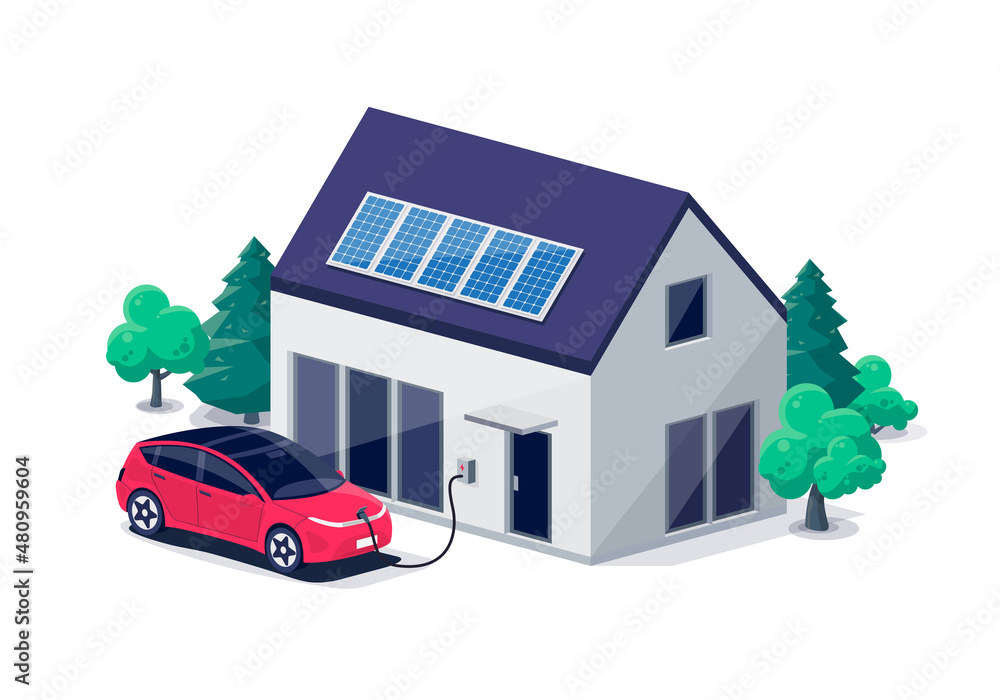
The federal Alternative Fuel Vehicle Refueling Property Credit covers 30% of the cost of purchasing and installing a home EV charger, up to $1,000 total credit. This applies to both the hardware and installation costs.
To qualify in 2026 the charger must be installed at your primary residence, the installation must be completed by a licensed electrician, and you must file IRS Form 8911 with your tax return. Most of the chargers on this list qualify — confirm with your tax advisor for your specific situation.
At $699 for a ChargePoint Home Flex plus $400 installation, your total cost before the credit is $1,099. After the 30% credit on the first $1,000, your effective cost drops to $799. The credit doesn’t eliminate the price difference between chargers but it meaningfully reduces the out-of-pocket cost for higher-end units.
Internal Links — Further Reading on Clean Energy Bazaar
The best home EV chargers 2026 US comparison is where most buyers start. Here’s what to read next.
Before buying any charger on this list, use our interactive quiz to find the right EV charger for your home — it walks through your car’s AC charging rate, your panel capacity, and your installation type to confirm which spec tier makes sense for your specific situation. If you’re unsure what any of the specs in this comparison mean, our guide to understanding EV charger specs 2026 translates kW, amps, NACS, CCS and OCPP into plain language. If you’re still deciding between J1772 and NACS, our J1772 vs Type 2 connector guide covers every compatibility scenario. Before finalising your purchase, read our EV charger warranty comparison to understand exactly what each brand’s coverage means in practice. And if something goes wrong at a public charging station on the road, our EV charger troubleshooting guide covers every fix across charger types.
Final Thoughts
The best home EV chargers 2026 US list looks different depending on who you are and what you actually need. A Tesla owner with a 200-amp panel and solar panels has a completely different optimal answer from a Chevrolet Bolt owner in a rented apartment with a 100-amp panel.
The honest summary:
- NACS vehicle, straightforward setup: Tesla Wall Connector
- J1772 vehicle, want flexibility: ChargePoint Home Flex
- Tight budget, reliable charging: Grizzl-E Classic
- Solar integration, best value smart charger: Emporia EV Charger
- Renting or need portability: JuiceBox 40
- Future-proofing, OCPP 2.0.1: Autel MaxiCharger
Don’t buy the most expensive charger on this list unless your situation actually calls for it. Don’t buy the cheapest one unless occasional charging is genuinely all you need. The best home EV chargers 2026 US for your home is the one that matches your car, your panel, your budget, and your realistic charging habits — not the one with the most impressive spec sheet number or the highest affiliate commission rate.