Most people buying a home EV charger for the first time go through the same process. They search online, find twelve different options ranging from ₹15,000 to ₹80,000, read three spec sheets they don’t fully understand, watch a YouTube video that was made in 2021, and end up either buying the wrong thing or giving up and asking someone at the dealership who gives them a vague answer.
There’s a better way.
This guide — built around an interactive framework to help you find the right EV charger for your home — walks you through every decision point in plain language. Answer the questions, follow your path, and you’ll land on a specific charger type that fits your car, your home’s electrical supply, your location, and your budget. No spec sheet confusion. No oversimplified “just buy this one” advice that ignores your actual situation.
Whether you’re in the US navigating the NACS transition or in Europe choosing between single-phase and three-phase, this is the most direct path to the right answer.
Before You Start — Four Things to Check at Home
Before working through the quiz framework, gather these four pieces of information. You don’t need to be an electrician — just check or call someone who knows.
1. What EV do you drive? Specifically, what is your car’s maximum AC charging rate? This is listed in the owner’s manual under charging specifications. Common examples:
- Tata Nexon EV Standard: 7.2 kW
- Hyundai Creta Electric (standard variant): 7.2 kW
- Hyundai Creta Electric (long range): 11 kW
- Tesla Model 3 (US): 11.5 kW
- Renault Zoe (Europe): 22 kW
- Volkswagen ID.4 (Europe): 11 kW
- BMW iX (Europe): 11 kW
This number is the single most important spec when you want to find the right EV charger for your home because your car’s maximum AC rate is the ceiling your home charger should match — not exceed significantly.
2. What type of electrical supply does your home have?
- Single-phase (most Indian apartments and US homes)
- Three-phase (some Indian homes with higher sanctioned load, common in European residential)
If you don’t know, check your electricity meter or call your electrician. In India, a single-phase connection typically has a sanctioned load of 1-5 kW. A three-phase connection has a sanctioned load of 5 kW and above.
3. Do you park indoors or outdoors? This determines the IP rating you need. Outdoor installations require IP55 or above in Indian and European conditions. Indoor installations can use lower-rated units.
4. What is your budget? Be realistic. Include installation costs — not just the charger unit price. In India, installation typically adds ₹5,000-₹15,000 depending on cable run length and electrical work required. In the US, installation adds $200-$600. In Europe, installation adds €150-€500.
The Interactive Quiz — Find the Right EV Charger for Your Home
Work through each question in order. Each answer points you to the next relevant question or directly to a recommendation.
Question 1: Where Are You Located?
A) India → Go to Question 2 (India Path)
B) United States or Canada → Go to Question 2 (US Path)
C) Europe (UK, Germany, France, Netherlands, Scandinavia, etc.) → Go to Question 2 (Europe Path)
Question 2 (India Path): What Is Your Home Setup?
A) Apartment with single-phase supply and society permission → Go to Question 3 (India — Apartment)
B) Independent house with single-phase supply → Go to Question 3 (India — House, Single Phase)
C) Independent house with three-phase supply → Go to Question 3 (India — House, Three Phase)
D) Commercial premises or office → Go to Question 3 (India — Commercial)
Question 3 (India — Apartment): What Is Your Car’s Maximum AC Charging Rate?
A) Up to 7.2 kW (Tata Nexon EV, Tata Tiago EV, Tata Punch EV standard)
You need a 7.2 kW single-phase Type 2 home charger. This is the most common home charging setup in India. A 32A dedicated circuit is required — confirm with your society’s electrician that a dedicated line from your flat’s DB can be run to your parking space.
Recommended spec: 7.4 kW, 32A, 230V single-phase, Type 2 tethered, IP55, OCPP 1.6, smart scheduling
Look at: Statiq Home, Tata Power EZ Charge Home, Magenta ChargeGrid Home
B) Up to 11 kW (Hyundai Creta Electric Long Range, MG ZS EV, BYD Atto 3)
You technically need three-phase supply for 11 kW AC charging in India. If your apartment only has single-phase supply, you’ll charge at 7.2 kW regardless of the charger’s rating. Confirm your supply type before spending extra on an 11 kW unit.
If you have three-phase: Recommended spec: 11 kW, 16A per phase, 400V three-phase, Type 2 tethered, IP55, OCPP 1.6
If you have single-phase only: Buy a 7.4 kW single-phase unit — you’ll get the same charge rate at lower cost.
C) 22 kW (older Renault Zoe, some European imports)
22 kW AC charging requires three-phase supply. In a standard Indian apartment, this is unlikely to be available. You’ll charge at whatever your supply supports — typically 7.2 kW single-phase. A 7.4 kW charger is the right buy here.
Question 3 (India — House, Single Phase): What Is Your Car’s Maximum AC Charging Rate?
A) Up to 7.2 kW
You need a 7.2-7.4 kW single-phase Type 2 charger. A dedicated 32A circuit from your distribution board is the standard installation. The charger can be wall-mounted in your garage or on an exterior wall.
Recommended spec: 7.4 kW, 32A, 230V single-phase, Type 2 tethered or untethered, IP55 for outdoor, OCPP 1.6
B) Up to 11 kW
With single-phase supply only, you’ll charge at 7.2 kW maximum regardless of charger rating. Either buy a 7.4 kW unit now or consider upgrading your connection to three-phase — useful if you plan to add solar or have other high-draw appliances.
Question 3 (India — House, Three Phase): What Is Your Car’s Maximum AC Charging Rate?
A) Up to 7.2 kW
You have three-phase supply but your car only accepts 7.2 kW AC. A single-phase 7.4 kW charger is the right buy — spending extra for a three-phase unit doesn’t help your current car charge faster.
Exception: If you’re planning to buy a higher-spec EV within 2-3 years, buying an 11 kW three-phase charger now gives you future-proofing.
B) Up to 11 kW
You have both the supply and the car to take advantage of 11 kW charging. This is the sweet spot for finding the right EV charger for your home in India with three-phase supply.
Recommended spec: 11 kW, 16A per phase, 400V three-phase, Type 2 tethered, IP55, OCPP 1.6, load balancing
C) 22 kW
22 kW AC charging is theoretically possible on Indian three-phase residential supply but requires a high sanctioned load and the right metering. Confirm with your DISCOM and electrician before buying a 22 kW unit.
Question 3 (India — Commercial): How Many EVs Do You Need to Charge Simultaneously?
A) 1-3 vehicles
A multi-port 22 kW three-phase AC charger or two to three individual 7.4 kW units on a load-managed circuit covers this comfortably. Exicom and Tata Power have good commercial options in this range.
B) 4-10 vehicles
You need a proper commercial charging solution with load balancing across multiple units. Exicom, Tata Power EZ Charge Commercial, and ChargeZone offer fleet-scale solutions with central management software.
C) More than 10 vehicles
This requires a site survey, transformer capacity assessment, and a dedicated EV charging infrastructure plan. Contact Tata Power, HPCL, or ChargeZone directly for a commercial quote — this is beyond a standard home charger purchase.
Question 2 (US Path): What Type of EV Do You Own?
A) Tesla (any model)
Tesla vehicles use NACS natively. You need a NACS home charger — Tesla’s own Wall Connector is the most straightforward choice, delivering up to 11.5 kW on a 48A circuit. Third-party NACS chargers from ChargePoint, Grizzl-E, and Emporia are also available.
Recommended spec: NACS connector, 48A, 240V, 11.5 kW, hardwired or NEMA 14-50 plug, indoor or outdoor rated
B) Non-Tesla EV bought before 2024 (Chevrolet Bolt, Nissan Leaf, older Ford Mach-E, older Hyundai Ioniq 5)
Your car has a J1772 port. You need a J1772 home charger.
→ Go to Question 3 (US — J1772)
C) Non-Tesla EV bought in 2024 or later (Ford, GM, Rivian, Honda, newer Hyundai/Kia)
Most 2024+ non-Tesla US EVs now use NACS. Confirm in your owner’s manual. If NACS, follow the Tesla path above. If J1772 (some models), follow the J1772 path below.
Question 3 (US — J1772): What Is Your Home’s Electrical Panel Capacity?
A) 100-amp panel with available circuits
A 32A, 7.2 kW J1772 charger on a 40A dedicated breaker is the right choice. Don’t push to 48A on a 100-amp panel without an electrician confirming available capacity.
Recommended spec: J1772, 32A, 240V, 7.2 kW, NEMA 14-50 or hardwired, IP44 minimum
Look at: ChargePoint Home Flex, Grizzl-E Classic, JuiceBox 32
B) 200-amp panel
You have capacity for a 48A charger delivering 11.5 kW — the practical maximum for most US home setups. This is the right choice if you want to find the right EV charger for your home in the US with maximum future-proofing.
Recommended spec: J1772, 48A, 240V, 11.5 kW, hardwired preferred, smart charging features, OCPP
Look at: ChargePoint Home Flex (48A), Emporia EV Charger, Grizzl-E Smart
C) Unsure of panel capacity
Have a licensed electrician assess your panel before buying any charger above 32A. Oversizing a charger for an underpowered panel is the most common and most avoidable home charging installation mistake.
Question 2 (Europe Path): What Is Your Home’s Power Supply?
A) Single-phase supply (most UK homes, some continental European homes)
→ Go to Question 3 (Europe — Single Phase)
B) Three-phase supply (common in Netherlands, Germany, Scandinavia, Belgium)
→ Go to Question 3 (Europe — Three Phase)
C) Unsure
Check your electricity meter or fuse box. Single-phase meters have one live wire connection. Three-phase meters have three. Your electrician can confirm in five minutes.
Question 3 (Europe — Single Phase): What Is Your Car’s Maximum AC Charging Rate?
A) Up to 7.4 kW (most common — Volkswagen ID.4, BMW i4, Hyundai Ioniq 6 standard)
You need a 7.4 kW single-phase Type 2 home charger. This is the most common home EV charging setup across Europe.
Recommended spec: 7.4 kW, 32A, 230V single-phase, Type 2 tethered or untethered, IP55, OCPP 1.6, smart scheduling
Look at: Wallbox Pulsar Plus, Easee One, Zaptec Go, Myenergi Zappi
B) Up to 11 kW (BMW iX, Audi e-tron, some Hyundai variants)
With single-phase supply, you’ll charge at 7.4 kW maximum. An 11 kW charger on single-phase delivers 7.4 kW — you’re paying for capacity your supply can’t provide. Buy the 7.4 kW unit.
Exception: If you’re planning a three-phase upgrade, buying an 11 kW unit now makes sense.
Question 3 (Europe — Three Phase): What Is Your Car’s Maximum AC Charging Rate?
A) Up to 7.4 kW
Your car limits you to 7.4 kW regardless of supply. A single-phase 7.4 kW charger is the right buy unless you’re future-proofing for a higher-spec vehicle.
B) Up to 11 kW
Three-phase supply plus an 11 kW car — you’re in the sweet spot. This is where finding the right EV charger for your home in Europe delivers the best value: a full charge on most 60-75 kWh batteries in 5-6 hours.
Recommended spec: 11 kW, 16A per phase, 400V three-phase, Type 2 tethered or untethered, IP55, OCPP 1.6, load balancing
Look at: Wallbox Commander 2, ABB Terra AC, Easee Charge, Zaptec Pro
C) Up to 22 kW (Renault Zoe ZE50, some older BMW i3)
You have the car and the supply to use 22 kW AC charging — rare but genuinely impressive when it works. At 22 kW you’re adding 120-150 km of range per hour.
Recommended spec: 22 kW, 32A per phase, 400V three-phase, Type 2 tethered, IP55, OCPP 2.0.1
Look at: ABB Terra AC W22, Wallbox Commander 2 (22 kW variant), Schneider Electric EVlink
The Five Most Common Mistakes When Trying to Find the Right EV Charger for Your Home
After going through the quiz framework, these are the mistakes worth double-checking you haven’t made:
Mistake 1: Buying a charger rated higher than your car’s maximum AC rate A Tata Nexon EV owner buying a 22 kW charger. A Chevrolet Bolt owner buying a 48A unit when the car only accepts 32A. The extra capacity is wasted money. Always match the charger to your car’s ceiling first.
Mistake 2: Assuming three-phase supply without checking In India especially, many homeowners assume they have three-phase because they have a higher electricity bill or more appliances. Check the meter. This mistake leads to buying an 11 kW or 22 kW charger that performs identically to a 7.4 kW unit because the supply can’t support it.
Mistake 3: Ignoring installation costs in the budget The charger unit price is only part of the cost. A long cable run from your apartment’s DB board to your basement parking can cost ₹8,000-₹15,000 in conduit and cabling alone. A US installation requiring a new circuit from a 200-amp panel can add $400-$600. Budget for total installed cost, not just the hardware.
Mistake 4: Choosing a charger with no smart features to save ₹2,000-₹3,000 Scheduled charging and energy monitoring have real financial value over a 5-7 year charger lifespan. If time-of-use electricity tariffs come to your state or city during that period — increasingly likely in India — a dumb charger with no scheduling capability becomes an expensive paperweight.
Mistake 5: Not checking warranty and service network before buying A charger that fails at month 18 with a service centre 200 km away is a problem regardless of how good the specs are. Always check real-world service availability in your city before finalising a purchase. Our EV charger warranty comparison guide breaks down exactly what each brand covers and where their service networks actually reach.
What to Do After the Quiz — Your Next Steps
Once you’ve worked through the framework and landed on a charger type, here’s the right order of next steps:
Step 1: Confirm your home’s electrical supply type and available circuit capacity with a licensed electrician before ordering anything.
Step 2: Get two or three installation quotes before committing to a charger brand — some brands require their own authorised installer, which affects your total cost.
Step 3: Check real-world owner reviews in your city, not just national averages. Service network availability varies enormously by location.
Step 4: Read the warranty terms carefully — specifically the voltage surge exclusion clause and the installation requirements clause. Our EV charger warranty comparison has done this work for every major brand.
Step 5: Check subsidy eligibility. In India, FAME II and state-level subsidies can reduce your net cost significantly. In the US, the federal EV charger tax credit covers 30% of home charger installation costs up to $1,000. In Europe, country-specific subsidies vary — check your national energy agency website.
Internal Links — Further Reading on Clean Energy Bazaar
Finding the right EV charger for your home is step one. Here’s the full picture.
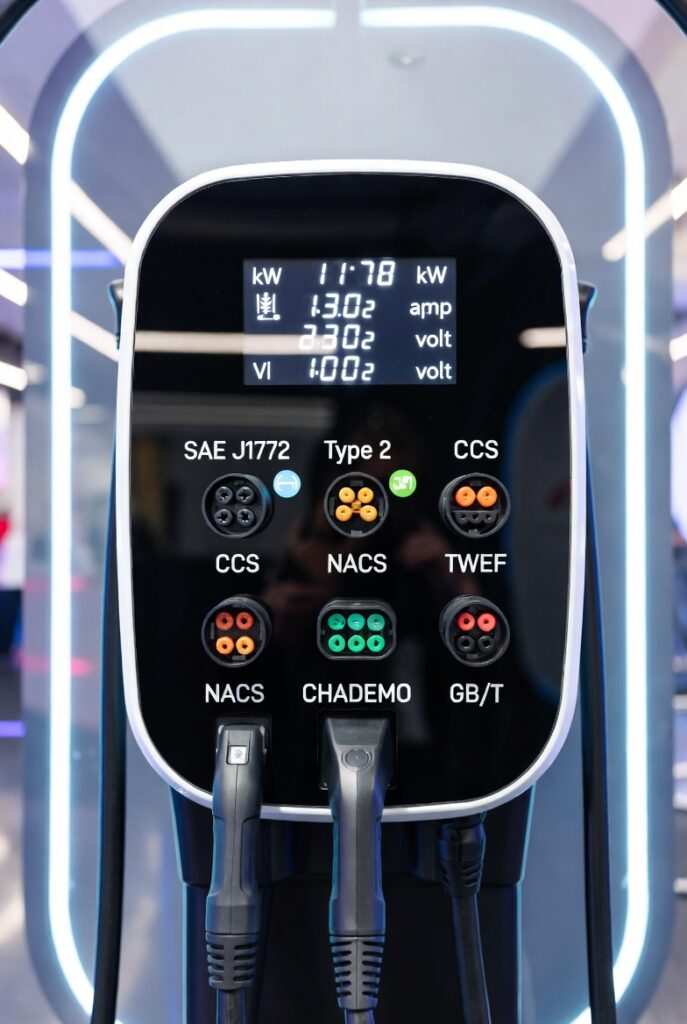
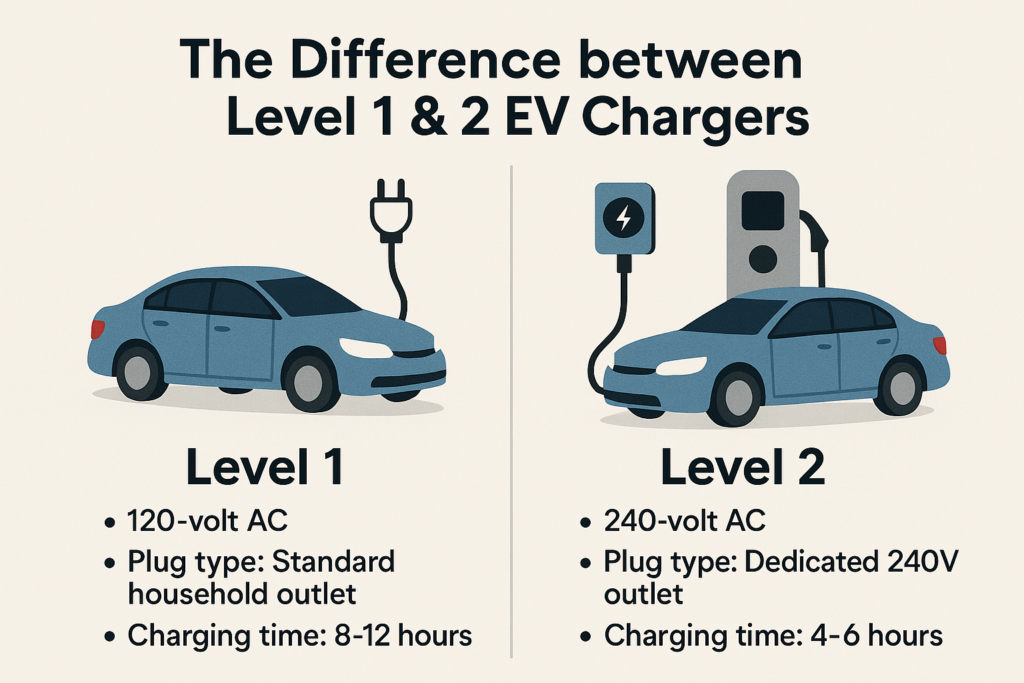
For a deep dive into what every spec on a charger listing actually means, our guide to understanding EV charger specs 2026 translates kW, amps, voltage, NACS and CCS into plain language. If you’re confused about whether your car needs a J1772 or Type 2 connector, our J1772 vs Type 2 connector guide covers every compatibility scenario in detail. For the broader charging framework — how home charging fits into Level 1, Level 2 and DC Fast Charging — our EV charging guide 2026 puts it all in context. Before finalising any purchase, read our EV charger warranty comparison to know what you’re actually covered for. And if something goes wrong at a public station on the way home, our EV charger troubleshooting guide covers every fix across Type 2, CCS2 and AC chargers.
Final Thoughts
The goal of this quiz framework is simple: help you find the right EV charger for your home without wading through spec sheets, conflicting forum advice, or sales pitches from brands that benefit from selling you a more expensive unit than you need.
The right charger for your home is the one that matches your car’s maximum AC charging rate, works with your home’s electrical supply, survives your local climate conditions, and comes with warranty coverage that’s actually reachable when you need it. Everything beyond that is either future-proofing or nice-to-have.
Work through the questions honestly — especially the electrical supply check, which is the step most people skip and most often regret. And if you’re still unsure after going through the framework, the comments section is open — tell us your EV model, your location, and your home setup and we’ll point you in the right direction.
Because finding the right EV charger for your home shouldn’t be harder than charging the car itself.