Author name: editoradmin

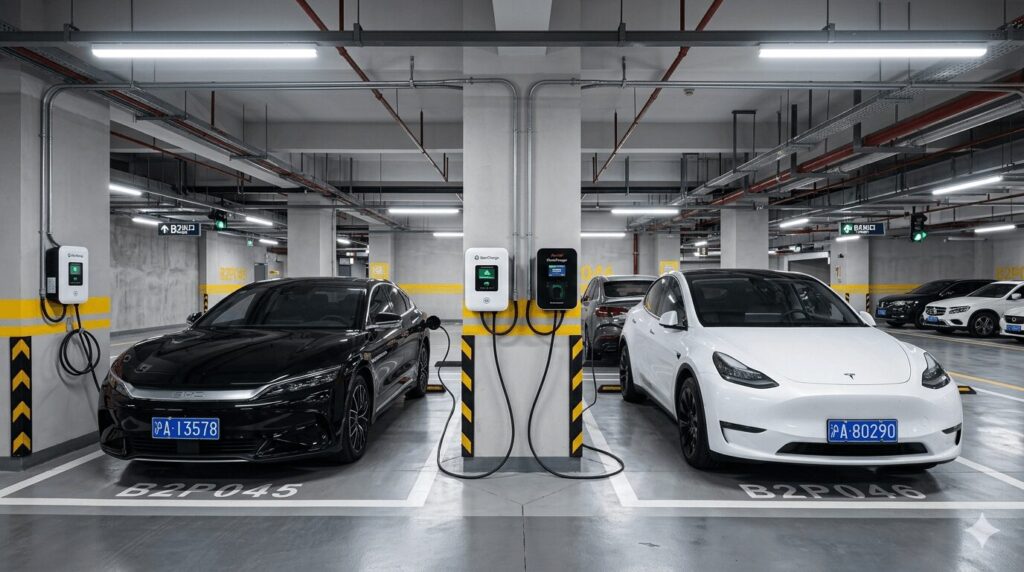
Case study Shanghai family with two EVs BYD and Tesla charging setup in a high-rise—a sleek black BYD Han EV and white Tesla Model Y charge simultaneously on adjacent parking spaces in a Changning District underground car park, with StarCharge and Autel wall-mounted chargers connected and operational
EV charging

Case Study: Shanghai Family with Two EVs – BYD and Tesla Charging Setup in a High-Rise 2026 — The Honest Complete Guide

When a Shanghai family bought their second electric vehicle in 2024, they knew home charging would be essential—but navigating the 物业 approval process, State Grid applications, and technical challenges of installing two chargers in a high-rise apartment building proved more complex than expected. This case study Shanghai family with two EVs BYD and Tesla charging setup in a high-rise documents every step of their six-month journey: from the initial 物业 enquiry in October 2024 to the fully operational dual charging system running today. With a BYD Han EV and Tesla Model Y sharing adjacent parking spaces in a Changning District high-rise, the Li family overcame WiFi connectivity issues, load management challenges, and panel capacity constraints to achieve a net investment of just ¥4,330 after subsidies—delivering ¥5,393 in annual savings with a 10-month payback period. Read the complete account of their installation costs, government subsidies, operational lessons, and the six critical takeaways for any dual-EV household in China considering home charging.
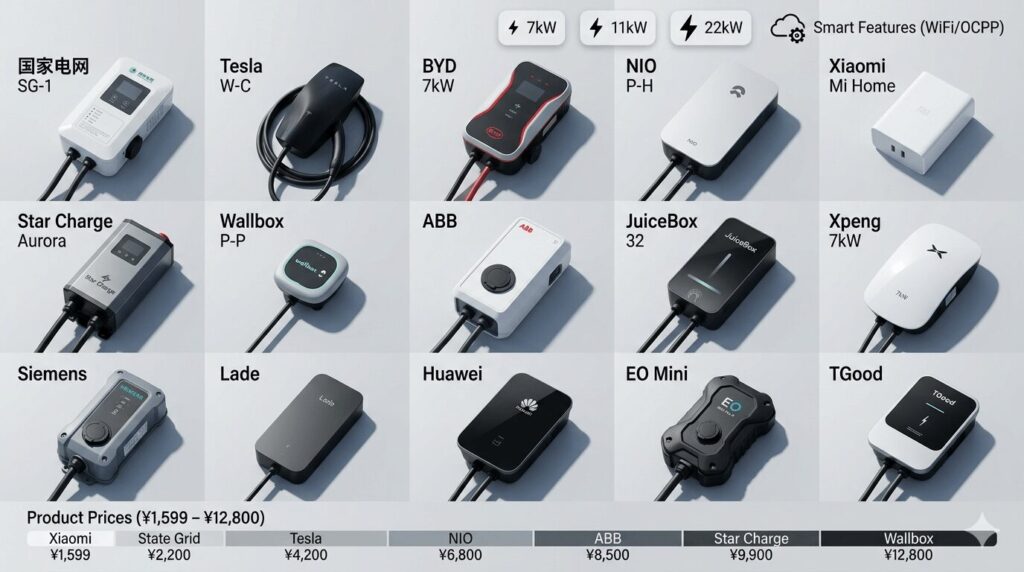
visual side-by-side: 15 top EV chargers 2026 – China market compared — grid display of State Grid, Tesla, BYD, NIO, Xiaomi, Star Charge, Wallbox, and Huawei home chargers with power ratings and price comparison chart.
EV charging

Visual Side-by-Side: 15 Top EV Chargers 2026 – China Market Compared

Choosing the wrong home EV charger costs you time, money, and smart features you will wish you had later. This comprehensive guide delivers a visual side-by-side: 15 top EV chargers 2026 – China market compared across power output (7kW, 11kW, 22kW, and 20kW DC), smart capabilities (WiFi, OCPP, TOU scheduling, RFID), price (¥1,599 to ¥12,800), and best-use scenarios. From State Grid’s reliable workhorses and BYD’s budget-friendly OEM units to NIO’s premium ecosystem, Xiaomi’s Mi Home integration, Tesla’s design benchmark, and Star Charge’s OCPP-compliant smart home champions — every charger is reviewed in detail. Complete installation cost tables, a decision framework for seven common owner scenarios, and the four mistakes that derail most charger purchases. Whether you own a BYD Han, Tesla Model 3, NIO ET5, Xiaomi SU7, or any other Chinese EV, this comparison tells you exactly which charger to buy and why. The annual fuel saving versus petrol (¥10,000+) pays for any charger on this list within the first year — often within three months.

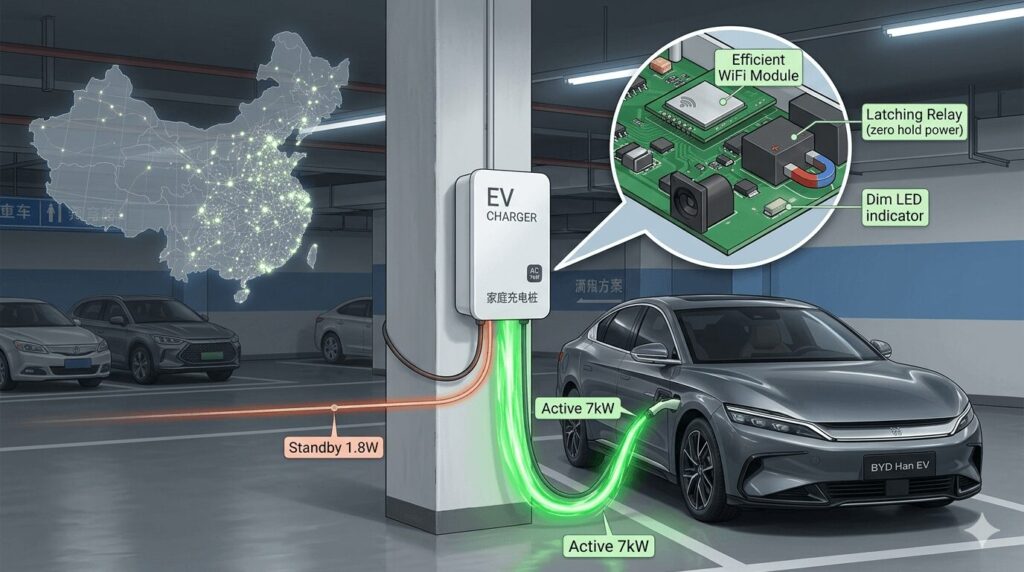
most energy-efficient EV chargers 2026 lowest standby power draw for the Chinese grid featured illustration showing a wall-mounted home charger with a thin 1.8W standby energy trickle versus a thick 7kW active charging flow, with a magnified view of efficient internal components including a latching relay and low-power WiFi module in a Chinese residential parking garage
EV charging

Most Energy-Efficient EV Chargers 2026: Lowest Standby Power Draw for the Chinese Grid — The Complete Technical Guide

What are the most energy-efficient EV chargers 2026 lowest standby power draw for the Chinese grid? This complete technical guide measures, compares, and certifies the real idle consumption of every major home EV charger available in China — from the ultra-efficient StarCharge S1 at just 1.8 watts to power-hungry cellular and “smart screen” models wasting over 8 watts. You will learn the annual standby energy cost for each charger (as little as ¥4.90 or as much as ¥22+), which features cause high vampire draw (4G/5G, colour screens, mechanical contactors), and why the difference between the best and worst charger is ¥17 per year for an individual but over 370 GWh of wasted electricity across China’s 8.5 million residential chargers. For pilot city residents, OCPP-capable Autel MaxiCharger delivers demand response income while maintaining excellent efficiency. For non-pilot city owners, StarCharge S1 is the efficiency champion. Avoid cellular chargers, screen gimmicks, and old stock entirely.

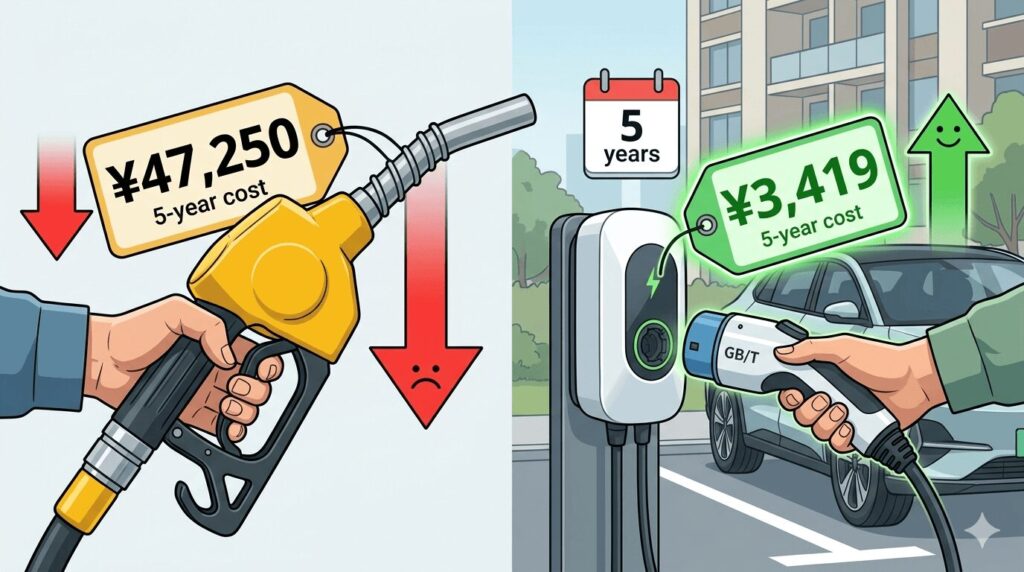
5-year true cost of home EV charger ownership 2026 China electricity pricing vs petrol featured illustration comparing a petrol pump showing 47250 yuan five-year cost on the left versus a home EV charger showing 3419 yuan five-year cost on the right in a Chinese residential parking scene
EV charging

5-Year True Cost of Home EV Charger Ownership 2026: China Electricity Pricing vs Petrol — The Complete Financial Breakdown

What is the 5-year true cost of home EV charger ownership 2026 China electricity pricing vs petrol? This complete financial breakdown moves beyond the headline “EVs are cheaper” claims to deliver an honest, scenario‑by‑scenario model. It accounts for hardware and installation costs across entry, mid, and premium charger tiers, real TOU electricity pricing in tier‑1, tier‑2, and rural China, demand response income for OCPP‑compliant chargers in pilot cities, charger depreciation, and petrol vehicle fuel costs at current prices. The result is a clear answer for every buyer: even in the worst case, a home charger pays for itself in 3‑4 months and saves ¥38,000‑¥44,000 over five years compared to petrol. If you own an EV in China — or are thinking of buying one — this guide gives you the real numbers you need.

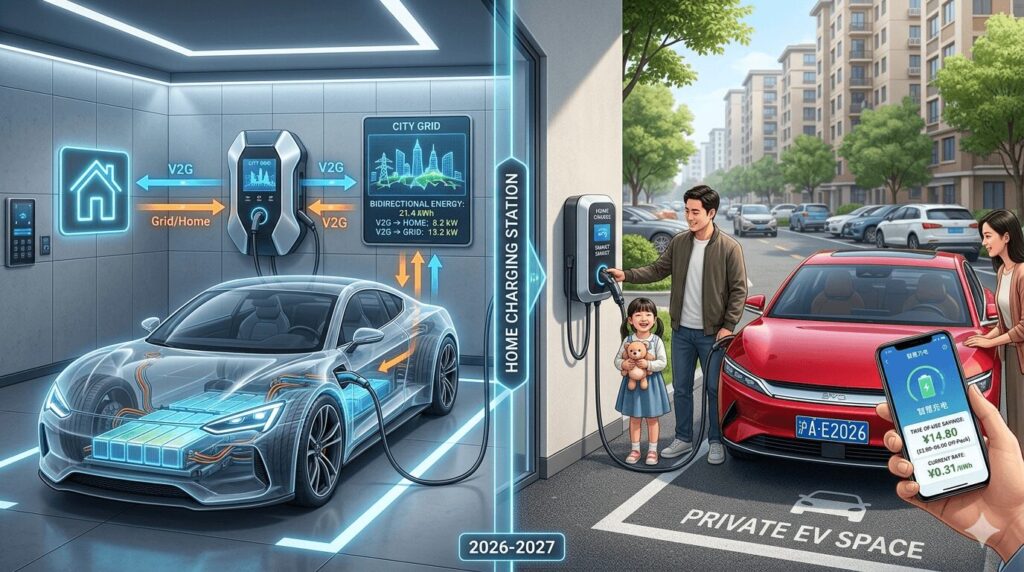
upcoming EV charger trends 2026-2027 V2G solid-state batteries and what to buy now in China featured illustration showing a bidirectional V2G home charger on the left with a futuristic solid-state battery EV and a standard smart charger on the right in a Chinese residential community
EV charging

Upcoming EV Charger Trends 2026-2027: V2G, Solid-State Batteries, and What to Buy Now in China — The Honest Complete Guide

What are the upcoming EV charger trends 2026-2027 V2G solid-state batteries and what to buy now in China? This honest, no‑hype guide separates commercial reality from laboratory promises. It assesses V2G pilot income in Shanghai and Shenzhen, the real impact of solid‑state batteries on home charging, AI energy management value, OCPP 2.0 timelines, and whether wireless or ChaoJi matters for your home. Most importantly, it gives clear buying recommendations for different owner profiles — so you invest in hardware that lasts and skip premiums for technology that isn’t ready yet. If you own an EV in China today, this is your practical roadmap through the noise.

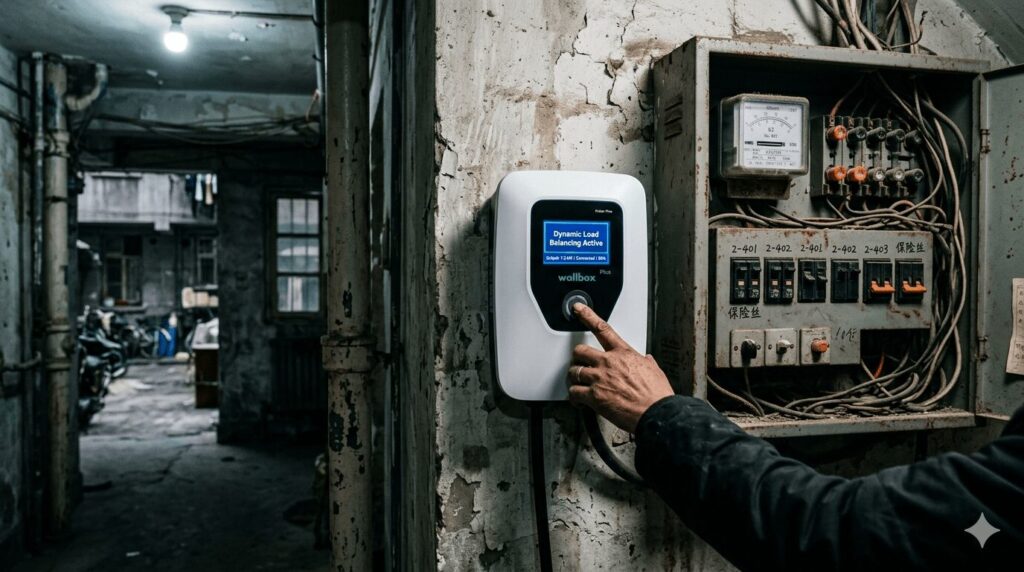
Load balancing EV chargers 2026 avoid tripping breakers in old Chinese apartment blocks by dynamically adjusting current from ageing 1990s electrical panels—shown here with a modern smart charger installed beside a vintage circuit breaker box in a 老旧小区.
EV charging

Load Balancing EV Chargers 2026: Avoid Tripping Breakers in Old Chinese Apartment Blocks — The Honest Complete Guide

Struggling with circuit breakers that trip every time you plug in your EV? You don’t necessarily need an expensive panel upgrade. This honest guide to load balancing EV chargers 2026 avoid tripping breakers in old Chinese apartment blocks explains how dynamic load management works, which chargers actually fit 1990s wiring (aluminium included), and why a ¥1,300 load-balancing charger often beats a ¥15,000 electrical overhaul for 老旧小区 residents.

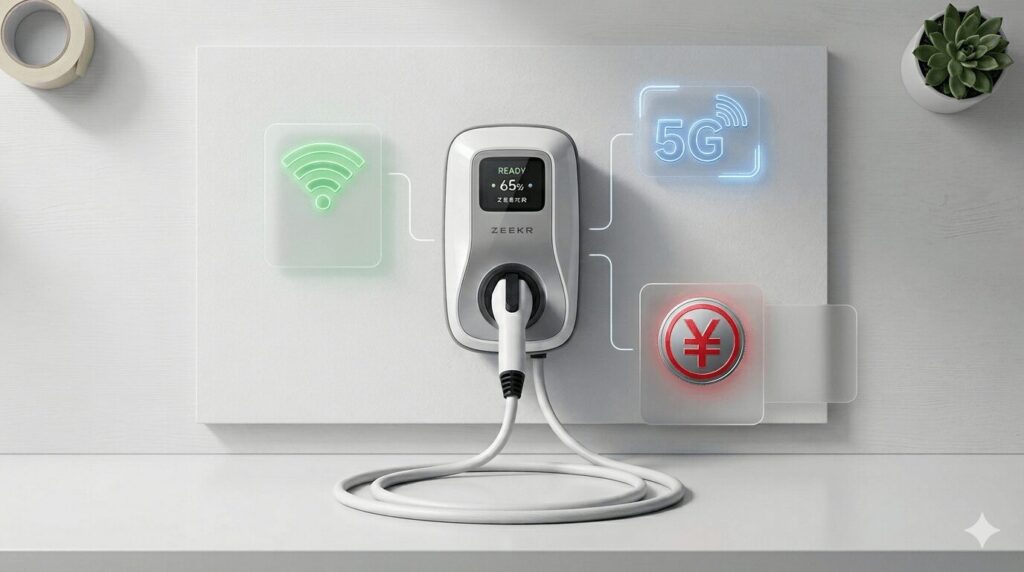
Best smart connectivity WiFi 5G digital yuan payments in Chinese smart chargers featured visual showing a wall-mounted EV charger surrounded by Wi-Fi, 5G, and e-CNY payment icons on a clean workbench in a modern Chinese home garage setting for 2026.
EV charging

Best Smart Connectivity WiFi, 5G, Digital Yuan Payments in Chinese Smart Chargers 2026 — The Honest Complete Guide

Searching for the best smart connectivity WiFi 5G digital yuan payments in Chinese smart chargers usually means wading through a sea of marketing hype. This honest guide cuts through the noise to reveal which features actually save you money (like basic WiFi TOU scheduling), which are irrelevant for home use (5G and blockchain), and which are worth a small premium (OCPP and NFC). If you are a Chinese EV owner looking to avoid paying for useless features in 2026, this is your complete reality check on every connectivity specification that matters.

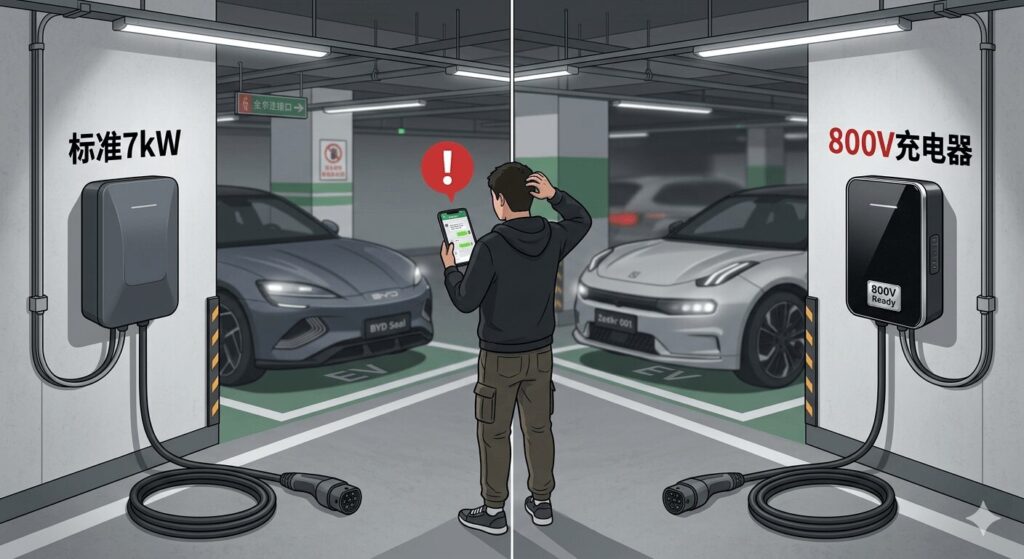
800V vs 400V architecture should Chinese EV owners buy an 800V ready charger in 2026 — technical cutaway diagram showing 220V AC mains power flowing through a standard home charger into the vehicle's onboard charger (OBC) which converts to 800V DC for the battery, proving the home charger never needs 800V capability
EV charging

800V vs 400V Architecture Should Chinese EV Owners Buy an 800V Ready Charger in 2026? — The Honest Complete Guide

800V vs 400V architecture should Chinese EV owners buy an 800V ready charger in 2026 — the honest answer is no. This complete guide explains why every “800V-ready” home AC charger delivers zero benefit over a standard certified GB/T charger, how the vehicle’s onboard charger (OBC) — not battery voltage — determines home charging speed, and why BYD Seal, Zeekr 001, and Xpeng G9 owners are wasting ¥500-¥900 on meaningless marketing. Learn what specifications actually matter for home charging, how to avoid the misconception costing Chinese EV buyers money, and the correct charger for your 800V vehicle in 2026. No technical background required — just the truth about 800V vs 400V home charging.

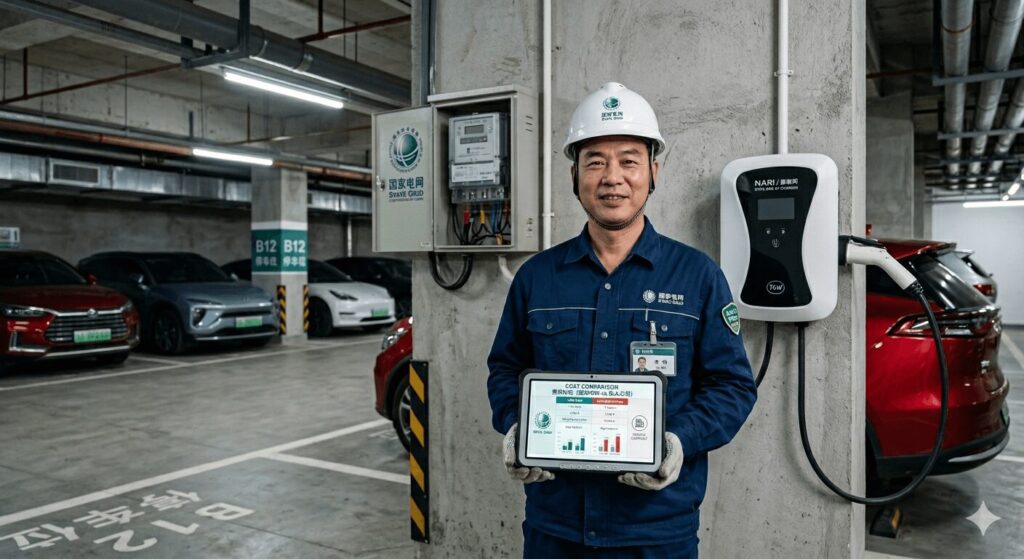
Professional EV charger installation costs 2026 what State Grid chargers vs private companies charge — featured image of a licensed Chinese electrician comparing costs on a tablet beside a wall-mounted home EV charger in an underground car park
EV charging

Professional EV Charger Installation Costs 2026: What State Grid Chargers vs Private Companies Charge — The Honest Complete Guide

Wondering about professional EV charger installation costs 2026 what State Grid chargers vs private companies charge in China? The truth is, prices vary wildly—from under ¥1,000 to over ¥6,000—depending on cable distance, your city, and who does the work. This guide breaks down every cost component: State Grid meter fees, private electrician labour, cable specs, and hidden charges. You’ll learn how to spot red flags, compare quotes properly, and avoid overpaying for your home installation.

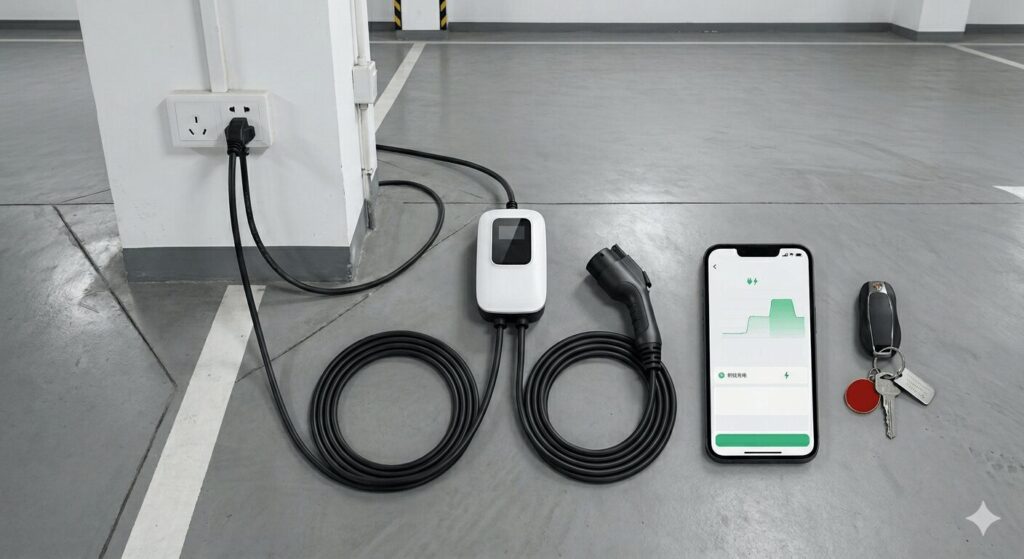
Flat lay of certified portable EVSE plugged into a standard 220V apartment wall socket with smartphone and car keys, illustrating a safe DIY EV charger installation 2026 easiest plug and play models for Chinese apartments 220V setup without an electrician
EV charging

DIY EV Charger Installation 2026: Easiest Plug and Play Models for Chinese Apartments (220V) — The Honest Complete Guide

Looking for a DIY EV charger installation 2026 easiest plug and play models for Chinese apartments 220V that doesn’t require waiting weeks for an electrician or fighting with property management? This honest guide cuts through the confusion. You’ll learn exactly which portable EVSE models (from BESEN, Pilot-EV, and Autel) are genuinely safe for overnight 220V socket charging, how to perform the critical 30-minute warm-hand test, and why a smart portable charger with TOU scheduling can actually save you money over a hardwired installation. No extension cords. No electrical permits. Just certified, RCCB-protected plug-and-play solutions that work in Chinese apartments right now. If your daily mileage is under 120km and you have a standard 220V socket, this is the most financially sound path to home EV charging in 2026.

Scroll to Top