Introduction: What the World Can Teach India About Charging at Home
India’s electric vehicle revolution is accelerating fast. With millions of EVs expected on Indian roads by 2030, one question keeps coming up in EV communities, WhatsApp groups, and dealership showrooms: “How do I set up a proper charger at home?”
The good news? Millions of EV owners in the United States and Europe have already been through exactly this journey — and they’ve learned a lot. From garage wiring upgrades to smart charger Wi-Fi apps, their experiences hold powerful lessons for Indian buyers planning their first EV charger setup.
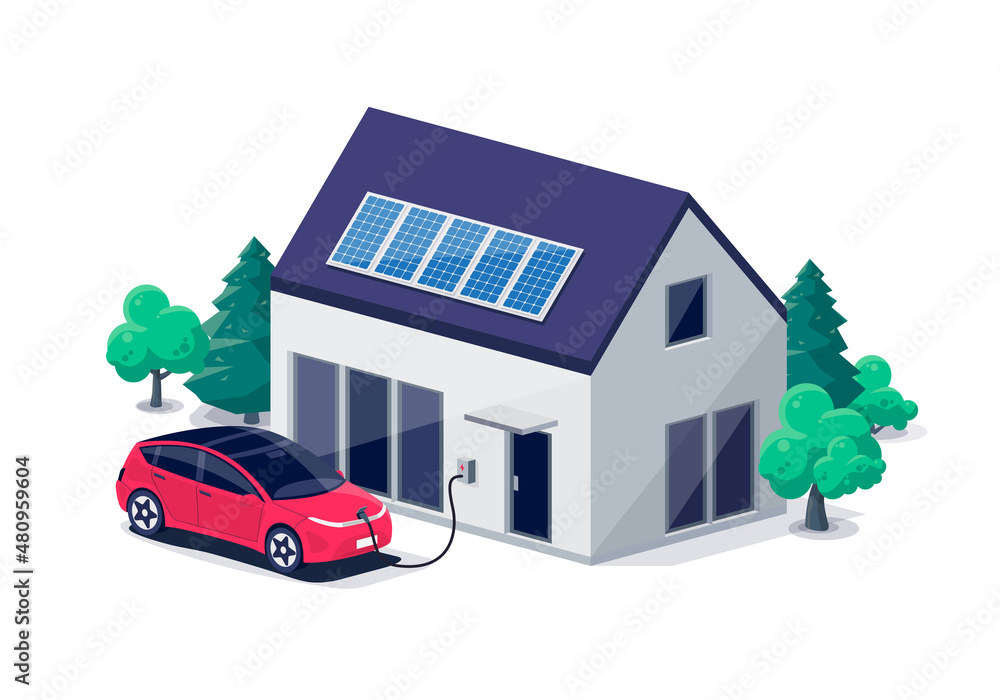
In this article, we’ve compiled real EV charger setup stories from US and European readers — a mix of apartment dwellers, suburban homeowners, and early adopters — and drawn out the insights most relevant to Indian buyers researching home charging solutions.
Whether you drive a Tata Nexon EV, MG ZS EV, Mahindra XEV 9e, or any other electric car, understanding how global EV owners handle their charging setup will help you make smarter, more confident decisions.
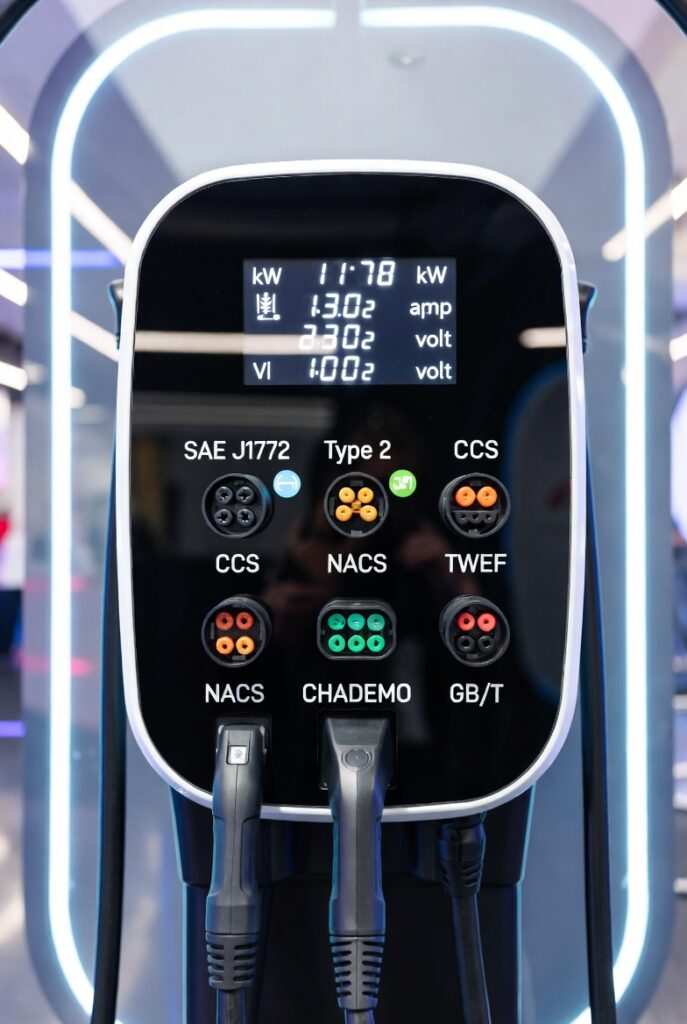
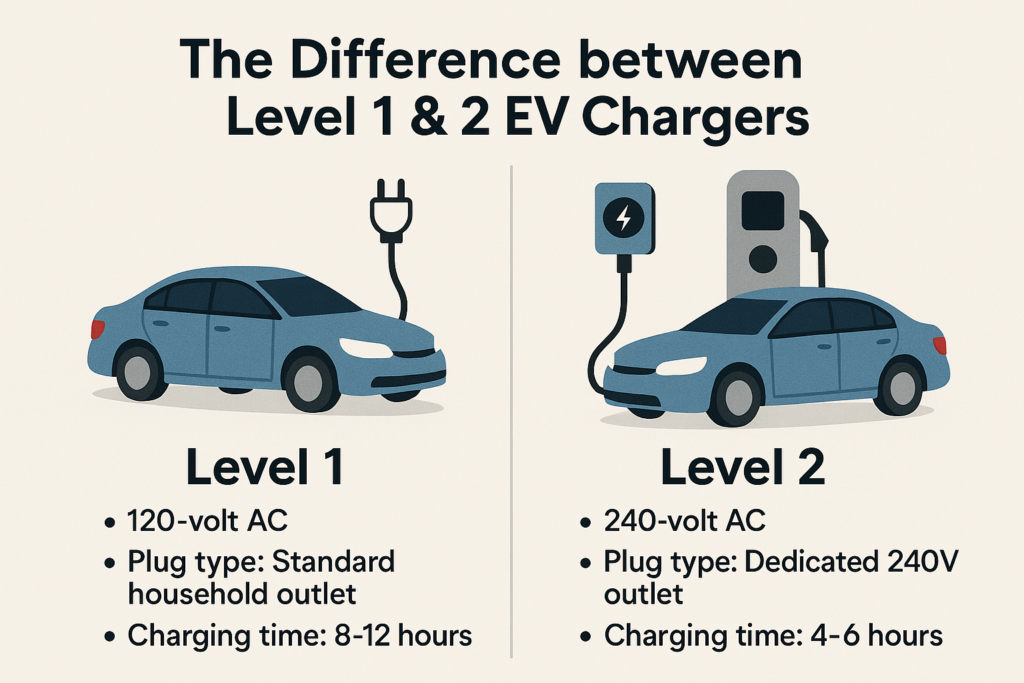
New to EV charging basics? Before diving into the stories, check out our beginner-friendly guide: EV Charger Types Explained: AC vs DC, Level 1 vs Level 2 vs Level 3 — it covers everything from connector standards to charging speeds in the Indian context.
Story 1: Marcus from Portland, Oregon, USA — The Garage Upgrade That Changed Everything
Vehicle: 2022 Ford Mustang Mach-E Charger: ChargePoint Home Flex (48A, Level 2) Setup: Hardwired in a single-car garage
Marcus had been relying on the standard Level 1 “trickle charger” that came with his Mach-E for the first three months of ownership. At 120V/12A, it was adding only about 6–8 km of range per hour — frustrating for someone commuting 80 km daily.
“I was waking up at 5 AM just to check if my car had enough charge for the day,” Marcus recalls. “It was like constantly babysitting a phone on 3% battery.”
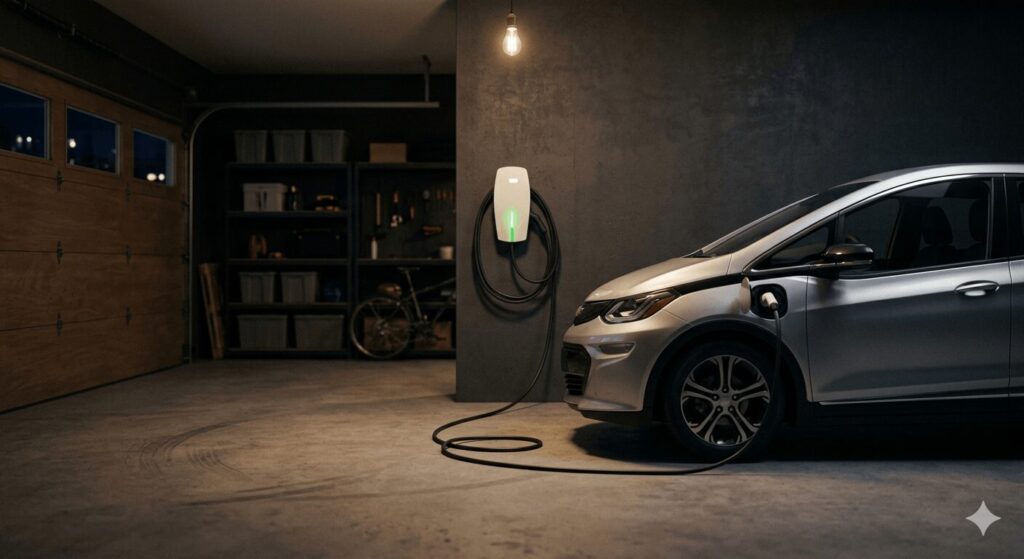
His solution was to hire a licensed electrician to install a dedicated 240V/50A circuit in his garage and mount a ChargePoint Home Flex. Total cost: approximately $1,200 USD (including the charger at $699 and installation at ~$500).
The result? He now plugs in every night after dinner and wakes up to a full battery every morning — no more anxiety.
Key takeaway for Indian buyers: This mirrors exactly the situation many Tata Nexon EV or Hyundai Ioniq 5 owners face in India when relying solely on the portable charger that comes in the box. Upgrading to a dedicated AC home charger (7.2 kW or 11 kW) — the equivalent of Level 2 in India — transforms the daily charging experience dramatically.
📌 Wondering which home charger to buy in India? Read our detailed comparison: Best Home EV Chargers in India 2025: Tata, Exicom, and More Compared
Story 2: Sophie from Amsterdam, Netherlands — Apartment Charging Done Right
Vehicle: 2023 Volkswagen ID.4 Charger: Wallbox Pulsar Plus (11 kW, Type 2) Setup: Shared underground parking garage with dedicated socket
Sophie represents a growing segment of EV owners across Europe and increasingly in India — apartment dwellers without a private parking space or dedicated circuit.
When she bought her ID.4, her building’s homeowner association (VvE in Dutch) had already approved a shared charging scheme. Wallbox Pulsar Plus units were installed in the underground parking with smart load balancing — meaning all six chargers in the lot shared a single 44 kW supply without ever tripping the building’s breaker.
“The app tells me when my car is fully charged, and I can even set it to charge only during off-peak hours when electricity is cheapest. It cost me nothing to install because the building absorbed the cost — I just pay per kWh.”
Cost to Sophie: €0 installation. Per-charge billing at €0.25/kWh through the building’s shared energy contract.
Key takeaway for Indian buyers: In Indian cities like Mumbai, Bengaluru, and Pune, apartment societies (housing co-operatives) are beginning to adopt exactly this model. The smart load management feature Sophie uses is increasingly standard on chargers like Exicom’s AC units and Tata Power’s home charging solutions. If you live in a society, this story shows it IS possible — and worth pushing your RWA to explore.
📌 Read our deep dive: How to Get an EV Charger Installed in Your Apartment Society in India
Story 3: James from Texas, USA — Going Solar + EV, The Full Setup
Vehicle: 2023 Tesla Model Y Long Range Charger: Tesla Wall Connector (Gen 3, 48A) Setup: Garage + 10 kW rooftop solar + home battery (Powerwall 2)
James is what the EV community calls a “prosumer” — someone who both produces and consumes energy. His setup in suburban Austin is perhaps the most future-ready in this list.
After installing a 10 kW rooftop solar system in 2021, he added the Tesla Wall Connector and a Powerwall 2 (13.5 kWh battery) in 2022. His Model Y now charges almost entirely from solar energy during the day, stored in the Powerwall and delivered to the car overnight.
“My electricity bill dropped by 85% after going solar. My Tesla essentially charges for free most months. The Powerwall handles grid outages too — Texas has had a few of those.”
Total system cost: ~$38,000 USD (including solar, Powerwall, and Wall Connector), with federal tax credits bringing it down to ~$26,000.
Key takeaway for Indian buyers: India has some of the best solar irradiance in the world, and rooftop solar costs have plummeted. Combining a home EV charger with a rooftop solar setup is increasingly viable — especially in states like Rajasthan, Gujarat, and Maharashtra. The combination of PM Surya Ghar subsidy for solar + FAME II benefits for EVs makes this equation even more attractive.
📌 Interested in solar + EV? See our guide: Solar-Powered EV Charging at Home in India: Is It Worth It in 2025?
Story 4: Elena from Barcelona, Spain — Navigating the Connector Maze
Vehicle: 2022 Peugeot e-208 Charger: Wallbox Copper SB (7.4 kW, Type 2) Setup: Ground-floor apartment with private parking slot
Elena’s story is one many Indian EV buyers will relate to soon — the connector compatibility confusion.
When she was shopping for a home charger, she was bewildered by the Type 1 vs Type 2 vs CCS vs CHAdeMO terminology. Her Peugeot e-208 uses a Type 2 (IEC 62196) connector for AC charging — now the universal standard across European electric cars.
“My car came with a Mode 2 cable — basically a portable charger with a Type 2 plug on one end and a regular Schuko plug on the other. It charged at 2.3 kW, which was fine for overnight, but I wanted faster. I bought a Wallbox Copper SB for my parking slot and now charge at 7.4 kW — full in under 5 hours.”
She also noted a key lesson: “Always check your car’s onboard charger capacity. My e-208 can only accept 7.4 kW AC, so buying an 11 kW charger would have been pointless — I’d still only charge at 7.4 kW anyway.”
Key takeaway for Indian buyers: This is one of the most practical lessons in this entire article. In India, CCS2 has emerged as the dominant DC fast charging standard for four-wheelers, while AC home charging typically uses a Type 2 connector. Always check your vehicle’s onboard charger rating before buying a home charger — a car with a 3.3 kW onboard charger won’t benefit from a 7.2 kW wall unit. You’re limited by the car, not the charger.
📌 Confused by connector types? We’ve simplified it for India: CCS2 vs CHAdeMO vs Bharat DC: EV Connector Types in India Explained
Story 5: David from London, UK — Smart Charging and Off-Peak Savings
Vehicle: 2023 Hyundai Ioniq 6 Charger: Ohme Home Pro (7.4 kW, smart) Setup: Driveway outside a terraced house
David is a data-driven EV owner who turned his home charger into a cost-optimization tool. The Ohme Home Pro integrates with Octopus Energy’s “Agile Octopus” tariff in the UK, which offers electricity prices that fluctuate by the half hour based on grid demand.
“Some nights, electricity goes negative — meaning the grid actually pays you to use power. My car charges for free, or close to it, multiple times a week. My annual charging cost is under £150 for about 15,000 miles of driving.”
He sets a target departure time and target charge level in the app, and the charger automatically figures out the cheapest windows to charge — even pausing and resuming as prices fluctuate overnight.
Key takeaway for Indian buyers: India doesn’t yet have dynamic time-of-use EV tariffs as mature as the UK, but several DISCOMs (distribution companies) are beginning to introduce off-peak EV charging rates — typically between 10 PM and 6 AM. Some smart charger brands available in India, including Statiq’s home units and Tata Power’s iZEV, allow scheduled charging. Even without dynamic pricing, setting your charger to run after 11 PM can meaningfully reduce your monthly electricity bill.
📌 Learn how much it actually costs to charge your EV at home in India: EV Home Charging Cost Calculator India: Per-Unit Rates by State 2025
Story 6: Astrid from Oslo, Norway — The Gold Standard of EV Infrastructure
Vehicle: 2022 Volvo XC40 Recharge Charger: Easee Home (7.4 kW) Setup: Shared column in a row house community with dynamic load balancing
Norway has the highest EV penetration rate in the world — over 90% of new car sales are electric. Astrid’s story reflects what mature EV infrastructure actually looks like.
Her row house community (similar to a gated township in India) has a shared Easee charging system with one Easee Home charger per parking slot — 14 units total — all load-balanced from a single 63A three-phase supply. The system automatically distributes available power based on how many cars are charging simultaneously.
“In summer, when everyone is away on holiday, my car charges at the full 7.4 kW. In winter evenings when all 14 cars plug in after work, it might drop to 2–3 kW each — but since we charge overnight, it doesn’t matter. We always wake up to a full car.”
Her biggest frustration? “Public chargers can still be unreliable. Norway has done a lot, but the 50 kW fast chargers at older stations are now too slow for modern cars. We need 150+ kW everywhere.”
Key takeaway for Indian buyers: The shared load balancing model Astrid describes is directly applicable to Indian gated communities and housing societies with multiple EVs. As EV penetration increases in Indian metros, smart load management will shift from a luxury feature to an essential one. When your society evaluates charger brands, look for systems that support dynamic load balancing — this is what prevents electrical upgrades from becoming ruinously expensive.
📌 Planning to install a charger in your gated community? Complete Guide: EV Charging Infrastructure for Residential Complexes in India
Story 7: Roberto from Milan, Italy — The Work-From-Home Opportunist
Vehicle: 2023 Fiat 500e Charger: EV Box BusinessLine (22 kW, Type 2 three-phase) Setup: Dedicated parking at workplace
Roberto doesn’t charge at home at all. His employer — a mid-sized tech company in Milan — installed EV Box BusinessLine chargers in the company parking lot as part of a sustainability initiative, and employees can use them for free.
“I charge entirely at work. I plug in when I arrive at 9 AM and unplug when I leave at 6 PM. That’s 9 hours of Level 2 charging — more than enough to fill my Fiat 500e. I’ve spent zero money on home charging.”
He does carry a portable Mode 2 cable for long road trips when he can’t find a public fast charger — but for daily use, workplace charging has been a complete solution.
Key takeaway for Indian buyers: Workplace EV charging is an underrated opportunity in Indian corporate campuses. IT parks in Hyderabad, Bengaluru, and Pune, along with manufacturing facilities, are increasingly installing chargers for employees. If your employer hasn’t considered this yet, this is a compelling case to make to your HR or facilities team — especially with government subsidies and CSR incentives available. For daily urban commuters with office parking, workplace charging can completely eliminate home charging costs.
📌 Show your employer this article: Why Your Company Should Invest in Workplace EV Charging in India
Patterns and Lessons: What Global EV Users Agree On
Having read through seven very different real-world EV charger setups across five countries, several universal truths emerge — all highly relevant to Indian EV buyers:
1. The Portable Charger Is a Starter, Not a Solution
Every single user who relied on their car’s bundled portable charger — whether in Portland or Barcelona — eventually upgraded to a dedicated wall unit. The portable charger is essential as a backup, but for daily use, a fixed home or workplace charger is a transformative quality-of-life upgrade.
2. Smart Charging Pays for Itself
Whether it’s off-peak scheduling (David in London), solar integration (James in Texas), or dynamic load balancing (Astrid in Norway), smart charger features aren’t gimmicks — they reduce costs, protect electrical infrastructure, and make shared installations viable.
3. Check Your Car’s Onboard Charger First
Elena in Barcelona’s lesson is critical: the car’s onboard charger, not the wall unit, determines your maximum AC charging speed. Verify this spec before buying any home charger. Overpaying for a 22 kW charger when your car accepts only 7.2 kW is a common and expensive mistake.
4. Apartment and Society Charging Is Solvable
Sophie in Amsterdam and Astrid in Norway prove that apartment and community charging doesn’t require heroic infrastructure — it requires smart planning, load balancing technology, and buy-in from the building management. All three are achievable in Indian cities.
5. Installation Costs Are as Important as Charger Costs
In every story, the total cost of ownership includes both the charger hardware and the electrical installation. In India, installation costs vary significantly by city, building age, and panel capacity. Always get multiple quotes, and factor in whether a panel upgrade is needed.
📌 Get a realistic sense of what home EV charger installation costs in India: EV Charger Installation Cost in India: What to Expect in 2025
How India Compares: The Growing Parity
India is often 3–5 years behind the US and Europe in EV infrastructure maturity — but that gap is closing rapidly. In fact, Indian EV buyers today have access to:
- CCS2-compatible DC fast chargers on all major national highways (over 91% of NH covered within 50 km, per 2025 Ministry of Power data)
- Smart AC home chargers from brands like Exicom, Tata Power, Statiq, and Delta
- PM E-DRIVE subsidies for public charging infrastructure, creating a flywheel of investment
- Bharat EV Policy 2024 encouraging more affordable imports and domestic manufacturing
The experiences of global EV users aren’t distant fantasies — they represent exactly where India’s charging ecosystem is heading within this decade.
📌 Stay updated on India’s EV infrastructure development: India EV Charging Infrastructure Report 2025: State-by-State Breakdown
Frequently Asked Questions (FAQ)
Q: Can I use a US or European EV charger in India? Most home chargers from the US (Level 2, J1772) or Europe (Type 2) are NOT directly compatible with Indian EVs without an adapter, and voltage differences (India is 230V/50Hz) may also require conversion. Stick with chargers certified for Indian standards (IS-17017 for connectors, BIS certification for safety).
Q: What is the Indian equivalent of Level 2 charging? In India, Level 2 equivalent is a 3.3 kW to 22 kW AC charger using a Type 2 or Bharat AC-001 connector. Most Indian home chargers are 3.3 kW or 7.2 kW units.
Q: How long does a 7.2 kW home charger take to charge a Tata Nexon EV? The Tata Nexon EV Max has a 40.5 kWh battery. At 7.2 kW, a full charge from empty takes approximately 5.5–6 hours — comfortably done overnight.
Q: Is smart charging worth it in India? Yes, particularly for scheduled off-peak charging. With electricity tariffs typically lower between 10 PM and 6 AM in several Indian states, smart scheduling can reduce monthly charging costs by 20–40%.
Q: Can I install a charger in my apartment society? Yes. Under Ministry of Power guidelines (2021, updated 2024), apartment residents have the right to install EV charging points in their designated parking space, and DISCOMs are mandated to provide connections within 7–15 days of application.
Conclusion: Your Setup, Your Story
Every EV owner’s charging journey is unique — shaped by their vehicle, living situation, budget, and energy goals. What Marcus in Portland, Sophie in Amsterdam, James in Texas, Elena in Barcelona, David in London, Astrid in Oslo, and Roberto in Milan all share is that they took the time to understand their options, and made informed decisions that now make daily EV ownership genuinely effortless.
India’s EV community is writing its own version of this story right now — in Bengaluru apartments, Chennai villas, Pune IT parks, and Delhi housing societies. The lessons are there to be learned.
At Clean Energy Bazaar, we’re building India’s most comprehensive resource for EV charger comparison, buying guides, and real-world installation stories. Whether you’re buying your first EV charger or upgrading an existing setup, we’re here to help you make the smartest choice.
📌 Ready to choose your charger? Compare All Home EV Chargers Available in India — Side-by-Side