As India accelerates towards its goal of 30% electric vehicle (EV) sales by 2030, the demand for efficient EV charging infrastructure is surging. However, the needs for EV charging solutions in urban India differ significantly from those in rural areas. This article explores urban vs rural EV charging solutions in India, highlighting key challenges, innovative approaches, and future prospects to help you make informed decisions for your EV journey. Whether you’re searching for the best urban EV charging stations in India or solutions for rural EV charging infrastructure challenges, we’ve got you covered.
The Growing Landscape of EV Charging in India
India’s EV charging network has expanded dramatically, growing from around 5,000 public stations in FY22 to over 26,000 by early FY25. This growth is driven by government initiatives like the FAME II scheme and the PM E-Drive program, which allocates ₹2,000 crore for deploying 72,000 fast chargers. Despite this progress, the charger-to-EV ratio stands at about 1:235, leading to range anxiety and long wait times. Urban areas dominate with 79% of public chargers, while rural regions lag due to infrastructure gaps.
Long-tail keywords like “EV charging infrastructure development in India 2026” and “public vs private EV chargers in urban and rural areas” are crucial for understanding this divide. Let’s break it down.
Urban EV Charging Solutions: Convenience and Speed in City Life
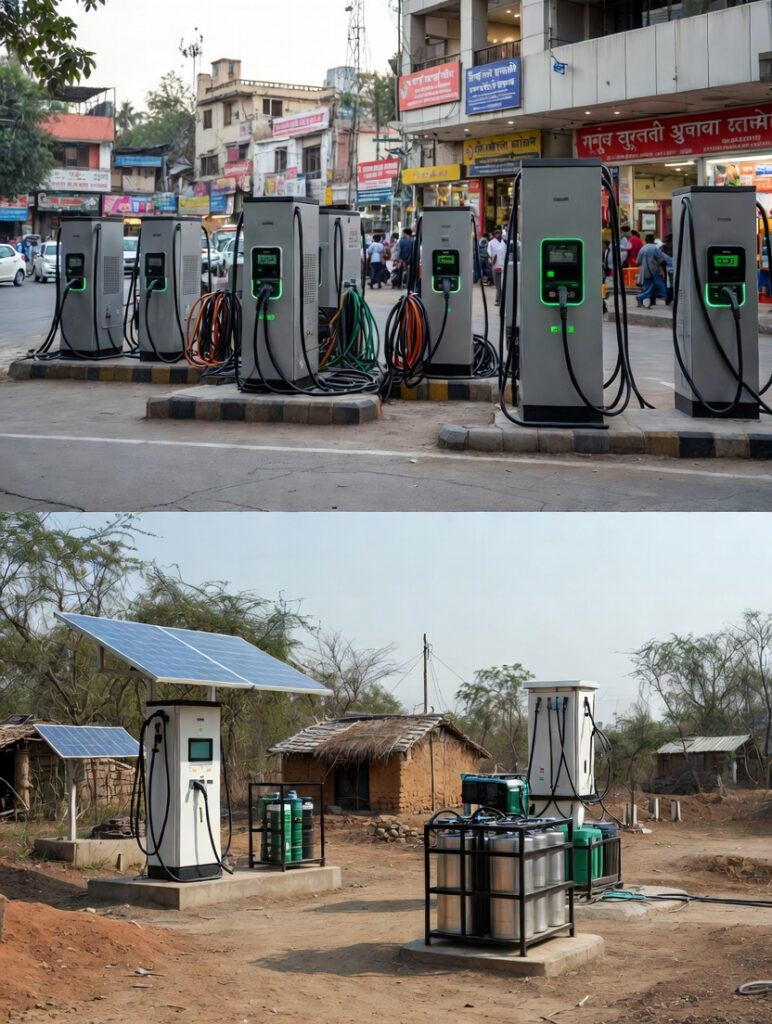
In bustling cities like Delhi, Mumbai, and Bengaluru, urban EV charging solutions focus on high-density, fast-charging options to match the fast-paced lifestyle. With easier grid access and higher EV adoption rates, urban areas benefit from a mix of home, public, and workplace chargers.
Key Features of Urban EV Charging Infrastructure
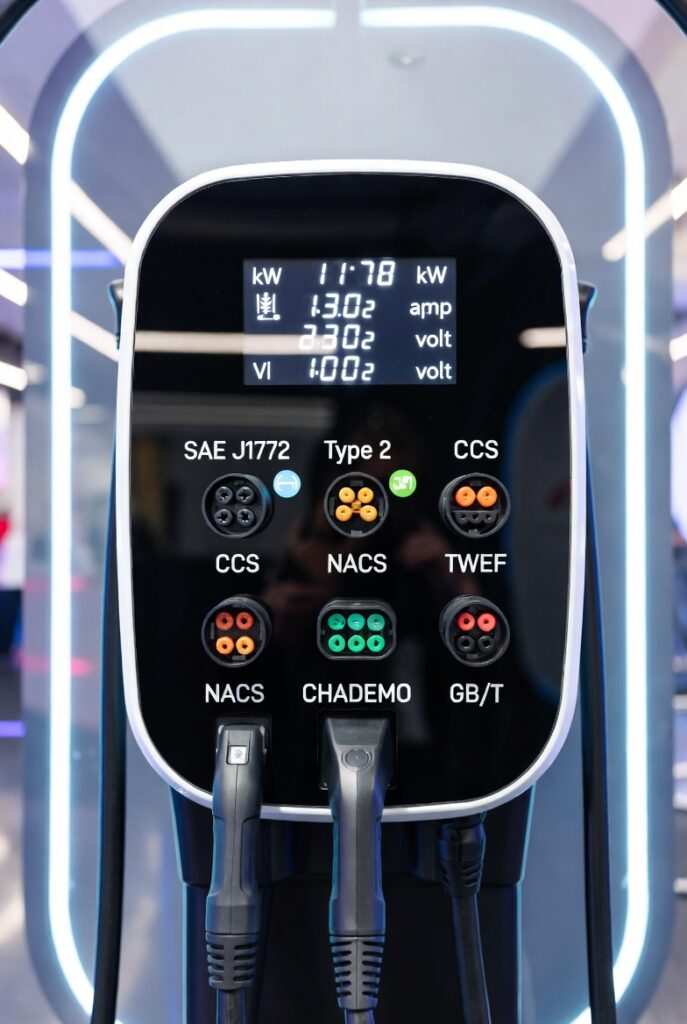
- Fast Chargers and DC Stations: Ideal for quick top-ups, these are common in malls, offices, and highways. Companies like Tata Power offer over 5,500 stations across 620+ cities, including fast DC chargers.
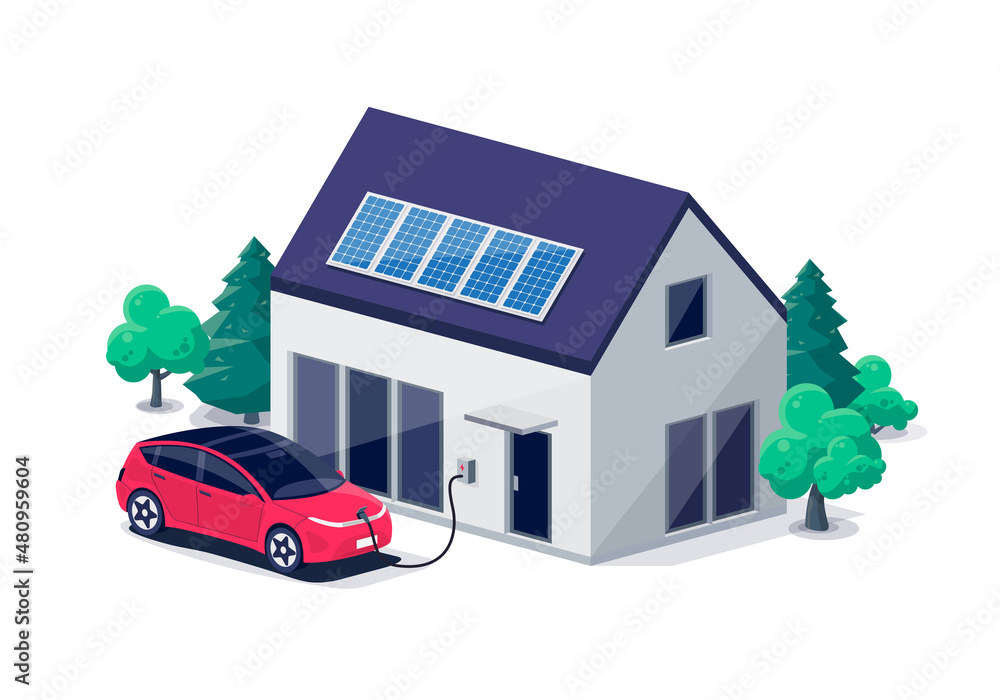
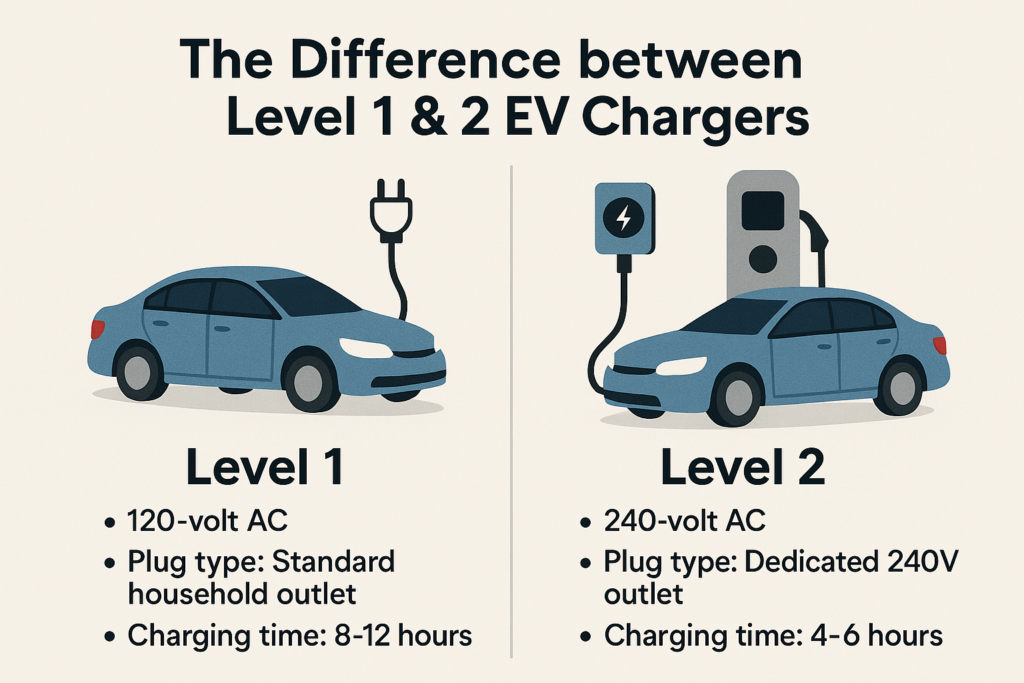
- Home and Apartment Charging: Slow AC chargers (Level 1/2) are popular in residential societies, with over 1.2 lakh home installations by Tata Power. This suits urban commuters with short daily drives.
- Network Providers: Bolt.Earth and Statiq lead with 100,000+ and 7,000+ chargers respectively, covering 1,900+ cities.
For those querying “best fast EV charging solutions for urban India,” urban setups prioritize reliability and app-based access to reduce downtime.
Challenges in Urban EV Charging
Despite advancements, urban areas face issues like space constraints, high electricity tariffs, and grid overload. Land allocation in dense cities is complex, involving multiple agencies. Solutions include retrofitting parking lots and integrating smart charging to manage peak loads.
Rural EV Charging Solutions: Reliability and Sustainability Off the Grid
Rural EV charging infrastructure in India faces unique hurdles, but innovative solutions like solar-powered stations are game-changers. With abundant sunlight (4-7 kWh per square meter daily), rural areas can leverage off-grid options to overcome unreliable electricity.
Innovative Approaches for Rural EV Charging
- Solar-Powered Chargers with BESS: Battery Energy Storage Systems (BESS) enable reliable charging in remote areas, reducing dependence on the grid. These are ideal for farmers and small businesses, cutting fuel costs and boosting incomes.
- Portable and Battery Swapping: Emerging models like pay-per-use subscriptions make EVs affordable. Companies like Exicom promote these for semi-urban and rural adoption.
- Government Support: Initiatives aim to install chargers every 25 km on highways, extending to rural corridors.
If you’re looking for “solar EV charging stations for rural India,” these solutions address long-distance travel and low-density demand.
Major Challenges in Rural EV Charging Infrastructure
Rural areas struggle with low EV ownership, grid capacity limits, and lack of awareness. High upfront costs and sparse stations create range anxiety, but policies like subsidies for solar setups are bridging the gap.
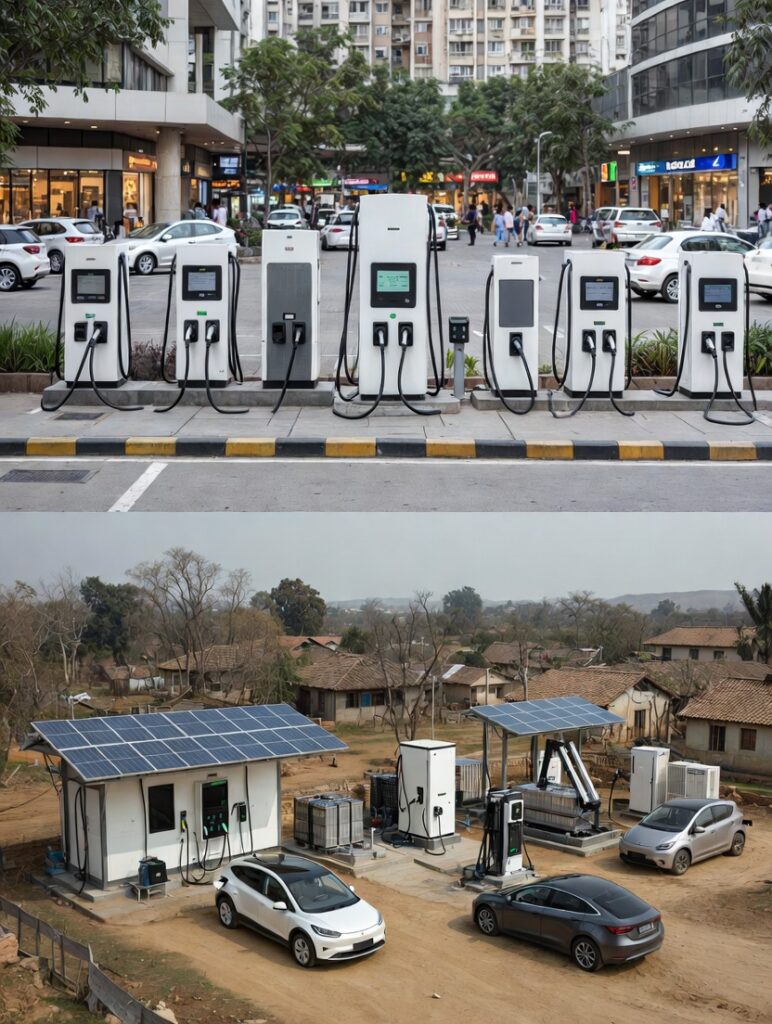
Urban vs Rural EV Charging: A Side-by-Side Comparison
To better understand “differences between urban and rural EV charging needs in India,” here’s a comparison table:
| Aspect | Urban EV Charging Solutions | Rural EV Charging Solutions |
|---|---|---|
| Primary Focus | Speed and convenience for daily commutes | Reliability and affordability for long hauls |
| Charger Types | Fast DC chargers, home AC units | Solar with BESS, portable swaps |
| Grid Dependence | High, with smart management | Low, off-grid options preferred |
| Challenges | Space, tariffs, overload | Infrastructure gaps, awareness |
| Adoption Drivers | Urban policies, high density | Economic benefits for farmers |
| Examples | Tata Power in Mumbai | Solar hubs in villages |
This table highlights how urban setups cater to quick needs, while rural ones emphasize sustainability.
Future Outlook: Bridging the Urban-Rural Divide in EV Charging
India aims for 39 lakh charging stations by 2030, focusing on equitable distribution. Innovations like managed charging and state-specific guidelines (e.g., Tamil Nadu’s framework) will help. For “future trends in EV charging infrastructure urban vs rural India,” expect more solar integrations in rural areas and AI-optimized networks in cities.
Conclusion: Choosing the Right EV Charging Solution for Your Needs
Whether in urban hubs or rural landscapes, EV charging solutions in India are evolving to meet diverse needs. Urban users benefit from dense networks, while rural adopters gain from sustainable, cost-effective options. By addressing challenges like grid readiness and uneven distribution, India is poised for a greener future. If you’re comparing EV chargers, explore our site for the latest reviews on “top EV charging stations for urban and rural India 2026.” Stay charged and drive sustainably!