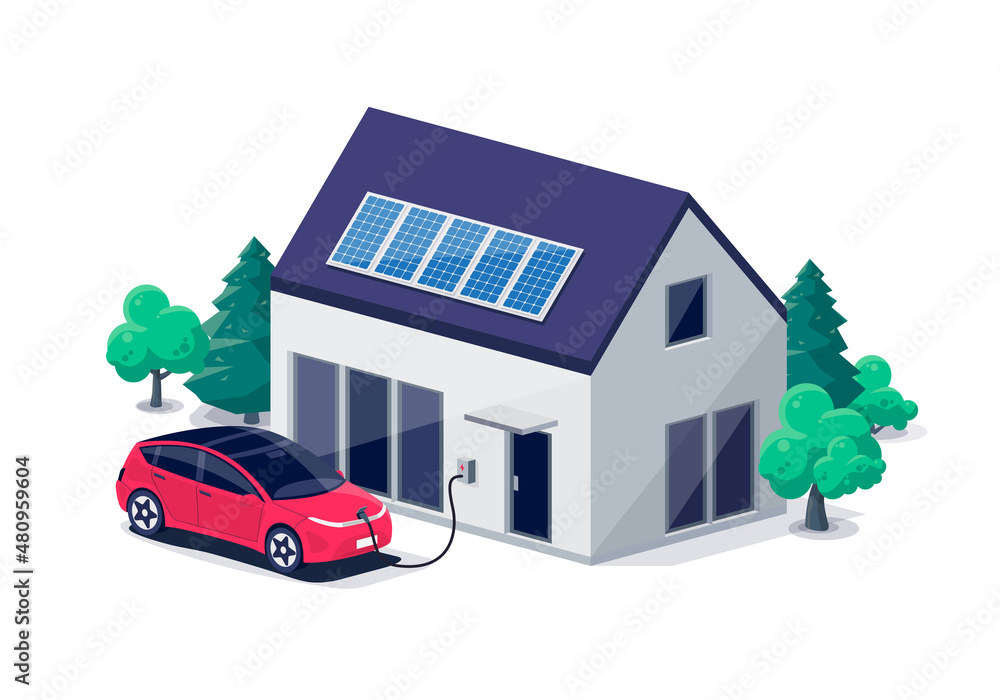
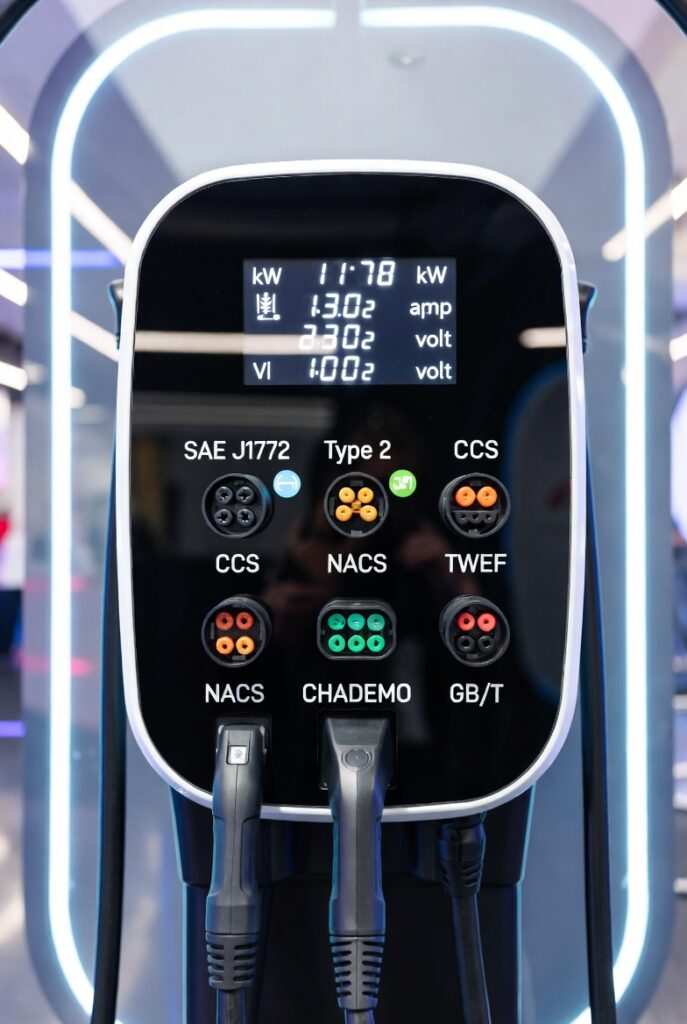
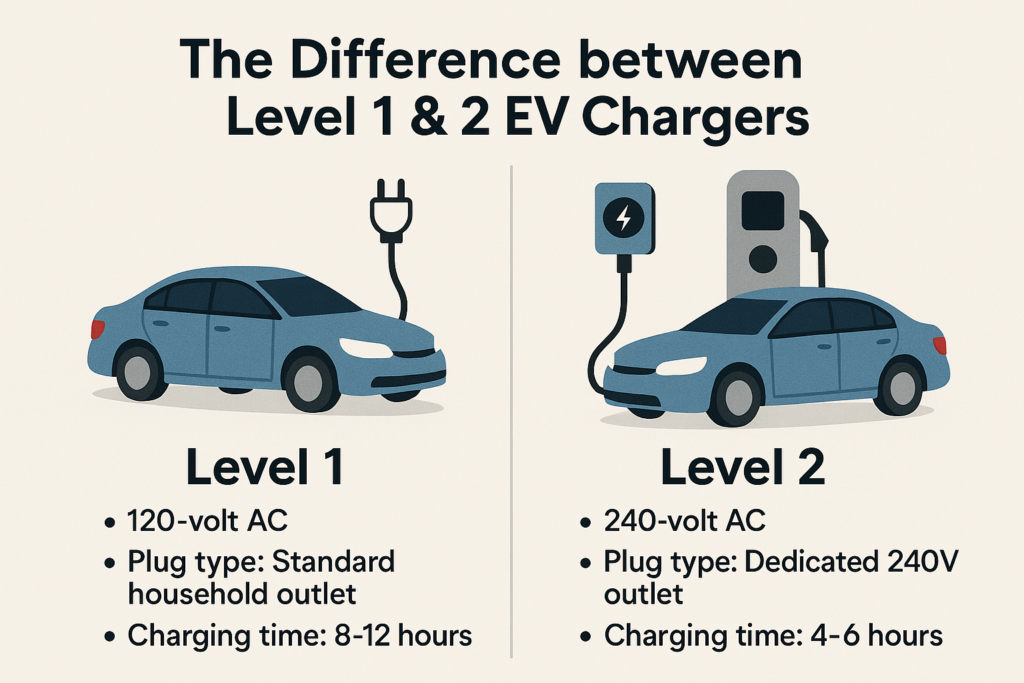
Here is the question that every Chinese EV owner should ask before buying their next charger — or before traveling internationally with their current EV.
Not “which charger has the best app?” Not “which one is cheapest?” But the most critical compatibility question: what connector does my car actually have, and what connector does the charger I want to use actually provide?
The answer has become more complicated in 2026 than ever before. Chinese domestic EVs use the GB/T standard — but Tesla owners in China face a unique situation where their vehicles use a different connector standard than the global NACS system. Meanwhile, Chinese EV owners traveling abroad or importing vehicles face a maze of CCS1, CCS2, Type 1, Type 2, and NACS adapters.
This comprehensive interactive EV charger selector tool: GB/T vs NACS – find your match for Tesla/BYD/Xpeng guide walks you through every major connector standard in 2026, explains exactly which cars use which plugs, and provides a systematic framework for determining the right charger or adapter for your specific vehicle and charging scenario.
The Short Answer: Geography Still Decides the Plug in 2026
Despite years of speculation about a single global EV charging standard, 2026 looks remarkably tidy in terms of regional dominance:
| Region | Dominant Standard | AC Only Standard | Key Vehicles |
|---|---|---|---|
| Mainland China | GB/T | GB/T AC | BYD, NIO, Xpeng, Li Auto, Xiaomi, domestic Tesla |
| North America | NACS (SAE J3400) | J1772 (legacy) | Tesla, Ford, GM, Rivian, Hyundai, Kia |
| Europe | CCS2 | Type 2 | Volkswagen, BMW, Mercedes, Renault, Tesla (EU) |
| Japan | CHAdeMO (legacy) | Type 1 | Nissan Leaf, Mitsubishi |
| Rest of World | CCS2 / Mixed | Type 2 / GB/T | Varies by country |
The hard part isn’t picking a standard — it’s understanding where your vehicle fits, what adapters you need for cross-border travel, and how to future-proof your home charging investment.
Part 1: Understanding the Major Connector Standards in 2026
GB/T — The Chinese National Standard
GB/T (Guobiao/Tuijian) is the mandatory standard for any charger sold or operated in mainland China. It uses two physically separate connectors — one for AC and one for DC — which is the opposite of the CCS/NACS unified plug philosophy.
Technical specifications:
- AC connector (GB/T 20234.2): Up to 7.4 kW (single-phase) or 22 kW (three-phase)
- DC connector (GB/T 20234.3): Typically 60–250 kW (max 250A at 750-950V)
- Communication protocol: CAN bus (Controller Area Network)
- Regional dominance: Mainland China, plus some Belt & Road countries
What vehicles use GB/T:
- BYD (all models sold in China)
- NIO (all models)
- Xpeng (all models)
- Li Auto (all models)
- Xiaomi SU7
- AITO, Zeekr, and virtually all domestic Chinese EVs
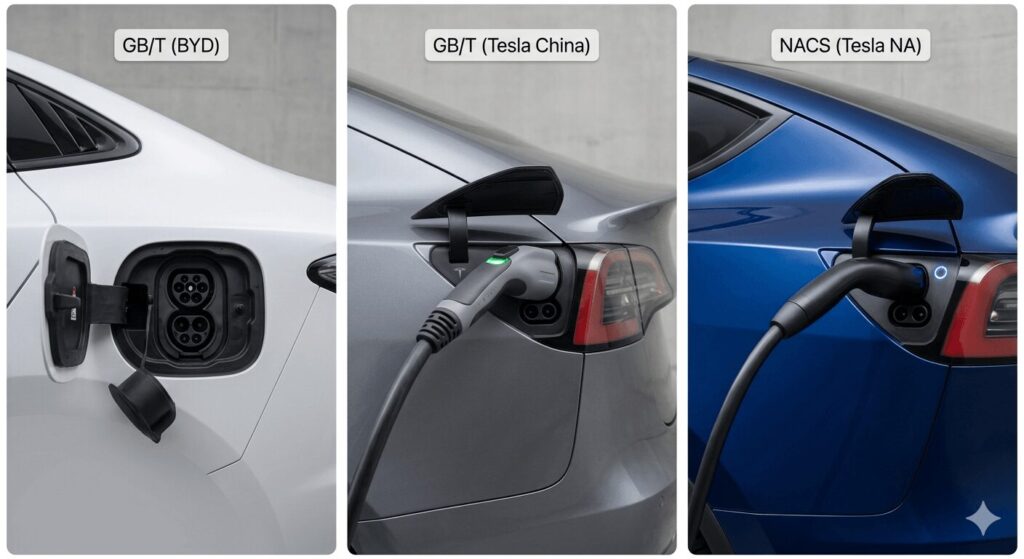
- Tesla vehicles sold in China (factory-modified to GB/T)
Unique feature: GB/T uses separate AC and DC ports, meaning your car has two different inlet holes. A home charger uses one; a DC fast charger uses the other.
ChaoJi (GB/T 2.0): A new high-power standard co-developed with Japan’s CHAdeMO group, supporting up to 900 kW with liquid-cooled cables. It’s mechanically backward-compatible with GB/T via adapters and is being rolled out across new highway HPC sites, heavy commercial vehicles, and ultra-fast hubs in China.
NACS — The North American Charging Standard
NACS (North American Charging Standard, officially SAE J3400) is no longer a Tesla-only connector. As of 2026, every major OEM selling in North America has either shipped vehicles with native NACS ports or supplied adapters.
Technical specifications:
- AC charging: Up to 11.5 kW (Level 2)
- DC fast charging: Up to 250 kW (V3 Superchargers) and 350 kW+ (V4)
- Communication protocol: PLC (ISO 15118 / J3400)
- Key advantage: Single, slim plug handles both AC and DC charging
Why NACS matters for Chinese EV owners:
- Tesla vehicles sold outside China use NACS
- Chinese EVs exported to North America need NACS adapters or modifications
- NACS is the fastest-growing standard globally (but not in China)
The NACS ecosystem in 2026:
- V3 & V4 Supercharger stalls (250kW+): Generally compatible with most EVs via adapters
- V2 stalls (150kW): Tesla-only — older communication protocols prevent non-Tesla use
- Magic Dock stalls: Open to all CCS vehicles via integrated adapter
CCS1 and CCS2 — The Combined Charging System
CCS (Combined Charging System) uses the same AC port as Type 1 (CCS1) or Type 2 (CCS2) with two additional DC pins below. CCS2 is the universal standard for Europe and Oceania; CCS1 is the legacy fast-charging standard in North America.
Key differences:
| CCS1 | CCS2 | |
|---|---|---|
| Region | North America | Europe, Oceania, Middle East, Asia-Pacific |
| AC base | Type 1 (J1772) | Type 2 (Mennekes) |
| 3-phase AC | No | Yes |
| Max power | Up to 350 kW | Up to 400 kW+ |
| Key vehicles | Legacy non-Tesla in NA | Most European EVs |
What Chinese EV owners need to know: If you’re importing a Chinese EV to Europe, you’ll need a GB/T-to-CCS2 adapter or a charger conversion kit.
Type 1 and Type 2 — The AC Charging Standards
These are the AC-only standards used for home and destination charging (Level 2):
- Type 1 (J1772 / J-plug): North America and Japan. Most common connection at home, work, and public Level 2 stations.
- Type 2 (Mennekes): Europe and many other regions. Supports both single and three-phase power. Most European street chargers are “socket-only” — you provide your own cable.
CHAdeMO — The Legacy Japanese Standard
CHAdeMO (short for “Charge de Move”) was the first system designed for high-speed DC charging in Japan. In 2026, it is increasingly rare, found primarily on older Nissan Leaf models and some Japanese-market EVs. For Chinese EV owners, CHAdeMO is largely irrelevant unless importing a used Japanese EV.
Part 2: The Compatibility Matrix — Which Connector Works With Which?
Here is the complete compatibility matrix for 2026:
| Connector Type | GB/T | CCS2 | Type 2 (AC) | NACS | CHAdeMO |
|---|---|---|---|---|---|
| GB/T | Native | Adapter required | No direct | Adapter required | No direct |
| CCS2 | Adapter required | Native | AC portion native | Adapter (CCS1-to-NACS in NA) | No direct |
| Type 2 (AC) | No direct | AC native | Native | Adapter required | No direct |
| NACS | Adapter required | Adapter required | Adapter required | Native | Adapter rare |
| CHAdeMO | No direct | Adapter rare | No direct | Adapter rare | Native |
What this means for you:
- If you have a GB/T vehicle (most Chinese EVs), you cannot use NACS, CCS2, or Type 2 chargers without an adapter — and adapters between GB/T and other standards are rare and expensive.
- If you have a NACS vehicle (Tesla outside China), you can charge at GB/T stations only with a specific (and uncommon) adapter.
Part 3: Vehicle-by-Vehicle Compatibility Guide
Tesla Vehicles
Tesla presents the most complex compatibility situation because the connector varies by manufacturing destination:
| Tesla Model | Market | Native Connector | Can Use (Without Adapter) | Needs Adapter For |
|---|---|---|---|---|
| Model 3/Y (China-made) | Mainland China | GB/T | All GB/T chargers in China | NACS, CCS2, Type 2 |
| Model 3/Y (imported) | China (pre-2020) | NACS (modified) | Some GB/T (varies) | Most public chargers |
| Model S/X/3/Y | North America | NACS | NACS Superchargers, NACS AC | CCS1, J1772, GB/T |
| Model S/X/3/Y | Europe | CCS2 | CCS2, Type 2 (AC) | NACS, GB/T |
Tesla in China — special note: Tesla vehicles sold in mainland China are factory-modified to use the GB/T standard, not NACS. This means:
- You can use any public GB/T charger (State Grid, TELD, StarCharge, etc.)
- You can use Tesla Superchargers in China (they output GB/T)
- You cannot use NACS chargers abroad without an adapter
Tesla home charger compatibility in China: Tesla’s third-generation home charger can support other brands through charging permission control settings, but performance optimization is mainly designed for Tesla vehicles.
BYD Vehicles
BYD is fully committed to GB/T for the domestic market:
| BYD Model | Market | Native Connector | Can Use | Cannot Use |
|---|---|---|---|---|
| All BYD (China) | Mainland China | GB/T | All GB/T chargers | NACS, CCS2 (without adapter) |
| BYD Atto 3 (export) | Europe | CCS2 | CCS2, Type 2 (AC) | GB/T (without adapter) |
| BYD Seal (export) | Europe, Australia | CCS2 | CCS2, Type 2 | GB/T (without adapter) |
BYD home charger compatibility: BYD home chargers are fully compliant with national standards and support communication protocols used by most domestic models, but they do not support Tesla’s ultra-fast charging modes.
Xpeng Vehicles
Xpeng follows the same pattern as BYD — fully GB/T for the domestic market:
| Xpeng Model | Market | Native Connector | Notes |
|---|---|---|---|
| G3, P7, G9, P5 | Mainland China | GB/T | Full access to GB/T public network |
| Xpeng (export) | Europe (limited) | CCS2 | Modified for European market |
Xpeng specific: Xpeng’s S4 Superchargers in China use GB/T DC connectors (up to 480 kW). The same physical connector works for all GB/T vehicles.
Other Major Brands Compatibility Summary
| Brand | China Market Connector | Export Market Connector | Notes |
|---|---|---|---|
| NIO | GB/T | CCS2 (Europe) | Battery swap unaffected by connector |
| Li Auto | GB/T | N/A (China only) | EREV models, home charging primary |
| Zeekr | GB/T | CCS2 (Europe) | Part of Geely export push |
| Xiaomi SU7 | GB/T | Planned CCS2 | New entrant, export coming |
| AITO | GB/T | N/A (China only) | Huawei partnership |
| Volkswagen ID series | GB/T (China), CCS2 (EU), CCS1 (NA) | Varies by market | Multi-standard manufacturer |
| BMW i series | GB/T (China), CCS2 (EU), CCS1 (NA) | Varies by market | Multi-standard manufacturer |
Part 4: The Interactive Selector Framework — Find Your Match
Use this systematic framework to determine exactly what charger or adapter you need. No app required — just answer the questions in order.
Step 1: Identify Your Vehicle’s Native Connector
Question 1: Where was your vehicle purchased, and what is its origin?
- A) Purchased new in mainland China from a domestic brand (BYD, NIO, Xpeng, Li Auto, Zeekr, Xiaomi, AITO) → Native Connector: GB/T
- B) Purchased new in mainland China from Tesla → Native Connector: GB/T (China-made Teslas use GB/T, not NACS)
- C) Imported vehicle from North America → Native Connector: NACS (if Tesla) or CCS1 (if non-Tesla like Ford, GM, etc.)
- D) Imported vehicle from Europe → Native Connector: CCS2
- E) Imported vehicle from Japan → Native Connector: CHAdeMO (mostly Nissan Leaf) or Type 1
Step 2: Identify Your Target Charger Type
Question 2: Where do you want to charge?
| Scenario | Charger Connector Type |
|---|---|
| Home charging in China (standard wallbox) | GB/T AC |
| Home charging in China (3-phase, villa) | GB/T AC (22 kW capable) |
| Public AC charging in China (destination) | GB/T AC |
| Public DC fast charging in China | GB/T DC |
| Tesla Supercharger in China | GB/T DC (China Superchargers are GB/T) |
| Home charging in North America (new install) | NACS |
| Home charging in North America (legacy install) | J1772 (Type 1) |
| Public charging in Europe | CCS2 (DC) / Type 2 (AC) |
| Tesla Supercharger in North America | NACS |
Step 3: Determine If You Need an Adapter
Question 3: Does your vehicle’s native connector match the target charger?
Part 5: Home Charger Selection Guide by Vehicle Type
For Chinese EV owners installing a home charger, the selection process is straightforward — but only if you understand the compatibility landscape.
Chinese Domestic EVs (BYD, NIO, Xpeng, Li Auto, Zeekr, Xiaomi, AITO)
What you need: A GB/T AC home charger (7 kW single-phase or 22 kW three-phase)
Recommendation: Any charger fully compliant with GB 46519-2025 and GB/T standards. These chargers support communication protocols used by major domestic brands. Vehicle replacement does not require charger replacement.
Popular options:
- StarCharge S1 (GB/T, 7 kW, smart features)
- BYD Smart Charger (full compatibility, optimized for BYD)
- Autel MaxiCharger (GB/T version, OCPP compliant)
- ChargeWay CW-J7032 (basic, budget option)
Key consideration: Ensure the charger has passed energy efficiency certification (mandatory for chargers manufactured after November 2026 under GB 46519-2025).
Tesla (China Market)
What you need: A GB/T AC home charger — the same as any other Chinese EV. China-made Teslas do NOT use NACS.
Recommendation: Tesla’s third-generation home charger is optimized for Tesla vehicles but can support other brands through charging permission control settings.
Alternative: Any GB/T compliant charger will work, but performance optimization (charging speed, scheduling integration) may be better with Tesla’s own unit.
Imported Vehicles in China (NACS, CCS2, CCS1)
What you need: This depends entirely on your vehicle’s native connector. For imported vehicles, home charging in China requires either:
- A GB/T home charger + an adapter (if your vehicle has NACS or CCS2)
- A charger with your vehicle’s native connector (rare in China — most home chargers sold are GB/T)
Recommendation for import owners: Contact the importer or a specialized installer. Off-the-shelf solutions are limited for non-GB/T vehicles in China.
Part 6: The Adapter Guide — When You Need One and What to Buy
Adapters solve compatibility mismatches, but they add cost, reduce charging speed in some cases, and create another point of failure.
Most Common Adapter Use Cases
Adapter Direction Matters
- NACS to CCS1: Allows a NACS-equipped vehicle (like a Tesla) to use a CCS1 fast charger
- CCS1 to NACS: Allows a CCS1-equipped vehicle to use a NACS (Tesla) fast charger
You must use the adapter designed for your specific vehicle inlet.
Important Warnings About Adapters
- Speed reduction: When protocols are mismatched, charging efficiency may decrease significantly. For example, when non-Tesla vehicles use Tesla Superchargers, charging power may be reduced by 30-50%.
- Communication protocols matter: Physical compatibility does not guarantee charging will start. The vehicle and charger must “speak” the same protocol (CAN bus for GB/T, PLC for NACS/CCS).
- Safety certification: Use only certified adapters from reputable manufacturers. Cheap uncertified adapters risk overheating and fire.
- Warranty implications: Using third-party adapters may void your vehicle’s charging system warranty. Check with your manufacturer.
Part 7: Future-Proofing — What to Expect by 2026-2030
NACS Consolidation in North America
NACS has won the North American market. By 2026, every major OEM has either shipped vehicles with native NACS ports or supplied adapters. The certification ecosystem is fully mature.
What this means for Chinese EV exporters: Vehicles shipped to North America in 2026+ will need native NACS ports or manufacturer-supplied adapters. CCS1 is legacy.
ChaoJi (GB/T 2.0) Rollout in China
ChaoJi is quietly reshaping China’s high-power DC segment. It supports up to 900 kW with liquid-cooled cables and is mechanically backward-compatible with GB/T via adapters.
What this means for Chinese EV owners: New highway HPC sites, heavy commercial vehicles, and battery-swap-adjacent ultra-fast hubs are adopting ChaoJi. If you drive a passenger EV, standard GB/T remains fine — but commercial fleet operators need ChaoJi-capable hardware.
Europe Remains CCS2
Europe shows no sign of switching to NACS. CCS2 remains the universal standard, with Type 2 for AC destination charging.
Global Adapter Market Growth
Through at least 2030, the connector transition will not be clean. North American sites will need NACS-to-CCS1 adapters; European fleets buying US-built trucks will need NACS-to-CCS2 solutions; Chinese OEMs exporting to Europe will ship GB/T-to-CCS2 conversion kits with their vehicles.
This creates a steady aftermarket: replacement cable assemblies, dual-port retrofit kits, and certified adapters.
Part 8: Comparison Tables for Quick Reference
Connector Standards at a Glance (2026)
| Standard | Interface | Region | Primary Use | Max DC Speed | 3-Phase AC? | Key Feature |
|---|---|---|---|---|---|---|
| NACS | Single plug | North America | Home & Fast Charging | 350kW+ | No* | Slim unified design |
| GB/T | Two separate plugs | China | Home & Fast Charging | 250kW (ChaoJi: 900kW) | Yes | National standard |
| CCS2 | Combo plug | Europe/World | Universal Charging | 350kW+ | Yes | Standard for EU |
| CCS1 | Combo plug | North America | Fast Charging (Legacy) | 350kW | No | Bulkier with latch |
| Type 2 | Round plug | Europe | Destination Charging | 43kW AC | Yes | “Socket-only” stations |
| Type 1 | Flat plug | North America/Japan | Destination Charging | N/A (AC only) | No | The “J-plug” |
| CHAdeMO | Large round plug | Japan/Global | Fast Charging (Legacy) | 100kW+ | No | Native V2H support |
*While NACS hardware can technically support 3-phase in commercial settings, it is rarely implemented in North American residential vehicles.
Vehicle Brand Connector Summary
| Brand | China Market | North America Market | Europe Market | Notes |
|---|---|---|---|---|
| BYD | GB/T | NACS (via adapter/export) | CCS2 (export models) | Domestic: full GB/T |
| NIO | GB/T | Not sold | CCS2 | Battery swap network China-only |
| Xpeng | GB/T | Not sold | CCS2 (limited) | S4 uses GB/T DC |
| Li Auto | GB/T | Not sold | Not sold | China-only |
| Zeekr | GB/T | Not sold | CCS2 | Export models use CCS2 |
| Tesla | GB/T | NACS | CCS2 | China-made: GB/T |
| Xiaomi | GB/T | Planned | Planned | SU7 domestic: GB/T |
| VW ID | GB/T | CCS1 (legacy) / NACS (new) | CCS2 | Multi-standard |
| BMW | GB/T | CCS1 (legacy) / NACS (new) | CCS2 | Multi-standard |
Final Thoughts
The interactive EV charger selector tool: GB/T vs NACS – find your match for Tesla/BYD/Xpeng framework produces one clear finding: for Chinese EV owners staying in China, the answer is simple. Your vehicle uses GB/T. Buy a GB/T charger. Everything works.
The complexity emerges at the edges:
- Chinese EVs traveling abroad need adapters — and those adapters are rare, expensive, and not always reliable.
- Imported vehicles in China face the opposite problem: finding adapters to charge at GB/T stations.
- Tesla owners in China have GB/T vehicles — they are not NACS owners. This is the most common point of confusion.
The three most important actions:
- Know your vehicle’s native connector. Check your charging port. If you see two separate inlets (one small round, one larger with DC pins), you have GB/T. If you see one compact unified port, you have NACS (Tesla outside China) or CCS2.
- For home charging in China, buy a GB/T charger. Do not try to import a NACS or CCS2 charger — it will not work without an adapter, and adapters for home charging are not standard.
- If you need an adapter for travel, buy certified and test before departure. Adapter direction matters. Speed reduction is common. Communication failures happen.
The connector landscape in 2026 is stable within regions but fragmented globally. Know your standard. Buy accordingly. Charge confidently.