Here’s something that happens to EV buyers across Europe every week.
They research chargers. They compare specs. They get an installation quote. They buy the charger. They get it installed. Then — three months later — a friend mentions that they claimed a government grant that covered £350 of the cost. Or a colleague in Germany got a KfW loan at 1% interest for their home charging setup. Or someone in France got €960 back through ADVENIR on a shared installation they had no idea they were eligible for.
The information exists. It’s just scattered across government websites in multiple languages, updated at different times, with eligibility criteria that change regularly and application processes that vary from straightforward to genuinely bewildering.
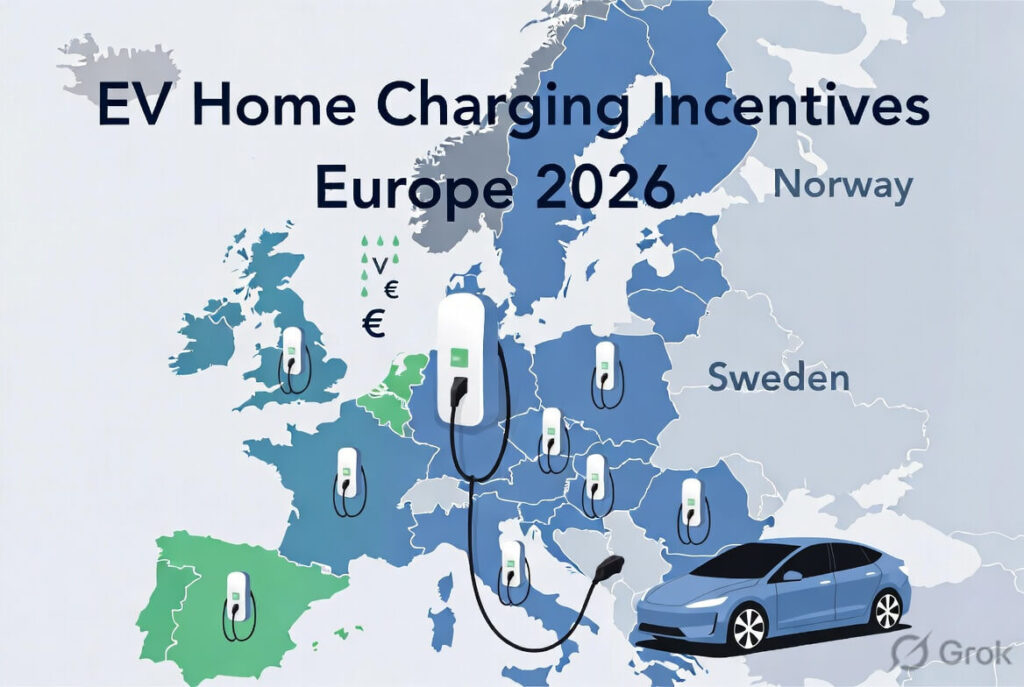
This guide on EV home charging incentives Europe 2026 puts it all in one place — every major grant, rebate, subsidy, and loan scheme available to homeowners and flat owners across the UK and European Union for home EV charger installation. Eligibility criteria. How to apply. How much you can actually claim. And the catches that most summaries leave out.
Why Incentive Information Is So Hard to Find in One Place
Before getting into the country-by-country breakdown, it’s worth understanding why EV home charging incentives Europe 2026 information is so fragmented.
First, EV charging incentives are administered at multiple levels simultaneously — EU-wide, national government, regional government, and sometimes local authority. In Germany, federal incentives interact with Länder-level schemes. In Belgium, three separate regional governments (Flemish, Walloon, Brussels) each run their own programmes. In Spain, national incentives sit alongside regional ones that vary significantly by autonomy.
Second, these schemes change frequently. Budgets run out mid-year, eligibility criteria get revised, application portals change, and schemes that existed in 2024 may have been replaced by different ones in 2026. Any guide that gives you specific figures without a publication date is unreliable — and this guide is no exception. Always verify current rates directly with the administering body before committing to a purchase.
Third, installers have a financial incentive to guide you toward schemes that work for them rather than schemes that work for you. Some grant schemes pay the installer directly and require you to use specific approved hardware from their catalogue — which may not be the best hardware for your situation. Understanding the schemes independently of your installer’s advice is the only way to make sure you’re getting genuine value.
With those caveats in place, here’s what EV home charging incentives Europe 2026 actually looks like across the major markets.
United Kingdom — OZEV Grant and Beyond
The Electric Vehicle Homecharge Scheme (EVHS) — The Core UK Grant
Amount: Up to £350 off the purchase and installation of a home EV charger Who qualifies: Flat owners (not renters, not homeowners in houses — it was restricted to flats only from April 2022), people living in rental accommodation, and those in social housing What it covers: The combined cost of the charger unit and installation by an OZEV-registered electrician How to claim: Through your OZEV-registered installer — you don’t apply directly, the installer claims on your behalf and deducts the grant from your invoice Charger requirements: Must be a smart charger on the OZEV-approved product list Important catch: Since April 2022 the EVHS no longer covers homeowners in houses with off-street parking — they were moved off this scheme. Only flat owners and renters qualify for the current EVHS.
This is the single most important thing to know about the UK OZEV grant situation in 2026: if you own a house with a driveway, you are no longer eligible for the EVHS. The scheme was specifically redesigned to focus on those for whom home charging is most difficult — flat and apartment dwellers.
The Workplace Charging Scheme (WCS)
Amount: Up to £350 per socket, maximum 40 sockets Who qualifies: UK businesses, charities, and public sector organisations What it covers: Purchase and installation of workplace EV charge points How to claim: Through the OZEV portal before installation — you must apply and receive approval before purchasing Relevance for home charging: Relevant if you work from home and can demonstrate the charger serves a business purpose, or if your building has a mixed residential/commercial designation
On-Street Residential Charging Scheme (ORCS)
Amount: Up to 75% of the cost of purchasing and installing on-street charge points Who qualifies: Local authorities in England What it covers: EV charge points on residential streets for residents without off-street parking Relevance: Not directly accessible by individuals — local councils apply for funding and then install on-street charging. Relevant if you want to advocate for charging infrastructure on your street.
Energy Efficiency Grants and EV Charging
Several UK energy efficiency grant schemes include provisions that interact with EV charging:
The Great British Insulation Scheme and ECO4 don’t directly cover EV chargers but improving your home’s energy efficiency under these schemes can reduce your electricity costs and improve the financial case for home EV charging.
Smart Export Guarantee (SEG) — not a charging grant but directly relevant for solar-owning EV drivers. UK electricity suppliers must offer a tariff for solar electricity exported to the grid. Combined with a Myenergi Zappi charger, SEG creates a financial ecosystem where solar generation reduces both your export earnings loss (by using surplus for EV charging) and your grid electricity purchases.
Scottish Government EV Charging Grants
Scotland has historically run additional EV incentive schemes on top of UK-wide programmes. The Scottish Government’s interest-free loan scheme for home EV chargers has been available in previous years — check Transport Scotland’s current offerings as these schemes are updated regularly.
Northern Ireland
Northern Ireland follows the UK EVHS scheme for eligible installations. Confirm current eligibility and approved installer lists through the OZEV portal for Northern Ireland-specific applications.
Germany — KfW and Länder Schemes
KfW Bank — Federal EV Charging Loans
Germany’s primary federal EV charging incentive comes not as a direct grant but as subsidised financing through the KfW (Kreditanstalt für Wiederaufbau) development bank.
KfW 261 — Energy-Efficient Rehabilitation: Includes EV charging infrastructure as part of broader home energy efficiency improvements. Subsidised interest rates and grant elements available for qualifying projects.
KfW 270 — Renewable Energy Home Storage: While primarily for battery storage, can interact with EV charging installations that include home energy management systems.
Important context for 2026: The German federal government’s approach to EV charging incentives has shifted from direct purchase grants (which existed under previous programmes) toward financing support and local grid integration incentives. The direct €900 purchase subsidy that existed under earlier BAFA programmes has ended. The current German federal incentive landscape is primarily financing-based rather than grant-based.
Länder (State) Schemes
Several German federal states run their own EV charging incentive programmes on top of federal offerings:
Bavaria (Bayern): The Bavarian government has run EV charging grant schemes for private homeowners. Check current availability through the Bayerisches Staatsministerium für Wirtschaft.
Baden-Württemberg: L-BANK (the state development bank) offers EV charging incentive programmes. Current terms should be verified directly.
North Rhine-Westphalia: The most populous German state has historically offered EV charging support through its Progres.NRW programme.
Hamburg, Berlin, Bremen: City-states tend to have their own urban mobility incentive programmes that include EV charging components.
How to find current German Länder incentives: The Förderberatung “Fördermittel” database (foerderdatenbank.de) is the most comprehensive source for current German federal and state funding programmes related to EV charging.
Grid Connection Costs — The German Apartment Challenge
In Germany, a significant portion of apartment EV charging costs come not from the charger hardware but from the grid connection upgrade required when multiple residents simultaneously want to charge. The local grid operator (Netzbetreiber) may require a grid connection upgrade that costs €2,000-€10,000 for an apartment building’s electrical supply.
The KfW apartment building charging programme (KfW 439, where it has been operational) addresses this specifically with subsidised financing for shared charging infrastructure in multi-unit residential buildings. Verify current programme availability directly with KfW.
France — ADVENIR and TVA Rate Reduction
ADVENIR Programme
France’s ADVENIR programme is one of the most comprehensive and well-funded EV charging incentive schemes in Europe. It’s administered by AVERE France and funded through the CEE (Certificates of Energy Savings) mechanism.
For individual homeowners (individual parking space):
- Amount: Varies by installation type but typically covers 50% of the cost of purchase and installation up to a maximum of €960 for individual installations in shared residential buildings
- Who qualifies: Residents of apartment buildings installing charging in their individual parking space
- How to claim: Through an ADVENIR-approved installer who handles the application process
For collective residential installations (shared infrastructure):
- Amount: Higher subsidy rates for installations that serve multiple residents simultaneously — up to €1,560 per charging point for collective installations in residential buildings
- Who qualifies: Building management (syndics) or groups of residents installing shared charging infrastructure
- How to claim: Through the building syndic with an ADVENIR-approved installer
For individual houses:
- Amount: Reduced subsidy rate compared to collective installations — typically €300-€500 for individual house installations
- Eligibility: Homeowners with individual parking spaces
Important 2026 update: ADVENIR programme budgets are allocated annually and can run out before year-end. Applications should be submitted as early in the year as possible. Verify current budget availability and subsidy rates at advenir-ev.fr before planning an installation.
TVA Rate Reduction
France applies a reduced TVA (VAT) rate of 5.5% rather than the standard 20% rate to the supply and installation of EV charging equipment in residential premises. This applies automatically — no application required — and represents a 14.5% saving on the total cost of purchase and installation for French residents.
For a €700 charger with €400 installation (€1,100 total), the 5.5% TVA rather than 20% TVA saves approximately €160. Combined with ADVENIR subsidies, French homeowners can reduce their EV charger installation costs significantly.
Bonus Écologique and Rétrofit
While primarily EV purchase incentives rather than charging incentives, the French bonus écologique (EV purchase bonus) and rétrofit (conversion to electric) schemes interact with charging incentives — buyers who claim the bonus écologique are also typically eligible for the full ADVENIR charging subsidy.
Netherlands — SEEH Subsidy
Subsidie Elektrische Rijden — SEEH
The Netherlands runs one of the most straightforward and well-funded home EV charging subsidy schemes in Europe.
Amount: 30% of the cost of purchasing and installing a home EV charger, up to a maximum subsidy of €1,500 per installation Who qualifies: Dutch homeowners and flat owners installing a home EV charger at their primary residence What it covers: The combined cost of the charger unit (from an approved list) and installation by a certified electrician How to apply: Through the RVO (Rijksdienst voor Ondernemend Nederland — Netherlands Enterprise Agency) portal at subsidieregeling.nl Important: The SEEH has historically operated on a first-come, first-served basis with an annual budget that can run out mid-year. Applications typically open in January and popular years see the budget exhausted by spring.
2026 status: Verify current budget availability and application periods at rvo.nl/subsidie-en-financiering. The Dutch government has been supportive of EV adoption incentives but specific programme terms change annually.
Dutch Energy Tax Reduction
Dutch electricity used for EV charging at home is not specifically taxed differently from domestic electricity — but the Netherlands has a reduced energy tax (energiebelasting) rate for the first tranche of electricity consumption that applies to EV charging costs as part of overall household consumption.
Municipal EV Charging Programmes
Several Dutch municipalities — Amsterdam, Rotterdam, Utrecht, The Hague — run their own EV charging incentive and infrastructure programmes beyond the national SEEH. These vary significantly by municipality and are worth checking with your local gemeente (municipality) directly.
Norway — Enova and Kommunal Support
Enova EV Charging Grant
Norway has the highest per-capita EV adoption rate in the world, and the Norwegian government’s incentive infrastructure reflects this — it’s arguably the most mature and well-funded in Europe.
Enova — Home Charging Grant:
- Amount: Up to NOK 3,000 (approximately £220 / €260) per charging point for individual home installations
- Who qualifies: Norwegian homeowners installing a home EV charger
- How to apply: Through the Enova portal at enova.no
Enova — Apartment Building Charging Infrastructure:
- Amount: Higher grant rates for shared charging infrastructure in apartment buildings — up to NOK 20,000 (approximately £1,500 / €1,800) per building for qualifying shared installations
- Who qualifies: Housing associations (borettslag) and co-operative housing organisations
- How to apply: Through the housing association or borettslag management
Important context: Norway’s generous EV incentive landscape means home charging is well-supported but individual grant amounts are lower than some other European countries because the baseline infrastructure (fast public charging, parking with power) is already more developed. The Enova grants are top-ups to an already well-supported system rather than the primary financial lever.
Norwegian VAT Exemption on EV Charging Equipment
Norway exempts EV charging equipment from MVA (VAT) for qualifying home installations. The Norwegian VAT rate is 25% — an exemption is financially significant. Confirm current VAT treatment with your installer as tax rules change.
Sweden — Rotavdrag and Green Technology Deduction
Rotavdrag (ROT Deduction)
Sweden’s Rotavdrag is a tax deduction for labour costs on home improvement work — including EV charger installation. The deduction is 30% of the labour cost (not materials) for qualifying home improvement work.
Amount: 30% of the labour element of EV charger installation costs, up to SEK 75,000 total annual Rot/Rut deduction Who qualifies: Swedish homeowners paying for home improvement work How to claim: The installer claims directly with Skatteverket (Swedish Tax Agency) on your behalf — you pay only 70% of the labour cost and the installer claims the remaining 30% from the government Practical value: For a typical EV charger installation with SEK 3,000-5,000 in labour costs, the Rotavdrag saves SEK 900-1,500 (approximately £65-£110 / €75-£130)
Green Technology Deduction (Grönt Teknik Avdrag)
Sweden’s green technology deduction allows a 15% tax reduction on the cost of installing solar panels, battery storage, and EV charging stations at home.
Amount: 15% of the total installation cost (hardware plus labour) for qualifying green technology Maximum: SEK 50,000 total deduction Who qualifies: Swedish homeowners installing qualifying green technology How to claim: Through your annual Swedish tax return (deklaration)
The combination of Rotavdrag on labour and the green technology deduction on total cost makes Swedish EV charger installation one of the most tax-incentivised in Europe for qualifying homeowners.
Belgium — Three Regional Schemes
Belgium’s federal structure means EV charging incentives are administered primarily at the regional level — three separate schemes for three separate regions.
Flanders (Vlaanderen) — Premie Laadpaal
Amount: Up to €300 per charging point for residential EV charger installation Who qualifies: Flemish homeowners installing a home EV charger How to apply: Through the Vlaams Energie- en Klimaatagentschap (VEKA) portal Important: The Flemish premium scheme has historically operated with an annual budget allocation. Verify current availability at veka.be
Wallonia — Prime Énergie
Wallonia’s energy premium scheme includes EV charging installation as a qualifying measure.
Amount: Varies by installation type and household income — typically €100-€500 for residential EV charger installation Who qualifies: Walloon homeowners and flat owners How to apply: Through the Walloon Energy Agency (SPW Énergie)
Brussels Capital Region — Primes Énergie
Amount: Up to €500 for home EV charger installation in qualifying Brussels properties Who qualifies: Brussels homeowners meeting energy performance criteria How to apply: Through Bruxelles Environnement (leefmilieu.brussels)
Denmark — Green Home Loan
Danish Green Home Loan (Grøn Boligaftale)
Denmark’s approach to home energy incentives — including EV charging — shifted significantly in 2023 with the Green Home Agreement.
Green Home Loan:
- Amount: Low-interest financing for qualifying home energy improvements including EV charger installation
- Interest rate: Subsidised below market rates
- Eligibility: Danish homeowners undertaking qualifying energy improvements
- Administration: Through participating Danish banks and the Danish Energy Agency (Energistyrelsen)
Denmark’s broader EV incentive context: Denmark eliminated the registration tax exemption for EVs that made them price-competitive earlier than other European markets, but has maintained infrastructure incentives. EV charging at home is supported through the Green Home Loan rather than direct grants.
Spain — MOVES III and Regional Incentives
MOVES III Programme
Spain’s MOVES III programme is the primary national EV incentive scheme and includes home charging installation:
Amount: Up to €500 for individuals and €1,000 for businesses for EV charge point installation Who qualifies: Spanish residents purchasing and installing qualifying EV charge points How to apply: Through regional energy agencies — MOVES III is co-funded and co-administered at the autonomous community level Important: MOVES III budgets are allocated to autonomous communities and application procedures vary by region. Some communities have exhausted their MOVES III budgets in previous years. Verify current availability in your autonomous community.
Regional Spanish Incentives
Beyond MOVES III, Spanish autonomous communities run their own EV charging incentive schemes:
Catalonia (Cataluña): The Institut Català d’Energia (ICAEN) administers EV charging grants that have historically been among the most generous in Spain.
Madrid: The Community of Madrid has run its own EV incentive programme alongside MOVES III.
Basque Country (País Vasco): The EVE (Ente Vasco de la Energía) administers EV incentive programmes with a strong track record of implementation.
Italy — Bonus Colonnine and Superbonus Interaction
Bonus Colonnine Domestiche (Home Charging Column Bonus)
Italy’s dedicated home EV charger incentive scheme:
Amount: 80% of the purchase and installation cost of a home EV charger, up to a maximum of €1,500 per installation Who qualifies: Italian private individuals purchasing and installing a home EV charger How to apply: Through the official portal when the application window is open — Italy’s bonus schemes operate in application windows that open and close based on budget availability Important 2026 note: The Bonus Colonnine has been one of the most generous home EV charger subsidies in Europe but has historically been overwhelmed with applications within hours of the application window opening. Preparation before the window opens is essential — have your installer, hardware choice, and documentation ready before applying.
Superbonus Interaction
Italy’s Superbonus 110% energy efficiency scheme — which allowed tax deductions of 110% of renovation costs — was significantly scaled back after 2023. Current Superbonus rates and EV charging eligibility should be verified with a qualified Italian tax advisor (commercialista) as the rules change frequently.
Portugal — EV Charging Incentives
IFRRU 2020 and Housing Renovation Support
Portugal’s housing renovation support schemes have included EV charging provisions:
Amount: Varies — typically subsidised financing rather than direct grants for residential EV charging Administration: Instituto da Habitação e da Reabilitação Urbana (IHRU)
Portuguese VAT Reduction
Portugal applies a reduced IVA (VAT) rate of 6% rather than the standard 23% to the installation of qualifying energy equipment including EV chargers. The effective 17% VAT saving is automatically applied — no application required.
How to Maximise Your EV Home Charging Incentives in 2026 — A Practical Framework
Step 1: Identify Every Scheme You’re Eligible For
Most European homeowners are eligible for incentives at multiple levels simultaneously — national grant, regional subsidy, VAT reduction, and potentially a utility rebate. Map every scheme available in your country and region before committing to a purchase.
Step 2: Check Current Budget Availability
Several schemes — SEEH in the Netherlands, ADVENIR in France, Bonus Colonnine in Italy — operate on a first-come, first-served basis with annual budgets that run out. Check application status before planning your installation timeline.
Step 3: Choose an Installer Who Knows the Schemes
Not all electricians are familiar with grant application processes. An OZEV-registered UK installer, an ADVENIR-approved French installer, or a SEEH-certified Dutch installer handles the application on your behalf and reduces your administrative burden significantly. Ask specifically about grant experience when getting quotes.
Step 4: Choose Hardware That Qualifies
Grant schemes typically require hardware from an approved list. Don’t buy a charger and then apply for the grant — check the approved hardware list first and choose from it. The best charger that qualifies for your grant may differ from the best charger available overall.
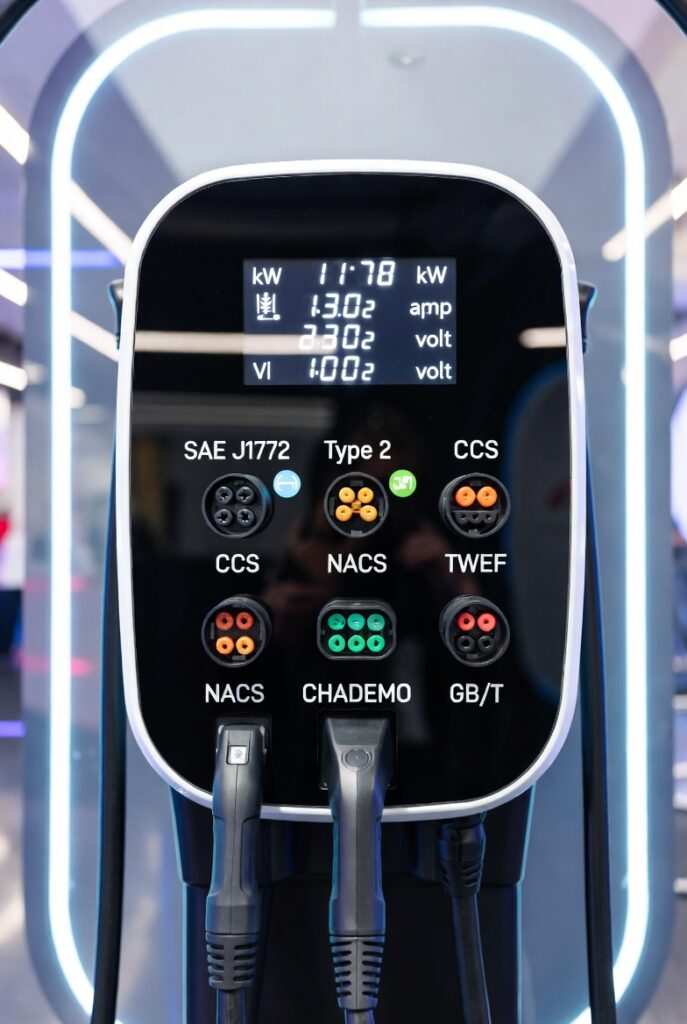
If you want to understand every spec on an approved charger listing in plain language before choosing, our guide to understanding EV charger specs 2026 translates kW, amps, OCPP and IP ratings into terms that actually make sense.
Step 5: Apply Before Installation Where Required
Several schemes — including the UK’s Workplace Charging Scheme and some EU national programmes — require you to apply and receive approval before installation begins. Installing first and applying after is not accepted and disqualifies you from the grant.
Step 6: Keep Your Documentation
Grant claims require purchase receipts, installation invoices, and sometimes photos of the completed installation. Keep originals of everything. Grant audits do happen and missing documentation can result in clawback of granted amounts.
The Honest Summary — How Much Can You Actually Save?
Here’s the realistic all-in incentive picture for a typical home EV charger installation (€700-€900 unit, €300-€500 installation, total €1,000-€1,400) across major European markets:
| Country | Primary Incentive | Approximate Saving | Net Cost Range |
|---|---|---|---|
| UK (flat owner) | OZEV £350 grant | £350 | £300-£750 |
| UK (homeowner) | No EVHS eligibility | £0 | £650-£1,100 |
| France | ADVENIR + 5.5% TVA | €460-€1,120 | €0-€940 |
| Netherlands | SEEH 30% up to €1,500 | €300-€450 | €550-€950 |
| Norway | Enova NOK 3,000 | €260 | €740-€1,140 |
| Sweden | Rotavdrag + Green Tech | 15-30% of cost | €700-€1,190 |
| Belgium (Flanders) | Premie Laadpaal €300 | €300 | €700-£1,100 |
| Germany | KfW financing | Variable | €800-€1,400 |
| Italy | Bonus Colonnine 80% | €800-€1,120 | €0-€600 |
| Spain | MOVES III up to €500 | €500 | €500-€900 |
| Denmark | Green Home Loan | Financing only | €1,000-€1,400 |
| Portugal | 6% IVA rate | €170 | €830-€1,230 |
France and Italy offer the most generous incentive coverage — in the best cases essentially free hardware and installation for eligible buyers. The UK’s OZEV grant is meaningful for flat owners but leaves house-owning homeowners without direct support. Germany’s shift to financing rather than grants makes direct cost comparison less straightforward.
Internal Links — Further Reading on Clean Energy Bazaar
EV home charging incentives Europe 2026 tells you what you can claim. These guides tell you what to buy with the money you save.
For the full UK and European home charger comparison covering Wallbox, Easee, Hypervolt, Myenergi Zappi and more, our best Level 2 EV chargers UK Europe 2026 guide covers every major option honestly. If you’re in an apartment and need to navigate building permissions before you can claim any of these incentives, our apartment EV charging solutions 2026 US Europe guide covers UK flat permissions, EU right to charge laws, and the practical solutions that work. For smart charger options that qualify for most European grant schemes, our Wallbox vs Myenergi Zappi vs Andersen smart charger Europe 2026 comparison covers the three most talked-about premium options. Before finalising any purchase, our EV charger warranty comparison tells you what the warranty actually covers. And if you want to understand every spec on an approved charger listing in plain language, our guide to understanding EV charger specs 2026 is the right starting point.
Final Thoughts
EV home charging incentives Europe 2026 is a landscape where the gap between what’s available and what people actually claim is wider than it should be. Thousands of European EV owners install home chargers every month without claiming the grants and subsidies they’re entitled to — simply because the information is scattered, updated frequently, and presented in a way that assumes you already know where to look.
The practical summary is straightforward: check every scheme available at national and regional level before committing to a purchase, choose an approved installer who handles applications, choose hardware from the approved list, and apply before installation where required.
France’s ADVENIR and Italy’s Bonus Colonnine are the most generous for homeowners who qualify and can access open application windows. The UK’s OZEV grant provides meaningful support for flat owners. Germany, Netherlands, Sweden, and Norway all have well-funded programmes that significantly reduce net installation costs.
The money is there. Knowing it exists and knowing how to claim it are the two things standing between most European EV owners and a significantly cheaper home charging installation.