Here’s the conversation happening in EV owner groups right now: “I just bought a new EV. How much can I actually get back on a home charger in 2026?”
The answers are all over the place — some say “$1,000 federal credit,” others say “it’s expired,” and a few mention random state rebates. Most people are left confused.
This guide fixes that.
EV charger tax credits & rebates 2026 are more fragmented than ever. The federal program is ending soon, but strong state and utility incentives still exist in many places. This is the no-BS breakdown of exactly what you can claim before the deadlines hit.
The Federal 30C EV Charger Tax Credit in 2026 — What’s Still Alive
The Alternative Fuel Vehicle Refueling Property Credit (Section 30C) still exists in 2026, but it’s on life support.
Key facts as of April 2026:
- You can claim 30% of the cost of the charger + installation, up to a maximum of $1,000 per charging port.
- The credit applies to your primary residence only.
- Deadline: The charger must be fully installed and “placed in service” by June 30, 2026. After that, the residential credit disappears.
- Big restriction: Your home must be in a qualifying low-income or non-urban census tract. Roughly 60-65% of Americans live in an eligible area.
Important: This is a non-refundable tax credit — it reduces the taxes you owe. If your tax liability is low, you may not use the full amount.
How to check if you qualify:
- Go to the Argonne National Lab 30C Eligibility Map.
- Enter your address.
- If your census tract is highlighted, you’re eligible.
What costs qualify?
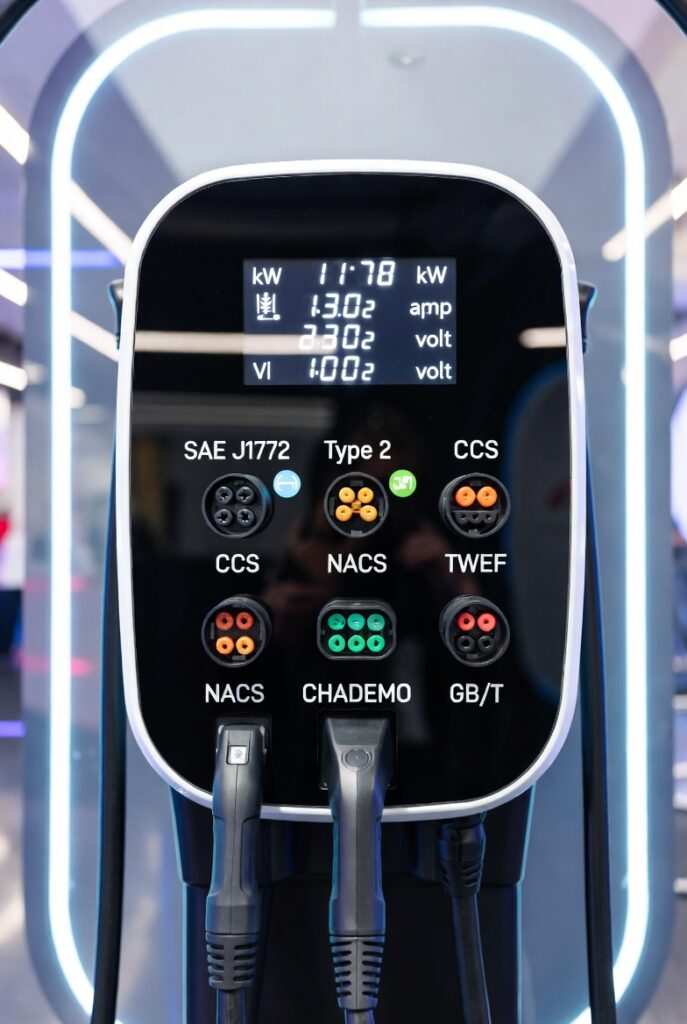
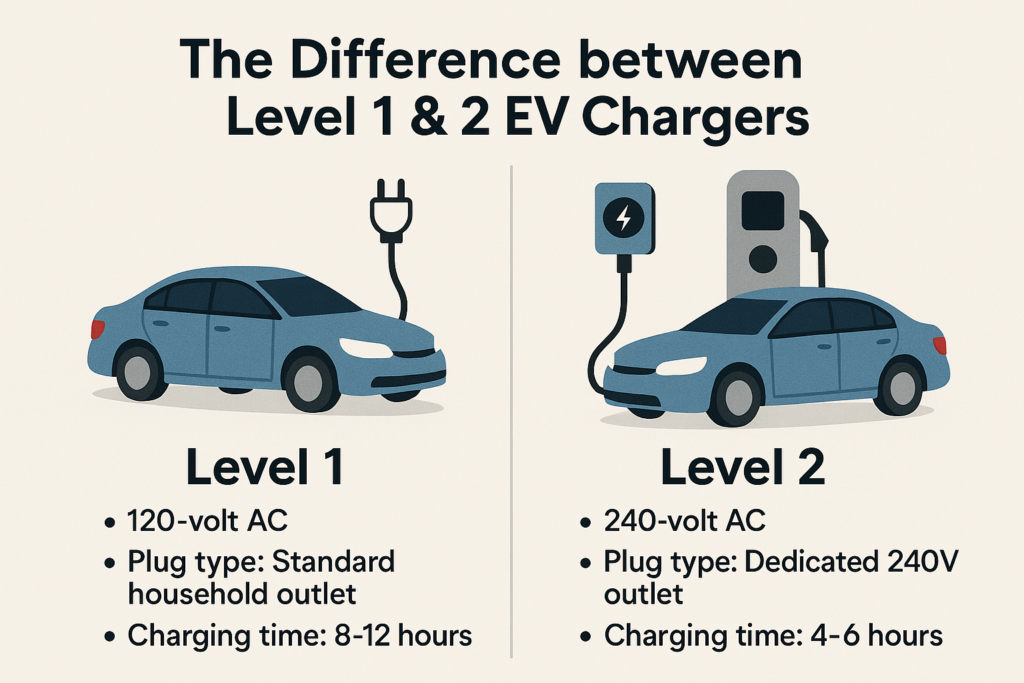
- The EV charger itself (Level 1 or Level 2)
- Essential parts (wiring, breakers, pedestals)
- Professional installation labor
- Permitting fees
Pro tip: Get a detailed invoice from your electrician that clearly separates qualifying costs.
How to Claim the Federal 30C Credit
- File IRS Form 8911 with your 2026 tax return.
- Keep all receipts and the electrician’s documentation.
- Many people hire a tax professional for this — especially if combining it with other energy credits.
State-by-State EV Charger Tax Credits & Rebates in 2026
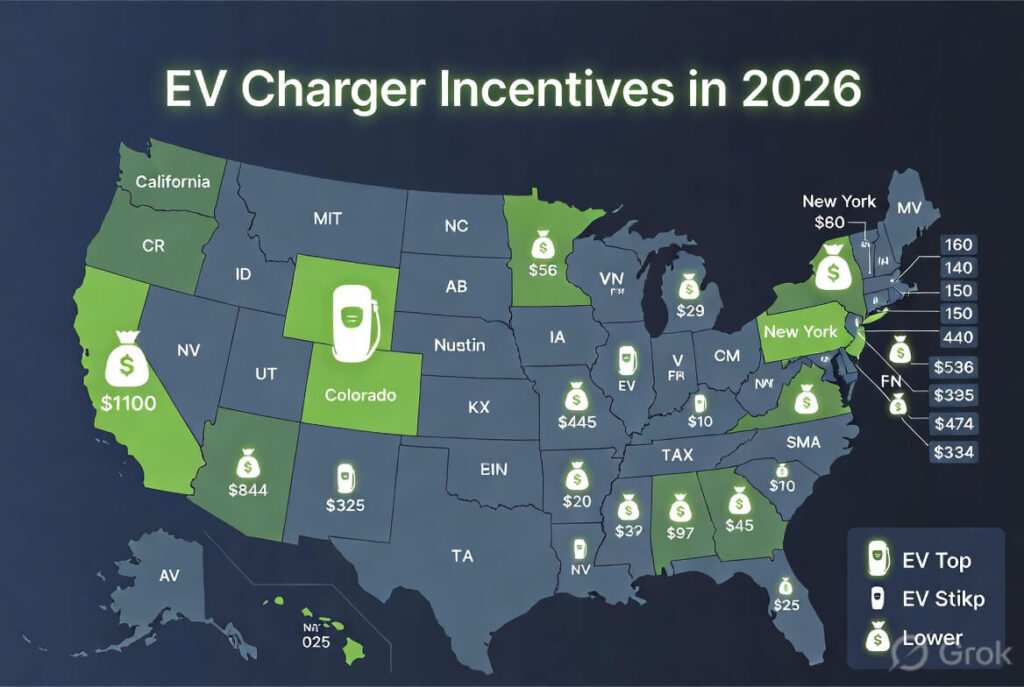
Here’s where the real money is in 2026. Federal help is shrinking, but many states and utilities are still pushing hard.
California One of the strongest programs.
- CALeVIP and utility rebates often give $500–$2,000+ for Level 2 chargers.
- Income-qualified residents can stack grants up to $2,000 for charging equipment.
- Many utilities (PG&E, SCE, SDG&E) offer additional rebates + panel upgrade support.
New York
- NYSERDA and utility programs offer up to $1,000–$5,000 for residential and multi-unit chargers.
- State tax credit available for alternative fueling infrastructure (up to 50% in some cases).
Texas
- More limited statewide, but several utilities (Oncor, CenterPoint, Austin Energy) offer $200–$750 rebates for residential Level 2 chargers.
Florida
- Utility-specific rebates common ($100–$500).
- Orlando Utilities Commission and others still paying out for home chargers.
Other strong states (2026):
- Colorado: Charge Ahead Colorado + utility rebates
- Washington & Oregon: Strong incentives for both residential and shared charging
- New Jersey, Maryland, Massachusetts: Solid residential and multi-family programs
- Hawaii: Up to $4,500+ for Level 2 in some programs
Many states have no statewide charger rebate but offer excellent utility programs. Always check your local electric provider first.
Brutally Honest Cost Breakdown After Incentives (2026)
Typical home Level 2 installation costs: $800 – $2,500
Best-case scenario (eligible for everything):
- Charger + install: $1,800
- Federal 30C: –$540 (capped at $1,000 max)
- State/utility rebate: –$500 to $1,500
- Net cost: $0 – $760
Worst-case scenario (no federal eligibility):
- Rely only on state/utility rebates (many still get you under $1,000 net)
Smart Strategies to Maximize Your Savings in 2026
- Act fast — June 30, 2026 is a hard deadline for the federal credit.
- Stack incentives — Federal + state + utility is allowed in most places.
- Consider panel upgrades — Many utilities offer extra money for 200A+ service upgrades needed for EV charging.
- Shared/multi-unit buildings — Different (often better) commercial 30C rules and state programs apply.
- Buy smart hardware — Choose UL-listed, Energy Star, or utility-approved chargers to qualify for every possible rebate.
Final Thoughts
EV charger tax credits & rebates 2026 are still worth chasing — but the window is closing fast on the federal side. If you’ve been waiting to install a Level 2 charger, now is one of the cheapest times you’ll see for the next several years.
Don’t rely on generic advice. Check your census tract for the 30C credit, contact your utility, and run the numbers for your specific situation. The savings can be massive if you do it right.
The EV transition is happening whether incentives exist or not — but smart owners are grabbing every dollar available before it disappears.
Looking for more practical EV charging advice? Check out our comprehensive guide to Apartment EV Charging Solutions 2026 US Europe: The Brutally Honest Guide to US Condo Rules vs European Flat Permissions — perfect if you live in a condo or flat and need help getting charging approved.
For deeper dives, explore our guides on the best home EV chargers in 2026, portable vs hardwired EV chargers, and how to understand EV charger specifications before you buy.
Stay informed and maximize your savings as the EV landscape evolves in 2026.