Here is the problem with most home EV charger comparison guides written for the Chinese market.
They either list every brand alphabetically without meaningful differentiation — leaving you no clearer about which one to buy than before you started — or they recommend whichever brand paid for the placement without disclosing it. The result is that Chinese EV owners, who are buying home chargers at a faster rate than any other national market in the world, are making purchasing decisions based on worse information than buyers in the UK or Europe who have access to genuinely independent comparison content.
This guide on the best home EV chargers 2026 top 7 comparison for Chinese homeowners Star Charge Autel and more takes the same approach as every other guide on cleanenergybazaar.com — honest comparison with no paid placements, specific verdicts, and clear explanations of why each charger earns its position.
The seven chargers covered are the most relevant for Chinese homeowners in 2026 — chosen based on market availability, GB/T certification, user community reviews from Chinese EV owner platforms (懂车帝, 汽车之家, 蔚来App communities), and technical specifications relevant to the Chinese residential electrical environment.
This is not an exhaustive list of every GB/T home charger available — there are dozens. It is the seven that most Chinese homeowners will genuinely benefit from knowing about before making a purchase decision.
The Comparison Criteria — What We Measure and Why
Every charger in this comparison is evaluated on the same seven criteria:
1. Price (unit cost, before installation): The charger unit purchase price in RMB. Installation costs vary too widely by location and installation complexity to include in the hardware comparison — see our find the right EV charger for your home China edition guide for installation cost guidance.
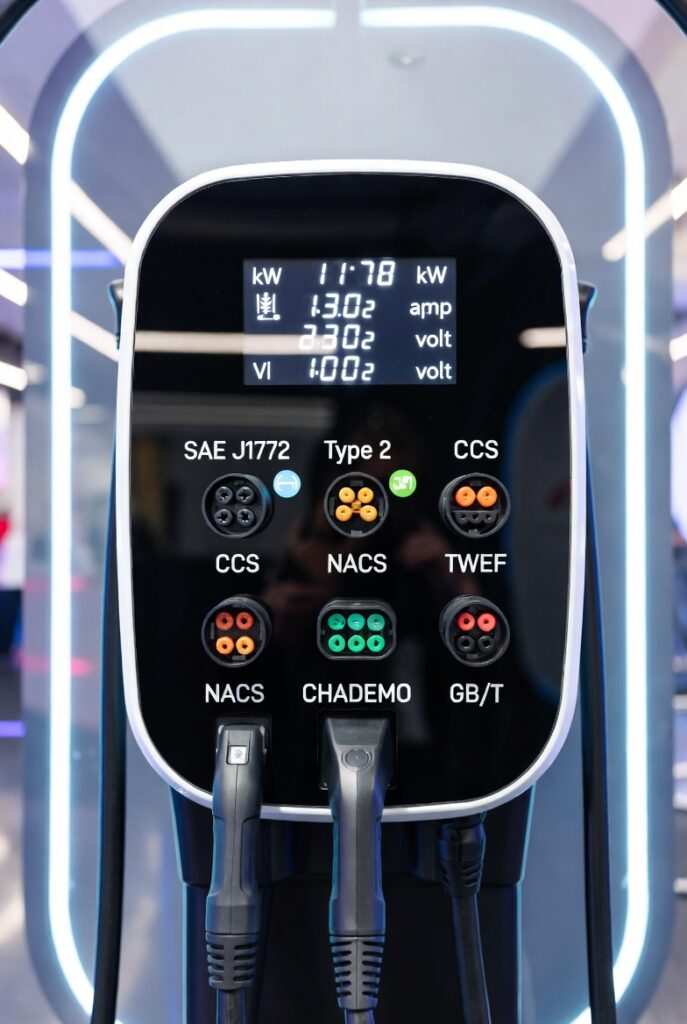
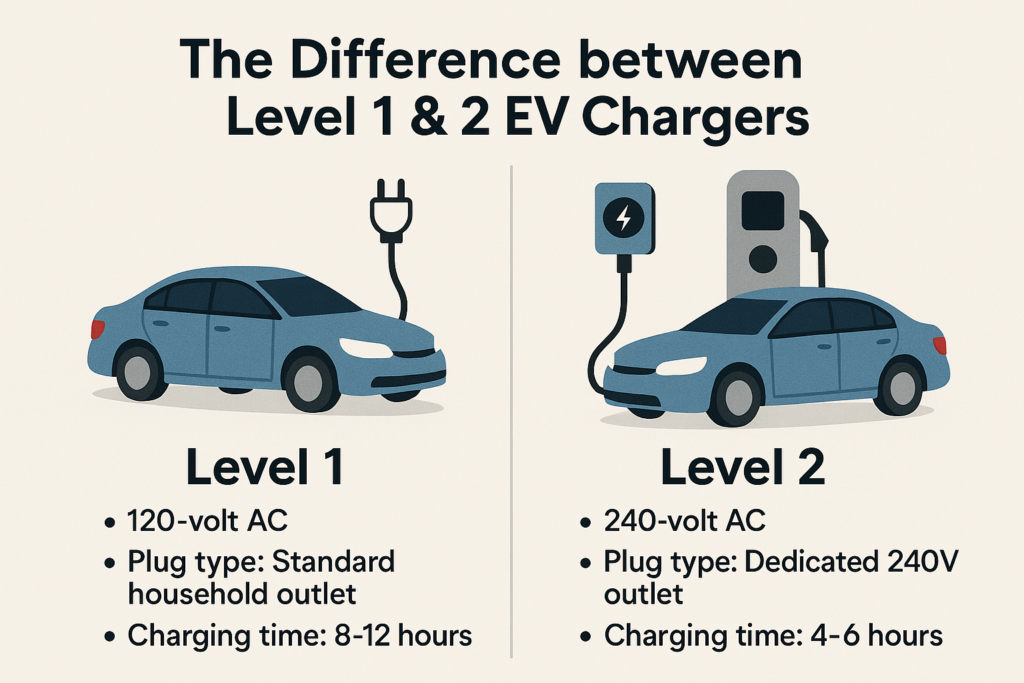
2. Maximum power and connector: The charger’s rated power output and GB/T connector standard. For Chinese residential use, 7 kW single-phase is the relevant specification for most apartment owners.
3. Smart features: TOU scheduling capability, app quality, energy monitoring, solar integration, voice assistant integration, and GB/T 34657 smart charging compliance.
4. Build quality and IP rating: Enclosure material, IP weather protection rating, operating temperature range, and build quality based on owner community reviews.
5. Brand reliability and after-sales: Manufacturer track record, warranty terms, service network, and user-reported warranty claim experience from Chinese EV owner communities.
6. Ecosystem integration: Integration with specific Chinese EV brand apps (BYD DiLink, NIO app, Xpeng app, Tesla China app) and with broader Chinese smart home platforms (Huawei HarmonyOS, Xiaomi Home, Alibaba Tmall Genie).
7. Value for money: The overall financial return relative to purchase price — particularly the TOU scheduling value and long-term reliability value relative to cost.
Understanding the Chinese Market Context Before the Comparison
Three market-specific factors shape this comparison in ways that make it different from a European or US equivalent:
Factor 1: GB/T Certification Is Non-Negotiable
Every charger in this comparison is GB/T 20234.2-2015 certified for AC charging. This is the minimum legal requirement for home EV charging equipment in China — not a differentiating feature. Any product that lacks this certification should not be considered regardless of price or features.
Factor 2: TOU Scheduling Is the Primary Financial Differentiator
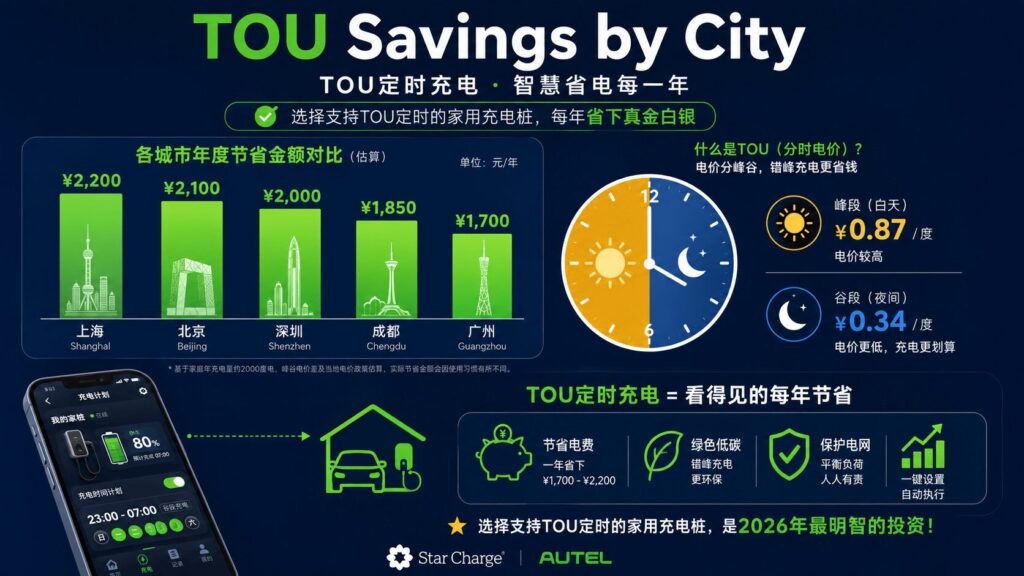
Chinese cities with residential time-differentiated electricity pricing (居民分时电价) — including Shanghai, Beijing, Shenzhen, Guangzhou, Chengdu, and most other major cities — create significant TOU scheduling value. The difference between peak rates (¥0.75-1.00/kWh in many cities) and valley rates (¥0.28-0.45/kWh) generates annual savings of ¥1,000-¥2,500 for typical Chinese EV owners who charge overnight at valley rates.
A charger with reliable TOU scheduling that costs ¥500 more than a basic unit pays back its premium in under 3 months through electricity savings. This financial dynamic shapes the recommendation weightings throughout this guide.
Factor 3: Manufacturer Home Charging Programmes Change the Calculation for Some Buyers
NIO, BYD, Xpeng, Tesla China, and Li Auto all offer manufacturer home charging programmes — subsidised or free charger units with brand-managed installation for new vehicle buyers. For owners of these vehicles, the manufacturer programme should be evaluated alongside independent third-party options.
Charger 1: StarCharge Smart Home Charger S Series (星星充电 S系列)
The market leader — most widely installed residential charger in China
Specifications
| Specification | Detail |
|---|---|
| Price | ¥899-¥1,499 (depending on variant) |
| Max Power | 7 kW (single-phase) / 11 kW (three-phase) |
| Connector | GB/T 20234.2-2015 |
| Installation | Hardwired |
| Cable Length | 5m (tethered) |
| IP Rating | IP54 |
| Operating Temp | -20°C to +55°C |
| Smart Features | TOU scheduling, energy monitoring, remote start/stop, GB/T 34657 |
| Connectivity | WiFi (2.4 GHz), Bluetooth setup |
| App | 星星充电 app (iOS/Android) |
| Warranty | 3 years |
| GB/T Certification | GB/T 20234.2-2015 ✅ |
| GB/T 34657 | ✅ Smart charging compliant |
Smart Features Breakdown
| Feature | Available |
|---|---|
| TOU Scheduling (谷电计划) | ✅ Yes |
| Solar Integration | ❌ No |
| Energy Monitoring | ✅ Yes |
| Remote Start/Stop | ✅ Yes |
| Scheduled Charging | ✅ Yes |
| Overcurrent Protection | ✅ Yes |
| Xiaomi Home Integration | ✅ Yes |
| Voice Control (Tmall Genie) | ✅ Yes |
| OTA Updates | ✅ Yes |
What This Charger Does Best
StarCharge’s S Series is the most widely deployed residential home charger in China — a position earned through consistent build quality at competitive pricing, a service network that covers tier-1 through tier-3 cities, and reliable smart charging features that deliver the TOU savings most Chinese urban EV owners need.
The TOU scheduling (谷电计划) feature is well-implemented — configuring the valley rate charging window takes under 2 minutes in the app, and the scheduling reliability in owner reviews is consistently positive. For the core financial value proposition of Chinese smart home EV charging, the StarCharge S Series delivers.
The Xiaomi Home and Tmall Genie integration is a genuine differentiator over less ecosystem-connected competitors — relevant for the significant portion of Chinese EV owners who use Xiaomi smart home devices or Alibaba’s smart home ecosystem.
The Honest Limitations
IP54 is the most significant specification limitation — lower than ideal for fully exposed outdoor installations in Chinese cities with heavy rainfall (Guangzhou, Chengdu, Wuhan). For covered parking in underground car parks — the most common Chinese residential installation — IP54 is adequate. For exposed outdoor parking spaces, IP65 is preferable.
The app design receives mixed reviews — functional and reliable but not intuitive for first-time users. Initial setup sometimes requires multiple attempts to establish WiFi connectivity.
Who Should Buy This
Chinese EV owners who want the most widely supported residential charger in China with reliable TOU scheduling, a broad national service network, and smart home ecosystem integration. The default recommendation for most Chinese apartment owners without specific brand ecosystem requirements.
Value for money: Excellent Reliability: Very Good Smart features: Good
Overall verdict: The benchmark Chinese home EV charger — the right choice for most buyers without a specific reason to choose otherwise.
Charger 2: Autel MaxiCharger AC Wallbox (Autel 奥创充电桩)
The international-quality option with Chinese market adaptation
Specifications
| Specification | Detail |
|---|---|
| Price | ¥1,299-¥2,499 (depending on variant) |
| Max Power | 7 kW (single-phase) / 11 kW (three-phase) |
| Connector | GB/T 20234.2-2015 |
| Installation | Hardwired or NEMA 14-50 equivalent (GB/T socket) |
| Cable Length | 5m tethered or untethered socket version |
| IP Rating | IP65 |
| Operating Temp | -30°C to +55°C |
| Smart Features | TOU scheduling, energy monitoring, OCPP 1.6, load management, solar integration |
| Connectivity | WiFi (2.4 GHz + 5 GHz), Bluetooth, Ethernet (premium variant) |
| App | Autel Charge app (iOS/Android) |
| Warranty | 3 years |
| GB/T Certification | GB/T 20234.2-2015 ✅ |
| GB/T 34657 | ✅ Smart charging compliant |
| OCPP | 1.6 ✅ |
Smart Features Breakdown
| Feature | Available |
|---|---|
| TOU Scheduling | ✅ Yes |
| Solar Integration | ✅ Yes (with compatible inverter) |
| Energy Monitoring | ✅ Excellent |
| Remote Start/Stop | ✅ Yes |
| Load Management | ✅ Dynamic |
| OCPP 1.6 | ✅ Yes |
| OTA Updates | ✅ Excellent |
| Voice Control | ✅ Limited |
| Multi-unit Coordination | ✅ Yes |
What This Charger Does Best
Autel is a Chinese company (headquartered in Shenzhen) that has positioned itself as an international-quality EV charging brand — selling globally including in the US and European markets — and has brought this quality standard to their Chinese domestic products.
The IP65 rating is the most immediately differentiating specification versus the majority of Chinese competitors at IP54. For Chinese EV owners with outdoor parking exposure — a common scenario in villa compounds, open-air parking areas, and lower-level outdoor parking in tier-2 and tier-3 cities — IP65 provides substantially better protection against moisture ingress during heavy rainfall events.
The -30°C operating temperature range is the widest in this comparison, making the Autel the correct choice for EV owners in northern Chinese cities — Harbin, Changchun, Shenyang, and Inner Mongolia — where sustained -20°C to -30°C winter temperatures are normal.
The OCPP 1.6 compliance is significant for EV owners interested in future demand response participation and smart grid programme integration — as Chinese utility companies develop more sophisticated residential demand management programmes, OCPP-compliant chargers are better positioned to participate.
The solar integration capability — compatible with multiple Chinese solar inverter brands including Sungrow (阳光电源) and Growatt (古瑞瓦特) — is a genuine differentiator among Chinese home charger brands. For Chinese EV owners with rooftop solar (increasingly common in villa and low-rise housing in Chinese tier-2 and tier-3 cities), the Autel delivers solar divert capability comparable to the European Myenergi Zappi.
The Honest Limitations
Price is the primary barrier — the Autel MaxiCharger costs ¥400-¥1,000 more than the StarCharge S Series for broadly similar core charging function. The premium is justified by IP65, OCPP compliance, and solar integration — but only for buyers who specifically need these features. For apartment owners with covered parking and no solar, the StarCharge delivers equivalent daily charging value at lower cost.
Ecosystem integration with Chinese EV brand apps is less developed than manufacturer-supplied chargers — Autel’s app is good but not integrated with BYD DiLink, NIO, or Xpeng vehicle apps in the seamless way that manufacturer chargers are.
Who Should Buy This
Chinese EV owners with outdoor parking exposure who need IP65 protection. Northern Chinese residents (Harbin, Changchun, Shenyang) who need -30°C capability. Villa and low-rise housing owners with solar panels wanting solar integration. EV fleet managers who need OCPP compliance for management system integration.
Value for money: Good (excellent if IP65 or solar integration is needed) Reliability: Excellent Smart features: Excellent
Overall verdict: The best Chinese home EV charger for outdoor installations and northern cold climates. Justified premium over StarCharge for buyers who specifically need IP65, -30°C capability, or solar integration.
Charger 3: TELD Smart Home Charger (特来电家充桩)
The network operator’s home charging advantage
Specifications
| Specification | Detail |
|---|---|
| Price | ¥799-¥1,299 |
| Max Power | 7 kW (single-phase) |
| Connector | GB/T 20234.2-2015 |
| Installation | Hardwired |
| Cable Length | 5m tethered |
| IP Rating | IP54 |
| Operating Temp | -20°C to +50°C |
| Smart Features | TOU scheduling, energy monitoring, TELD network integration |
| Connectivity | WiFi (2.4 GHz) |
| App | 特来电 app |
| Warranty | 3 years |
| GB/T Certification | GB/T 20234.2-2015 ✅ |
Smart Features Breakdown
| Feature | Available |
|---|---|
| TOU Scheduling | ✅ Yes |
| Solar Integration | ❌ No |
| Energy Monitoring | ✅ Yes |
| Remote Start/Stop | ✅ Yes |
| TELD Network Integration | ✅ Unique feature |
| OTA Updates | ✅ Yes |
| Unified Home + Public Dashboard | ✅ Yes |
What This Charger Does Best
TELD’s primary competitive advantage is the integration between their home charger and their public charging network app. For Chinese EV owners who regularly use TELD’s extensive public charging network — over 400,000 points nationally — the unified app experience is genuinely valuable.
From a single app, TELD home charger users can:
- Monitor home charging sessions and costs
- Locate and navigate to TELD public charging stations
- View combined home and public charging history and costs
- Manage TELD account balance for public charging
This end-to-end visibility of EV charging costs — home and public combined — is more useful than most users anticipate before experiencing it. Understanding your true total EV charging cost (not just home electricity but all charging) is financially valuable for optimising the balance between home and public charging.
The TOU scheduling is reliable and the pricing is competitive — TELD’s home charger is a strong value proposition at ¥799-¥1,299.
The Honest Limitations
The hardware specification is similar to StarCharge’s S Series — IP54, single-phase only in most configurations, no solar integration. The primary differentiation is the TELD network integration rather than hardware superiority.
For EV owners who don’t regularly use TELD public charging, the network integration advantage disappears — and the StarCharge S Series at comparable pricing becomes the more rational choice.
Who Should Buy This
Chinese EV owners who regularly use TELD public charging infrastructure and want a unified home + public charging management experience. Particularly relevant for frequent travellers who use TELD stations on motorways and in commercial parking areas.
Value for money: Good (excellent for frequent TELD public charging users) Reliability: Good Smart features: Good
Overall verdict: The right choice specifically for frequent TELD public charging users who want unified app management. Not the top choice for drivers who primarily home charge and use public charging only occasionally.
Charger 4: NIO Home Charger (蔚来家充桩)
The NIO ecosystem’s home charging anchor
Specifications
| Specification | Detail |
|---|---|
| Price | ¥0-¥1,500 (subsidised through NIO programme) |
| Max Power | 7 kW (single-phase) or 11 kW (three-phase) |
| Connector | GB/T 20234.2-2015 |
| Installation | Hardwired — NIO-managed installation |
| Cable Length | 5m tethered |
| IP Rating | IP55 |
| Operating Temp | -20°C to +50°C |
| Smart Features | NIO app integration, TOU scheduling, energy monitoring, NIO ecosystem |
| Connectivity | WiFi |
| App | NIO app (蔚来App) |
| Warranty | 3 years |
| GB/T Certification | GB/T 20234.2-2015 ✅ |
Smart Features Breakdown
| Feature | Available |
|---|---|
| TOU Scheduling | ✅ Yes |
| NIO App Integration | ✅ Deep integration |
| Charging Session History | ✅ Yes |
| Remote Start/Stop | ✅ Yes |
| NIO Power Ecosystem | ✅ Full access |
| Battery Health Monitoring | ✅ Yes (via NIO app) |
| OTA Updates | ✅ Yes |
| Battery Swap Coordination | ✅ Yes (unique to NIO) |
What This Charger Does Best
The NIO Home Charger’s primary advantage is not the hardware — it is the integration within NIO’s comprehensive energy ecosystem and the managed installation programme.
The NIO home charging programme: NIO provides home charger installation as a managed service for new vehicle buyers. The process includes:
- NIO service engineer site assessment
- 物业 coordination support (NIO representatives have experience navigating residential compound approvals)
- Installation by certified NIO-approved electricians
- Post-installation support through NIO service channels
For NIO owners who find the 物业 approval process daunting, NIO’s managed service significantly reduces the friction. NIO’s service representatives have navigated hundreds of residential installation approvals in major Chinese cities and understand the specific requirements of different compound types.
The NIO app integration: The depth of integration between the NIO Home Charger and the NIO app is the most comprehensive of any manufacturer-supplied charger in this comparison. From the NIO app, owners can see:
- Real-time charging status and power delivery
- Session history with energy and cost data
- Battery state of charge and health metrics
- Charging schedule management
- Coordination between home charging and NIO Power swap stations
This unified view of NIO Power — home charging, public charging, and battery swap — in a single app is the best energy management experience available for any single Chinese EV brand.
The subsidised pricing: NIO’s home charging programme often provides the charger at zero or heavily subsidised cost for new owners — making the NIO Home Charger potentially the lowest net cost option in this comparison despite its standard retail price.
The Honest Limitations
The NIO Home Charger is only meaningfully valuable for NIO vehicle owners. A non-NIO vehicle can technically use the GB/T connector — but loses all ecosystem integration benefits that justify the product.
The hardware itself is not exceptional by independent metrics — IP55 is adequate but not best-in-class, and the 7 kW rating matches the market standard without exceeding it.
If you leave the NIO ecosystem (sell your NIO and buy a different brand), the charger becomes a standard 7 kW home charger without ecosystem value.
Who Should Buy This
NIO vehicle owners who want the deepest ecosystem integration and the most supported installation experience available for their brand. The subsidised pricing through NIO’s programme makes this the rational default for NIO owners before even evaluating alternatives.
Value for money: Excellent (for NIO owners via NIO programme) Reliability: Good Smart features: Excellent (within NIO ecosystem) Ecosystem integration: Best in class (NIO vehicles only)
Overall verdict: The definitive choice for NIO owners via NIO’s home charging programme. Irrelevant for non-NIO vehicle owners.
Charger 5: BYD Smart Charger (比亚迪家用充电桩)
The BYD ecosystem integration for China’s best-selling EV brand
Specifications
| Specification | Detail |
|---|---|
| Price | ¥800-¥1,600 (at BYD dealership) |
| Max Power | 7 kW (single-phase) or 11 kW (three-phase variant) |
| Connector | GB/T 20234.2-2015 |
| Installation | Hardwired — BYD dealer-managed installation available |
| Cable Length | 5m tethered |
| IP Rating | IP55 |
| Operating Temp | -20°C to +50°C |
| Smart Features | BYD DiLink integration, TOU scheduling, energy monitoring |
| Connectivity | WiFi |
| App | 比亚迪 app / DiLink |
| Warranty | 3 years |
| GB/T Certification | GB/T 20234.2-2015 ✅ |
Smart Features Breakdown
| Feature | Available |
|---|---|
| TOU Scheduling | ✅ Yes |
| BYD DiLink Integration | ✅ Deep |
| Energy Monitoring | ✅ Yes |
| Remote Start/Stop | ✅ Yes |
| Blade Battery Health Monitor | ✅ Via DiLink |
| OTA Updates | ✅ Yes |
| BYD Dealer Service | ✅ National network |
What This Charger Does Best
BYD is China’s best-selling EV brand — and the BYD Smart Charger delivers the ecosystem integration that BYD owners expect from their car manufacturer.
DiLink integration: BYD’s DiLink connected car platform integrates with the BYD app to provide:
- Real-time charging status visible from the car’s infotainment system
- Blade Battery health monitoring — BYD’s specific battery architecture has specific optimal charging parameters that the DiLink-integrated charger manages
- Charging cost tracking and session history
- Smart scheduling aligned with BYD’s vehicle-specific charging recommendations
The Blade Battery specific advantage: BYD’s proprietary Blade Battery architecture has specific optimal charging recommendations for longevity — particular temperature ranges, specific charge rates for long-term battery health. The BYD Smart Charger is programmed with these parameters and can communicate with the Blade Battery management system in ways that third-party chargers cannot.
For BYD Seal and BYD Han EV owners specifically, the BYD Smart Charger’s Blade Battery optimisation is a genuine technical advantage over third-party alternatives.
BYD dealer installation network: BYD has the most extensive dealer network in China — with over 3,000 dealership locations nationally. This network provides installation services and after-sales support in tier-1 through tier-4 cities, covering geographic areas where StarCharge or Autel may have less service density.
The Honest Limitations
The hardware specification is similar to StarCharge’s S Series — IP55, 7 kW standard, no solar integration or OCPP compliance. The BYD Smart Charger charges ¥0-¥400 more than equivalent StarCharge units for the same hardware specifications.
The DiLink integration benefit applies only to BYD vehicles. Non-BYD vehicles charge normally via GB/T but receive no ecosystem benefit.
The price comparison reality: Some BYD dealers bundle the charger with vehicle purchase at a discount or at cost — effectively subsidising the charger as part of the sale. If your BYD dealer offers this, the pricing comparison changes significantly in the BYD charger’s favour.
Who Should Buy This
BYD vehicle owners who want Blade Battery-optimised charging, full DiLink integration, and access to BYD’s national dealer service network. Particularly valuable for BYD Seal and BYD Han EV owners where Blade Battery optimisation is most significant.
Value for money: Good (excellent if dealer-bundled at discount) Reliability: Good Smart features: Good (excellent within BYD ecosystem)
Overall verdict: The natural choice for BYD vehicle owners — particularly those with BYD Seal or Han EV where Blade Battery optimisation is relevant. Third-party alternatives like StarCharge offer equivalent function at lower cost for non-BYD owners or those without specific DiLink integration needs.
Charger 6: Sungrow EV Charger (阳光电源充电桩)
The solar integration specialist
Specifications
| Specification | Detail |
|---|---|
| Price | ¥1,500-¥3,500 (depending on variant) |
| Max Power | 7 kW (single-phase) / 11 kW (three-phase) |
| Connector | GB/T 20234.2-2015 |
| Installation | Hardwired |
| Cable Length | 5m tethered |
| IP Rating | IP65 |
| Operating Temp | -25°C to +55°C |
| Smart Features | Solar divert, TOU scheduling, energy monitoring, inverter integration, battery storage integration |
| Connectivity | WiFi, Ethernet |
| App | iSolarCloud / Sungrow app |
| Warranty | 5 years (with Sungrow inverter) / 3 years (standalone) |
| GB/T Certification | GB/T 20234.2-2015 ✅ |
| Solar Integration | ✅ Native Sungrow ecosystem |
Smart Features Breakdown
| Feature | Available |
|---|---|
| TOU Scheduling | ✅ Yes |
| Solar Divert | ✅ Best in class (Sungrow ecosystem) |
| Energy Monitoring | ✅ Excellent — whole-home |
| Battery Storage Integration | ✅ Yes (Sungrow SBR battery) |
| Remote Start/Stop | ✅ Yes |
| OCPP 1.6 | ✅ Yes |
| OTA Updates | ✅ Yes |
| iSolarCloud Platform | ✅ Comprehensive |
What This Charger Does Best
Sungrow is China’s largest solar inverter manufacturer — and the world’s second largest. Their EV charger product is the natural extension of their solar ecosystem, designed specifically for the Chinese EV owner who also has rooftop solar.
The solar integration advantage: The Sungrow EV Charger integrates natively with Sungrow solar inverters — the most common residential solar inverter in China. This integration enables:
- Real-time solar generation monitoring from the iSolarCloud platform
- Automatic solar surplus detection and EV charging prioritisation
- Eco mode: charges EV from solar surplus when available, switches to grid at TOU valley rates when surplus insufficient
- Combined solar + storage + EV optimisation when Sungrow SBR battery storage is also installed
The financial case for solar-integrated EV charging in China: Chinese residential electricity pricing makes the solar self-consumption calculation compelling:
At Shanghai peak rates (¥0.87/kWh) and solar surplus diverted to EV rather than exported at feed-in rate (approximately ¥0.35-0.40/kWh):
Annual solar surplus available for EV charging (5 kWp system in Shanghai): approximately 1,500-2,000 kWh
Saving = 1,500 kWh × (¥0.87 – ¥0.35) = 1,500 × ¥0.52 = ¥780/year additional saving from solar divert vs exporting
On top of TOU scheduling savings (¥1,500-2,000/year), solar divert adds ¥780/year — the Sungrow charger’s premium over a standard smart charger pays back within 12-18 months for solar-equipped Chinese homeowners.
The 5-year warranty: The 5-year warranty available when the Sungrow EV Charger is installed with a Sungrow solar inverter is the longest standard warranty in this comparison — matching ABB’s extended warranty option but included as standard for the Sungrow ecosystem.
The Honest Limitations
The Sungrow EV Charger’s advantages are entirely dependent on having a Sungrow solar installation. Without solar panels — or with a different brand’s solar inverter — the Sungrow charger becomes a well-built but expensive 7 kW home charger whose premium features aren’t utilised.
Price is the highest in this comparison for the premium variant — ¥2,500-¥3,500 for the full solar integration version is a significant investment relative to StarCharge’s ¥899-¥1,499 range.
The iSolarCloud app — while comprehensive for solar management — is designed around solar monitoring rather than EV-centric user experience. EV charging functions are present but the app prioritises solar generation data over charging session data in the interface hierarchy.
Who Should Buy This
Chinese homeowners with Sungrow solar installations (villa, low-rise housing, commercial-residential properties) who want maximum solar self-consumption for EV charging. Also relevant for Chinese homeowners planning solar installation who want to invest in the Sungrow ecosystem at once.
Value for money: Excellent (for Sungrow solar owners) Reliability: Excellent Smart features: Best in class (solar integration)
Overall verdict: The definitive choice for Chinese EV owners with Sungrow solar panels. A significant premium without solar — choose StarCharge or Autel instead.
Charger 7: Schneider Electric EVLink Home (施耐德电气充电桩)
The international industrial quality option for Chinese homeowners
Specifications
| Specification | Detail |
|---|---|
| Price | ¥2,000-¥4,500 (depending on variant) |
| Max Power | 7 kW (single-phase) / 22 kW (three-phase) |
| Connector | GB/T 20234.2-2015 |
| Installation | Hardwired |
| Cable Length | 5m or 7.5m tethered |
| IP Rating | IP65 |
| Operating Temp | -30°C to +50°C |
| Smart Features | TOU scheduling, energy monitoring, OCPP 1.6, load management |
| Connectivity | WiFi, Ethernet, Modbus |
| App | EcoStruxure / Schneider app |
| Warranty | 3 years standard / extended available |
| GB/T Certification | GB/T 20234.2-2015 ✅ |
| OCPP | 1.6 ✅ |
Smart Features Breakdown
| Feature | Available |
|---|---|
| TOU Scheduling | ✅ Yes |
| Solar Integration | ✅ Via third-party integration |
| Energy Monitoring | ✅ Excellent |
| Load Management | ✅ Dynamic |
| OCPP 1.6 | ✅ Yes |
| Remote Diagnostics | ✅ Yes |
| Modbus Integration | ✅ Yes (building management systems) |
| OTA Updates | ✅ Excellent |
What This Charger Does Best
Schneider Electric brings global industrial electrical quality standards to the Chinese residential EV charging market. As one of the world’s leading electrical infrastructure companies with significant manufacturing presence in China (including factories in Shanghai, Beijing, and Guangzhou), Schneider offers genuine international engineering quality with localised GB/T certification.
The hardware quality difference: Schneider’s EV Charger uses components from Schneider’s industrial product lines — contactor quality, surge protection, and electrical protection devices that exceed what domestic-brand equivalents typically deploy at comparable price points.
For Chinese homeowners who view a home EV charger as a 10-15 year installation — not a 5-7 year consumer electronics product — the hardware longevity argument for Schneider is stronger than for any domestic competitor.
The 22 kW three-phase variant: Schneider’s three-phase variant delivers up to 22 kW — the highest power available in this comparison. For Chinese homeowners in villa compounds or commercial-residential properties with genuine three-phase supply and vehicles accepting 11-22 kW AC (NIO ET7, Tesla Model Y, Xpeng G9), the 22 kW Schneider delivers charging speeds no domestic Chinese brand in this comparison matches.
OCPP and building integration: The Modbus communication capability — in addition to OCPP 1.6 — enables integration with building management systems (BMS) in premium Chinese residential and commercial developments. For villa compound owners or commercial property owners, this BMS integration supports collective energy management at a level other chargers don’t provide.
The long-term business continuity confidence: Schneider Electric has been operating in China for over 30 years and has manufacturing facilities that are deeply embedded in Chinese supply chains. Brand continuity for a 10-15 year home installation horizon is not a concern — unlike some newer Chinese domestic brands whose long-term trajectory is less certain.
The Honest Limitations
Price is the dominant limitation. The Schneider EVLink Home costs 2-4× more than the StarCharge S Series for daily charging function that is indistinguishable. The premium buys hardware longevity, industrial component quality, OCPP compliance, and brand continuity confidence — genuine value, but only if you specifically prioritise these attributes.
The EcoStruxure app — Schneider’s industrial IoT platform translated to a consumer interface — is functional but lacks the consumer-friendly polish of domestic Chinese brand apps. For technically confident users it is adequate; for users who want intuitive consumer app experience, domestic alternatives are more approachable.
Chinese EV brand ecosystem integration (BYD DiLink, NIO app, Xpeng) is absent — the Schneider charges any GB/T vehicle but integrates with no Chinese EV brand ecosystem specifically.
Who Should Buy This
Chinese homeowners in villa or low-rise housing with three-phase supply who want premium hardware quality and 22 kW charging capability. Commercial property owners wanting OCPP and BMS integration. EV owners planning 10-15 year installation who prioritise hardware longevity over initial cost. Northern Chinese residents (Harbin, Changchun) where -30°C capability is required alongside maximum hardware quality.
Value for money: Moderate (excellent for 10-year ownership horizon) Reliability: Excellent Smart features: Good
Overall verdict: The premium quality choice for serious long-term investment. The price premium is justified specifically for three-phase villa installations, 22 kW capability, and 10+ year ownership horizon. Over-specified and over-priced for standard 7 kW apartment installation.
The Complete Side-by-Side Comparison Table
| Specification | StarCharge S | Autel MaxiCharger | TELD Smart | NIO Home | BYD Smart | Sungrow EV | Schneider EVLink |
|---|---|---|---|---|---|---|---|
| Price | ¥899-1,499 | ¥1,299-2,499 | ¥799-1,299 | ¥0-1,500 | ¥800-1,600 | ¥1,500-3,500 | ¥2,000-4,500 |
| Max Power | 7/11 kW | 7/11 kW | 7 kW | 7/11 kW | 7/11 kW | 7/11 kW | 7/22 kW |
| IP Rating | IP54 | IP65 | IP54 | IP55 | IP55 | IP65 | IP65 |
| Min Temp | -20°C | -30°C | -20°C | -20°C | -20°C | -25°C | -30°C |
| Warranty | 3 years | 3 years | 3 years | 3 years | 3 years | 3-5 years | 3 years+ |
| TOU Sched | ✅ | ✅ | ✅ | ✅ | ✅ | ✅ | ✅ |
| Solar Integ | ❌ | ✅ | ❌ | ❌ | ❌ | ✅ Best | ✅ Partial |
| Load Mgmt | ❌ | ✅ | ❌ | ❌ | ❌ | ❌ | ✅ |
| OCPP 1.6 | ❌ | ✅ | ❌ | ❌ | ❌ | ✅ | ✅ |
| Network Integ | Xiaomi/Tmall | Limited | TELD network | ✅ NIO | ✅ BYD | Sungrow | BMS/Modbus |
| Brand EV App | ❌ | ❌ | ❌ | ✅ NIO only | ✅ BYD only | ❌ | ❌ |
| Value (general) | ⭐⭐⭐⭐⭐ | ⭐⭐⭐⭐ | ⭐⭐⭐⭐ | ⭐⭐⭐⭐⭐* | ⭐⭐⭐⭐* | ⭐⭐⭐⭐* | ⭐⭐⭐ |
*Ecosystem-dependent value rating
The Decision Shortcuts — Who Should Buy What
I drive a NIO and want the simplest solution
→ NIO Home Charger — use NIO’s installation programme
I drive a BYD and want Blade Battery optimisation
→ BYD Smart Charger — particularly for Seal and Han EV owners
I drive any Chinese EV and want best general value
→ StarCharge S Series — the benchmark for most buyers
I have outdoor parking and need IP65
→ Autel MaxiCharger — best IP65 option at reasonable price
I live in Harbin, Changchun or similar northern city
→ Autel MaxiCharger or Schneider EVLink — -30°C capability
I have Sungrow solar panels
→ Sungrow EV Charger — native ecosystem integration
I use TELD public charging frequently
→ TELD Smart Charger — unified home + public management
I want maximum hardware quality for 10+ years
→ Schneider EVLink — industrial quality, 22 kW three-phase option
I want solar integration without Sungrow solar
→ Autel MaxiCharger — compatible with multiple inverter brands
I want OCPP for smart grid / demand response
→ Autel MaxiCharger or Schneider EVLink
The TOU Savings Comparison — What Smart Scheduling Actually Saves You
All seven chargers in this comparison support TOU scheduling. The annual saving from using TOU scheduling rather than unscheduled charging is the same regardless of which charger you choose — what matters is that the charger has reliable scheduling and that you configure it.
Annual TOU Saving by City
| City | Peak Rate | Valley Rate | Annual Saving (20,000km/year) |
|---|---|---|---|
| Shanghai | ¥0.87/kWh | ¥0.34/kWh | ¥2,154/year |
| Beijing | ¥0.85/kWh | ¥0.30/kWh | ¥2,236/year |
| Shenzhen | ¥0.78/kWh | ¥0.33/kWh | ¥1,831/year |
| Chengdu | ¥0.70/kWh | ¥0.28/kWh | ¥1,710/year |
| Guangzhou | ¥0.75/kWh | ¥0.32/kWh | ¥1,752/year |
The consistent insight: Every charger in this comparison delivers ¥1,700-¥2,200 in annual TOU savings for a 20,000 km/year Chinese EV owner on residential TOU pricing. The charger brand matters far less than the decision to configure TOU scheduling on the day of installation.
The 5-Year True Cost Comparison
Including electricity costs alongside hardware costs gives the complete financial picture:
| Charger | Net Hardware Cost | 5yr Electricity (TOU) | 5yr True Cost |
|---|---|---|---|
| StarCharge S (Shanghai) | ¥1,199 | ¥6,925* | ¥8,124 |
| Autel MaxiCharger | ¥1,899 | ¥6,925 | ¥8,824 |
| TELD Smart | ¥1,049 | ¥6,925 | ¥7,974 |
| NIO Home (subsidised) | ¥500 | ¥6,925 | ¥7,425 |
| BYD Smart | ¥1,199 | ¥6,925 | ¥8,124 |
| Sungrow EV (with solar) | ¥2,500 | ¥5,225** | ¥7,725 |
| Schneider EVLink | ¥3,000 | ¥6,925 | ¥9,925 |
*Based on Shanghai valley rate ¥0.34/kWh, 4,073 kWh/year (20,000km), 5 years **Solar reduces grid electricity by approximately ¥1,700/year over 5 years
The insight: Over 5 years, the electricity cost dominates — the hardware cost difference between the cheapest and most expensive option (¥2,000) is small relative to the 5-year electricity cost (¥6,925). But the NIO subsidised charger + TOU delivers the lowest true cost for NIO owners, and the Sungrow + solar delivers competitive true cost for solar-equipped homeowners despite higher upfront hardware cost.
Internal Links — Further Reading on Clean Energy Bazaar
The best home EV chargers 2026 top 7 comparison for Chinese homeowners Star Charge Autel guide is the product comparison within the Chinese market content cluster.
For the complete buying framework covering every decision before choosing a charger, our find the right EV charger for your home China edition guide covers the 物业 process, supply type assessment, and decision framework. For the technical specifications that explain every number in this comparison, our understanding EV charger specs 2026 kW amps 800V architecture and the new GB standards guide translates everything into plain language. For the connector compatibility guide covering GB/T and international standards, our GB/T vs NACS vs CCS which EV charger plug do you actually need in China in 2026 guide covers every scenario. For the complete Chinese charging speed guide covering how these home chargers fit within the broader Chinese charging ecosystem, our EV charging guide 2026 slow vs fast vs ultra-fast differences in the Chinese market provides full context. And for the charge time calculator covering BYD, NIO, Xpeng and all major Chinese EVs at 7 kW home charging speeds, our EV charge time calculator 2026 covers every model.
Final Thoughts
The best home EV chargers 2026 top 7 comparison for Chinese homeowners Star Charge Autel produces clear recommendations for every type of Chinese EV owner.
The honest rankings for most buyers:
Best for most Chinese apartment owners: StarCharge S Series — the benchmark combination of reliable TOU scheduling, good smart features, wide service network, and competitive pricing. The default recommendation for buyers without specific requirements that other chargers uniquely serve.
Best for outdoor parking and cold climates: Autel MaxiCharger — IP65 and -30°C combined with OCPP compliance and solar integration capability make this the right choice for any installation where weather exposure or northern Chinese winter temperatures are relevant.
Best for NIO owners: NIO Home Charger via NIO’s programme — subsidised pricing, managed installation, and the best EV brand ecosystem integration in the comparison.
Best for BYD owners (Seal/Han EV): BYD Smart Charger — Blade Battery optimisation and DiLink integration justify the modest premium over third-party alternatives.
Best for solar owners (Sungrow system): Sungrow EV Charger — native ecosystem integration delivers solar divert capability that no other charger in this comparison matches for Sungrow solar users.
Best for long-term quality investment: Schneider EVLink — industrial quality, 22 kW three-phase capability, and OCPP compliance for buyers planning 10+ year ownership and willing to pay the premium.
Best for frequent TELD users: TELD Smart Charger — unified home and public charging management for regular TELD network users.
The right charger is the one that matches your vehicle, your installation environment, your EV brand ecosystem preferences, and your specific usage pattern — at a price that makes the financial case work over the ownership period you’re planning.
Configure TOU scheduling on the day of installation. That single action delivers more financial value than the choice between any two chargers in this comparison.