Are you searching for the best home EV charger in India 2026, wondering about EV home charging setup cost in India, or looking for real user reviews of home EV chargers India? You’re not alone. As electric vehicles become mainstream across cities like Bengaluru, Mumbai, Delhi, and Pune, more Indian EV owners are sharing their personal stories about home charging solutions.
This article compiles real-world experiences from EV enthusiasts (drawn from forums like Team-BHP, Reddit’s r/EVIndia, and other owner discussions). These reader-submitted insights cover everything from 3.3 kW portable EV chargers for apartments to 7.4 kW wallbox home EV chargers for independent houses, including installation challenges, costs, reliability, and daily convenience.
Whether you’re dealing with home EV charger installation in apartment India or upgrading your bungalow’s electrical setup, these stories highlight practical tips for affordable home EV charging solutions India.
Why Home Charging Wins for Most Indian EV Owners
Most EV owners in India charge primarily at home—overnight plugging in beats hunting for public stations. Owners report that home charging is cheaper (often ₹3-10 per unit from domestic supply), safer, and hassle-free compared to public fast chargers.
A common theme: For daily commutes of 40-80 km, a slow 3.3 kW setup is often “more than enough,” while higher-mileage drivers prefer 7.4 kW for faster top-ups.
Popular Home Charger Setups Shared by Real Users
Here are anonymized but realistic setups based on owner feedback from 2025-2026 discussions:
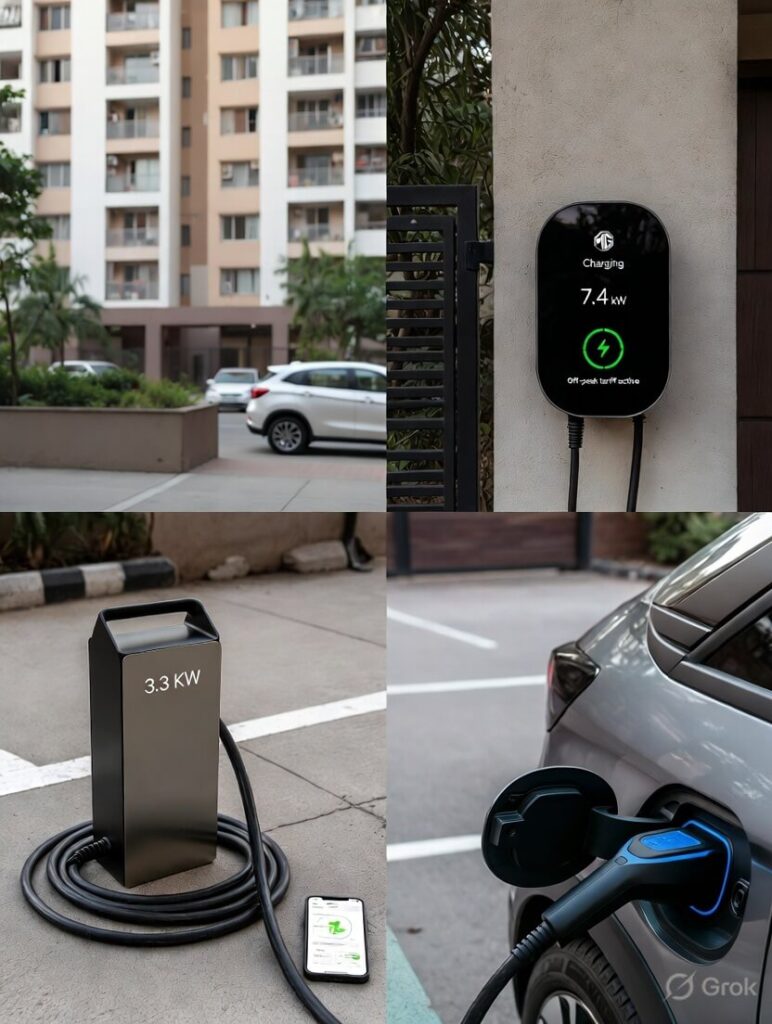
- Portable 3.3 kW Charger – Apartment-Friendly & Budget Option Many apartment dwellers in Bengaluru and Mumbai start with a 3.3 kW portable EV charger. One Reddit user from r/EVIndia shared: “I use a basic 3.3 kW portable with a dedicated 16-amp socket. It adds about 12-15% per hour—perfect for my daily 50 km city drive. No major rewiring needed, just an electrician upgrade for ₹5,000-8,000.”Pros from users: Easy to store, no permanent installation, works with most Type-2 EVs like Tata Nexon EV or MG ZS EV. Cons: Slower for larger batteries; some warn against regular household sockets without upgrades (risk of overheating).Popular brands mentioned: ZeroFootprint, generic portable options, or OEM chargers from Tata/Ather.
- 7.4 kW Wallbox Charger – Faster & Reliable for Independent Houses Owners with bungalows or villas often upgrade to 7.4 kW wall-mounted chargers. A Team-BHP member detailed their MG ZS EV setup: “Installed a 7.4 kW AC fast charger with dedicated wiring from the meter. Charging from 20-100% takes 6-8 hours overnight. Total cost around ₹40,000-80,000 including electrician work and MCB upgrades.”Another user in a Tier-2 city added: “Went with Zevpoint after Bangalore recommendations. Smart app shows real-time status—great for monitoring. Reliable even during monsoons.”Pros: Faster charging (ideal for 80-120 km daily runs), smart features like scheduling for off-peak tariffs. Cons: Higher upfront cost; needs electrical panel check (some pay extra for load upgrades).
- Smart Chargers with Apps (Tata Power, ChargeMOD, Statiq, Exicom) Users love app-integrated options for tracking sessions and costs. One owner shared: “Tata Power home charger setup was seamless—app notifies when full. Costs ₹50,000-1 lakh installed, but peace of mind is worth it.”Reddit feedback on Zevpoint: “Smart display, proper app, good support—better than cheaper no-name brands.”For two-wheeler owners (Ather, Ola), Ather Grid home extensions get praise for integration.
- Public Charger at Home – Passive Income Experiment Innovative owners install public-access chargers (like Bolt.Earth Lite 3.3 kW) near roads. One Team-BHP story: “No installation cost from provider; they pay ₹14-16 per unit consumed. Earns extra in a high-traffic area.”Great for bungalows, but risks include maintenance and security.
Real Costs: What Owners Actually Paid for EV Charger Installation in India
Installation varies by location, home type, and charger:
- Basic 3.3 kW portable setup: ₹15,000-40,000 (charger + minor wiring).
- 7.4 kW wallbox installation: ₹40,000-1,50,000 (includes dedicated circuit, electrician, possible panel upgrade).
- Smart/home charger full setup: ₹50,000-1,20,000 (brands like Tata Power, Zevpoint).
- Extra tips: Apartment RWAs may charge ₹20,000-40,000 for permissions; always get a certified electrician.
Owners advise: “Get your load sanctioned first—many face delays.”
Pros, Cons & Tips from Real EV Owners
Pros:
- Overnight full charge = zero range anxiety mornings.
- Cheaper than petrol (₹1-2/km vs ₹5+).
- Convenient—no public queue waits.
Cons:
- Initial electrical upgrades can surprise.
- Apartments need RWA approval.
- Slow charging for long trips (supplement with public).
Tips:
- Choose 3.3 kW if daily <60 km; 7.4 kW for more.
- Opt for smart chargers with apps for scheduling.
- Use off-peak hours for lower bills.
- Check compatibility (Type-2 is standard).
Final Thoughts: Start Simple, Scale Up
Real Indian EV owners emphasize starting with basics—like a reliable 3.3 kW home EV charger setup—and upgrading as needed. Home charging transforms EV ownership from “challenging” to “seamless.”
Have your own setup story or review? Share in the comments below! Your experience could help fellow readers searching for best home EV charger India real reviews or EV home charging experiences India 2026.
Stay charged, and drive electric! 🚗⚡
Note: Costs and experiences vary by city, electricity board, and EV model. Consult professionals for your setup.