Author name: kartikey.ajay@gmail.com

vehicle to load V2L vs V2G what Chinese campers and homeowners actually need featured image showing a modern Chinese EV powering a rice cooker and kettle via a V2L adapter at a scenic mountain campsite in Guilin.
Uncategorized

Vehicle to Load (V2L) vs V2G: What Chinese Campers and Homeowners Actually Need 2026 — The Honest Complete Guide

Vehicle-to-Load (V2L) vs V2G: What Chinese Campers and Homeowners Actually Need — The Honest Complete Guide

Are you a Chinese EV owner confused by the flood of “bidirectional charging” information that lumps completely different technologies together? You’re not alone. A camping enthusiast powering a rice cooker at a mountain campsite has vastly different needs from a homeowner wanting to sell electricity back to the grid — yet both are often addressed with the same vague “V2X” language.

This complete guide on vehicle to load V2L vs V2G what Chinese campers and homeowners actually need draws the precise distinctions that actually matter for your lifestyle. Here’s the honest breakdown: V2L powers your camping gear, outdoor market stall, or essential appliances during a blackout — costing just a ¥280-¥600 adapter with zero installation. V2G earns you income by exporting to the grid — but requires OCPP-compliant hardware and demand response programme participation. V2H powers your home’s fixed circuits during extended outages — but requires ¥11,500-¥21,000 in installed hardware.

For the majority of Chinese EV owners in 2026 — especially those drawn to the country’s rapidly growing camping culture — V2L is the immediately available, practical answer. A weekend of camping cuisine consumes just 3-5 kWh from your battery (equivalent to 15-25 km of range), letting you power rice cookers, electric kettles, induction hotpots, and overnight fans with negligible impact on your driving range.

We compare V2L across every major Chinese EV brand — BYD (2.2-3.3 kW), NIO (2.2 kW boot socket), Zeekr (up to 6 kW), Xpeng (3.3 kW), Li Auto EREV (effectively unlimited with generator), and Xiaomi SU7 (3.5 kW) — plus provide the exact V2L starter kit and safety considerations so you can unlock your vehicle’s camping and emergency backup potential today.

Whether you’re a weekend camper, street food vendor, rural worker, or urban homeowner wanting blackout backup, this guide delivers the capability-to-use-case mapping that tells you exactly which bidirectional technology is relevant to you — and which isn’t.

Read the full guide to discover why V2L is ready now, what it costs, and which vehicles offer the best outdoor power capability for your specific needs in 2026.
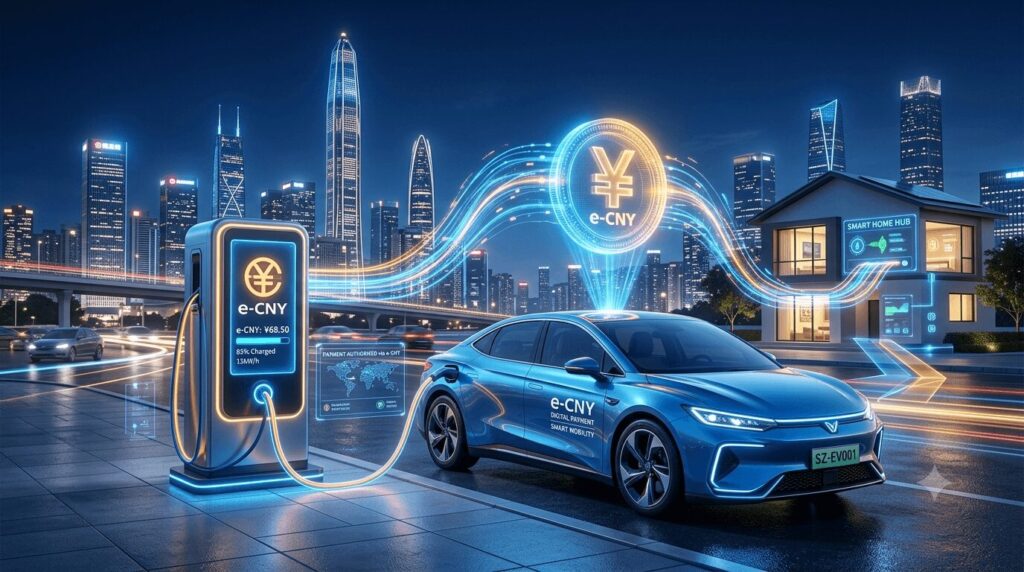
Digital yuan and smart charging how CBDC is automating EV payments in Shenzhen — a futuristic illustration showing an electric vehicle charging at a smart station with e-CNY holographic payment interface floating above, Shenzhen skyline at night.
EV charging

Digital Yuan and Smart Charging: How CBDC is Automating EV Payments in Shenzhen 2026 — The Honest Complete Guide

This honest, technically-grounded guide on digital yuan and smart charging how CBDC is automating EV payments in Shenzhen cuts through the hype to deliver what EV owners actually need to know in 2026—examining the genuine capabilities of programmable e‑CNY for fleet reconciliation, cross‑operator roaming payments, subsidy distribution, and demand response settlement (all demonstrated in Shenzhen’s 数字人民币绿色出行 programme offering 5‑10% bonus credits on public charging), while delivering a clear-eyed reality check: for residential home charging, digital yuan adds zero practical benefit today, as TOU scheduling, OCPP demand response, and smart charger optimisation all operate independently of payment method and your dedicated EV meter’s monthly utility billing remains entirely unaffected. With practical advice for Shenzhen EV owners—register for the free bonus programme, but never pay a premium for “e‑CNY integration” in a home charger—this guide separates genuine innovation from overhyped marketing, so you know exactly where digital yuan fits (and doesn’t fit) into your EV charging strategy, making it the essential read for anyone navigating China’s evolving CBDC and EV landscape.

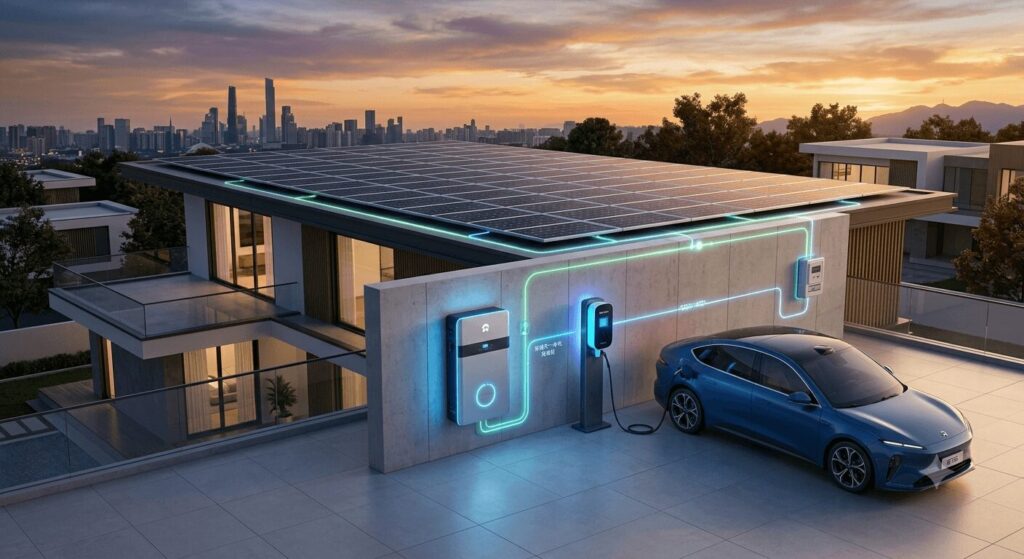
A modern Chinese villa with a rooftop solar array and an EV charger, illustrating the concept of battery energy storage systems BESS combining solar storage EV charging in China for a smart, integrated home energy future.
EV charging

Battery Energy Storage Systems (BESS): Combining Solar + Storage + EV Charging in China 2026 — The Honest Complete Guide

2026 marks a pivotal year for Chinese homeowners, as the vision of a fully integrated home energy system moves from a futuristic concept to a tangible reality. This complete guide cuts through the hype to deliver an honest, data-driven analysis of battery energy storage systems BESS combining solar storage EV charging in China.

From the bustling villas of Shanghai to the sun-drenched rooftops of Hainan, we dissect the real financial case, the technical challenges, and the best products from leading brands like Huawei, CATL, and BYD. Discover the actual payback periods, the crucial “gotchas” around grid export limits and warranty cycles, and the non-financial benefits that could make this a smart investment for your home. We compare the full 光储充 (solar-storage-charging) system against simpler alternatives to help you decide if it’s the right step for your energy independence journey.

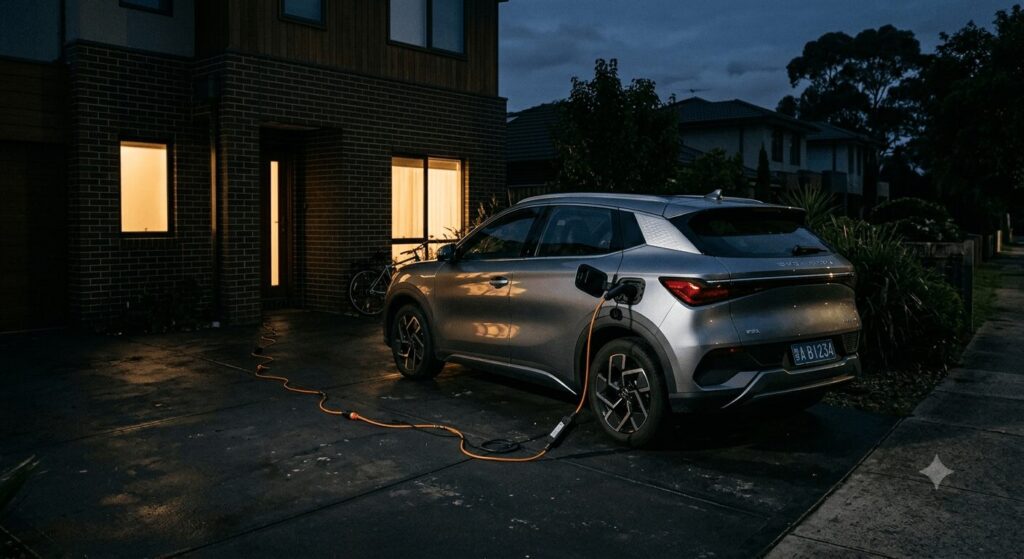
V2G in China 2026 can your BYD Atto 3 power your home during a blackout — featured image showing a BYD Atto 3 using V2L to supply emergency power to a house during a grid outage.
EV charging

V2G in China 2026: Can Your BYD Atto 3 Power Your Home During a Blackout? — The Honest Complete Guide

Can your BYD Atto 3 genuinely back up your home when the grid goes down? This honest, technically-grounded guide answers V2G in China 2026 can your BYD Atto 3 power your home during a blackout with zero hype — explaining exactly what V2H, V2G, and V2L each mean, which Chinese EVs are truly V2H‑ready in 2026, and the practical steps Atto 3 owners should take now.

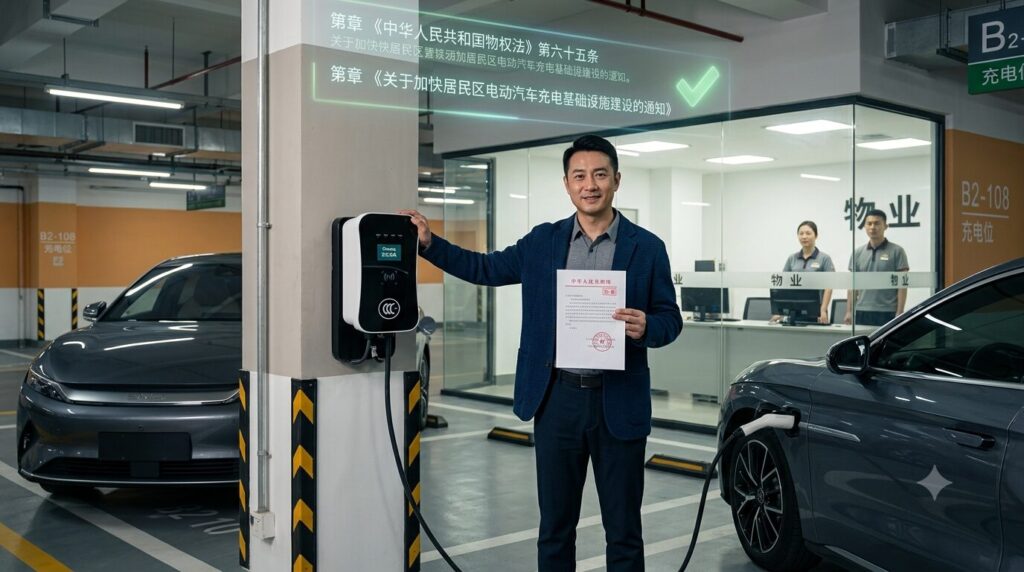
A Chinese homeowner stands beside his new EV charger in an apartment parking garage, holding a government-approved document—visually representing how to get permission to install a charger in a Chinese apartment the legal loopholes are actually established legal rights, not tricks, and this formal approval process works when properly invoked.
EV charging

How to Get Permission to Install a Charger in a Chinese Apartment: The Legal Loopholes 2026 — The Honest Complete Guide

How to get permission to install a charger in a Chinese apartment the legal loopholes — this guide provides the honest truth about what these “loopholes” actually are: not legal tricks, but established rights and regulatory mechanisms that Chinese law has specifically designed to prevent 物业 management companies from unreasonably obstructing EV charger installations. When 物业 refuses your application without substantiated safety or capacity grounds, you have documented escalation pathways that work — from formal written applications with regulatory timeline references, through concurrent State Grid applications, to 12345 government mediation and housing authority complaints. This comprehensive guide covers the Civil Code property rights framework, city-specific provisions (Shanghai’s 20-working-day rule, Shenzhen’s notification-only framework, Beijing’s subsidy conditionality), the complete escalation ladder with realistic timelines, and the documentation system that makes every escalation step effective. For Chinese EV owners facing 物业 obstruction, knowing your rights transforms a situation that feels hopeless into one with a clear, proven resolution path — typically within 4-8 weeks of committing to the right approach. Your charger, your parking space, your legal rights — use them.

A professional electrician installing the connection cable from the distribution board to the dedicated EV meter, demonstrating the physical installation process behind the debate of State Grid SGCC vs private networks who offers the best home connection rate in 2026
EV charging

State Grid (SGCC) vs Private Networks: Who Offers the Best Home Connection Rate? 2026 — The Honest Complete Guide

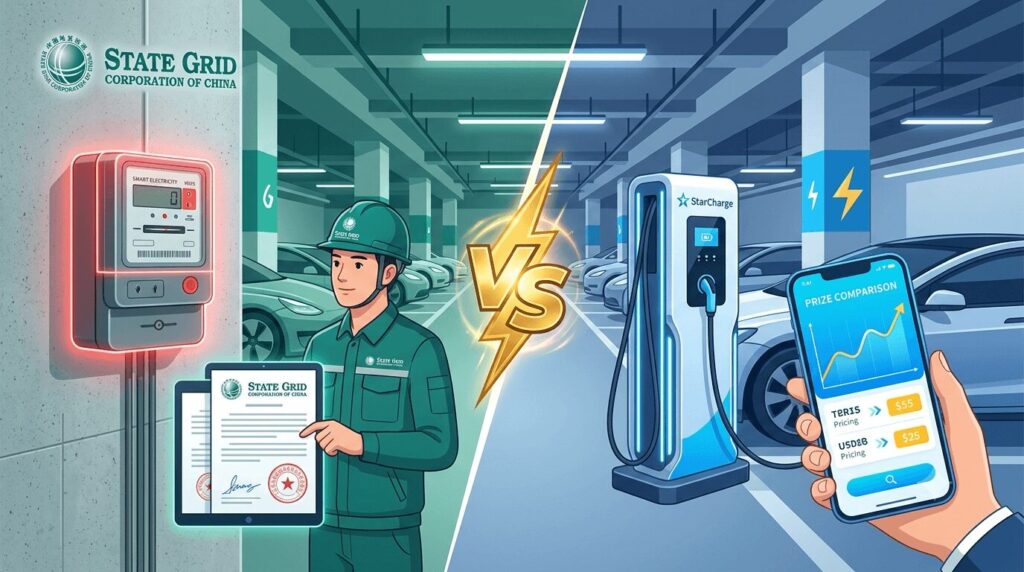
Navigating the cost of installing a home EV charger in China is confusing, especially when it comes to the connection fee. This honest and complete guide cuts through the complexity to definitively answer State Grid SGCC vs private networks who offers the best home connection rate. Whether you’re in a Shanghai apartment or a rural home, we break down the real costs, processes, and timeline for State Grid, Southern Grid, and private operators like StarCharge. Discover the hidden fees, which scenarios qualify for subsidies, and how to get the lowest total cost for your specific setup—without getting trapped by confusing jargon or unexpected charges.

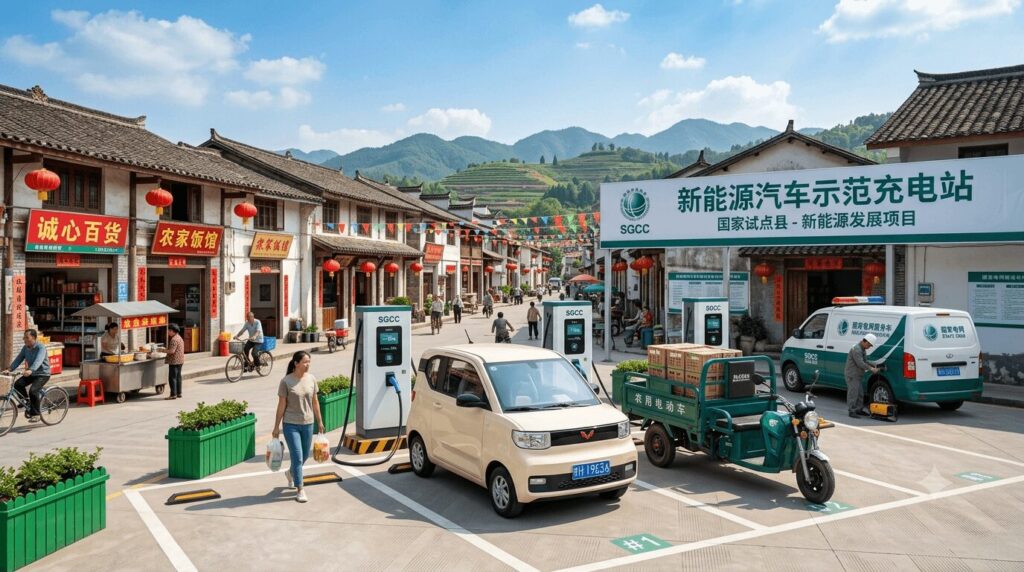
Rural charging boom 2026 how to start a charging business in China's 59 new pilot counties – a modern, sunlit EV charging hub in a bustling rural township with micro EVs and agricultural vehicles charging against a backdrop of traditional architecture and rolling hills, showcasing the real-world scale of the pilot county opportunity.
EV charging

Rural Charging Boom 2026: How to Start a Charging Business in China’s 59 New Pilot Counties — The Honest Complete Guide

Rural charging boom 2026 how to start a charging business in China’s 59 new pilot counties” represents one of the most significant yet underreported opportunities in China’s EV ecosystem—and this complete guide cuts through the hype to deliver the honest business assessment entrepreneurs actually need.

While urban EV charging markets face consolidation and margin compression, the 59 pilot counties programme creates a genuinely differentiated opportunity: designated rural counties with central government subsidies covering 20-40% of project costs, priority grid connection support, and simplified permitting processes. But the opportunity isn’t uniform—success depends on specific location-level factors that most coverage ignores.

This comprehensive guide covers the actual policy framework, the real rural EV demand profile (micro EVs, PHEVs, and agricultural vehicles with usage patterns radically different from urban markets), the financial model with break-even calculations showing why 2 sessions per day is the critical threshold, and the practical steps from confirming pilot county status to navigating rural grid constraints.

The honest reality: rural charging isn’t easy money. It requires specific site selection, early engagement with local grid companies, equipment appropriate for rural voltage fluctuations, and conservative financial models based on current—not projected—EV populations. But for entrepreneurs willing to do the detailed work, the 59 pilot counties offer a genuine entry point into China’s rural EV charging market before it follows the urban market into consolidation.

The rural charging boom is real—but it happens at the township commercial centre and county seat level, not at the policy announcement level. This guide shows you exactly where and how to participate.

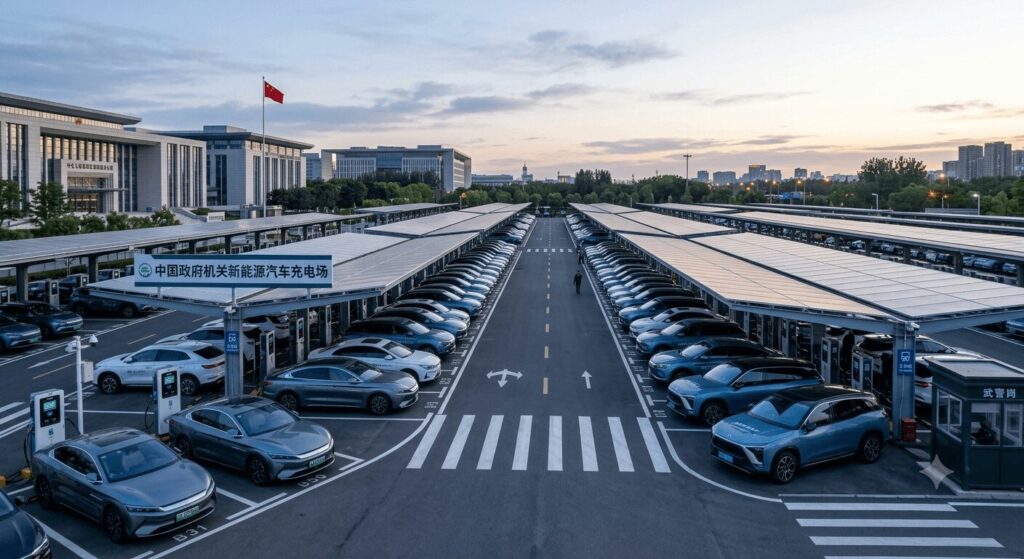
Public sector opportunity guide to China's 25 percent government fleet charging mandate — wide-angle view of a Chinese government compound parking facility with rows of NEV official vehicles parked under solar carports, multiple AC and DC charging points installed in orderly rows, and intelligent charging management displays, conveying the institutional-scale infrastructure deployment required by the mandate.
EV charging

Public Sector Opportunity: Guide to China’s 25 percent Government Fleet Charging Mandate 2026 — The Honest Complete Guide

This public sector opportunity guide to China’s 25 percent government fleet charging mandate reveals one of the largest structured procurement opportunities in the global EV charging market—and one that’s largely overlooked in English-language industry coverage. The mandate requires government agencies, public institutions, and SOEs at all administrative levels to ensure that a minimum of 25% of newly procured fleet vehicles are new energy vehicles. Critically, this isn’t just a vehicle procurement requirement—it’s backed by explicit infrastructure mandates requiring dedicated charging points at specific ratios, creating annual equipment and installation spending estimated at ¥150 million to ¥500 million.

For Chinese EV charging businesses, this guide explains exactly which institutional buyers are covered, what specifications government procurement demands (including OCPP compliance, multi-point load management, and 3C certification), how the tender process works through Chinese Government Procurement channels (ccgp.gov.cn), and the four distinct revenue streams this mandate creates—from equipment supply and installation services to O&M contracts and technical consulting. With leading cities like Shenzhen and Beijing already exceeding the 25% threshold and 2030 targets pushing proportions higher, this represents predictable, policy-backed demand that’s more financially durable than volatile residential markets.

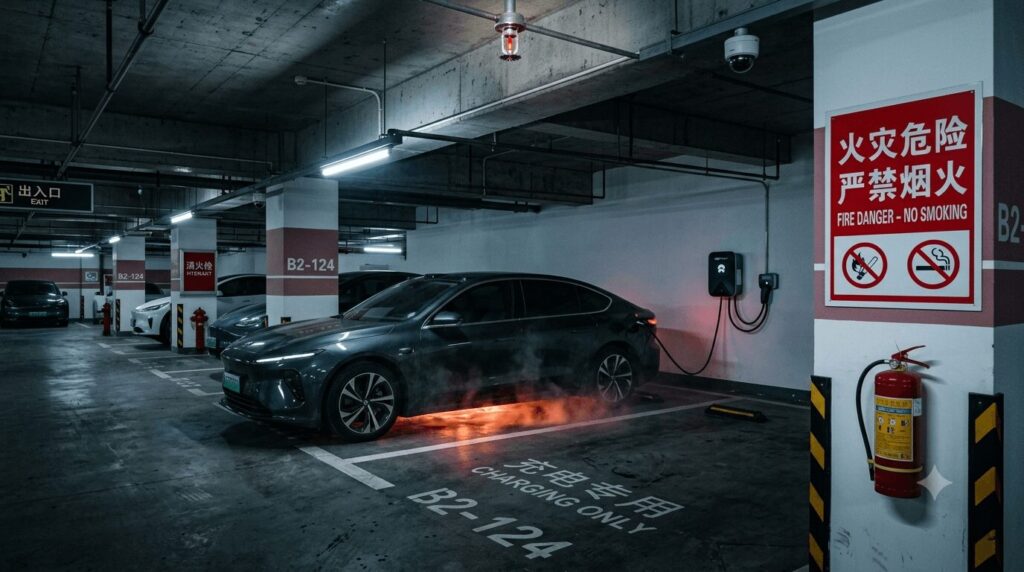
Fire safety and EV charging what Chinese homeowners need to know about indoor parking risks - featured banner showing an EV charging in a modern underground garage with a thermal runaway warning glow beneath the battery and visible fire suppression equipment.
EV charging

Fire Safety and EV Charging: What Chinese Homeowners Need to Know About Indoor Parking Risks 2026 — The Honest Complete Guide

Charging your EV in an underground or covered parking space carries hidden dangers that every resident must understand. This complete guide on fire safety and EV charging what Chinese homeowners need to know about indoor parking risks uncovers the science behind battery thermal runaway, reviews recent fatal incidents across China, breaks down current legal regulations, and provides six critical habits to protect your family and property during overnight charging in 2026.

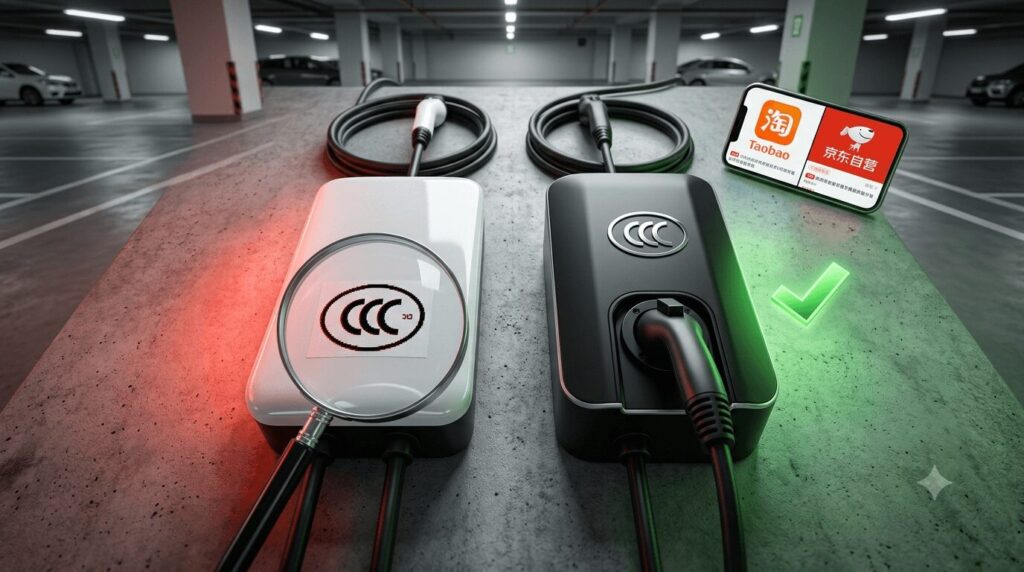
Side-by-side comparison of a counterfeit EV charger with a pixelated sticker logo versus a genuine EV charger with an embossed metallic logo, visually demonstrating the first physical clues for spotting fake 3C logos how Chinese buyers can verify certification on Taobao JD chargers.
EV charging

Spotting Fake 3C Logos: How Chinese Buyers Can Verify Certification on Taobao JD Chargers 2026 — The Honest Complete Guide

The EV charger market on Taobao and JD.com is flooded with products displaying the 3C certification mark—but many of these logos are completely fake. When you’re spotting fake 3C logos how Chinese buyers can verify certification on Taobao JD chargers becomes a critical safety question: the ¥399 charger with a copied 3C mark has never been through any accredited testing laboratory, its RCCB protection may not function, its cable may be undersized, and if it causes a fire, no insurance will cover the damage.

This complete guide reveals the six categories of certification fraud—from complete fabrication and certificate transfer to lapsed certifications and image manipulation—then provides the definitive five-minute database verification process through CQC’s public system that every buyer must perform before purchase. It includes platform-specific strategies for navigating Taobao’s higher-risk marketplace versus JD.com’s more verifiable self-operated listings, plus a physical inspection checklist for when your charger arrives. The visual mark on a product image is not certification—the database record is the certification. This guide shows you exactly how to check, what to look for, and what to do if you’ve already purchased an uncertified charger.

Scroll to Top