Author name: editoradmin

EV charging

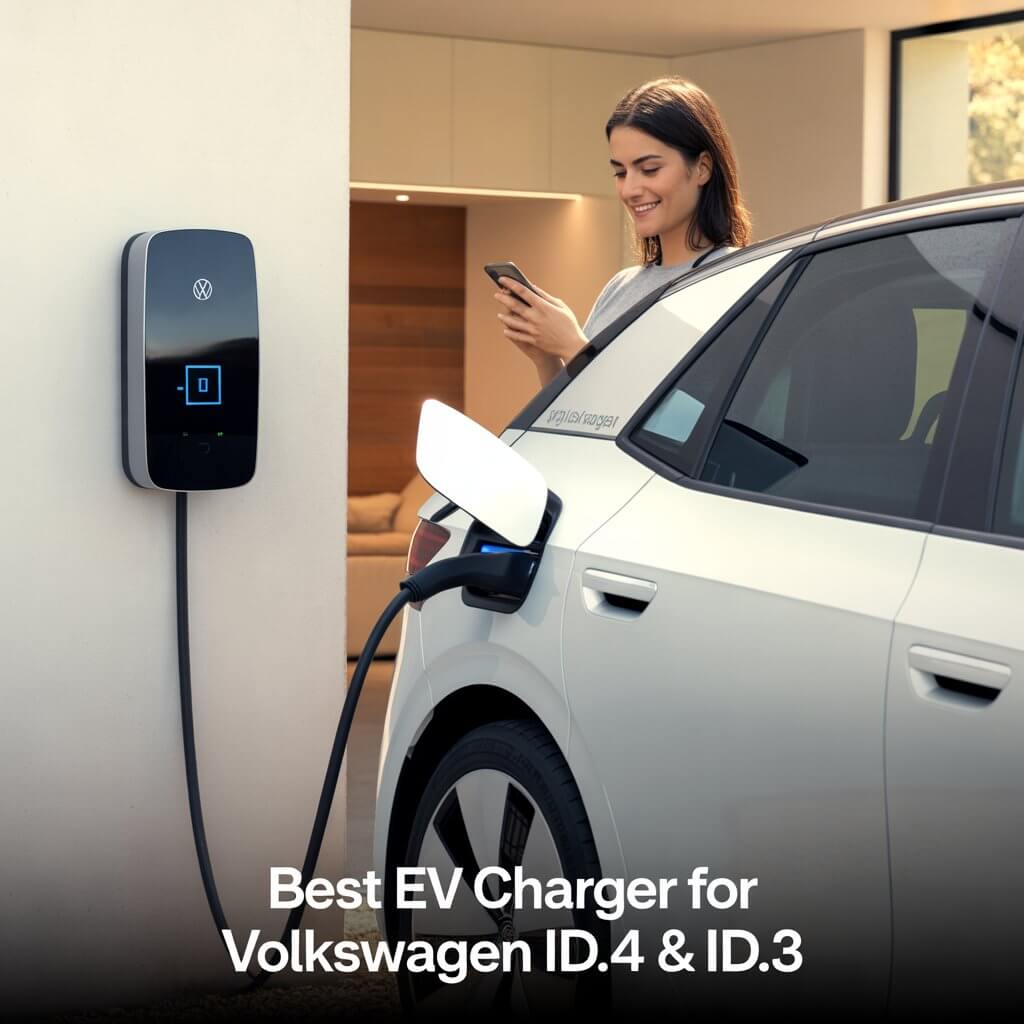
Luxury EV Charging Solutions for Porsche Taycan, Lucid Air, and Audi e-tron in India: A Comprehensive Guide

As India’s luxury electric vehicle segment heats up in 2026, discerning buyers in Bengaluru, Mumbai, and Delhi are turning to flagship models like the Porsche Taycan, Lucid Air, and Audi e-tron (including the Q8 e-tron and e-tron GT variants) for unparalleled performance, refinement, and cutting-edge technology. These high-end EVs demand robust charging solutions to match their advanced 800V+ architectures and large battery packs—ensuring minimal downtime whether at home in upscale neighborhoods or on long highway drives.
India’s public EV charging infrastructure has seen remarkable growth, with over 29,000 public charging stations installed nationwide as of early 2026, supported by schemes like PM E-DRIVE and FAME-II. Networks such as Bolt.Earth, Tata Power EZ Charge, and ChargeZone now offer high-power DC fast chargers (up to 150-360 kW in select locations), making rapid top-ups feasible for luxury models. For instance, the Porsche Taycan’s 800V system supports peaks of up to 320 kW, enabling a 10-80% charge in as little as 18-22 minutes under ideal conditions—perfect for quick stops on routes like Bengaluru to Chennai.
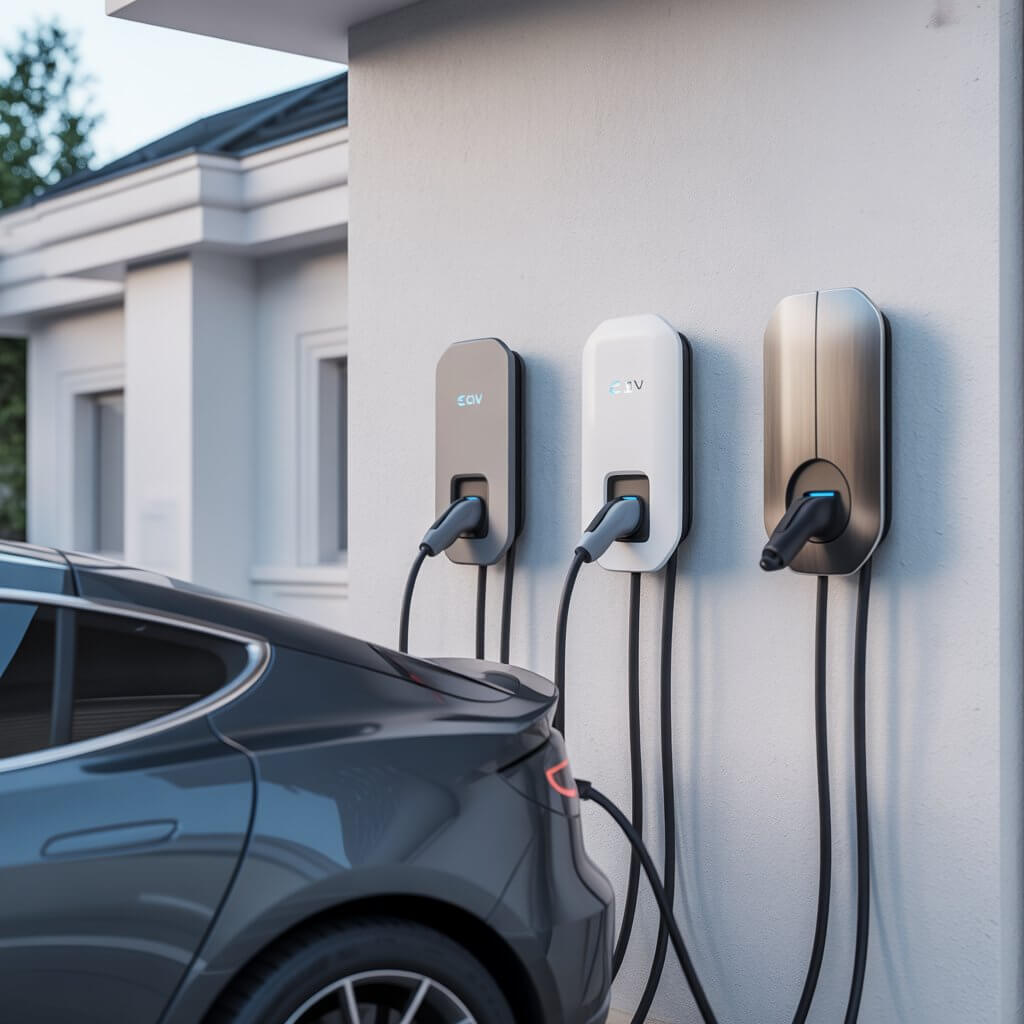
At home, luxury EV owners prioritize smart, reliable Level 2 AC chargers (7.4 kW to 22 kW) for overnight convenience and cost efficiency (often ₹3-5 per km). Popular options in India include:

RIOD Powerpod (22 kW three-phase) – Ideal for fast home charging of the Porsche Taycan in India.
Delta AC Mini Plus or Exicom Spin (11-22 kW) – Smart features with app control, solar compatibility, and load balancing.
Tata Power EZ Charge wallbox (7.2 kW) – Widely available and reliable for Audi e-tron home charging setups.

Audi leads with its ‘Charge My Audi’ network, boasting over 6,500 points across 850+ cities, offering seamless access via the myAudi Connect app—often with complimentary sessions for e-tron owners.
While the Lucid Air (with its ultra-efficient 900V+ architecture promising exceptional range and fast charging) awaits wider official availability in India, compatible universal chargers and high-power public stations ensure it thrives in premium setups.
This excerpt highlights why luxury EV charging in India 2026 is more accessible than ever—blending expanding infrastructure, smart home solutions, and vehicle-specific optimizations to eliminate range anxiety for elite electric driving. Explore detailed comparisons on our site for the best luxury EV charging solutions tailored to your Porsche Taycan, Lucid Air, or Audi e-tron needs in Bengaluru and beyond.

EV charging

Compact EV Charging: Best Options for Nissan Leaf and Chevy Bolt in India

As electric vehicles gain popularity among enthusiasts in India, imported classics like the Nissan Leaf and Chevy Bolt require reliable, space-saving charging solutions tailored to local conditions. Whether you’re searching for the best compact portable EV charger for Nissan Leaf in India or the top portable Level 2 charger for Chevy Bolt India 2025, compact chargers deliver fast, convenient Level 2 charging (typically 7.2–7.4 kW) without bulky installations—perfect for Bengaluru apartments, home garages, or travel.
These portable units plug into standard Indian sockets (with proper 16A+ capacity), support Type 2 connectors common in the market, and often include adjustable current, smart apps, and safety features like IP66 waterproofing to handle monsoon weather.

EV charging

Ford F-150 Lightning Charging Guide: Best Home and Mobile EV Charging Solutions in India 2026

The Ford F-150 Lightning is making waves as one of the most capable electric pickups globally, and despite not being officially available in India yet, a growing number of enthusiasts and importers in cities like Bengaluru, Mumbai, and Delhi are bringing these beasts home. The biggest practical question for Indian owners? How to charge a Ford F-150 Lightning at home or on the move in India in 2026, given the difference in connectors (J1772/CCS1 in the US vs. Type 2/CCS2 here).
This comprehensive guide covers everything you need: the best home charging solutions for Ford F-150 Lightning in India, compatible Level 2 wall chargers (7.4 kW Type 2 options), essential J1772 to Type 2 adapters and CCS1 to CCS2 DC fast charging adapters, portable/mobile charging setups for road trips or farmhouses, public highway charging compatibility with networks like Tata Power, Zeon, and Statiq — plus the Lightning’s killer feature: Pro Power Onboard for V2L/V2V and home backup power during outages.
Whether you’re looking for the cheapest way to charge Ford F-150 Lightning at home in India, overnight full-charge times for the 98 kWh or 131 kWh batteries, real 2026 pricing (₹45,000–80,000 setups), or tips to maximize range on Indian roads, we’ve got you covered with practical, India-specific advice and comparisons.
Ready to go electric-truck style? Read on for the full breakdown, adapter recommendations, and current top charger picks tailored for Indian F-150 Lightning owners.

EV charging

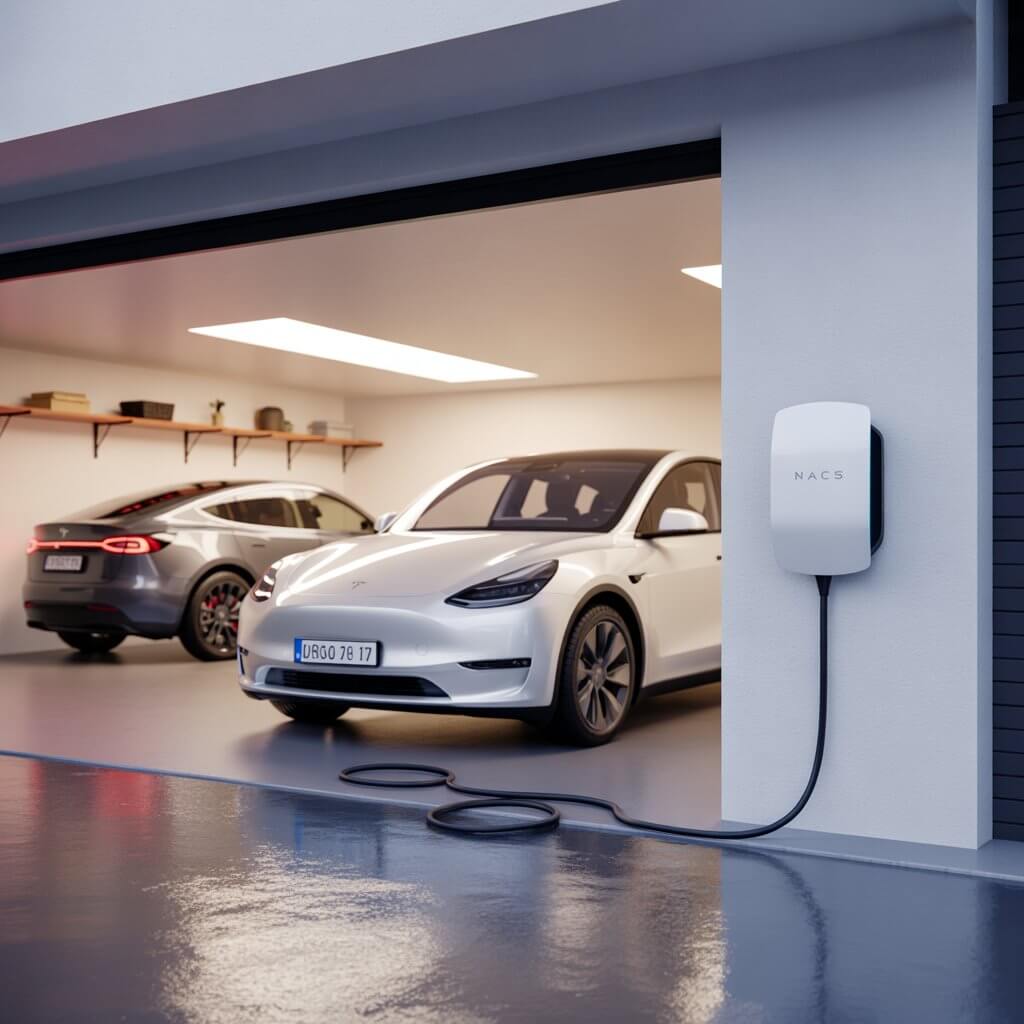
Best Chargers for Tesla Owners in India 2026 (Non-Tesla Compatible Options Included)

IS IS 17017 certification mark on EV charger product label India – Mandatory BIS certification (IS 17017) with ISI mark – the first safety checkpoint for any EV charger sold in India. EV charger compliance label showing BIS and safety standards close-up – Detailed product label on a quality EV charger displaying BIS registration, voltage ratings, and built-in protection features. Indian EV charger with visible ISI mark and certifications – Look for the prominent ISI mark – proof of BIS compliance and electrical safety testing for Indian conditions. 30mA RCD RCCB protection in EV charging station India – Essential 30mA Residual Current Device (RCD/RCCB) – cuts power instantly on earth leakage, mandatory for safe EV charging in Indian homes. Tesla Model Y CCS2 charging port India specification – Tesla vehicles in India use CCS2 port for DC fast charging – fully compatible with most public and home chargers in 2026. Type 2 Mennekes connector plugged into Tesla EV India – Standard Type 2 AC charging connector – works seamlessly with wallboxes for Tesla Model 3 and Model Y owners in India. Tata Power EZ Charge 7.4 kW wallbox home installation Tesla compatible – Top-rated Tata Power EZ Charge wallbox – reliable, BIS-certified, and perfect for safe overnight charging of Tesla vehicles. Premium Delta ABB Type 2 AC wall charger for Tesla India – High-end Delta or ABB Terra wallbox (11–22 kW) – offers faster charging, load balancing, and premium build for Tesla owners. Tesla Mobile Connector with adapters portable charging India – Official Tesla Mobile Connector – versatile portable option with multiple adapters for home, travel, or apartment use in India. Tata Power Bolt.Earth CCS2 DC fast charging station for Tesla India – Public CCS2 DC fast charger from Tata Power or Bolt.Earth networks – delivers high-speed charging (up to 250 kW+) for Tesla in India.

EV charging

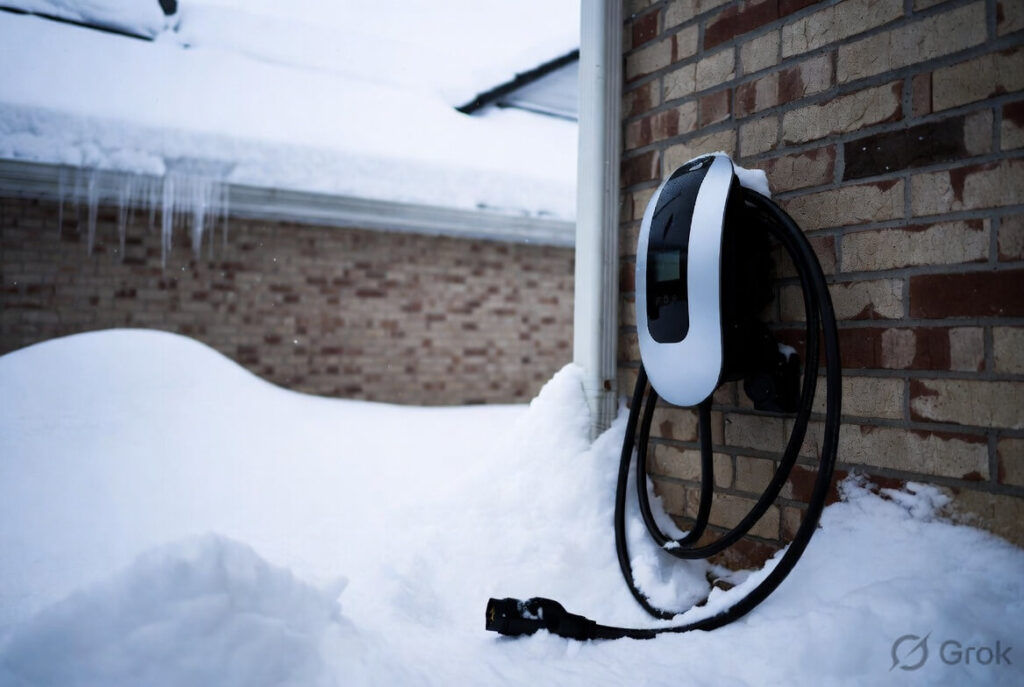
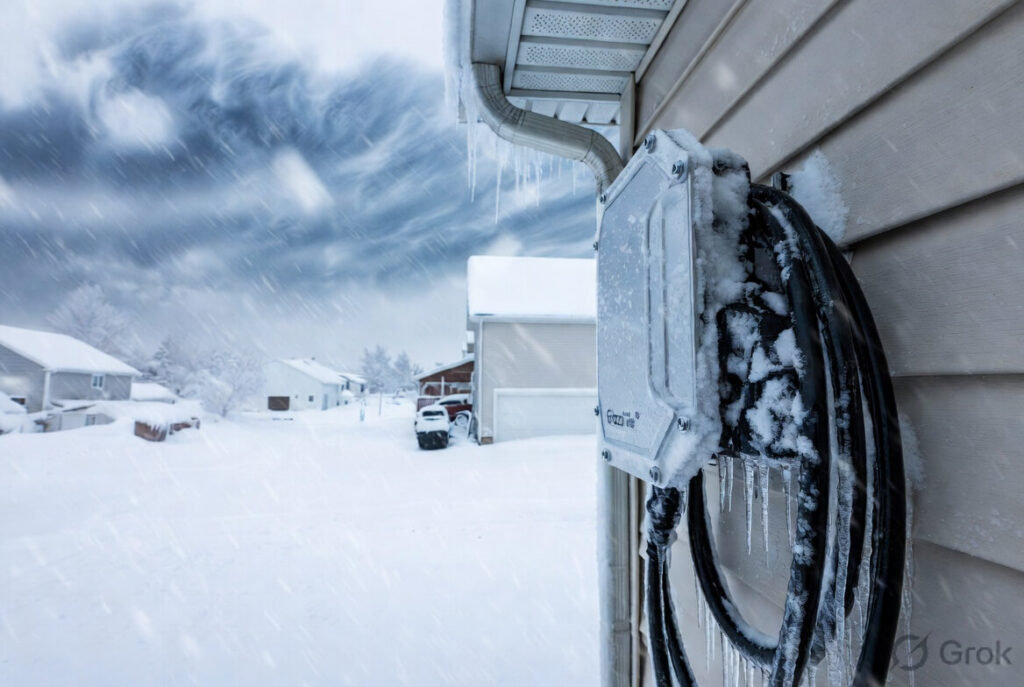
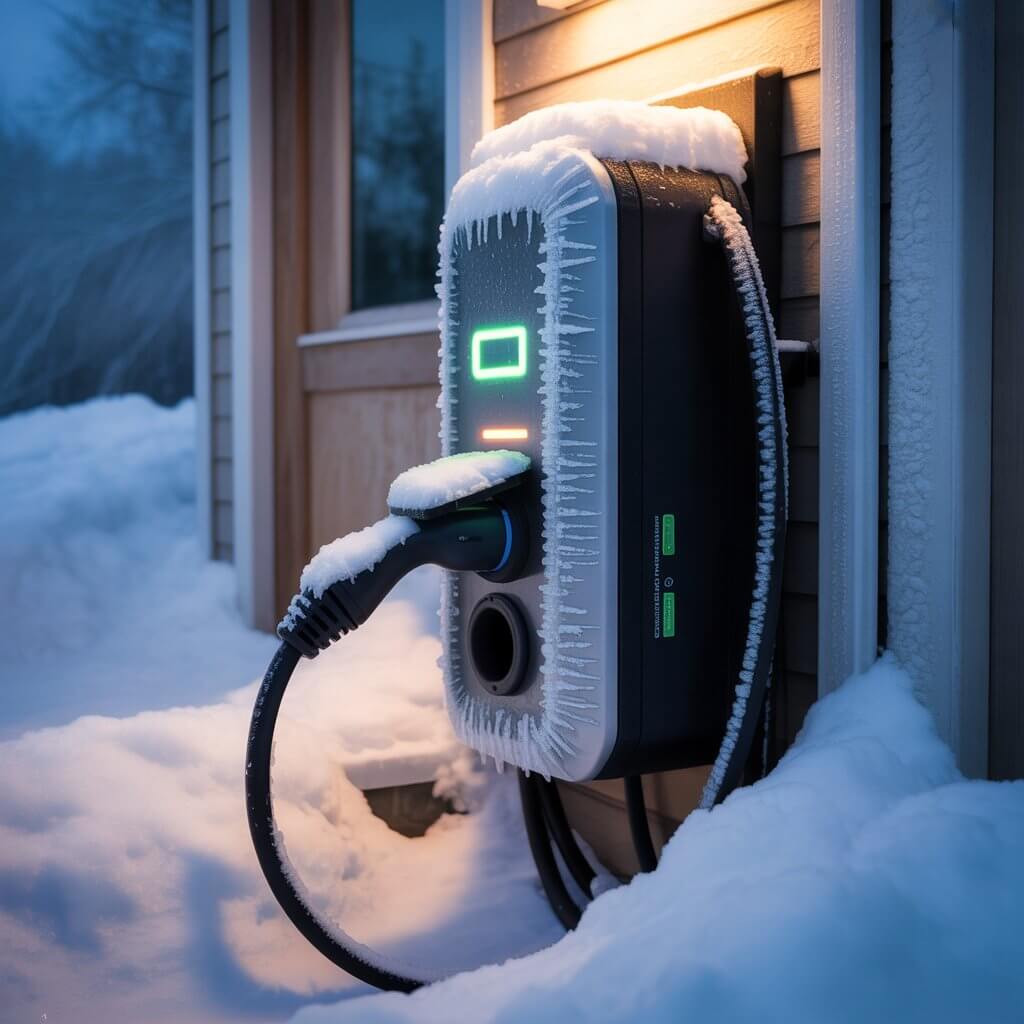
Weatherproof Ratings Explained: What Chargers Work Best in Extreme Conditions (India 2026 Guide)

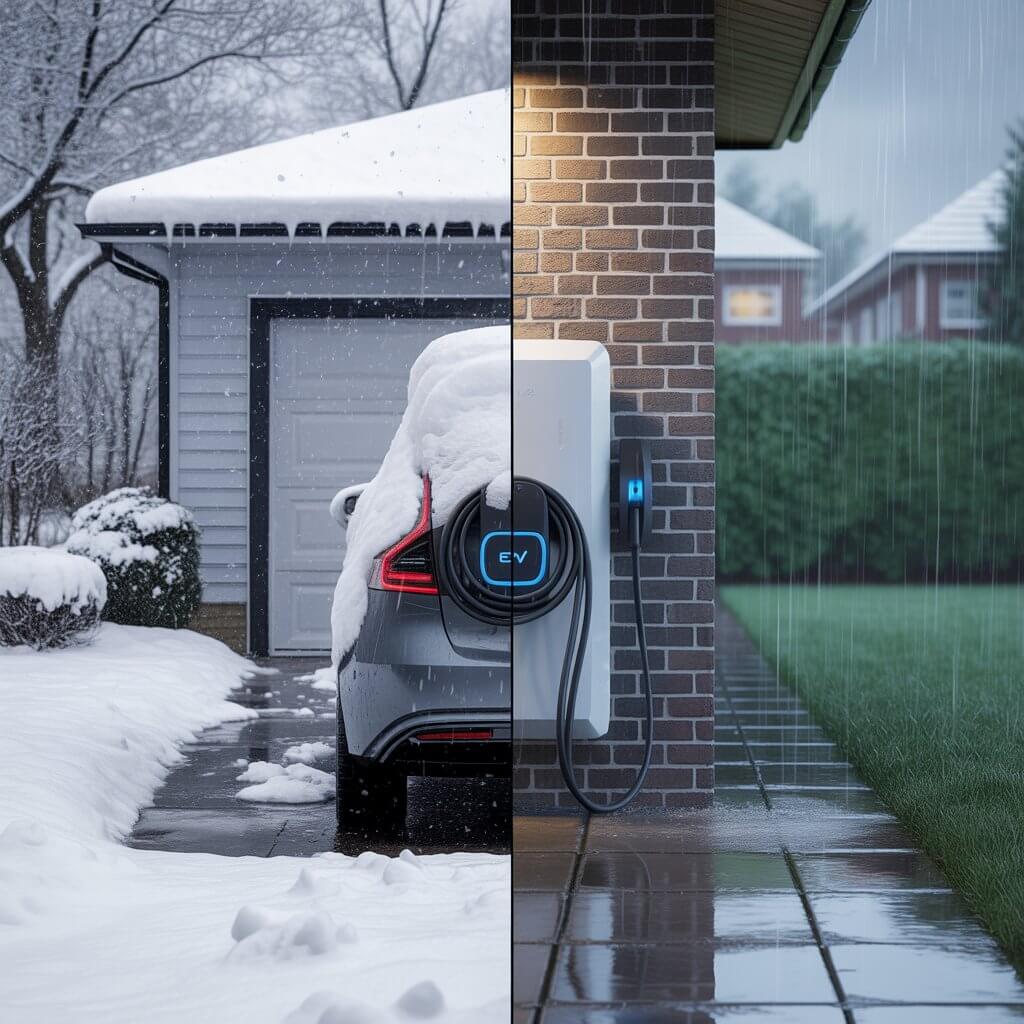
ndia’s unpredictable weather—scorching 45°C+ summers, torrential monsoons, coastal humidity, and northern dust storms—puts home EV chargers through one of the toughest real-world tests anywhere. A poorly sealed charger can fail during peak rain, overheat in summer, or get damaged by accidental knocks, leading to costly repairs or unreliable charging.
The secret to long-term reliability lies in IP (Ingress Protection) and IK (Impact Protection) ratings. IP65+ (dust-tight and protected against powerful water jets) combined with IK08+ (impact resistance) is now the minimum standard for outdoor or semi-exposed installations in most Indian cities.
This 2026 guide explains:

What IP65, IP66, IK08, and IK10 ratings actually mean in practical terms
Which ratings suit open parking, balconies, coastal areas, or extreme heat zones
Top weatherproof chargers that consistently perform across Bengaluru monsoons, Delhi summers, Mumbai humidity, and more:
Tata Power EZ Charge (IP65 / IK08 – proven all-rounder)
Delta AC Mini (IP65 / IK10 – fanless & heat-resistant)
Exicom Spin, Bolt.Earth, and Victron models

Plus quick buying tips, installation best practices (canopy use, surge protection), and a comparison table to match your exact mounting location and climate.
Whether your charger faces direct rain, dust, or blazing sun, choosing the right weatherproof rating can save you thousands in downtime and repairs. Read the full guide to pick a durable, future-proof home EV charger built for India’s extremes.

EV charging

Apartment vs House EV Charging Solutions: Complete Guide for India (2026)

Apartment vs House EV Charging Solutions: Complete Guide for India (2026)
Electric vehicles (EVs) are transforming mobility across India, with sales continuing to grow rapidly and public charging infrastructure expanding under schemes like PM E-DRIVE. However, for the vast majority of EV owners, reliable and affordable charging at home remains the single most important factor for hassle-free ownership.
Where you live—whether in an independent house or an apartment complex—dramatically affects your charging options, installation costs, daily convenience, monthly running expenses, and even long-term property value.
This complete 2026 guide compares both scenarios with updated costs, real-world challenges, available solutions, and practical recommendations tailored to Indian conditions.
Why Home Charging Still Wins in India
Home charging delivers the lowest cost per kilometre in the country. Overnight Level-2 charging typically works out to ₹1–2 per km, compared to ₹4–6+ per km on most public DC fast chargers. For anyone driving 50–100 km per day, home charging usually saves thousands of rupees every month over public-station dependency.
Residential electricity tariffs (₹7–10/unit in most states) and the growing availability of night-time EV-specific slabs make home charging even more attractive in 2026.
EV Charging Solutions for Independent Houses
Key Advantages

Complete control over installation and placement
Dedicated parking space or garage
Lowest electricity cost using residential rates
Straightforward integration with rooftop solar systems
Significant boost to property resale value (often 5–8%)

Typical Installation Process

Assess your home’s electrical load and available capacity (most require a dedicated 7–11 kW circuit).
Engage a certified electrician and (optionally) apply for a separate EV meter through your DISCOM.
Install a wall-mounted AC charger (Type-2 or CCS2 connector).
Add smart features such as app-based scheduling, energy monitoring, and load balancing.

2026 Cost Breakdown

7.4 kW smart charger: ₹35,000–₹70,000
Wiring, MCB, earthing, and labour: ₹15,000–₹35,000
Separate EV meter (optional but recommended): ₹3,000–₹6,000
Total one-time investment: ₹55,000–₹1,00,000

Popular & Reliable Home Charger Brands in 2026

Tata Power EZ Charge
Delta AC Mini
Exicom Spin
Victron Energy
Zeconex
Magenta ChargeGrid home models

All of the above are BEE-star-rated or OCPP-compliant with mobile app control.
EV Charging Solutions for Apartments – The Bigger Challenge
Apartment residents face several common obstacles:

Requirement for RWA / society approval
Shared parking areas with no personal wall space
Stricter fire-safety norms for basement parking (NBC guidelines)
Concerns around equitable billing and load management

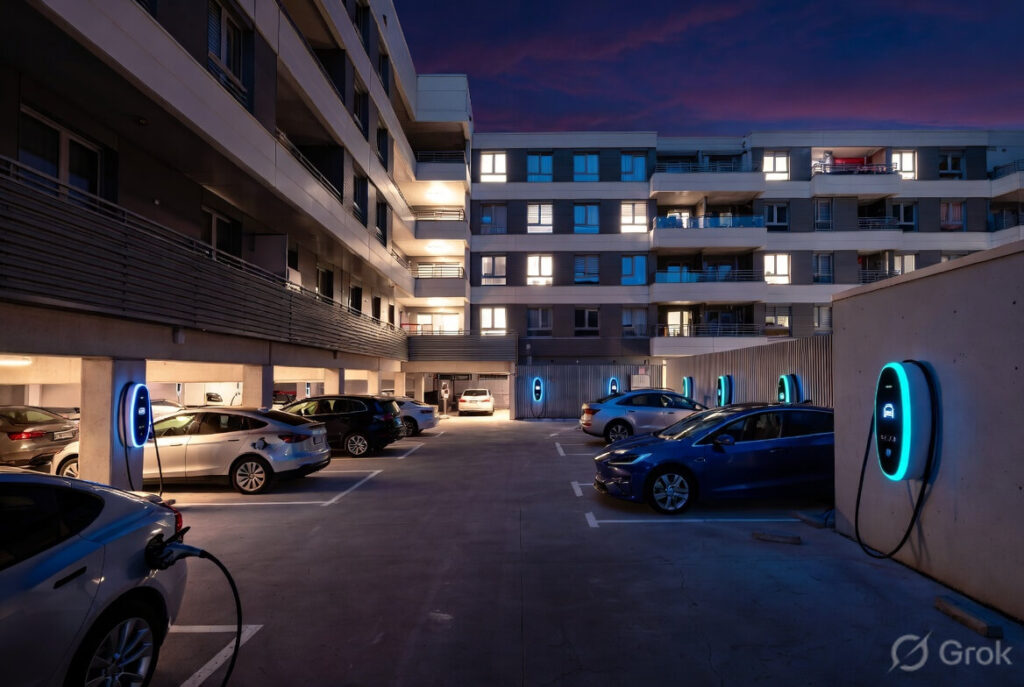
Despite these hurdles, 2026 has seen a sharp increase in apartment societies adopting EV charging as a standard amenity, especially in metros like Bengaluru, Pune, Hyderabad, and NCR.
Current Practical Solutions

Society-Level Shared Charging Infrastructure (Most Common & Recommended)
4–20 AC chargers installed in common parking zones
Pay-per-use model via mobile app (₹12–18 per kWh in most cities)
Managed by third-party operators (Bolt.Earth, Statiq, Tata Power, ChargeGrid, Kazam, etc.)
RWA pays nothing upfront in many revenue-share models

Individual Dedicated Charging Point (If RWA Permits)
Run a dedicated cable from your household meter to your parking slot
One-time cost: ₹40,000–₹90,000
Many progressive societies now allow this after seeing successful implementations

Portable / Plug-in Chargers (Temporary Workaround Only)
Use a 3.3–7.4 kW portable charger with an existing 15A/16A socket
Slow charging and higher safety risk if used long-term
Not recommended as a permanent solution

Apartment vs Independent House: Side-by-Side Comparison (2026)

FactorIndependent HouseApartment ComplexOne-time Setup Cost₹55,000 – ₹1,00,000₹0 (shared) or ₹40,000 – ₹90,000 (individual)Monthly Charging Cost (50–100 km/day)₹1,200 – ₹2,500₹1,800 – ₹3,500 (shared tariff)Typical Home Charging Speed7–11 kW (4–6 hours full charge)3.3–7.4 kW (shared points)Daily ConveniencePark and plug anytimeDepends on availability & booking systemApprovals RequiredElectrical safety clearance onlyRWA / society committee + possibly DISCOMSolar Panel IntegrationEasy and highly cost-effectiveDifficult unless society installs central solarImpact on Property Value+5–8%+3–6% (EV-ready societies command premium)
Important Factors to Consider Before Buying an EV

Daily commute distance — Under 80 km/day? Even a 3.3 kW charger is usually sufficient.
Society / RWA policy — Check existing rules or WhatsApp group discussions before purchasing an EV.
Night-time tariffs — Many states now offer ₹5–7/unit EV slabs after 10 PM.
Safety first — Always choose chargers with Type-B RCCB, surge protection, and BEE / ARAI certification.

Government Support & Incentives Still Active in 2026

PM E-DRIVE scheme extended
Continued subsidies for public & semi-public charging infrastructure
Several states offer additional rebates for apartment society installations
Preference given to BEE 3–5 star-rated chargers

Future-Proof Recommendation
Whether you live in a house or an apartment, opt for smart, OCPP-compliant chargers with app control, scheduling, and load-balancing features. These models are ready for upcoming V2G (vehicle-to-grid), solar+storage integration, and dynamic pricing that will become mainstream by 2027–28.
Final Verdict for 2026 Buyers

Independent house owners → Install a dedicated 7.4 kW smart wall charger + consider rooftop solar for maximum savings and convenience.
Apartment residents → Actively push your RWA / managing committee for shared smart charging infrastructure. Societies with EV-ready facilities are already seeing faster flat sales and higher resale values in major cities.

Charging infrastructure is no longer an afterthought—it is now one of the most important decisions when buying an EV in India. Plan your charging solution first, then choose your vehicle.
Have questions about your specific society or home setup? Drop your city and parking situation in the comments—we’ll recommend the best options available in your area.
Related Articles

Best Home EV Chargers Under ₹60,000 in India 2026
How to Convince Your Apartment RWA to Install EV Chargers

EV charging

Budget EV Chargers Under ₹500: Are They Worth Considering in 2026?

Budget EV Chargers Under ₹500: Are They Worth Considering? – Quick Excerpt

In India’s booming electric two-wheeler market, spare chargers for Ola S1, Ather Rizta, TVS iQube, and countless e-bikes often tempt buyers with prices as low as ₹299–₹499 on Amazon and Flipkart. These generic 48V/60V lithium chargers promise auto cut-off, LED indicators, and fast charging — but do they deliver safely?

The Appeal
Ultra-cheap, next-day delivery, lightweight, and functional for occasional use or as an emergency backup. Many owners of low-usage e-cycles report no immediate issues.

The Hidden Dangers
Poor voltage regulation, missing proper temperature sensors, fake “auto cut-off,” and substandard components frequently lead to overheating, battery swelling, or worse — fires. Real incidents in India highlight risks from third-party chargers damaging expensive lithium packs (₹15,000–₹40,000) and voiding OEM warranties from Ola, Ather, or TVS.

Verdict in 2026
Only consider as a **true last-resort spare** — never your daily driver. For regular use, invest ₹1,000+ in a branded or OEM-compatible charger to protect your battery health and safety.

Charge smart, stay safe ⚡ — because saving ₹400 isn’t worth the fire risk!

EV charging

Smart Chargers vs Basic Chargers: Are Advanced Features Worth It?

Planning to buy an EV charger for your home in Bengaluru? Compare smart EV chargers vs basic chargers in India 2026 — cost, features, savings, and solar integration. Smart chargers (Tata Power, Bolt.Earth, Exicom) offer app scheduling, off-peak ToD tariff optimization, load balancing for apartments, and rooftop solar priority — saving ₹8,000–₹20,000+ annually in Karnataka. Basic portable chargers are cheaper (₹10k–₹30k) but miss long-term efficiency. Discover which is worth it for Tata Nexon EV, MG ZS EV, or Mahindra e-Verito owners in Bengaluru’s rising solar & variable tariff landscape.

EV charging

2026 Home EV Charger Installation Cost in India FOR BEST SAVINGS – Level 2, Rebates & More

As electric vehicles gain momentum across Maharashtra and India in 2026, installing a home charger has become a practical step toward clean, cost-effective driving. But how much does it really cost?
Level 1 setups using standard outlets start as low as ₹5,000–₹15,000 (often with minimal or no installation), while popular Level 2 chargers—delivering fast overnight charging—typically range from ₹40,000 to ₹1,50,000 including wiring, permits, and electrician fees. Major electrical panel upgrades or longer cable runs can push totals higher, but government incentives and state schemes help offset expenses significantly.
In this detailed cost breakdown, explore real 2026 figures for different charger types, key factors affecting your quote, and smart ways to save—whether you’re in Navi Mumbai, Artist Village, or beyond. Pair it with solar for even greater savings on your clean energy journey!

Scroll to Top