Here’s the question that gets asked in Tesla owner communities dozens of times a week.
“I just got a Model Y / Model 3. What home charger should I buy?”
The replies are a mess. Tesla owners telling everyone to buy the Tesla Wall Connector. Non-Tesla charger advocates arguing that ChargePoint or Emporia is better value. Someone asking whether they even need a Level 2 charger at all. Someone else saying just use the free NACS-to-NEMA 14-50 adapter and never buy anything.
None of those answers is wrong. But none of them is complete — because the best home charger for a Tesla Model Y or Model 3 owner in 2026 depends on your specific situation in ways those generic answers don’t address.
This guide on the best home chargers Tesla Model Y Model 3 2026 gives you the complete picture. What your car actually needs. What the connector transition means for your buying decision. Which chargers genuinely maximise your car’s charging capability. And where the Tesla Wall Connector is the obvious answer versus where a third-party charger delivers more value.
What Tesla Model Y and Model 3 Owners Actually Need From a Home Charger
Before comparing specific chargers, it’s worth establishing what the Model Y and Model 3 actually accept from a home charging standpoint — because buying a charger without knowing your car’s ceiling is the most expensive mistake in this comparison.
Tesla Model Y — Home Charging Specs
Model Y Long Range (current generation):
- Maximum AC charging rate: 11.5 kW (48A, 240V)
- Connector: NACS native
- Battery size: 75-82 kWh depending on variant
- Full charge time at 11.5 kW: approximately 7-8 hours
- Full charge time at 7.2 kW (32A): approximately 11-12 hours
Model Y RWD (Standard Range):
- Maximum AC charging rate: 7.2 kW (32A, 240V)
- Connector: NACS native
- Battery size: approximately 57-60 kWh
- Full charge time at 7.2 kW: approximately 8-9 hours
Critical implication: The Model Y Long Range accepts 48A. The Model Y RWD only accepts 32A. Buying a 48A charger for a Model Y RWD doesn’t charge it faster — it charges at 32A regardless. Know your variant before buying a charger.
Tesla Model 3 — Home Charging Specs
Model 3 Long Range (current generation):
- Maximum AC charging rate: 11.5 kW (48A, 240V)
- Connector: NACS native (post-2023 US vehicles)
- Battery size: approximately 75-82 kWh
- Full charge time at 11.5 kW: approximately 7-8 hours
Model 3 RWD (Standard Range):
- Maximum AC charging rate: 7.2 kW (32A, 240V)
- Connector: NACS native (post-2023 US vehicles)
- Battery size: approximately 57-60 kWh
- Full charge time at 7.2 kW: approximately 8-9 hours
Older Model 3 (pre-2021 US vehicles):
- Maximum AC charging rate: 7.2 kW (32A, 240V) for most variants
- Connector: NACS (with CCS1 also present on some variants)
- Note: Some pre-2021 Model 3s have different onboard charger configurations — check your specific build year
The Connector Situation in 2026
All current Tesla Model Y and Model 3 vehicles sold in the US use NACS connectors natively. If you bought your Tesla new in 2023 or later, you have NACS. If you bought older, you may have NACS or a legacy connector depending on the specific build date.
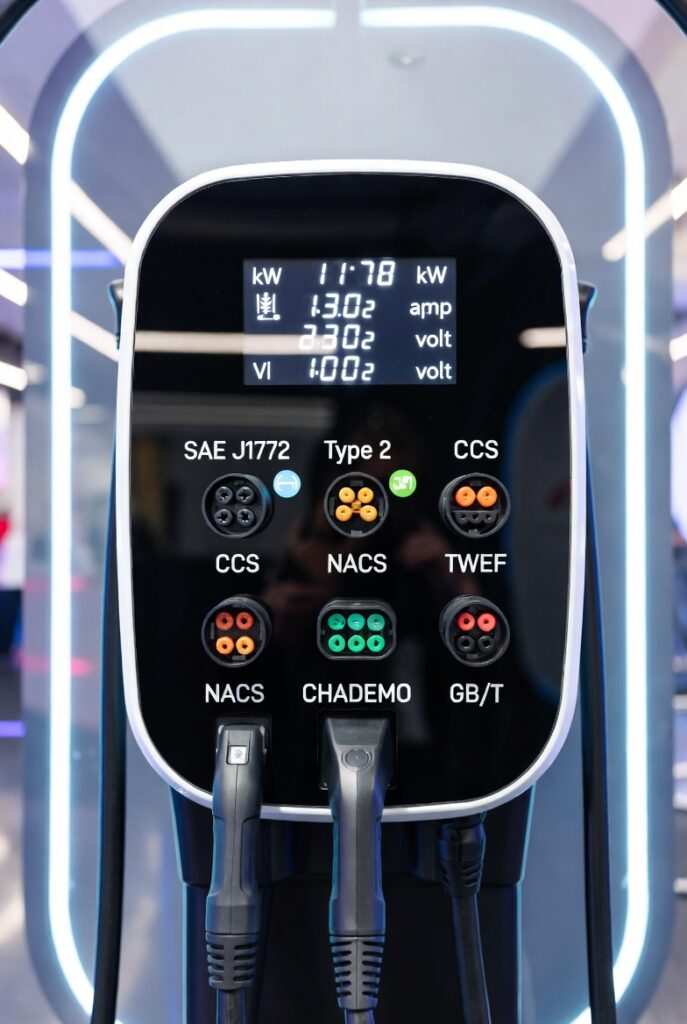
NACS vehicles can use J1772 public chargers with the included NACS-to-J1772 adapter. They can also use J1772 home chargers with that same adapter — which means all J1772 home chargers on the market are technically compatible with your Tesla, just through an adapter connection.
The question for best home chargers Tesla Model Y Model 3 2026 is whether to use a native NACS charger (no adapter needed) or a J1772 charger with the NACS adapter (adapter needed but broader charger market to choose from).
Option 1: Native NACS Home Chargers — The Clean Solution
Tesla Wall Connector (Gen 3) — The Default Answer and Why It Earns That Status
Price: $425 Connector: NACS Max Power: 11.5 kW (48A, 240V) Installation: Hardwired, 60A dedicated breaker Smart Features: App control, scheduled charging, energy monitoring, load sharing Warranty: 4 years Cable Length: 24 feet
The Tesla Wall Connector is the default answer to the best home chargers Tesla Model Y Model 3 2026 question for one reason that most third-party comparison guides understate: when you use a Tesla Wall Connector with a Tesla vehicle, the integration between the charger and the car is genuinely seamless in a way that third-party chargers don’t match.
What seamless actually means in practice:
The Tesla app shows your Wall Connector as part of your home charging ecosystem — the same place you manage charging schedules, set departure times, and monitor battery levels. When you set a departure time in the Tesla app, the car and the Wall Connector coordinate charging automatically to deliver a full battery by your departure time while prioritising off-peak electricity hours. You don’t manage two separate apps. You don’t configure the charger separately from the car. It just works.
This integration is valuable in a way that’s hard to quantify on a spec sheet but easy to appreciate daily. Tesla’s home charging experience is designed end-to-end — from the charger hardware to the app to the car’s software — in a way that third-party charger brands can’t replicate regardless of how good their hardware is.
The 24-foot cable covers awkward parking configurations without extension cord workarounds. The load sharing feature for two-unit installations means two Wall Connectors on the same circuit automatically negotiate capacity — if you have or plan to get a second Tesla, this eliminates the need for separate load management hardware. The 4-year warranty is the longest standard coverage of any home charger in this comparison.
Where it falls short for Tesla owners:
No solar integration. If you have rooftop solar and want to maximise self-consumption by charging from surplus solar generation, the Tesla Wall Connector doesn’t have this capability. The Emporia Pro handles this better at $26 less.
No OCPP support — Tesla uses proprietary protocols. For homeowners who want integration with third-party home energy management systems or utility demand response programs, this is a limitation.
Hardwired only. Renters or homeowners who want the option to take the charger with them can’t — the Wall Connector requires permanent hardwired installation.
Verdict for Tesla owners:
The Tesla Wall Connector is the right home charger for Model Y and Model 3 owners who want the cleanest possible integration between their car and their charging setup, have a permanent installation location, and don’t have solar panels as a priority. For Model Y Long Range and Model 3 Long Range owners with 200-amp panels, the 48A delivery maxes out your car’s charging capability. For RWD variants, a 32A charger delivers the same speed at lower cost.
Tesla Universal Wall Connector — The Better Choice for Mixed Households
Price: $595 Connector: NACS + J1772 adapter included Max Power: 11.5 kW (48A, 240V) Installation: Hardwired, 60A dedicated breaker Smart Features: App control, scheduled charging, energy monitoring, load sharing Warranty: 4 years Cable Length: 24 feet
The Tesla Universal Wall Connector is the same hardware as the Gen 3 Wall Connector with one meaningful addition: a J1772 adapter included in the box that allows any J1772 vehicle to charge from the same unit.
For households with a Tesla and a non-Tesla EV — or for homeowners who plan to eventually replace their Tesla with a different brand or sell the house and want the charger to work for the next owner — the Universal Wall Connector’s $170 premium over the standard Wall Connector makes sense.
For pure Tesla households with no plans to charge non-Tesla vehicles, the standard Wall Connector at $425 is the better value.
Emporia Pro (NACS Version) — Best Value NACS Charger With Solar Integration
Price: $399 Connector: NACS (also available in J1772) Max Power: 11.5 kW (48A, 240V) Installation: Hardwired or NEMA 14-50 plug Smart Features: App control, TOU scheduling, solar integration, load management, energy monitoring, Alexa/Google Home Warranty: 3 years Cable Length: 25 feet
The Emporia Pro NACS version is the strongest competitor to the Tesla Wall Connector for Tesla Model Y and Model 3 owners in 2026 — and for solar homeowners specifically, it’s a better buy.
The native NACS connector means no adapter needed. The 48A delivery matches the Tesla Wall Connector for Long Range variants. The 25-foot cable is actually longer than the Tesla’s 24-foot cable. And at $399 it’s $26 less than the Tesla Wall Connector.
But the real differentiation is the solar integration. The Emporia Pro integrates with the Emporia Vue whole-home energy monitor — when your solar panels generate surplus electricity, the Pro automatically diverts it to charging your Model Y or Model 3. For a California, Texas, Arizona, or Florida homeowner with rooftop solar charging a Model Y Long Range that commutes 60 km daily, this integration can save $400-$600 annually in charging costs.
The load management feature makes 48A charging practical on 100-amp panels — the Pro monitors your home’s total electrical draw and reduces charging speed when other high-draw appliances are running, preventing tripped breakers. For Tesla owners in older homes with 100-amp panels who don’t want to pay $2,000-$4,000 for a panel upgrade, this is a genuinely valuable feature.
Where it falls short vs Tesla Wall Connector:
The app integration with the Tesla vehicle isn’t as seamless as the Tesla Wall Connector’s native integration. You’ll use two apps — Tesla’s for vehicle management and Emporia’s for charger management. For some owners this is a minor inconvenience. For others it’s a dealbreaker.
The 3-year warranty is one year shorter than the Tesla Wall Connector. Emporia is a newer brand with a less established service infrastructure.
Solar integration requires the Emporia Vue energy monitor as a companion device — an additional $150-$200. The all-in cost of Emporia Pro plus Vue ($549-$599) narrows the price advantage over the Tesla Wall Connector.
Verdict:
The Emporia Pro NACS is the right home charger for Tesla Model Y and Model 3 owners with rooftop solar, 100-amp panels, or a strong preference for solar integration and load management over seamless Tesla app integration.
Option 2: J1772 Home Chargers With NACS Adapter — The Broader Market
Every Tesla in the US comes with a NACS-to-J1772 adapter. This means every J1772 home charger is technically compatible with your Model Y or Model 3 — you just plug the adapter onto the charger’s J1772 connector before plugging into your car.
The question is whether the adapter adds enough friction and wear to make native NACS preferable. Here’s the honest answer: for daily home charging the adapter adds roughly three seconds per session and introduces one additional connection point that can wear over time. Over 7-10 years of daily use, adapter wear is a real consideration. For most owners it’s a minor inconvenience. For owners who want the cleanest possible setup, native NACS is preferable.
That said, the J1772 market has chargers with capabilities that native NACS options don’t match — particularly for specific use cases.
ChargePoint Home Flex — Best J1772 Option for Tesla Owners Wanting Maximum Flexibility
Price: $699 Connector: J1772 (NACS adapter available) Max Power: 11.5 kW (48A, 240V) — adjustable to 16A Installation: Hardwired or NEMA 14-50 plug Smart Features: App control, scheduled charging, energy monitoring, ChargePoint network integration, OCPP 1.6 Warranty: 3 years
The ChargePoint Home Flex’s adjustable amperage is the feature that makes it worth considering for Tesla Model Y and Model 3 owners with uncertain electrical panel capacity. During installation you set the maximum amperage based on your panel’s available headroom — 16A to 48A. If you’re not sure whether your panel can support a dedicated 48A circuit, the Home Flex lets you start lower and adjust upward when you’ve assessed the situation.
The OCPP 1.6 compliance and ChargePoint network integration are genuine differentiators for Tesla owners who are also ChargePoint public charging users — home and public charging history, energy tracking, and cost reporting all appear in one app.
The adapter consideration: Running a Model Y Long Range (48A capable) through a ChargePoint Home Flex requires the NACS-to-J1772 adapter. This works fine but adds the adapter wear consideration over a 7-10 year ownership period.
Verdict:
Best for Tesla owners with uncertain panel capacity who want manual amperage control, or those who use ChargePoint public charging and want integrated network management. Less compelling than the Tesla Wall Connector or Emporia Pro for pure-Tesla households without these specific needs.
Grizzl-E Classic (J1772) — Best Budget Option for Tesla Owners in Mild Climates
Price: $229 Connector: J1772 Max Power: 9.6 kW (40A, 240V) Installation: Hardwired or NEMA 14-50 plug Smart Features: None Warranty: 3 years IP Rating: IP67
The Grizzl-E Classic is the best budget home charger for Tesla Model Y and Model 3 owners who want reliable no-frills charging at the lowest possible cost.
At 40A (9.6 kW) it doesn’t max out the Long Range variants’ 48A capability — but for RWD Model Y and Model 3 owners whose cars only accept 32A anyway, the Grizzl-E Classic’s 40A delivers more than the car needs at a fraction of the price of premium alternatives.
For Long Range owners: the difference between 40A (9.6 kW) and 48A (11.5 kW) is approximately 1.5-2 hours on a full charge from empty. For owners who charge overnight and always start with a meaningfully depleted battery, this difference rarely matters in practice — you’re plugging in for 8-10 hours either way.
The IP67 rating and -40°C operating temperature make it the best cold weather budget charger available — relevant for Tesla owners in northern US states and Canada.
No smart features means no scheduled charging, no app, no energy monitoring. For owners on flat-rate electricity tariffs who don’t care about off-peak optimisation, this is fine. For owners on TOU tariffs who want automated scheduling, it’s a dealbreaker.
Verdict:
Best for Tesla owners who want reliable budget charging, particularly RWD variant owners for whom 40A exceeds the car’s acceptance rate anyway, and cold climate owners who need IP67 weather protection.
Grizzl-E Smart (J1772) — Best Budget Smart Option
Price: $329 Connector: J1772 Max Power: 9.6 kW (40A, 240V) Installation: Hardwired or NEMA 14-50 plug Smart Features: WiFi app control, scheduled charging, energy monitoring Warranty: 3 years IP Rating: IP67
The Grizzl-E Smart adds WiFi connectivity, app control, and TOU scheduling to the rugged Grizzl-E Classic platform. For Tesla owners on time-of-use tariffs who want scheduled charging at a competitive price point, the Grizzl-E Smart is the most affordable smart charger with IP67 weather protection.
The 40A ceiling is the same limitation as the Classic — doesn’t max out Long Range variant capability but covers RWD variants with headroom to spare.
Verdict:
Best for Tesla RWD owners who want scheduled charging and weather resistance at a competitive price. Long Range owners who want to maximise 48A charging should look at the Tesla Wall Connector or Emporia Pro instead.
The Panel Question — What Most Tesla Buyers Miss
The electrical panel question is more relevant for Tesla Model Y and Model 3 owners than for owners of many other EVs — because the Long Range variants’ 48A acceptance rate requires a 60A dedicated breaker, which is demanding on older 100-amp residential panels.
If you have a 200-amp panel: Straightforward. A 60A dedicated breaker for a 48A charger is a standard installation that doesn’t stress a 200-amp panel. Buy whichever charger matches your priorities.
If you have a 100-amp panel: You have three options:
- Panel upgrade to 200 amps — typically $1,500-$4,000. Adds long-term electrical capacity and eliminates all charging constraints but is expensive and disruptive.
- Buy a 32A (7.2 kW) charger rather than 48A — a 32A charger requires a 40A dedicated breaker rather than 60A, which is much more manageable on a 100-amp panel. For RWD Model Y and Model 3 owners this doesn’t sacrifice any charging speed. For Long Range owners it reduces overnight charging speed but rarely affects daily use if you charge every night.
- Buy the Emporia Pro with load management — the load management feature monitors your home’s total draw and reduces charging speed dynamically when other appliances are running. This makes 48A charging practical on many 100-amp panels without a panel upgrade. The Emporia Pro at $399 plus Vue monitor at $150-$200 ($549-$599 total) is significantly cheaper than a panel upgrade.
Do You Even Need a Level 2 Charger? The Honest Answer
This question gets asked by every new Tesla Model Y and Model 3 owner and most guides avoid answering it directly.
You probably don’t need a Level 2 charger if:
- You drive less than 40 km daily
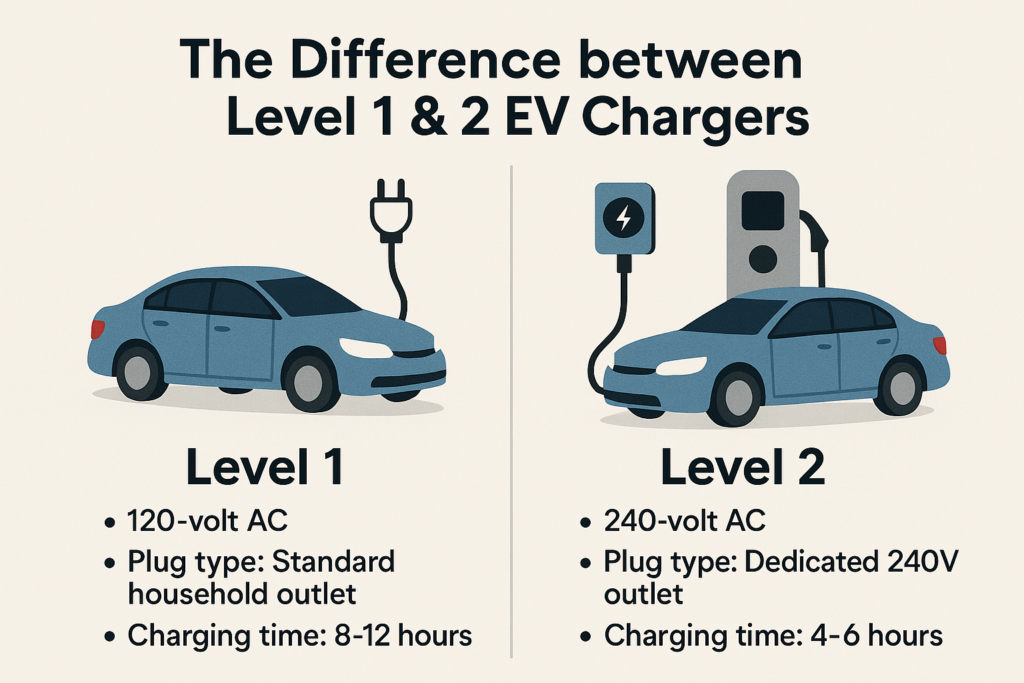
- You have access to a NEMA 14-50 outlet at your parking location (Level 1+ from a 240V outlet delivers roughly 30-40 km per hour of charging)
- You live near a reliable Tesla Supercharger and are comfortable weekly top-up charging there
- You’re renting short-term and moving within a year
You definitely need a Level 2 charger if:
- You drive more than 80 km daily
- You often arrive home with the battery below 30%
- Multiple drivers share the vehicle with different schedules
- You regularly need a full battery after arriving home with low charge
- You find yourself thinking about charging logistics more than once a week
The honest answer for most Model Y and Model 3 owners who use their car as a primary vehicle: a Level 2 home charger is worth the investment. The convenience of waking up to a full battery every morning — never thinking about charging logistics — is worth more than the charger costs over a 5-year ownership period.
The Best Home Charger for Tesla Model Y and Model 3 — Decision Matrix
| Situation | Best Charger | Why |
|---|---|---|
| Long Range + 200A panel + no solar | Tesla Wall Connector ($425) | Best Tesla integration, 48A, 4-year warranty |
| Long Range + solar panels | Emporia Pro NACS ($399 + $150-200 Vue) | Solar divert pays for itself in 1-2 years |
| Long Range + 100A panel | Emporia Pro NACS ($399) | Load management avoids panel upgrade |
| RWD + budget priority | Grizzl-E Classic ($229) | 40A exceeds car’s 32A need, lowest cost |
| RWD + want scheduling | Grizzl-E Smart ($329) | Smart features at competitive price |
| Mixed Tesla + non-Tesla household | Tesla Universal Wall Connector ($595) | J1772 adapter included for non-Tesla |
| Renter + need portability | ChargePoint Home Flex NEMA 14-50 ($699) | Portable option with smart features |
| Cold climate + budget | Grizzl-E Ultimate ($399-449) | IP67, -40°C, internal heating |
| Cold climate + smart features | Emporia Pro NACS ($399) | IP66 + solar + load management |
The Federal Tax Credit — What Tesla Owners Can Claim
The federal Alternative Fuel Vehicle Refueling Property Credit covers 30% of the purchase and installation cost of a home EV charger, up to $1,000 total credit.
For Tesla Model Y and Model 3 owners this applies to:
- The charger unit cost
- Professional installation costs
- Any electrical panel work specifically required for the charger circuit
Examples:
Tesla Wall Connector ($425) + $400 installation = $825 total 30% credit on $825 = $247.50 Effective cost after credit: $577.50
Emporia Pro ($399) + $400 installation = $799 total 30% credit on $799 = $239.70 Effective cost after credit: $559.30
Emporia Pro + Vue ($549-$599) + $400 installation = $949-$999 total 30% credit on $949-$999 = $284.70-$299.70 Effective cost after credit: $664.30-$699.30
The tax credit makes the effective cost difference between the Tesla Wall Connector and the Emporia Pro even smaller — less than $20 after credit on typical installation costs.
File IRS Form 8911 with your tax return. Confirm with your tax advisor for your specific situation.
Internal Links — Further Reading on Clean Energy Bazaar
The best home chargers Tesla Model Y Model 3 2026 decision sits within a broader context these guides cover.
For the full US home charger market including every option beyond Tesla-specific picks, our best home EV chargers 2026 US comparison covers ten options honestly. For the detailed three-way comparison between the Tesla Universal Wall Connector, ChargePoint Home Flex, and Emporia Pro, our Tesla Universal Wall Connector vs ChargePoint Home Flex vs Emporia Pro 2026 guide goes deep on every relevant difference. If you want to know whether smart features like solar integration and load management genuinely justify their premium, our smart EV chargers 2026 features worth the cost guide gives specific payback timelines. For understanding every spec in plain language before you buy, our guide to understanding EV charger specs 2026 covers kW, amps, NACS and OCPP clearly. Before finalising any purchase, our EV charger warranty comparison covers what warranty terms mean in practice. And if you’re deciding between portable and hardwired installation, our portable vs hardwired home EV chargers US Europe guide covers the real cost comparison and decision framework.
Final Thoughts
The best home chargers Tesla Model Y Model 3 2026 question has clearer answers than most guides admit.
For most Tesla owners with a permanent installation location and no solar panels: the Tesla Wall Connector is the right buy. The seamless app integration, 4-year warranty, and native NACS connector justify the price for the clean daily experience it delivers.
For Tesla owners with solar panels: the Emporia Pro NACS is the better buy. Solar divert pays for itself within 1-2 years and the native NACS connector eliminates adapter complexity.
For Tesla RWD owners on a budget: the Grizzl-E Classic delivers everything you need at a third of the Tesla Wall Connector’s price — and at 40A it delivers more than your car’s 32A ceiling anyway.
For cold climate Tesla owners: the Grizzl-E Ultimate’s IP67, -40°C rating, and internal heating make it the most reliable outdoor charger available at this price for northern US states and Canada.
The worst outcome in this comparison is paying $595 for the Tesla Universal Wall Connector when you have a pure-Tesla household and could have the Gen 3 Wall Connector for $425. Or buying a 48A charger for a Model Y RWD that only accepts 32A. Or installing a smart charger on a 100-amp panel and tripping the breaker on the first cold morning when the heater, dryer, and EV charger all run simultaneously.
Know your car’s maximum AC acceptance rate. Know your panel capacity. Answer those two questions first. The right charger from this comparison follows naturally.