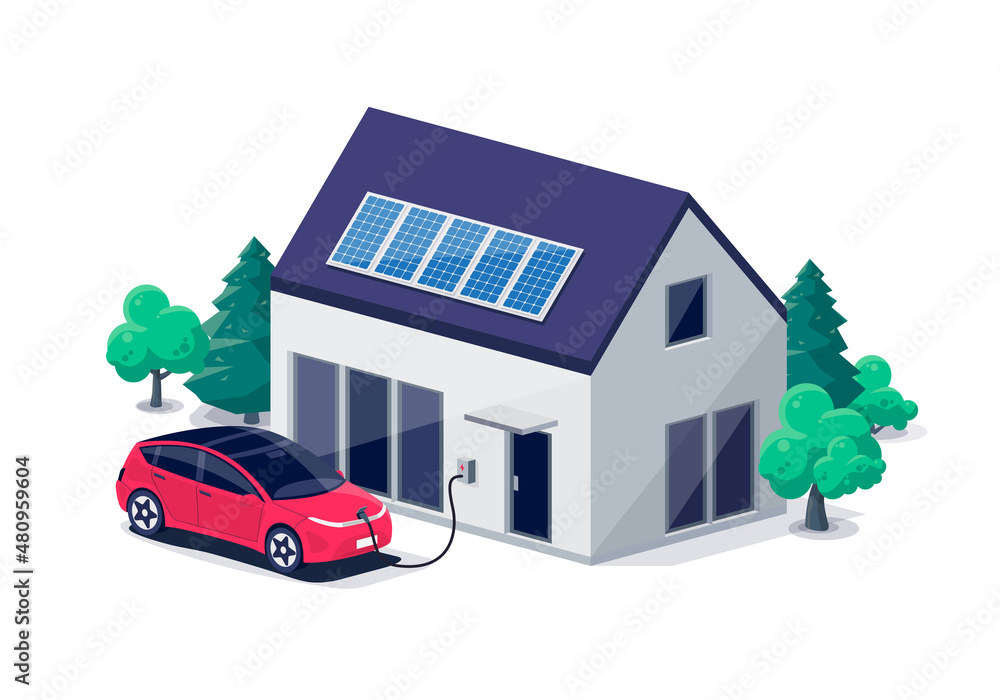
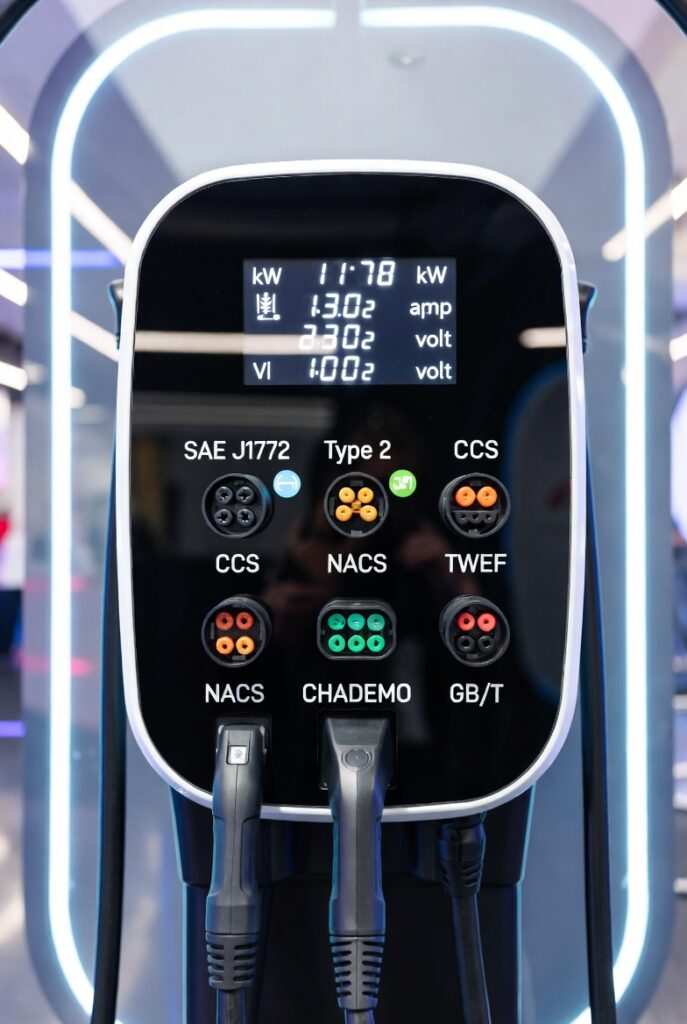
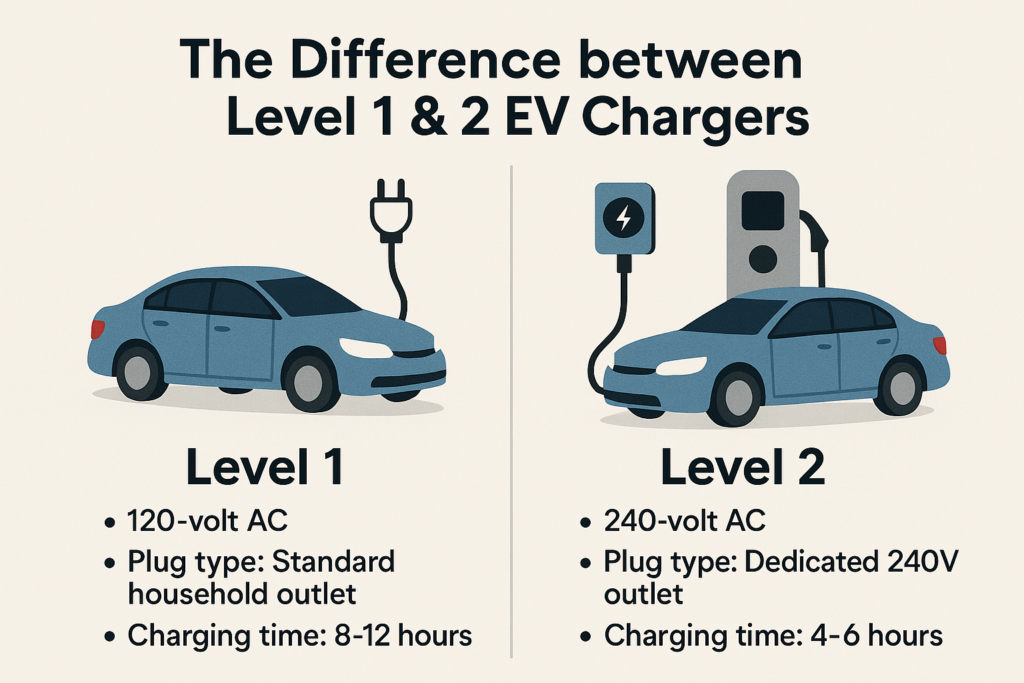
Here is a product listing that appears frequently on Chinese e-commerce platforms in 2026.
“Smart EV home charger — WiFi + 5G dual connectivity, supports digital yuan (数字人民币) payment, AI energy management, voice control, NFC card access, remote monitoring, OTA updates, blockchain energy ledger, OCPP 2.0 smart grid integration.”
The product costs ¥2,800. The equivalent StarCharge S1 with reliable WiFi and TOU scheduling costs ¥999.
The question that Chinese EV buyers should ask — but most don’t — is: which of those ten connectivity features actually delivers daily value, which are present but marginal, which are technically impressive but financially worthless, and which are feature-list padding that exists only to justify the price premium?
The honest answer is that approximately three of those ten features deliver genuine ongoing daily value for most Chinese EV owners. One — 5G connectivity — sounds impressive but serves almost no home charging purpose that 2.4 GHz WiFi doesn’t serve better. One — digital yuan payment — is a real capability but specifically relevant to public charging rather than home charging. Several are genuine future-looking technologies that are not yet commercially meaningful for residential users.
This guide on the best smart connectivity WiFi 5G digital yuan payments in Chinese smart chargers evaluates every major connectivity feature category in Chinese smart home EV chargers with the same financial discipline applied throughout this content cluster: what does it actually do, does it work reliably, how much does the feature cost as a premium over alternatives, and what is the annual financial or practical value it delivers?
The Chinese Smart Charger Connectivity Landscape — What Exists in 2026
Before evaluating individual features, mapping the connectivity landscape of Chinese smart EV chargers in 2026 provides context for the feature assessment.
The Three Connectivity Tiers
Tier 1: Essential connectivity (present in every legitimate smart charger)
- WiFi 2.4 GHz: Connects charger to home network and cloud service
- TOU scheduling: Delays charging to valley rate window
- Remote start/stop: App-controlled session management
- Energy monitoring: Session history and cost tracking
- OTA firmware updates: Software improvements without physical intervention
These features are the minimum definition of a smart charger and are present in the StarCharge S1 at ¥899-¥1,099. They deliver the primary financial value of home smart charging — ¥1,500-¥1,700/year in TOU savings.
Tier 2: Enhanced connectivity (present in premium smart chargers)
- WiFi dual-band (2.4 + 5 GHz): Better connectivity in dense urban environments
- Bluetooth: Local connection backup if WiFi is unavailable
- OCPP 1.6: Third-party platform integration, demand response capability
- Smart home ecosystem integration: Xiaomi Mi Home, Huawei HarmonyOS
- Voice control: 小爱同学, 小艺 integration
These features add convenience, ecosystem value, and future-proofing. Premium justified in specific circumstances (dense WiFi environment, smart home ecosystem users, long-term ownership plans).
Tier 3: Advanced/emerging connectivity (premium and specialised products)
- 4G/5G cellular connectivity: Backup or primary wireless connection
- OCPP 2.0: Advanced smart grid integration
- Digital yuan (e-CNY) payment integration
- NFC card access
- Blockchain energy ledger
- V2G bidirectional communication protocols
These features are real and technically genuine but have specific relevance profiles — valuable for some users in some scenarios, meaningless for most home charging situations.
Feature 1: WiFi Connectivity — The Foundation That Everything Else Depends On
Why WiFi Quality Is the Most Important Connectivity Specification
Before evaluating any premium connectivity feature, WiFi reliability deserves the most scrutiny — because a smart charger that loses WiFi connectivity becomes a dumb charger. All TOU scheduling, remote control, energy monitoring, and smart home integration depends on sustained WiFi connectivity.
2.4 GHz vs Dual-Band (2.4 + 5 GHz) WiFi
2.4 GHz WiFi (single-band chargers — StarCharge S1, TELD, most budget smart chargers):
The 2.4 GHz frequency band provides adequate WiFi for EV charging management in most Chinese residential environments. It has better range and wall-penetration than 5 GHz — important for underground car parks where the charger may be 2-3 floors below the home WiFi router.
The 2.4 GHz congestion problem in Chinese urban environments: In high-density Chinese apartment buildings — a 30-storey Shanghai high-rise may have 100+ WiFi networks visible on 2.4 GHz — channel congestion creates intermittent connectivity issues. A charger whose TOU scheduling depends on cloud API communication may miss scheduled charging windows if WiFi connectivity is intermittent.
5 GHz WiFi advantages for EV chargers: The 5 GHz band has less congestion (fewer devices use it) and higher data throughput. In dense urban environments, a charger on 5 GHz maintains more reliable connectivity than one limited to congested 2.4 GHz.
The limitation of 5 GHz for underground parking: 5 GHz signals attenuate more through walls and floors than 2.4 GHz. A charger installed 3 floors underground from the router may have poor 5 GHz signal even when 2.4 GHz is adequate. Dual-band chargers select the better signal — using 5 GHz in close proximity and falling back to 2.4 GHz when distance or obstacles reduce 5 GHz signal quality.
Annual value of dual-band WiFi vs single-band: If single-band 2.4 GHz connectivity failures cause 10 missed TOU charging sessions per year (conservative estimate in dense urban buildings):
- Each missed TOU session cost: 50 km day × 18 kWh/100km × ¥0.41 (peak-valley difference) = ¥3.69/session
- Annual cost of connectivity-induced TOU failures: 10 × ¥3.69 = ¥36.90/year
The dual-band WiFi premium over single-band in chargers: approximately ¥150-¥300.
Payback: 4-8 years — financially modest. The justification for dual-band WiFi is more about reliability confidence than financial return.
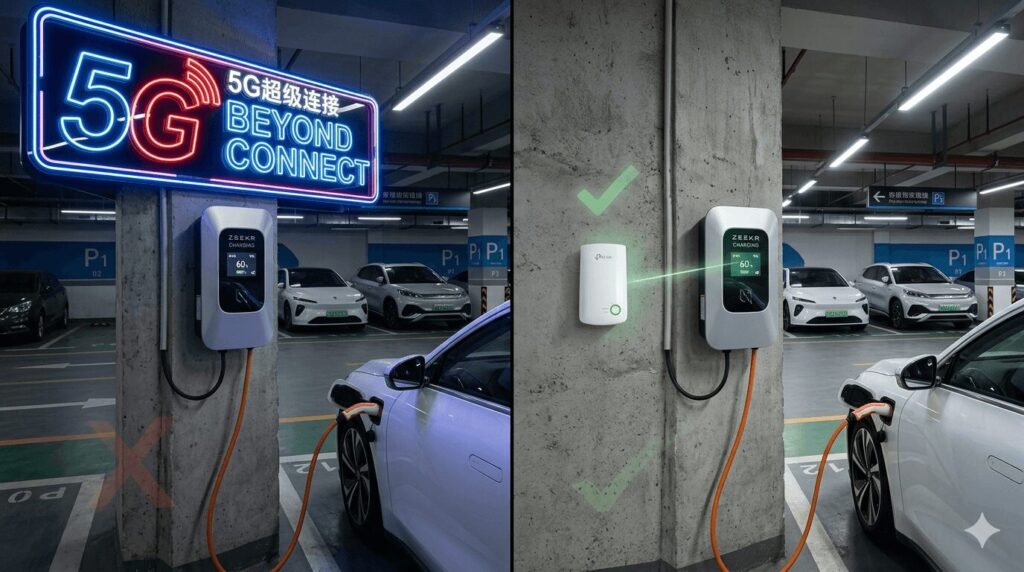
Recommendation: In standard Shanghai underground parking (2-3 floors), 2.4 GHz WiFi with a WiFi extender (¥80-¥150) is a more cost-effective reliability improvement than paying a premium for dual-band WiFi in a different charger. In dense Beijing high-rise environments where 2.4 GHz is specifically congested, dual-band provides genuine benefit.
WiFi Extender — The Overlooked Solution
For owners with single-band WiFi chargers experiencing connectivity issues:
A TP-Link or Xiaomi WiFi extender positioned at the B1 level of the underground car park — powered from a car park maintenance socket with 物业 permission — extends reliable WiFi coverage to B2 or B3 levels where most Chinese EV chargers are installed.
Cost: ¥80-¥150 (extender) + ¥50-¥100 (electrician to connect to maintenance socket) Annual value: Prevents missed TOU sessions — equivalent value to dual-band WiFi premium Payback: Immediate (cost far below charger replacement)
This solution works with any existing charger and is usually a better investment than upgrading a charger primarily for its WiFi specification.
Feature 2: 4G/LTE Connectivity — The Solution to the WiFi Problem
What 4G Connectivity in a Home EV Charger Does
Some Chinese home EV chargers — most notably certain Autel MaxiCharger variants and Ampere Time AI chargers — offer optional 4G/LTE cellular connectivity as an alternative or backup to WiFi.
How it works: A SIM card (either installed by the manufacturer with a data plan, or user-installed with a chosen carrier) connects the charger directly to the internet via cellular network — independent of the home or building WiFi infrastructure.
The practical value:
- Charging in underground car parks with no WiFi signal: 4G provides reliable connectivity where WiFi fails
- Charging in rural or non-standard locations: cellular coverage is often available when home WiFi is not
- Backup connectivity when home router fails or is replaced: 4G maintains charger function independent of home network changes
Annual cost of 4G connectivity: A dedicated IoT data SIM for a home EV charger (low data usage — primarily small telemetry packets): ¥60-¥180/year depending on carrier and plan.
Annual value of 4G vs WiFi connectivity (where WiFi is unreliable): For a charger in a location where WiFi is consistently unreliable — causing 20+ missed TOU sessions annually: 20 sessions × ¥3.69/session = ¥73.80/year in avoided TOU failures Plus: Convenience of not managing WiFi router changes, extender maintenance, etc.
Payback on 4G option premium (typically ¥300-¥600 over WiFi-only model) + annual data cost:
- Premium: ¥450 average
- Annual data: ¥120
- Annual value: ¥100-¥200
- Payback: 2-4 years — marginal financial case, genuine reliability case
The 4G recommendation: For chargers in locations with confirmed poor WiFi coverage — rural installations, deep underground parking, locations where router is more than 20 metres away with multiple concrete walls — the 4G option provides reliability that justifies its cost. For standard home installations with adequate WiFi, 4G is an unnecessary expense.
Feature 3: 5G Connectivity — The Most Overhyped Connectivity Feature in Chinese Chargers
The 5G Marketing Reality
5G connectivity in home EV chargers is the single most overhyped feature in the Chinese smart charger market in 2026. Understanding why requires understanding what 5G actually provides versus what home EV charging actually needs.
What 5G Provides
5G cellular connectivity offers:
- Very high data throughput (potentially 1 Gbps+)
- Very low latency (1-10 milliseconds)
- High device density support
- Reliable connectivity in dense urban environments
What Home EV Charging Actually Requires
A home EV charger’s connectivity needs:
- Data throughput: Extremely low — a charging session’s telemetry (SOC updates, power readings, session logs) generates approximately 1-5 kilobytes of data per session. Even 2G networks can handle this comfortably.
- Latency: Non-critical for home charging. Whether a “start charging” command takes 50 milliseconds (4G) or 5 milliseconds (5G) to execute is meaningless when the charging session will run for 6-8 hours.
- Device density: Irrelevant for a single home charger.
The honest 5G assessment for home EV chargers: 5G provides no functional benefit over 4G for any home EV charging use case in 2026. The data requirements of EV charging telemetry are orders of magnitude below what even 2G can deliver. The latency advantage of 5G over 4G is irrelevant for scheduled overnight charging.
The Chinese charger brands using “5G” in marketing: Several Chinese smart charger brands include “5G” in their product listings either:
- By specifying 5G-compatible WiFi (WiFi 6, also called WiFi 6E) — which is a router/home network standard, not cellular 5G
- By including a 5G cellular SIM capability — which provides no functional benefit over 4G for home charging
- As pure marketing without actual 5G hardware — using the term to signal technological sophistication
Clarification: WiFi 6 vs 5G cellular: These are frequently conflated. WiFi 6 (802.11ax) operates on 2.4 GHz and 5 GHz frequency bands and is a legitimate home network improvement — better performance in congested environments. Cellular 5G is a mobile network standard. A charger with “5G WiFi” likely has WiFi 6 (legitimate) not cellular 5G (irrelevant for home use).
Annual value of 5G cellular in a home EV charger: ¥0 The data requirements of home EV charging are so low that any connectivity standard from 2G upward is sufficient.
Recommendation: Any product claiming 5G connectivity as a home EV charger differentiator should prompt the question: “Is this WiFi 6 (which is genuinely useful in congested environments) or cellular 5G (which provides zero benefit for home charging)?” If cellular 5G, the premium is unjustified.
Feature 4: Digital Yuan (数字人民币 / e-CNY) Payment Integration
What Digital Yuan Is
The digital yuan (数字人民币 / e-CNY) is China’s central bank digital currency — issued by the People’s Bank of China (PBoC). It is not a cryptocurrency — it is a digital form of the renminbi with the same legal status as physical cash, but stored and transacted digitally through official wallet applications.
Current digital yuan deployment status: The PBoC has been conducting trials of digital yuan since 2019. By 2026, digital yuan is accepted at:
- Major retail chains (Starbucks, McDonald’s, certain supermarkets)
- Some government service payments
- Selected EV charging networks — most notably State Grid charging stations in pilot cities
- Certain transportation payment systems
Digital Yuan and Public EV Charging
Where digital yuan currently integrates with EV charging:
The State Grid’s 国网充电桩 app in pilot cities (Beijing, Shanghai, Shenzhen, Suzhou, Chengdu) has integrated digital yuan payment as an option alongside Alipay and WeChat Pay. At compatible State Grid public charging stations, sessions can be paid with e-CNY wallet.
The specific digital yuan EV charging advantage: Digital yuan transactions have no transaction fees between parties — unlike Alipay and WeChat Pay, which charge merchants a fee (typically 0.38-0.6%). For high-volume charging operators, zero transaction fees is a meaningful cost advantage that theoretically allows lower per-kWh pricing for e-CNY payments.
In practice (2026): Most Chinese public charging stations that accept digital yuan also accept Alipay and WeChat Pay at identical prices. The fee advantage has not yet translated into consumer-visible price differences at public charging stations at scale.
Digital Yuan and Home EV Charging
Does digital yuan payment integration in a home charger matter?
For home EV charging specifically: No — not meaningfully in 2026.
Home EV charging electricity costs are billed through the electricity meter — to the State Grid residential electricity account. The electricity bill is paid through standard utility payment channels (Alipay, WeChat Pay, bank transfer, State Grid app). The home charger’s energy monitoring app shows consumption and costs — but the actual payment mechanism is through the electricity account, not the charger app’s payment system.
For public AC charging at commercial car parks (where the charger app handles payment): Digital yuan integration can reduce transaction friction if the user already uses digital yuan wallet. But this is a public charging use case — not home charging.
The home charger “digital yuan support” marketing reality: Products claiming “digital yuan support” for a home EV charger are typically describing:
- The ability to top up a charger app wallet using digital yuan
- Integration with the State Grid’s digital yuan pilot in their public network (not applicable to home installation)
- Aspirational features for future integration
For a home charger where all electricity billing goes through the utility account — digital yuan payment integration in the charger itself is currently a marketing feature without meaningful practical function.
Annual value of digital yuan integration in a home EV charger: ¥0-¥50 (marginal at best) The convenience of paying a charger app wallet with digital yuan rather than Alipay reduces 3-5 button taps in an already convenient payment flow. This has negligible financial value.
Recommendation: Do not pay a hardware premium for digital yuan payment integration in a home EV charger. The feature is relevant for public charging network apps and may become more valuable when digital yuan adoption is wider — but has no meaningful home charging value in 2026.
Feature 5: NFC Card Access (NFC刷卡启动)
What NFC Card Access Does
NFC (Near Field Communication) card access allows the owner to start a charging session by tapping an NFC card or NFC-enabled smartphone on a reader built into the charger — instead of using the app.
Primary use cases:
- Starting charging without opening the app
- Allowing shared access to the charger (giving a card to a family member or parking space sharer)
- Backup access if the app is unavailable (phone battery dead, app malfunction)
The Annual Value Assessment
Convenience value: The time saving of NFC tap versus app open-navigate-press: approximately 15-30 seconds per session. At daily use: 15 seconds × 365 days = 91 minutes annually. At a time value of ¥50/hour: ¥75.83/year.
This is a real convenience benefit — but modest.
Shared access value: For owners who share their home charger with a family member, partner, or neighbour, NFC cards provide a simple and reliable access method that doesn’t require managing app logins on multiple phones.
The NFC backup access value: In practice, smart chargers typically allow override charging from the vehicle’s own controls or the vehicle app, reducing the dependency on charger NFC access as a backup.
Feature premium for NFC: Typically ¥100-¥300 over non-NFC equivalent.
Recommendation: NFC is a genuinely useful convenience feature — particularly for shared access scenarios. The ¥100-¥300 premium is reasonable if shared access is relevant to your situation. Not worth pursuing as a sole purchasing criterion.
Feature 6: OCPP 1.6 vs OCPP 2.0 — The Protocol That Opens Future Value
What OCPP Provides
As covered in our smart feature value guide, OCPP (Open Charge Point Protocol) is the communication standard that enables home chargers to participate in third-party energy management systems, fleet management, and smart grid demand response programmes.
OCPP 1.6: The current standard. Handles basic session management, billing integration, energy reporting, and standard demand response signals.
OCPP 2.0.1: The advanced standard. Adds bidirectional communication, device management, ISO 15118 Plug-and-Charge, advanced smart grid integration, enhanced security.
Current and Future Value in China
OCPP 1.6 current value for Chinese residential owners:
- Fleet management: Relevant for commercial operators — not typical residential owners
- Third-party energy platform integration: Some Chinese energy management platforms support OCPP — growing
- Demand response: Beijing and Shanghai pilot programmes support OCPP-compliant chargers — ¥200-¥800/year potential income for active participants
OCPP 2.0 current value for Chinese residential owners:
- Same as OCPP 1.6 currently — programmes that specifically require 2.0 are not yet widespread in Chinese residential market
- V2G readiness: The bidirectional communication in OCPP 2.0 is prerequisite for residential V2G — which is not commercially available in China’s residential market in 2026
OCPP premium justification for long-term owners: Owners planning 7-10 year ownership horizon: OCPP 1.6 is worth the ¥300-¥500 premium for demand response programme access. OCPP 2.0 adds ¥300-¥600 more for V2G preparedness — worth considering for Shenzhen and Shanghai owners in China’s most advanced electricity market cities.
Feature 7: Voice Control Integration (语音控制)
What Voice Control Provides
Smart charger voice control in China operates through one of three platforms:
小爱同学 (Xiaoqi — Xiaomi AI assistant): Available through Xiaomi EV Charger + Mi Home integration. Commands in natural Mandarin manage charging:
- “小爱,开始充电” (Start charging)
- “小爱,晚上11点开始充电” (Start charging at 11pm tonight)
- “小爱,车充了多少了” (How much has the car charged)
小艺 (Xiaoyi — Huawei AI assistant): Available through Huawei FusionCharge + HarmonyOS. Similar natural language EV charging commands.
天猫精灵 (Tmall Genie — Alibaba AI assistant): Available through StarCharge S Series Pro + Alibaba ecosystem. Less natural language sophistication than Xiaomi or Huawei but functional for basic commands.
Annual Value of Voice Control
Time saving: Opening app + navigating to charging control + tapping start: approximately 20-30 seconds. Voice command equivalent: 3-5 seconds. Daily time saving: 15-25 seconds. Annual: 91-152 minutes. At ¥50/hour time value: ¥75-¥126/year.
Convenience value beyond time: Starting a charging session while carrying groceries (hands-free), adjusting charging schedule without finding phone, checking charging status while cooking — genuine quality-of-life improvements.
Feature premium for voice control: Typically included in Xiaomi EV Charger, Huawei FusionCharge, StarCharge S Series Pro — not available as a standalone addition to basic chargers.
Recommendation: Voice control is a genuine convenience feature for ecosystem users (Xiaomi Mi Home, Huawei HarmonyOS). The premium is primarily in the charger’s ecosystem tier, not specifically in voice capability. For owners already paying for the smart home ecosystem, voice control comes naturally. For owners without the ecosystem, don’t pay for it specifically.
Feature 8: Blockchain Energy Ledger (区块链能源账本)
What This Feature Claims to Do
Some premium Chinese smart charger products in 2026 include blockchain-based energy ledger features — recording every charging session as an immutable blockchain entry, theoretically enabling:
- Tamper-proof energy consumption records for green energy certification
- Carbon credit tracking and verification
- Vehicle-to-grid energy trading with verifiable transaction records
- Peer-to-peer energy sharing verification
The Honest Assessment
For residential home EV charging in 2026: zero practical value.
The use cases that blockchain energy recording supports — carbon credit trading, peer-to-peer energy markets, certified green energy verification — are not available to individual Chinese residential EV owners in 2026. These are industrial-scale applications in early development or pilot stages.
The blockchain charger premium: Products with blockchain features typically cost ¥500-¥1,500 more than functionally equivalent chargers without blockchain.
Annual value of blockchain energy ledger for home EV owner: ¥0
Recommendation: Do not pay any premium for blockchain energy ledger features in a home EV charger in 2026. The feature will not be useful for residential owners until carbon trading markets and peer-to-peer energy systems develop significantly beyond their current state.
Feature 9: Plug-and-Charge / ISO 15118 (即插即充)
What Plug-and-Charge Does
ISO 15118 “Plug and Charge” is a protocol that enables EV charging to begin automatically when the connector is plugged in — without any app interaction, card tap, or QR scan. The vehicle and charger authenticate each other through digital certificates embedded in the hardware.
How it works:
- Plug GB/T connector into vehicle
- Charger and vehicle automatically authenticate
- Charging begins — no user action required
- Session ends automatically at target SOC or departure time
- Billing handled automatically through linked accounts
Current Availability in China
Plug-and-Charge for home EV charging: For privately installed home chargers in China, most current implementations allow automatic charging session start when the car is plugged in — this is basic EVSE function, not Plug-and-Charge.
True ISO 15118 Plug-and-Charge — with cryptographic vehicle-charger authentication and automatic billing — is deployed at select public charging networks in China:
- Selected State Grid stations with IS0 15118 support
- Some premium commercial charging hubs
For home EV charging where the owner always plugs in their own car: True ISO 15118 Plug-and-Charge provides no advantage over standard auto-start on connection — the authentication and automatic billing features are relevant for public charging where unknown vehicles connect to shared infrastructure.
Annual value of ISO 15118 for home EV charger: ¥0-¥30 (trivial convenience)
Feature 10: AI Energy Optimisation (AI能源优化)
What AI Energy Optimisation Claims
Premium Chinese smart chargers — particularly Huawei FusionCharge, Ampere Time, and CATL Ningle — include AI energy optimisation features:
- Departure time learning and charging schedule optimisation
- Price forecasting for dynamic electricity pricing
- Multi-device energy coordination (EV + solar + storage + appliances)
- Consumption pattern prediction and adaptive scheduling
The Financial Value at Different AI Levels
Level 1 AI (simple departure learning): Learns departure time patterns and charges as late as possible within valley rate window. Annual additional saving over basic TOU scheduling: ¥50-¥150/year
Level 2 AI (price forecasting + multi-source optimisation): Coordinates solar, battery storage, and EV charging for maximum self-consumption and minimum grid cost. Annual additional saving over basic TOU: ¥200-¥600/year (for solar + storage equipped homes)
Level 3 AI (full Huawei FusionCharge ecosystem): As covered in our smart charger AI comparison guide:
- TOU scheduling: ¥1,670/year
- AI departure optimisation bonus: ¥200-¥400/year
- Solar + storage optimisation: ¥780/year additional
- Total ecosystem: ¥2,650-¥2,850/year
The standalone AI value (no solar or storage): Level 1 departure learning: ¥50-¥150/year additional over basic TOU Premium over basic smart charger: ¥400-¥1,200
Payback: 3-24 years — weak standalone case, strong case within full ecosystem.
Recommendation: AI energy optimisation standalone (no solar, no storage) provides modest incremental value over basic TOU scheduling. The compelling case requires the full Huawei ecosystem or equivalent multi-source energy management.
The Complete Feature Value Summary
| Feature | Annual Value | Premium Cost | Payback | Verdict |
|---|---|---|---|---|
| WiFi 2.4 GHz (TOU scheduling) | ¥1,670/yr | ¥0 (baseline) | Immediate | ✅ Essential |
| Dual-band WiFi | ¥37-¥75/yr | ¥150-¥300 | 4-8 years | ⚠️ Situational |
| 4G connectivity | ¥100-¥200/yr | ¥300-¥600 | 2-4 years | ⚠️ For poor WiFi |
| 5G connectivity | ¥0/yr | ¥200-¥600 | Never | ❌ Worthless |
| Digital yuan payment | ¥0-¥50/yr | ¥100-¥300 | 2-300 years | ❌ Irrelevant home |
| NFC card access | ¥75/yr (convenience) | ¥100-¥300 | 1-4 years | ✅ Useful shared |
| OCPP 1.6 | ¥200-¥800/yr future | ¥300-¥500 | 0.4-2.5 years | ✅ Long-term owners |
| OCPP 2.0 | ¥0-¥200/yr currently | ¥300-¥600 | 1.5-300 years | ⚠️ Future V2G |
| Voice control (ecosystem) | ¥75-¥126/yr | Bundled | Immediate | ✅ For ecosystem users |
| Blockchain ledger | ¥0/yr | ¥500-¥1,500 | Never | ❌ Worthless |
| ISO 15118 Plug-and-Charge | ¥0-¥30/yr | ¥200-¥500 | 7-500 years | ❌ Irrelevant home |
| AI departure learning | ¥50-¥150/yr | ¥400-¥1,200 | 3-24 years | ⚠️ Marginal standalone |
| AI full ecosystem | ¥780-¥1,180/yr | ¥1,000-¥3,000 | 1-4 years | ✅ For full ecosystem |
The Connectivity Buying Framework
If You Live in a Dense Urban Apartment (Beijing/Shanghai High-Rise)
Essential: WiFi connectivity with TOU scheduling — provides ¥1,670/year. Dual-band WiFi preferred for 2.4 GHz congested environments, or WiFi extender for ¥80-¥150.
Worth adding: OCPP 1.6 for demand response programme participation (¥200-¥800/year in pilot areas). Voice control if Xiaomi or Huawei ecosystem user.
Skip: 5G, blockchain, digital yuan for home charger, ISO 15118 Plug-and-Charge.
Best charger: StarCharge S1 or Xiaomi EV Charger (Mi Home users) or Autel MaxiCharger (IP65 outdoor users).
If You Have Poor WiFi at Parking Space
Essential: 4G connectivity option — provides reliable scheduling where WiFi fails.
Or: WiFi extender (cheaper if electricity source available near parking).
Best charger: Autel MaxiCharger with optional 4G, or any charger with WiFi extender installed nearby.
If You Are a Huawei Ecosystem User (HarmonyOS + Huawei Inverter + Huawei LUNA)
Essential: WiFi (included), AI energy management, solar integration, voice control (小艺).
Worth adding: OCPP 2.0 for future V2G.
Best charger: Huawei Digital Power FusionCharge — the full ecosystem delivers ¥2,650-¥2,850/year in combined savings.
If You Are a Xiaomi Mi Home User
Essential: WiFi (dual-band preferred), Mi Home integration, voice control (小爱).
Best charger: Xiaomi EV Charger — the HyperOS integration delivers genuine daily value.
If You Are Planning Long-Term Ownership (7-10 Years) in Shenzhen or Shanghai
Worth adding: OCPP 1.6 minimum, OCPP 2.0 if price difference is modest — for demand response and future V2G programme access.
Best charger: Autel MaxiCharger (OCPP 1.6 + IP65 + -30°C) or Ginlong Solis (OCPP 2.0 + IP66).
The “Feature Creep” Problem in Chinese Smart Charger Marketing
The feature lists on Chinese smart charger product listings have expanded dramatically since 2020 — from simple WiFi + TOU scheduling to the 10+ feature lists that now appear on premium products. This creates a specific risk for buyers: paying for features that sound impressive but deliver no value for residential home charging use.
How to Read a Chinese Smart Charger Feature List
Features that always justify scrutiny:
- “5G” — ask whether this is cellular 5G or WiFi 6. If cellular 5G: no value for home charging.
- “Blockchain” — no residential value in 2026. Skip.
- “Digital yuan payment” — relevant for public charging apps, not home installations.
- “ISO 15118 Plug-and-Charge” — relevant for public charging, negligible for home.
- “AI [anything]” — what does the AI specifically do? Departure learning? Price forecasting? Ecosystem coordination? The answers determine value.
Features worth paying for:
- “TOU scheduling” — the primary financial feature
- “OCPP 1.6/2.0” — for demand response and future programmes
- “IP65/IP66” — for outdoor and humid installations
- “-30°C” — for northern China and cold climates
- “Ecosystem integration (Mi Home/HarmonyOS)” — for ecosystem users
The 3-question test for any feature:
- What specifically does this feature do in daily home EV charging use?
- How much does it cost as a premium over a charger without it?
- What is the annual financial or practical value?
If you cannot get a clear answer to question 1, the feature is likely marketing rather than function.
Internal Links — Further Reading on Clean Energy Bazaar
The best smart connectivity WiFi 5G digital yuan payments in Chinese smart chargers guide is the connectivity analysis companion to the smart charger comparison guides in the Chinese market content cluster.
For the comprehensive smart charger comparison covering Huawei FusionCharge, Xiaomi, and local innovators in depth, our best smart EV chargers China 2026 Huawei Digital Power vs Xiaomi vs local innovators guide covers every AI platform. For the AI load balancing vs standard features financial analysis that established the value framework this guide applies to connectivity, our smart EV chargers 2026 AI load balancing vs standard features worth the extra cost in China guide provides the financial methodology. For the full home charger comparison covering the connectivity specifications of every major Chinese charger brand, our best home EV chargers 2026 top 7 comparison for Chinese homeowners Star Charge Autel guide covers complete market specifications. For the local utility rebates guide covering how OCPP compliance unlocks demand response income, our local utility rebates for EV charging 2026 Shenzhen Shanghai Beijing guide covers demand response programme details. For the weatherproof guide confirming which connectivity features are available in IP65/IP66 models, our weatherproof EV chargers 2026 IP ratings for humid southern China vs dusty northern China guide covers every specification. And for the Western market equivalent covering WiFi, app, and solar integration in US and European smart chargers, our best smart connectivity WiFi app solar integration US Emporia vs Europe Zappi guide provides the international comparison.
Final Thoughts
The best smart connectivity WiFi 5G digital yuan payments in Chinese smart chargers analysis in 2026 produces a clear hierarchy of feature value that cuts through the marketing complexity.
The three connectivity features that always justify investment:
- WiFi with TOU scheduling — ¥1,670/year in electricity savings. The most important feature by a factor of 10 over anything else. Available in every smart charger from ¥899.
- OCPP 1.6 — ¥200-¥800/year in demand response income for long-term owners in pilot cities. Pay the ¥300-¥500 premium for long-horizon ownership.
- Ecosystem integration (Xiaomi/Huawei) — genuine daily convenience and coordination value for active ecosystem users. Worth paying for if you’re already in the ecosystem.
The connectivity features worth considering in specific circumstances:
- 4G connectivity: For genuinely poor WiFi parking locations
- Dual-band WiFi: For dense urban environments where 2.4 GHz congestion causes TOU failures
- NFC card access: For shared charger access scenarios
- AI ecosystem optimisation: For full Huawei/solar/storage ecosystem owners
- OCPP 2.0: For Shenzhen/Shanghai 7-10 year ownership with V2G aspirations
The connectivity features to ignore entirely:
- 5G cellular: Zero functional benefit over 4G for any home charging use case
- Blockchain energy ledger: No residential value in 2026
- Digital yuan home charger payment: Relevant for public charging only
- ISO 15118 Plug-and-Charge: Public charging feature irrelevant to home installation
The feature that determines 90% of the annual financial value from any smart EV charger — TOU scheduling — has been available in Chinese smart home chargers since 2019 and is present in every product above ¥899. Every additional connectivity feature in this guide adds incremental value above this baseline.
Configure TOU scheduling on installation day. Evaluate every other connectivity feature against the question: what does it do, what does it cost, and what does it return? Apply the answers, not the marketing.