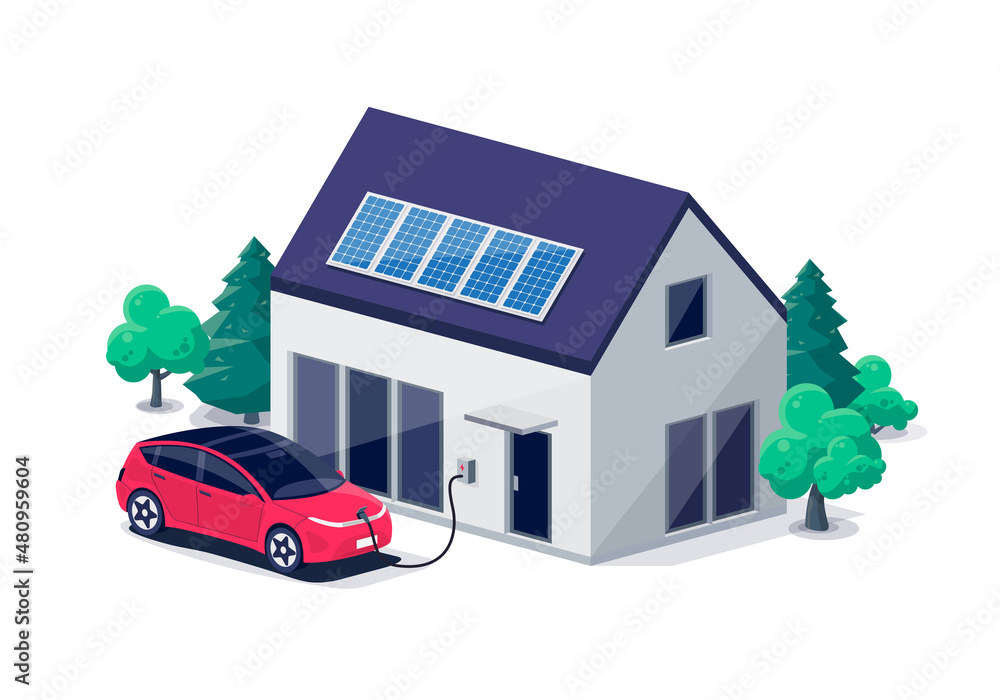
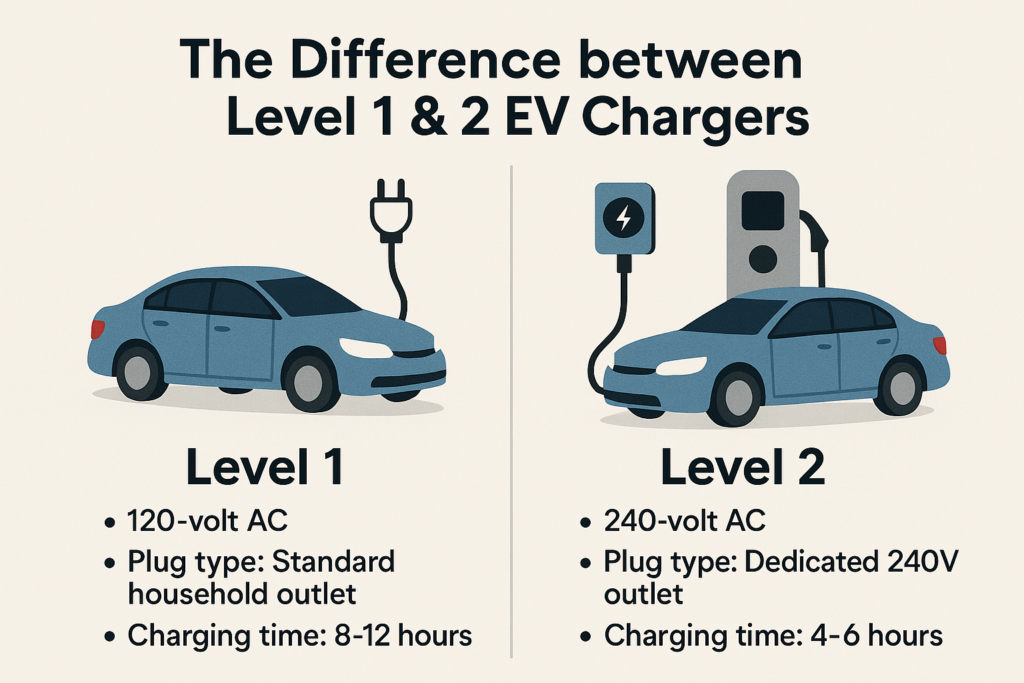
The demographic reality of China’s EV adoption is more varied than the marketing imagery suggests. While the EV market’s dominant narrative focuses on technology-enthusiastic young professionals — the Xiaomi SU7 buyers with HyperOS integration, the NIO owners monitoring battery cells through sophisticated apps — a significant and growing proportion of Chinese EV buyers are older adults: retirees who purchased an EV for practical economic reasons (significantly lower running costs), seniors whose adult children recommended the switch, and older drivers who bought their first car relatively recently as China’s vehicle ownership rate has grown across all age groups.
These owners have genuinely different needs from the technology-forward majority that most EV charging guides implicitly address. They don’t want to manage an app ecosystem. They don’t want to configure OCPP backends. They don’t want to troubleshoot WiFi connectivity. They want to plug their car in when they get home, know it will be charged by morning, and not think about it further. The technical sophistication that this guide series has covered extensively — AI energy management, demand response participation, V2G readiness, ChaoJi standard preparation — is genuinely irrelevant to their charging experience and genuinely counterproductive if it comes at the cost of the reliability and simplicity that their actual needs require.
This guide on top 5 set it and forget it chargers for Chinese seniors simplified apps addresses this specific, underserved Chinese EV owner demographic honestly — what actually matters for senior-appropriate EV charging, which specific products deliver it well, and how to help an older relative or parent set up a genuinely reliable, genuinely simple home charging arrangement that serves them well for years without requiring ongoing technical maintenance.
What “Set It and Forget It” Actually Requires
The Specific Capability Profile That Senior-Appropriate Charging Demands
Misconception 1: Simple chargers are cheap chargers
The temptation when selecting a charger for a senior relative is to purchase the cheapest, simplest unit available on the basis that “they just need it to charge the car.” This logic, while superficially appealing, produces the worst possible outcome: cheap, simple chargers from unestablished brands carry exactly the zombie pile, safety certification, and reliability risks documented throughout this guide series — risks that are even more problematic for senior owners who won’t be monitoring their charging equipment for warning signs and who have limited capacity to troubleshoot problems when they arise.
The “set it and forget it” capability profile requires not cheap simplicity but confident reliability from brands with strong survival probability, backed by safety certifications that guarantee the equipment actually does what it claims, with software simple enough to set up correctly once and then genuinely leave alone.
What “set it and forget it” actually requires:
Requirement 1: One-time TOU schedule configuration that then executes reliably without ongoing attention
The financial case for home EV charging — the ¥1,200-¥1,670 annual saving that forms the core recommendation throughout this guide series — depends on TOU scheduling executing correctly every night. For a senior owner who is not monitoring their charger app, this means TOU scheduling must be reliable enough to function correctly without daily verification, using settings configured once (ideally by an adult child during initial setup) that remain stable over months and years.
Cloud-dependent TOU scheduling (where the schedule is maintained on the manufacturer’s cloud servers and sent to the charger nightly) is less reliable for this use case than local TOU scheduling (where the schedule is stored in the charger itself and executes locally regardless of internet connectivity). A WiFi outage, a cloud server issue, or a zombie pile scenario each interrupts cloud-dependent scheduling — producing unnoticed peak-rate charging that a senior owner who isn’t monitoring the app won’t detect.
Requirement 2: Physical indicator that is immediately interpretable without app consultation
A senior owner should be able to confirm charging status with a glance at a physical LED or display — not by opening an app, navigating to a device page, and interpreting a status icon. Green means charging. Red or amber means something needs attention. This immediate physical feedback loop is the critical safety net for senior owners who won’t routinely check apps.
Requirement 3: Exceptionally robust connector engagement — low force, reliable lock
The connector engagement-disengagement interaction happens every charging day. For senior owners with arthritic hands, reduced grip strength, or reduced fine motor control, a connector that requires significant force to engage or a complex unlock mechanism to release creates genuine daily difficulty that makes home charging less pleasant than it should be.
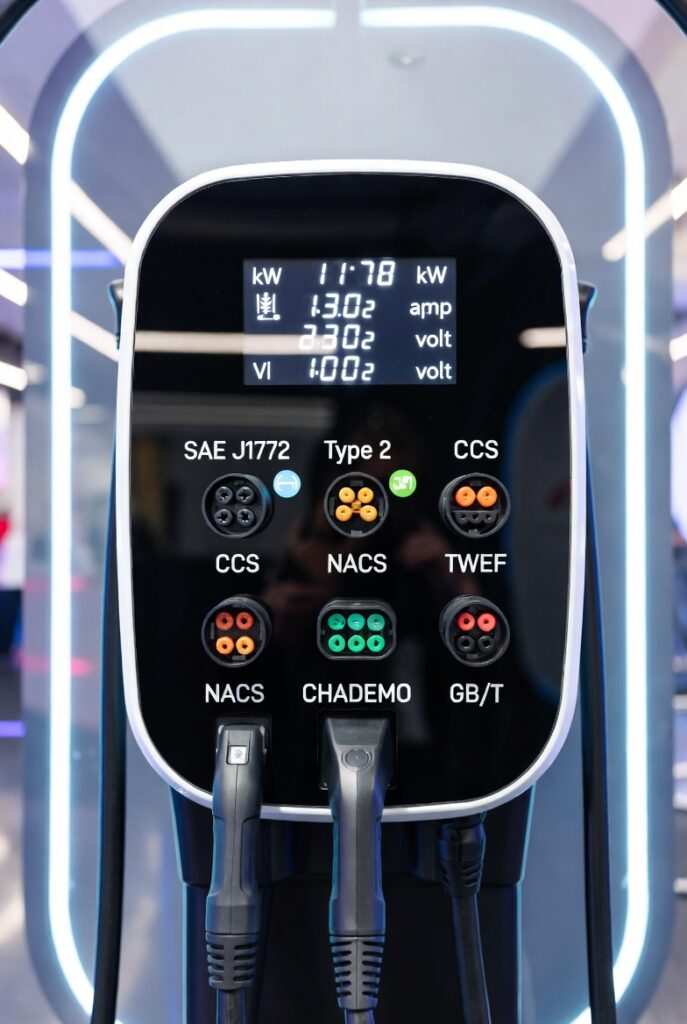
GB/T connector design varies across products in engagement force and lock mechanism design — differences that are barely noticed by younger owners with full hand strength but are significant for seniors.
Requirement 4: Automatic charging initiation without app confirmation
Some smart chargers require an app confirmation step each time a new charging session is initiated — a security feature (preventing unauthorised charging use) that becomes an inconvenience for a sole-owner home charger used by the same person every day. For senior owners, the session initiation process should be: plug in vehicle, charging starts automatically on the configured TOU schedule. No app required after initial configuration.
Requirement 5: Passive safety that works without owner attention
RCCB protection, thermal protection, overcurrent protection — all of the safety mechanisms covered throughout this guide series — must function completely passively, without any owner action or awareness. For a senior owner who won’t be checking error codes or conducting maintenance inspections, the safety mechanisms must work silently and automatically, protecting against fault conditions without requiring owner intervention.
The Five Brands Most Suitable for Senior-Appropriate Charging
The Honest Evaluation Against Each Requirement
Charger 1: StarCharge S1 Basic (星星充电S1基础版) — The Most Widely Available Simple Option
Why this appears first on the senior-appropriate list:
The StarCharge S1’s dominance in China’s residential EV charger market — the most common home charger brand in this guide series’ recommendations — reflects exactly the characteristics that make it appropriate for senior owners: a well-established product with nationwide installation support, straightforward physical operation, and the basic reliability that comes from years of iterative product refinement.
Assessment against the five requirements:
TOU scheduling reliability: ⭐⭐⭐⭐ (4/5)
The StarCharge S1’s TOU scheduling stores the configured schedule locally on the charger firmware rather than purely cloud-side — an important technical characteristic for senior reliability. Once configured by an adult child or installer during initial setup, the TOU schedule executes locally without requiring continuous cloud connectivity.
Caveat: The S1’s scheduling depends on the charger’s internal clock maintaining correct time. After power interruptions, confirm the clock has re-synchronised correctly — a one-time check after any power outage.
Physical indicator clarity: ⭐⭐⭐⭐⭐ (5/5)
The StarCharge S1’s LED indicator system is genuinely excellent for senior use: clearly visible from across a parking space, with distinct colours and patterns for different states. The basic interpretation — solid green = charging, flashing = scheduled and waiting, red = fault — is learnable in a single demonstration.
Connector ergonomics: ⭐⭐⭐ (3/5)
Standard GB/T connector engagement force — adequate for most users but not specifically ergonomically optimised for senior use. The trigger-release mechanism for connector disconnection requires a specific button press that some users with reduced hand strength may find requires two-handed operation.
Automatic session initiation: ⭐⭐⭐⭐⭐ (5/5)
Once configured, the StarCharge S1 starts a scheduled charging session automatically at the configured time without requiring any app interaction. Plug in the vehicle and walk away — charging starts at the scheduled valley rate window without any further action required.
Passive safety systems: ⭐⭐⭐⭐ (4/5)
3C certified, RCCB protection (Type A/AC — adequate but note that Type B is preferable for underground installations as covered in our professional installation guide), thermal protection, overcurrent protection — all function passively.
The app situation:
The 星星充电 app is the most downloaded and used EV charging app in China by a significant margin. For senior setup purposes, the important characteristic is that it doesn’t need to be used daily after initial configuration — the adult child or installer sets the TOU schedule during installation, and the charger then operates independently. The app remains available for monitoring and any reconfiguration, but it doesn’t intrude on the charging experience.
Recommended for: Senior owners in standard residential installations where a family member can handle initial setup, in apartments or compounds where StarCharge’s installer network provides easy professional installation.
Price range: ¥999-¥1,299
Charger 2: BYD Smart Charger (比亚迪家用充电桩) for BYD Vehicle Owners — The Integrated Simplicity Option
Why BYD vehicle owners specifically benefit from the manufacturer’s own charger:
As covered in our BYD vs NIO vs Xpeng manufacturer bundle guide, BYD’s Smart Charger for its own vehicles provides something that third-party chargers cannot: native Blade Battery optimisation and a single-app experience where the vehicle and charger are managed through the BYD app that the owner is already learning to use for their vehicle.
For a senior BYD owner — the BYD Dolphin, BYD Seagull, or BYD Han EV are all popular purchases among cost-conscious older Chinese buyers — the BYD Smart Charger eliminates the need to learn a separate charging app entirely.
Assessment against the five requirements:
TOU scheduling reliability: ⭐⭐⭐⭐ (4/5)
BYD Smart Charger integrates TOU scheduling into the BYD app ecosystem, with the schedule stored and managed in coordination with the vehicle’s own battery management preferences. For BYD vehicle owners, the combined vehicle-plus-charger scheduling approach provides TOU optimisation that also accounts for the Blade Battery’s specific thermal management preferences.
Physical indicator clarity: ⭐⭐⭐⭐ (4/5)
Clear LED status indication with a simple status display. BYD’s physical design language is generally clean and intuitive — consistent with the broader BYD product design approach.
Connector ergonomics: ⭐⭐⭐⭐ (4/5)
BYD’s own connector design, while using standard GB/T specification, has been specifically optimised for the Blade Battery charging port — the physical engagement and lock confirmation is generally considered among the more satisfying of Chinese EV connector designs.
Automatic session initiation: ⭐⭐⭐⭐⭐ (5/5)
BYD’s integrated vehicle-plus-charger approach allows scheduling from the vehicle side (using the BYD app or the in-vehicle control screen) independently of the charger — providing an additional layer of scheduling redundancy that suits senior owners who may configure scheduling from the vehicle’s touchscreen rather than a separate charging app.
Passive safety systems: ⭐⭐⭐⭐⭐ (5/5)
3C certified with BYD’s own safety engineering standards for the Blade Battery charging interaction — among the highest documented safety specifications for residential charging equipment.
The app situation:
The BYD app that senior BYD owners need to learn for their vehicle provides the charger management as well — one app, not two. For seniors who are already investing in learning the BYD vehicle app (typically guided by the dealer or an adult child), the charger management requires no additional learning beyond what vehicle ownership already requires.
Recommended for: Senior BYD vehicle owners where the single-app integration specifically reduces cognitive burden below what a separate charging brand would create.
Price range: ¥1,299-¥1,899 (often available through BYD promotions at better pricing)
Charger 3: Xiaomi EV Charger (小米电动汽车充电器) for Xiaomi Household Users — The Ecosystem Integration for Tech-Adjacent Seniors
Why this appears for a specific senior subgroup:
The “technology-phobic senior” is not the only senior profile that matters for this guide. An equally important profile is the senior who is already deeply integrated into the Xiaomi ecosystem through earlier household technology adoption — many Chinese seniors who seem “not technological” are actually heavy WeChat users, frequent Douyin viewers, and comfortable operators of Mi Home smart home devices that their children helped them set up years ago.
For this specific senior profile — already using Mi Home for air conditioning control, already familiar with Xiaomi’s consistent design language — the Xiaomi EV Charger’s integration into Mi Home is a familiarity advantage rather than a technological burden.
Assessment against the five requirements:
TOU scheduling reliability: ⭐⭐⭐⭐ (4/5)
Xiaomi’s TOU scheduling through Mi Home benefits from the same local schedule storage that makes StarCharge’s scheduling reliable, plus the added familiarity advantage for Xiaomi ecosystem users who already understand how Mi Home scheduling works from other devices.
Physical indicator clarity: ⭐⭐⭐ (3/5)
Xiaomi’s LED indicator design is clean but somewhat more minimalist than StarCharge’s — the status interpretation requires slightly more familiarity, though one-time learning is entirely achievable.
Connector ergonomics: ⭐⭐⭐ (3/5)
Standard GB/T connector, similar to StarCharge. No specific senior ergonomic optimisation.
Automatic session initiation: ⭐⭐⭐⭐⭐ (5/5)
Mi Home’s scheduling and automation capabilities allow sophisticated “plug in and forget” configuration that is genuinely among the best available for automatic session management.
Passive safety systems: ⭐⭐⭐⭐ (4/5)
3C certified, standard residential protection devices. Xiaomi’s consumer electronics manufacturing standards applied to the safety-critical charger context.
The app situation:
For the specific senior profile already using Mi Home: no new app to learn. The charger appears as another Mi Home device managed through the same interface they use for other Xiaomi home devices. For seniors who don’t already use Mi Home: the Xiaomi EV Charger loses its key advantage and is not specifically recommended over alternatives.
Recommended for: Specifically for seniors already using Mi Home devices in their home, where no new app learning is required.
Price range: ¥1,099-¥1,499
Charger 4: Huawei FusionCharge (华为智能充电桩) — The Premium “Invisible Technology” Option
Why the most sophisticated charger is also a strong senior option:
This may seem counterintuitive — how is Huawei’s AI-enhanced premium charger appropriate for seniors who want simplified technology? The answer is that “set it and forget it” suitability is not determined by the charger’s technical sophistication but by whether that sophistication works invisibly once configured.
Huawei FusionCharge’s AI energy management — which seems most relevant to tech-savvy users — actually serves senior owners particularly well once correctly set up by an adult child or Huawei-certified installer, because the AI handles optimisation automatically without any ongoing owner attention. The AI that learns departure patterns and manages battery optimisation is doing exactly what a senior owner wants their charger to do: make intelligent decisions without requiring ongoing engagement.
Assessment against the five requirements:
TOU scheduling reliability: ⭐⭐⭐⭐⭐ (5/5)
Huawei’s AI scheduling is the most reliable TOU execution available in the Chinese residential charger market, combining local schedule execution with adaptive AI that handles edge cases (unusual departure times, unexpected battery states) without requiring owner configuration updates. Once set up with departure patterns and TOU rates, it requires no ongoing adjustment.
Physical indicator clarity: ⭐⭐⭐⭐ (4/5)
Clear LED status system with the FusionCharge’s physical display showing status information. Huawei’s consumer product design heritage produces clean, immediately interpretable status indication.
Connector ergonomics: ⭐⭐⭐ (3/5)
Standard GB/T connector — no specific senior ergonomic advantage over alternatives.
Automatic session initiation: ⭐⭐⭐⭐⭐ (5/5)
Huawei’s AI auto-schedule capability is specifically designed for hands-off operation — the charger learns typical usage patterns and optimises scheduling without requiring manual reconfiguration.
Passive safety systems: ⭐⭐⭐⭐⭐ (5/5)
Among the most comprehensive passive safety implementation available in the Chinese residential market, backed by Huawei’s industrial electronics manufacturing standards.
The app situation:
The FusionCharge app requires initial setup that is technically demanding enough that it should be handled entirely by an adult child or Huawei-certified installer during setup. Once correctly configured, the app is not required for daily operation — the charger manages itself.
The honest limitation for senior use:
Any troubleshooting of Huawei FusionCharge issues requires comfort with a relatively complex app — if a problem arises that the senior owner cannot solve by checking the LED indicator, it requires either adult child assistance or Huawei’s customer service. This is an acceptable dependency for most senior owner situations but should be acknowledged explicitly.
Recommended for: Senior owners whose adult children are actively involved in managing the household technology, where the initial setup investment produces the most reliable and hands-off long-term operation available.
Price range: ¥2,499-¥3,499
Charger 5: Delta Electronics AC Mini EV Charger (台达充电桩) — The Industrial Reliability Option
Why Delta appears as a senior-appropriate option despite lower mainstream profile:
Delta Electronics, the Taiwanese industrial electronics manufacturer whose Chinese market EV charger line has appeared throughout this guide series, produces chargers that reflect the company’s primary market — industrial and commercial applications where reliability over sophisticated user experience is the dominant design priority.
This industrial reliability emphasis makes Delta’s residential charger products unusual in the current Chinese market: less feature-rich than Huawei or Xiaomi, less prominently marketed than StarCharge, but with the kind of straightforward, durable reliability that industrial-heritage manufacturers embed in products designed for unattended long-term operation.
Assessment against the five requirements:
TOU scheduling reliability: ⭐⭐⭐⭐ (4/5)
Delta’s TOU scheduling is straightforward and reliable — less sophisticated than Huawei’s AI approach but precisely as reliable for the simple scheduled-overnight-charging use case that senior owners need.
Physical indicator clarity: ⭐⭐⭐⭐⭐ (5/5)
Delta’s industrial design heritage produces clear, prominent status indication optimised for at-a-glance interpretation — clean, unambiguous, visible from a distance. This is where Delta’s industrial-first design philosophy produces a specific senior-appropriate advantage.
Connector ergonomics: ⭐⭐⭐ (3/5)
Standard GB/T specification — no specific ergonomic differentiation from other brands.
Automatic session initiation: ⭐⭐⭐⭐ (4/5)
Standard scheduled operation, automatically executing without app confirmation after initial configuration.
Passive safety systems: ⭐⭐⭐⭐⭐ (5/5)
Delta’s industrial electronics heritage produces specifically robust protection system implementation — the safety components benefit from Delta’s broader industrial safety engineering standards.
The app situation:
Delta’s smartphone app is less feature-rich than Xiaomi’s or Huawei’s — and for senior owners, this is an advantage. Fewer features means simpler navigation, less to learn, and less that can go wrong in the app experience. The initial configuration (TOU schedule, charging current setting) is straightforwardly accessible, and daily use genuinely requires no app interaction.
Recommended for: Senior owners who value industrial reliability and simple, clear physical status indication over smart features, and where the adult child’s primary goal is setting up a reliable system and then not needing to maintain it remotely.
Price range: ¥1,499-¥2,299
The Senior Setup Protocol — What the Adult Child Does During Initial Installation
The Complete Handoff Process for Family-Managed EV Charger Setup
The setup session approach:
The most effective approach to senior EV charger setup is not “teach the senior everything about the charger” but rather “set everything up correctly so the senior never needs to think about it, with one simple backup procedure for the single failure mode most likely to require their attention.”
Phase 1: The technical setup (handled entirely by the adult child or installer)
Configure TOU schedule for the senior’s city and charging pattern:
- Set scheduled start time to 30 minutes after the TOU valley window opens (to allow for any clock drift)
- Set target SOC to 80% for standard daily use (as recommended throughout this guide series for battery longevity)
- Set minimum SOC override at 20% (immediate charging if battery very low, overriding schedule)
- Document the TOU window for the specific city (available in our TOU savings guide)
Configure WiFi connection using the home’s network credentials
Register the charger in the relevant brand’s app
Enable auto-firmware-updates (covered in our firmware security guide)
Test a complete charging cycle with the vehicle to confirm schedule execution
Phase 2: The one-skill handoff (what the senior needs to know)
The single skill a senior owner needs for normal daily operation: look at the LED indicator when they plug in the car.
Green/white pulse: scheduled and will charge at the configured time. No action needed.
Charging light pattern: currently charging. No action needed.
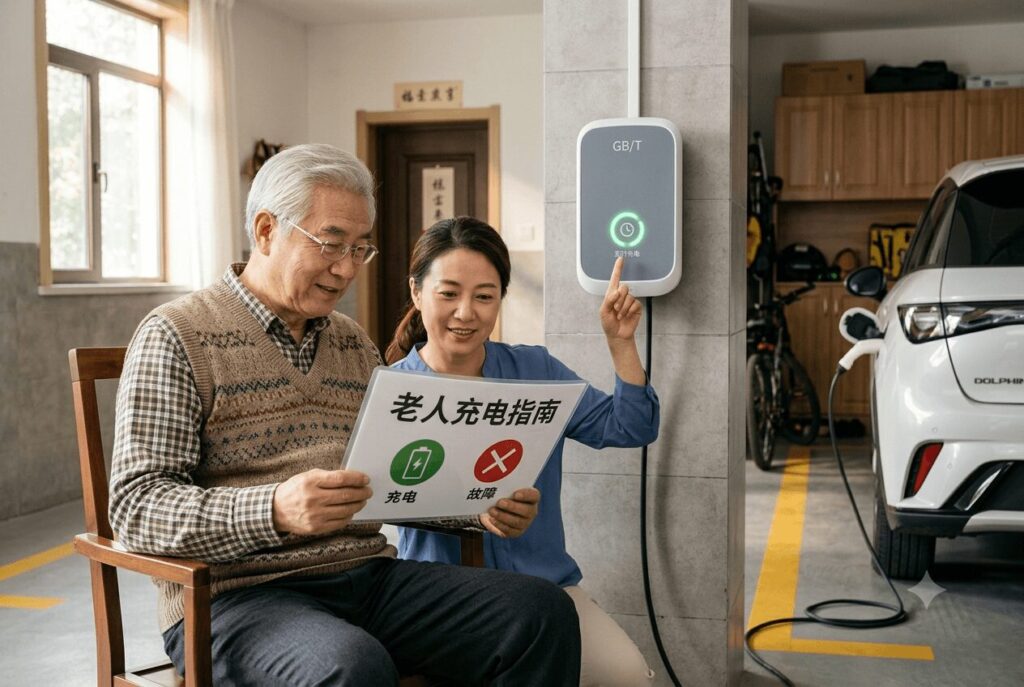
Red or amber: consult the laminated quick reference card.
The laminated quick reference card (print and give to the senior):
This single page, in large font, covers the two situations that ever require senior attention:
- Red light after plugging in: Try unplugging and replugging firmly. If still red, call [adult child name and number].
- Car not charged in morning: Call [adult child name and number].
That is the complete senior operating guide. Everything else is handled by the charger itself.
Phase 3: Remote monitoring setup (the adult child’s ongoing role)
For each of the five recommended brands, the app provides remote monitoring that the adult child can check from their own phone:
StarCharge: 星星充电 app → 我的设备 → [parent’s charger] → session history
BYD: BYD app → Charging Centre → Home Charging → History
Xiaomi: Mi Home → Devices → [parent’s charger] → Energy Monitor
Huawei: FusionCharge app → Energy Reports → Session History
Delta: Delta EV app → Device Status → History
A monthly check of the session history confirms TOU scheduling is executing correctly — verifying the sessions are occurring in the valley rate window without requiring the senior to engage with the app at all.
The Physical Accessibility Considerations
Making Connector Handling Easier for Senior Users
The connector ergonomics reality:
GB/T connector engagement force and the spring-loaded locking mechanism present genuine challenges for senior users with reduced hand strength. None of the five recommended chargers specifically address this through ergonomic redesign — it is an underserved design gap in China’s residential EV charger market.
Practical mitigations:
Cable management hook installation:
A cable management hook installed at a comfortable height adjacent to the parking space, holding the connector at a convenient orientation for engagement, reduces the awkward positioning that makes connector engagement difficult. A simple hook mounted at the height most comfortable for the specific senior owner costs approximately ¥50-¥100 for hardware and installation, and meaningfully reduces daily connector handling difficulty.
Two-handed connector engagement:
Teaching the senior to use two hands for connector engagement — one hand guiding the connector, one hand supporting the cable weight — reduces the force required from one hand and makes the locking confirmation easier to feel. This technique is more effective than it sounds and is worth a specific, patient demonstration during setup.
Connector cleaning as senior maintenance:
The connector cleaning procedure from our Xiamen maintenance guide (and applicable in any climate for senior installations) should be included in the adult child’s occasional visit maintenance routine — not expected from the senior owner. Twice-yearly connector cleaning during family visits, combined with the adult child’s remote monitoring app check, covers the maintenance requirement without creating any expectation of senior maintenance engagement.
The Honest Financial Case for Senior EV Owners
Why TOU Optimisation Matters Even More for Fixed-Income Seniors
The financial context:
Many Chinese senior EV owners are retirees on fixed pension incomes — for whom the annual electricity saving from TOU-optimised home charging is proportionally more significant than for working-age adults with higher discretionary income.
The annual saving for a typical senior EV owner:
A senior owner of a BYD Dolphin driving 12,000 km/year in Shanghai:
Annual kWh consumption: 12,000 × 14 kWh/100km × 1.12 = 1,882 kWh
At 85% valley rate (TOU scheduled): 1,882 × ¥0.37 average = ¥697/year
Without TOU optimisation (flat rate): 1,882 × ¥0.67 flat = ¥1,261/year
Annual TOU saving: ¥564/year
For a Shanghai retiree receiving the city average pension of approximately ¥3,800-¥4,500/month, ¥564/year represents approximately 1.3-1.5 months of additional discretionary spending — genuinely meaningful.
Why the “set it and forget it” reliability is financially as well as practically important:
Every day the TOU schedule fails to execute and the car charges at flat or peak rates rather than valley rates, the senior loses approximately ¥1.54 in unnecessary electricity cost (for the BYD Dolphin example above). Over a year of intermittent TOU scheduling failures, this financial loss compounds in ways that the adult child who set up the charger should actively monitor through the remote monitoring approach above — ensuring the charger they configured for the senior parent is actually delivering the financial benefit they configured it to provide.
Internal Links — Further Reading on Clean Energy Bazaar
The top 5 set it and forget it chargers for Chinese seniors simplified apps guide connects to the product comparison, TOU savings, and family management guides throughout this content cluster.
For the TOU savings guide establishing the financial case for valley-rate charging that makes correct TOU configuration so important for senior owners, our time-of-use EV charging savings smart chargers that exploit cheaper night rates in China guide covers every tariff structure. For the best home EV charger comparison guide where the five recommended chargers are evaluated against their full specifications, our best home EV chargers 2026 top 7 comparison for Chinese homeowners guide covers every product in detail. For the BYD manufacturer bundle guide detailing the BYD Smart Charger’s integration advantages for BYD vehicle owners, our BYD vs NIO vs Xpeng which EV maker sells the best home charging bundle in 2026 guide covers every manufacturer programme. For the smart charger guide covering the Huawei FusionCharge AI capabilities that paradoxically make it senior-appropriate through invisible automation, our best smart EV chargers China 2026 Huawei Digital Power vs Xiaomi vs local innovators guide covers every AI platform. For the zombie pile crisis guide establishing the brand survival importance that is particularly relevant for senior owners who cannot easily navigate charger replacement, our zombie pile crisis 2026 how to avoid dead chargers from liquidated Chinese brands guide covers the complete survival framework. And for the user stories guide featuring Mrs Liang’s genuine account of intergenerational EV charging management, our user stories real EV charger setups from Chinese drivers from Shenzhen taxis to Hainan tourists guide covers eight first-person accounts including senior-relevant scenarios.
Final Thoughts
The top 5 set it and forget it chargers for Chinese seniors simplified apps selection is fundamentally about matching technology capability to genuine user need — and recognising that for many Chinese senior EV owners, the genuinely excellent charging experience is one that works invisibly and reliably, not one that offers the most features.
The five chargers this guide has recommended — StarCharge S1 for established reliability, BYD Smart Charger for BYD vehicle ecosystem integration, Xiaomi EV Charger for existing Mi Home users, Huawei FusionCharge for maximum invisible automation, and Delta Electronics for industrial reliability — each serve different senior profiles well. None of them are appropriate for all senior owners; the right choice depends on which vehicle the senior drives, which technology ecosystem they already navigate, and how actively their adult children will be involved in initial setup and occasional monitoring.
What all five share is the combination that senior-appropriate EV charging genuinely requires: sufficient brand stability to maintain long-term TOU scheduling function (the zombie pile concern is genuinely more serious for senior owners who cannot easily navigate charger failure and replacement), sufficient safety certification to operate passively without owner monitoring, and sufficient app simplicity (or sufficient initial setup capability by a family member) to achieve the “configured once and operating reliably for years” outcome that senior daily life practically requires.
The most important single action an adult child can take for a senior parent who is newly purchasing an EV is not buying the best charger — it is setting up whatever charger is purchased with complete TOU configuration, creating the laminated quick-reference card with the two-action response guide, and establishing the monthly remote monitoring check that catches any configuration drift before it costs the senior parent months of unnecessary electricity expense.
Simple in operation. Reliable in execution. Set up carefully. Monitored quietly. That is the complete senior EV charging solution.