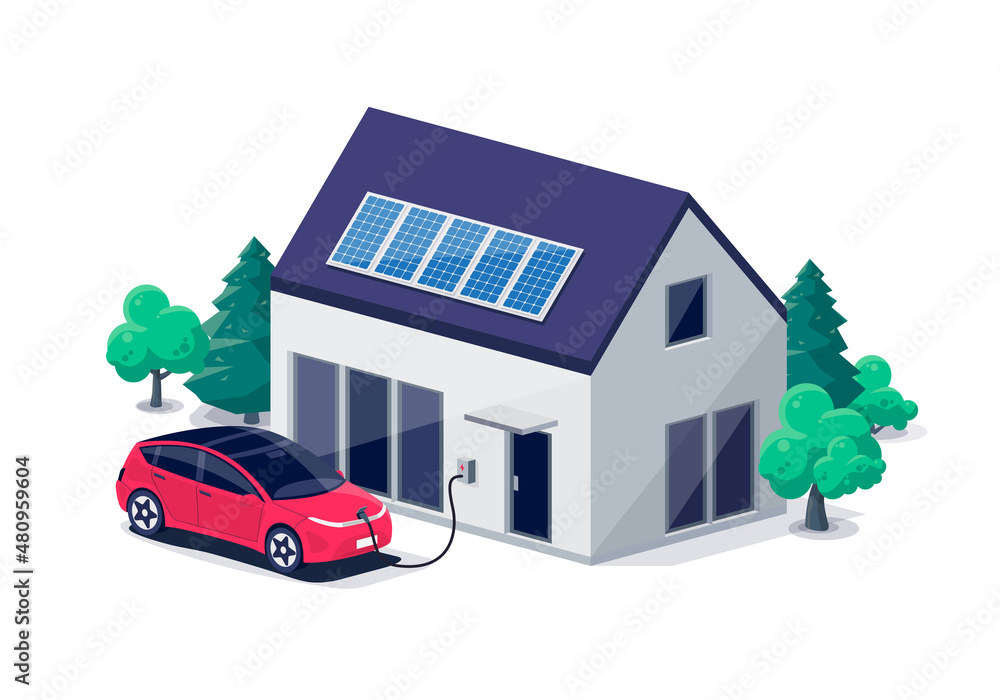
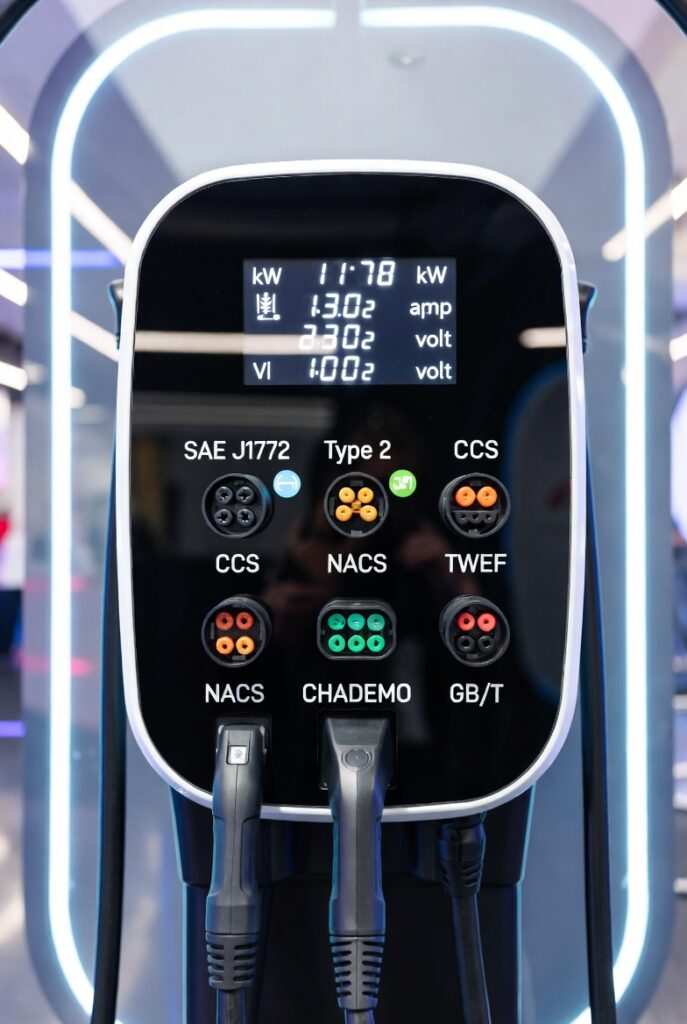
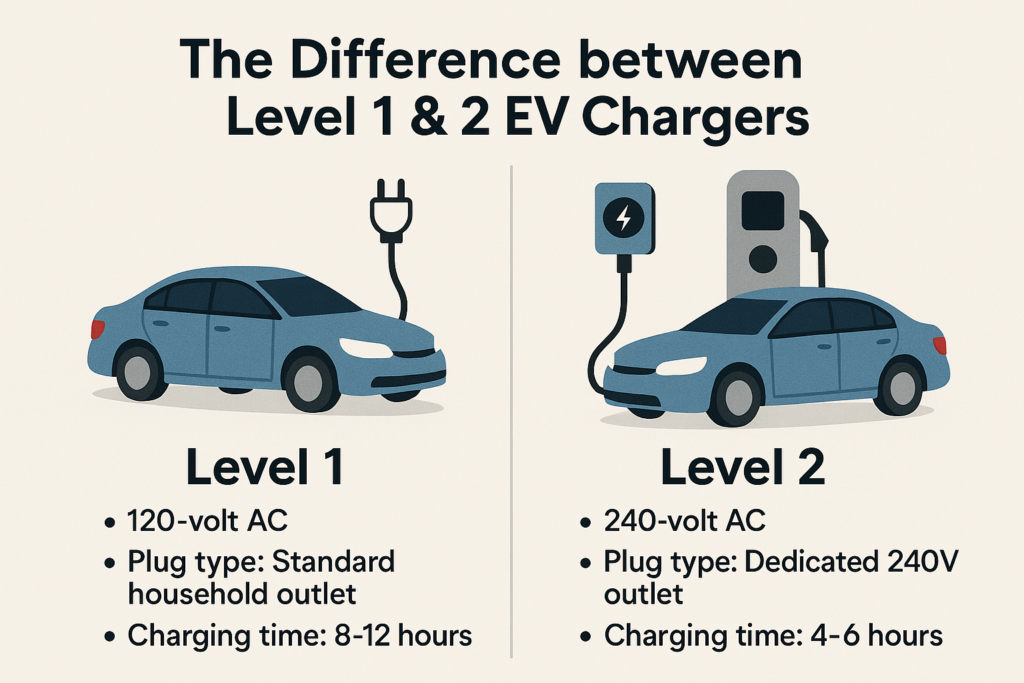
Most Chinese EV owners think of their home charger as a piece of electrical infrastructure — something closer to a circuit breaker than to a smartphone. Fixed. Passive. Not the kind of thing that needs to be “updated.” Once installed and working, it should just work, indefinitely, without the kind of ongoing software maintenance that phones and computers demand.
This mental model was approximately correct for the first generation of home EV charging equipment — simple electromechanical devices that converted AC power to a controlled flow of electricity toward a vehicle, with no meaningful software component beyond basic relay control logic. But it is increasingly incorrect for the smart home EV chargers that now dominate China’s residential market: the Huawei FusionCharge with its AI energy management, the Xiaomi charger integrated into HyperOS, the Autel MaxiCharger with OCPP 2.0 cloud connectivity, the StarCharge S1 with TOU scheduling and demand response participation.
These chargers are not electrical infrastructure in the traditional sense. They are networked computing devices connected to your home WiFi, communicating with cloud servers, participating in grid management programmes, and in some cases maintaining persistent authenticated connections to vehicle systems, energy management platforms, and payment processing systems. They are, in the specific technical sense that matters for security, Internet of Things devices — and IoT devices have a documented, well-studied security vulnerability profile that makes firmware updates not a convenience but a security necessity.
This guide on firmware updates why your Chinese smart charger needs security patches like a phone provides the complete honest explanation — what smart charger firmware actually is and what it does, what specific security vulnerabilities exist in networked EV charging equipment, what documented attacks and exploitation patterns have been identified globally, how the major Chinese charger brands approach firmware security and update delivery, and the practical guidance for Chinese EV owners who want to ensure their smart charger is maintained as the networked computing device it actually is.
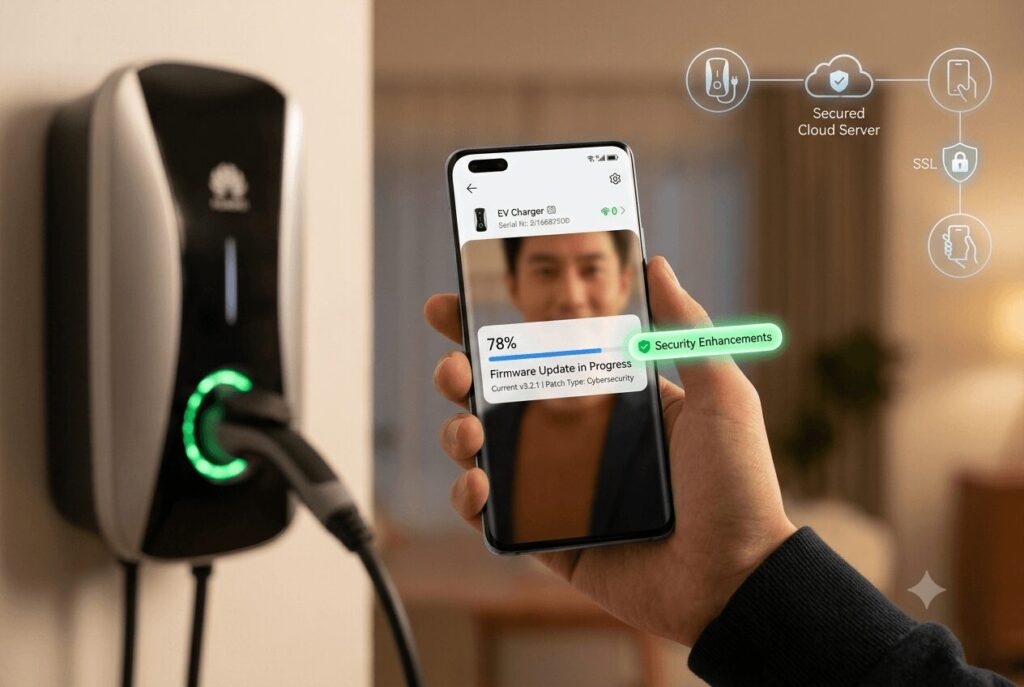
What Smart Charger Firmware Actually Is
The Software Stack Inside a Modern Chinese Home EV Charger
The computing components that turn a smart charger into an IoT device:
A modern Chinese smart home EV charger like the Huawei FusionCharge or Autel MaxiCharger contains, in addition to the power electronics that handle the actual electrical conversion, a complete embedded computing stack:
The application processor:
A dedicated microcontroller or application processor (typically ARM Cortex-M or similar architecture) running the charger’s operational software. This processor handles TOU scheduling logic, OCPP protocol communication, energy monitoring and reporting, charging session management, protection function coordination, and app command processing.
The connectivity module:
A WiFi module (in most Chinese smart chargers, based on either Espressif ESP8266/ESP32 family or similar dedicated WiFi SoC) with its own firmware that handles wireless network connection, network security protocols (WPA2/WPA3), and data transmission between the charger application processor and the cloud services.
The OCPP client:
Software implementing the OCPP 1.6 or 2.0 protocol stack that communicates with the OCPP backend — managing session authorisation, metering data transmission, smart charging commands, and demand response signal processing.
The security layer:
Cryptographic libraries, certificate management, and authentication logic that secure communication between the charger and cloud services, between the charger and the user app, and (for OCPP 2.0) between the charger and the grid operator’s demand management system.
What firmware is:
Firmware is the software that runs on this embedded computing stack — the combination of the operating system (often a real-time operating system like FreeRTOS or a lightweight Linux variant), the application logic, the communication protocol implementations, and the security components. Unlike traditional electrical infrastructure firmware (which might be a few kilobytes of simple control logic), modern smart charger firmware can run to megabytes of code across multiple software components, each with their own development and maintenance requirements.
Why firmware needs updating:
Exactly as a smartphone’s operating system and apps need updating because:
- Security vulnerabilities are discovered in the underlying software components
- Protocol standards evolve and require implementation updates
- Bug fixes address functional issues discovered after deployment
- New features are added or optimised through software improvement
Smart charger firmware needs updating for precisely the same reasons. The software components within a smart charger — the WiFi stack, the TLS cryptographic library, the OCPP implementation, the application logic — are all software, and all software has vulnerabilities that researchers discover over time.
The Specific Security Vulnerabilities in Smart EV Chargers
What Has Been Discovered and What It Means for Chinese Owners
The global security research context:
EV charger security has been a rapidly developing field of security research since approximately 2020, driven by the combination of rapid EV charger deployment globally and the security research community’s recognition that networked EV chargers represent an attractive target — they are networked devices connected to significant electrical infrastructure, often with poor baseline security hygiene relative to more mature IoT categories like smartphones and routers.
Security researchers from multiple countries have published findings about EV charger vulnerabilities, and several specific vulnerability categories have been documented across multiple products from different manufacturers.
Vulnerability Category 1: Authentication and Authorisation Weaknesses
The most commonly documented vulnerability class in smart EV charger research: weaknesses in the authentication mechanisms that control who can command the charger to do what.
Specific documented attack scenarios:
Unauthenticated OCPP commands: Early versions of OCPP (1.6 without security extensions) did not include mandatory authentication of OCPP messages — an attacker who could reach the charger’s OCPP communication channel could potentially send commands (start/stop charging, change configuration, trigger firmware update) without valid credentials.
Weak default credentials: Several manufacturers shipped chargers with default passwords for the administration interface — well-known defaults that, if not changed during installation (and they often weren’t), allowed anyone who could reach the device’s admin interface to access charger configuration.
App-to-charger authentication gaps: In some charger implementations, the mobile app authenticated to the cloud service but the cloud-to-charger communication was not separately authenticated — an attacker who could position themselves in the cloud-to-charger communication path could potentially inject commands.
Why this matters for Chinese EV owners:
Successful exploitation of authentication weaknesses could allow an attacker to:
- Remotely stop a charging session at an inconvenient time
- Remotely start a charging session when the owner doesn’t want to charge
- Modify TOU scheduling to charge at peak rather than valley rates (imposing unnecessary electricity costs on the owner)
- Access energy consumption data that reveals occupancy patterns (when the EV is home, when it is not)
Vulnerability Category 2: Network Communication Security
The communication between a smart charger, its cloud backend, and the user’s mobile app typically uses HTTPS/TLS encrypted communication — the same standard used for secure web browsing. However, implementation quality varies significantly:
Certificate validation weaknesses: Some charger implementations perform HTTPS communication but don’t properly validate the server certificate — making them vulnerable to man-in-the-middle attacks where an attacker intercepts the communication between the charger and its cloud backend, potentially reading data and injecting commands.
Outdated TLS versions: TLS (Transport Layer Security) has had multiple version updates (TLS 1.0, 1.1, 1.2, 1.3), with earlier versions having known cryptographic weaknesses. Charger firmware that uses TLS 1.0 or 1.1 has weaker communication security than firmware updated to TLS 1.3.
Weak cipher suite selection: Even with a current TLS version, the specific cryptographic algorithms (cipher suites) used within TLS determine the actual security strength. Outdated cipher suites within otherwise current TLS versions represent a security weakness.
Why this matters for Chinese EV owners:
Weak TLS implementation could allow network-positioned attackers to intercept communication between the charger and its cloud backend — accessing session data, energy consumption patterns, and potentially command channels.
Vulnerability Category 3: OCPP Protocol Security
As covered in our connectivity guide’s discussion of OCPP, the OCPP protocol is the primary interface between smart chargers and grid management systems. OCPP security has its own specific vulnerability profile:
OCPP 1.6 security extension non-adoption: OCPP 1.6 specified optional security extensions (authentication, certificate-based identity, encrypted communication) that many implementations did not enable by default, leaving chargers with OCPP 1.6 connections without the security provisions the standard’s security extensions provide.
OCPP 2.0 migration vulnerability window: The transition from OCPP 1.6 to OCPP 2.0 (which has security built in rather than as an optional extension) creates a specific vulnerability window where chargers and backends may support both protocol versions, with a downgrade attack potentially forcing communication to use the less secure 1.6 protocol.
Backend impersonation: If an attacker can reach a charger’s OCPP communication channel and knows the charger’s identity information (OCPP charge point identifier), they may be able to impersonate the legitimate OCPP backend — particularly in OCPP 1.6 implementations without mandatory backend authentication.
Vulnerability Category 4: Firmware Update Mechanism Security
Ironically, the mechanism used to deploy security patches — the OTA firmware update system — is itself a potential attack vector if implemented without appropriate security:
Unsigned firmware acceptance: A charger that accepts and installs firmware without verifying a cryptographic signature from the manufacturer can be manipulated into installing malicious firmware that an attacker controls. This represents the most severe vulnerability category — compromised firmware could make the charger do anything the attacker programs it to do.
HTTP rather than HTTPS firmware delivery: Downloading firmware updates over unencrypted HTTP rather than HTTPS allows a network-positioned attacker to intercept and modify the firmware file during download.
No rollback protection: A firmware update mechanism without rollback protection may allow a firmware downgrade attack — installing an older, vulnerable firmware version on a device that had been updated to a more secure version.
The Chinese market specific context:
Research into Chinese smart charger security specifically is less published than research into North American and European charger products (which have been the subject of more public security conference presentations and published CVEs), but the underlying vulnerabilities in generic IoT security — weak authentication, TLS implementation quality, firmware update security — apply to Chinese products’ firmware equally, and Chinese charger manufacturers’ security practices vary significantly in ways that are not always visible from product marketing materials.
The Documented Attacks on EV Charging Infrastructure
What Has Actually Happened Beyond Theoretical Vulnerabilities
The Bitmain/WallBox UK incident (documented 2022):
Security researchers publicly demonstrated practical attacks against multiple EV charger products from different manufacturers — not as proof-of-concept exploits in isolated lab conditions but as documented attacks against deployed production firmware in real-world network configurations.
The demonstrated attacks included remote session interruption (stopping a charging session from the internet without physical access to the charger or vehicle), configuration modification (changing the charger’s OCPP server address to redirect communication to an attacker-controlled backend), and unauthorised access to energy consumption data.
The significance for Chinese charger owners:
While this research involved non-Chinese charger products specifically, the vulnerability classes demonstrated — OCPP authentication weaknesses, weak TLS implementation, network-reachable configuration interfaces — are not unique to any specific manufacturer or market. Chinese charger products with similar architectural characteristics carry similar vulnerability profiles, and the research’s practical demonstration confirms that these vulnerabilities are exploitable by motivated attackers, not merely theoretical.
The Ukraine power grid context (documented EV charger component):
Reports from Ukraine in 2022 documented that EV charger controllers in the Kyiv area were compromised and modified to display pro-Russian propaganda messages — not a capability attack (not aimed at electricity infrastructure disruption) but a definitively documented demonstration that specific EV charger products were remotely accessed and their display output modified by unauthorised parties.
The attack vector exploited authentication weaknesses in the specific products involved — the same vulnerability category documented by academic researchers.
The grid stability concern that security researchers have specifically raised:
Beyond individual charger compromise, security researchers have specifically raised concerns about the aggregate effect of large-scale smart charger compromise in the context of the grid stability challenge our grid capacity guide described. If an attacker with access to a large number of compromised home chargers simultaneously commanded them to begin charging at maximum rate at the same moment — a coordinated attack rather than opportunistic exploitation — the aggregate load spike could create a grid frequency disturbance that utilities would have difficulty managing.
This is not a current active threat but a security research concern that the EV charging security community has specifically named as a motivation for improving EV charger security standards — the same concern that motivates grid operators’ interest in secure OCPP implementations rather than unauthenticated OCPP deployments.
How Major Chinese Charger Brands Handle Firmware Updates
The Brand-by-Brand Assessment of Security Update Practices
Huawei FusionCharge — Security Update Leader
Huawei’s security update practices for FusionCharge firmware reflect the company’s broader (and well-documented, given its prominence in global technology security discussions) investment in security engineering:
OTA update delivery: Automatic and manual update delivery through the FusionCharge app, using Huawei’s cloud infrastructure with established security practices
Cryptographic integrity: Huawei’s firmware update mechanism uses cryptographic signing — firmware packages are signed with Huawei’s private key and the charger’s firmware update mechanism verifies this signature before installation
Update frequency: Huawei has released FusionCharge firmware updates including security-relevant patches at a frequency that security researchers would assess as engaged rather than neglectful — typically 2-4 meaningful firmware releases per year
Security vulnerability disclosure: Huawei operates a product security incident response team (PSIRT) with a published vulnerability disclosure policy — meaning security researchers who discover vulnerabilities in Huawei products have an established channel for responsible disclosure
Honest limitation: Huawei’s security track record on its charging products is better than most Chinese charger manufacturers’ but not equivalent to the major consumer electronics security leaders (Google’s Android security updates, Apple’s iOS security updates) whose monthly security patch cycles and rigorous patch documentation set the benchmark.
Xiaomi EV Charger — Consumer Electronics Security Heritage
Xiaomi’s approach to smart charger firmware security reflects its extensive consumer IoT experience across its broader product range:
OTA update delivery: Through Mi Home app with HyperOS integration, consistent with Xiaomi’s standard IoT update mechanism across hundreds of Mi Home-compatible devices
Update frequency: Generally consistent with Xiaomi’s broader IoT update cadence — less frequent than smartphone updates but more consistent than many pure-play charger manufacturers
Security vulnerability disclosure: Xiaomi operates an IoT security programme and has bug bounty provisions for security vulnerabilities, though charger-specific security documentation is less public than smartphone security documentation
Honest limitation: Xiaomi’s security update practices are better than small charger-specific companies but may have less charger-specific security engineering depth than its smartphone-focused security team.
Autel MaxiCharger — Automotive Electronics Security Background
Autel’s security update approach for MaxiCharger products reflects its automotive diagnostics background, where software security and update reliability are professionally important:
OTA update delivery: Through Autel Charge app with explicit update notification and user-initiated update confirmation
Cryptographic integrity: Autel’s update documentation indicates signed firmware verification, consistent with automotive electronics industry practices
OCPP 2.0 security: Autel’s commitment to OCPP 2.0 compliance (covered throughout this guide series) specifically includes the OCPP 2.0 security architecture that addresses the OCPP authentication weaknesses documented above
Honest limitation: Autel’s charger security documentation is less publicly detailed than Huawei’s, making independent assessment of their specific security implementation depth more difficult.
StarCharge S1 — Less Transparent Security Practices
StarCharge’s S1 product, while an excellent value-positioned charger for its core functionality as covered throughout this guide series, presents less transparency about firmware security practices:
OTA update delivery: Available through the 星星充电 app, with update notifications
Update documentation: Security-specific firmware changelogs are not prominently published — distinguishing security patches from feature updates is difficult from publicly available information
Cryptographic integrity: Not explicitly documented in publicly available product documentation — this doesn’t mean it’s absent, but the lack of documentation makes assessment difficult
Honest limitation: The StarCharge S1’s strong value positioning and established market presence make it a reasonable product choice for core EV charging function, but owners who specifically prioritise security-transparent firmware practices should be aware that StarCharge’s public security documentation is less detailed than Huawei’s or Autel’s.
The Practical Firmware Security Guide for Chinese EV Owners
What to Actually Do to Keep Your Smart Charger Secure
Action 1: Enable Automatic Firmware Updates
Every major Chinese smart charger brand’s app includes a firmware update setting — confirm that automatic updates are enabled (or that update notifications are enabled for brands that require manual confirmation):
Huawei FusionCharge: FusionCharge app → Device Management → Firmware → Auto Update setting
Xiaomi EV Charger: Mi Home → Device → [charger] → Settings → Software Update → Auto Update
Autel MaxiCharger: Autel Charge app → Settings → Device → Firmware Update → Auto Update
StarCharge: 星星充电 app → 我的设备 → 设备设置 → 固件更新
Action 2: Verify Current Firmware Version Quarterly
Even with automatic updates enabled, manually verify the installed firmware version against the current published version at least quarterly:
Navigate to the firmware version display in your brand’s app (the specific path varies but is typically Settings → Device → About)
Compare the displayed version against the version published on the manufacturer’s app store listing description or official product page
If the installed version is behind the current version and automatic updates haven’t applied it, trigger a manual update check
Action 3: Check Your Home Network Security Configuration
The smart charger’s WiFi security is only as strong as the home network it connects to:
Confirm your home router is using WPA2 or WPA3 security (not WEP or open network, which would expose the charger and all connected devices to local network attacks)
Confirm your router’s own firmware is current — router security vulnerabilities are frequently exploited and a compromised router can undermine the security of all connected devices
Consider whether your smart charger should be on a separate IoT network segment from your primary devices (phones, computers, banking apps) — many home routers support “guest networks” or VLAN-based network segmentation that can limit what compromised IoT devices can access on the broader home network
Action 4: Change Default Credentials If Present
For charger brands whose initial setup involves any administrator credentials (password to the local administration interface, OCPP backend login), confirm these have been changed from factory defaults:
Contact the brand’s customer service to confirm whether an administrative interface exists for your specific model and what credentials should be changed
Document changed credentials securely — charger administration credentials that are lost cannot typically be recovered without factory reset
Action 5: Monitor for Security Advisories
Major Chinese charger brands with responsible security practices publish security advisories when significant vulnerabilities are discovered and patched. Following:
The brand’s official WeChat account for product security notices
The brand’s app store listing for update descriptions that mention security improvements
Security research publications and EV charging security news (the Chinese cybersecurity publication community covers IoT security)
…provides early awareness when a security-relevant firmware update has been released, allowing prioritised update rather than waiting for the next automatic update check.
Action 6: Assess the Zombie Pile Security Dimension
As covered extensively in our zombie pile crisis guide, charger manufacturer failure ends security update delivery. The specific security dimension of zombie pile risk — which the zombie pile guide primarily addressed from the TOU scheduling and warranty perspective — is that a charger from a ceased manufacturer will never receive another security update regardless of what vulnerabilities are subsequently discovered in its firmware.
For owners who specifically value long-term security update support:
Brand survival probability (assessed per the zombie pile guide’s five-factor framework) directly correlates with long-term security update availability
Huawei and Xiaomi, at Tier 1 survival probability, are most likely to provide security updates throughout a charger’s operational life
StarCharge and TELD at Tier 2 are likely but less certain
Unknown smaller brands are the highest risk for both zombie pile outcome and security update cessation
The OCPP Security Dimension — What Demand Response Participation Means for Security
The Grid Interface Security Considerations That OCPP Participation Creates
Why OCPP participation creates a specific security consideration:
As covered in our connectivity and technology trends guides, OCPP-compliant chargers enrolled in demand response programmes maintain an authenticated, persistent connection to the OCPP backend operated by either the charger manufacturer, a charging service provider, or in some programmes, directly by the grid operator.
This OCPP connection is the mechanism through which the grid operator sends smart charging commands — reduce current, start charging, stop charging. It is also, from a security perspective, a privileged command channel: whoever controls the OCPP connection can instruct the charger to charge or not charge, at whatever current level, at whatever time.
The security implication:
The OCPP connection’s security is therefore the security of the demand response participation — if an attacker can impersonate the OCPP backend or inject commands into the OCPP channel, they can disrupt or manipulate the charging behaviour of enrolled chargers.
OCPP 2.0 specifically addresses this:
OCPP 2.0’s security architecture (versus OCPP 1.6’s optional and frequently unenabled security extensions) mandates:
Mutual TLS authentication — both the charger and the OCPP server authenticate each other’s identity using certificates, preventing impersonation in either direction
Message signing — OCPP 2.0 messages can be signed cryptographically, preventing message injection or modification
Secure firmware management — OCPP 2.0 includes security-focused firmware update management commands
The consistent recommendation throughout this guide series for OCPP 2.0 over OCPP 1.6 — made primarily for technical capability reasons (more features, better future compatibility) — also has a security dimension: OCPP 2.0’s built-in security architecture is meaningfully more secure than OCPP 1.6’s optional extensions, and this security difference is particularly relevant for chargers enrolled in demand response programmes that use the OCPP channel for grid management commands.
The Honest Assessment — How Worried Should Chinese EV Owners Actually Be?
Proportionate Risk Assessment Rather Than Security Panic
The realistic threat landscape for Chinese residential EV charger owners in 2026:
The security vulnerabilities documented in this guide are real, technically credible, and in some cases demonstrated rather than merely theoretical. However, honest risk assessment requires calibrating concern proportionately to realistic threat scenarios for Chinese residential EV charging owners specifically:
What is a realistic threat:
Opportunistic scanning and exploitation of known vulnerabilities in unpatched charger firmware — the kind of automated scanning and exploitation that affects all IoT devices with known unpatched vulnerabilities, not targeted attacks specifically aimed at EV chargers
Privacy exposure through energy consumption data — charging session timing and duration data that reveals vehicle presence patterns (and therefore home occupancy patterns) to whoever can access it
TOU manipulation (increasing electricity costs by preventing valley-rate charging through remote session interruption) — financially motivated rather than physically threatening
What is not a realistic current threat for individual residential owners:
Nation-state targeted attacks on specific residential EV charger owners — highly sophisticated attacks that require significant resources and motivation that individual residential EV charging doesn’t provide as a target
Coordinated large-scale grid disruption through mass residential charger compromise — a security research concern for future risk assessment but not a current operational threat
Physical harm through charger manipulation — the electrical safety functions are implemented in hardware protection systems that software cannot override
The proportionate response:
Enable automatic firmware updates: this is the single most impactful security action, and it takes 2 minutes.
Maintain basic home network security: this protects all IoT devices, not just the EV charger.
Choose brands with credible security update practices when purchasing: this is a consideration that should be weighted alongside other purchasing factors, not a dominant consideration that overrides everything else.
Don’t be paralysed by security concerns: the risks are real but manageable through the practical actions above.
Internal Links — Further Reading on Clean Energy Bazaar
The firmware updates why your Chinese smart charger needs security patches like a phone guide is the cybersecurity companion to the connectivity and technology guides throughout this content cluster.
For the connectivity guide that established the OCPP framework whose security dimension this guide extends, our best smart connectivity WiFi 5G digital yuan payments in Chinese smart chargers guide covers every connectivity specification. For the technology trends guide covering OCPP 2.0’s security architecture advancement over OCPP 1.6, our upcoming EV charger trends 2026-2027 V2G solid-state batteries and what to buy now in China guide covers every emerging technology. For the zombie pile crisis guide that establishes how manufacturer failure affects long-term security update availability, our zombie pile crisis 2026 how to avoid dead chargers from liquidated Chinese brands guide covers the complete brand survival framework. For the smart charger guide covering Huawei’s AI security monitoring and Xiaomi’s HyperOS integration that are specifically relevant to security update practices, our best smart EV chargers China 2026 Huawei Digital Power vs Xiaomi vs local innovators guide covers every platform. For the grid capacity guide contextualising the aggregate grid security concerns that motivate EV charger security standards, our target 20 million units can China’s grid handle the EV load in 2026 guide covers China’s grid infrastructure. And for the Lader scams guide covering the counterfeit products whose firmware security is categorically absent, our Lader scams why cheap chargers on Pinduoduo are burning out guide covers the counterfeit product safety landscape.
Final Thoughts
The firmware updates why your Chinese smart charger needs security patches like a phone message is ultimately simple even though the technical foundation is detailed: your smart EV charger is a networked computer connected to your home WiFi, your cloud accounts, and the electricity grid’s management systems, and it has the security vulnerabilities that networked computers have.
The analogy with phones is precise rather than approximate. Your phone needs security patches because its software has vulnerabilities that researchers discover and attackers exploit. Your smart charger’s software has vulnerabilities that researchers discover and attackers exploit for the same fundamental reasons — software is complex, complexity creates vulnerabilities, vulnerabilities are discovered over time, and patches are the mechanism that addresses discovered vulnerabilities.
The actions required to maintain smart charger security are proportionate to the actual risk level: enable automatic firmware updates, maintain basic home network security, choose brands with credible security update track records. These are not demanding security hygiene requirements — they are the same basic practices that already apply to every other networked device in your home.
The one specifically EV-charging-particular implication is the zombie pile dimension: a charger from a manufacturer that ceases operations will never receive another security patch, regardless of what vulnerabilities are subsequently discovered. This is the security update argument for the brand survival framework our zombie pile guide established — adding a cybersecurity dimension to the practical and financial reasons for choosing brands with durability.
Your charger is smart. Keep it updated. Treat it like the networked computing device it actually is. The security of your home network, your energy data, and your charging experience depends on it.