Here is the most widespread technical misconception in China’s home EV charging market in 2026.
It appears in dealership sales pitches. It appears in e-commerce product listings. It appears in WeChat group recommendations from well-meaning but mistaken owners. It costs Chinese EV buyers money they don’t need to spend, on hardware capabilities they cannot use, solving problems that do not exist.
The misconception: that owners of 800V architecture electric vehicles — BYD Seal Long Range, Zeekr 001 Performance, Xpeng G9, Porsche Taycan, and others — need to buy a special “800V-ready” or “800V compatible” home charger to unlock their vehicle’s charging capability or achieve optimal home charging performance.
This misconception is wrong. Completely, unambiguously, technically wrong. And it is costing Chinese EV buyers ¥500-¥2,000 on unnecessary hardware premiums that deliver zero additional charging speed, zero additional charging efficiency, and zero additional benefit of any kind.
This guide on 800V vs 400V architecture should Chinese EV owners buy an 800V ready charger in 2026 provides the complete, honest technical explanation of why this misconception exists, why it is wrong, what 800V architecture actually does and doesn’t do for home charging, and what the correct home charger buying criteria are for owners of 800V vehicles in China.
By the end of this guide, you will understand 800V architecture in the context that matters for your purchasing decision — and you will never be misled by 800V charger marketing again.
The Core Answer — Before the Explanation
Should Chinese EV owners with 800V vehicles buy an “800V-ready” home charger?
No. Definitively, technically, financially: no.
There is no such thing as an “800V-ready” home AC charger that provides any benefit over a standard 7 kW or 11 kW home AC charger for an 800V architecture EV. The marketing term “800V ready” applied to home AC chargers is either a misunderstanding of how EV charging works or deliberate misdirection to justify a price premium.
Every 800V EV charges from a standard home AC charger at exactly the same speed as an equivalent 400V EV. The 800V battery architecture has no connection to AC home charging speed whatsoever.
The explanation of why this is true — and why it is often misunderstood — is the value of this guide.
Understanding 800V Architecture — What It Actually Is
To understand why 800V architecture is irrelevant to home charging, you need to understand what 800V architecture actually describes and what it was designed to solve.
The History of 400V Architecture
When electric vehicles became commercially viable in the early 2010s, the battery packs that powered them were designed around approximately 400 volts nominal operating voltage. This 400V standard was adopted across the industry because:
- It balanced battery pack design complexity with safe handling requirements
- It matched the output voltage of available DC fast charging infrastructure
- It allowed relatively compact power electronics in the vehicle’s drivetrain and charging systems
The result: virtually every commercial EV sold between 2010 and approximately 2020 uses 400V nominal battery architecture. The Nissan Leaf, early Tesla Model S, BMW i3, BYD Qin series, early NIO vehicles — all 400V.
The 400V fast charging limitation:
At 400V, delivering high DC fast charging power requires high current:
Power (W) = Voltage (V) × Current (A)
To deliver 150 kW at 400V requires: 150,000 ÷ 400 = 375 amps
375A through cables, connectors, and battery cells generates significant heat. The thermal management required to handle 375A limits practical fast charging to approximately 100-150 kW before heat becomes the constraining factor.
Why 800V Architecture Was Developed
The 800V architecture was developed specifically to enable much faster DC fast charging without proportionally increasing current:
To deliver 350 kW at 800V requires: 350,000 ÷ 800 = 437.5 amps To deliver 350 kW at 400V would require: 350,000 ÷ 400 = 875 amps
The same 350 kW power delivery at 800V requires only half the current of 400V. Half the current means:
- Thinner, lighter charging cables
- Less heat generation in connectors and battery cells
- Better sustained fast charging without thermal throttling
- Higher peak power delivery before thermal limits are reached
The purpose of 800V architecture, stated plainly: To enable very high DC fast charging power (200-500+ kW) without creating thermal management problems that would otherwise limit that power delivery.
Which Chinese EVs Use 800V Architecture
Confirmed 800V architecture Chinese EVs (2024-2026 models):
| Vehicle | Architecture | Max DC Fast |
|---|---|---|
| BYD Seal Long Range | 800V | 150 kW |
| BYD Seal Performance AWD | 800V | 150 kW |
| BYD Yangwang U9 | 800V+ | 500 kW |
| Zeekr 001 Long Range | 800V | 200 kW |
| Zeekr 001 Performance | 800V | 400 kW |
| Zeekr 001 Privilege | 800V | 360 kW |
| Xpeng G9 Ultra | 800V | 480 kW |
| Xpeng G6 Long Range | 800V | 270 kW |
| Porsche Taycan (China-spec) | 800V | 270-320 kW |
| BMW i5 | 400V | 205 kW |
| Mercedes EQE | 400V | 170 kW |
| NIO ET5/ET7 | 400V (some 800V) | 126 kW |
What 800V architecture specifically enables for these vehicles: Their exceptional DC fast charging speeds. The BYD Seal Long Range’s 150 kW DC capability is enabled by 800V architecture allowing efficient high-current delivery. The Zeekr 001 Performance’s 400 kW DC capability would be thermally impossible on 400V architecture.
The Onboard Charger (OBC) — The Missing Piece Most People Don’t Know About
Understanding why 800V architecture is irrelevant to home AC charging requires understanding the vehicle component that makes this so: the Onboard Battery Charger, or OBC.
What the OBC Does
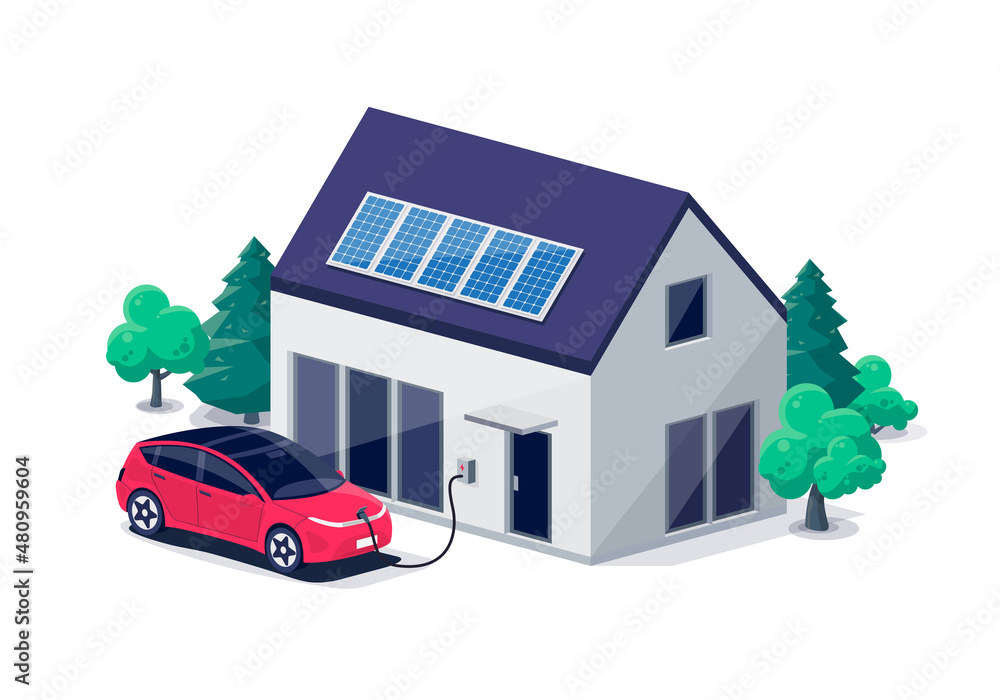
When you plug your EV into a home AC charger, electricity flows from the grid into your vehicle’s AC charging port. Inside the vehicle, before that electricity reaches the battery, it passes through the Onboard Battery Charger.
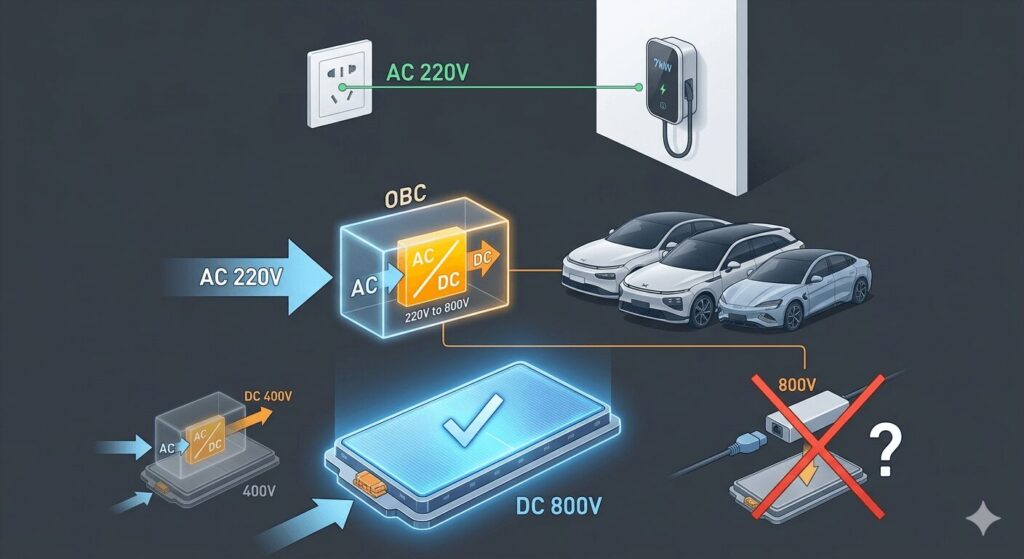
The OBC’s function: The OBC converts incoming AC electricity (220V AC from your home circuit) into DC electricity at the voltage required to charge the battery pack.
For an 800V architecture vehicle:
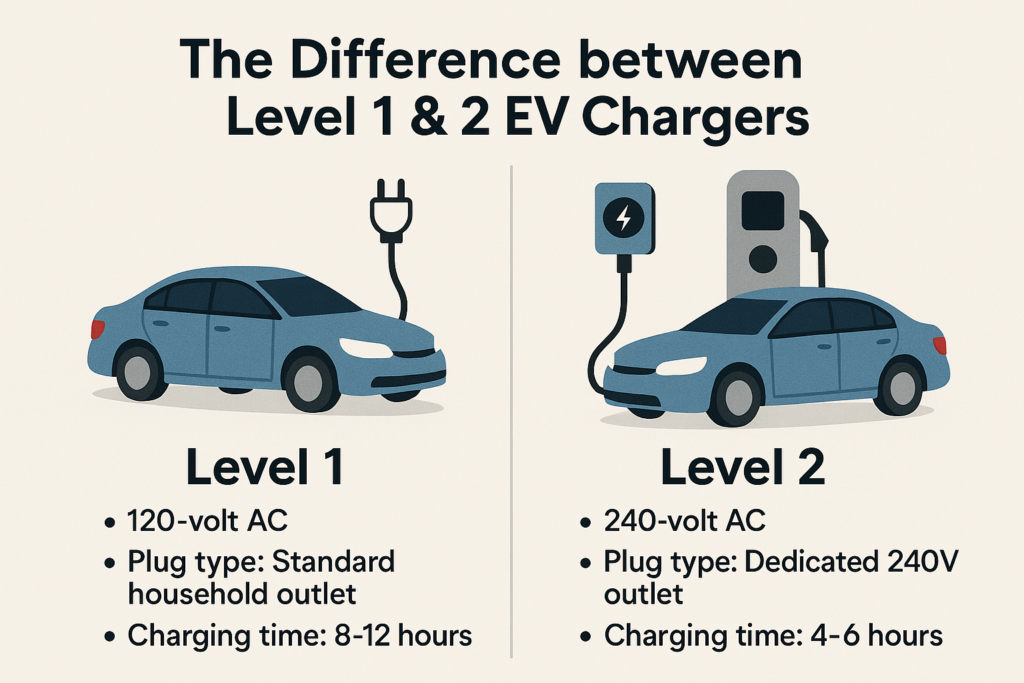
- Input: 220V AC (from standard Chinese residential supply)
- OBC processing: AC to DC conversion, voltage step-up
- Output: Approximately 700-900V DC (to charge the 800V battery pack)
For a 400V architecture vehicle:
- Input: 220V AC (identical)
- OBC processing: AC to DC conversion, voltage step-up
- Output: Approximately 350-450V DC (to charge the 400V battery pack)
Why the OBC Determines Home Charging Speed — Not Battery Architecture
The OBC’s AC input rating is the ceiling for home AC charging speed. This rating is set by the OBC’s power electronics design — independent of whether the battery pack is 400V or 800V.
BYD Seal Long Range (800V):
- OBC AC input rating: 6.6 kW maximum
- This OBC accepts up to 6.6 kW of AC input
- Home charger output above 6.6 kW is not used — the OBC only accepts 6.6 kW
- Home charging speed: 6.6 kW regardless of charger’s maximum output
BYD Dolphin (400V):
- OBC AC input rating: 6.6 kW maximum
- This OBC accepts up to 6.6 kW of AC input
- Home charging speed: 6.6 kW
Result: The 800V Seal Long Range and the 400V Dolphin charge identically at home — both at 6.6 kW from a 7 kW home charger.
The OBC handles the voltage conversion internally. The home charger’s only job is to deliver AC electricity at the current and voltage the OBC requests. Whether the OBC then converts that to 350V DC (for a 400V battery) or 750V DC (for an 800V battery) is entirely the OBC’s business — the home charger is not involved in this conversion and its output specification does not change.
The DC Fast Charging Bypass — Why 800V Matters There
At a DC fast charging station, the situation is completely different:
The DC fast charger does the AC-to-DC conversion outside the vehicle, delivering pre-converted DC electricity directly to the battery through the DC charging port. This bypasses the OBC entirely.
At a DC fast charging station:
- The charger delivers DC electricity directly to the battery
- The battery voltage determines what DC voltage the charger must output
- For an 800V battery: the charger must output approximately 700-900V DC
- For a 400V battery: the charger must output approximately 350-450V DC
This is where 800V architecture matters: The DC fast charger must be designed to output the appropriate voltage range. A 400V-only DC fast charger cannot efficiently charge an 800V battery (though some 800V vehicles have DC-DC converters to handle this — at reduced speed).
At home, there is no DC fast charging — only AC charging. The OBC handles everything. Battery voltage is irrelevant.
The “800V-Ready Home Charger” Claim — Deconstructed
Now that the technical foundation is established, examining what “800V-ready home charger” actually means in Chinese e-commerce listings reveals the misconception clearly.
What Sellers Claim
Common “800V-ready” home charger marketing claims on Chinese e-commerce platforms:
- “支持800V电动汽车充电” (Supports 800V EV charging)
- “800V架构兼容” (800V architecture compatible)
- “适配800V车型” (Compatible with 800V models)
- “未来800V充电架构升级” (Future 800V architecture upgrade)
What These Claims Actually Mean
Claim: “Supports 800V EV charging”
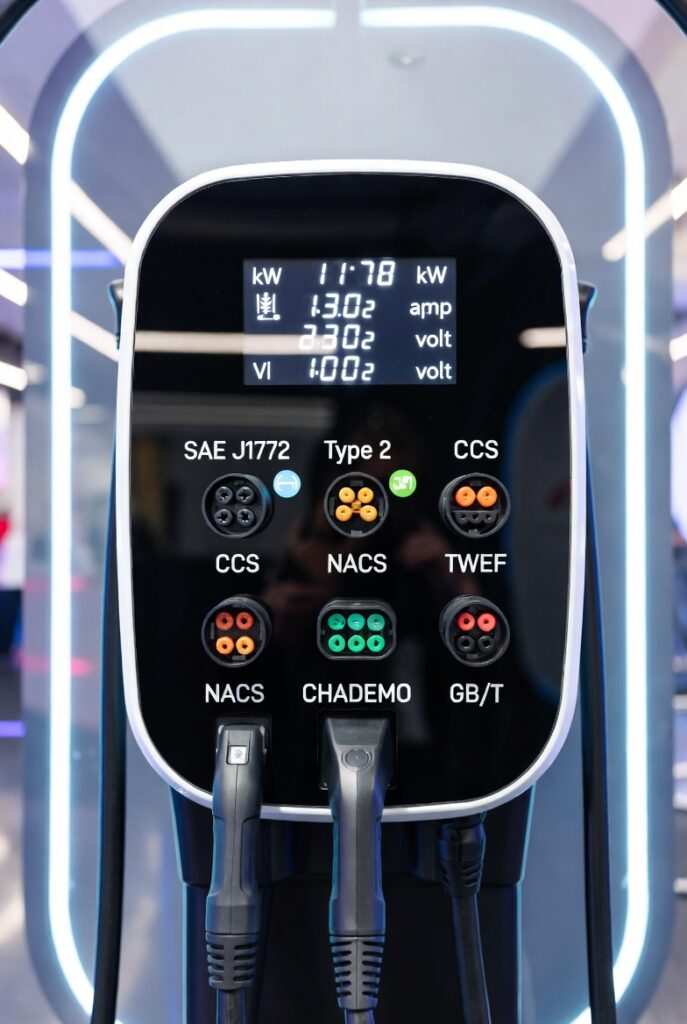
Translation: The charger has a GB/T 20234.2-2015 certified connector, which is compatible with all Chinese EVs including 800V models. This is true of every certified GB/T home charger from any manufacturer. There is nothing specific about 800V compatibility — every GB/T AC charger is “compatible” with 800V vehicles in exactly the same way.
This is equivalent to claiming a USB cable “supports iPhones and Samsung phones” — it connects to both, but the connection is the standard GB/T connector, not something 800V-specific.
Claim: “Future 800V architecture upgrade”
This claim implies that 800V architecture will eventually change home AC charging requirements and that buying this charger “future-proofs” the buyer.
This is false. 800V architecture cannot change home AC charging because home AC charging is governed by the OBC — which has no connection to battery pack voltage. Future 900V, 1000V, or 1200V battery architectures will not change the OBC’s AC input requirements unless OBC design specifically changes.
The future-proofing argument for 800V home chargers is therefore entirely without foundation.
The Products That Create This Confusion
The “800V ready home charger” products that appear in Chinese e-commerce fall into three categories:
Category 1: Standard certified home chargers with misleading labelling A standard 7 kW or 11 kW GB/T certified home charger that functions identically to competing products but includes “800V compatible” marketing language. No technical difference from non-“800V” equivalents. Same hardware, inflated price.
Category 2: DC fast charging equipment incorrectly positioned for home use Some 800V-capable DC fast charging equipment — genuinely relevant to 800V architecture — is occasionally marketed in ways that imply home use suitability. DC fast charging equipment at appropriate power levels (200-500 kW) is industrial equipment requiring dedicated three-phase high-voltage supply that no Chinese residential property has. This equipment is not for home use and should not be considered as such.
Category 3: Higher-spec AC chargers with “800V” branding for unrelated features Some genuinely premium AC home chargers — with legitimate premium features like IP66 protection, OCPP 2.0, or enhanced load management — use “800V ready” as branding for features that have nothing to do with 800V architecture. The premium features may be worth paying for; the 800V branding is irrelevant to those features.
What Home Charging Specifications Actually Matter for 800V EV Owners
Having established that 800V architecture is irrelevant, identifying what actually matters for home charger selection for 800V EV owners redirects the decision to productive criteria.
What Matters: The Vehicle’s Maximum AC Charging Rate
The OBC’s AC input rating — the vehicle’s maximum AC charging rate — is the specification that determines which home charger delivers full speed benefit.
800V vehicles and their AC maximums:
| Vehicle | AC Maximum | Correct Charger |
|---|---|---|
| BYD Seal Long Range | 6.6 kW | 7 kW single-phase |
| BYD Seal Performance | 6.6 kW | 7 kW single-phase |
| Zeekr 001 (all variants) | 11 kW | 11 kW three-phase |
| Xpeng G9 Ultra | 11 kW | 11 kW three-phase |
| Xpeng G6 Long Range | 11 kW | 11 kW three-phase |
| Porsche Taycan (China) | 11 kW | 11 kW three-phase |
| Zeekr 001 Privilege | 11 kW | 11 kW three-phase |
The BYD Seal insight: Despite having 800V battery architecture and 150 kW DC fast charging capability, the BYD Seal’s OBC is limited to 6.6 kW AC. A 7 kW single-phase standard home charger delivers the Seal’s full AC charging capability. An 11 kW three-phase charger delivers exactly the same 6.6 kW. An “800V-ready premium” charger at any power rating delivers exactly the same 6.6 kW.
The Zeekr 001 insight: The Zeekr 001 accepts 11 kW AC maximum — the correct home charger is an 11 kW three-phase unit. This is relevant regardless of 800V architecture. The three-phase specification is about the Zeekr’s OBC rating — not about its battery voltage.
What Matters: Installation Environment
As covered in our weatherproof charger guide, the installation environment determines IP rating and temperature specification requirements. These specifications are completely independent of whether the vehicle is 800V or 400V architecture.
An 800V Zeekr 001 in outdoor parking in Guangzhou needs an IP65 charger for exactly the same reasons as a 400V BMW i5 in the same location.
What Matters: Smart Features and Ecosystem
TOU scheduling value, smart home integration (Huawei HarmonyOS, Xiaomi Mi Home), OCPP compliance for demand response — all independent of battery architecture. A 7 kW smart charger with TOU scheduling delivers ¥1,670/year in electricity savings for a BYD Seal owner in Shanghai, identically to a 400V BYD Dolphin owner with the same charger.
What Matters: Long-Term Battery Health
As covered in our CATL Ningle charger analysis, cell-level battery health optimisation is available for CATL-battery vehicles (Zeekr, Xpeng, NIO). This optimisation is relevant regardless of battery architecture voltage.
The Financial Damage of the “800V Charger” Misconception
How Much the Misconception Costs Buyers
The price premium for “800V-ready” home charger products in Chinese e-commerce:
Standard certified 7 kW smart home charger (StarCharge S1): ¥899-¥1,099 “800V-ready” 7 kW home charger (various brands with 800V marketing): ¥1,299-¥1,999
Premium for “800V” marketing: ¥400-¥900
At zero additional benefit.
The 5-year financial impact: Hardware premium: ¥400-¥900 (paid once) Additional annual value from “800V compatibility”: ¥0/year 5-year net cost of the misconception: ¥400-¥900
This is not a catastrophic sum — but ¥400-¥900 wasted on meaningless marketing is ¥400-¥900 that could have been spent on a better-specified charger for legitimate reasons (IP65 for outdoor installation, -30°C for northern China, OCPP for demand response).
The Opportunity Cost — What ¥500 Better Spent Buys
Instead of spending ¥500 on the “800V premium” in a standard charger, the same ¥500 buys:
Upgrading IP54 to IP65: Prevents moisture-related electronics failure in humid or outdoor installations — genuine 5-year hardware protection value of ¥500-¥2,000 in avoided replacement costs.
Upgrading to OCPP 1.6 compliance: Positions the charger for demand response programme participation — potential ¥200-¥800/year future income from grid response incentives.
Upgrading to -30°C specification: Prevents cold-weather startup failures in Beijing, Harbin, or Changchun outdoor installations — genuine operational reliability value.
Adding Type B RCD instead of Type A: Provides proper dual-polarity fault protection for 800V EV charging circuits — genuine safety value.
Every one of these upgrades delivers real, quantifiable, ongoing value. The “800V-ready” premium delivers nothing.
The “Will 800V Architecture Ever Affect Home Charging?” Question
This is the reasonable forward-looking question that the “future-proofing” argument exploits. The honest answer matters.
Scenario 1: Could Future OBCs Have Higher AC Input Ratings?
Yes — this is technically possible. A future vehicle OBC could be designed to accept 11 kW AC on single-phase supply (currently this requires three-phase in standard Chinese residential infrastructure) or higher three-phase AC rates.
But this would be driven by OBC design decisions, not by battery pack voltage. A 400V architecture vehicle could equally have a higher-rated OBC. A 800V architecture vehicle can have a lower-rated OBC (the BYD Seal’s 6.6 kW OBC in an 800V vehicle is the clearest example).
Would existing home AC chargers need to be replaced if OBC AC input ratings increase? Only if the charger’s power rating is below the new OBC’s maximum. A 7 kW charger installed today remains appropriate for any future vehicle with 7 kW or lower OBC rating. An 11 kW three-phase charger installed today remains appropriate for any future vehicle with 11 kW or lower OBC rating.
The correct future-proofing for home charger hardware: Install the highest AC power level your current infrastructure supports (7 kW single-phase for standard apartment, 11 kW three-phase if available). This is independent of 800V architecture.
Scenario 2: Could Home DC Fast Charging Become Viable?
High-power DC fast charging at home — delivering DC directly to the battery at 50-150 kW — is technically possible but would require:
- Three-phase high-voltage electrical supply to the home (not available in standard Chinese residential)
- Dedicated distribution transformer for the property
- Significantly higher installation costs (¥20,000-¥100,000+)
- Regulatory approval for industrial-level electrical supply in residential settings
This is the domain of commercial charging infrastructure, not home charging. If high-power home DC charging ever becomes viable for Chinese residential properties, the entire home charging landscape will have changed structurally — existing AC home chargers of any specification would be replaced by fundamentally different equipment.
“800V-ready” AC home chargers today provide no preparedness advantage for a future where home DC fast charging becomes viable. The voltage architecture difference is irrelevant — the infrastructure change would be so fundamental that all current home charging hardware would be superseded regardless of “800V readiness.”
Scenario 3: Could Vehicle-to-Grid (V2G) Require 800V-Specific Home Hardware?
V2G (vehicle-to-grid) bidirectional charging — where the EV battery exports electricity back to the home or grid — does require more sophisticated home hardware than standard AC charging. But V2G hardware requirements are driven by bidirectional power electronics requirements, not by battery voltage architecture.
The correct V2G preparation: Purchase a charger with bidirectional hardware readiness (Wallbox Pulsar Plus European market example, certain Huawei FusionCharge variants). This is independent of 800V architecture — 400V and 800V vehicles alike can participate in V2G if their OBC and the home charger both support bidirectional operation.
The Honest Specification Guide — What 800V EV Owners Should Actually Buy
For BYD Seal Owners (800V, 6.6 kW AC Max)
The correct charger: A certified 7 kW single-phase home charger.
The correct selection criteria:
- IP rating appropriate for installation environment (IP54 for covered underground, IP65 for outdoor)
- Smart features appropriate for ecosystem (Xiaomi charger for Mi Home users, StarCharge for general use)
- Temperature specification appropriate for location (-20°C for most cities, -30°C for outdoor Beijing/northeast)
- TOU scheduling for ¥1,548/year electricity saving
What to completely ignore: Any “800V compatibility” marketing claim.
Best value recommendation: StarCharge S1 (¥899-¥1,099) for standard covered installation. Autel MaxiCharger (¥1,299-¥2,499) for outdoor or northern China installation.
For Zeekr 001 Owners (800V, 11 kW AC Max)
The correct charger: An 11 kW three-phase home charger — where three-phase supply is available.
The decision process:
- Confirm three-phase supply availability at parking space
- If three-phase available: specify 11 kW three-phase charger
- If single-phase only: 7 kW charger (11 kW capability unused)
Best recommendations:
- Covered, standard environment: Autel MaxiCharger 11 kW three-phase
- Outdoor, humid south China: Ginlong Solis Smart (IP66, OCPP 2.0)
- Huawei ecosystem: Huawei FusionCharge 11 kW three-phase
What to completely ignore: Any “800V compatibility” marking on the charger.
For Xpeng G9 Ultra Owners (800V, 11 kW AC Max)
Identical analysis to Zeekr 001. 11 kW three-phase where available. TOU scheduling for ¥1,500+/year saving. CATL Ningle for cell-level battery health optimisation if frequent S4 480 kW usage. Xpeng home charger for XNGP pre-conditioning integration.
800V charger marketing: Irrelevant.
For Porsche Taycan China-Spec Owners (800V, 11 kW AC Max)
The correct charger: 11 kW three-phase (villa/premium residential with three-phase supply). ABB Terra AC W7 for ABB-Porsche brand alignment. Huawei FusionCharge for Huawei ecosystem users.
What drives the premium charger selection for Taycan owners: Hardware longevity, 5-year warranty, visual premium positioning, and brand alignment. Not 800V architecture compatibility.
The Common Questions — Answered Directly
“My BYD Seal dealer says I need an 800V charger. Are they wrong?”
Yes, they are wrong — or more charitably, they are using “800V charger” as shorthand for “a charger compatible with your 800V vehicle,” which is simply a standard certified GB/T charger. Every certified GB/T charger is compatible with your BYD Seal. The dealer may not understand the technical distinction, or they may be selling a specific charger product with “800V” marketing.
What to do: Buy a standard certified 7 kW GB/T home charger (StarCharge S1 or equivalent). It delivers the full AC charging capability of your BYD Seal. You are not missing anything.
“The charger product listing says ‘supports 800V architecture.’ Does this mean it charges faster than a standard charger for my Zeekr?”
No. The claim means the charger has a standard GB/T connector, which connects to all Chinese EVs including your Zeekr. This is true of every certified GB/T charger. Your Zeekr charges at 11 kW from any 11 kW three-phase GB/T charger — whether it says “800V support” or not.
What the Zeekr charging speed depends on: Whether you have three-phase supply (for 11 kW), whether the charger is rated 11 kW, and whether the installation circuit is 32A or higher per phase. The “800V support” label is irrelevant to all of these.
“I see a charger that costs ¥1,800 and says 800V compatible. Another costs ¥999 with no 800V mention. Will my 800V Seal charge slower with the cheaper one?”
No. They charge at identical speed. Both deliver AC electricity to your Seal’s OBC at whatever current the OBC requests (maximum 30A/6.6 kW). The OBC converts this to DC for the 800V battery. The ¥1,800 “800V compatible” charger and the ¥999 standard charger deliver identical performance for your BYD Seal.
Spend the ¥800 price difference on something that actually matters: An installation environment upgrade (IP65 vs IP54), a 3-year vs 2-year warranty, or a smart charger with TOU scheduling if the cheaper option lacks it.
“Will 800V vehicles need a different home charger in the future?”
No — unless OBC AC input ratings increase beyond current home electrical supply limits. If a future vehicle’s OBC accepts 22 kW AC on three-phase supply, and your home has three-phase supply, you would benefit from a 22 kW three-phase charger. This has nothing to do with 800V battery architecture — it is about OBC design.
The future-proofing that makes sense: Install the maximum power charger your current infrastructure supports (7 kW single-phase or 11 kW three-phase). This covers any future vehicle with equal or lower OBC rating — regardless of that vehicle’s battery architecture.
“Does using a standard charger damage my 800V vehicle’s battery?”
No. The OBC is specifically designed to accept standard AC input and manage charging to protect the battery. The OBC manages all aspects of the charging process including voltage conversion, charge rate, temperature management, and cell balancing. A standard certified 7 kW GB/T charger is exactly what the OBC is designed to work with.
What would damage your battery: Non-certified charging equipment (covered in our 3C certification guide), sustained charging above 80% SOC, or ignoring manufacturer recommendations on charging temperature. A standard certified home charger does none of these harmful things.
The Complete Comparison Table — 800V vs 400V Home Charging Reality
| Aspect | 800V Vehicle | 400V Vehicle | Same or Different? |
|---|---|---|---|
| Home AC charging speed | OBC-limited | OBC-limited | Same |
| Home charger needed | Standard GB/T | Standard GB/T | Same |
| 7 kW charger utility | Same as 400V | Standard | Same |
| 11 kW three-phase utility | Same as 400V | Same | Same |
| TOU savings available | ✅ Full | ✅ Full | Same |
| OBC input rating | 6.6-11 kW | 6.6-11 kW | Same |
| DC fast charging speed | Higher (800V advantage) | Lower | Different |
| Public charging compatibility | GB/T DC | GB/T DC | Same |
| “800V charger” needed | ❌ No | ❌ N/A | No |
What “800V Ready” Should Actually Mean — Legitimate Uses of the Term
To be completely fair, there are legitimate applications of “800V ready” terminology in EV charging contexts. Understanding these prevents throwing out useful product information with the misleading marketing.
Legitimate Use 1: DC Fast Charging Infrastructure
“800V ready” means something real for public DC fast charging stations. A DC fast charger that outputs up to 1,000V DC can serve both 400V vehicles (at 350-450V output) and 800V vehicles (at 700-900V output). This is a genuine specification — some older DC fast chargers with maximum 500V output cannot efficiently charge 800V vehicles.
When evaluating public charging networks for long-distance travel in your 800V vehicle, confirming that the stations you plan to use have 800V output capability is genuinely meaningful. The Xpeng S4 network (800V-capable, up to 480 kW), State Grid ultra-fast hubs (800V capable at select locations), and BYD Diamond stations (800V capable) are correctly described as “800V ready” DC fast charging.
This legitimate use has nothing to do with home AC charging.
Legitimate Use 2: V2G Bidirectional Hardware
Future V2G home charging hardware that must interface with an 800V battery system requires different power electronics than equipment designed only for 400V battery systems. When V2G home chargers become commercially available in China, “800V compatible” will be a meaningful specification for bidirectional operation.
In 2026, V2G home chargers are not commercially available in China’s mainstream residential market. The term is being used now for AC chargers that will never have V2G function.
Legitimate Use 3: Component Voltage Ratings in Hardware Documentation
Engineers reviewing charger component specifications may encounter “800V rated” components — capacitors, MOSFETs, and other power electronics components. These component ratings relate to the charger’s internal electrical design, not to vehicle battery architecture. A charger with 800V-rated internal components may be more robust in certain operating conditions — but this is an engineering detail, not a consumer marketing point, and it has no relationship to the vehicle’s battery pack voltage.
Internal Links — Further Reading on Clean Energy Bazaar
The 800V vs 400V architecture should Chinese EV owners buy an 800V ready charger in 2026 guide is the technical clarification companion to every vehicle-specific charging guide in the Chinese market content cluster.
For the BYD Seal and Han guide where the 800V misconception first appears for most Chinese EV buyers, our best home chargers for BYD Seal and Han owners 2026 compatibility with 800V systems guide covers every BYD specification. For the Zeekr 001 and Xiaomi SU7 guide covering three-phase charging for other 800V vehicles, our charging guide for Xiaomi SU7 Zeekr and Wuling Mini EV compact vs performance charging guide covers the complete picture. For the technical specifications guide that explains the OBC, kW, and voltage relationships in plain language, our understanding EV charger specs 2026 kW amps 800V architecture and the new GB standards guide covers every specification. For the home charger comparison covering the best actual charger choices for 800V vehicle owners, our best home EV chargers 2026 top 7 comparison for Chinese homeowners Star Charge Autel guide covers the complete market. For the safety certification guide ensuring the standard certified charger purchased for an 800V vehicle is genuinely safe, our 3C certification and EV chargers 2026 why buying non-certified chargers is dangerous in China guide covers every safety requirement. And for the smart feature value guide confirming which charger features actually deliver financial return for 800V EV owners, our smart EV chargers 2026 AI load balancing vs standard features worth the extra cost in China guide provides the financial analysis.
Final Thoughts
The 800V vs 400V architecture should Chinese EV owners buy an 800V ready charger in 2026 question has a single, definitive, technical answer: No. There is no such thing as an “800V-ready” home AC charger that provides any benefit over a standard certified GB/T home charger for any 800V vehicle.
The explanation is straightforward once understood:
- Home charging is AC charging
- AC charging uses the vehicle’s OBC to convert AC to DC for the battery
- The OBC’s AC input rating determines home charging speed — not battery pack voltage
- The BYD Seal (800V battery) and BYD Dolphin (400V battery) have identical 6.6 kW OBC ratings — identical home charging speed
- The Zeekr 001 (800V battery) and Xpeng G9 (800V battery) need 11 kW three-phase home chargers because their OBC accepts 11 kW — not because their battery is 800V
The correct home charger selection criteria for 800V vehicle owners:
- Match the charger power to the vehicle’s OBC AC input rating (6.6 kW → 7 kW charger; 11 kW → 11 kW three-phase charger)
- Match the IP rating to the installation environment (IP65 for outdoor)
- Match the temperature specification to the climate (-30°C for outdoor northern China)
- Choose smart features based on ecosystem value (Xiaomi, Huawei) and financial return (TOU scheduling: ¥1,500+/year)
- Verify genuine 3C certification
What to completely ignore: Any “800V compatible,” “800V ready,” or “800V architecture support” claim in a home AC charger’s marketing. These claims describe nothing that is not true of every certified GB/T home charger, and they justify no price premium.
The ¥500-¥900 that Chinese EV buyers spend on “800V charger” premiums every day could instead be spent on IP65 protection that prevents moisture damage, Type B RCD protection that prevents electrical fault injuries, or OCPP compliance that generates demand response income. Those specifications deliver real, measurable, ongoing value.
“800V charger” marketing delivers none.