As the electric vehicle (EV) market in India surges forward, savvy buyers are looking beyond basic charging solutions. Vehicle-to-Grid (V2G) compatible chargers represent the next frontier in EV technology, allowing your car to not only draw power but also feed it back to the grid or your home. If you’re searching for the best V2G compatible EV chargers in India 2026, understanding how this bidirectional charging works can help you make a future-proof purchase that aligns with India’s growing renewable energy goals and smart grid initiatives. In this comprehensive guide, we’ll explore V2G technology, its benefits for Indian EV owners, current market status, top charger recommendations, and tips on how to choose V2G charger for home in India.
What is Vehicle-to-Grid (V2G) Technology and How Does It Work?
Vehicle-to-Grid (V2G) technology enables bidirectional energy flow between electric vehicles and the power grid, transforming your EV into a mobile energy storage unit. Unlike traditional one-way chargers, V2G systems allow EVs to charge during off-peak hours when electricity is cheap and abundant (often from renewable sources like solar) and discharge energy back to the grid during peak demand. This is particularly relevant in India, where grid instability and renewable integration challenges are common.
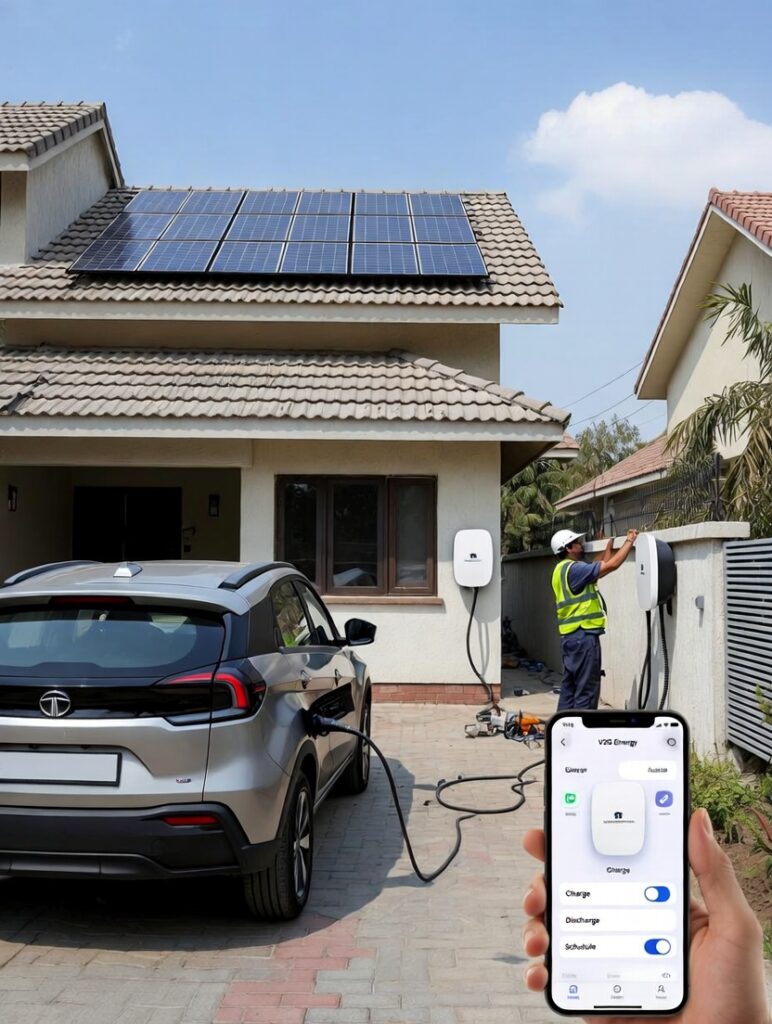
In simple terms, V2G works through specialized bidirectional chargers that communicate with the grid, your EV, and even home energy systems. For instance, during high-demand evenings, your parked EV could supply power to stabilize the grid or power your home appliances, potentially earning you incentives from utilities. Related concepts include Vehicle-to-Home (V2H), where the EV powers your household, and Vehicle-to-Load (V2L), for charging other devices.
According to experts, V2G can utilize EV batteries up to 10 times more efficiently than standard smart charging, making it a game-changer for energy management. In India, pilots have demonstrated AC-based V2G systems, which are more affordable and scalable for local conditions.
Benefits of V2G Technology for Indian EV Owners
Adopting V2G compatible chargers offers multiple advantages, especially in India’s context of rapid EV growth and renewable energy push. Here are the key benefits of bidirectional EV charging in India:
- Grid Stability and Renewable Integration: V2G helps balance India’s power grid by storing surplus solar or wind energy and releasing it during peaks, reducing curtailment and supporting the country’s net-zero goals. With EVs projected to make up 30% of vehicle sales by 2030, V2G could provide up to 20 GW of distributed storage.
- Cost Savings: EV owners can offset 30-40% of charging costs by selling excess energy back to the grid, with fleet operators potentially earning ₹8,000-₹12,000 per month per vehicle. In states like Kerala, pilots reward users for discharging during peak times.
- Environmental Impact: By optimizing renewable energy use, V2G reduces reliance on coal-based power, lowering the carbon footprint of EVs and promoting sustainable mobility.
- Energy Independence: During outages, V2G acts as a home backup, providing power for up to three days in some systems, which is crucial in areas with unreliable electricity.
- Utility Incentives: Discoms benefit from demand-side management, potentially passing savings to users through lower tariffs or rebates.
These benefits make V2G a smart choice for future-proof EV charging solutions in India, aligning with government schemes like FAME II and PM E-Drive.
Current Status of V2G in the Indian EV Market
As of 2026, V2G technology in India is in its nascent but promising phase. The India Smart Grid Forum (ISGF) led a landmark pilot in 2024-25, retrofitting four Tata Nexon EVs with bidirectional modules and AC chargers from international suppliers like Nuvve and Watt&Well. This project, conducted in Delhi and Kerala, demonstrated grid export capabilities and green charging with renewables.
Government support is growing: The Central Electricity Authority (CEA) is developing reverse charging guidelines, and policies incentivize V2G-ready infrastructure under FAME and state EV plans. However, challenges persist, including limited bidirectional charger availability, high upgrade costs, and the need for dynamic pricing. EV penetration is expected to reach 40% by 2030, unlocking massive storage potential if 25% participate in V2G.
Pilots in Delhi (with BSES and Tata Power) and Bengaluru (BESCOM) are testing e-buses and solar-integrated hubs. Globally, the V2G market is projected to grow from $5 billion in 2024 to $25 billion by 2029, with India emerging as a key player.
Best V2G Compatible EV Chargers in India 2026
While V2G options are limited in India, international models are entering via partnerships, and local pilots are paving the way. Here’s a comparison of top V2G compatible chargers suitable for the Indian market:
| Charger Model | Power Output | Key Features | Compatibility | Price Range (INR) | Availability in India |
|---|---|---|---|---|---|
| Enphase IQ Bidirectional EV Charger | Up to 11 kW | V2H/V2G support, app control, solar integration, grid export during peaks | Nissan Leaf, Tata Nexon (retrofitted), Mitsubishi models | 1.5-2.5 lakhs | Available via importers; pilots in progress |
| Wallbox Quasar 2 | Up to 7.4 kW (expandable) | Vehicle-to-Home/Grid, energy management, up to 3 days home backup | CHAdeMO-compatible EVs like Nissan, Mitsubishi | 1.2-2 lakhs | Entering India through EV networks |
| Nuvve AC Bidirectional Charger | 19-52 kW | Grid balancing, renewable charging, fleet-optimized | Tata Nexon, custom retrofits | 2-4 lakhs | Used in ISGF pilots; commercial rollout expected |
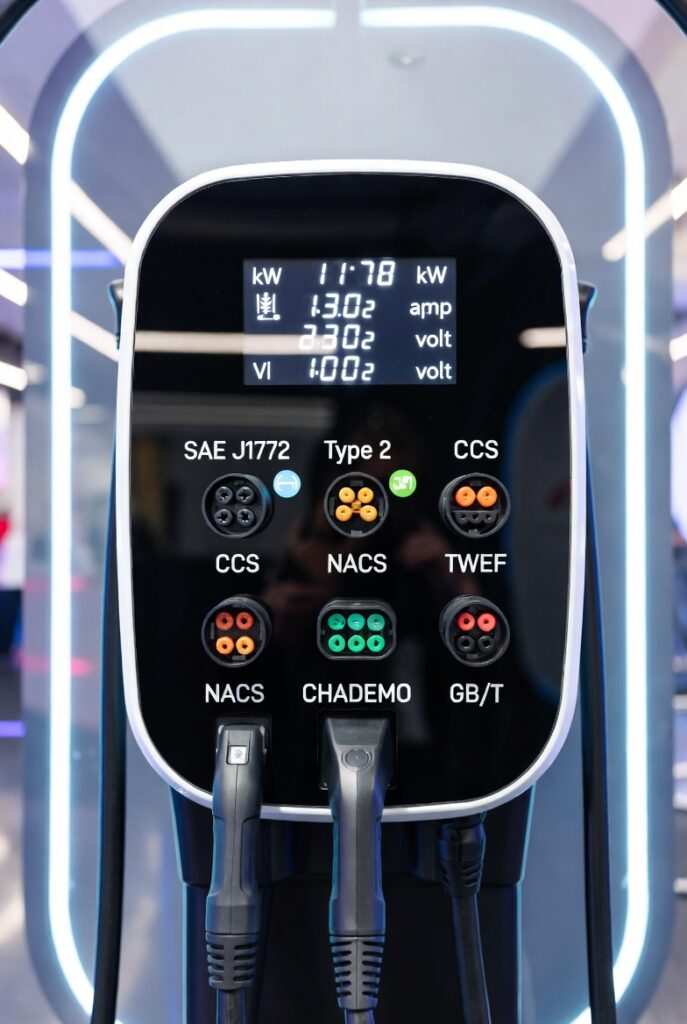
These chargers support standards like CCS2 and CHAdeMO, common in India. For home use, start with models like Enphase for its AI-powered control. Always check for BIS certification for Indian compliance.
How to Choose a V2G Compatible Charger for Your Home in India
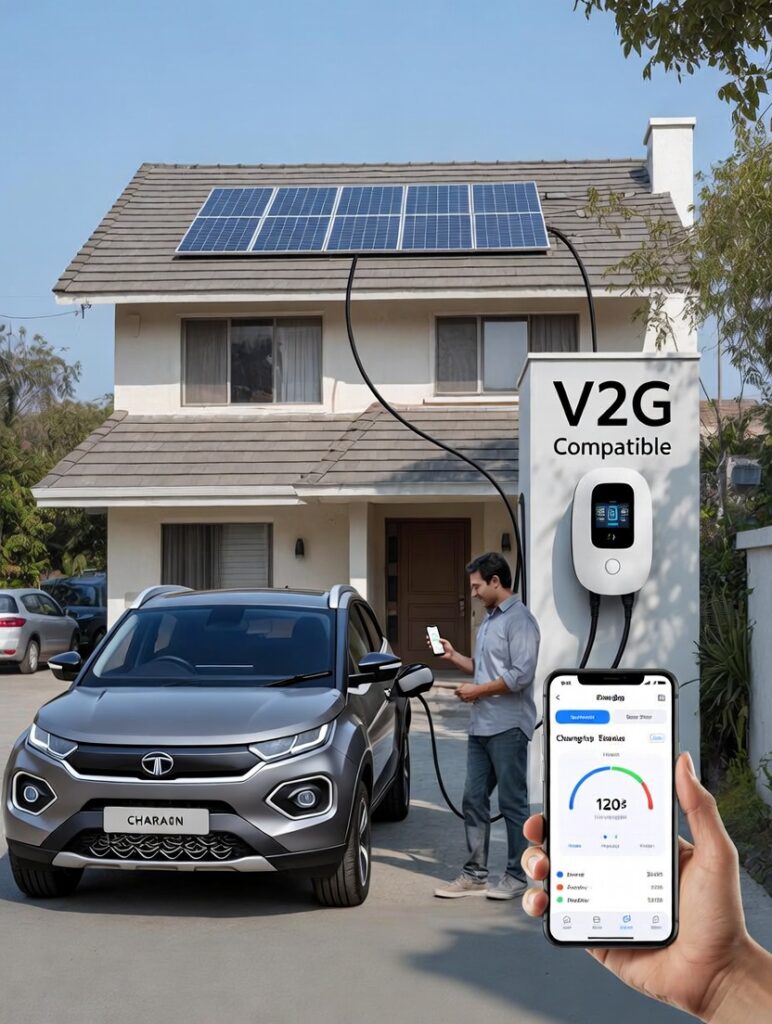
Selecting the right V2G charger involves balancing compatibility, features, and budget. Here’s a step-by-step guide on how to choose V2G compatible charger for home in India:
- Assess Vehicle Compatibility: Ensure your EV (e.g., Tata Nexon EV, Hyundai IONIQ) supports bidirectional charging. Check onboard charger capacity (e.g., 3.3 kW or 7.4 kW) and connector type (Type 2, CCS2).
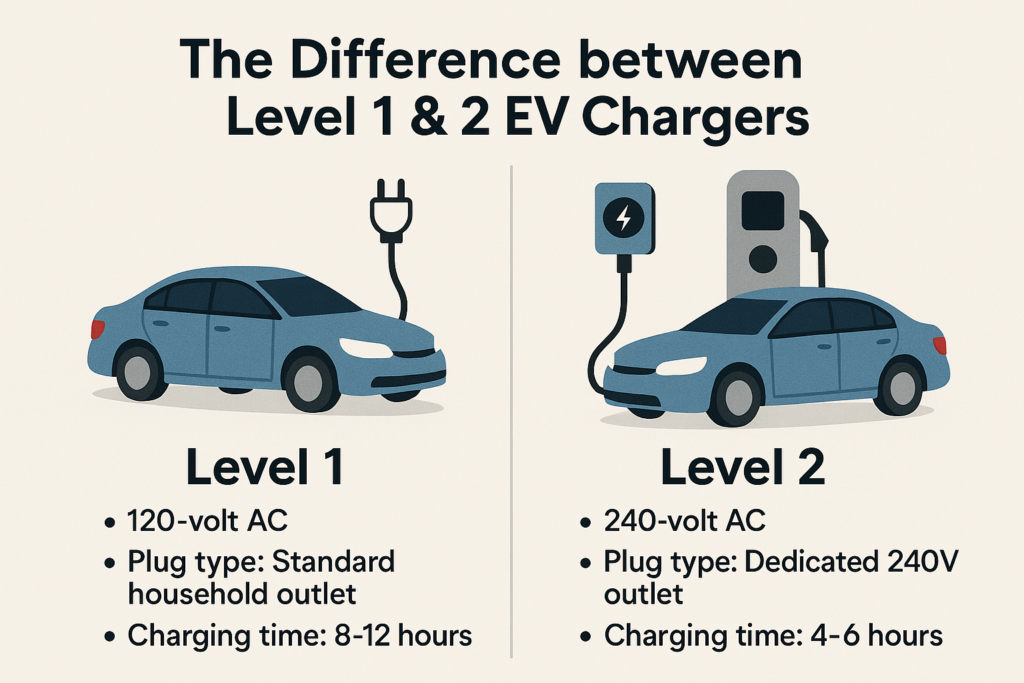
- Evaluate Power and Speed: For home setups, opt for 7-11 kW AC chargers. Avoid DC fast chargers unless you have high-capacity electrical service.
- Prioritize Smart Features: Look for app integration, solar compatibility, and safety like overcurrent protection and IP ratings for India’s weather.
- Consider Installation and Costs: Factor in electrical upgrades (e.g., panel capacity) and incentives under state EV policies. Installation costs range from ₹20,000-50,000.
- Check Certifications and Warranty: BIS/CE certified models with at least 2-3 years warranty. Future-proof with upgradeable software.
Consult providers like Tata Power or Bolt.Earth for personalized advice.
Installation and Compatibility Tips for V2G Chargers in India
Professional installation is key—hire certified electricians to assess your home’s wiring (at least 3-phase supply recommended). Integrate with solar panels for maximum benefits, and use apps for scheduling discharges. For compatibility, retrofits are available for models like Tata Nexon. Start small with V2H before full V2G to test grid interactions.
Conclusion: Embrace V2G for a Smarter EV Future in India
Investing in Vehicle-to-Grid compatible chargers is more than a purchase—it’s a step toward energy independence and sustainability. With India’s EV ecosystem evolving rapidly, choosing the best V2G compatible EV chargers in India 2026 ensures your setup is ready for tomorrow’s smart grids. Whether for cost savings, environmental impact, or grid support, V2G technology positions you at the forefront of the green mobility revolution. Compare options on our site and future-proof your EV charging today!