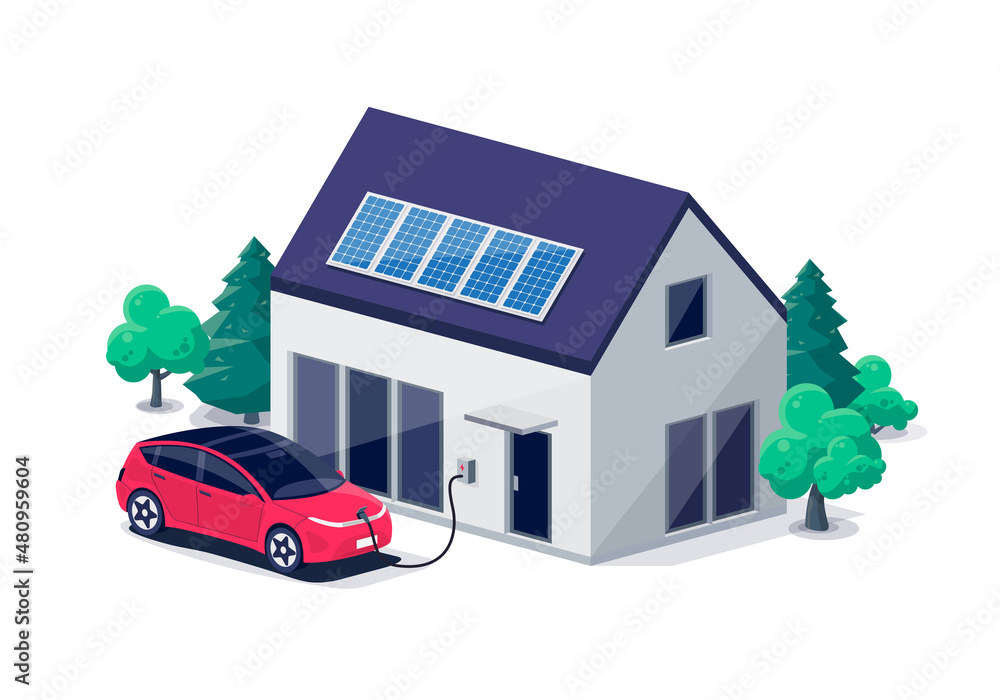
Here’s something nobody tells you when you buy your first electric vehicle.
The charging part — the thing you’ll do every single day for as long as you own the car — is also the thing most dealerships explain the worst. You drive home with a new EV, a charging cable you don’t fully understand, and a vague sense that you should probably figure this out before the battery hits zero.
This EV charging guide 2026 Level 1 vs Level 2 vs DC Fast breaks down everything you actually need to know — how each charging level works, how fast each one really is in the real world, how the US and European systems differ, and which one makes sense for your driving life. No jargon. No unnecessary technical depth. Just the information that helps you charge smarter.
Why EV Charging Levels Exist in the First Place
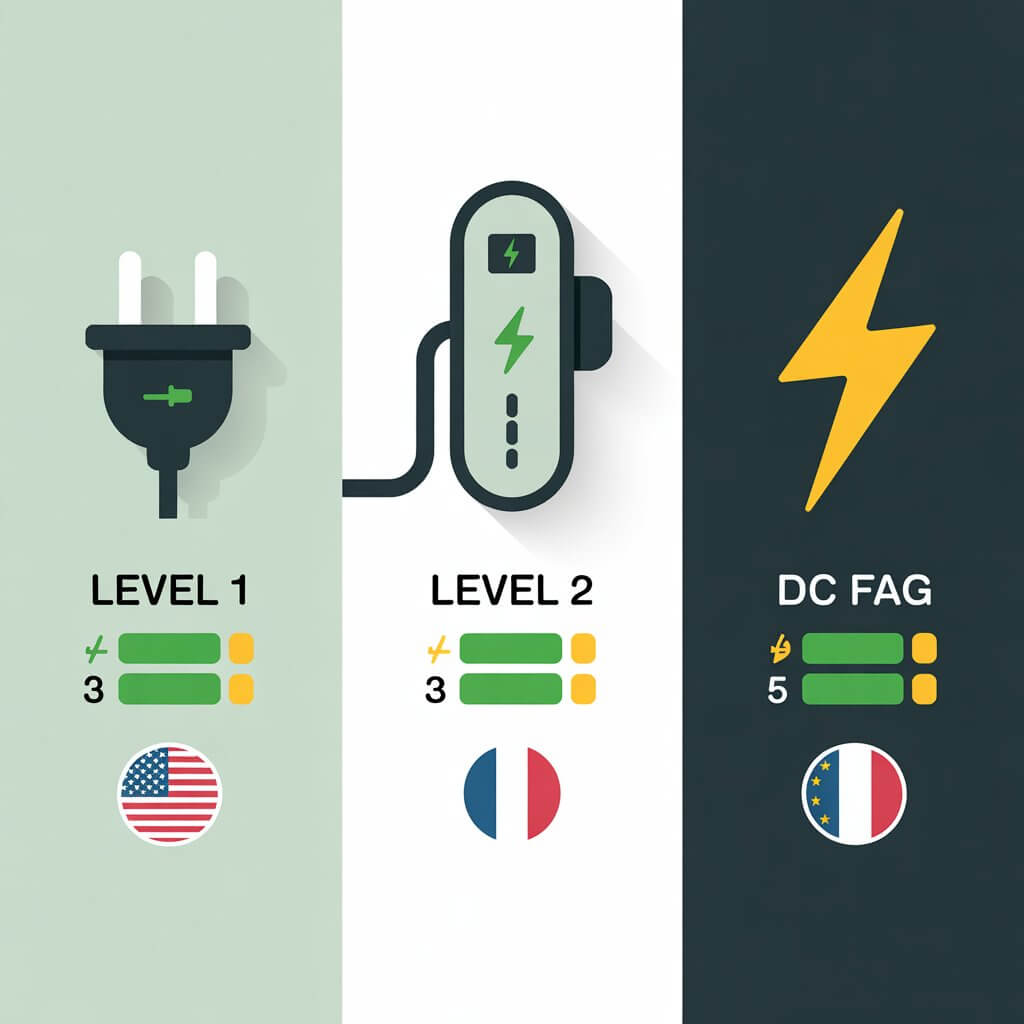
The Level 1 / Level 2 / DC Fast charging framework isn’t arbitrary. It reflects three genuinely different approaches to delivering electricity to a battery — each with different speeds, costs, and use cases.
Think of it this way. Charging an EV battery is fundamentally about moving electrons from the grid into a battery pack as efficiently and safely as possible. The battery doesn’t care where the electrons come from — but it cares very much about how fast they arrive and in what form. That’s what the levels are actually describing: the speed and electrical format of the charge.
In the US, the Level 1/2/3 framework is the standard way to describe this. In Europe, the same concepts exist but the terminology and connector standards are different. We’ll cover both in detail.
Level 1 Charging — The Slowest but Most Accessible Option
What Is Level 1 Charging?
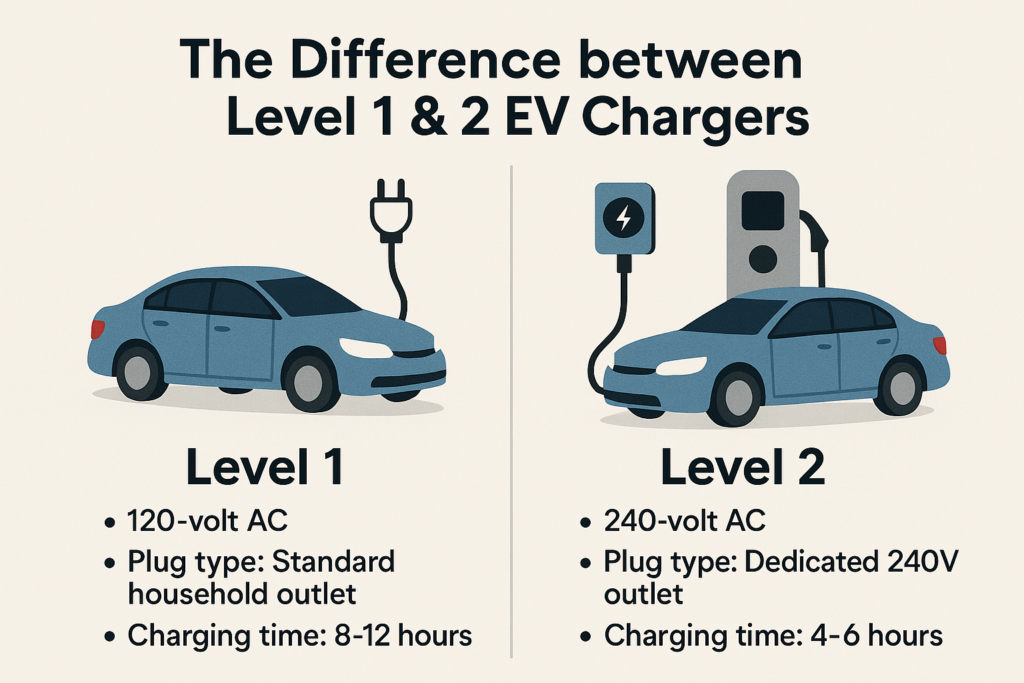
Level 1 charging is what happens when you plug your EV into a standard household outlet — a regular 120V socket in the US or a 230V socket in Europe using a standard domestic plug adapter.
No special equipment needed. No electrician required. Just plug in and wait.
How Fast Is Level 1 Charging?
In the US (120V): Level 1 charging delivers roughly 1.2 kW to 1.4 kW of power. In practical terms, this translates to about 4-8 km of range added per hour of charging. A completely flat battery on a mid-range EV like a Tesla Model 3 or Chevrolet Equinox EV would take 40-50 hours to fully charge from Level 1.
In Europe (230V): A standard European household outlet delivers slightly more power — typically 2.3 kW — which means faster Level 1 charging than the US equivalent. Expect around 10-15 km of range per hour. Still slow, but meaningfully better than US Level 1.
When Level 1 Charging Actually Makes Sense
Level 1 charging gets dismissed a lot and the dismissal is usually unfair. For a specific type of driver — someone who commutes less than 50 km daily and parks at home overnight — Level 1 is genuinely sufficient. You use 40 km of range during the day, plug in when you get home, and wake up to a full battery. No special installation, no upfront cost beyond the cable that came with the car.
Where Level 1 fails: longer daily commutes, multiple drivers sharing one vehicle, or situations where you need a quick top-up rather than an overnight charge.
Level 1 Charging — US vs Europe
| US Level 1 | European Level 1 | |
|---|---|---|
| Voltage | 120V | 230V |
| Power | ~1.4 kW | ~2.3 kW |
| Range per hour | 4-8 km | 10-15 km |
| Connector | J1772 or NACS | Type 2 or Schuko adapter |
| Cost | Free (standard outlet) | Free (standard outlet) |
Level 2 Charging — The Real Workhorse of EV Ownership
What Is Level 2 Charging?
Level 2 charging uses a dedicated charging unit — either installed at home by an electrician or available at public charging stations — that delivers significantly more power than a standard household outlet. In the US this means 240V single-phase power. In Europe it means 230V single-phase or 400V three-phase.
Level 2 is where most EV owners do most of their charging. It’s fast enough to fully charge most EVs overnight, affordable to install at home, and widely available at public locations like shopping centres, hotels, offices, and car parks.
How Fast Is Level 2 Charging?
In the US: Level 2 home chargers typically deliver 7.2 kW to 11.5 kW depending on the unit and your home’s electrical capacity. At 7.2 kW, you’re adding roughly 40-50 km of range per hour. A typical EV with a 60-75 kWh battery charges fully in 8-10 hours — perfect for overnight home charging.
In Europe: Level 2 is where European EVs have a genuine advantage. Three-phase power allows European Level 2 chargers to deliver up to 22 kW at public stations, with home chargers typically running at 7.4 kW or 11 kW. At 22 kW, you’re adding around 120-150 km of range per hour — fast enough to meaningfully top up during a shopping trip or a lunch break.
This is Why Level 2 Is the Smart Choice for Most EV Owners
If you’re going to install one thing at home for your EV, make it a Level 2 charger. The cost — typically $400-$800 for the unit plus $200-$600 installation in the US, or €300-€700 plus installation in Europe — pays for itself quickly in convenience alone. You’ll never think about charging range anxiety again if you wake up to a full battery every morning.
The difference between Level 1 and Level 2 at home is the difference between an inconvenient EV ownership experience and a seamless one. This is not a minor upgrade.
Level 2 Charging — US vs Europe
| US Level 2 | European Level 2 | |
|---|---|---|
| Voltage | 240V | 230V (single) / 400V (three-phase) |
| Max Power (home) | 11.5 kW | 11 kW |
| Max Power (public) | 19.2 kW | 22 kW |
| Range per hour | 40-100 km | 50-150 km |
| Connector (standard) | J1772 / NACS | Type 2 (IEC 62196) |
| Home installation cost | $600-$1,400 | €300-€1,000 |
DC Fast Charging — The EV Charging Guide 2026 Level 1 vs Level 2 vs DC Fast Answer for Long Distance Travel
What Is DC Fast Charging?
DC Fast Charging — also called Level 3 charging in the US — is a fundamentally different type of charging from Level 1 and Level 2. Here’s the key distinction: Level 1 and Level 2 deliver alternating current (AC) to your car, and your car’s onboard charger converts it to the direct current (DC) the battery needs. DC Fast Charging skips your car’s onboard charger entirely and delivers DC power directly to the battery.
This is why DC Fast Charging is so much faster — it bypasses the bottleneck of your car’s onboard AC-to-DC converter and pushes power directly where it needs to go.
How Fast Is DC Fast Charging?
This is where the numbers get genuinely impressive.
Entry-level DC Fast Chargers (50 kW): Add roughly 250-300 km of range per hour. Most EVs can go from 20% to 80% in 30-45 minutes on a 50 kW charger.
Mid-range DC Fast Chargers (100-150 kW): Common at highway charging stations in both the US and Europe. Add 400-600 km of range per hour. A 20% to 80% charge takes 20-30 minutes on most modern EVs.
High-power DC Fast Chargers (250-350 kW): Tesla Supercharger V3, Ionity stations in Europe, Electrify America’s premium stations in the US. At 250 kW+, compatible vehicles like the Hyundai Ioniq 6 or Kia EV6 can add 100 km of range in under 5 minutes.
Important caveat: Your car sets the ceiling, not the charger. A Nissan Leaf with a 50 kW DC input limit will charge at 50 kW regardless of whether the station is rated at 50 kW or 350 kW. Always check your specific EV’s maximum DC charging rate.
DC Fast Charging in the US — Standards and Connectors
The US charging landscape has changed significantly going into 2026. Here’s where things stand:
NACS (North American Charging Standard): Tesla’s connector, now adopted as the industry standard by Ford, GM, Rivian, Honda, and most other major manufacturers. Most new EVs sold in the US from 2025 onward use NACS natively. Tesla’s Supercharger network — the largest and most reliable DC fast charging network in North America — is now open to all NACS-compatible vehicles.
CCS1 (Combined Charging System): The previous US standard, combining a J1772 AC connector with DC pins. Still widely available at Electrify America, EVgo, and ChargePoint stations. Older EVs like early Chevrolet Bolts and pre-2024 Ford Mustang Mach-Es use CCS1. NACS-to-CCS1 adapters are available for cross-compatibility.
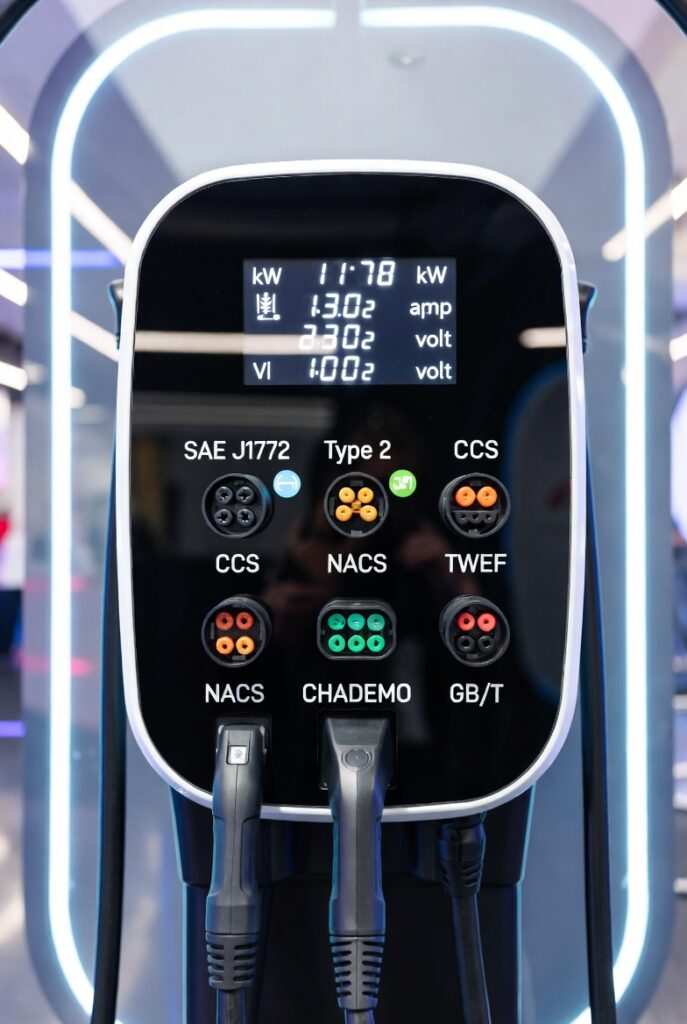
CHAdeMO: Japanese standard used by the Nissan Leaf and some older Mitsubishi EVs. Being phased out rapidly in the US — finding a working CHAdeMO station is increasingly difficult as the network shrinks.
DC Fast Charging in Europe — Standards and Connectors
Europe’s DC fast charging landscape is more standardised than the US — and has been for longer.
CCS2 (Combined Charging System Type 2): The dominant standard across Europe. Used by Volkswagen, BMW, Mercedes, Hyundai, Kia, Renault, and most other manufacturers selling in Europe. The vast majority of European DC fast charging stations use CCS2.
Tesla Supercharger (now CCS2 in Europe): Tesla switched European Superchargers to CCS2 connectors in 2019, making them compatible with all CCS2 vehicles. Tesla’s European Supercharger network is open to non-Tesla vehicles at most locations.
Ionity: The pan-European high-power charging network backed by BMW, Mercedes, Ford, Hyundai and others. Ionity stations offer up to 350 kW and are found along major European motorways. Coverage is strong across Western Europe and expanding in Eastern Europe.
CHAdeMO: Still present at some older stations in Europe but being phased out faster than in the US. The Nissan Leaf is the main remaining CHAdeMO vehicle in the European market.
DC Fast Charging — US vs Europe
| US DC Fast | European DC Fast | |
|---|---|---|
| Standard connector | NACS (new) / CCS1 (legacy) | CCS2 |
| Max available power | 350 kW (Electrify America) | 350 kW (Ionity) |
| Largest network | Tesla Supercharger | Tesla Supercharger / Ionity |
| CHAdeMO | Being phased out | Being phased out |
| Highway coverage | Growing but gaps remain | Strong in Western Europe |
| Average cost per kWh | $0.25-$0.45 | €0.35-$0.79 |
The Honest Difference Between US and European EV Charging in 2026
The US and Europe have converged more than most people realise going into 2026 — but real differences remain.
Where Europe still leads:
Three-phase power gives European Level 2 charging a genuine speed advantage at public locations. A 22 kW public AC charger in a European car park adds range meaningfully during a two-hour shopping trip. The equivalent US public Level 2 station at 7.2-11.5 kW adds less range in the same time. For day-to-day public charging without using DC fast chargers, European infrastructure is more practical.
European charging network coverage along motorways is also more consistent. The combination of Ionity, Tesla Supercharger, and national networks means most major European motorway routes have reliable high-power charging every 50-80 km. The US highway network has improved dramatically but still has more gaps, particularly outside the coasts and major corridors.
Where the US has caught up:
The NACS standardisation is a genuine turning point. The fragmentation that plagued US EV charging for years — multiple incompatible standards, confusing adapter requirements, networks that only worked with specific apps or membership cards — is meaningfully better in 2026. A new EV buyer in the US today has a much simpler charging experience than someone who bought in 2021.
Tesla’s Supercharger network, now accessible to most new EVs, is still the gold standard for reliability and user experience in North America. Nothing in Europe quite matches the consistency of finding a working, fast Supercharger at regular intervals along US highways.
Where both still struggle:
Apartment and urban charging remains the unsolved problem on both continents. If you live in a flat in Berlin, Paris, London, New York, or Chicago without dedicated parking, reliable home charging is still difficult. Public charging infrastructure in dense urban areas is improving but hasn’t kept pace with EV adoption rates. This is the real gap in the EV charging story of 2026 — not the highway networks, but the everyday charging access for people without garages.
Which Charging Level Do You Actually Need? A Simple Framework
You need Level 1 if:
- Your daily drive is under 50 km
- You have overnight parking at home
- You want zero upfront installation cost
- You’re in Europe where 230V Level 1 is meaningfully faster than US 120V Level 1
You need Level 2 if:
- Your daily drive is 50-200 km
- You want to wake up to a full battery every morning
- You share a car between multiple drivers
- You want the option to charge fully in 4-8 hours rather than overnight
You need DC Fast Charging access if:
- You regularly drive longer distances between cities
- You don’t have home charging and rely on public infrastructure
- You need to add significant range in under 30 minutes
Most EV owners need Level 2 at home and DC Fast Charging access on the road. Level 1 is a fallback, not a strategy — unless your daily driving genuinely fits within its limits.
NACS vs CCS — The 2026 Update Every EV Buyer Needs to Read
The connector standard question has been the most confusing part of EV charging in the US for years. Here’s where things stand in 2026.
NACS has won the US market. If you’re buying a new EV from any major manufacturer in the US in 2026, it almost certainly has a NACS port natively or comes with a CCS1-to-NACS adapter included. The vast majority of new public DC fast chargers being installed in the US are NACS compatible.
CCS1 stations from Electrify America, EVgo, and ChargePoint are still operating and will be for years — they represent too much installed infrastructure to disappear quickly. But new installations are predominantly NACS.
In Europe, CCS2 remains the unified standard with no serious challenger. Tesla’s decision to use CCS2 in Europe rather than push NACS internationally means Europe avoided the connector fragmentation battle entirely.
The practical advice: if you’re buying in the US in 2026, prioritise NACS. If you’re buying in Europe, CCS2 is the only standard that matters for DC fast charging.
EV Charging Costs in 2026 — US vs Europe
Charging costs vary enormously depending on whether you’re charging at home, at a public Level 2 station, or at a DC fast charger.
Home charging (both US and Europe): The cheapest option by far. In the US, average residential electricity is around $0.13-$0.17 per kWh, making a full charge on a 75 kWh battery cost roughly $10-$13. In Europe, home electricity rates vary widely — from around €0.15/kWh in France to €0.40/kWh in Germany — making home charging costs $11-$30 for the same battery depending on location.
Public Level 2 (both): Often free at hotels, shopping centres, and workplaces as an amenity. Paid public Level 2 typically runs $0.10-$0.25 per kWh in the US and €0.25-$0.45 in Europe.
DC Fast Charging: The most expensive option on both continents. Tesla Supercharger rates in the US average $0.25-$0.50 per kWh. Ionity in Europe charges up to €0.79 per kWh at non-member rates — expensive enough that a DC fast charging road trip in Europe can approach petrol costs if you’re not on a membership plan.
The message is consistent across both markets: home charging is where you save money, DC fast charging is a convenience you use on the road and pay a premium for.
Final Thoughts on the EV Charging Guide 2026 Level 1 vs Level 2 vs DC Fast
The good news going into 2026 is that EV charging — in both the US and Europe — is genuinely easier than it was three years ago. Standards are more unified, networks are more reliable, and the charging hardware itself has improved significantly.
The bad news is that the information gap between what EV owners actually need to know and what they’re told at the dealership is still wider than it should be. Most people buying an EV in 2026 still don’t fully understand the difference between their home charging options, don’t know their car’s maximum DC charging rate, and haven’t thought through what happens when they need to charge away from home.
This EV charging guide 2026 Level 1 vs Level 2 vs DC Fast is the starting point. Bookmark it, share it with anyone who’s just bought or is considering an EV, and check back — the charging landscape is still moving fast enough that what’s true today may have a meaningful update by the end of the year.
If this guide got you thinking about your broader EV ownership setup, we have everything covered. If you’re figuring out which home charger to actually buy after understanding the levels, our honest guide to the best home EV chargers in India with real user costs and setups is the natural next read. Once your charger is installed, understanding EV maintenance requirements across Tata, MG, Hyundai, Ola and Ather helps you plan long term ownership costs properly. And before you hit the road for a festival or long weekend, our guide to managing EV charging during holidays in India covers everything from highway corridor reliability to what to do when your planned charger is offline. If something does go wrong at a public station, bookmark our EV charger troubleshooting guide — it covers every error code and fix across Type 2, CCS2 and AC chargers. And if you’re still deciding which brand to buy, our EV charger warranty comparison breaks down exactly what each brand’s fine print actually covers.