Are you wondering how much does it cost to charge an EV at home in India 2026? Or comparing home EV charger cost per full charge across popular models like 3.3 kW, 7.2 kW, or 22 kW AC chargers? With rising EV adoption in cities like Mumbai, Bangalore, Delhi, and Pune, understanding the real cost per charge for different home charger models in India is key to maximizing savings and choosing the right setup.
Home charging remains the cheapest and most convenient option — often 50-70% less expensive than public stations. In this detailed guide, we’ll provide a ready-to-use EV home charging cost calculator approach, real 2026 India data (especially Maharashtra/Mumbai tariffs), comparisons of popular charger models, and tips to minimize your EV charging cost per km at home.
Why Home Charging Wins in 2026 – Cost Comparison Home vs Public
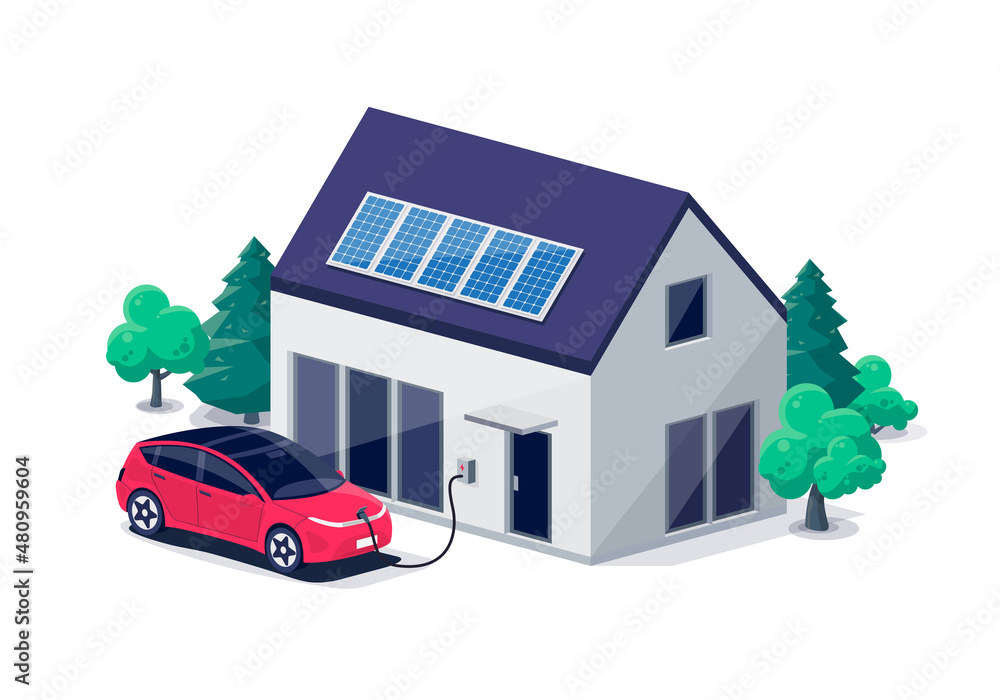
Home charging uses your domestic electricity connection, while public stations (AC or DC fast) add network fees, higher per-kWh rates, and sometimes session/parking charges.
Typical 2026 rates in India:
- Home charging — ₹6–₹12/kWh (off-peak lower in many states; Mumbai/Maharashtra averages ₹8–₹11/kWh for mid-to-high slabs)
- Public AC (7–22 kW) — ₹10–₹18/kWh
- Public DC fast (50 kW+) — ₹18–₹25/kWh (or more during peak)
For a typical 40 kWh battery EV (like Tata Nexon EV, MG ZS EV, or Mahindra XUV400):
- Full charge at home → ₹240–₹480
- Same at public DC → ₹720–₹1,000+
Long-tail keyword tip: Searching for “cheapest way to charge EV at home in Mumbai 2026” or “EV full charge cost comparison home vs public India” shows home charging saves ₹500–₹1,500 per full cycle for most owners.
Current Domestic Electricity Tariffs in Maharashtra (Mumbai) 2026
In Mumbai (BEST/Tata Power/Adani areas) and broader Maharashtra (MSEDCL), residential slabs are progressive:
- 0–100 units: ~₹4.4–₹5/kWh
- 101–300 units: ~₹9–₹10/kWh
- 301–500 units: ~₹12–₹13/kWh
- Above 500 units: ~₹14+/kWh
Many EV owners fall into the ₹8–₹11/kWh effective range after slab progression. Some DISCOMs offer special EV tariffs or off-peak discounts (₹6–₹8/kWh overnight in select areas). Always check your latest bill or DISCOM portal for exact rates.
Pro tip: Charge overnight (off-peak) to stay in lower slabs and save 20–40% on your home EV charging electricity cost per kWh 2026.
Popular Home Charger Models in India 2026 – Specs & Price Overview
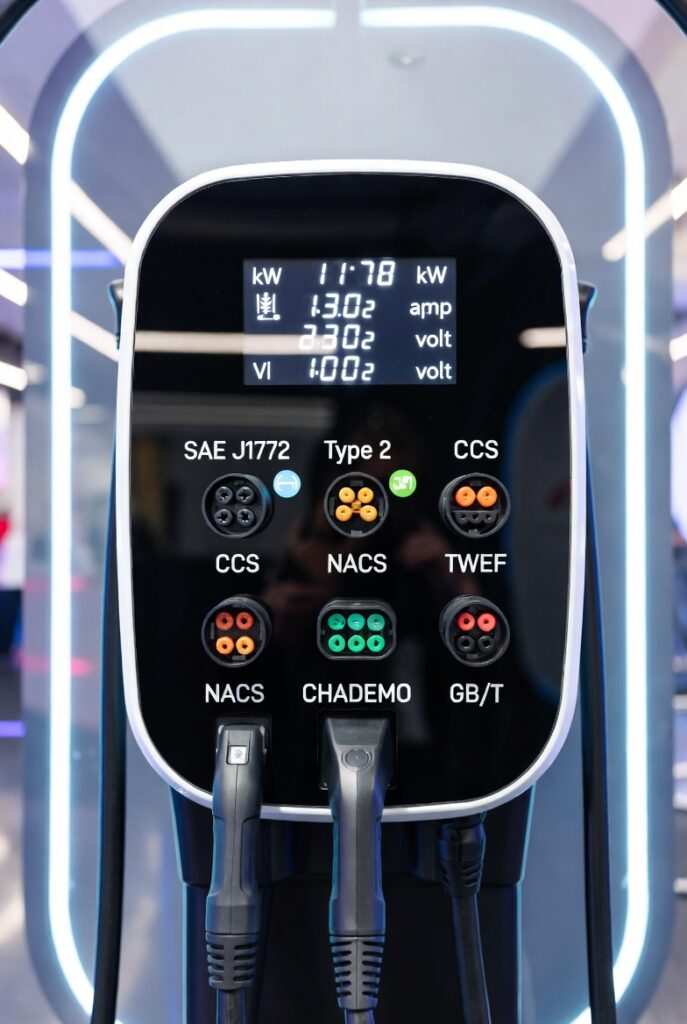
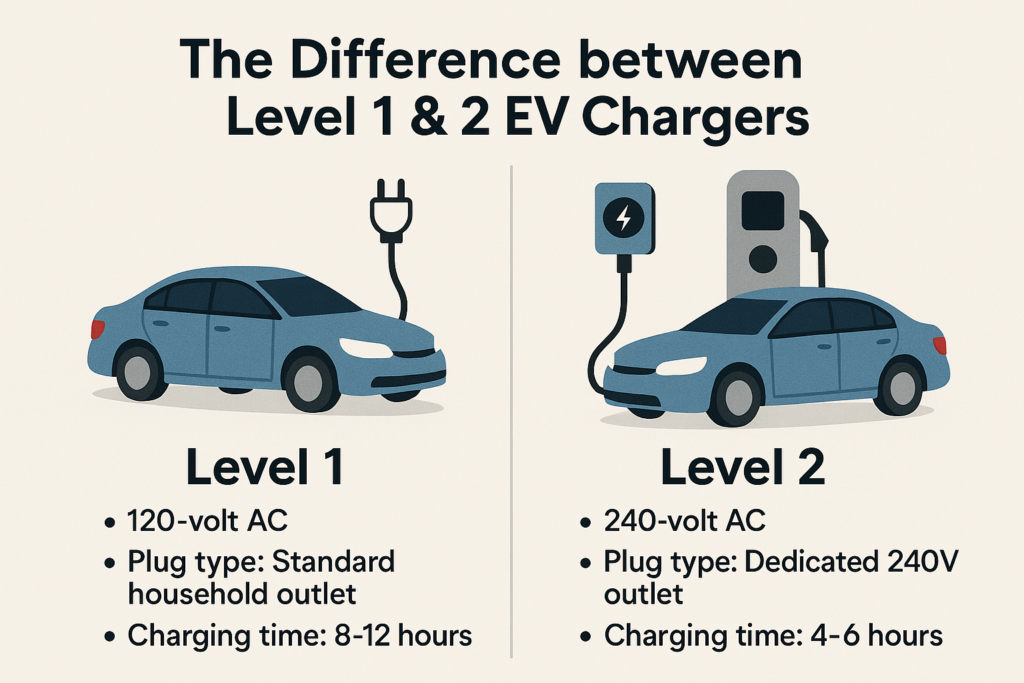
Here are common AC Level 2 chargers available for home use in India (single-phase or three-phase compatible):
- 3.3 kW Portable/Slow Charger (often comes free with many EVs like Tata, MG)
- Power output: 3.3 kW
- Approx. price: ₹5,000–₹15,000 (or free bundled)
- Charging speed: ~12–15 km/hour added range
- 7.2–7.4 kW Wallbox (most popular – Tata Power EZ Charge, Exicom, Bolt.Earth, etc.)
- Power output: 7.2–7.4 kW
- Approx. price: ₹35,000–₹70,000 (including installation)
- Charging speed: ~25–35 km/hour
- Features: App control, RFID, scheduling
- 22 kW AC Charger (for three-phase homes or faster needs)
- Power output: 22 kW (limited by vehicle onboard charger to ~7–11 kW in most passenger EVs)
- Approx. price: ₹80,000–₹1,50,000+
- Charging speed: Up to vehicle max (rarely exceeds 11 kW for four-wheelers)
(Note: Many 2026 EVs have onboard chargers capping at 7–11 kW, so 7.4 kW is the sweet spot for most.)
Cost per Charge Calculator – Step-by-Step for Different Models
Use this simple formula for any charger model:
Cost per full charge (₹) = Battery capacity (kWh) × Electricity rate (₹/kWh)
Charging time (hours) ≈ Battery capacity (kWh) ÷ Charger power (kW) (assuming 90–95% efficiency; ignore for cost calc)
Cost per km ≈ Cost per full charge ÷ Usable range (km)
Example Table: Cost per Full Charge (40 kWh Battery EV, Mumbai Effective Rate ₹9/kWh)
| Charger Model | Power (kW) | Approx. Full Charge Time | Cost per Full Charge (₹) | Cost per 100 km (₹) (assuming 4 km/kWh efficiency) | Best For |
|---|---|---|---|---|---|
| 3.3 kW Portable | 3.3 | 12–14 hours | ₹360 | ~₹9 | Budget, slow overnight charging |
| 7.4 kW Wallbox | 7.4 | 5–6 hours | ₹360 | ~₹9 | Daily use, most popular choice |
| 22 kW AC | 22 | 4–5 hours (capped by car) | ₹360 | ~₹9 | Future-proof, three-phase homes |
Key insight: The electricity cost per charge is the same regardless of charger speed — faster chargers just reduce time, not rupee cost (assuming same kWh rate).
If your rate is ₹7/kWh (off-peak/special EV tariff): Full charge drops to ~₹280 → ₹7 per 100 km.
Real-World Example: Tata Nexon EV (40–45 kWh variants)
- At ₹9/kWh home rate → Full charge ≈ ₹360–₹405
- Range ~300–350 km → Running cost ₹1.1–₹1.35/km
- Public DC (₹20/kWh average) → Same charge ≈ ₹800–₹900 → ₹2.4–₹3/km
Savings: ₹1–₹2 per km with home charging — over ₹15,000–₹30,000/year for 15,000 km driven.
How to Use Your Own Cost per Charge Calculator
- Find your battery capacity (from car specs: e.g., 30 kWh Ather 450X scooter, 40 kWh Nexon EV, 50 kWh BYD Atto 3)
- Check your latest electricity bill slab rate (or average ₹/kWh)
- Multiply: Cost = kWh × ₹/kWh
- Add ~5–10% for charging losses if you want precision
Online tools like e-AMRIT home charging calculator or MG Motor’s EV calculator can help plug in numbers quickly.
Tips to Minimize Your EV Charging Cost per Charge in 2026
- Charge during off-peak hours (11 PM–6 AM) for lower slabs or TOU rates.
- Install a smart charger with scheduling (Tata Power, Bolt.Earth models).
- Apply for EV-specific tariffs if available in your state.
- Use solar + home battery setups for near-zero marginal cost (emerging trend).
- Compare charger models not just on price, but warranty (2–5 years), app features, and installation ease.
FAQ – Cost per Charge for Different Charger Models
What is the average home charging cost per kWh in India 2026?
₹6–₹12/kWh, depending on state and slab. Mumbai/Maharashtra often ₹8–₹11/kWh effective.
Does faster charger mean lower cost per charge?
No — cost depends only on kWh consumed and electricity rate, not speed.
Which home charger model gives lowest cost per full charge?
All give similar electricity cost; choose 7.4 kW for best balance of speed and price.
Is public charging ever cheaper than home?
Rarely — only if home tariff > ₹18/kWh (uncommon) or free promotional public sessions.
Ready to calculate your exact numbers? Plug your EV model, battery size, and current ₹/kWh rate into the formula above — or drop your details in comments for personalized estimates!
Switching to home charging is the smartest money move for EV owners in India today. Compare chargers, install smart, and enjoy driving electric for pennies per kilometer.
(Always verify latest tariffs with your DISCOM — rates can change with policy updates.)