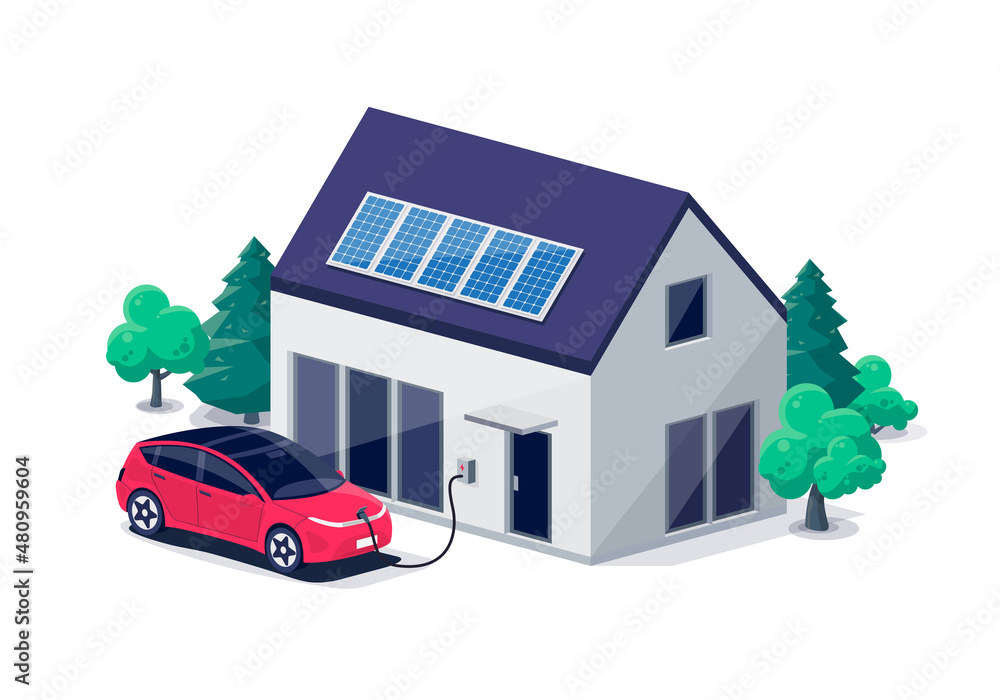
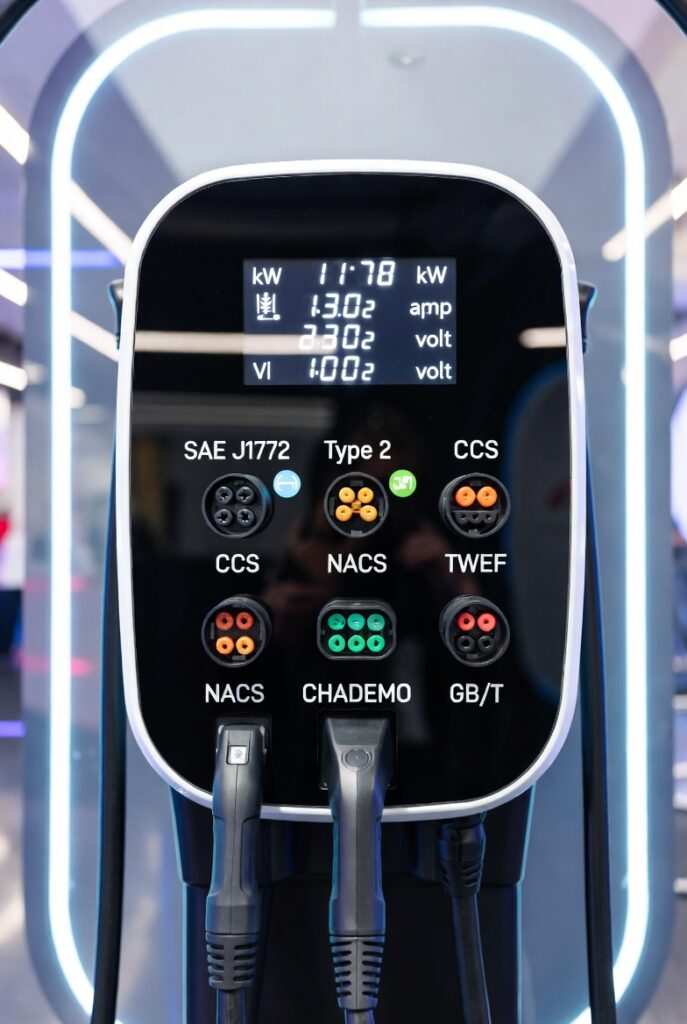
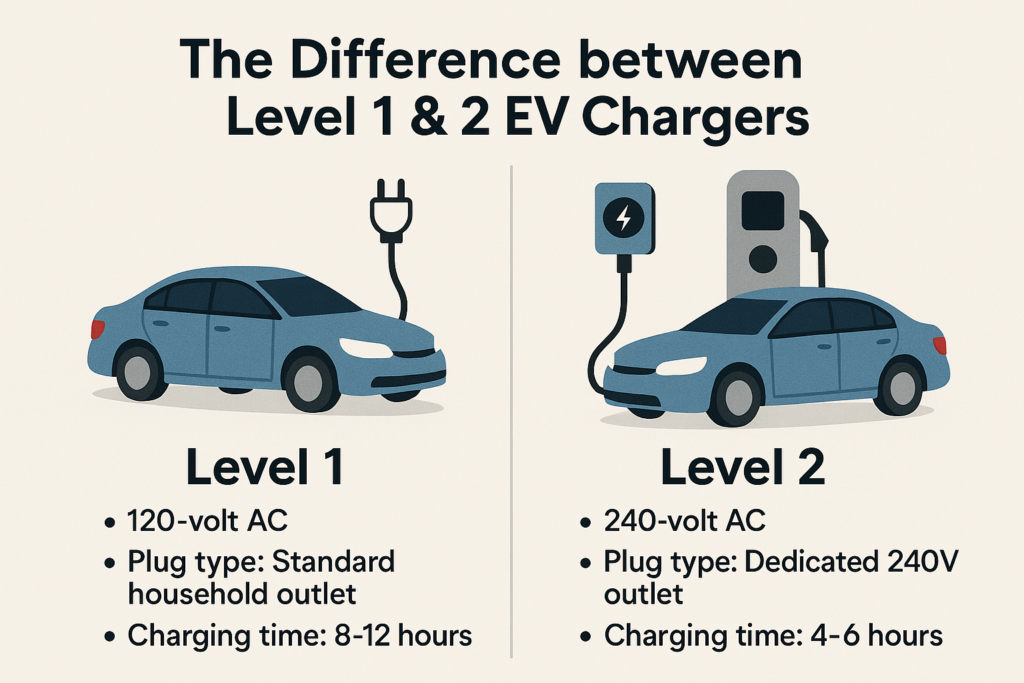
Here is a conversation that happens in luxury villa communities across Shanghai, Beijing, and Shenzhen in 2026.
The homeowner has just taken delivery of a Porsche Taycan, a Mercedes‑EQE, or a BMW i7. The car cost ¥800,000 to ¥1,500,000. The villa cost ¥20,000,000 to ¥50,000,000. The renovation budget was ¥2,000,000 to ¥5,000,000.
Now the electrician asks: “Where do you want the charger?”
The homeowner looks at the wall of their climate‑controlled garage. They see polished concrete floors, custom millwork, integrated lighting. And they imagine a standard white plastic box with a blue LED stuck to that wall. The thought is genuinely unpleasant.
So they ask a different question: “What are the beautiful options?”
That homeowner has just discovered the premium segment of the home EV charging market — chargers that are designed to be looked at, not just plugged into. Chargers made from powder‑coated aluminium, solid oak, or hand‑finished stainless steel. Chargers that cost ¥8,000 to ¥25,000 instead of ¥2,000 to ¥4,000.
This guide on Luxury chargers: ChargePoint (imported) vs local premium brands (Andersen style) – worth the premium? answers the question those homeowners are really asking. What do you actually get for a ¥15,000 charger versus a ¥3,000 StarCharge? Is the imported ChargePoint Home Flex genuinely superior to emerging local premium brands? Do the Andersen‑style local offerings deliver genuine design value or just superficial styling? And in the specific context of a luxury home where the charger is a visible design element for years, what premium is actually justified?
The answer depends on how much you genuinely value design — and whether you are buying genuine craftsmanship or simply paying a premium for import fees and marketing.
What Makes a Charger “Luxury” in 2026? — Defining the Segment
Before comparing specific products, understanding what defines the luxury charger segment in 2026 — and how it differs from the standard home charger market — frames the entire value discussion.
The Standard Market (¥2,000-¥4,500)
The standard home EV charger market in China is mature, competitive, and functionally excellent. Products from StarCharge, Autel, BYD, NIO, and Xpeng deliver:
- 7 kW or 11 kW charging at 90-95% efficiency
- IP54 to IP55 weather resistance
- -20°C to +50°C operating range
- WiFi, Bluetooth, or 4G connectivity
- TOU scheduling and energy monitoring apps
- 2-3 year warranties
- Functional but industrial plastic housing
These chargers are good. They charge reliably, last for years, and deliver 99% of the daily utility that any homeowner needs. What they do not deliver is beauty.
The Luxury Market (¥8,000-¥25,000)
The luxury home EV charger segment in 2026 is defined by four characteristics that standard chargers do not offer:
Characteristic 1: Design as primary feature.
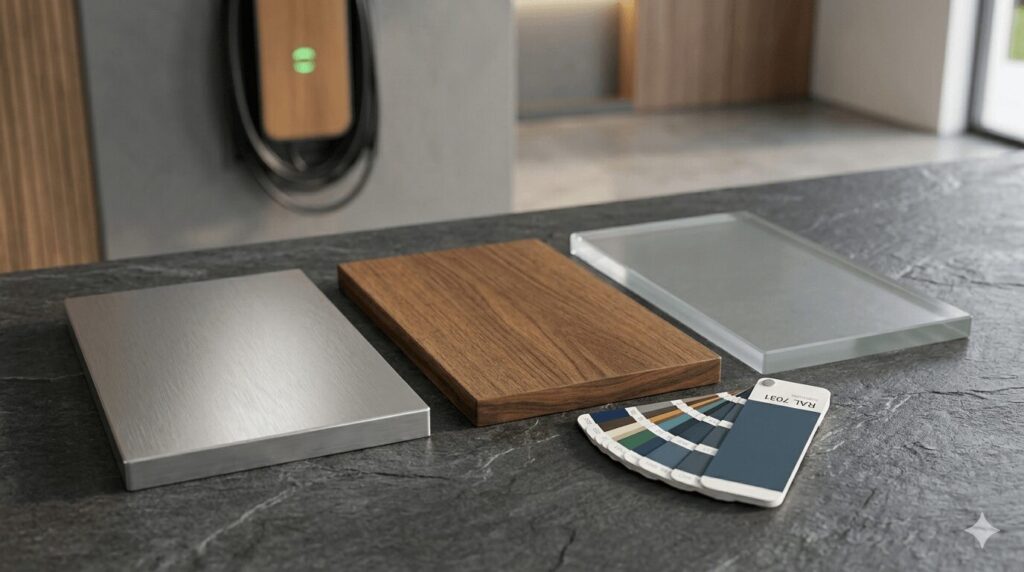
Luxury chargers are designed by industrial designers, not electrical engineers. They use premium materials — brushed stainless steel, powder‑coated aluminium, solid wood, tempered glass, leather accents. They are available in custom RAL colours to match garage interiors. They are meant to be visible and admired, not hidden.
Characteristic 2: Material quality above functionality.
A standard charger uses ABS plastic because it is durable, UV‑stable, and cheap. A luxury charger uses aluminium because it feels premium to the touch. It uses solid oak because the grain pattern adds warmth to a garage. These materials cost 5-20x more than plastic. They do not charge the car better. They feel better to the owner.
Characteristic 3: Installation integration.
Luxury chargers are often semi‑recessed or flush‑mounted into walls, not surface‑mounted like standard chargers. This requires custom installation work — cutting into finished walls, running concealed conduits, integrating with garage cabinetry. Installation costs for luxury chargers are typically ¥3,000-¥8,000, compared to ¥1,500-¥2,500 for standard units.
Characteristic 4: Brand storytelling.
Luxury chargers come with brand stories. British heritage (Andersen). American EV charging pioneer (ChargePoint). Danish minimalist design. Swiss precision engineering. The brand story is part of what the premium price buys — the right to say “I have a ChargePoint” or “I imported an Andersen” to other luxury homeowners.
The Key Insight
Luxury chargers do not charge cars better than standard chargers. A ¥15,000 Andersen A2 and a ¥2,500 StarCharge both deliver 7 kW at 92% efficiency. The difference is entirely in design, materials, installation integration, and brand cachet.
Understanding this is essential before reading the rest of this guide. Luxury chargers are a design and lifestyle purchase, not a functional upgrade. The value question is purely subjective: how much is beautiful design worth to you over 5-10 years of daily use?
The Imported Contender: ChargePoint Home Flex
Product Overview
ChargePoint is the largest EV charging network in North America and a publicly traded company (NYSE: CHPT). The ChargePoint Home Flex is their premium residential charger — a product designed for the North American and European markets that is imported into China by specialty distributors and parallel importers.
ChargePoint does not have an official direct sales channel in China. All ChargePoint Home Flex units in China are imported — either by authorised distributors in Hong Kong or by grey‑market parallel importers. This has significant implications for pricing, warranty, and support.
Specifications
| Specification | ChargePoint Home Flex |
|---|---|
| Power | Up to 12 kW (50A circuit) / 7 kW typical for Chinese single‑phase |
| Connector | GB/T (China version) or Type 2 (imported variant) |
| Design | Modern minimalist — smooth white rounded rectangle |
| Housing Material | UV‑stabilised polycarbonate (plastic) |
| Dimensions | 260mm x 182mm x 115mm |
| Cable | 7.6m tethered |
| IP Rating | NEMA 4 (equivalent to IP54) |
| Operating Temp | -30°C to +50°C |
| Connectivity | WiFi, Bluetooth, 4G (via ChargePoint network) |
| App | ChargePoint app (global) |
| Smart Features | TOU scheduling, charging history, ChargePoint network integration |
| Warranty | 3 years (US/EU) — varies for China imports |
| Price in China (2026) | ¥8,000-¥12,000 depending on importer and variant |
What the ChargePoint Home Flex Delivers
Charging performance:
The Home Flex is technically excellent. It can deliver up to 12 kW on a 50A circuit — though most Chinese residential installations are limited to 7 kW single‑phase or 11 kW three‑phase. The charger automatically adjusts to available circuit capacity. Charging efficiency is 93-95%, comparable to premium local units.
App quality — the genuine advantage:
The ChargePoint app is one of the best in the industry. It provides:
- Real‑time charging status with elegant visualisation
- Detailed charging history with cost breakdowns
- TOU scheduling that integrates with utility rate data
- Public ChargePoint network integration (less relevant in China where ChargePoint has minimal presence)
For homeowners who travel internationally or value app design quality, the ChargePoint app is genuinely superior to most local competitors. The interface is clean, responsive, and clearly designed by people who understand UX.
ChargePoint network integration:
In North America and Europe, the Home Flex integrates seamlessly with ChargePoint’s extensive public charging network — route planning, charger availability, unified billing. In China, this integration is almost worthless. ChargePoint has approximately zero public chargers in China. The public charging integration is a feature that does not function in the Chinese market.
Build quality:
The Home Flex is well‑built. The polycarbonate housing is durable, UV‑resistant, and suitable for outdoor installation. The cable is flexible in cold weather. The connector fits securely. However, the housing material is plastic — not aluminium, not wood, not glass. The Home Flex is a premium functional charger, not a luxury design charger. It looks like a very nice standard charger, not a piece of interior design.
The Critical Problem: Import Status
The Home Flex is not officially sold in China. This creates four significant issues:
Issue 1: No manufacturer warranty.
ChargePoint’s 3‑year warranty applies only to products purchased through authorised channels in North America and Europe. Imported units in China have no warranty coverage. If the charger fails, you cannot send it to ChargePoint. Your only recourse is the importer — most of whom offer 30‑90 day warranties only.
Issue 2: No certified installation partners.
ChargePoint does not certify installers in China. Installation must be arranged independently through local electricians. Proper installation of a 12 kW charger on a dedicated circuit requires professional work — but without ChargePoint’s installation certification, there is no guarantee of correct setup or liability coverage.
Issue 3: No local customer support.
If the app stops working, if connectivity fails, if firmware updates are needed — there is no ChargePoint support team in China. Support must come from the importer (who is a distributor, not a technical expert) or from online forums.
Issue 4: Potential GB/T compatibility issues.
ChargePoint produces Home Flex units with multiple connector types. For China, the correct connector is GB/T 20234.2-2015. Imported units may have Type 2 (European) connectors with GB/T adapters — which add failure points and reduce weather resistance. Always verify connector type before purchasing.
The Honest Assessment of ChargePoint Home Flex
Where ChargePoint delivers value:
- Excellent app quality and user experience
- Strong technical performance (up to 12 kW)
- Reputable global brand for those who value brand recognition
- Genuinely good build quality for a plastic charger
Where ChargePoint falls short for the luxury buyer:
- Housing material is plastic — not luxury material
- No official warranty in China
- No local customer support
- ChargePoint public network integration is useless in China
- Price (¥8,000-¥12,000) is 3-4x standard chargers for plastic housing
- Installation is uncoordinated and uncertified
The fundamental ChargePoint question for luxury buyers:
Are you buying the brand name or the actual product?
For a homeowner who wants to say “I have a ChargePoint” because they recognise the brand from business travel to San Francisco or because they want a globally recognised name on their garage wall — the ChargePoint delivers that brand value.
For a homeowner who wants a genuinely beautiful charger made from premium materials, the ChargePoint is not that product. It is a very good plastic charger with a premium price driven by import costs and brand marketing.
ChargePoint Verdict: 6.5/10 (for Chinese luxury buyers)
Technically excellent. App is genuinely best‑in‑class. But the import status kills warranty and support. The housing is plastic, not luxury material. At ¥8,000-¥12,000, you are paying import fees and brand tax, not design or material value.
The Local Premium Contenders — Andersen Style
Market Overview
The success of Andersen EV in the UK — a company that turned home chargers into bespoke design objects with solid oak and powder‑coated aluminium — has inspired a small but growing segment of Chinese manufacturers. These local premium brands produce chargers that directly mimic the Andersen formula: premium materials, custom finishes, flush or semi‑recessed mounting, and design‑first philosophy.
Notable brands in this segment in 2026 include:
- La Poste (拉波斯特) — Shanghai‑based, most direct Andersen aesthetic clone
- VillaCharge (别墅充) — Shenzhen‑based, focused on villa integration
- MuCharging (沐充) — Hangzhou‑based, emphasis on wood finishes and traditional Chinese design elements
- EliX (依力克斯) — Beijing‑based, industrial minimalist style with brushed aluminium
These are not mass‑market brands. They are small, often direct‑to‑consumer operations. Production volumes are low (hundreds of units per year, not thousands). Quality varies significantly between brands.
What Andersen‑Style Local Chargers Deliver
Material quality — the genuine advantage:
Unlike ChargePoint’s plastic housing, these local premium chargers actually use premium materials:
- Powder‑coated aluminium (2-3mm thickness) — same material used for Apple products
- Solid oak, walnut, or teak — real wood, not wood‑effect plastic
- Tempered glass — for the front panel on some models
- Stainless steel — for outdoor‑rated models
- Custom RAL colours — any colour the homeowner wants, matched to garage cabinetry
The material difference is immediately apparent when you touch the charger. Aluminium is cold to the touch. Wood is warm. Glass is smooth. Plastic is … plastic.
Design flexibility:
Standard chargers are surface‑mounted boxes. Andersen‑style local chargers are designed for semi‑recessed installation — the charger body sits partially inside the wall, with only the front panel and connector visible.
This installation style creates a built‑in look, similar to a high‑end light switch or AV panel. The charger becomes part of the architecture, not an appliance attached to it.
Custom finishes — the true luxury feature:
The most sophisticated local premium brands offer genuine customisation:
- RAL colour matching to garage cabinets or wall paint
- Wood species selection (oak, walnut, teak, ash)
- Personalised engraving (family name, villa name, commissioning date)
- Bespoke cable colours (black, white, grey, brown, or leather‑wrapped)
No imported charger offers this level of customisation. ChargePoint offers white or black. Andersen UK offers a limited palette. Local premium brands offer anything.
Installation integration — the critical differentiator:
Local premium brands typically work with certified installation partners who specialise in luxury home integration. The installation process includes:
- Site assessment by design consultant, not just electrician
- Coordination with villa architects or interior designers
- Recessed mounting box installation during construction or renovation
- Concealed conduit routing
- Final finish matching to wall surface
This level of installation integration is impossible to achieve with an imported ChargePoint. The local premium brands understand Chinese villa construction, Chinese electrical standards, and Chinese luxury homeowner expectations in ways that no imported product can match.
The Critical Problem: Brand Immaturity
The local premium charger segment has three significant problems that buyers must understand:
Problem 1: Unknown long‑term reliability.
Andersen UK has been making chargers since 2017. ChargePoint has been making chargers since 2010. Most local premium brands have been operating for 2-3 years. No one knows if their chargers will still function reliably after 5 years of daily use. The electronics inside are standard — but the custom materials and recessed installation create unique failure modes (heat dissipation in recessed enclosures, wood expansion/contraction, moisture ingress around custom panels).
Problem 2: Inconsistent quality between brands.
La Poste makes a genuinely high‑quality product with proper thermal management and automotive‑grade connectors. Some smaller brands use cheap internal components hidden behind beautiful external panels. Without third‑party testing or long‑term owner reviews, distinguishing quality from styling is difficult.
Problem 3: Company longevity risk.
A local premium brand that sells 500 chargers per year is a small business. If that business fails in 3 years, the warranty is worthless. Replacement parts (custom wood panels, specialised mounting boxes) will be unavailable. This risk is real for any buyer choosing a small, young brand.
Pricing of Andersen‑Style Local Chargers
| Product Level | Price Range | What You Get |
|---|---|---|
| Entry premium (standard materials, limited colours) | ¥6,000-¥9,000 | Aluminium housing, 3-5 colour options, standard installation |
| Mid premium (wood finishes, semi‑recessed) | ¥9,000-¥15,000 | Wood/aluminium combination, RAL colour matching, design consultation |
| Full custom (bespoke materials, flush integration) | ¥15,000-¥25,000 | Any RAL colour, any wood species, engraving, architect coordination |
Installation for premium chargers is typically ¥3,000-¥8,000 additional — significantly higher than standard charger installation due to recessed mounting requirements.
The Honest Assessment of Local Premium Brands
Where local premium brands deliver genuine value:
- Material quality is genuinely premium (aluminium, wood, glass, steel)
- Design flexibility is unmatched — custom colours, materials, finishes
- Installation integration is superior — designed for Chinese villa construction
- Local support and warranty are actually enforceable
- The visual result is genuinely beautiful in a way that no plastic charger can match
Where local premium brands fall short:
- Unknown long‑term reliability for most brands
- Inconsistent quality between manufacturers
- Company longevity risk for small brands
- App quality is typically mediocre — functional but not beautiful
- Resale value is unknown — a custom charger may add or detract from home value
The fundamental local premium question:
Are you buying from a genuine quality brand or a styling‑only operation?
The difference between a ¥8,000 local premium charger and a ¥20,000 local premium charger is not always material quality. Sometimes it is simply brand positioning. Buyers must research specific brands, ask for component specifications (internal electronics brand, connector brand, thermal management design), and ideally see the product installed before purchasing.
Local Premium Verdict: 8/10 (for the right brand and installation)
When properly executed by a quality brand with certified installation, these chargers deliver genuine design value that no imported product can match. The material quality, customisation, and architectural integration are real. The risks are company longevity and inconsistent quality between brands.
The Head‑to‑Head Comparison: ChargePoint vs Local Premium
Dimension 1: Design & Materials
| Criteria | ChargePoint Home Flex | Local Premium (Andersen Style) |
|---|---|---|
| Housing Material | Plastic (polycarbonate) | Aluminium, wood, glass, steel |
| Design Aesthetic | Modern minimalist | Bespoke / architectural |
| Customisation | White or black only | Any RAL colour, any wood species, engraving |
| Installation Style | Surface mount | Semi‑recessed or flush mount |
| Visual Impact | “Very nice standard charger” | “Part of the architecture” |
| Winner | Local Premium (significantly better materials and customisation) |
Design verdict: Local premium chargers are genuinely more beautiful than ChargePoint. This is not subjective — aluminium and solid wood are objectively higher‑grade materials than plastic. The recessed installation creates a built‑in look that surface‑mounted chargers cannot achieve.
Dimension 2: App & Smart Features
| Criteria | ChargePoint Home Flex | Local Premium (Andersen Style) |
|---|---|---|
| App Design | Excellent — industry‑leading UX | Variable — usually functional but basic |
| TOU Scheduling | Excellent, integrates utility rates | Basic to good |
| Charging History | Detailed, exportable | Basic |
| Public Network Integration | ChargePoint network (useless in China) | None or local roaming partners |
| Firmware Updates | Automatic | Manual or not available |
| Winner | ChargePoint |
App verdict: ChargePoint’s app is genuinely superior. For homeowners who care about app experience — detailed charging data, elegant interface, reliable scheduling — ChargePoint delivers. Local premium brands typically treat the app as an afterthought. Their apps work, but they do not delight.
Dimension 3: Installation & Integration
| Criteria | ChargePoint Home Flex | Local Premium (Andersen Style) |
|---|---|---|
| Installation Type | Standard surface mount | Recessed / flush mount requiring wall modification |
| Certified Installers | None in China | Brand‑certified partners available |
| Architect Coordination | Not available | Available with premium brands |
| Installation Cost | ¥1,500-¥2,500 | ¥3,000-¥8,000 |
| Installation Complexity | Low | High |
| Winner | ChargePoint (simpler, cheaper) |
Installation verdict: For simpler installations, ChargePoint wins on cost and convenience. But for a luxury home where the charger must be integrated into a finished design scheme, the local premium brand’s certified installers and architect coordination are essential. The higher cost buys capability that ChargePoint simply does not offer.
Dimension 4: Warranty & Support
| Criteria | ChargePoint Home Flex | Local Premium (Andersen Style) |
|---|---|---|
| Warranty in China | None (import grey market) | 2-5 years depending on brand |
| Local Support | None — importer only | Direct brand support |
| Parts Availability | Difficult — must import | Readily available |
| Firmware Support | Unclear for China units | Brand-dependent |
| Company Longevity | High (global public company) | Low to medium (small local brands) |
| Winner | Local Premium (enforceable warranty) |
Warranty verdict: This is the most important dimension. A ChargePoint purchased in China has no manufacturer warranty. A local premium charger has a 2-5 year warranty that is enforceable through Chinese consumer protection laws. For a ¥10,000+ purchase, warranty matters enormously.
Dimension 5: Total Cost (5-Year View)
For a luxury villa owner in Shanghai with a Porsche Taycan, 20,000 km/year:
| Cost Component | ChargePoint Home Flex | Local Premium (Mid) |
|---|---|---|
| Charger hardware | ¥10,000 (imported) | ¥12,000 |
| Installation | ¥2,000 | ¥6,000 |
| 5-year electricity (valley rate) | ¥6,925 | ¥6,925 |
| 5-year maintenance / support | ¥500 (risk of no warranty) | ¥200 (warranty covered) |
| 5-year total | ¥19,425 | ¥25,125 |
But — the value question changes when the charger fails:
If the ChargePoint fails in year 3:
- No warranty coverage
- Replacement cost: ¥10,000
- New installation: ¥2,000
- Total with failure: ¥31,425
If the local premium charger fails in year 3:
- Warranty replacement: ¥0
- Installation covered: ¥0 (if warranty includes labour)
- Total with failure: ¥25,125
The warranty difference is not theoretical — it is a ¥6,000+ risk premium that the ChargePoint buyer carries.
The Direct Comparison: ChargePoint vs Premium Local vs Standard
| Dimension | Standard (StarCharge) | ChargePoint Home Flex | Local Premium (Andersen Style) |
|---|---|---|---|
| Price (hardware) | ¥1,000-¥2,000 | ¥8,000-¥12,000 | ¥6,000-¥20,000 |
| Installation cost | ¥1,500-¥2,500 | ¥1,500-¥2,500 | ¥3,000-¥8,000 |
| Housing material | Plastic | Plastic | Aluminium / wood / glass |
| Design quality | Functional | Good (for plastic) | Excellent (premium materials) |
| Customisation | None | Limited (white/black) | Extensive (colour, wood, engraving) |
| App quality | Good | Excellent | Basic to good |
| Warranty (China) | 3 years (enforceable) | None (import) | 2-5 years (enforceable) |
| Local support | Yes | No | Yes |
| Installation type | Surface mount | Surface mount | Recessed / flush |
| Best for | Value-focused homeowners | App-focused buyers who accept risk | Design-focused luxury homeowners |
The Honest Verdict: Is the Premium Worth It?
Scenario 1: You Want the Best App Experience and Accept Import Risk
Winner: ChargePoint Home Flex
If the ChargePoint app is genuinely important to you — if you want the most elegant charging data visualisation, the smoothest scheduling interface, and the most reliable connectivity — and you accept the risk of no warranty and no local support, ChargePoint delivers. The app is genuinely best‑in‑class.
But you must accept: You are paying ¥8,000-¥12,000 for a plastic charger with no warranty. The same money buys an aluminium and wood local premium charger with a 3-year warranty. You are paying for the app and the global brand name.
Recommendation: Only buy ChargePoint if:
- You have used ChargePoint internationally and love the app
- You are willing to replace the charger at full cost if it fails
- You have a trusted electrician for installation and future repairs
- You do not care about premium materials or recessed installation
Scenario 2: You Want the Most Beautiful Charger for Your Luxury Home
Winner: Local Premium (Andersen Style) — specifically La Poste or VillaCharge
For a homeowner who has invested in a beautiful garage — polished concrete, custom cabinetry, integrated lighting — a white plastic charger on the wall is unacceptable. The local premium charger, with its aluminium body, solid wood face, and semi‑recessed installation, becomes a design feature rather than an eyesore.
What you are paying for: Genuine material quality, customisation, architectural integration, and the daily satisfaction of seeing something beautiful on your wall. The charging experience is identical to a ¥2,000 StarCharge. The daily visual experience is completely different.
Recommendation: Buy local premium if:
- Your garage is part of your home’s design statement
- You are renovating or building new (allowing recessed installation)
- You are willing to research specific brands and verify quality
- You value material quality (aluminium, wood) over app features
- You want an enforceable Chinese warranty
Specific brand notes for 2026:
- La Poste (拉波斯特): Most established, best Andersen aesthetic clone, 3-year warranty. Recommended for most buyers.
- VillaCharge (别墅充): Best for integration with villa smart home systems. App quality is above average for local premium.
- MuCharging (沐充): Best wood finishes, including traditional Chinese hardwood options. Lower production volume — verify current availability.
- EliX (依力克斯): Best for industrial minimalist homes. Brushed aluminium finish is excellent. Smaller brand — higher risk.
Scenario 3: You Want Value and Functionality, Not Design
Winner: Standard (StarCharge or Autel)
At ¥2,000-¥4,500 all-in (hardware + installation), a StarCharge or Autel charger delivers 99% of the daily utility of any luxury charger. The app is good. The reliability is proven. The warranty is enforceable. The charger is white plastic on your wall — but it is white plastic that costs ¥8,000 less than the local premium alternative.
The honest truth: Most homeowners do not need a luxury charger. The standard charger charges the car just as fast, just as reliably, and just as safely. The luxury premium buys feel, not function.
Recommendation: Buy standard if:
- Your garage is a functional space, not a design space
- Your budget for the EV and home is practical rather than unlimited
- You would rather spend ¥10,000 on something else (holidays, home theatre, wine cellar)
- You do not care what the charger looks like
The Independent Alternative — When No Charger Is the Right Charger
There is a fourth option that many luxury homeowners overlook: conceal the standard charger entirely.
For ¥2,000-¥3,000 for the charger and ¥3,000-¥5,000 for custom joinery, a skilled carpenter can build a cabinet that houses a standard StarCharge charger behind a beautiful wooden door that matches your garage cabinetry.
| Approach | Cost | Visual Result |
|---|---|---|
| Standard charger, surface mounted | ¥3,000 | Functional but visible plastic |
| Concealed standard charger | ¥6,000-¥8,000 | Nothing visible — cabinet door hides charger |
| Local premium charger, semi‑recessed | ¥15,000-¥25,000 | Beautiful design feature on wall |
For homeowners who want a beautiful garage but do not want to pay luxury charger premiums, concealed installation of a standard charger is the smart middle ground. The charger is hidden. The garage is beautiful. The cost is less than half of a local premium charger.
The Financial Summary — Total 5-Year Cost by Option
For a Shanghai luxury villa owner, 20,000 km/year, valley rate electricity:
| Option | Hardware + Install | 5yr Elec | 5yr Maint | 5yr Total | Notes |
|---|---|---|---|---|---|
| Standard (StarCharge) | ¥3,000 | ¥6,925 | ¥200 | ¥10,125 | Baseline |
| Standard + concealed cabinet | ¥7,000 | ¥6,925 | ¥200 | ¥14,125 | Best value for design-conscious |
| ChargePoint Home Flex | ¥12,000 | ¥6,925 | ¥500 (risk) | ¥19,425 | Best app, no warranty |
| Local premium (entry) | ¥10,000 | ¥6,925 | ¥200 | ¥17,125 | Good value for aluminium charger |
| Local premium (mid, wood) | ¥18,000 | ¥6,925 | ¥200 | ¥25,125 | Beautiful, customisable |
| Local premium (full custom) | ¥28,000 | ¥6,925 | ¥200 | ¥35,125 | Bespoke, any material |
The key finding: The difference between the cheapest and most expensive option over 5 years is ¥25,000. That is real money. That is a weekend at Aman Shanghai, a new watch, or a significant home audio upgrade. The question is whether the daily visual satisfaction of a beautiful charger is worth that trade-off.
The Decision Framework for Luxury Charger Buyers
Use this decision tree before spending ¥10,000+ on a luxury charger:
Step 1: Do you care what your garage looks like?
If no — buy a standard StarCharge or Autel for ¥3,000 total. Stop reading.
If yes — proceed to Step 2.
Step 2: Are you willing to build custom cabinetry to conceal the charger?
If yes — buy a standard charger + custom cabinet for ¥7,000-¥10,000 total. Best value for design.
If no — proceed to Step 3.
Step 3: Do you prioritise app quality (ChargePoint) or material quality (local premium)?
If app quality is most important and you accept import risk — buy ChargePoint Home Flex.
If material quality (aluminium, wood, glass) is most important — proceed to Step 4.
Step 4: Choose local premium brand by priority:
- Lowest risk, most established → La Poste
- Best smart home integration → VillaCharge
- Best wood craftsmanship → MuCharging
- Best industrial minimalist design → EliX
Step 5: Verify before purchasing:
- Ask for component specifications (internal electronics brand — should be legitimate brands like Texas Instruments, Infineon, not generic)
- Ask for warranty terms in writing (minimum 3 years)
- Ask for installation partner credentials
- Ask to see an installed example in person (visit previous customer site if possible)
Internal Links — Further Reading on Clean Energy Bazaar
The Luxury chargers: ChargePoint (imported) vs local premium brands (Andersen style) – worth the premium? guide is the luxury segment analysis within the Chinese home EV charging content cluster.
For the complete independent comparison of standard chargers that represents the alternative to luxury purchases, our best home EV chargers 2026 top 7 comparison for Chinese homeowners Star Charge Autel guide covers every specification. For the three-way head-to-head between Tesla Wall Connector, StarCharge, and Autel that provides the baseline performance comparison, our Tesla Universal Wall Connector vs Star Charge vs Autel 2026 China market comparison guide covers every dimension. For the AI smart charger comparison covering Huawei and Xiaomi as premium technology alternatives, our best smart EV chargers China 2026 Huawei Digital Power vs Xiaomi vs local innovators guide covers the premium technology segment. For the smart feature value analysis determining which premium features justify additional cost, our smart EV chargers 2026 AI load balancing vs standard features worth the extra cost in China guide provides the financial framework. And for the complete installation guidance relevant to all charger types, our find the right EV charger for your home China edition guide covers every step.
Final Thoughts
The Luxury chargers: ChargePoint (imported) vs local premium brands (Andersen style) – worth the premium? comparison produces a clear verdict: the premium is worth it only for homeowners who genuinely value design as part of their daily environment.
The honest overall ranking for the Chinese luxury buyer in 2026:
1st: Standard charger + concealed cabinet (¥7,000-¥10,000)
The smart luxury choice. Beautiful garage with no visible charger. All the functionality, half the cost of a premium charger. Works with any standard charger.
2nd: Local premium brand — La Poste or VillaCharge (¥12,000-¥18,000)
For homeowners who want the charger itself to be a design feature. Genuine premium materials, real customisation, enforceable warranty, proper installation integration. The charger becomes architecture. The value is in the daily visual experience.
3rd: Standard charger, surface mounted (¥3,000-¥4,500)
The practical choice. Functionally excellent. No design pretension. For the vast majority of homeowners, this is the correct choice.
4th: ChargePoint Home Flex (¥10,000-¥14,000 installed)
Only for app enthusiasts who accept no warranty and no local support. The app is genuinely excellent. Everything else — materials, warranty, support, installation integration — is worse than local premium alternatives at similar or lower prices.
The universal recommendation:
Luxury chargers do not charge cars better. They charge your feeling about your garage. If that feeling is worth ¥10,000-¥20,000 to you over 5-10 years, buy a local premium brand with a proper warranty. If you want the app experience, understand the import risk. And if you want a beautiful garage without paying the luxury premium, build a cabinet.
The car charges either way.