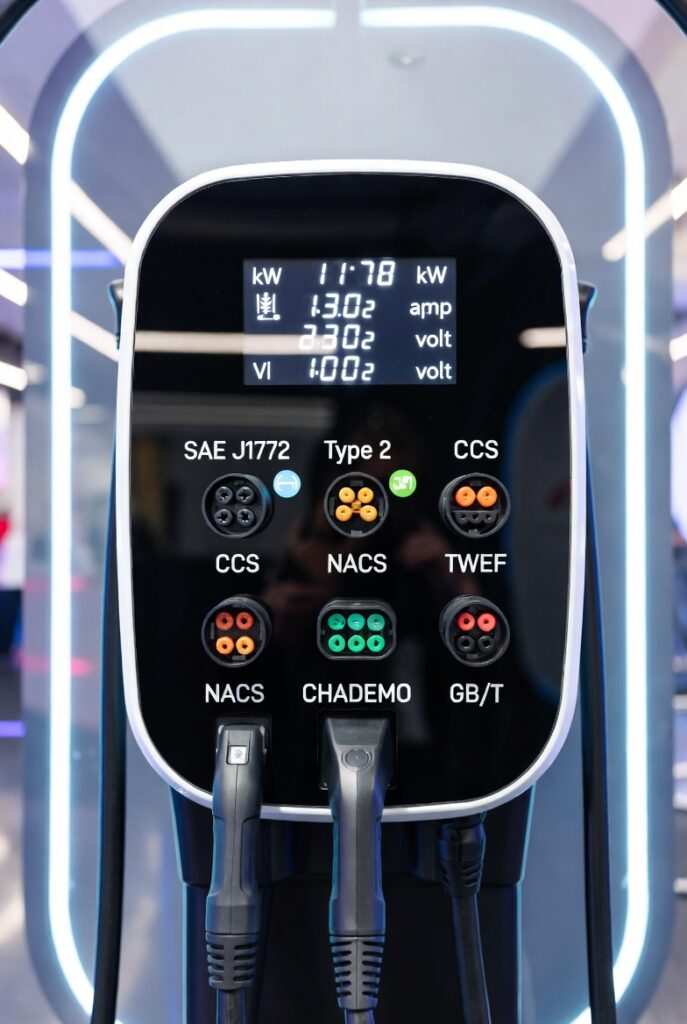
Price: $399 (US) — NACS or J1772 versions available Max Power: 11.5 kW (48A, 240V) Connector: NACS or J1772 Smart Features: Real-time energy monitoring, TOU scheduling, solar integration, load management, app control, Alexa/Google Home Solar Integration: Yes — via Emporia Vue energy monitor OCPP: 1.6 Warranty: 3 years
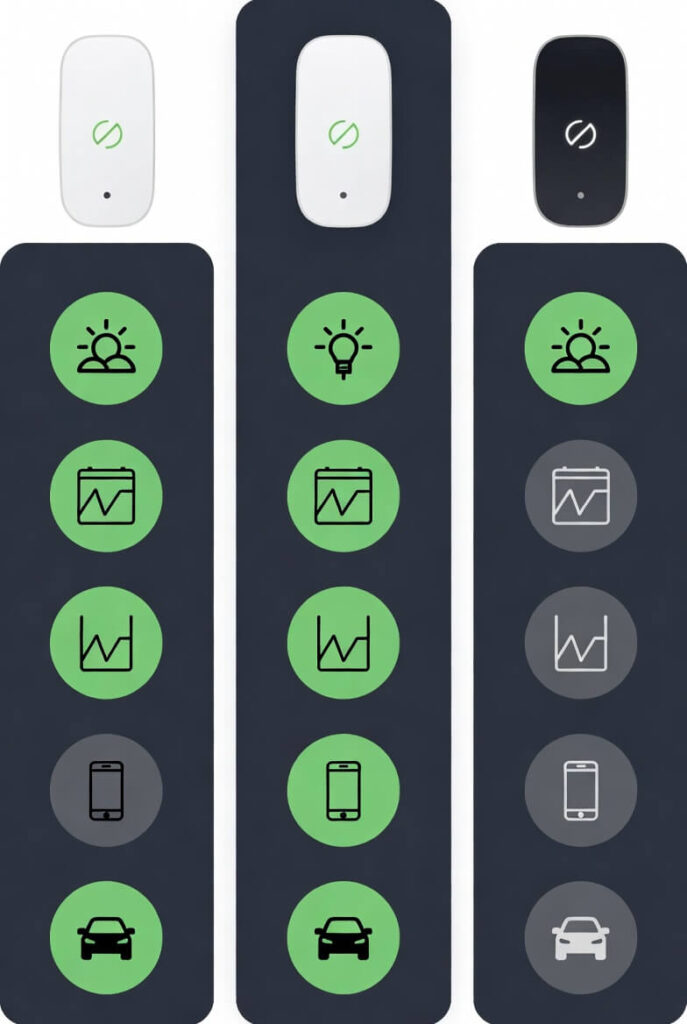
What Makes the Emporia Pro Stand Out
The Emporia Pro is the charger that makes the smart EV chargers 2026 features worth the cost question most interesting — because at $399 it delivers smart features that competing chargers charge $600-$700 for.
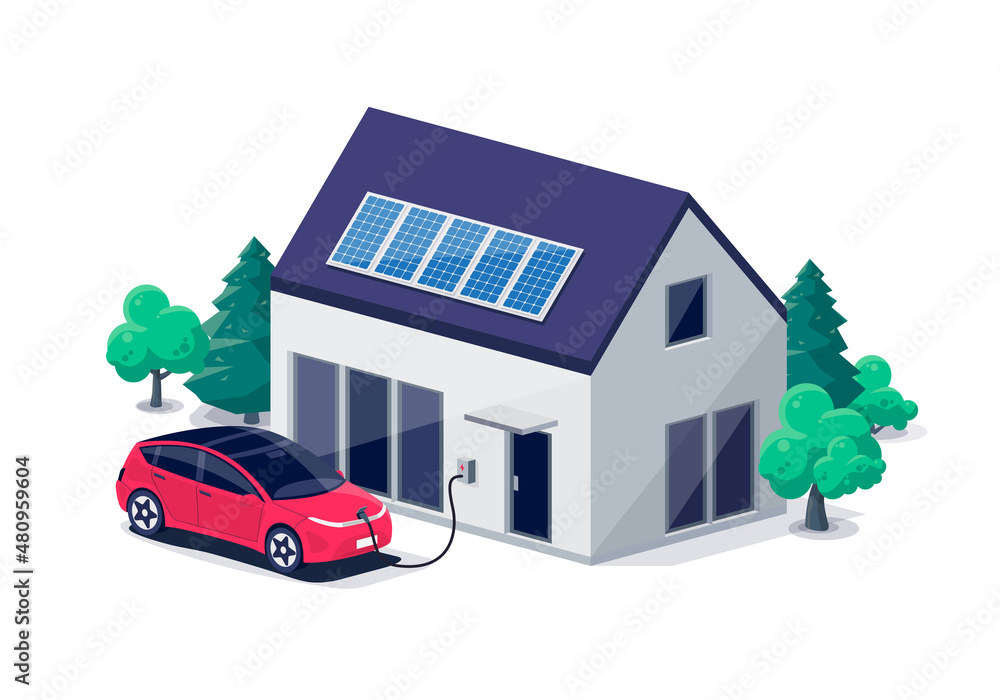
The solar integration is the standout capability. Emporia makes whole-home energy monitors — their Vue device tracks every circuit in your home in real time — and the Pro integrates directly with it. When your solar panels are generating more than your home is consuming, the Pro automatically increases charging speed to absorb the surplus. When solar generation drops, it throttles back. The result is that your car charges from free solar electricity during daylight hours rather than from grid power at peak rates.
For US homeowners with rooftop solar — and solar adoption is accelerating across California, Texas, Arizona and Florida — this integration pays for itself. A homeowner generating 3-4 kWh of daily surplus solar and charging at 40 cents per kWh grid rate saves roughly $400-$500 annually on charging costs. The Emporia Pro’s premium over a basic smart charger is recovered in under a year for a typical solar household.
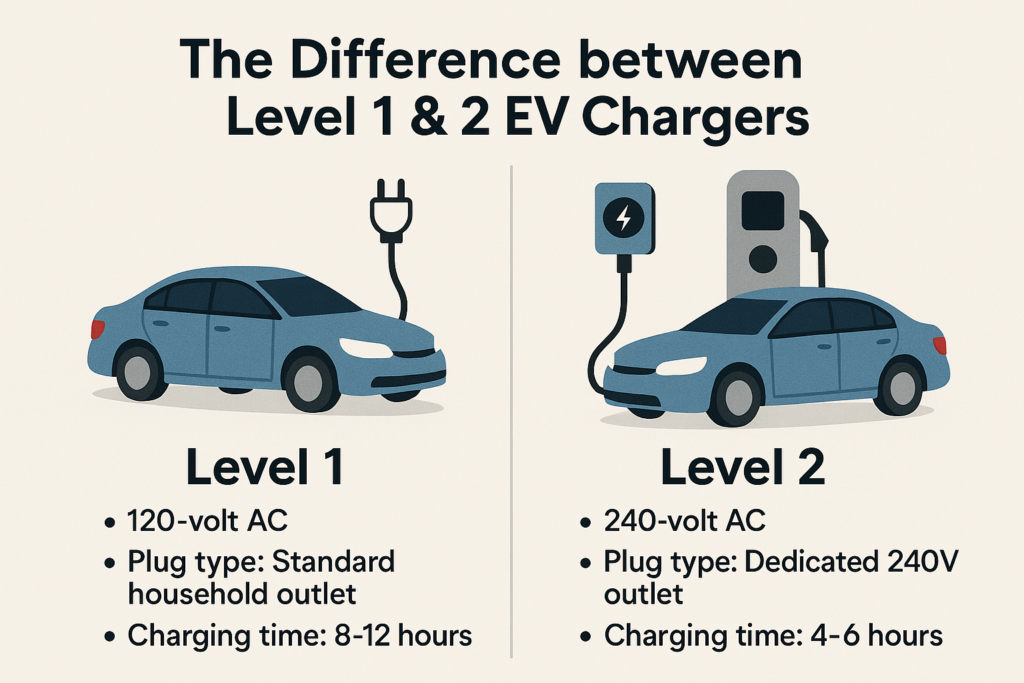
The load management feature is the second genuinely useful capability. On a 100-amp residential panel — still the majority of US homes — running a 48A EV charger simultaneously with a dryer, air conditioning, and an electric oven can trip the main breaker. The Emporia Pro monitors your home’s total draw and automatically reduces charging speed when it detects risk of overload. This makes 48A home charging practical in older homes that would otherwise need an expensive panel upgrade.
The TOU scheduling works reliably. Set your off-peak window — 10pm to 6am if you’re on a standard time-of-use tariff — and the Pro handles the rest. The app is clean and functional. Alexa and Google Home integration works. Real-time energy monitoring is clear and actionable.
Where the Emporia Pro Falls Short
Emporia is a smaller brand than Tesla or Myenergi. The customer support infrastructure — while improving — is less mature than Tesla’s or ChargePoint’s. The app has had stability complaints in some owner reviews, particularly around WiFi reconnection after router changes.
OCPP 1.6 rather than 2.0.1 means slightly less future-proofing for smart grid integration — not a real-world problem in 2026 for most homeowners but worth knowing.
The solar integration, while genuinely good, requires the Emporia Vue energy monitor as a companion device — an additional $150-$200 investment that some buyers don’t factor into the total cost. Without the Vue, the solar divert capability doesn’t work.
Emporia Pro — Smart Features Worth the Cost?
TOU scheduling: Yes — works reliably, genuinely saves money on any time-of-use tariff. Solar integration: Yes, if you have solar and buy the Vue monitor. One of the best implementations available at this price. Load management: Yes — makes 48A charging practical on 100-amp panels without expensive electrical work. Alexa/Google Home: Nice to have, not transformative. Real-time monitoring: Useful for expense tracking, worth having.
Overall verdict: The Emporia Pro delivers more financially valuable smart features per dollar than any other charger at this price point. The solar integration and load management are the features that justify the premium over a basic charger — if either applies to your situation, the Emporia Pro pays for the price difference relatively quickly.
Tesla Universal Wall Connector — The Smart Charger That Prioritises Simplicity Over Feature Count
Price: $595 (US) Max Power: 11.5 kW (48A, 240V) Connector: NACS with J1772 adapter included Smart Features: App control, scheduled charging, energy monitoring, load sharing between multiple units, over-the-air updates Solar Integration: No native solar divert OCPP: No Warranty: 4 years
What Makes the Tesla Universal Wall Connector Different
The Tesla Universal Wall Connector — not to be confused with the standard Wall Connector which is NACS only — includes a J1772 adapter in the box, making it compatible with both NACS and J1772 vehicles. For households with a mix of connector standards, or for buyers planning to replace a J1772 vehicle with a NACS vehicle within the next few years, this is the most practically useful connectivity story on this list.
The 4-year warranty is the longest standard coverage of the three chargers compared here — and Tesla’s warranty support track record is more established than Emporia’s or even Myenergi’s in the US market. When you buy a Tesla charger you’re buying into a support ecosystem that has hundreds of thousands of installed units and a service infrastructure to match.
The load sharing feature is genuinely unique at this price point. Install two Universal Wall Connectors on the same circuit and they automatically negotiate to share available capacity between them — no configuration, no additional hardware. For two-EV households this eliminates the need for a more expensive load management solution.
OTA (over-the-air) updates are handled more reliably on Tesla chargers than on most competing brands — the same infrastructure that keeps Tesla vehicles updated keeps their chargers current. In a category where firmware updates sometimes cause connectivity issues on cheaper hardware, this reliability matters.
The app experience is clean and consistent. Scheduled charging works well. Energy monitoring is clear. The charger integrates seamlessly with the Tesla app if you drive a Tesla — session history, charging speeds, and cost tracking all appear in the same place you manage your vehicle.
Where the Tesla Universal Wall Connector Falls Short
No native solar divert. For homeowners with rooftop solar who want to maximise self-consumption, the Universal Wall Connector doesn’t have the capability the Emporia Pro and Zappi offer. This is the most significant functional gap.
No OCPP support — Tesla uses proprietary protocols rather than the open standard. This limits integration with third-party home energy management systems and smart grid utility programs that require OCPP compliance.
At $595 it’s the most expensive of the three on a pure unit price basis — though the included J1772 adapter adds real value for non-NACS households that would otherwise buy an adapter separately.
The smart feature set — while reliable — is narrower than the Emporia Pro. Scheduled charging, energy monitoring and load sharing are genuinely useful. But TOU tariff API integration, solar divert, and load management (beyond the two-charger load sharing) are absent.
Tesla Universal Wall Connector — Smart Features Worth the Cost?
Scheduled charging: Yes — works reliably and is sufficient for most TOU tariff use cases. Load sharing (two chargers): Yes, if you have two EVs. A genuine differentiator. OTA updates: Yes — more reliable than most competing chargers. 4-year warranty: Yes — the longest standard coverage on this comparison and from a brand with service infrastructure to back it. Solar integration: No — this is a genuine gap. OCPP: No — limits future smart grid integration.
Overall verdict: The Tesla Universal Wall Connector is the right smart charger for NACS-native households — or households transitioning to NACS — who prioritise reliability, a long warranty, and a seamless app experience over a deep feature list. It’s not the right choice for solar homeowners or buyers who want maximum TOU tariff optimisation.
Myenergi Zappi — The Smart Charger Built Around One Feature Done Perfectly
Price: £699-£849 (UK); €749-€899 (Europe); ~$750 (US, limited availability) Max Power: 7.4 kW (single-phase) or 22 kW (three-phase) Connector: Type 2 (UK/Europe); J1772 (US) Smart Features: Solar divert (Eco and Eco+ modes), app control, scheduled charging, energy monitoring, hub integration, smart tariff compatibility Solar Integration: Best in class OCPP: 1.6 Warranty: 3 years OZEV Approved: Yes (UK)
What Makes the Myenergi Zappi Different
The Myenergi Zappi doesn’t try to be the best at everything. It tries to be the best at solar divert — and it succeeds more convincingly than any other home EV charger currently available.
If the Emporia Pro’s solar integration is good, the Zappi’s is exceptional. The difference is in the granularity of control. The Zappi offers three distinct charging modes:
Fast mode: Charges at maximum speed regardless of solar generation — standard grid-powered charging.
Eco mode: Charges at the minimum speed required to keep the car charging (typically 1.4 kW), topping up with surplus solar whenever it’s available. The car always charges, just as fast as solar allows.
Eco+ mode: Only charges when there’s surplus solar generation. If there’s no surplus, the car doesn’t charge. This is the mode for maximum self-consumption — your EV only ever charges from free solar electricity.
This three-mode system gives solar homeowners a level of control over the solar-vs-grid tradeoff that the Emporia Pro’s binary approach doesn’t match. Eco+ mode in particular is a genuine differentiator — on a summer day with consistent solar generation, a homeowner with a 4 kWh daily surplus can charge their EV entirely from solar, exporting nothing to the grid and buying nothing from it.
The financial value is significant. In the UK where grid electricity costs 24-28p per kWh and SEG export rates are typically 4-8p per kWh, the difference between charging from solar versus exporting solar and buying grid electricity is roughly 16-24p per kWh. On 3,000-4,000 km of solar-charged driving annually — a typical UK commuter — that’s £200-£400 in annual savings. The Zappi’s premium over a basic smart charger is recovered in 1-2 years for a typical UK solar household.
The Myenergi hub integration extends the Zappi’s capability further. When combined with Myenergi’s Eddi solar diverter and Libbi battery storage, the Zappi becomes part of a whole-home solar energy management system — the kind of integration that premium home energy brands charge significantly more for.
Smart tariff compatibility in the UK is strong. The Zappi works well with Octopus Go, OVO Drive Anytime and British Gas EV tariffs through scheduled charging. It doesn’t have the direct API integration that Ohme does for Octopus Agile specifically — but for most UK smart tariff users, scheduled overnight charging covers the majority of the savings anyway.
Where the Zappi Falls Short
The Zappi’s non-solar smart features are noticeably less polished than the Emporia Pro or Tesla Universal Wall Connector. The app is functional but the UI design feels less consumer-oriented than Tesla’s or Emporia’s. Setup is more involved than competing chargers — connecting the Zappi to a solar system and configuring the energy monitoring requires a level of technical confidence that some homeowners find challenging.
US availability is limited. The Zappi is primarily designed for the UK and European market. US buyers can source it through specialist importers but warranty support and installer familiarity in the US is thin.
No load management beyond the solar divert function — if you need load balancing on a limited panel capacity, the Emporia Pro handles this better.
OCPP 1.6 rather than 2.0.1 — same limitation as the Emporia Pro for future smart grid integration.
Zappi — Smart Features Worth the Cost?
Solar divert (Eco/Eco+ modes): Yes — the best implementation available on any home EV charger. If you have solar, this pays for itself. Three charging modes: Yes — the granularity of control is genuinely useful for solar homeowners. Smart tariff scheduling: Yes — works reliably for standard TOU tariffs. Myenergi hub integration: Yes, if you have or plan to install other Myenergi products. App experience: Functional but not exceptional. Load management: No — go elsewhere if this is a priority.
Overall verdict: The Myenergi Zappi is the right smart charger for UK and European homeowners with rooftop solar panels. Full stop. If you have solar and you’re in the UK or Europe, nothing else on this list competes with the Zappi’s solar divert capability. If you don’t have solar, the premium is hard to justify.
Head to Head — Smart EV Chargers 2026 Features Worth the Cost
| Feature | Emporia Pro | Tesla Universal WC | Myenergi Zappi |
|---|---|---|---|
| Price | $399 | $595 | £699-£849 |
| Max Power | 11.5 kW | 11.5 kW | 7.4/22 kW |
| Warranty | 3 years | 4 years | 3 years |
| TOU Scheduling | Yes | Yes | Yes |
| Solar Integration | Good | No | Best in class |
| Load Management | Yes | Two-charger only | No |
| OCPP | 1.6 | No | 1.6 |
| Bidirectional Ready | No | No | No |
| OTA Updates | Basic | Excellent | Basic |
| App Quality | Good | Excellent | Functional |
| Market | US | US (global) | UK/Europe |
The Real Question — Is Any Smart Charger Worth the Premium?
This is the question most buyers are actually asking and most guides avoid answering directly.
Here’s the honest answer broken down by situation:
Smart features are worth the premium if:
You’re on a time-of-use tariff and your basic charger has no scheduling capability. The difference between charging at peak rates versus off-peak rates is typically $0.10-$0.25 per kWh in the US and 10-20p per kWh in the UK. On 15,000 km of annual driving in an average EV, that’s $200-$400 annually — enough to pay for the smart premium within 2-3 years.
You have rooftop solar. Solar divert on the Emporia Pro or Myenergi Zappi recovers its premium within 1-2 years for a typical solar household. This is the clearest financial case for smart features of anything on this list.
You have a 100-amp panel and want 48A charging. Load management on the Emporia Pro makes 48A charging practical without an expensive panel upgrade — the panel upgrade alone would cost $1,500-$3,000 in most US markets, making the Emporia Pro’s load management feature worth several times its price premium.
You have two EVs. Tesla’s load sharing between two Universal Wall Connectors eliminates the need for a separate load management solution.
Smart features are probably not worth the premium if:
You’re on a flat-rate electricity tariff with no off-peak pricing and no plans to switch. Scheduled charging has no financial value if all electricity costs the same regardless of when you use it.
You don’t have solar and don’t plan to install it. Solar divert on the Zappi or Emporia Pro is the feature that most clearly pays for itself — without solar, that justification disappears.
Your daily driving is under 30 km. At low mileage, the absolute savings from smart tariff optimisation are small — you’re not using enough electricity for the scheduling savings to add up meaningfully.
What Comes Next — The Smart Charger Features That Will Actually Matter in 2027-2028
Understanding smart EV chargers 2026 features worth the cost also means knowing what’s coming — because the charger you install today will still be on your wall in 2030.
Bidirectional charging (V2H and V2G) is the feature that will change the smart charger calculus most significantly. When bidirectional charging becomes mainstream — expected to be a practical reality for a wider range of vehicles by 2027-2028 — your EV battery becomes a home energy storage device. Charge cheaply overnight, power your home during expensive peak evening hours, earn money by selling stored electricity back to the grid. The value of a smart charger with bidirectional capability becomes significantly larger in that scenario. The Wallbox Pulsar Plus is the charger on the current market with the most credible bidirectional roadmap.
OCPP 2.0.1 and V2G grid integration will matter more as utilities build out smart grid programs. Chargers with OCPP 2.0.1 — the ABB Terra AC is the most accessible home charger with this currently — will be able to participate in utility demand response programs that could generate meaningful annual payments for homeowners who allow their charger to be temporarily adjusted during grid stress events.
Solar battery integration is becoming more sophisticated. As home battery storage adoption grows — particularly in the UK, Germany and California — smart chargers that integrate with both solar panels and battery storage systems will become increasingly differentiated from those that handle solar alone.
Before finalising any smart charger purchase it’s worth reading our EV charger warranty comparison — the smart features that matter most over a 5-7 year charger lifespan depend partly on whether the brand is still around and supporting the hardware with software updates throughout that period.
Internal Links — Further Reading on Clean Energy Bazaar
The smart EV chargers 2026 features worth the cost question sits in a broader context that these guides cover.
If you want to understand what all the specs on a smart charger listing actually mean — kW, amps, OCPP, load management — our guide to understanding EV charger specs 2026 translates every number into plain language. If you’re choosing between smart chargers for a UK or European home specifically, our best Level 2 EV chargers UK Europe 2026 comparison covers Wallbox, Easee, Hypervolt and more with the same honest approach. For the US market, our best home EV chargers 2026 US comparison covers ten options including the Emporia and Tesla chargers in the context of the full US market. If you’re still deciding which charger is right for your specific setup, our interactive quiz to find the right EV charger for your home walks through your supply type, connector, and installation requirements step by step. And if something goes wrong with any charger after installation, our EV charger troubleshooting guide covers every common fault and fix.
Final Thoughts
The smart EV chargers 2026 features worth the cost question has a clearer answer than most guides admit.
TOU scheduling pays for itself within 2-3 years on any meaningful time-of-use tariff. Solar divert pays for itself within 1-2 years for a typical solar household. Load management on the Emporia Pro pays for itself if it saves you a panel upgrade. Tesla’s load sharing pays for itself in two-EV households. Everything else is either nice-to-have or future-proofing.
The honest summary by situation:
- US homeowner with solar: Emporia Pro — best solar integration at the lowest price
- US homeowner with two EVs or NACS vehicle: Tesla Universal Wall Connector — load sharing and 4-year warranty
- UK/European homeowner with solar: Myenergi Zappi — the best solar divert implementation available anywhere
- UK homeowner on Octopus Agile: Ohme Home Pro beats all three on dynamic tariff optimisation
- Budget-conscious buyer who just wants scheduling: Any basic smart charger with TOU scheduling — the premium features matter less than whether you’ll use them
The worst outcome in the smart EV chargers 2026 features worth the cost decision is paying £300 or $250 extra for solar divert when you don’t have solar panels, or paying for load management when your 200-amp panel has headroom to spare. Buy the features that match your actual situation — not the features that sound impressive on a spec sheet.