Author name: kartikey.ajay@gmail.com

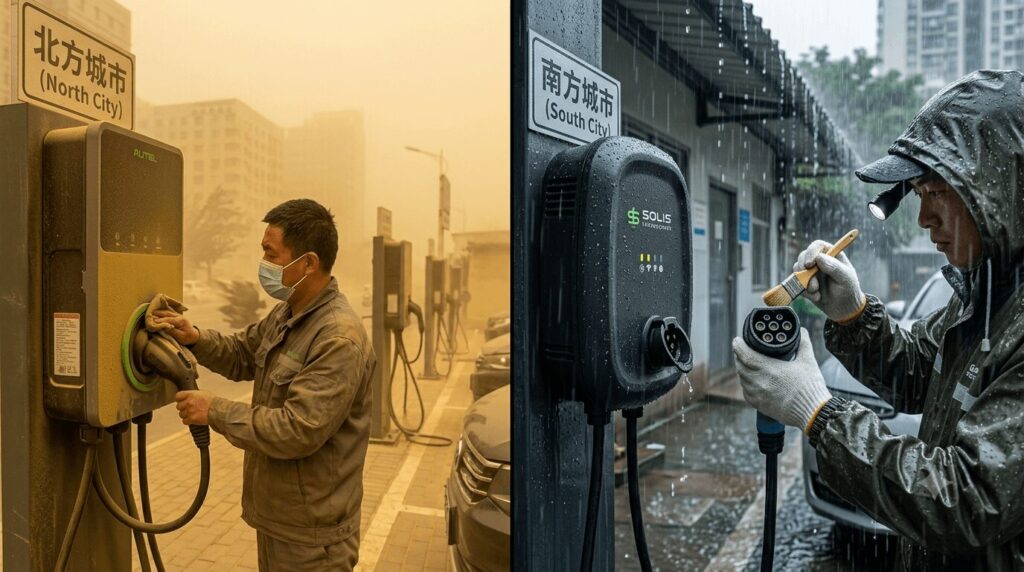
EV charger maintenance 2026 dust protection vs humidity resistance brand comparison – Split-screen featured image showing dust storm maintenance in northern China versus monsoon humidity maintenance in southern China, featuring Autel MaxiCharger and Ginlong Solis Smart chargers
EV charging

EV Charger Maintenance 2026: Dust Protection vs Humidity Resistance – Brand Comparison — The Honest Complete Guide

Every guide in this Chinese EV charging content cluster has addressed the buying decision — which charger to purchase, which specification matches your climate, which brand carries acceptable survival risk. This guide addresses what happens after the purchase decision is made and the charger has been installed: the ongoing maintenance reality that determines whether a correctly specified charger actually delivers its full 7-10 year service life, or fails prematurely despite having the right IP rating on paper.

This comprehensive EV charger maintenance 2026 dust protection vs humidity resistance brand comparison reveals that IP ratings, while essential for initial purchasing decisions, represent only the starting point of a charger’s actual multi-year service life. Dust protection maintenance focuses on progressive accumulation management through periodic seal inspection, post-dust-event cleaning, and connector contact maintenance — particularly relevant for northern Chinese installations facing Beijing’s spring dust storms, Xi’an and Lanzhou’s Loess Plateau exposure, or Hohhot and Urumqi’s Gobi Desert proximity. Humidity resistance maintenance centres on corrosion monitoring and condensation-cycle awareness through connector inspection, functional verification during peak monsoon intensity, and thorough post-season assessment — specifically critical for South China’s monsoon exposure and the sustained heat-humidity combination Wuhan and Chongqing experience for months at a time.

The brand comparison reveals clear differentiation: ABB Terra AC W7 and Ginlong Solis Smart demonstrate the lowest expected maintenance burden through superior seal materials and connector quality, appropriate for owners specifically prioritising minimal ongoing intervention. Autel MaxiCharger and Huawei FusionCharge provide strong maintenance characteristics at more moderate pricing, with Huawei’s ecosystem monitoring offering a distinctive early-warning advantage. StarCharge, Xiaomi, and EV manufacturer-branded chargers (BYD, NIO) provide adequate maintenance characteristics appropriately calibrated to their value positioning and covered installation scenarios.

The universal conclusion across every brand and every climate: a correctly specified charger that receives appropriate seasonal attention — the modest, periodic inspection and cleaning routines detailed throughout this guide — genuinely achieves its full intended service life. The charger that fails prematurely is rarely the charger with an inadequate IP rating from the start; it is far more often the correctly specified charger that received zero ongoing attention through years of accumulated dust, humidity cycling, and connector wear that a few hours of annual inspection would have caught and addressed before minor degradation became charger failure.

This EV charger maintenance 2026 dust protection vs humidity resistance brand comparison covers every climate-specific maintenance schedule, brand-by-brand assessment, and practical annual calendar needed to maximise your charger’s longevity — whether you’re installing in Beijing’s dust corridor, Guangzhou’s monsoon zone, or Wuhan’s furnace city heat.
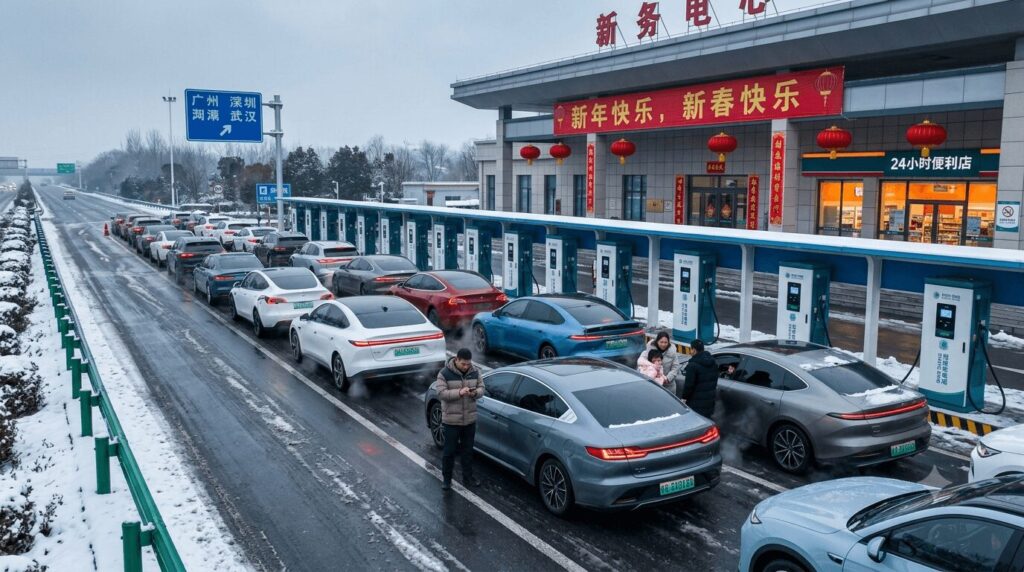
Spring Festival rush how to handle EV charging demand during China's largest holiday migration: a wide documentary view of a crowded expressway service area during Chunyun, showing long orderly queues of BYD, NIO, and Tesla EVs waiting at State Grid fast chargers under winter skies with festive red lanterns and drivers preparing for their holiday road trips.
EV charging

Spring Festival Rush: How to Handle EV Charging Demand During China’s Largest Holiday Migration 2026 — The Honest Complete Guide

Spring Festival rush how to handle EV charging demand during China’s largest holiday migration is the honest, practical guide every Chinese EV owner needs before hitting the road for Chunyun 2026. This comprehensive article cuts through the anxiety and hype to deliver the real strategies that experienced EV road trippers actually use—from departure timing optimisation and route redundancy planning to real-time app intelligence and vehicle-specific advantages like NIO’s battery swap network or EREV petrol backup flexibility. Drawing on documented patterns from previous years’ expressway service area queues and the latest infrastructure improvements, this guide explains exactly what to expect on the most heavily travelled corridors, how to avoid the worst peak-hour bottlenecks, and what to do when you encounter a genuinely congested charging station. Whether you’re driving from Shenzhen to Hunan, Shanghai to Anhui, or Beijing to the northeast, this complete Chunyun survival guide provides the practical, proportionate preparation framework that turns a potentially stressful journey into a manageable, even enjoyable, holiday road trip—with the specific buffer time, multi-app monitoring, and portable charging backup strategies that genuinely work when demand peaks during China’s largest annual migration.

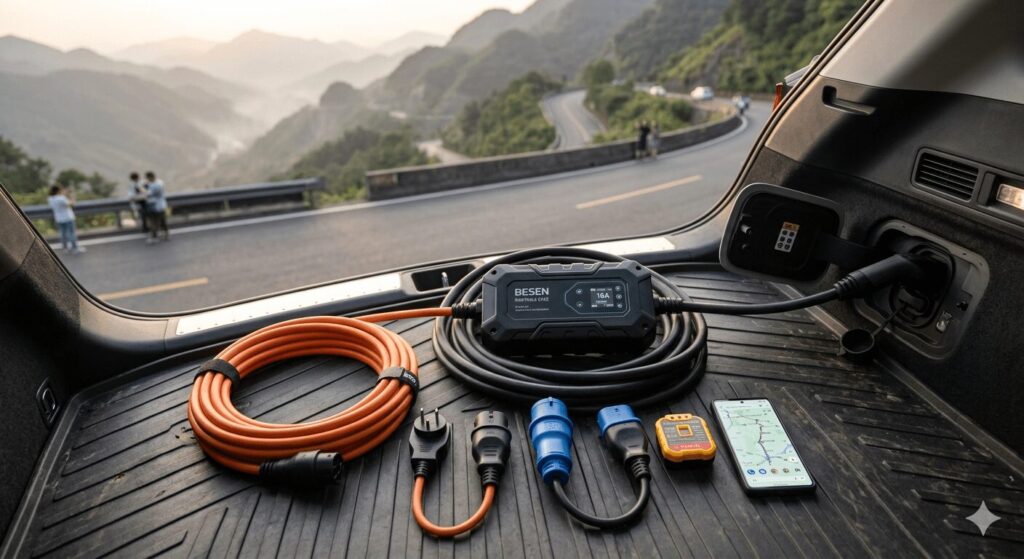
Best portable EV chargers for travel 2026 China national highway road trip essentials complete charging kit laid out in EV boot showing BESEN portable EVSE, interchangeable plugs, extension cable, socket tester and smartphone with Amap navigation app displaying EV charging stations along a scenic Chinese highway route
EV charging

Best Portable EV Chargers for Travel 2026: China National Highway Road Trip Essentials — The Honest Complete Guide

China’s national highway and expressway network now spans over 180,000 kilometres, making long-distance EV road trips increasingly viable. But while public DC fast charging infrastructure has expanded dramatically along major corridors, predictable gaps remain — holiday queuing during 国庆节 and Spring Festival, individual charger malfunctions, rural route coverage gaps, and accommodation without dedicated EV infrastructure. This comprehensive guide on best portable EV chargers for travel 2026 China national highway road trip essentials covers exactly what equipment belongs in your road trip kit, how to navigate China’s expressway service area charging reality, and the practical strategies that transform EV road tripping from anxious contingency-planning into confident, flexible travel. From quality Mode 3 portable EVSE units with interchangeable plugs to the extension cable specification that genuinely matters (and the safety mistakes to avoid), this guide provides the complete portable charging toolkit for Chinese EV owners planning to explore the country’s extraordinary road network in 2026. With regional climate considerations for northern cold routes, southern furnace cities, and coastal monsoon regions, plus the specific app habits and pre-trip preparation that experienced Chinese road trippers actually use, this is the honest, practical guide every EV owner needs before hitting the highway.

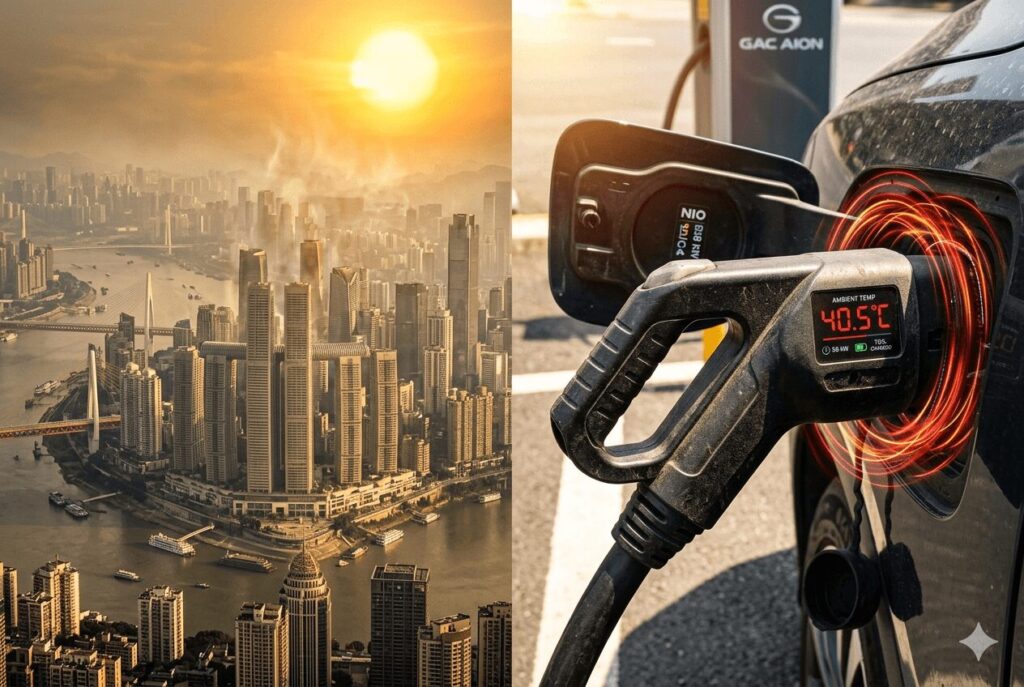
Hot weather EV charger tips thermal management for furnace cities like Wuhan and Chongqing - illustrated split image showing an EV charger battling extreme city summer heat with a digital cooling system.
EV charging

Hot Weather EV Charger Tips: Thermal Management for Furnace Cities like Wuhan and Chongqing 2026 — The Honest Complete Guide

Navigating the brutal summer heat in China’s famous “furnace cities” presents a unique set of challenges for electric vehicle owners. This comprehensive guide delivers essential hot weather EV charger tips thermal management for furnace cities like Wuhan and Chongqing, explaining the distinct engineering stress that extreme heat and humidity place on your battery and charging hardware. From understanding heat-related charging rate reductions to choosing the right equipment with a robust upper-temperature rating, we cover everything you need to keep your EV charging reliably and efficiently through the most intense summer months.

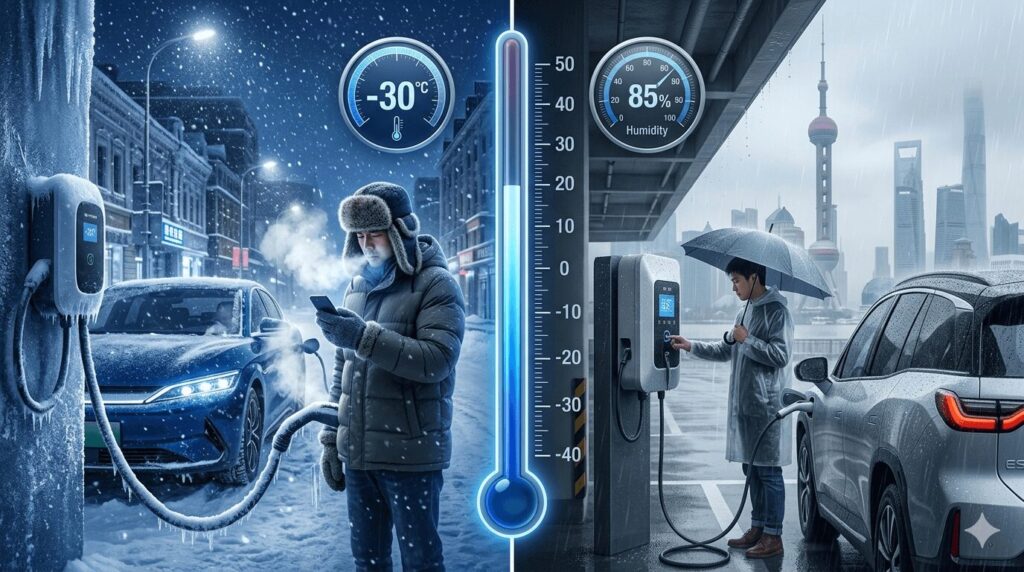
Winter EV charging guide 2026 cold weather performance for Harbin -30C vs wet Shanghai split-screen illustration showing Harbin extreme cold snowy EV charging scene with frost-covered cables and -30°C thermometer versus Shanghai humid rainy EV charging scene with condensation on equipment and 85% humidity reading, featuring Chinese electric vehicles charging in both winter conditions with dramatic cinematic lighting and cold blue-grey colour palette
EV charging

Winter EV Charging Guide 2026: Cold Weather Performance for Harbin (-30°C) vs Wet Shanghai — The Honest Complete Guide

China’s winter isn’t one season—it’s two dramatically different challenges for electric vehicle owners. In Harbin, temperatures plunge to -30°C, slashing range by 40-55% and reducing charging speeds to just 30% of normal. In Shanghai, a different enemy emerges: persistent humidity and condensation that silently degrades charging equipment while range drops a more moderate 15-25%. This comprehensive winter EV charging guide 2026 cold weather performance for Harbin -30C vs wet Shanghai reveals exactly what happens to batteries and chargers in each climate, the specific hardware specifications that survive each environment, and the operational habits that separate owners who sail through winter from those who get stranded. From lithium plating risks and battery pre-conditioning strategies to the heated garage calculation and IP65 vs extreme cold rating priorities, this guide covers every technical and practical detail Chinese EV owners need to charge reliably through every month of the year—whether you’re facing Harbin’s extreme deep freeze or Shanghai’s damp, deceptive chill.

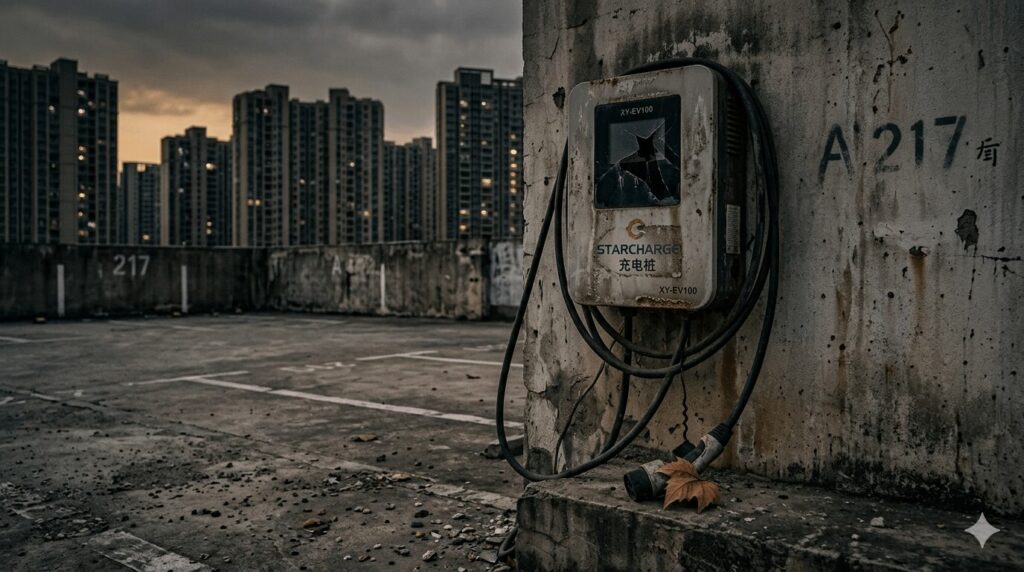
A featured illustration for the zombie pile crisis 2026 how to avoid dead chargers from liquidated Chinese brands guide, depicting an abandoned, dust-covered EV charger with a dead screen and tangled cable mounted on a residential parking area wall at dusk.
Uncategorized

The ‘Zombie Pile’ Crisis 2026: How to Avoid Dead Chargers from Liquidated Chinese Brands — The Honest Complete Guide

The zombie pile crisis 2026 how to avoid dead chargers from liquidated Chinese brands is the underappreciated risk every Chinese EV owner faces when buying a home charger. This honest, complete guide covers what actually happens when a charger manufacturer fails, the documented failures already affecting owners, the critical cloud-dependent vs cloud-optional architecture distinction, a five-factor due diligence framework for assessing brand survival probability, and a brand-by-brand risk tier assessment for Huawei, Xiaomi, StarCharge, TELD, BYD, NIO, and every other major Chinese charger brand, so you can buy a charger that will still work in five years.

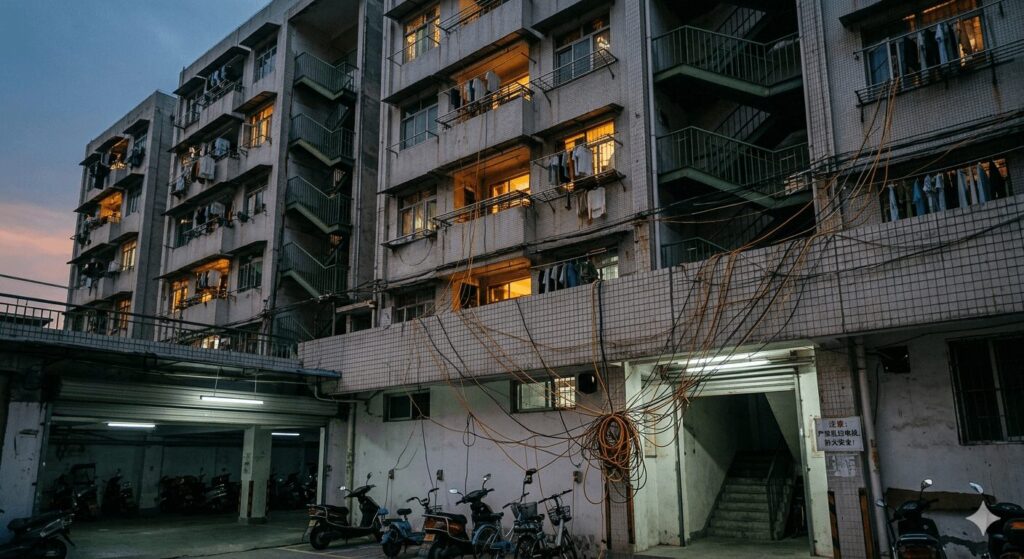
China apartment flywire charging is it safe legal solutions for lower ground parking — a realistic documentary photograph showing multiple electrical extension cords dangling from apartment balconies and windows, running down the building exterior and across walkways to electric vehicles parked in the basement-level parking area, with tangled cables near a fire escape entrance highlighting the safety and legal concerns examined in this comprehensive 2026 guide for Chinese EV owners.
EV charging

China Apartment ‘Flywire’ Charging: Is it Safe? Legal Solutions for Lower Ground Parking 2026 — The Honest Complete Guide

China apartment flywire charging is it safe legal solutions for lower ground parking— this is the question haunting thousands of Chinese EV owners in older residential compounds who’ve resorted to running charging cables from balconies and windows down to basement parking spaces. This complete guide cuts through the fear-mongering and dismissive “just don’t do it” advice to deliver an honest, evidence-based assessment: what actually goes wrong with flywire charging (the specific failure mechanisms, not vague warnings), the real legal status under Chinese fire safety and building regulations, documented fire incident patterns from Chinese authorities, and — most crucially — the five legitimate alternatives that solve the same problems without the safety and legal exposure. From escalating物业 refusals through regulatory channels, to certified extension cables with proper RCCB protection for genuine short-distance cases, to collective basement infrastructure projects that transform a building’s worth of individual flywire risks into one properly engineered solution, this guide provides a practical path forward for every EV owner facing lower ground parking charging challenges in 2026.

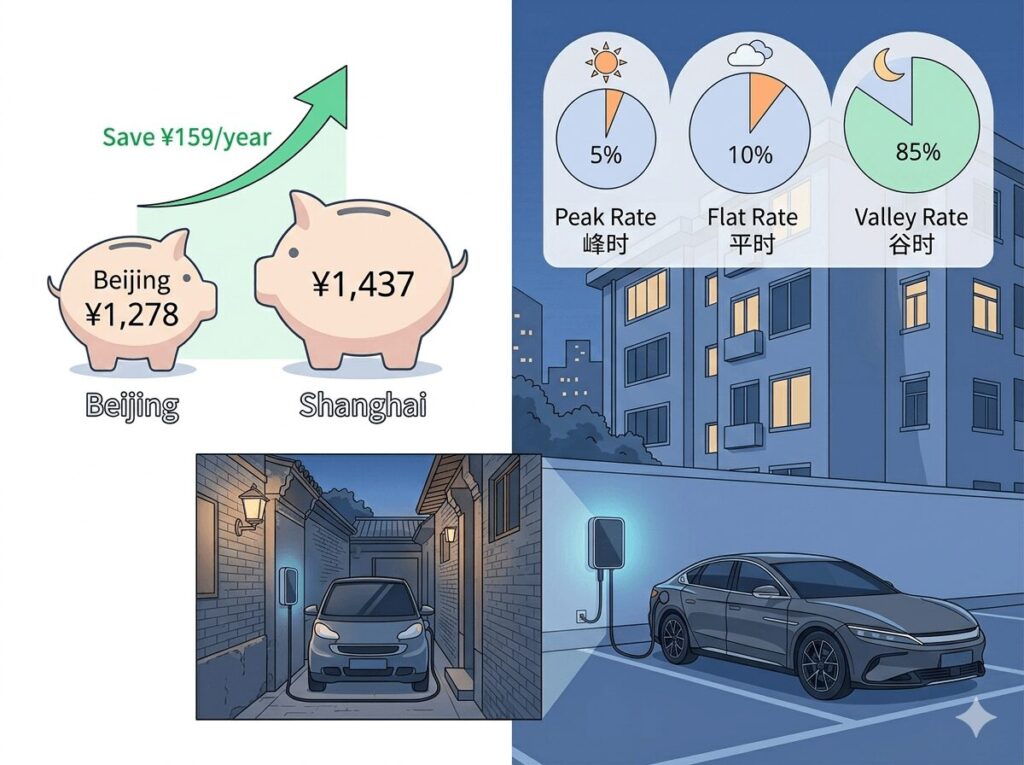
home EV charging cost calculator factor in tiered electricity rates Beijing vs Shanghai — illustration showing a BYD Han EV plugged into a home charger at night with TOU valley rate display, alongside Beijing and Shanghai skyline comparison.
EV charging

Home EV Charging Cost Calculator: Factor in Tiered Electricity Rates (Beijing vs Shanghai) 2026 — The Honest Complete Guide

For Chinese EV owners, the difference between guessing your electricity bill and knowing it comes down to one tool. This guide presents the home EV charging cost calculator factor in tiered electricity rates Beijing vs Shanghai — an interactive tool that moves beyond generic estimates to deliver your precise annual electricity cost, cost per kilometre, and true savings versus petrol. Using real 2026 TOU tariffs, vehicle efficiency data, and your specific charging mix (valley, flat, peak), the calculator reveals why Beijing owners save ¥159/year over Shanghai despite higher peak rates, why Chengdu’s hydropower makes it China’s cheapest EV city at just ¥0.053/km, and how even imperfect TOU adherence still delivers massive savings. Complete reference tables for BYD Han, NIO ET5, Wuling Mini EV, and Porsche Taycan — plus tiered pricing explanations, effective rate analysis, and the five mistakes that throw off most calculations. If you own an EV in China or are planning to install a home charger, this is the electricity cost reality check you need for 2026.

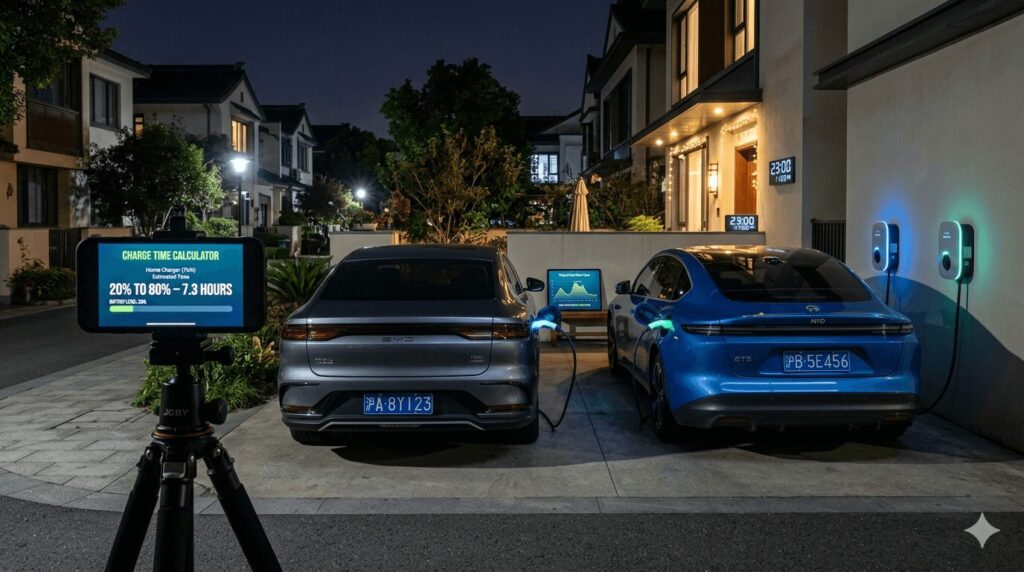
EV charge time calculator 2026 how long to full for your Chinese EV BYD to NIO shown on a smartphone beside a BYD Han and NIO ET5 charging overnight at home in Shanghai, demonstrating 7 kW AC charging fitting within the 9-hour valley window.
EV charging

EV Charge Time Calculator 2026: How Long to Full for Your Chinese EV (BYD to NIO) — The Honest Complete Guide

How long does it really take to charge your BYD, NIO, or other Chinese EV from home or on the road? Most guides give vague answers, but this complete guide offers an EV charge time calculator 2026 how long to full for your Chinese EV BYD to NIO that factors in your exact battery size, starting SOC, target SOC, and charger type. Inside, you’ll find an interactive calculator, detailed reference tables for AC home charging (7 kW, 11 kW) and public DC fast charging (50 kW to 400 kW), plus practical planning for TOU valley windows, cold weather adjustments, and vehicle-specific insights—so you can plan your charging around your life, not the other way around.

Scroll to Top