Rural charging boom 2026 how to start a charging business in China’s 59 new pilot counties” represents one of the most significant yet underreported opportunities in China’s EV ecosystem—and this complete guide cuts through the hype to deliver the honest business assessment entrepreneurs actually need.
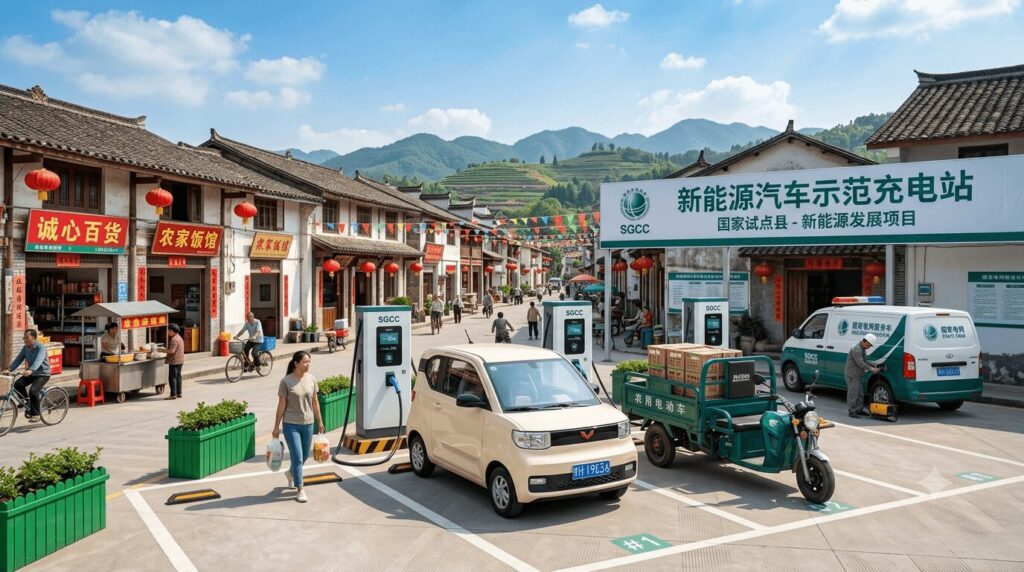
While urban EV charging markets face consolidation and margin compression, the 59 pilot counties programme creates a genuinely differentiated opportunity: designated rural counties with central government subsidies covering 20-40% of project costs, priority grid connection support, and simplified permitting processes. But the opportunity isn’t uniform—success depends on specific location-level factors that most coverage ignores.
This comprehensive guide covers the actual policy framework, the real rural EV demand profile (micro EVs, PHEVs, and agricultural vehicles with usage patterns radically different from urban markets), the financial model with break-even calculations showing why 2 sessions per day is the critical threshold, and the practical steps from confirming pilot county status to navigating rural grid constraints.
The honest reality: rural charging isn’t easy money. It requires specific site selection, early engagement with local grid companies, equipment appropriate for rural voltage fluctuations, and conservative financial models based on current—not projected—EV populations. But for entrepreneurs willing to do the detailed work, the 59 pilot counties offer a genuine entry point into China’s rural EV charging market before it follows the urban market into consolidation.
The rural charging boom is real—but it happens at the township commercial centre and county seat level, not at the policy announcement level. This guide shows you exactly where and how to participate.