A warranty is only as valuable as the entity standing behind it, the clarity of what it actually covers, and the practical reality of what happens when you actually need to use it. For Chinese EV owners choosing between domestically manufactured charger brands and equipment imported from or associated with US and other international manufacturers, the warranty comparison involves genuinely different considerations than simply comparing the number of years printed on a specification sheet.
This guide on EV charger warranty comparison 2026 best coverage from local brands vs US importers covers the complete warranty landscape across the major Chinese home charger market — what local Chinese brands genuinely offer versus what they document, what imported and internationally-associated brands provide in the specific context of the Chinese market (which often differs meaningfully from those same brands’ home-market warranty terms), the practical claims process reality for each category, and the honest assessment of which warranty approach genuinely protects Chinese EV owners’ multi-year hardware investment most effectively.
Why Warranty Comparison Requires More Than Reading the Stated Term Length
The Gap Between Stated Warranty Length and Practical Protection
Why a longer stated warranty isn’t automatically better protection:
As established throughout our zombie pile crisis guide, a warranty’s actual value depends entirely on the manufacturer’s continued operational existence and willingness to honour claims throughout the stated period — meaning a nominally longer warranty from a brand carrying meaningful survival risk provides less genuine protection than a shorter warranty from a brand with strong demonstrated longevity, exactly as that guide’s framework established for assessing brand risk independent of warranty terms.
The specific factors beyond stated length that determine real protection:
What the warranty actually covers (parts only, or parts and labour; full replacement, or repair-first with replacement only if repair proves impossible), how claims are processed in practice (direct manufacturer service, versus requiring engagement through a separate retailer or installer who may or may not remain cooperative), what voids coverage (specific installation requirements, specific maintenance requirements, or restrictions on which installer performed the original work), and what geographic service coverage actually exists (whether service technicians and replacement parts are genuinely available in your specific city, or whether claims require shipping equipment to a distant service centre with associated delay and cost).
The Local Chinese Brand Warranty Landscape
StarCharge — Warranty Terms and Practical Reality
Stated warranty terms:
StarCharge’s standard residential product line, as covered throughout this guide series, typically carries a 3-year manufacturer warranty covering both parts and the core electronic components, consistent with the value-positioned market segment this guide series has consistently placed StarCharge within.
What the warranty practically covers:
Generally covers manufacturing defects and component failures occurring during normal use, with the typical exclusions common across this market segment — damage from improper installation (relevant to the professional installation guidance covered in our installation costs guide), damage from electrical conditions outside the product’s rated specification (relevant to the load balancing considerations covered in our load balancing guide), and physical damage from external causes.
Claims process reality:
StarCharge’s substantial market presence and installation base throughout China, as established in our zombie pile crisis guide’s brand assessment, generally translates to relatively accessible claims processing through the company’s established customer service channels, with the company’s broad geographic installer network (relevant to the installation guidance throughout this content cluster) generally providing reasonable service technician availability across most Chinese cities where the product is commonly installed.
Honest assessment: Solid, appropriately calibrated warranty coverage for the product’s value positioning, backed by genuine market scale and operational longevity that provides meaningful confidence in the warranty’s practical honourability throughout its stated term, consistent with the Tier 2 (low-moderate zombie risk) assessment from our brand survival guide.
Autel — Warranty Terms and Practical Reality
Stated warranty terms:
Autel’s MaxiCharger product line, consistent with its positioning throughout this guide series as a strong specification leader, typically carries a 3-year standard warranty, with the company’s broader automotive diagnostic equipment heritage (a market segment with its own established warranty and service expectations) potentially informing somewhat more structured claims processing than some newer pure-play charger manufacturers.
What the warranty practically covers:
Generally comprehensive component and manufacturing defect coverage, with Autel’s documented quality positioning throughout our maintenance and luxury EV charging guides suggesting genuinely lower claim incidence rates compared to budget alternatives, which itself represents a form of practical value beyond the formal warranty terms.
Claims process reality:
Autel’s established presence in automotive electronics more broadly, beyond just EV charging specifically, generally provides reasonably accessible customer service channels, though geographic service technician density specifically for EV charger installation and repair may vary somewhat more than StarCharge’s more EV-charging-focused installer network in certain smaller cities.
Honest assessment: Strong warranty coverage backed by a company with diversified business beyond pure EV charging (the Tier 2-3 “moderate” zombie risk assessment from our brand guide, reflecting genuine but not maximal diversification), providing solid practical protection appropriate to the product’s premium-but-not-luxury market positioning throughout this guide series.
Huawei Digital Power (FusionCharge) — Warranty Terms and Practical Reality
Stated warranty terms:
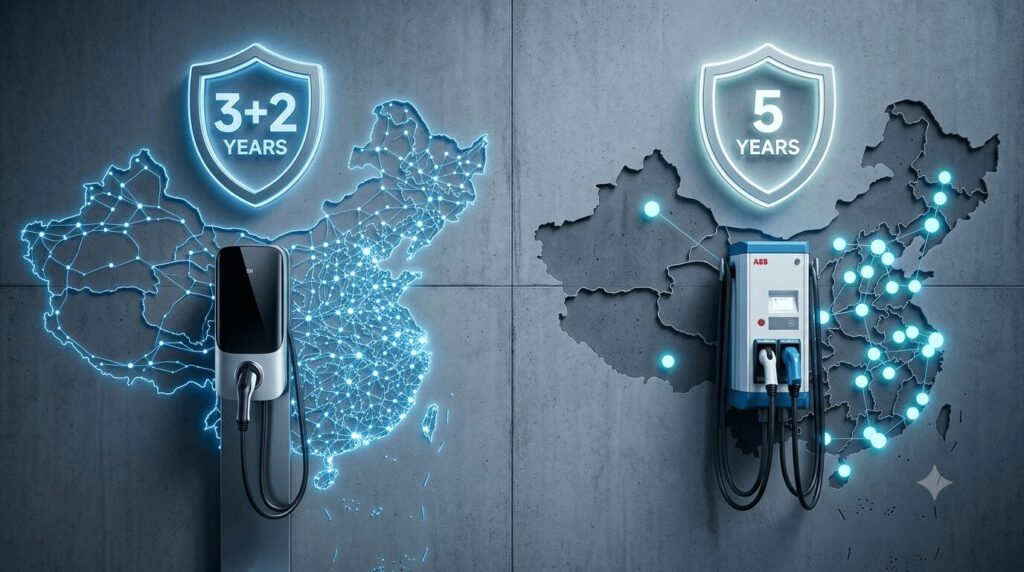
As covered in our luxury EV charging and maintenance guides, Huawei’s FusionCharge product line typically offers 3-year standard warranty with extended warranty options available, sometimes reaching 5 years for specific product variants, consistent with Huawei’s broader premium positioning across its product range.
What the warranty practically covers:
Comprehensive coverage backed by Huawei’s substantial industrial electronics manufacturing and service infrastructure, with the AI-enhanced monitoring capability discussed throughout our connectivity and maintenance guides potentially providing an additional practical benefit: proactive identification of developing issues sometimes allows warranty claims to be initiated before a complete failure occurs, rather than only after the product has already stopped functioning.
Claims process reality:
Huawei’s position as one of China’s largest and most operationally robust technology companies (the Tier 1 “very low” zombie risk assessment from our brand survival guide) provides genuinely strong confidence in long-term warranty honourability, backed by extensive service infrastructure across virtually every Chinese city given Huawei’s broader consumer electronics service network presence.
Honest assessment: Among the strongest practical warranty protection available in the Chinese market specifically because of the company’s scale and diversification, representing genuine value for owners specifically prioritising long-term warranty reliability over the moderate price premium this coverage commands relative to value-tier alternatives.
Xiaomi — Warranty Terms and Practical Reality
Stated warranty terms:
Xiaomi’s EV Charger product, as covered in our smart charger and connectivity guides, typically carries a 3-year standard warranty consistent with Xiaomi’s broader consumer electronics warranty conventions across its diverse product range.
What the warranty practically covers:
Standard manufacturing defect and component failure coverage, with Xiaomi’s Mi Home ecosystem integration potentially providing some practical claims-process convenience through the unified Xiaomi customer service channel that handles warranty matters across the company’s entire product range rather than requiring a separate, charger-specific service contact.
Claims process reality:
Xiaomi’s massive consumer electronics retail and service presence throughout China, including extensive physical Mi Home retail locations in most Chinese cities, generally provides convenient warranty claims initiation, though the specific technical service capability for EV charger hardware specifically (as distinct from Xiaomi’s much larger smartphone and general consumer electronics service volume) may represent a somewhat newer and less extensively proven service capability compared to companies with longer EV-charging-specific service history.
Honest assessment: Strong company-level warranty confidence (Tier 1 “very low” zombie risk from our brand guide) combined with broad retail service accessibility, though the EV-charger-specific service depth, while generally adequate, represents a somewhat newer capability within Xiaomi’s broader service infrastructure compared to companies with longer specific EV charging service track records.
BYD, NIO, Xpeng Manufacturer-Branded Chargers — Warranty Terms and Practical Reality
Stated warranty terms:
As covered extensively in our manufacturer bundle comparison guide, these EV manufacturer-branded home chargers typically carry 3-year warranties consistent with general home charger market conventions, though specific terms and any bundling with broader vehicle warranty programmes vary by manufacturer and by the specific promotional programme terms in effect at time of purchase.
What the warranty practically covers:
Generally standard manufacturing defect coverage, with the specific advantage (or, depending on circumstances, complication) that warranty claims processing sometimes integrates with the broader vehicle dealership and service network relationship, potentially providing convenience for owners who prefer addressing both vehicle and charger matters through a single manufacturer relationship.
Claims process reality, and the brand-specific risk consideration:
As covered in our zombie pile crisis guide’s specific discussion of EV manufacturer-branded charger risk, warranty practical reliability for this category is tied directly to the specific EV manufacturer’s own financial health and operational continuity, a genuinely dynamic risk factor that warrants research at time of purchase rather than assumption based on this guide’s general assessment, given how meaningfully this can change over time for any specific manufacturer.
Honest assessment: Variable by specific manufacturer, requiring the brand-specific due diligence covered in our zombie pile crisis guide rather than a single blanket assessment, with BYD generally carrying the strongest underlying company stability among Chinese EV manufacturers per that guide’s analysis.
The US and International Importer Warranty Landscape
Understanding the Specific China-Market Context for International Brands
Why imported brand warranty terms often differ from home-market expectations:
A critical consideration for Chinese EV owners evaluating internationally-associated brands is recognising that the specific warranty terms, service infrastructure, and practical claims process applicable in China frequently differ meaningfully from what the same brand offers in its home market or other international markets, making it essential to confirm China-specific warranty terms explicitly rather than assuming home-market terms apply.
The distribution and service model variation:
International brands selling into the Chinese market typically operate through one of several distinct models — direct company-operated China subsidiary operations (providing the most direct warranty relationship), official distributor partnerships (where warranty claims may route through the distributor rather than directly to the international parent company), or, in less formal cases, grey-market import arrangements (where warranty support may be genuinely limited or non-existent despite the product’s international brand recognition).
ABB — China Market Warranty Reality
Stated warranty terms:
As detailed extensively in our luxury EV charging guide, ABB’s Terra AC W7 product line offers a notably strong warranty structure in the Chinese market specifically — 2-year standard coverage with a documented 5-year extended warranty option, representing among the longest warranty terms available in this guide series’ comparison.
What the warranty practically covers, and why this differs from typical local brand terms:
ABB’s industrial electronics heritage, discussed throughout our luxury EV charging guide, generally translates to more comprehensive coverage terms consistent with industrial equipment warranty conventions (which often differ somewhat from pure consumer electronics warranty norms), with the extended warranty option specifically providing the kind of long-term protection particularly relevant for the premium installation positioning this guide series has consistently associated with ABB.
Claims process reality in China specifically:
ABB’s substantial, long-established direct operational presence in China (the company has operated extensively in the Chinese industrial electronics market for decades, well beyond just its more recent EV charging product line) provides genuine confidence in claims processing reliability, backed by ABB’s broader industrial service infrastructure presence across major Chinese cities — though this service density, while strong in major cities, may be somewhat less extensive in smaller tier-2/3 cities compared to local brands with more EV-charging-specific nationwide installer networks.
Honest assessment: Among the strongest available warranty terms in absolute length and coverage comprehensiveness, backed by genuine long-term company stability and established China market presence, representing strong value for the premium pricing this guide series has consistently associated with ABB, particularly for owners specifically prioritising the longest available warranty protection.
Schneider Electric — China Market Warranty Reality
Stated warranty terms:
As covered in our luxury EV charging guide, Schneider Electric’s EVLink Home product typically carries a 3-year standard warranty in the Chinese market, with extended warranty options available depending on the specific purchase channel and any bundled service agreements.
What the warranty practically covers:
Comprehensive coverage consistent with Schneider’s broader industrial and building automation equipment warranty conventions, with the company’s extensive China market presence across multiple industrial electronics product categories beyond EV charging specifically providing meaningful operational stability context.
Claims process reality in China specifically:
Schneider’s long-established Chinese market presence, including substantial local manufacturing and service infrastructure investment well beyond just EV charging products, generally provides solid claims processing reliability across major Chinese cities, with the BMW commercial partnership relationship discussed in our luxury EV charging guide potentially providing additional service channel access for BMW i5 owners specifically choosing Schneider for the brand alignment reasons that guide discussed.
Honest assessment: Strong, reliable warranty coverage backed by genuine long-term China market operational commitment, providing solid practical protection appropriate to its premium positioning, though the specific 3-year standard term is somewhat shorter than ABB’s notable 5-year extended option for owners specifically prioritising maximum warranty length.
Siemens — China Market Warranty Reality
Stated warranty terms:
As covered in our luxury EV charging guide, Siemens’ VersiCharge product typically carries a 3-year standard warranty in the Chinese market, consistent with Siemens’ broader industrial electronics warranty conventions.
What the warranty practically covers:
Standard comprehensive coverage backed by Siemens’ substantial global industrial electronics manufacturing standards, with the Mercedes commercial partnership relationship discussed in our luxury EV charging guide potentially providing brand-alignment value for Mercedes EQE owners specifically, similar to the Schneider-BMW relationship noted above.
Claims process reality in China specifically:
Siemens’ extensive, long-established China industrial presence provides genuine operational stability confidence, though as with several internationally-associated brands in this category, geographic service density specifically for EV charger products may show somewhat more variation across different Chinese city tiers compared to the most EV-charging-focused local brands’ more uniformly distributed installer networks.
Honest assessment: Solid, dependable warranty coverage backed by strong company-level stability, appropriate for the premium positioning this guide series has associated with Siemens, with German industrial engineering brand association providing additional non-warranty value for owners specifically valuing this positioning as discussed in our luxury EV charging guide.
Delta Electronics — China Market Warranty Reality
Stated warranty terms:
As covered throughout our luxury EV charging and general comparison guides, Delta Electronics’ EV charger products typically carry a 3-year standard warranty, consistent with the company’s broader industrial electronics product warranty conventions.
What the warranty practically covers:
Comprehensive coverage backed by Delta’s substantial Taiwanese industrial electronics manufacturing heritage and extensive mainland China manufacturing and operational presence, providing meaningful operational stability context similar to the other established industrial electronics brands compared throughout this guide.
Claims process reality in China specifically:
Delta’s substantial mainland China manufacturing presence (the company operates significant manufacturing operations within mainland China itself, distinct from purely importing finished products) generally provides genuinely accessible claims processing and parts availability, an advantage somewhat distinct from brands relying more heavily on imported components or finished products for the Chinese market specifically.
Honest assessment: Solid warranty coverage backed by genuine mainland China manufacturing presence providing practical service and parts availability advantages, representing dependable value within its premium-but-accessible positioning throughout this guide series.
The Direct Warranty Comparison Table
| Brand | Category | Standard Warranty | Extended Option | China Service Presence | Brand Survival Risk (per our framework) |
|---|---|---|---|---|---|
| StarCharge | Local | 3 years | Limited | Extensive, EV-focused | Low-moderate |
| Autel | Local | 3 years | Limited | Good, broader automotive base | Moderate |
| Huawei FusionCharge | Local | 3 years | Up to 5 years | Extensive, broad consumer base | Very low |
| Xiaomi | Local | 3 years | Limited | Extensive retail, newer EV-specific depth | Very low |
| BYD/NIO/Xpeng branded | Local (EV mfr) | 3 years | Varies by promotion | Tied to vehicle dealer network | Variable by manufacturer |
| ABB Terra AC W7 | International | 2 years | 5 years | Strong major cities, thinner tier 2/3 | Very low |
| Schneider EVLink | International | 3 years | Available | Strong major cities | Very low |
| Siemens VersiCharge | International | 3 years | Limited | Strong major cities | Very low |
| Delta Electronics | International | 3 years | Limited | Strong (mainland manufacturing) | Low |
The Practical Claims Process — What Actually Happens
The General Claims Initiation Sequence Across Most Brands
Step 1: Initial fault identification and basic troubleshooting
As covered extensively in our error code troubleshooting guide, confirming the issue represents a genuine hardware fault rather than a resolvable configuration or environmental issue is the appropriate first step before initiating a formal warranty claim, both because many issues resolve through the troubleshooting steps that guide covers, and because warranty claims processing generally moves more efficiently when the specific fault has been clearly identified and basic troubleshooting has already been attempted and documented.
Step 2: Contact the appropriate service channel
For local Chinese brands, this typically means the manufacturer’s dedicated customer service line or app-based support channel; for internationally-associated brands, this may mean either a direct China subsidiary service channel or, depending on the specific purchase arrangement, contact through the specific retailer or installer who facilitated the original purchase and installation.
Step 3: Documentation provision
Across virtually all brands, warranty claims require proof of purchase, the specific product serial number (typically located on the unit itself and often also recorded in the manufacturer’s app during initial setup), and, for issues not immediately obvious from description alone, photographic or video documentation of the specific symptom.
Step 4: Diagnostic assessment
Depending on the specific brand and the nature of the fault, this may involve remote diagnostic assistance (particularly for brands with the AI-enhanced monitoring capability discussed in our maintenance guide, which can sometimes provide diagnostic data directly to the manufacturer’s service team), an in-person service technician visit, or, in some cases, a requirement to ship the unit to a service centre for assessment.
Step 5: Resolution — repair, replacement, or, in rare cases, claim denial
The specific resolution path varies by brand and by the specific fault’s nature, with most reputable brands across both local and international categories generally favouring straightforward replacement for clearly manufacturing-defect-related issues within the warranty’s documented coverage scope, while issues that fall into excluded categories (improper installation, damage from electrical conditions outside specification, physical damage from external causes) may face claim denial requiring the owner to bear repair or replacement costs independently.
The Specific Documentation Practice That Improves Claims Success
Why proactive documentation matters:
Given the maintenance considerations covered extensively throughout our dedicated maintenance guide, maintaining your own periodic inspection records — even informal photo documentation taken during the seasonal maintenance checks that guide recommends — can provide valuable supporting evidence if a warranty claim’s resolution depends partly on demonstrating that the fault represents genuine manufacturing defect rather than neglect-related degradation that might fall into warranty exclusion territory.
The installation documentation connection:
As covered in our professional installation costs guide, retaining documentation of your original professional installation — confirming the work was performed by a licensed electrician following proper specification — provides valuable supporting evidence specifically relevant to warranty claims, since “improper installation” represents one of the most common warranty exclusion categories across virtually every brand compared in this guide.
The Honest Recommendation Framework
When Local Chinese Brand Warranties Represent the Better Choice
For owners prioritising maximum geographic service accessibility:
StarCharge’s extensive, EV-charging-specifically-focused installer and service network throughout China, including genuinely strong presence in smaller tier-2/3 cities where some internationally-associated brands show somewhat thinner service density, makes local brand warranty support genuinely more practically accessible for owners outside China’s largest metropolitan centres.
For owners prioritising the lowest absolute survival risk combined with strong warranty terms:
Huawei FusionCharge and Xiaomi both combine very low brand survival risk (per our zombie pile crisis framework) with solid, dependable warranty terms and extensive broader consumer service infrastructure, representing genuinely strong practical warranty protection without requiring the premium pricing some international brands command.
When International/Importer-Associated Brand Warranties Represent the Better Choice
For owners specifically prioritising the longest available warranty term:
ABB’s 5-year extended warranty option remains genuinely unmatched among the brands compared throughout this guide series, representing the strongest available formal warranty length for owners specifically valuing this consideration, consistent with the premium positioning our luxury EV charging guide associates with this product.
For owners in major tier-1 cities specifically:
The somewhat thinner tier-2/3 city service density that several internationally-associated brands show, relative to the most EV-charging-focused local brands, represents less of a practical concern for owners in Beijing, Shanghai, Shenzhen, Guangzhou, and similar major cities where these brands’ service infrastructure is generally strong, making this consideration largely moot for the urban, often premium-vehicle-owning demographic this guide series’ luxury EV charging content has specifically addressed.
Internal Links — Further Reading on Clean Energy Bazaar
The EV charger warranty comparison 2026 best coverage from local brands vs US importers guide is the warranty-specific companion to the brand survival and product comparison guidance covered throughout this content cluster.
For the zombie pile crisis guide that establishes the brand survival risk framework this warranty comparison builds directly upon, our zombie pile crisis 2026 how to avoid dead chargers from liquidated Chinese brands guide covers the complete five-factor due diligence assessment for every brand discussed in this warranty guide. For the luxury EV charging guide that details ABB, Schneider, Siemens, and Delta’s premium positioning and specific warranty terms in fuller context, our luxury EV charging 2026 Porsche Taycan BMW i5 Mercedes EQE best home solutions for China’s 1 percent guide covers every premium hardware option. For the maintenance guide that establishes the proper care practices relevant to avoiding warranty exclusion through demonstrated proper maintenance, our EV charger maintenance 2026 dust protection vs humidity resistance brand comparison guide covers every brand’s specific care requirements. For the professional installation costs guide that establishes the proper installation documentation relevant to warranty claims success, our professional EV charger installation costs 2026 what State Grid chargers vs private companies charge guide covers every installation cost component. For the error code troubleshooting guide that helps confirm a genuine warranty-relevant fault before initiating a formal claim, our troubleshooting home EV chargers common error codes for GB/T standards guide covers every common fault category. And for the manufacturer bundle comparison guide that details the BYD, NIO, and Xpeng branded charger warranty considerations specifically, our BYD vs NIO vs Xpeng which EV maker sells the best home charging bundle in 2026 guide covers every manufacturer programme.
Final Thoughts
The EV charger warranty comparison 2026 best coverage from local brands vs US importers analysis reveals that the strongest warranty protection available to Chinese EV owners in 2026 doesn’t divide cleanly along local-versus-international lines, but rather correlates most strongly with the underlying company stability and diversification factors this guide series’ zombie pile crisis framework established as the genuine foundation of long-term warranty reliability.
Huawei and Xiaomi, both local Chinese brands backed by some of the country’s largest and most diversified technology companies, combine very low survival risk with solid warranty terms and extensive service infrastructure. ABB, an internationally-associated brand with decades of established mainland China industrial operations, offers the single longest available warranty term in this comparison through its 5-year extended option, backed by genuine operational permanence. StarCharge, while carrying somewhat more concentrated business risk than the technology giants, offers the most extensively EV-charging-specifically-focused service network across China’s full geographic range, including the smaller cities where some internationally-associated brands show thinner presence.
The practical recommendation that emerges from this comparison is not “choose local” or “choose international” as a blanket rule, but rather: prioritise companies with genuine scale and diversification beyond pure EV charger manufacturing, regardless of whether that company happens to be headquartered in Shenzhen, Zurich, or Munich, while weighing your specific geographic location’s practical service accessibility for whichever specific brand you’re considering, and maintaining the proper documentation — both of your original professional installation and of your ongoing seasonal maintenance practice — that genuinely supports successful warranty claims regardless of which brand ultimately backs your specific charger.
A warranty document is only as good as the company standing behind it and the practical service infrastructure available when you actually need it. Choose accordingly, document carefully, and the multi-year protection this guide has compared across every major Chinese market option becomes genuine, practical value rather than just printed terms on a specification sheet.