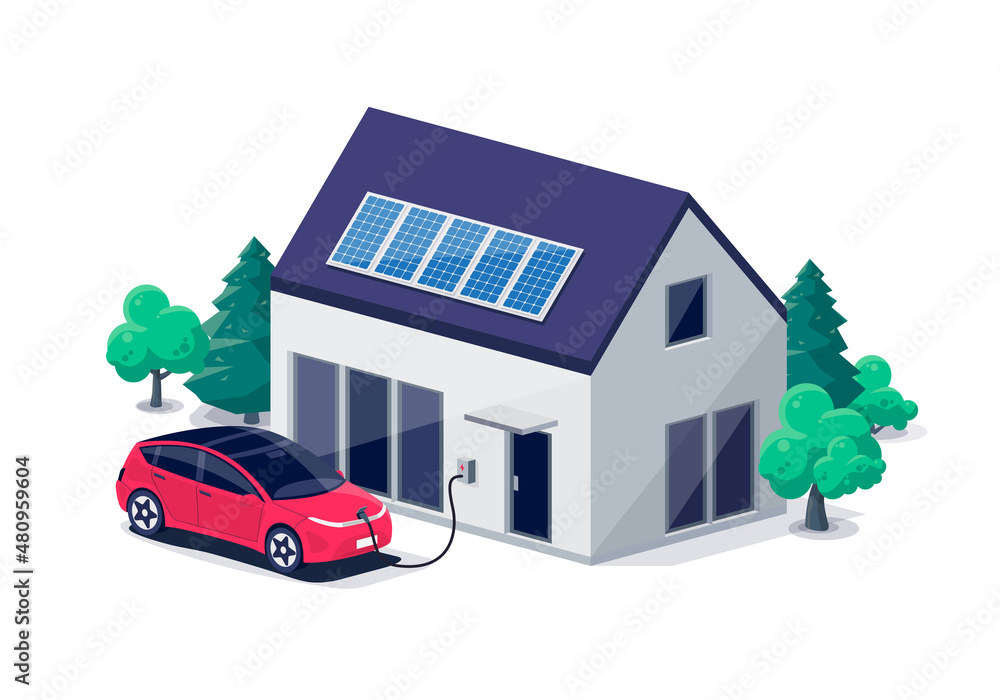
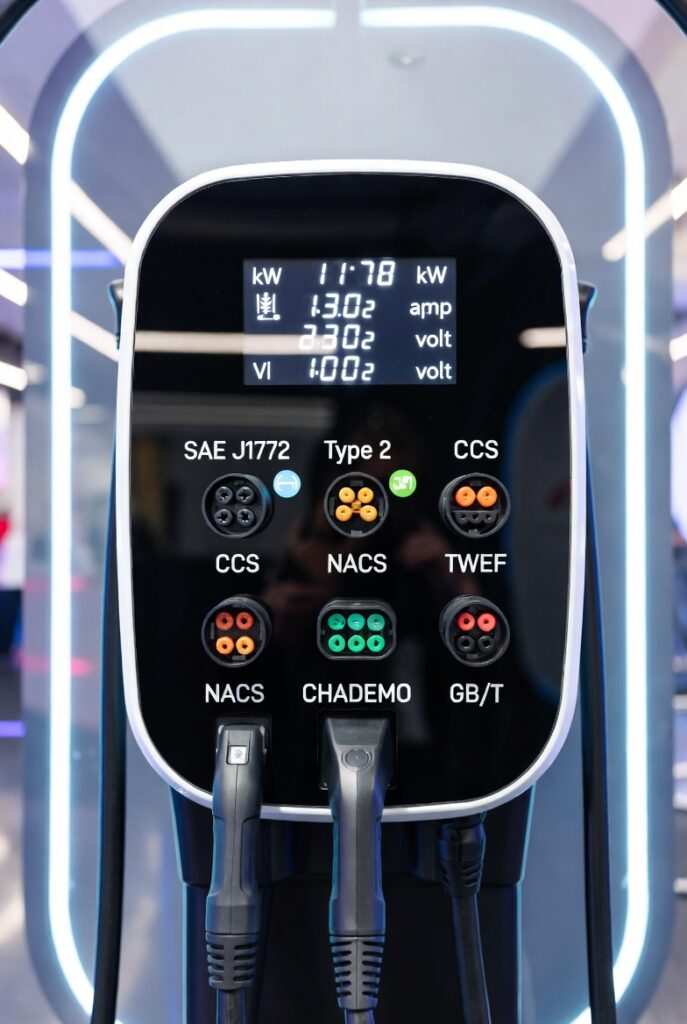
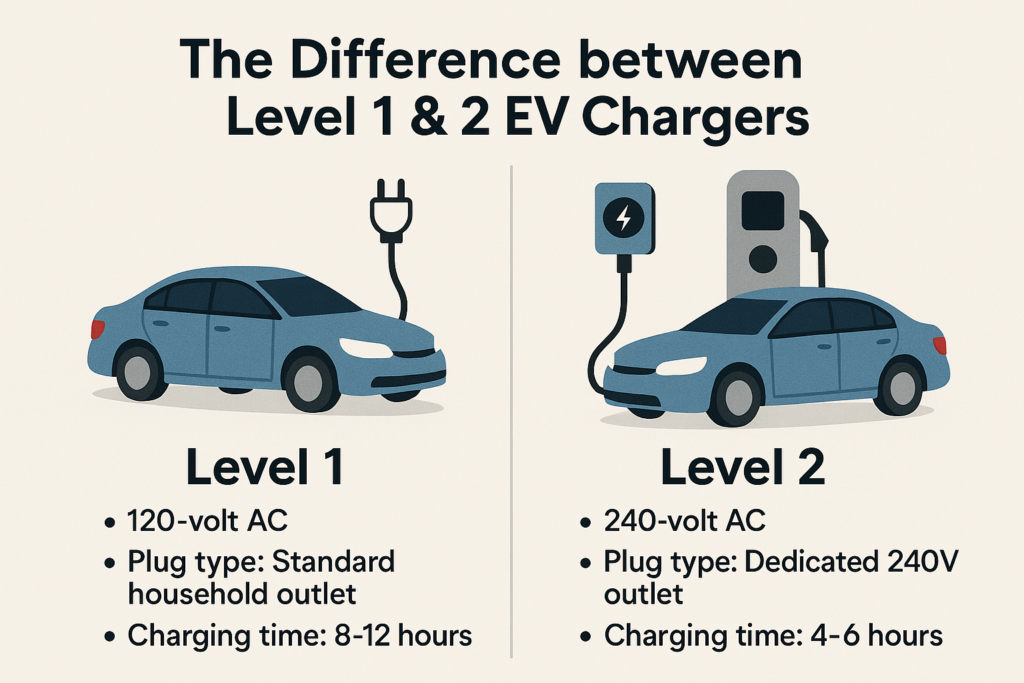
Here is the situation that thousands of Chinese EV owners find themselves in during the months between taking delivery of their vehicle and completing the formal home charger installation process.
The 物业 application has been submitted. The utility meter application is pending. The licensed electrician is booked but available in three weeks. In the meantime, the car sits in the underground car park with its included Mode 2 cable plugged into a standard 220V socket — charging at 2.2 kW, adding approximately 12 km of range per hour, and making the owner increasingly anxious about whether that standard socket can handle sustained overnight current draw safely.
Or the 物业 has flat-out refused — again — and the owner is exploring every legitimate option that doesn’t require 物业 cooperation.
Or the owner is moving to a new city in six months and doesn’t want to invest ¥3,000-¥5,000 in a permanent hardwired installation they’ll need to leave behind.
All of these situations share a common question: is there a legitimate, safe, self-installable EV charging solution for a Chinese 220V apartment that doesn’t require a licensed electrician, a 物业 application, or a dedicated circuit?
The answer is yes — with important qualifications about what “DIY” means in the Chinese electrical safety context, what “plug-and-play” actually delivers, and which specific products are genuinely safe for sustained 220V apartment use versus which appear safe but create real hazards.
This guide on DIY EV charger installation 2026 easiest plug and play models for Chinese apartments 220V covers the complete landscape honestly — what DIY EV charging is and isn’t in China, the specific products that can be legitimately self-installed without an electrician, the safety requirements that cannot be compromised regardless of how easy installation appears, and the charging speed reality of 220V plug-and-play solutions.
The Critical First Clarification — What DIY EV Charging Actually Means in China
Before listing any products, the most important service this guide provides is honest clarification of what “DIY” and “plug-and-play” mean in the Chinese residential EV charging context — because misunderstanding these concepts creates real safety risks.
What Is Legitimately Self-Installable
Category 1: Mode 2 and Mode 3 portable EVSE used with existing sockets
A portable EVSE — whether the Mode 2 cable that came with your vehicle or an upgraded Mode 3 unit purchased separately — is entirely self-installable. You plug one end into an existing socket and the other end into your vehicle. No electrician. No permits. No 物业 approval for the device itself.
This is the genuinely plug-and-play category — and it is the primary focus of this guide.
Category 2: NEMA 14-50 equivalent GB/T socket charging
If your parking space already has a 32A commando socket installed (by a previous occupant or as part of the building’s original fit-out), you can use a portable Mode 3 EVSE with a 32A commando plug — no electrician required for the charging device itself. The socket already exists. You’re simply plugging into it.
What is NOT self-installable:
Hardwired home charger installation: Any charger that is wired directly to a dedicated circuit requires a licensed electrician (持证电工) in China. This is not a recommendation — it is a legal requirement under Chinese electrical installation codes. The dedicated circuit from the distribution board to the charger mounting point is notifiable electrical work requiring a certified installer.
New socket installation: Installing a new 32A commando socket at your parking space — even if you’re technically capable of doing the work — is notifiable electrical work requiring a licensed electrician in China.
The honest summary: “DIY” in the Chinese apartment EV charging context means using an existing socket infrastructure with a portable EVSE that you connect and disconnect yourself. It does not mean installing new permanent electrical infrastructure yourself.
The Chinese Electrical Code Reality
Chinese electrical installation standards (GB 50303 and associated standards) require that any electrical installation work in residential buildings be performed by certified electricians. This is not bureaucratic friction — it reflects genuine safety considerations for electrical work that affects shared building infrastructure.
The safety reasons this matters for EV charging specifically:
- An improperly installed dedicated EV charging circuit creates fire risk in shared building infrastructure
- Underground car parks have limited fire suppression options for electrical fires in cable conduits
- Other residents’ safety is affected by substandard electrical work in shared spaces
The legitimate DIY path — using portable EVSEs with existing sockets — bypasses this entirely. You’re not installing electrical infrastructure. You’re using existing infrastructure with a device you own.
The Safety Non-Negotiables for 220V DIY EV Charging
Non-Negotiable 1: The Socket Must Be Safe for Sustained Current Draw
A standard 220V Chinese apartment socket (commonly rated 10A or 16A) is designed for appliances that draw current intermittently — a kettle for 3 minutes, a vacuum cleaner for 30 minutes, a rice cooker for 20 minutes. EV charging draws 8-12A continuously for 6-8 hours.
The sustained current distinction: A socket rated 10A is designed to handle 10A. But Chinese socket ratings are typically based on intermittent use, not continuous 8-hour current draw. A socket rated 10A for intermittent use may have contact quality, spring tension, and wiring rated for a lower continuous current.
How to assess whether a specific socket is safe for sustained EV charging:
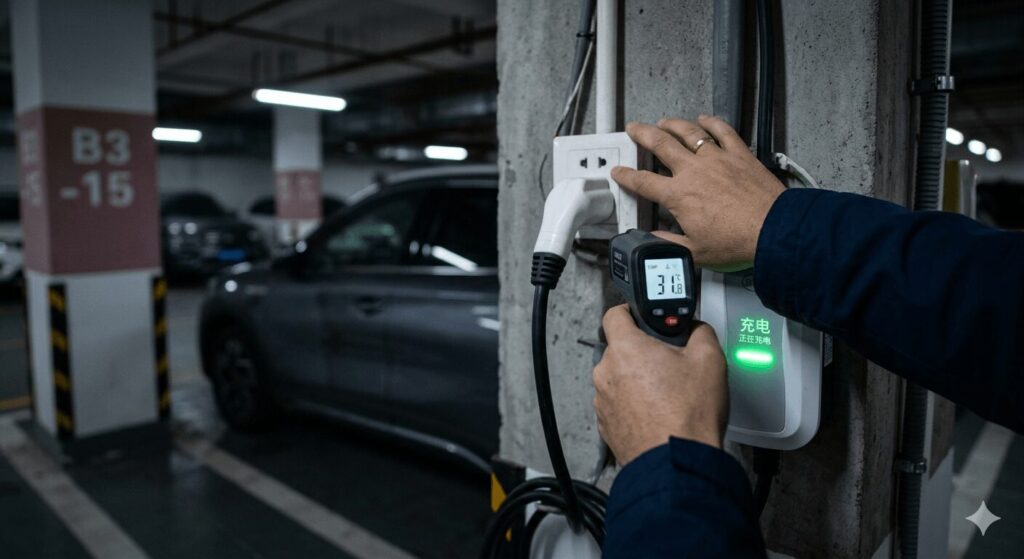
The warm-hand test: After 30 minutes of charging at the target current, touch the socket face and the plug (not the cable — the plug body at the socket). Both should be at or very close to room temperature.
- Room temperature to slightly warm (under 35°C): Acceptable
- Noticeably warm (35-45°C): Caution — reduce current or replace socket
- Hot (above 45°C): Stop immediately — the socket or wiring is overloaded
The visual inspection: Before first use, inspect the socket for:
- Discolouration around the socket face (brown or black marks indicate previous overheating)
- Loose socket face (indicates mechanical wear)
- Visible gaps around the socket insert (indicates the socket mount has loosened from the wall)
Any of these conditions: do not use this socket for EV charging until an electrician inspects and replaces it.
The socket age consideration: Chinese apartment sockets in buildings over 15 years old may use older socket standards with contact materials that degrade faster than modern equivalents. In buildings constructed before 2005, socket quality is more variable and the warm-hand test is especially important.
Non-Negotiable 2: The EVSE Must Have Built-In RCCB Protection
The Mode 2 cable included with most Chinese EVs has basic protection — a control pilot circuit and some thermal protection. Many do not have a built-in Residual Current Circuit Breaker (RCCB).
The RCCB is the safety device that disconnects power within milliseconds if current flows through an unintended path — through a person, through ground, through water. For EV charging, where the charging cable and connector are handled daily in a car park environment, ground fault protection is the primary safety device.
For any DIY EV charging solution, the EVSE must have built-in RCCB protection.
This is non-negotiable because:
- Many standard Chinese apartment circuits do not have Type B RCD protection (which handles both AC and DC fault currents from EV chargers)
- The building’s main circuit breaker provides overcurrent protection but not necessarily ground fault protection
- A portable EVSE with built-in RCCB provides self-contained fault protection regardless of the installation’s upstream protection
Chargers in this guide without built-in RCCB are excluded regardless of price or features.
Non-Negotiable 3: Never Use a Standard Domestic Extension Cord
Every EV charging guide in China says this. It needs to be said again because it is violated constantly.
Standard domestic extension cords are not rated for sustained EV charging current. A standard Chinese extension cord is typically rated 10A with conductor cross-section of 0.75-1.0mm² — capable of carrying 10A for brief periods but not 10A for 6-8 hours continuously.
The specific failure mode: A standard extension cord used for sustained EV charging heats progressively along its entire length. The weakest point — typically a coiled section of cable in a pile on the floor — reaches temperatures that degrade the insulation, potentially creating a fire risk at the cable rather than the socket.
If cable reach is an issue: The correct solution is a longer charging cable on the EVSE — specify 7m or 10m cable on the EVSE order. This is the manufacturer-supplied, rated, tested cable. It is not an extension cord.
The only acceptable “extension” for EV charging: A purpose-built EV charging cable extension (充电延长线) — specifically rated for sustained EV charging current (minimum 32A continuous, 2.5mm² conductor) with proper insulation and weather protection. These exist in the Chinese market but are specialty products, not standard electrical extension cords.
The Genuine Plug-and-Play Options for Chinese 220V Apartments
Category A: Upgraded Mode 3 Portable EVSE — The Direct Socket Solution
This is the simplest legitimate DIY EV charging solution — a portable EVSE that plugs into a standard 220V socket and connects to your vehicle’s GB/T charging port, with built-in RCCB protection.
Product A1: BESEN Smart Portable EVSE BP-1207S (倍思 BP-1207S)
The benchmark safe portable EVSE for Chinese apartments
| Specification | Detail |
|---|---|
| Price | ¥450-¥650 |
| Plug | Standard 220V (16A) |
| Max Power | 3.3 kW (16A, 220V) |
| Connector | GB/T 20234.2-2015 ✅ |
| Cable Length | 5m |
| IP Rating | IP55 |
| Built-in RCCB | ✅ Yes — 30mA trip threshold |
| Thermal Protection | ✅ Yes |
| Connector Temp Monitor | ✅ Yes |
| Certification | GB/T 20234.2-2015 + 3C ✅ |
| Display | LED status indicator |
| Warranty | 2 years |
Why BESEN is the benchmark:
The BESEN BP-1207S is the most widely recommended portable EVSE among Chinese EV owner communities for a reason that is simply stated: it has built-in RCCB protection that the included Mode 2 cable typically lacks, at a reasonable price, with genuine GB/T certification.
The 30mA RCCB trip threshold — the same as required for EV charging circuits under Chinese electrical standards — provides the same level of fault protection that a properly installed dedicated circuit would have, contained within the portable EVSE unit itself.
DIY installation procedure:
- Inspect your parking space socket using the visual inspection criteria above
- Plug the BESEN’s 16A standard plug into the socket
- Perform the warm-hand test after 30 minutes
- Connect the GB/T Type 2 connector to your vehicle’s charging port
- Charging begins — at 3.3 kW
No electrician. No permits. No 物业 application for the device itself.
What you get:
- 3.3 kW charging (versus 2.2 kW from included Mode 2 at 10A)
- Built-in RCCB protection (versus typically absent in included cable)
- IP55 weather protection (adequate for covered underground parking)
- Thermal and connector temperature monitoring
What you don’t get:
- 7 kW charging speed (requires a 32A circuit — not standard socket)
- App control or TOU scheduling (basic EVSE, no WiFi)
- Energy monitoring
Charging speed reality: At 3.3 kW, overnight charging (8 hours) adds approximately 26.4 kWh — approximately 145 km range for a BYD Han EV (at 18 kWh/100km real-world). For drivers covering under 100 km daily, this is adequate for daily energy replacement.
For drivers covering 100-150 km daily: 3.3 kW overnight may not fully replace daily consumption. Supplement with occasional public DC fast charging on higher-mileage days.
Product A2: Pilot-EV Smart Portable EVSE (派能科技 便携充电器)
The smart upgrade — TOU scheduling in a portable EVSE
| Specification | Detail |
|---|---|
| Price | ¥580-¥780 |
| Plug | Standard 220V (16A) or 32A commando (selectable) |
| Max Power | 3.3 kW (16A) or 7 kW (32A, if socket available) |
| Connector | GB/T 20234.2-2015 ✅ |
| Cable Length | 5m |
| IP Rating | IP55 |
| Built-in RCCB | ✅ Yes |
| WiFi | ✅ Yes |
| TOU Scheduling | ✅ Yes — app-based |
| Energy Monitoring | ✅ Basic |
| Certification | GB/T 20234.2-2015 + 3C ✅ |
| Warranty | 2 years |
Why the Pilot-EV adds genuine value over BESEN:
The Pilot-EV Smart Portable EVSE adds WiFi connectivity and TOU scheduling to the portable EVSE concept — capturing the primary financial advantage of a smart home charger without requiring permanent installation.
The TOU scheduling value for portable EVSE: Annual TOU saving using Pilot-EV’s scheduling versus charging immediately (Shanghai, BYD Han EV, 15,000 km/year):
- Annual kWh from 3.3 kW charging: 3,056 kWh (at 15,000 km, 18 kWh/100km)
- At TOU ¥0.34: ¥1,039/year
- Without TOU ¥0.75: ¥2,292/year
- Annual TOU saving: ¥1,253/year
The Pilot-EV’s ¥130-¥200 premium over the BESEN pays back in approximately 5-6 weeks through TOU savings. For any Chinese EV owner expecting to use this portable EVSE for more than 2 months, the smart scheduling pays for itself almost immediately.
The dual-plug versatility: The Pilot-EV’s interchangeable plug design — 16A standard plug or 32A commando plug — means if your parking space is later upgraded to a 32A commando socket (by a previous occupant, a future renovation, or a collective installation), the same EVSE delivers 7 kW instead of 3.3 kW. One purchase covers both current and future socket scenarios.
DIY installation: Same as BESEN — plug into existing socket. WiFi setup through the Pilot-EV app takes approximately 5 minutes.
Product A3: Autel MaxiCharger Portable AC (奥创便携充电器)
The premium portable — best build quality and smart features
| Specification | Detail |
|---|---|
| Price | ¥680-¥950 |
| Plug | 16A standard or 32A commando |
| Max Power | 3.3 kW (16A) / 7 kW (32A) |
| Connector | GB/T 20234.2-2015 ✅ |
| Cable Length | 5m |
| IP Rating | IP55 |
| Built-in RCCB | ✅ Yes |
| WiFi | ✅ Dual-band 2.4 + 5 GHz |
| TOU Scheduling | ✅ Yes |
| Energy Monitoring | ✅ Excellent |
| Solar Integration | ✅ Basic |
| Certification | GB/T 20234.2-2015 + 3C ✅ |
| OCPP | 1.6 ✅ |
| Warranty | 3 years |
Why Autel portable stands apart:
The Autel MaxiCharger Portable brings the same engineering quality as the Autel MaxiCharger hardwired unit to a portable EVSE format. The 3-year warranty — exceptional for a portable device — reflects the industrial heritage of Autel’s product engineering.
The dual-band WiFi is specifically valuable for Chinese apartment underground car parks where 2.4 GHz congestion causes intermittent connectivity in dense urban buildings. Reliable WiFi connectivity is essential for TOU scheduling reliability — a portable EVSE that loses WiFi connectivity stops scheduling correctly.
For Chinese EV owners who want the financial benefit of smart TOU scheduling in a portable device with maximum reliability: the Autel portable at ¥680-¥950 is the correct investment.
OCPP 1.6 in a portable EVSE: The OCPP compliance in Autel’s portable unit is unusual — this enables the device to participate in demand response programmes that standard portable EVSEs cannot access. For residents in Beijing, Shanghai, or Shenzhen who register for demand response programmes, the portable Autel can generate ¥200-¥800/year in demand response income even without permanent installation.
Category B: The 32A Commando Socket Solution — Maximum Speed Without Hardwiring
If your parking space already has a 32A commando socket (installed by a previous tenant’s electrician, provided as part of a commercial parking facility, or present in industrial-adjacent residential areas), you can achieve 7 kW charging without any electrical installation work — just connect a portable EVSE with a 32A commando plug.
How to check if a 32A commando socket exists at your space: Look for a round blue socket with a central earth pin and three connection points around it — larger and more robust in appearance than a standard flat-pin socket. These are installed by electricians and are uncommon in standard residential parking but present in some commercial-adjacent, industrial, and newer premium residential facilities.
Product B1: ChargeWay CW-E3207 Portable 32A (充威 CW-E3207)
7 kW portable charging from a 32A socket — full speed without hardwiring
| Specification | Detail |
|---|---|
| Price | ¥450-¥700 |
| Plug | 32A commando |
| Max Power | 7 kW (32A, 220V) |
| Connector | GB/T 20234.2-2015 ✅ |
| Cable Length | 5m |
| IP Rating | IP54 |
| Built-in RCCB | ✅ Yes |
| Thermal Protection | ✅ Yes |
| Smart Features | None — basic EVSE |
| Certification | GB/T 20234.2-2015 + 3C ✅ |
| Warranty | 2 years |
The case for ChargeWay 32A portable:
For Chinese EV owners who have discovered a 32A commando socket at their parking space, the ChargeWay CW-E3207 provides full 7 kW home-charger-equivalent charging speed without any installation work. Plug in, charge at 7 kW, unplug.
At 7 kW, the overnight charging picture changes completely:
| Vehicle | Battery | 20-80% at 7 kW | Valley window (11pm-8am) |
|---|---|---|---|
| BYD Seal LR | 82.56 kWh | 7.0 hours | ✅ Completes 6:00am |
| BYD Han EV | 76.9 kWh | 6.6 hours | ✅ Completes 5:36am |
| NIO ET5 | 75 kWh | 6.4 hours | ✅ Completes 5:24am |
| Xiaomi SU7 | 73.6 kWh | 6.3 hours | ✅ Completes 5:18am |
Full 7 kW speed, entirely plug-and-play from an existing 32A socket.
TOU scheduling without smart EVSE: The ChargeWay is a basic EVSE — no WiFi, no scheduling. Use your vehicle’s built-in charging timer instead. Set the car’s timer to begin charging at 11pm to capture valley rates without smart EVSE hardware.
Limitation: IP54 — adequate for covered parking, not for exposed outdoor positions. For outdoor 32A socket positions, specify the Autel Portable (IP55) or equivalent.
Product B2: BESEN BP-3307 Smart 32A Portable (倍思 BP-3307)
7 kW with TOU scheduling — the complete portable solution
| Specification | Detail |
|---|---|
| Price | ¥580-¥850 |
| Plug | 32A commando |
| Max Power | 7 kW (32A, 220V) |
| Connector | GB/T 20234.2-2015 ✅ |
| Cable Length | 5m |
| IP Rating | IP55 |
| Built-in RCCB | ✅ Yes |
| WiFi | ✅ Yes |
| TOU Scheduling | ✅ Yes — app-based |
| Energy Monitoring | ✅ Yes |
| Certification | GB/T 20234.2-2015 + 3C ✅ |
| Warranty | 2 years |
The BESEN BP-3307 combines:
- Full 7 kW charging speed from a 32A commando socket
- Smart TOU scheduling via BESEN app
- Built-in RCCB protection
- IP55 weather resistance
This is functionally equivalent to a hardwired smart 7 kW home charger — same speed, same TOU scheduling, same safety protection — with the portability advantage that it goes with you when you move.
Annual TOU saving with BESEN BP-3307 at 7 kW (Shanghai, BYD Han EV, 20,000 km/year): 4,073 kWh × (¥0.75 avg – ¥0.34 valley) = ¥1,670/year
Identical to a hardwired StarCharge S1. The portable unit achieves the same financial result where a 32A socket exists.
Category C: The Included Mode 2 Cable — When It’s Actually Acceptable
Before upgrading to a purchased portable EVSE, honestly evaluating the included Mode 2 cable prevents unnecessary expenditure.
The Mode 2 cable included with your Chinese EV charges at 2.2 kW (10A) or occasionally 3.3 kW (16A) from a standard socket. It is legitimate self-install charging — plug in, use, unplug.
When the included Mode 2 cable is adequate:
| Scenario | Verdict |
|---|---|
| Daily driving under 40 km | ✅ Mode 2 covers daily consumption |
| Wuling Mini EV or other micro EV | ✅ Correct solution — don’t upgrade |
| Li Auto EREV / BYD DM-i (petrol backup) | ✅ Adequate for electric fraction supplementation |
| Temporary solution (under 3 months) | ✅ Acceptable temporarily |
| Socket in confirmed good condition | ✅ Required condition for any Mode 2 use |
When the included Mode 2 cable is NOT adequate and upgrade is warranted:
| Scenario | Verdict |
|---|---|
| Daily driving over 60 km (pure BEV) | ❌ May not replace full daily consumption |
| Socket shows any warmth during charging | ❌ Stop — replace socket or upgrade to better EVSE |
| Long-term use (over 3 months) | ❌ Socket wear risk — upgrade to dedicated RCCB EVSE |
| BYD Han EV, NIO ET5, or other large battery | ❌ 2.2 kW too slow for comfortable daily management |
The upgrade trigger: If you are in any of the “not adequate” scenarios, the ¥450-¥650 BESEN BP-1207S upgrade is the correct action. The RCCB protection alone justifies the upgrade over continued Mode 2 use for long-term daily charging.
The DIY Installation Process — Step by Step
For Standard 220V Socket Installation (Mode 3 Portable EVSE)
Before you begin:
Step 1: Socket inspection Inspect the target socket using the visual criteria above. Confirm no discolouration, mechanical damage, or looseness. If the socket has any of these indicators, do not proceed without electrician assessment.
Step 2: Circuit breaker identification Locate the circuit breaker that controls the socket you plan to use. This is in the apartment’s consumer unit (配电箱), typically near the entrance. Know which breaker to trip if you need to kill power to the socket.
Step 3: Product check Confirm your portable EVSE has:
- Valid GB/T certification marking and traceable certificate number
- Built-in RCCB — documented in the product specification
- No physical damage to cable, plug, or GB/T connector
Installation:
Step 4: Plug in EVSE Connect the EVSE’s standard plug to the socket. Do not use an extension cord.
Step 5: First-use warm test Operate at maximum current for 30 minutes WITHOUT connecting the vehicle. Touch socket face and plug body. Should be at or near room temperature.
If warm or hot: Disconnect immediately. Have electrician inspect socket. If room temperature: Proceed.
Step 6: Connect vehicle Insert the GB/T connector firmly into the vehicle’s charging port until the mechanical lock engages. The EVSE status indicator should show charging active.
Step 7: Post-connection warm test After 30 minutes of charging with vehicle connected, re-check socket temperature.
If consistently at room temperature: The installation is safe for regular use.
Step 8: Configure TOU scheduling (for smart EVSE) Connect the EVSE to your WiFi network through the app. Configure the TOU valley rate charging window for your city. For non-smart EVSE, configure the vehicle’s built-in charging timer for the same window.
For 32A Commando Socket Installation
The process is identical to standard socket installation with one additional step:
Socket identification: Confirm the commando socket is 32A rated — the socket itself is typically marked with its current rating. A 16A commando socket (blue, 4-position) is different from a 32A commando socket (blue, 4-position with different pin configuration). Using a 32A EVSE with a 16A socket will trip the socket’s breaker immediately — no safety hazard, just a failed connection.
If the socket is rated 32A: Proceed with the BESEN BP-3307 or ChargeWay 32A portable EVSE using the same warm-test process.
Charging Speed Comparison — What Each DIY Solution Delivers
For BYD Han EV Long Range (76.9 kWh usable)
| Solution | Speed | 8hr Overnight | Daily 100km Replacement |
|---|---|---|---|
| Included Mode 2 (10A) | 2.2 kW | 17.6 kWh / 98 km | 8.2 hours needed |
| BESEN BP-1207S (16A) | 3.3 kW | 26.4 kWh / 147 km | 5.5 hours needed |
| Pilot-EV / Autel portable (16A) | 3.3 kW | 26.4 kWh / 147 km | 5.5 hours needed |
| ChargeWay / BESEN 32A (32A) | 7 kW | 56 kWh / 311 km | 2.6 hours needed |
| Hardwired smart 7 kW | 6.2 kW effective | 49.6 kWh / 276 km | 2.9 hours needed |
The 16A portable ceiling: At 3.3 kW, the daily 100 km replacement requires 5.5 hours — well within overnight availability. Drivers covering under 130 km daily can fully replace consumption overnight at 3.3 kW.
Drivers covering 130-200 km daily: 3.3 kW is tight — a 130 km daily consumption (23.4 kWh) requires 7.1 hours charging at 3.3 kW. Starting at 11pm, completion at 6:06am. Achievable but marginal.
The 32A solution changes everything: At 7 kW from a 32A socket, daily charging becomes almost entirely unconstrained within the valley rate window. The 32A portable solution is functionally equivalent to a hardwired 7 kW unit.
For NIO ET5 (75 kWh, 100 kWh, or 150 kWh options)
| Battery | At 3.3 kW (20-80%) | At 7 kW (20-80%) |
|---|---|---|
| 75 kWh | 13.6 hours | 6.4 hours |
| 100 kWh | 18.2 hours | 8.6 hours |
| 150 kWh | 27.3 hours | 12.9 hours |
Critical finding for NIO ET5 150 kWh owners: At 3.3 kW (16A standard socket), the 150 kWh battery’s 20-80% charge requires 27.3 hours — impossible to complete in a single overnight session. This battery simply cannot be managed on standard socket portable charging. NIO ET5 150 kWh owners must either use NIO swap stations, public DC fast charging, or secure a 32A commando socket for 7 kW portable charging.
At 7 kW (32A commando), 12.9 hours for 20-80% — barely fits in a stretched charging window (plug in at 6pm, 7 kW, complete by 6:54am). Manageable but tight. These owners should prioritise permanent hardwired installation.
For Wuling Mini EV (9.2 kWh standard, 13.8 kWh long range)
| Battery | At 2.2 kW (included cable) | At 3.3 kW |
|---|---|---|
| 9.2 kWh (20-100%) | 3.3 hours | 2.2 hours |
| 13.8 kWh (20-100%) | 5.0 hours | 3.3 hours |
The Wuling Mini EV’s small battery means even the included Mode 2 cable provides comfortable full overnight charging. The upgrade to 3.3 kW EVSE reduces this to 2-3 hours — more comfortable but not transformative. The RCCB safety upgrade is the primary reason to upgrade from the included cable for Mini EV owners, not charging speed.
The TOU Scheduling — Maximising Financial Return from DIY Solutions
Smart EVSE TOU Configuration
For smart portable EVSEs (Pilot-EV, Autel portable, BESEN BP-3307):
Shanghai valley rate window: 23:00-8:00 Configuration:
- Open the EVSE app
- Navigate to Scheduled Charging / 定时充电
- Set start time: 23:00
- Set end time: 8:00 (or leave open-ended with target SOC)
- Confirm scheduling active
Annual TOU saving from smart EVSE scheduling (versus immediate charging at flat rate, Shanghai, 20,000 km/year):
- 3.3 kW portable with TOU: 4,073 kWh × ¥0.34 = ¥1,385/year
- 3.3 kW without TOU: 4,073 kWh × ¥0.75 = ¥3,055/year
- Annual saving: ¥1,670/year
This is identical to the TOU saving from a ¥899 hardwired StarCharge S1. The smart portable EVSE captures the same financial benefit at lower hardware cost — with the added benefit of portability.
Car Timer TOU Configuration (Non-Smart EVSE)
For basic EVSEs without WiFi (BESEN BP-1207S, ChargeWay CW-E3207), use the vehicle’s built-in charging timer:
BYD vehicles: BYD app → Charging → Charging Settings → Scheduled Charging → Set start 23:00 NIO vehicles: NIO app → Charging → Schedule → Set start 23:00 Xpeng vehicles: Xpeng app → Charging → Set timer 23:00 Tesla China: Tesla app → Charging → Schedule Charging → On / Set departure time for 7:00am
The car timer captures identical TOU savings to the smart EVSE’s scheduling — the electricity bills are the same. The smart EVSE provides the convenience of charger-level scheduling (works even if the car’s timer is overridden) and energy monitoring. For budget-conscious owners, car timer with a basic EVSE is financially equivalent.
The Financial Comparison — DIY vs Hardwired Installation
5-Year Total Cost for Shanghai BYD Han EV Owner, 20,000 km/year
| Solution | Hardware | Install | 5yr Electricity (TOU) | 5yr Total |
|---|---|---|---|---|
| BESEN BP-1207S (16A, no TOU) | ¥550 | ¥0 | ¥15,275* | ¥15,825 |
| BESEN BP-1207S (16A, car timer TOU) | ¥550 | ¥0 | ¥6,925 | ¥7,475 |
| Pilot-EV Smart (16A, TOU) | ¥680 | ¥0 | ¥6,925 | ¥7,605 |
| Autel Portable (16A, TOU) | ¥820 | ¥0 | ¥6,925 | ¥7,745 |
| ChargeWay 32A (32A, car timer TOU) | ¥580 | ¥0 | ¥6,925 | ¥7,505 |
| BESEN BP-3307 (32A, TOU) | ¥720 | ¥0 | ¥6,925 | ¥7,645 |
| StarCharge S1 (hardwired, TOU) | ¥999 | ¥1,700 | ¥6,925 | ¥9,624 |
*Without TOU scheduling
The definitive finding: DIY portable EVSE solutions with TOU scheduling (via smart EVSE or car timer) have lower 5-year total cost than hardwired installation — because the portable solution has zero installation cost. The hardwired solution has higher hardware + installation cost (¥2,699) that is only partially recovered by the slightly higher efficiency of 7 kW versus 3.3 kW charging speed (which doesn’t reduce electricity cost — only reduces charging time).
When hardwired installation is financially superior: The hardwired 7 kW charger’s 5-year total (¥9,624) exceeds every DIY smart solution (¥7,475-¥7,745). Hardwired installation is NOT financially optimal for owners who have access to 3.3 kW portable charging with TOU scheduling.
Hardwired installation justification despite higher cost:
- Convenience: No daily connect/disconnect of portable cable
- Reliability: Dedicated circuit more reliable than standard socket long-term
- Speed: 7 kW versus 3.3 kW matters for high-mileage drivers or large batteries
- Future vehicle: If your next vehicle has larger battery, 7 kW becomes more important
- Property value: Installed charger adds value to parking space
The DIY Solution Selection Guide
Your Vehicle + Daily Mileage Determines Which DIY Solution Is Right
| Vehicle | Daily mileage | Recommended DIY Solution |
|---|---|---|
| Wuling Mini EV | Any | Included Mode 2 cable (adequate) or BESEN BP-1207S (for RCCB safety) |
| BYD DM-i / Li Auto EREV | Any | BESEN BP-1207S + car timer TOU — petrol backup reduces urgency |
| BYD Dolphin (44 kWh) | Under 100km | BESEN BP-1207S (3.3 kW sufficient) |
| BYD Han EV / Seal | Under 120km | Pilot-EV Smart or BESEN BP-1207S with car timer |
| BYD Han EV / Seal | Over 120km | 32A socket required — ChargeWay CW-E3207 or BESEN BP-3307 |
| NIO ET5 75 kWh | Under 100km | Pilot-EV Smart (3.3 kW adequate) |
| NIO ET5 100 kWh | Under 80km | Pilot-EV Smart (tight at 3.3 kW) |
| NIO ET5 150 kWh | Any | 32A socket required — or NIO programme hardwired |
| Xiaomi SU7 Standard | Under 100km | Autel Portable (smart features + reliability) |
| Zeekr 001 / luxury EV | Any | 32A socket preferred — basic EVSE at 3.3 kW is marginal |
Common DIY Mistakes and How to Avoid Them
Mistake 1: Assuming the Included Cable Is Safe Because It Came With the Car
The included Mode 2 cable was designed for occasional emergency or temporary use. It may not have built-in RCCB protection. Its 10A rating reflects the socket limitation, not a safety assessment of sustained 10A overnight use.
Prevention: For regular daily overnight charging (more than a few weeks), upgrade to a portable EVSE with built-in RCCB protection.
Mistake 2: Ignoring Socket Temperature After 30 Minutes
The warm-hand test after 30 minutes is the most important safety check in DIY EV charging. It is commonly skipped because “it’s worked fine for a week.”
Sockets can work fine for weeks before showing thermal problems — the degradation is gradual. A socket that is warm at week one is heading toward hot at week twelve.
Prevention: Test socket temperature after 30 minutes at each new charging location. Test again every month at regular charging locations.
Mistake 3: Using the Portable EVSE Indefinitely Without Investigating Hardwired Installation
DIY portable EVSE is an excellent temporary or permanent solution in specific circumstances — but it should not prevent the investigation of a permanent hardwired installation where that installation is feasible.
If your 物业 application is genuinely possible (you have a designated parking space), pursue it. The 7 kW hardwired option provides higher speed and better long-term reliability than 3.3 kW portable charging — even if the 5-year cost comparison favours portable charging financially.
Prevention: Use DIY portable as the bridge while pursuing hardwired installation — not as a permanent substitute for what could be a superior permanent solution.
Mistake 4: Thinking “Smart” EVSE Means No Safety Risk
A smart EVSE with WiFi and TOU scheduling but without built-in RCCB protection is less safe than a basic EVSE with RCCB protection. Smart features do not substitute for safety hardware.
Prevention: Verify RCCB presence in any EVSE — smart or basic — before purchase.
Internal Links — Further Reading on Clean Energy Bazaar
The DIY EV charger installation 2026 easiest plug and play models for Chinese apartments 220V guide is the self-install companion to the professional installation guides in the Chinese market content cluster.
For the standard professional installation guide covering when DIY transitions to hardwired, our find the right EV charger for your home China edition guide covers the complete installation path. For the portable vs hardwired comparison covering the full range of portable options beyond this guide’s 220V focus, our portable vs hardwired home EV chargers best options for Chinese apartment dwellers guide covers every scenario. For the safety certification guide ensuring every product in this guide uses certified hardware, our 3C certification and EV chargers 2026 why buying non-certified chargers is dangerous in China guide covers every safety requirement. For the no-fixed-spot solutions guide covering how DIY portable integrates with the broader creative charging landscape, our urban parking vs rural garages how Chinese homeowners install EV chargers without a fixed spot guide covers every alternative approach. For the rebates guide confirming which rebates apply to permanent installations after the DIY bridge period, our local utility rebates for EV charging 2026 Shenzhen Shanghai Beijing guide covers every available subsidy. And for the budget charger guide covering the lowest-cost hardwired options when DIY eventually transitions to permanent installation, our best budget EV chargers under ¥2,000 2026 Chinese options that actually work guide covers affordable certified alternatives.
Final Thoughts
The DIY EV charger installation 2026 easiest plug and play models for Chinese apartments 220V landscape in China is more viable, more financially competitive, and more safety-capable than most guides acknowledge.
The honest summary:
The genuinely plug-and-play solution exists: A certified portable EVSE with built-in RCCB protection, plugged into an existing 220V socket, configured with TOU scheduling through either the EVSE’s app or the vehicle’s built-in timer. No electrician. No permits. No 物业 application for the device itself.
The financial case is stronger than expected: DIY smart portable solutions with TOU scheduling have lower 5-year total cost than hardwired installation — because zero installation cost partially offsets the higher hardware cost of a permanent hardwired unit.
The speed limitation is real but manageable: 3.3 kW from a standard 16A socket limits overnight charging range replacement to approximately 140-150 km. For drivers covering under 120 km daily, this is adequate. For higher mileage drivers, a 32A commando socket delivers 7 kW — identical to a hardwired charger in speed.
The safety requirements are non-negotiable: RCCB protection in the EVSE, socket temperature testing, no extension cords. These three requirements separate safe DIY EV charging from hazardous DIY EV charging. Every product recommended in this guide meets all three.
The right products for the right scenarios:
- Under ¥600, basic safety upgrade from included cable: BESEN BP-1207S
- Under ¥800, smart TOU scheduling in portable EVSE: Pilot-EV Smart or BESEN BP-3307
- Under ¥1,000, maximum portable performance: Autel MaxiCharger Portable
- 32A socket available: ChargeWay CW-E3207 for basic, BESEN BP-3307 for smart
Use the vehicle’s built-in timer if you buy a non-smart EVSE. Configure it for your city’s valley rate window on the first night. The TOU saving — ¥1,253-¥1,670/year — is available from every solution in this guide regardless of whether the EVSE has WiFi.
The DIY path is not the standard path. But for millions of Chinese EV owners navigating 物业 delays, temporary accommodation, or uncertain tenure, it is the correct and financially sound path for right now.