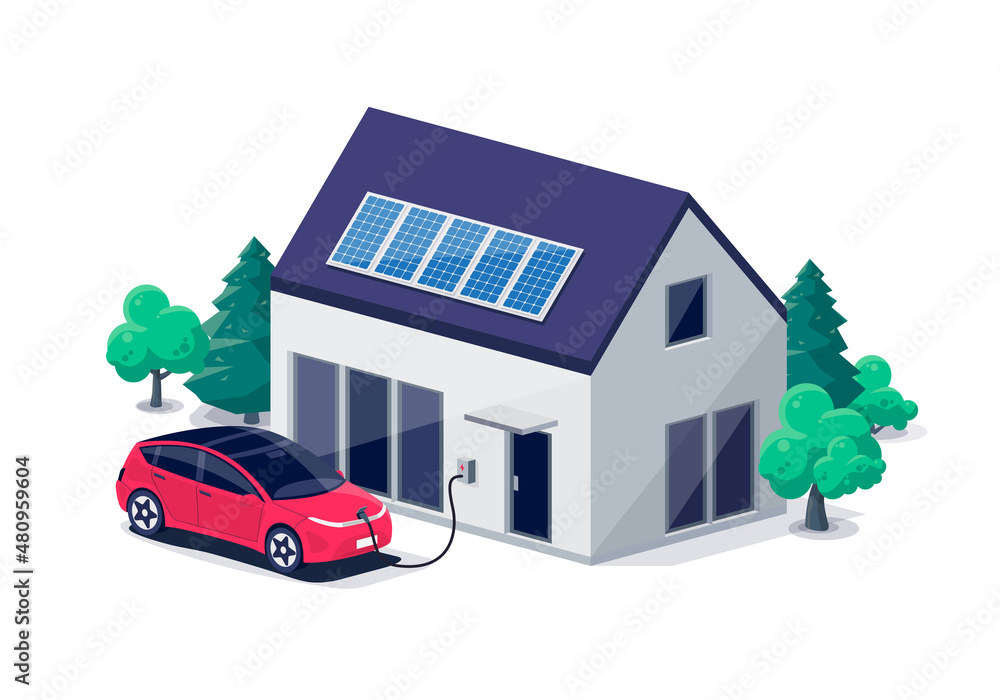
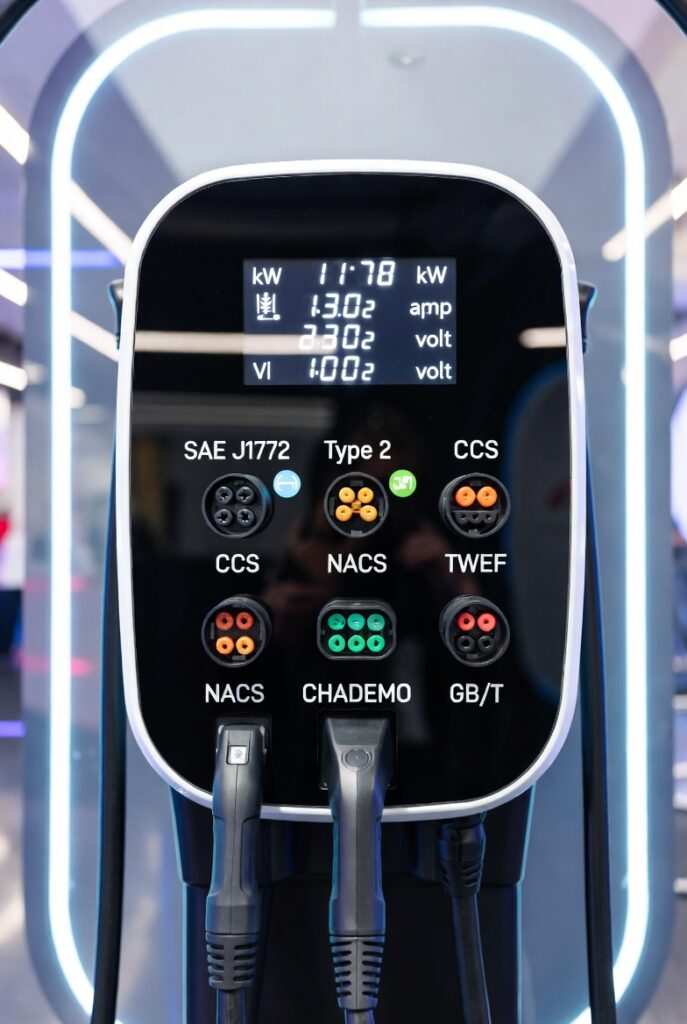
Here’s what happens to most US EV buyers after they take delivery.
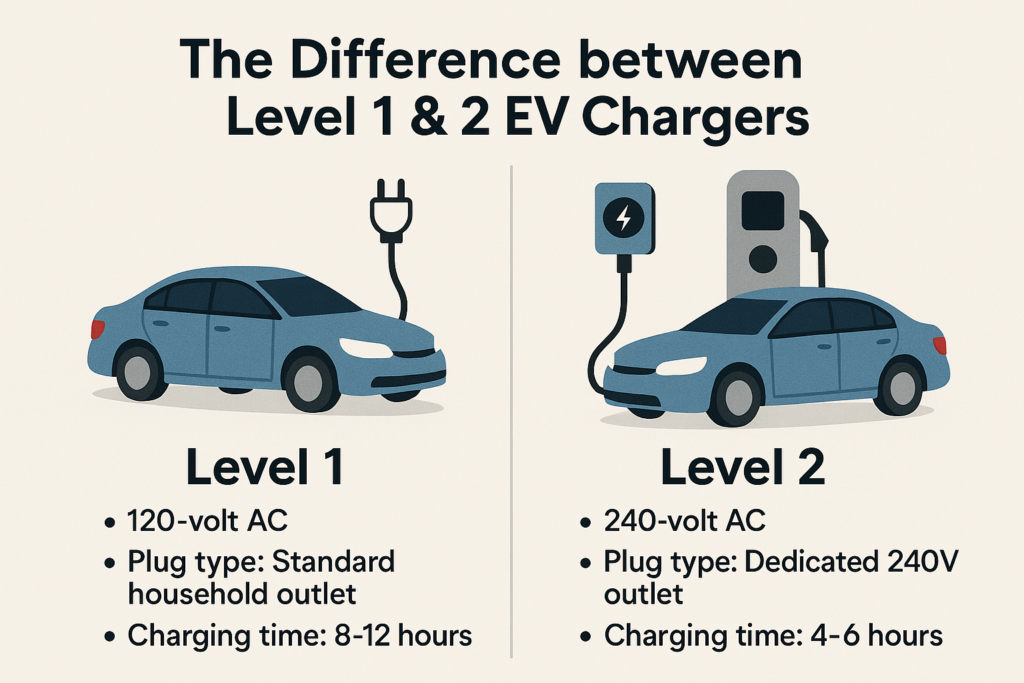
They spend weeks researching the car. They negotiate the price. They claim the federal EV purchase tax credit. They drive home, plug in with the included Level 1 cable, and spend the next six months charging slowly from a standard outlet — because nobody mentioned that there are significant federal and state rebates available for home EV charger installation that most buyers never claim.
A California homeowner installing a home EV charger in 2026 can stack a federal tax credit, a utility rebate from PG&E or SCE, and in some cases an additional state incentive — reducing a $700-$900 charger installation to an effective net cost of $0-$200. A New York homeowner can claim NYSERDA rebates that cover 50% of installation costs. A Texas homeowner has fewer direct state incentives but utility company programs from Oncor, CPS Energy, and Austin Energy that can cover $250-$500 of installation costs.
Most buyers miss all of this. Because the information is scattered across federal websites, state energy agency portals, and individual utility company pages — in the kind of bureaucratic language that discourages most people from digging further.
This guide on US EV charger rebates by state 2026 puts the complete picture in one place. Every major rebate, tax credit, and utility incentive available in California, New York, Texas, and beyond — with honest assessments of eligibility, application processes, and the catches that most summaries leave out.
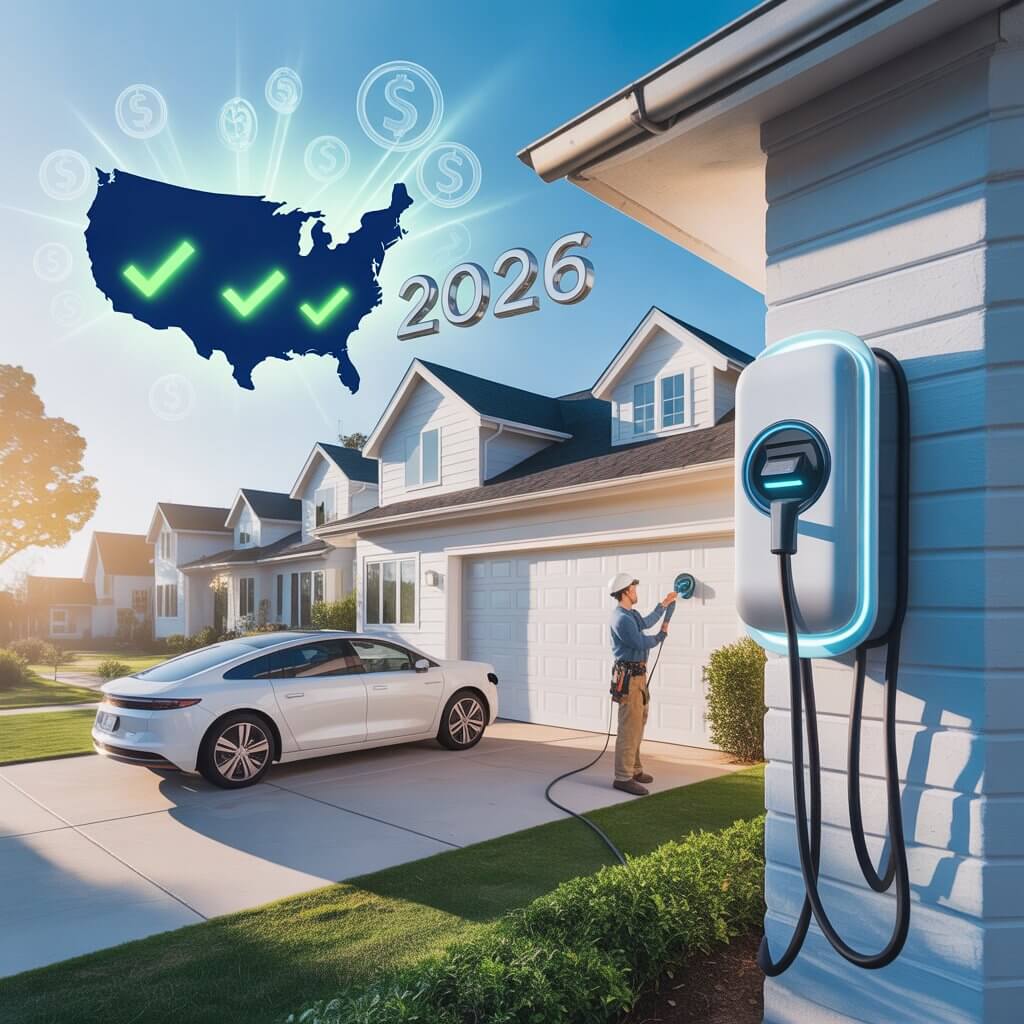
The Federal Foundation — What Every US EV Charger Buyer Can Claim
Before getting into state-specific programmes, every US homeowner installing a home EV charger in 2026 should understand the federal baseline — because it applies regardless of which state you live in and stacks on top of state and utility incentives.
Alternative Fuel Vehicle Refueling Property Credit (IRS Form 8911)
Amount: 30% of the combined cost of purchasing and installing a home EV charger, up to $1,000 maximum credit
Who qualifies:
- US homeowners installing a qualified EV charger at their primary residence
- The charger must be new — not used or reconditioned
- Must be installed for use with a vehicle you own or lease
- Income limitations may apply — the credit phases out at higher income levels for some taxpayers
What costs count:
- The charger unit purchase price
- Installation labour costs by a licensed electrician
- Electrical materials (wiring, conduit, circuit breaker)
- Permit and inspection fees directly related to the charger installation
- Panel upgrade costs specifically required for the charger circuit — though this is a grey area that your tax advisor should confirm
What it’s actually worth in practice: For a typical installation — $500 charger plus $400 installation = $900 total — the 30% credit is $270. For a more expensive installation — $700 charger plus $600 installation = $1,300 total — the credit caps at $1,000 credit maximum, so you claim the full $1,000 credit.
The maximum $1,000 credit is achieved when your total purchase plus installation costs reach $3,333 or more (30% of $3,333 = $1,000). Most EV charger installations — charger plus professional installation — exceed $3,333 when a panel upgrade is included, meaning many buyers can claim the full $1,000 credit.
How to claim: File IRS Form 8911 with your annual tax return. The credit reduces your tax liability dollar-for-dollar — if you owe $5,000 in federal taxes and claim a $1,000 credit, you owe $4,000. If the credit exceeds your tax liability for the year, the excess is non-refundable (you lose it) under current rules — consult your tax advisor for the current tax year treatment.
The catch most guides don’t mention: The federal credit applies to the tax year in which installation is completed. If you install in December 2026 but don’t file your 2026 taxes until April 2027, you claim the credit on your 2026 return filed in April 2027. Make sure your installation is complete in the tax year you want to claim.
California — The Most Generous State EV Charger Incentive Landscape in the US
California’s combination of state programmes, utility incentives, and federal credit creates the most comprehensive EV charger rebate stack available anywhere in the US. A California homeowner who understands and claims every available incentive can install a home EV charger for significantly less than the hardware alone costs at retail.
CAEVIP — California Electric Vehicle Infrastructure Project
Administrator: CALSTART on behalf of the California Energy Commission Amount: Up to $1,000 for residential Level 2 EV charger installation Who qualifies: California homeowners and renters (in some programmes) installing a qualifying Level 2 EV charger Income consideration: Higher rebate amounts available for income-qualified households — up to $1,500 for low-income applicants in some programme phases
Important 2026 note: CAEVIP programme budgets are allocated in phases and can be exhausted before the phase period ends. Application timing matters — check current programme status at CalSTA.ca.gov before planning your installation.
What it covers: Purchase of the charger unit and installation costs by a licensed contractor. Hardware must be from the approved product list.
Utility Company Rebates — The Biggest California Opportunity
California’s investor-owned utilities — Pacific Gas and Electric (PG&E), Southern California Edison (SCE), and San Diego Gas & Electric (SDG&E) — run their own EV charger rebate programmes that often exceed the state-level incentives in immediate cash value.
PG&E EV Charger Rebate:
- Amount: Up to $500 for qualifying home Level 2 EV charger installation
- Who qualifies: PG&E residential customers installing an ENERGY STAR certified Level 2 charger
- How to apply: Through the PG&E website before or within 90 days of installation — check current availability at pge.com/ev
- Stack with federal credit: Yes — PG&E rebate is a separate programme that stacks with the federal tax credit
PG&E EV Rate Plans: Beyond the hardware rebate, PG&E’s EV rate plans (EV2-A, EV-B) offer significantly discounted overnight electricity rates for EV charging — as low as $0.07-$0.12 per kWh during off-peak hours versus $0.30+ per kWh at peak. The annual savings from switching to an EV rate plan can exceed the hardware rebate in value for regular home chargers. This isn’t a rebate but it’s the most important financial consideration for California EV owners and it’s missed by most incentive summaries.
SCE Charge Ready Home Programme:
- Amount: Up to $1,000 rebate for qualifying home EV charger installation for SCE residential customers
- Income-qualified households: Higher rebates available — up to $2,500 in some programme phases
- Who qualifies: SCE residential customers in the SCE service territory
- How to apply: Through the SCE website — check current programme availability at sce.com/ev
SDG&E EV Charger Incentive:
- Amount: Up to $500 for residential EV charger installation
- Additional: SDG&E’s EV TOU rate plans provide off-peak charging rates that significantly reduce ongoing charging costs
- How to apply: Through SDG&E’s website — check current availability at sdge.com/ev
The California Full Stack — What You Can Actually Claim
For a California PG&E customer installing a $699 ChargePoint Home Flex with $400 professional installation ($1,099 total):
| Incentive | Amount | Notes |
|---|---|---|
| Federal tax credit (30% up to $1,000) | $329.70 | Filed on IRS Form 8911 |
| CAEVIP state rebate | Up to $1,000 | Subject to programme availability |
| PG&E utility rebate | Up to $500 | Requires ENERGY STAR certified charger |
| Total potential incentives | Up to $1,829.70 | |
| Net cost after incentives | $0 (credit balance) |
In the best case — all three incentives available and claimed — a California homeowner installs a quality Level 2 charger for effectively zero net cost. Even with conservative assumptions (federal credit only + utility rebate), the net cost drops from $1,099 to approximately $270-$600.
PACE Financing — An Additional California Tool
California’s Property Assessed Clean Energy (PACE) financing programme allows homeowners to finance EV charger installation costs through their property tax bill — no upfront payment, repaid over time through a property tax assessment. For California homeowners who want to install but face upfront cost barriers, PACE provides a path that doesn’t require traditional loan approval.
Low-Income California Programmes
California has several programmes specifically targeting income-qualified households:
TECH Clean California: Includes EV charging infrastructure in its whole-home electrification incentives for income-qualified households. Can cover significant portions of installation costs.
DAC-SASH (Disadvantaged Communities Single-family Affordable Solar Homes): Doesn’t directly cover EV chargers but the solar installation component interacts beneficially with EV home charging economics.
Equity-focused utility programmes: Both PG&E and SCE have income-qualified enhancement programmes that increase rebate amounts for qualifying households.
New York — NYSERDA and Con Edison Create a Strong Rebate Stack
New York’s EV charger incentive landscape is less uniformly generous than California’s but contains some programmes — particularly NYSERDA’s Clean Charge NY — that are among the most accessible and straightforward in the US.
NYSERDA Clean Charge NY
Administrator: New York State Energy Research and Development Authority (NYSERDA) Amount: Up to $500 rebate for residential Level 2 EV charger installation Who qualifies: New York State homeowners and renters (in some circumstances) installing an approved Level 2 EV charger Income-qualified enhancement: Up to $1,000 rebate for income-qualified households How to apply: Through the NYSERDA Clean Charge NY portal — application must be submitted within 90 days of installation
Important: NYSERDA’s rebate is available per charger, not per household — if you install multiple chargers, each may qualify.
Approved charger list: NYSERDA maintains an approved product list — check nyserda.ny.gov/clean-charge before purchasing hardware to confirm your chosen charger qualifies.
Con Edison EV Make-Ready Programme
For Con Edison customers (New York City and Westchester County), the EV Make-Ready programme goes beyond hardware rebates to address the electrical infrastructure costs that are often the largest barrier to EV charger installation in older New York City buildings and brownstones.
What it covers:
- Electrical panel upgrades required for EV charging
- Wiring and conduit installation from the panel to the parking location
- Metering equipment for multi-unit buildings
- In some cases, the charger hardware itself
Value: For New York City homeowners in older buildings where electrical upgrades are required, the Make-Ready programme can cover costs that exceed $2,000-$5,000 — significantly more valuable than a hardware rebate alone.
Relevant for: Brooklyn brownstone owners, Queens homeowners with older electrical panels, Manhattan co-op owners with parking — the programme addresses the infrastructure barriers that make EV charging difficult in New York City’s older housing stock.
PSEG Long Island EV Charger Rebate
Amount: Up to $500 rebate for residential Level 2 EV charger installation for PSEG Long Island customers Who qualifies: PSEG Long Island residential customers How to apply: Through PSEG Long Island’s website — check current programme availability at psegliny.com/ev
Central Hudson, National Grid, and Other New York Utilities
Several other New York utilities run their own EV charger incentive programmes:
National Grid (upstate New York): EV charger rebates up to $300 for residential customers. Check nationalgridus.com for current programme status.
Central Hudson: EV charging incentive programmes for Hudson Valley customers. Check centralhudson.com for current offerings.
Rochester Gas and Electric / New York State Electric and Gas: EV charger rebates available for residential customers in their service territories.
The New York Full Stack
For a New York City Con Edison customer installing a $699 ChargePoint Home Flex in an older brownstone requiring electrical work ($699 charger + $800 installation + $1,500 panel upgrade = $2,999 total):
| Incentive | Amount | Notes |
|---|---|---|
| Federal tax credit (30% up to $1,000) | $1,000 | Capped at maximum |
| NYSERDA Clean Charge NY | Up to $500 | |
| Con Edison Make-Ready (infrastructure) | Up to $2,000+ | Infrastructure costs covered |
| Total potential incentives | Up to $3,500+ | |
| Net cost | Effectively $0 |
For New York City homeowners in older buildings with significant electrical upgrade requirements, the combination of federal credit, NYSERDA rebate, and Con Edison Make-Ready can cover the entire installation cost and in some cases exceed it.
Texas — Fewer State Incentives, More Utility Programme Variation
Texas has no statewide EV charger rebate programme comparable to California’s CAEVIP or New York’s NYSERDA Clean Charge NY. The Texas state government has generally taken a deregulated approach to energy incentives — which means the incentive landscape is driven primarily by utility companies rather than state programmes.
The result is significant variation by utility service territory — what’s available to an Oncor customer in Dallas is different from what’s available to a CPS Energy customer in San Antonio or an Austin Energy customer in Austin.
Austin Energy — The Most Generous Texas Utility Programme
Austin Energy runs one of the most comprehensive EV incentive programmes of any Texas utility:
Austin Energy Plug-In EV Charger Rebate:
- Amount: Up to $1,200 for residential Level 2 EV charger installation
- Who qualifies: Austin Energy residential customers (City of Austin service territory)
- Income-qualified households: Enhanced rebates available — up to $1,500 in some programme phases
- How to apply: Through Austin Energy’s website at austinenergy.com/ev — application required before installation in some programme phases
Austin Energy EV Time-of-Use Rate: Austin Energy’s EV TOU rate provides electricity as low as $0.024 per kWh during off-peak overnight hours (9pm-noon). For a typical EV charging 15 kWh nightly, this rate versus the standard rate saves approximately $150-$200 annually — more financially significant than the hardware rebate for long-term owners.
The Austin advantage: Austin Energy’s combination of hardware rebate (up to $1,200) plus federal credit (up to $1,000) plus one of the cheapest overnight EV electricity rates in the US makes Austin one of the genuinely best cities in Texas — and in the US — for EV ownership economics.
Oncor — Dallas-Fort Worth Area
Oncor serves the Dallas-Fort Worth metroplex and is Texas’s largest electric transmission and distribution company.
Oncor EV Charger Programme:
- Amount: Up to $250 rebate for residential Level 2 EV charger installation
- Who qualifies: Oncor residential customers in the Oncor service territory
- How to apply: Through the Oncor website — check oncor.com/ev for current programme availability
Important context: Oncor is a transmission and distribution company — Texas’s deregulated electricity market means Oncor customers choose their retail electricity provider separately. The Oncor rebate is separate from your retail provider’s offerings. Your retail electricity provider (TXU, Reliant, Green Mountain, etc.) may also have EV-related rate plans that affect ongoing charging costs.
CPS Energy — San Antonio
CPS Energy EV Charging Rebate:
- Amount: Up to $250 for residential Level 2 EV charger installation
- Income-qualified enhancement: Up to $500 for qualifying households
- Who qualifies: CPS Energy residential customers in the San Antonio service territory
- How to apply: Through CPS Energy’s website at cpsenergy.com/ev
CPS Energy EV Rate Plan: CPS Energy’s EV TOU rate provides reduced overnight charging rates. The savings on electricity costs over a 5-year period can exceed $500-$800 — more financially significant than the hardware rebate for regular charging users.
Entergy Texas — Beaumont and East Texas
Entergy Texas EV Charger Rebate:
- Amount: Up to $250 for qualifying residential installations
- How to apply: Through Entergy’s website — check entergytexas.com for current programme availability
Texas Retail Electricity Provider Rates
Given Texas’s deregulated electricity market, the most impactful financial decision for Texas EV owners may not be which rebate to claim — but which retail electricity provider and rate plan to choose for EV charging.
Several Texas retail providers offer EV-specific rate plans with overnight flat rates or TOU pricing that significantly reduce EV charging costs:
Griddy (when operating): Real-time wholesale pricing — can result in very low overnight rates when grid demand is low TXU Energy EV plan: Dedicated overnight charging rates for EV customers Green Mountain Energy EV plan: 100% renewable electricity option with EV-specific pricing
For Texas EV owners in Oncor or other deregulated territories, switching to an EV-optimised retail electricity plan can save more over 5 years than any hardware rebate available in the state.
The Texas Full Stack (Austin Energy Customer)
For an Austin Energy customer installing a $499 Emporia Pro with $350 installation ($849 total):
| Incentive | Amount | Notes |
|---|---|---|
| Federal tax credit (30% up to $1,000) | $254.70 | Filed on IRS Form 8911 |
| Austin Energy rebate | Up to $1,200 | Subject to programme availability |
| Total potential incentives | Up to $1,454.70 | |
| Net cost | $0 (credit exceeds cost) |
For Austin Energy customers, the combination of federal credit and utility rebate can cover the entire installation cost. In non-Austin Oncor or CPS territories, the incentive stack is more modest — federal credit plus $250 utility rebate — but still meaningfully reduces net installation cost.
Beyond California, New York, and Texas — Key Programmes in Other States
Colorado
Xcel Energy EV Charger Rebate:
- Amount: Up to $500 for residential Level 2 EV charger installation
- Enhanced for income-qualified households: Up to $1,000
- Colorado also has a state income tax credit for EVs and associated infrastructure
Washington State
Puget Sound Energy (PSE) EV Charger Rebate:
- Amount: Up to $500 for qualifying home EV charger installation
- Washington State does not have a state sales tax on EV chargers — a 10.4% saving on hardware costs that effectively acts as a rebate
Oregon
Pacific Power and Portland General Electric EV Charger Rebates:
- Amounts vary: $250-$500 for residential Level 2 installations
- Oregon also provides a state incentive through the DEQ Clean Vehicle Rebate that includes charging infrastructure components
Massachusetts
National Grid and Eversource EV Charger Rebates:
- Amounts: Up to $200-$500 depending on utility
- Massachusetts DOER (Department of Energy Resources) administers additional state-level EV infrastructure incentives
Illinois
ComEd EV Charging Programme:
- Amount: Up to $500 rebate for residential Level 2 EV charger installation for ComEd customers
- Illinois Climate and Equitable Jobs Act (CEJA) includes provisions for EV charging infrastructure incentives
Florida
Duke Energy Florida and FPL EV Charger Programmes:
- Duke Energy: Up to $200 for qualifying residential EV charger installations
- Florida Power & Light: EV rate plans with reduced overnight charging rates — the primary financial benefit for FPL customers
- Florida has limited state-level EV charging incentives — utility programmes are the main source of incentives
Michigan
DTE Energy and Consumers Energy EV Charger Rebates:
- DTE Energy: Up to $500 for qualifying residential EV charger installation
- Consumers Energy: EV charger rebate programmes for residential customers
- Michigan also has state-level EV adoption incentives through the MPSC
Minnesota
Xcel Energy (Minnesota) EV Charger Rebate:
- Amount: Up to $500 for qualifying home EV charger installations
- Income-qualified enhancements available
- Minnesota has additional state-level EV infrastructure incentives through the MPCA
How to Find Rebates in Your State — A Practical Guide
The challenge with US EV charger rebates by state 2026 isn’t that the information doesn’t exist — it’s that it’s distributed across too many sources and changes too frequently for any single guide to be comprehensively current. Here’s the practical approach to finding what’s available for your specific address:
Step 1: Use the AFDC Alternative Fuels Station Locator
The US Department of Energy’s Alternative Fuels Data Center (AFDC) at afdc.energy.gov/laws maintains the most comprehensive database of state and utility EV charging incentives. Enter your state and select “home charging” to see current programmes. This database is updated regularly and is more reliable than individual guides.
Step 2: Check Your Utility’s Website Directly
Your utility company’s EV programme page is the authoritative source for utility-level rebates. Search “[your utility name] EV charger rebate” and look for the EV or clean energy section of their website. Programme names change — PG&E has renamed their programme several times — but the utility’s EV page will have the current offering.
Step 3: Contact Your Utility Before Installation
Some programmes require pre-approval or pre-registration before installation begins. Claiming a rebate after installation without prior registration can disqualify you. Call your utility or use their online portal to confirm the application process before any work begins.
Step 4: Choose Approved Hardware
Most utility and state rebate programmes maintain an approved hardware list. The ChargePoint Home Flex, Emporia Pro, Tesla Wall Connector, JuiceBox, and Grizzl-E Smart appear on most approved lists — but confirm your specific chosen charger qualifies before purchasing.
Step 5: Keep Every Receipt
Rebate claims and tax credits require documentation. Keep receipts for the charger purchase, installation labour invoice, permit fees, and any electrical materials. Photograph the installed charger for your records. Some programmes require photos as part of the rebate application.
The Honest Math — Stacking Every Available Incentive
Here’s the realistic combined incentive picture for a typical installation in each focus state — using a $699 ChargePoint Home Flex with $500 professional installation ($1,199 total):
California (PG&E Customer, Average Income)
| Incentive | Amount |
|---|---|
| Federal tax credit | $360 (30% of $1,199) |
| CAEVIP state rebate | Up to $1,000 |
| PG&E utility rebate | Up to $500 |
| Total incentives | Up to $1,860 |
| Net cost | $0 (excess credit) |
New York (Con Edison Customer, Average Income)
| Incentive | Amount |
|---|---|
| Federal tax credit | $360 |
| NYSERDA Clean Charge NY | Up to $500 |
| Con Edison (if infrastructure needed) | Up to $2,000+ |
| Total incentives | Up to $2,860+ |
| Net cost | $0 (with infrastructure programme) |
Texas (Austin Energy Customer)
| Incentive | Amount |
|---|---|
| Federal tax credit | $360 |
| Austin Energy rebate | Up to $1,200 |
| Total incentives | Up to $1,560 |
| Net cost | $0 (excess credit) |
Texas (Oncor Customer, DFW)
| Incentive | Amount |
|---|---|
| Federal tax credit | $360 |
| Oncor utility rebate | Up to $250 |
| Total incentives | Up to $610 |
| Net cost | ~$589 |
No State Programme (Most Other States — Federal Only)
| Incentive | Amount |
|---|---|
| Federal tax credit | $360 |
| Total incentives | $360 |
| Net cost | ~$839 |
The variation between states is significant. A California PG&E customer can install a quality Level 2 charger for effectively zero net cost. A homeowner in a state with no utility programme pays $839 after the federal credit alone. Knowing which category you’re in before you buy changes your charger selection, installation timing, and total budget.
The Five Mistakes US EV Owners Make With Charger Rebates
Mistake 1: Installing before checking rebate eligibility Several programmes — including some utility rebates and the CAEVIP — require pre-registration or application before installation begins. Installing first and applying after disqualifies you from some programmes. Always check the application process before any work starts.
Mistake 2: Choosing hardware not on the approved list State and utility rebate programmes maintain approved hardware lists. A charger that qualifies for the federal credit may not qualify for your utility’s rebate. Check the approved list for every programme you plan to claim before purchasing.
Mistake 3: Missing the federal credit filing deadline The federal Alternative Fuel Vehicle Refueling Property Credit is claimed on IRS Form 8911 filed with your annual tax return for the year of installation. Installations completed in December 2026 are claimed on your 2026 return filed by April 2027. Missing the filing window means losing the credit — there’s no amended return path for most taxpayers.
Mistake 4: Confusing tax credits with rebates Tax credits reduce your tax liability — they’re only valuable if you have a tax liability to reduce. A homeowner who owes $200 in federal taxes can only use $200 of a $360 federal EV charger credit — the remaining $160 is lost under current non-refundable credit rules. Utility rebates, by contrast, are direct payments that don’t depend on tax liability. For lower-income households, utility rebates may be more valuable than the federal credit in practical terms.
Mistake 5: Not stacking all available incentives The biggest financial mistake is claiming only one incentive when multiple are available. Federal credit, state rebate, and utility rebate can all be claimed simultaneously — they don’t cancel each other out. The total incentive stack often exceeds the hardware cost in strong incentive states.
How EV Charger Rebates Interact With Solar Panel Incentives
For US EV owners with or planning to install rooftop solar — a significant and growing overlap — the interaction between EV charger incentives and solar incentives creates additional financial optimisation opportunities.
The federal solar Investment Tax Credit (ITC) provides a 30% credit on rooftop solar installation costs. Combined with the 30% EV charger credit, a homeowner installing both solar and an EV charger in the same tax year claims credits on both — subject to the tax liability cap on non-refundable credits.
Some utility EV programmes give enhanced rebates to solar-owning EV customers. SCE’s Clean Fuel Reward and PG&E’s solar net metering programmes interact with EV charging in ways that benefit customers who optimise both. Consulting a solar-aware electrician or energy consultant for a combined solar + EV charging installation can yield significantly better financial outcomes than treating them as separate projects.
Smart charger selection for solar households. For US solar households, the Emporia Pro’s solar divert capability — which charges the EV from surplus solar generation rather than grid power — is the highest-value smart feature available. The annual electricity savings from solar divert can exceed $400-$600 for California or Texas solar households with meaningful daily surplus. This is separate from rebates but interacts with the total cost calculation in ways worth understanding before choosing hardware.
For the full breakdown of smart EV charger features and their financial payback timelines, our smart EV chargers 2026 features worth the cost guide covers every major smart feature with specific payback estimates.
Internal Links — Further Reading on Clean Energy Bazaar
The US EV charger rebates by state 2026 guide covers the incentive landscape. These guides cover what to buy with the money you save.
For the full US home charger comparison including every charger that qualifies for most state and federal programmes, our best home EV chargers 2026 US comparison covers ten options honestly. For Tesla Model Y and Model 3 owners specifically navigating the NACS charger market alongside these rebates, our best home chargers Tesla Model Y Model 3 2026 guide covers the full picture. For the three-way US premium comparison between Tesla, ChargePoint and Emporia, our Tesla Universal Wall Connector vs ChargePoint Home Flex vs Emporia Pro 2026 guide helps you decide which charger to buy once you know what rebates are available. For apartment and condo owners navigating both building permissions and rebate eligibility simultaneously, our apartment EV charging solutions 2026 US Europe guide covers both dimensions. And for the European equivalent of this guide, our EV home charging incentives Europe 2026 guide covers every European country’s incentive scheme in one place.
Final Thoughts
The US EV charger rebates by state 2026 landscape is more generous than most EV owners realise — and the gap between buyers who claim everything available and those who claim nothing is measured in hundreds to thousands of dollars.
The honest summary by state:
- California: Stack CAEVIP + utility rebate (PG&E, SCE, or SDG&E) + federal credit. Best case: $0 net installation cost. Always check programme availability before installing.
- New York: NYSERDA Clean Charge NY + utility rebate (Con Edison, PSEG LI, National Grid) + federal credit. Con Edison Make-Ready for infrastructure-intensive urban installations.
- Texas: Varies significantly by utility. Austin Energy customers have access to the most generous Texas programme ($1,200 + federal credit). Oncor and CPS customers have more modest utility rebates but should prioritise EV rate plan selection for long-term savings.
- All other states: Start with the AFDC database, check your utility’s current programme, and confirm eligibility before installing.
Three actions before you install: check the AFDC database for your state, call your utility to confirm current programme terms and pre-application requirements, and choose hardware from the approved list. Those three steps can reduce a $1,000-$1,500 installation to $0-$400 — making the research investment one of the best hourly returns available to any EV owner in 2026.