Are you tired of range anxiety every time you plan a road trip or daily commute in India? With electric vehicles booming — from the Tata Nexon EV to the MG Windsor EV and even popular scooters like the Ola S1 Pro and Ather 450X — knowing exactly how long to charge your specific EV is crucial.
Our charger speed calculator guide helps you calculate EV charging time in India for home wallboxes, public AC points, or DC fast chargers. Whether you’re searching for “how long to charge Tata Nexon EV with 7kW charger in India” or “EV charging time calculator for MG Comet EV,” this article covers everything with real 2026 specs, easy formulas, and long-tail examples tailored for Indian drivers.
Why an EV Charger Speed Calculator Matters in India
India’s EV market exploded in 2025-2026, with Tata, MG, Mahindra, and Ola leading sales. But charging infrastructure varies wildly — slow home charging in apartments vs ultra-fast DC stations on highways.
Factors like scorching summer temperatures (which slow charging), variable grid voltage in cities like Bengaluru or Delhi, and electricity tariffs (₹6-9 per unit) make precise calculations essential.
Use our charger speed calculator logic below to avoid overpaying for public chargers or waiting hours at home. Bookmark this for your specific EV model!
Understanding EV Charger Speeds Available in India (2026)
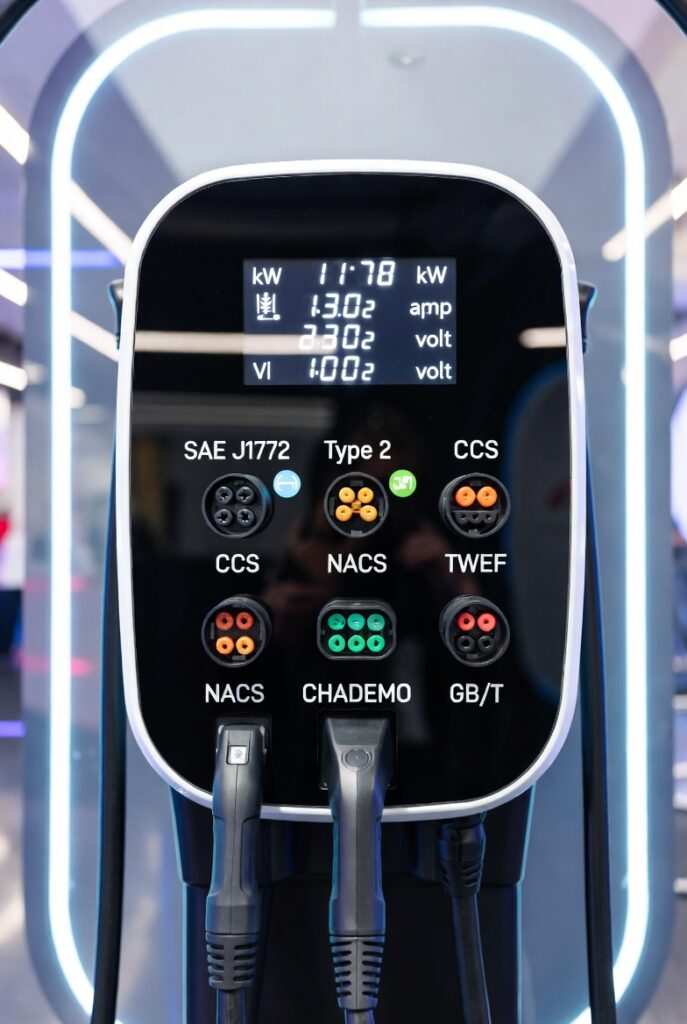
Indian EVs support three main charging types:
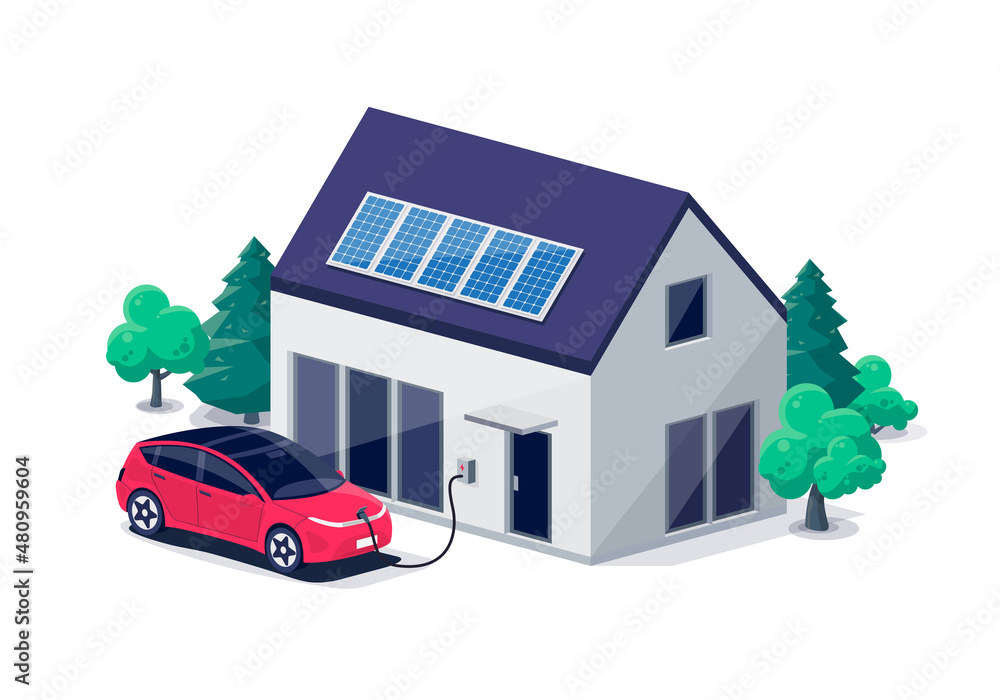
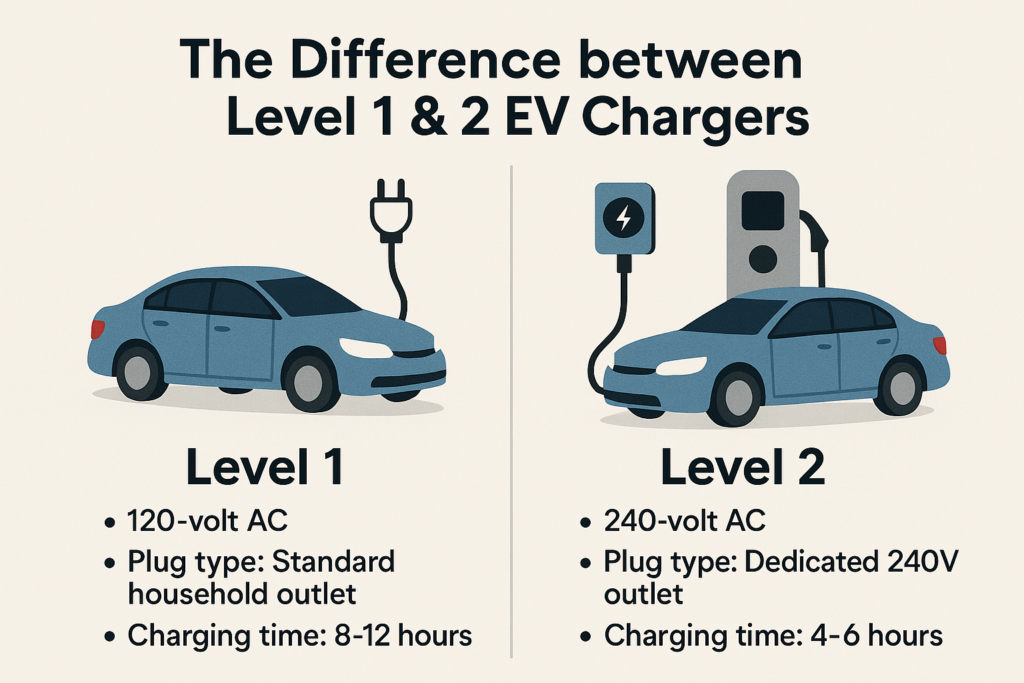
- Level 1 (Standard 15A plug / 3.3 kW AC): Free with most EVs. Slow but perfect for overnight home use.
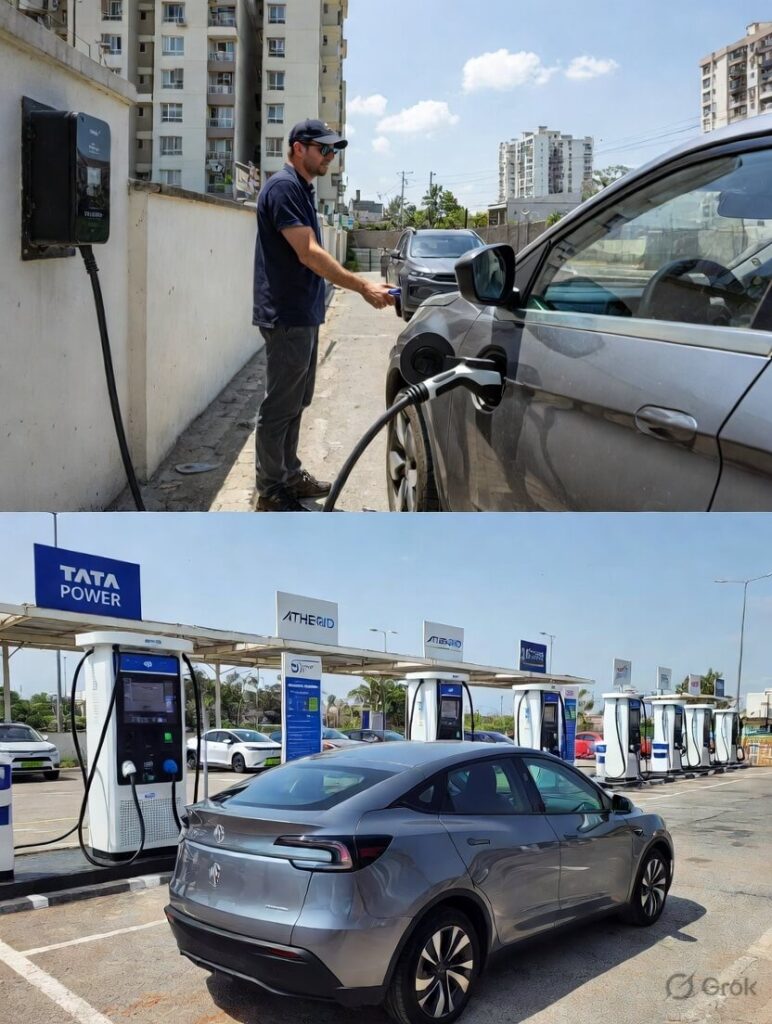
- Level 2 (7.4 kW or 11-22 kW Wallbox AC): Best for home or office. Common in new apartments and societies.
- DC Fast Charging (30-150+ kW): Public networks like Tata Power, Ather Grid, Ola Hypercharger, or Zeon. Ideal for 10-80% top-ups on highways.
Most Indian EVs have onboard chargers limited to 7-11 kW AC and 50-120 kW DC. Premium models like Mahindra BE 6 support higher rates.
The EV Charging Time Formula: How Our Charger Speed Calculator Works
The basic charger speed calculator formula is simple yet powerful. Here’s the exact math used by experts and government tools like e-AMRIT:
Charging Time (hours) = \frac{\text{Battery Capacity (kWh)}}{\text{Charger Power (kW)} \times \text{Efficiency}}
- Efficiency is typically 85-92% (use 90% for real-world India conditions — heat, cable losses, etc.).
- For partial charges (e.g., 20% to 80%): Multiply by the % needed.
Example Calculation (display mode):
[
t = \frac{E \times (SOC_2 – SOC_1)}{P \times \eta}
]
Where:
- ( t ) = time in hours
- ( E ) = battery capacity in kWh
- ( SOC ) = state of charge (%)
- ( P ) = charger power in kW
- ( \eta ) = efficiency (0.90)
Pro Tip: DC fast charging tapers after 80%, so real-world 0-100% takes longer than this formula suggests. Always add 20-30% buffer in Indian summers.
Step-by-Step: Use This Charger Speed Calculator for Your EV
- Find your EV’s battery capacity (check your app, manual, or our table below).
- Choose charger type (3.3 kW home? 7.4 kW wallbox? 50 kW DC?).
- Apply the formula above or use our ready examples.
- Adjust for India realities: Reduce speed by 10-15% in 40°C+ heat.
Want a ready reckoner? Plug your numbers into the formula and compare chargers on our website!
Charging Time Examples for Popular EVs in India (2026 Specs)
Here are real-world calculations using 2026 manufacturer data for top-selling models. All times are approximate 0-100% unless noted (real efficiency ~90%).
Tata Nexon EV (45 kWh Long Range – Most Searched “How Long to Charge Tata Nexon EV”)
- 3.3 kW home charger: ~15 hours
- 7.4 kW wallbox (most popular home upgrade): ~6.8 hours
- 50 kW DC fast charger: 54 minutes (10-80%)
- 100 kW DC: ~35 minutes (10-80%)
Tata Punch EV (35 kWh – Budget Favourite)
- 3.3 kW: ~11.5 hours
- 7.4 kW: ~5.3 hours
- 50 kW DC: ~56 minutes (10-80%)
MG Windsor EV (38 kWh base / 52.9 kWh long range)
- 7.4 kW AC: 7-9.5 hours (depending on variant)
- 50 kW DC: ~50-65 minutes (10-80%)
MG Comet EV (17.3 kWh – City Commuter)
- 3.3 kW home: ~6-7 hours
- 7.4 kW: ~3 hours (AC only — no fast DC on base)
Mahindra BE 6 (79 kWh – Long-Range SUV)
- 7.4 kW: ~12 hours
- 100+ kW DC: ~30-40 minutes (10-80%)
Electric Scooters (Huge in India – “How Long to Charge Ola S1 Pro or Ather 450X”)
- Ola S1 Pro (4-4.8 kWh): 6 hours home (3.3 kW), 50 km in 12-15 mins with Hypercharger
- Ather 450X (3.7 kWh): 4.5 hours home, 10 mins DC for 50 km range
- Bajaj Chetak (2.5-3 kWh): 2.5-4 hours home
Want exact for your model? Search “how long to charge [your EV] with 7kW charger India” or drop your specs in comments — we’ll update!
Factors Affecting Charging Speed in India (Real-World Adjustments)
- Temperature: Above 35°C (common in most states), speed drops 10-20%. Below 10°C (rare but in North), even more.
- Battery State: Charging 20-80% is fastest. Avoid 0-100% daily on DC.
- Onboard Charger Limit: Your EV caps the speed (e.g., Tata Nexon max ~11 kW AC).
- Voltage Fluctuations: Common in India — use a good stabiliser for home setups.
- Cable & Connector: Use original or BIS-certified for full speed.
Home EV Charger vs Public Fast Charging in India: Cost & Time Comparison
Home (7.4 kW wallbox): ₹25,000-45,000 installation. Full charge costs ₹250-400 (at ₹8/unit). Overnight = zero wait.
Public DC (50-120 kW): ₹15-25 per kWh. 30-60 mins but ₹800+ for full charge. Perfect for highways.
Recommendation: Install a 7.4 kW or 11 kW wallbox at home for daily use + use public for long trips. Compare top chargers on our site (Tata Power, ABB, Delta, etc.).
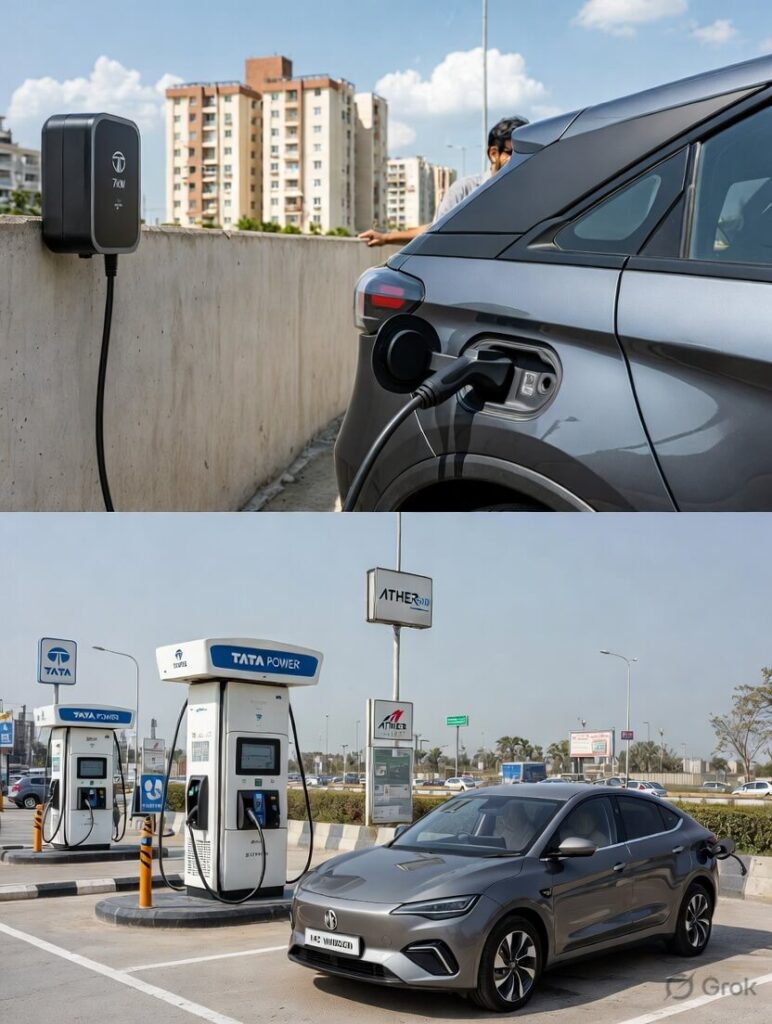
Best EV Chargers for Faster Charging in India 2026
Looking to upgrade? Check our comparison:
- Best home: 7.4 kW or 11 kW smart wallboxes (WiFi + app control)
- Best value DC: 60-120 kW stations from Tata Power or Ola Hypercharger network
- For apartments: Portable 3.3 kW or shared 22 kW AC points
Search our site for “best 7kW EV charger India 2026” or “Tata Nexon EV compatible chargers”.
FAQs: Charger Speed Calculator India Edition
Q1: How accurate is the EV charging time formula?
Very accurate for AC home charging (±15 mins). DC varies due to tapering.
Q2: Can I use a 15A socket as a charger speed calculator baseline?
Yes — it’s effectively 3.3 kW. Safe for most EVs but slow.
Q3: Does charging speed differ for electric scooters vs cars in India?
Yes — scooters (2-5 kWh) charge 3-6x faster. Ola and Ather models hit 80% in under 1 hour at home.
Q4: What’s the fastest way to charge my EV in Bengaluru/Delhi/Mumbai?
DC fast chargers (Ola Hypercharger or Ather Grid). 10-80% in 30-60 mins.
Q5: How much does it cost to charge vs petrol in India 2026?
EV: ₹1.5-2.5/km. Petrol: ₹8-10/km. Save ₹1.5 lakh+ yearly!
Ready to calculate for your specific EV? Use the formula, check our interactive charger comparison tool, or comment your model below.
Drive electric, charge smart — and never worry about “how long to charge my EV in India” again!
Share this guide with fellow EV owners and subscribe for monthly updates on fastest chargers, new models, and real-user reviews.
Last updated: March 2026. Specs based on latest manufacturer data — always verify with your dealer for exact variant.