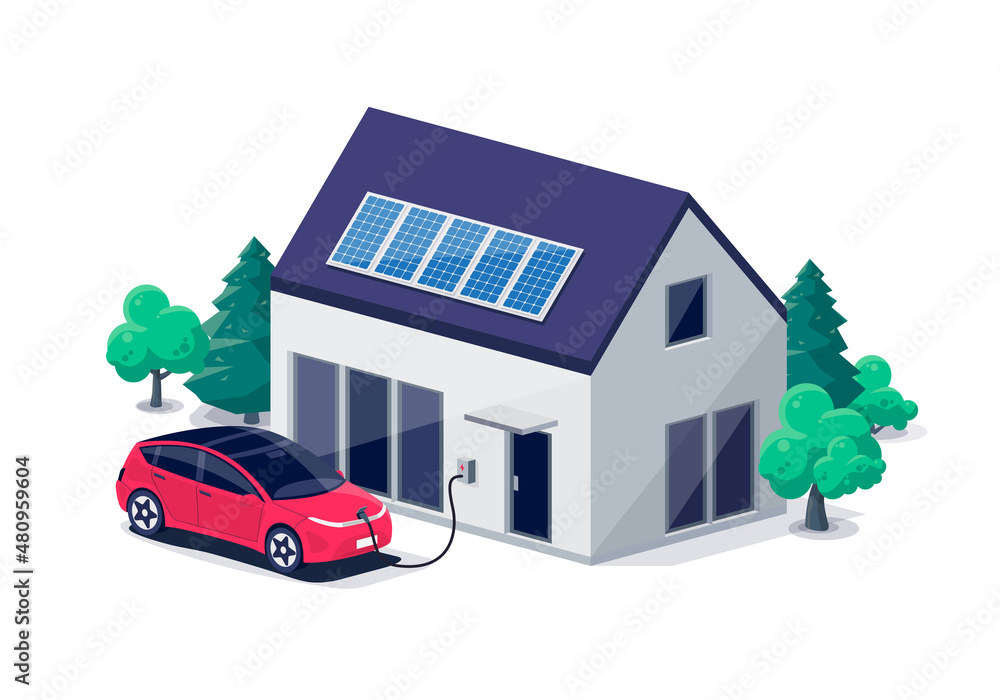
In the rapidly growing electric vehicle (EV) market in India, professional EV charger installation services are essential for ensuring safety, efficiency, and compliance. Whether you’re setting up a home EV charging station in Bangalore or installing commercial EV chargers in Delhi, understanding what electricians look for in different chargers can help you make informed decisions. This guide explores the key factors professional electricians evaluate during EV charger setup, including electrical requirements, safety checks, and compatibility for various charger types. If you’re searching for “EV charger installation cost in India” or “best electrician for home EV charger installation,” this article will provide valuable insights to optimize your setup for long-term performance.
Why Professional Installation Matters for EV Chargers in India
DIY EV charger installation might seem tempting, but it often leads to safety hazards, electrical overloads, and non-compliance with Indian regulations. Certified electricians specializing in EV infrastructure ensure your setup adheres to standards like IS 17017 from the Bureau of Indian Standards (BIS) and Automotive Research Association of India (ARAI) certifications. Professional installation not only prevents risks like electrical fires but also maximizes charging efficiency, especially in India’s diverse climates and power grids.
Key benefits include:
- Thorough site assessments to match charger type with your power supply.
- Compliance with local electricity board approvals, such as those from BESCOM in Karnataka or Tata Power in Mumbai.
- Warranty preservation for your EV and charger equipment.
For apartment complexes or housing societies, “professional EV charger installation for apartments in India” often involves additional steps like obtaining permissions from resident welfare associations (RWAs).
Understanding Different Types of EV Chargers Available in India
Before diving into what electricians assess, let’s break down the main EV charger types commonly used in India. This knowledge is crucial when querying “types of EV chargers for home use in India.”
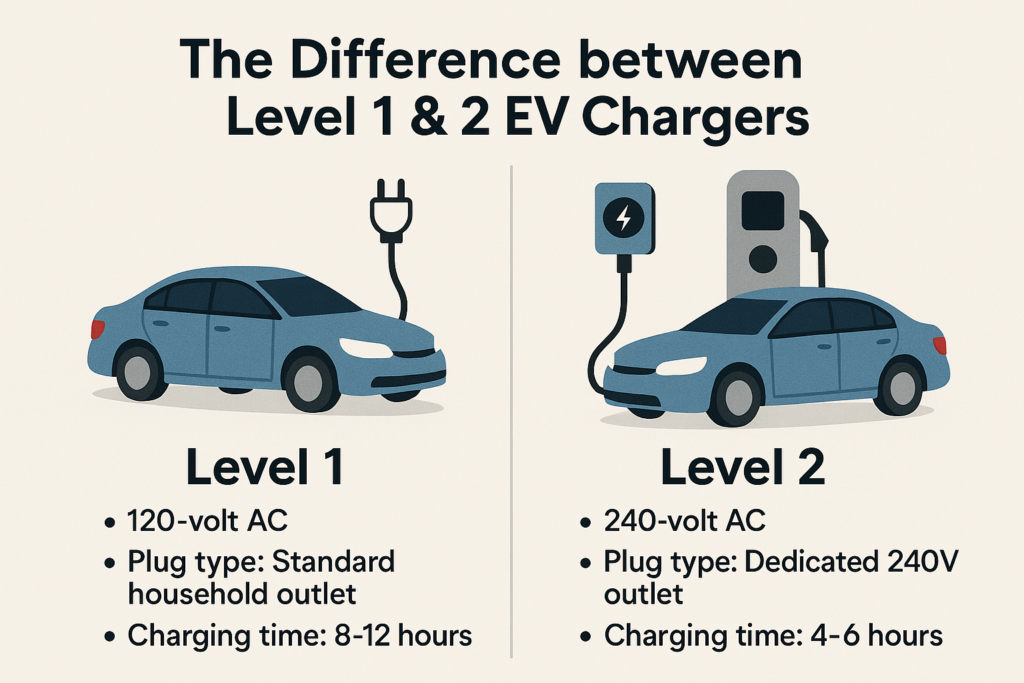
- Level 1 Chargers (Slow AC Chargers): Basic plug-in units using standard 220V household sockets. Ideal for overnight charging of small EVs like e-scooters. Power output: 2-3 kW. Common in homes with limited electrical upgrades.
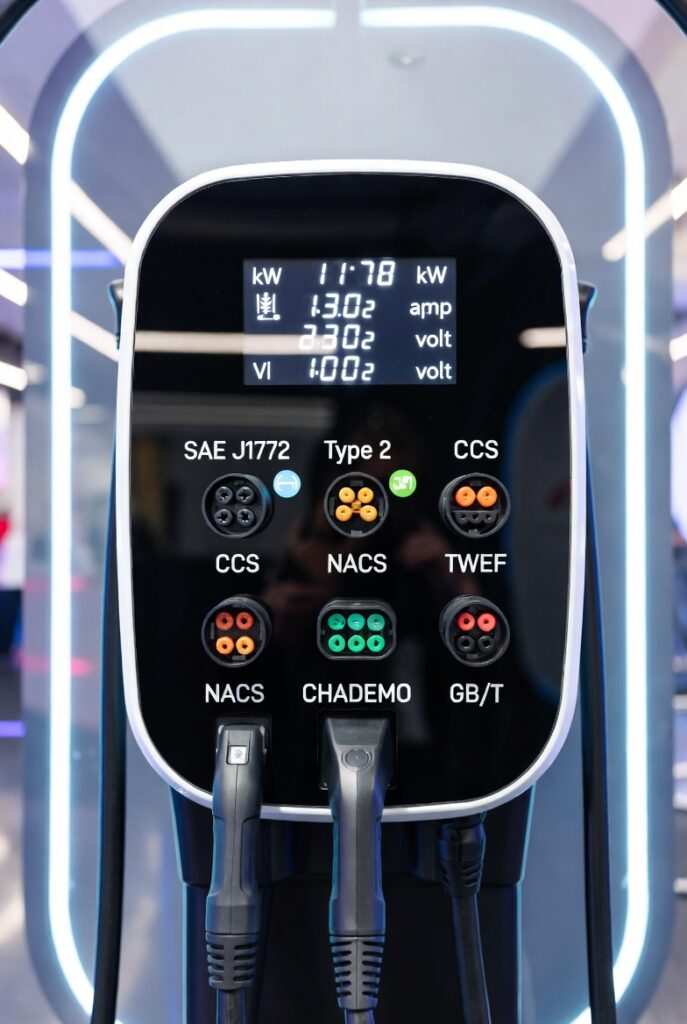
- Level 2 Chargers (Fast AC Chargers): Require dedicated circuits and offer faster charging. Standards include Bharat AC-001 (3.3 kW) and Type-2 (7-22 kW). Suited for residential and commercial spaces like offices or malls.
- DC Fast Chargers: High-speed options like Bharat DC-001 (15 kW) or CCS2 (50 kW+). Primarily for public stations, highways, or fleet operations, as they need robust three-phase power.
Electricians tailor their inspections based on these types, focusing on your specific needs, such as “Level 2 EV charger installation requirements for Indian homes.”
Key Factors Electricians Consider During EV Charger Installation
Professional electricians follow a structured checklist for EV charger setup in India. This ensures the installation is safe, scalable, and cost-effective. Here’s what they typically evaluate:
1. Site Inspection and Location Suitability
Electricians start with a detailed site survey. For “EV charging station installation in apartments,” they check:
- Proximity to the electrical panel (ideally within 15-20 meters to minimize wiring costs).
- Accessibility for vehicles and protection from weather elements.
- Ground clearance and mounting options—wall-mounted for homes or pedestal for commercial setups.
- Potential hazards like water sources or high-traffic areas.
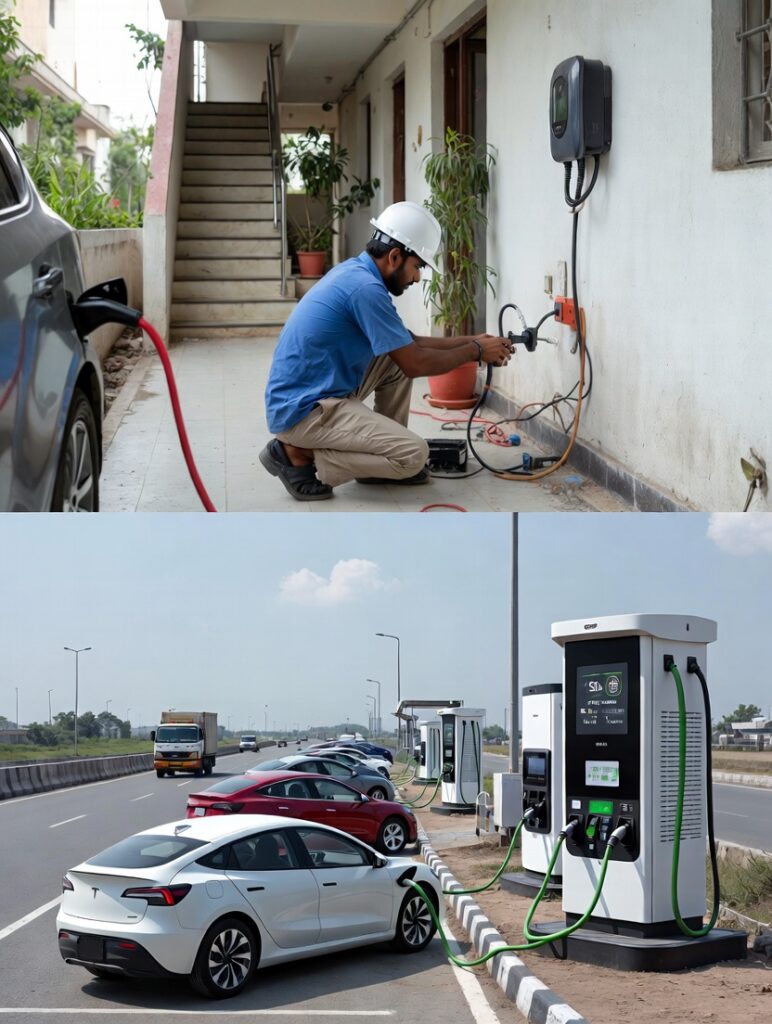
In urban areas like Bengaluru or Hyderabad, they also assess parking space constraints and ventilation for heat dissipation.
2. Electrical System Capacity and Upgrades
A major focus is your home or building’s electrical infrastructure. Electricians look for:
- Load Capacity: Ensuring the panel can handle the charger’s amperage without tripping breakers. For Level 2 chargers, a 32-40 amp circuit is often needed.
- Phase Type: Single-phase for basic setups vs. three-phase for high-power DC chargers.
- Wiring Quality: Use of copper wires with proper gauge (e.g., 6-10 mm² for Level 2) to prevent overheating.
- Meter Upgrades: In India, you may need a separate sub-meter for EV charging to avail tariffs like those from state discoms (e.g., ₹4-6 per unit in many states).
If upgrades are required, costs can range from ₹5,000-₹20,000, making “electrical upgrades for EV charger installation in India” a common search term.
3. Safety and Compliance Checks
Safety is paramount in “professional safety checks for EV charger wiring.” Electricians verify:
- Earthing and Grounding: Proper resistance (under 1 ohm) to prevent shocks, as per Indian Electricity Rules.
- Ingress Protection (IP Rating): IP54 or higher for outdoor units to withstand monsoon rains and dust.
- Certifications: BIS/ARAI-approved equipment to comply with MoRTH guidelines.
- Overload Protection: Installation of RCDs (Residual Current Devices) and surge protectors.
- Fire Safety: Non-flammable mounting surfaces and emergency shut-off switches.
For commercial installations, they ensure adherence to the Central Electricity Authority (CEA) norms.
4. Compatibility with Your EV and Future-Proofing
Electricians assess vehicle-specific needs, such as:
- Connector types (Type-2 for AC, CCS2 for DC).
- Charging speed alignment with your EV’s battery (e.g., Tata Nexon supports up to 7.2 kW AC).
- Smart features like app integration for scheduling, which requires stable Wi-Fi.
They also recommend scalable setups for “future-proof EV charger installation in Indian homes,” like provisions for multiple chargers.
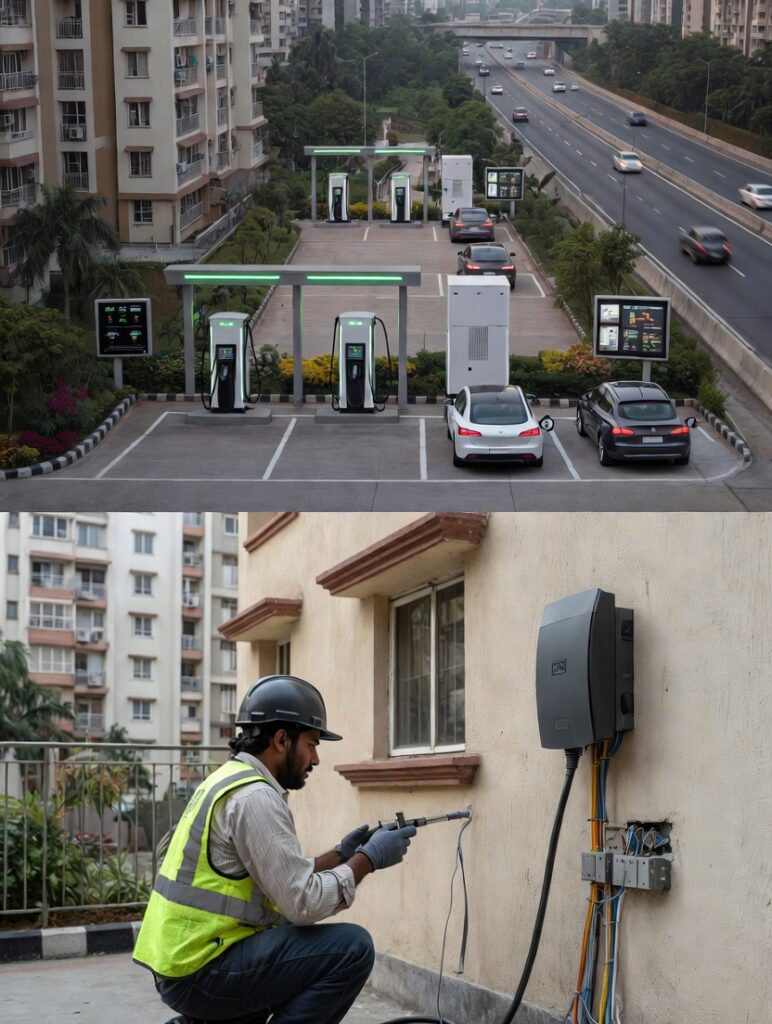
What Electricians Look for in Level 1 Chargers
Level 1 chargers are the simplest, but electricians still perform essential checks for “basic home EV charger installation in India”:
- Minimal electrical demands—plugs into standard 15-amp sockets.
- Focus on socket condition: No loose connections or outdated wiring.
- Portability: Ensure the unit is grounded and not overloaded with other appliances.
- Cost: Installation often under ₹2,000, ideal for budget-conscious users in smaller cities like Pune or Chennai.
Pros: Low-cost setup. Cons: Slow charging (8-12 hours for a full charge).
What Electricians Look for in Level 2 Chargers
For “Level 2 EV charger professional installation guide in India,” electricians prioritize efficiency:
- Dedicated circuit installation to avoid shared loads.
- Power output matching: 7 kW for homes, up to 22 kW for offices.
- Wall or floor mounting with cable management to prevent tripping hazards.
- Integration with smart meters for time-of-use billing.
In apartments, they coordinate with society management for shared power allocation. Installation costs: ₹10,000-₹30,000, including wiring.
What Electricians Look for in DC Fast Chargers
DC fast chargers demand the most rigorous inspections, especially for “commercial DC fast charger installation requirements in India”:
- High-voltage three-phase supply (minimum 415V).
- Robust infrastructure: Concrete foundations, cooling systems, and high-capacity transformers.
- Safety enclosures and signage as per OHS guidelines.
- Revenue metering for public use, compliant with state EV policies.
These are common on highways or in malls, with setup costs exceeding ₹1 lakh. Electricians often collaborate with CPOs (Charge Point Operators) like Tata Power or Bolt.Earth.
Special Considerations for Home vs. Commercial EV Charger Installations in India
- Home Setups: Focus on affordability and convenience. Electricians check for single-user safety, like child-proofing. Search for “home EV charging station setup cost in India” to estimate ₹5,000-₹50,000.
- Commercial Setups: Emphasize scalability and revenue. Assessments include traffic flow, multiple bays, and integration with payment apps. Compliance with GST and incentives under FAME-III scheme is key.
In regions like Gujarat or Maharashtra, incentives can reduce costs by 20-30%.
EV Charger Installation Costs and Regulations in India
Costs vary by type:
- Level 1: ₹1,000-₹5,000.
- Level 2: ₹15,000-₹50,000.
- DC Fast: ₹1-5 lakhs.
Regulations include obtaining NOCs from discoms and following the Ministry of Power’s guidelines for EV charging infrastructure. Always hire licensed electricians from platforms like UrbanClap or certified by EV manufacturers.
Conclusion: Choose the Right Professional for Your EV Charger Needs
Professional EV charger installation in India ensures a seamless transition to electric mobility. By understanding what electricians look for in different chargers—from electrical capacity to safety compliance—you can avoid common pitfalls and enjoy reliable charging. For personalized comparisons, visit our EV charger comparison tool or contact us for “recommended electricians for EV charger installation in your city.”
If you’re in Bengaluru or elsewhere in Karnataka, explore our guides on local incentives. Share your experiences in the comments below—what challenges did you face with your EV charger setup?
This article is for informational purposes. Always consult a certified professional for installations.