Are you an electric vehicle owner in India looking to set up a charging station at home without the hassle of hiring professionals? With the rising popularity of EVs like the Tata Nexon EV, MG ZS EV, and Hyundai Kona Electric, many enthusiasts are turning to DIY EV charger installation for convenience and cost savings. But not all chargers are created equal when it comes to ease of setup. In this comprehensive DIY installation guide for EV chargers in India, we’ll explore which chargers are the easiest EV chargers to self-install at home, focusing on plug-and-play options, safety tips, and India-specific regulations. Whether you’re in Mumbai, Delhi, Bengaluru, or any other city, this guide will help you choose the best home EV charger for DIY installation and get your setup running smoothly.
By the end of this article, you’ll know exactly how to perform a simple DIY EV charger setup in Indian homes, including long-tail considerations like compatibility with 220-240V Indian power outlets and adherence to BIS standards. Let’s dive in!
Understanding EV Charger Types: Which Ones Suit DIY Installation in India?
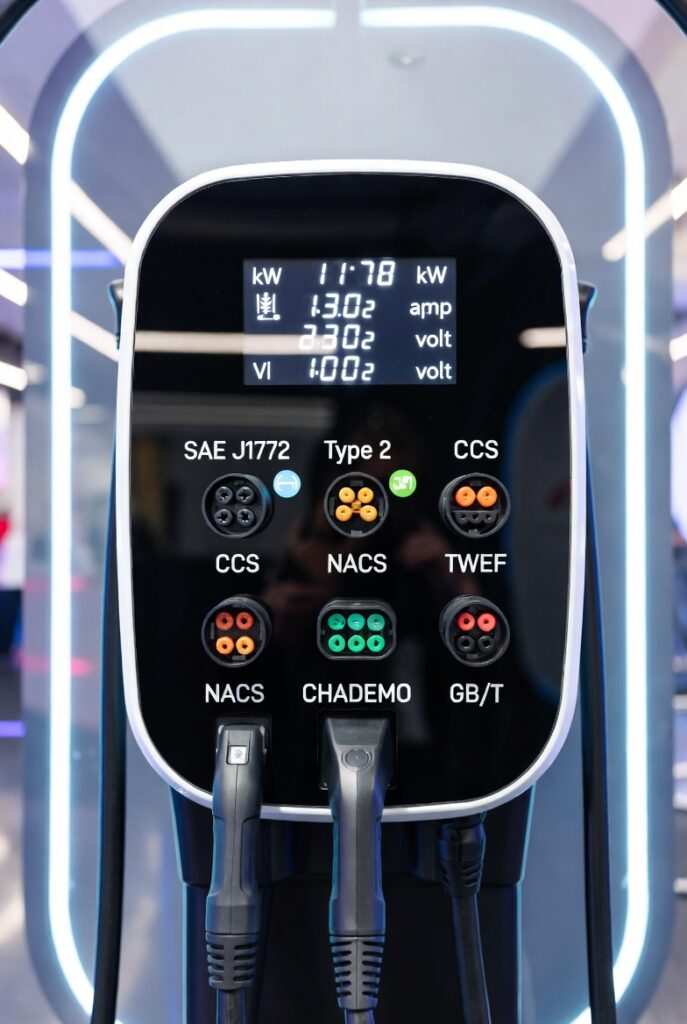
Before jumping into installation, it’s crucial to understand the types of EV chargers available in India. The Indian market follows standards like Bharat AC-001 and Bharat DC-001, alongside global ones like Type 2 (IEC 62196). Here’s a breakdown of charger levels and their DIY-friendliness:
Level 1 Chargers: The Easiest Option for Beginners
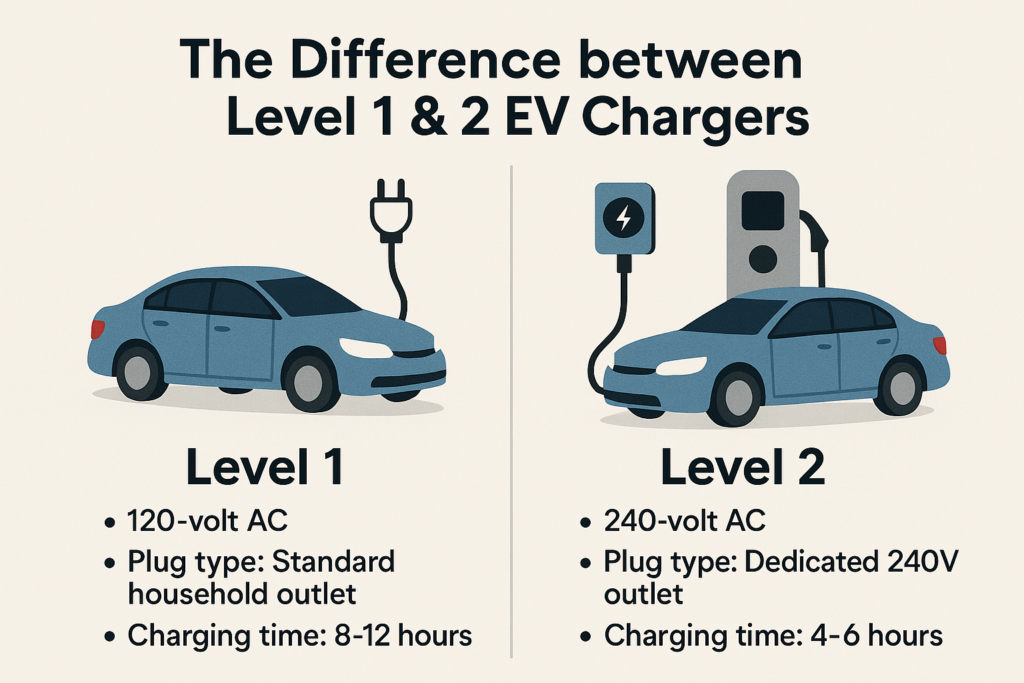
Level 1 chargers are essentially portable units that plug into a standard 15-amp household socket (like the ones used for your fridge or AC). These are hands-down the easiest EV chargers to self-install in India because they require zero wiring or electrical modifications.
- Why they’re DIY-friendly: No need for an electrician—just plug and play! Ideal for apartments or rented homes where permanent installations aren’t feasible.
- Popular models in India: The Tata Power EZ Charge Portable Charger or the Magenta ChargeGrid Portable EV Charger. These support slow charging (up to 3.3 kW) but are perfect for overnight top-ups.
- Pros for Indian users: Compatible with most Indian EVs, low cost (starting at ₹5,000-₹10,000), and no permit hassles from local electricity boards.
- Cons: Slower charging times (8-12 hours for a full charge on models like the Mahindra eVerito).
If you’re searching for the best portable EV charger for DIY installation in India, Level 1 is your go-to for hassle-free setup.
Level 2 Chargers: Moderate DIY Potential with Some Prep
Level 2 chargers offer faster charging (7-22 kW) but typically require a dedicated 32-amp circuit and a wall-mounted setup. While not as straightforward as Level 1, some models are designed for semi-DIY EV charger installation at home in India.
- Ease of self-install: Models with pre-wired plugs (like NEMA 14-50 equivalents adapted for India) can be installed if you have a compatible outlet. However, if your home lacks a high-amp socket, you’ll need basic electrical knowledge or professional help to avoid risks.
- Recommended models: The Wallbox Pulsar Plus (Type 2) or the EVIQ Smart Charger. These come with user-friendly apps for monitoring and are BIS-certified for Indian use.
- India-specific tips: Ensure your home’s electrical panel can handle the load—common in urban areas like Chennai or Hyderabad, but rural setups might need upgrades.
- Pros: Faster charging (3-6 hours for a full battery), smart features like scheduling via apps.
- Cons: May require RCD (Residual Current Device) installation for safety, pushing it beyond pure DIY for novices.
For those wondering how to install a Level 2 EV charger yourself in India, start with models that include detailed manuals and minimal tools required.
DC Fast Chargers: Not Recommended for DIY
DC fast chargers (50 kW+) are commercial-grade and unsuitable for home DIY. They demand high-voltage wiring, permits from DISCOMs (like BESCOM in Karnataka), and professional certification. Skip these if you’re aiming for the easiest home EV charging solutions for self-installation in India.
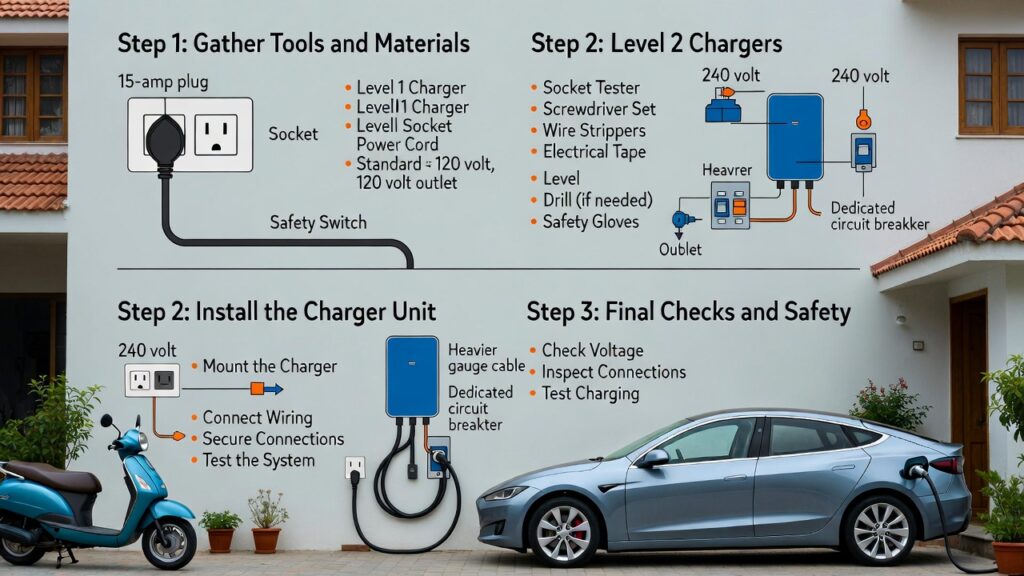
Step-by-Step DIY Installation Guide for the Easiest EV Chargers in India
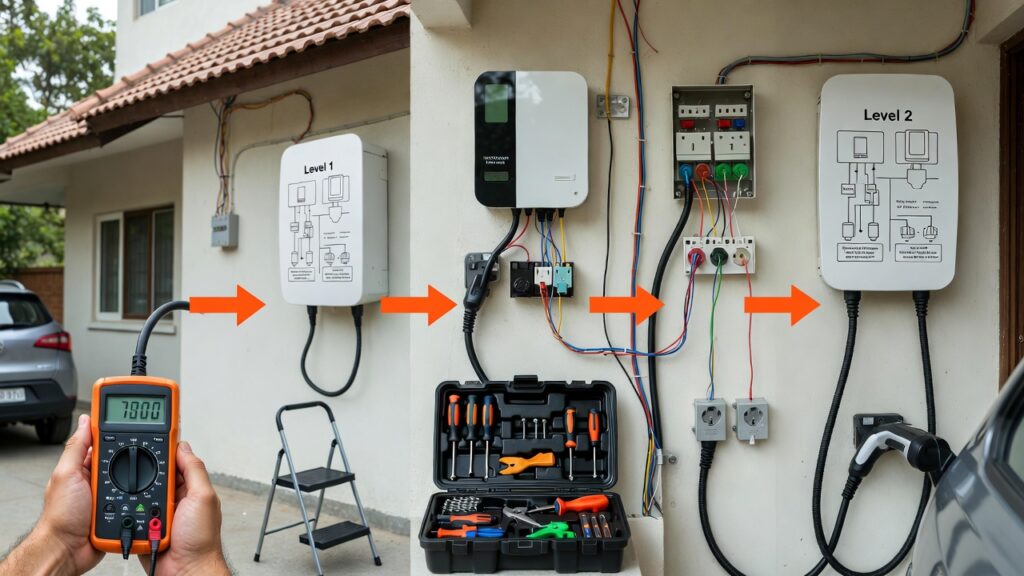
Ready to get hands-on? Here’s a detailed DIY EV charger installation tutorial for beginners in India, focusing on Level 1 and simple Level 2 options. Always prioritize safety—consult an electrician if unsure, and follow ARAI (Automotive Research Association of India) guidelines.
Step 1: Assess Your Home Setup
- Check your electrical outlet: Standard Indian 3-pin plugs (IS 1293) for Level 1; ensure grounding is proper to prevent shocks.
- Measure power capacity: Use a multimeter to confirm 220-240V supply. For Level 2, verify if your meter can handle extra load without tripping.
- Long-tail tip: If you’re in a high-rise in Pune or Ahmedabad, confirm society permissions for installing EV charger in apartment parking India.
Step 2: Choose the Right Charger
Opt for plug-and-play EV chargers easy to install at home in India. Brands like Ather Energy’s portable units or Delta Electronics’ home chargers are user favorites. Compare specs on sites like our EV charging comparison tool to find the most affordable DIY EV charger options in India.
Step 3: Unbox and Prepare
- Tools needed: Screwdriver, wall anchors (for mounted models), and cable ties.
- Read the manual: Indian models often include Hindi/English instructions for simple self-install EV charging stations in India.
Step 4: Install the Charger
- For Level 1: Plug into a dedicated socket away from water sources. Secure the cable to avoid tripping hazards.
- For Level 2: Mount the unit on a wall (drill holes if needed), connect to a 32-amp outlet, and test with your EV’s app.
- Pro tip: Install near your parking spot for convenience—ideal for garage EV charger DIY installation in Indian homes.
Step 5: Test and Troubleshoot
- Plug in your EV (e.g., BYD e6 or Kia EV6) and monitor for errors.
- Common issues: Overheating—ensure good ventilation; or app connectivity—use Wi-Fi extenders in larger Indian villas.
This step-by-step guide to DIY install EV charger without professional help in India should take 30-60 minutes for Level 1 setups.
Safety and Legal Considerations for DIY EV Charger Installation in India
Safety first! Improper installation can lead to fires or electrical hazards. Always use BIS-certified chargers and install an MCB (Miniature Circuit Breaker) for protection.
- Legal aspects: No nationwide permit is required for home chargers under 7 kW, but check state rules—e.g., Tamil Nadu’s TNEB encourages residential EV charger self-installation in India with subsidies.
- Insurance: Inform your home insurer about the setup to avoid claim issues.
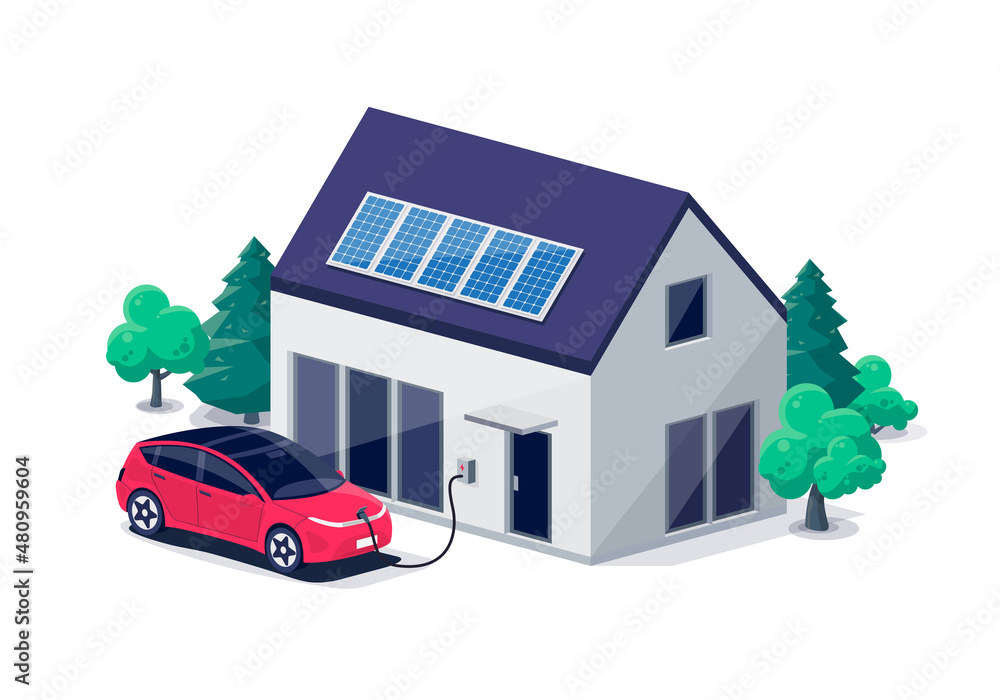
- Eco-tip: Pair with solar panels for sustainable DIY EV charging solutions in India, reducing your carbon footprint.
If you’re concerned about safety tips for self-installing EV chargers at home in India, remember: Never tamper with wiring if unqualified—better safe than sorry.
Comparison Table: Easiest EV Chargers for DIY Installation in India
To make your decision easier, here’s a quick comparison of top models:
| Charger Model | Type | Ease of DIY Install (1-10) | Charging Speed | Price Range (INR) | Best For |
|---|---|---|---|---|---|
| Tata Power EZ Charge Portable | Level 1 | 10 (Plug-and-Play) | 2-3 kW | 5,000-8,000 | Beginners in Apartments |
| Magenta ChargeGrid Portable | Level 1 | 9 | 3.3 kW | 6,000-10,000 | Daily Commuters in Cities |
| Wallbox Pulsar Plus | Level 2 | 7 (Some Wiring) | 7-22 kW | 40,000-60,000 | Homeowners with Garages |
| EVIQ Smart Charger | Level 2 | 8 | 7 kW | 30,000-50,000 | Tech-Savvy Users |
| Ather Dot | Level 1/2 Hybrid | 8 | Up to 7 kW | 20,000-40,000 | Ather Scooter Owners |
This table highlights the top easiest EV chargers for self-installation in India 2026, based on user reviews and compatibility.
Conclusion: Get Charged Up with DIY EV Solutions in India
Choosing the easiest EV chargers to self-install at home in India can save you time and money while supporting the country’s green mobility push. Level 1 portable chargers like Tata’s EZ Charge win for sheer simplicity, while Level 2 options offer speed for dedicated users. Remember, if DIY feels overwhelming, our website’s EV charging comparison tool can connect you with certified installers.
Ready to power up? Share your DIY EV charger installation experiences in India in the comments below, or explore our other guides like “Best EV Chargers Under 10,000 in India.” Drive electric, stay charged!
Disclaimer: Always consult local authorities and professionals for electrical work. This guide is for informational purposes only.