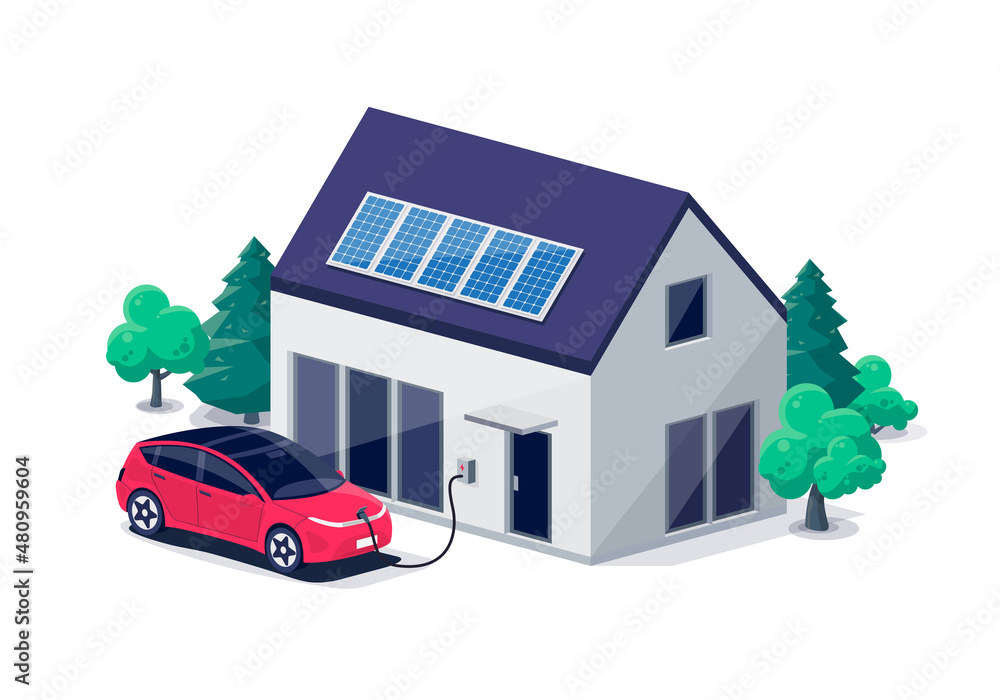
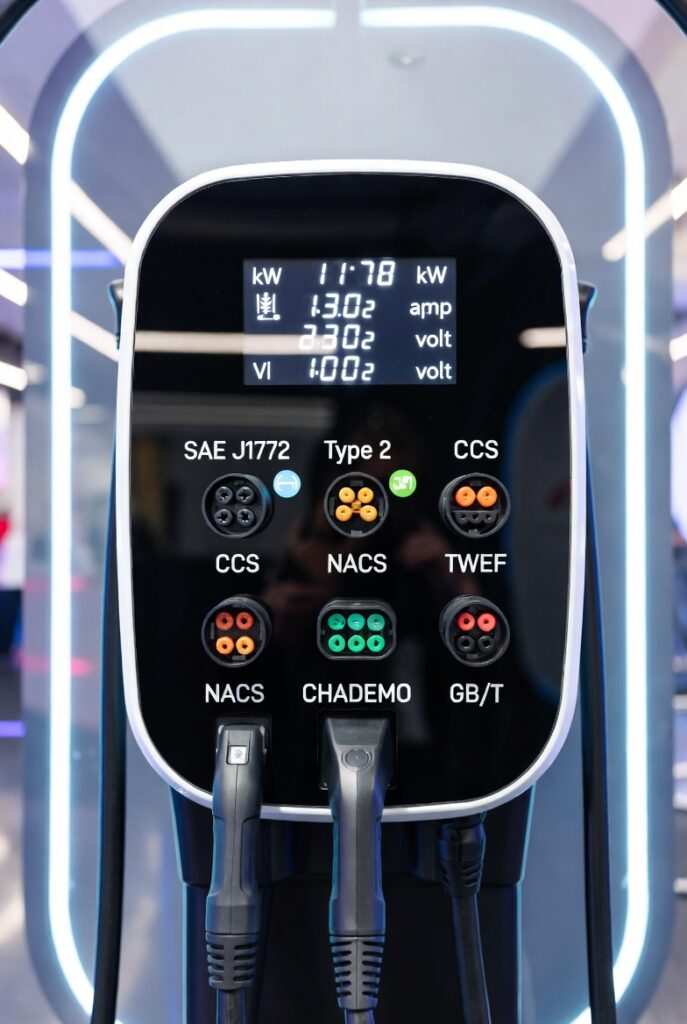
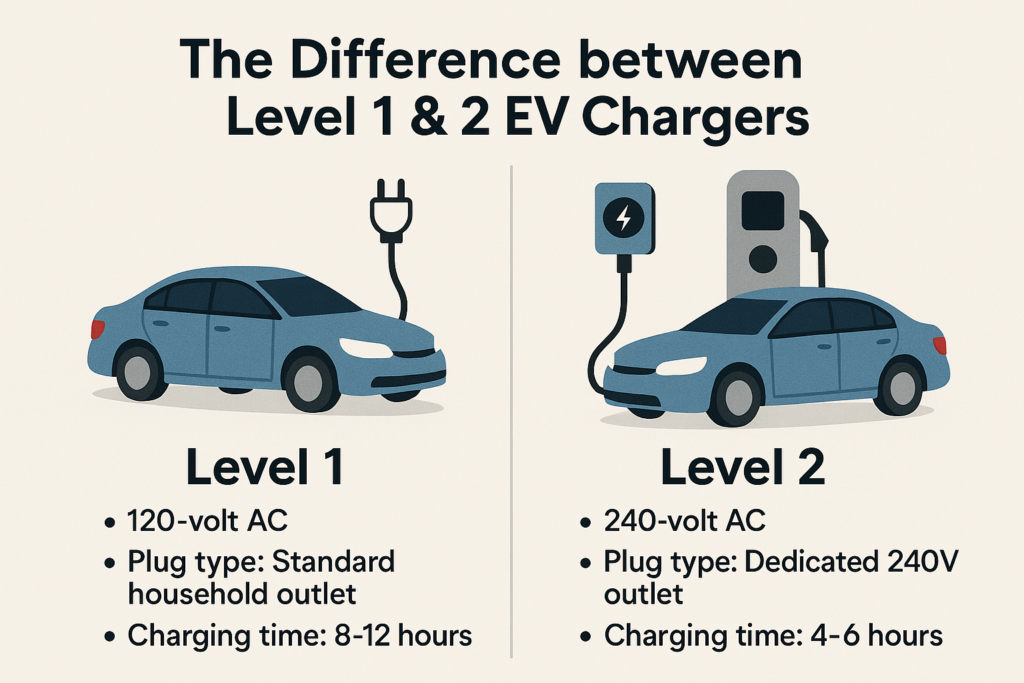
In the growing world of electric vehicles (EVs) in India, choosing the right home charger is key to efficient, cost-effective charging. With models like Tesla Model 3, Model Y, and other EVs gaining popularity in cities like Bengaluru, the Tesla Wall Connector and ChargePoint Home Flex stand out as top Level 2 home chargers. This detailed comparison covers features, costs, installation, compatibility, and more to help you decide the best EV home charger for your needs.
Whether you’re a Tesla owner or have a non-Tesla EV (like Tata Nexon or MG ZS), this showdown highlights pros, cons, and real-world performance in 2026.
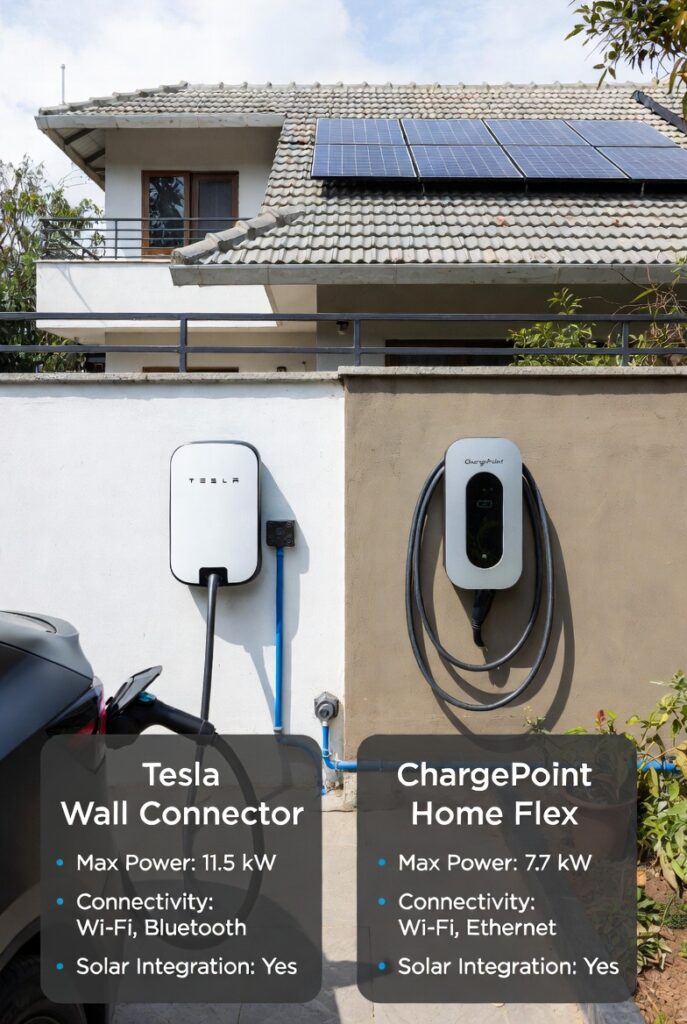
Image: Installed Tesla Wall Connector at home garage. (Alt text: Tesla Wall Connector home installation EV charger India 2026)
What is the Tesla Wall Connector?
The Tesla Wall Connector (Gen 3 or later) is a sleek, WiFi-enabled Level 2 charger designed primarily for Tesla vehicles but compatible with J1772 adapters for others. It delivers up to 48 amps (11.5 kW on single-phase in India), adding up to 70 km of range per hour.
Key Features:
- Power sharing for multiple units
- App integration with Tesla ecosystem (scheduling, monitoring)
- 7.3m cable length
- Indoor/outdoor rated (IP55)
- Over-the-air updates
Ideal for Tesla owners seeking seamless integration and fast charging.
What is the ChargePoint Home Flex?
The ChargePoint Home Flex is a versatile Level 2 charger with adjustable amperage (16–50 amps, up to 12 kW), making it flexible for various home electrical setups. It’s UL-listed, WiFi-connected, and works with all J1772-compatible EVs, including Teslas via adapter.
Key Features:
- Voice control with Alexa
- App for scheduling, energy tracking, and public ChargePoint network access
- 7m cable
- NEMA 6-50 or hardwired options
- Energy Star certified for efficiency
Perfect for multi-EV households or those wanting broad compatibility.
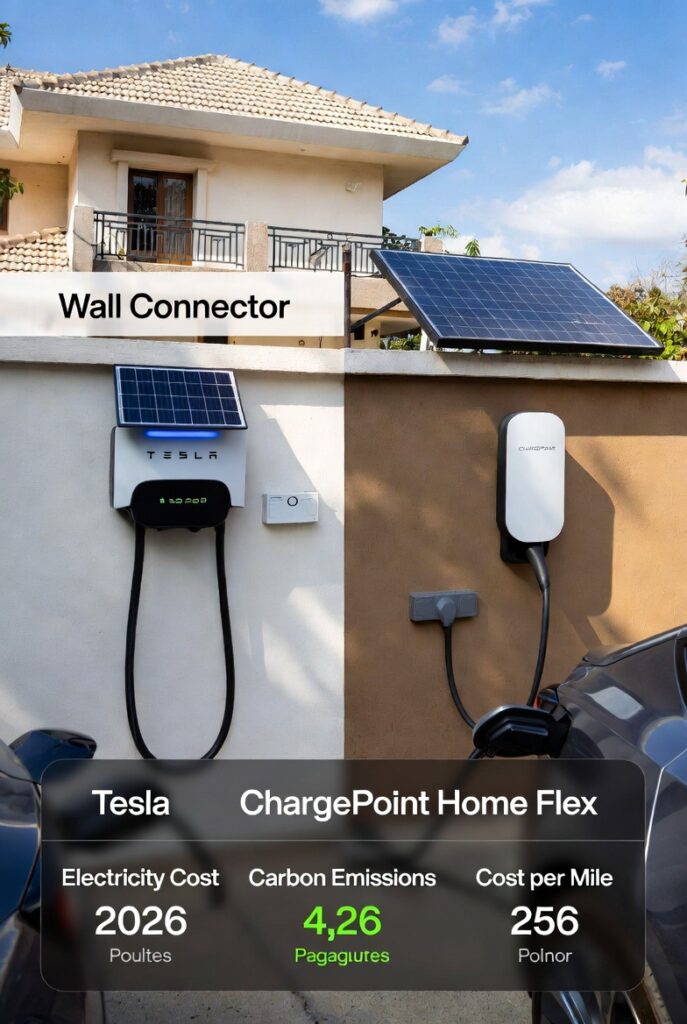
Image: ChargePoint Home Flex wall-mounted EV charger. (Alt text: ChargePoint Home Flex EV home charger comparison 2026)
Tesla Wall Connector vs ChargePoint Home Flex: Head-to-Head Comparison
| Feature | Tesla Wall Connector | ChargePoint Home Flex |
|---|---|---|
| Max Power/Amps | 11.5 kW / 48A | 12 kW / 50A |
| Charging Speed | Up to 70 km/hour (Tesla) | Up to 60 km/hour (adjustable) |
| Compatibility | Tesla native; others with adapter | All J1772 EVs; Tesla with adapter |
| Cable Length | 7.3m | 7m |
| Smart Features | Tesla app, OTA updates, power sharing | ChargePoint app, Alexa, energy reports |
| Installation | Hardwired only | Plug-in (NEMA) or hardwired |
| Warranty | 4 years | 3 years |
| Price (India 2026 est.) | ₹50,000–₹60,000 | ₹60,000–₹70,000 |
| Best For | Tesla ecosystem users | Versatile, multi-EV homes |
The Tesla edges in speed for its vehicles, while ChargePoint offers more flexibility.
Image: EV charger comparison infographic showing charging times. (Alt text: Tesla vs ChargePoint EV home charger comparison infographic 2026)
Pros and Cons: Breaking It Down
Tesla Wall Connector Pros
- Optimized for Tesla: Faster charging, seamless app integration.
- Cost-Effective: Lower price, no subscription fees.
- Durable Design: Sleek, weather-resistant.
- Power Sharing: Great for multiple Tesla households.
Tesla Wall Connector Cons
- Limited non-Tesla compatibility without adapter.
- Hardwired only – requires electrician.
- No voice control or advanced scheduling outside Tesla app.
ChargePoint Home Flex Pros
- Universal Compatibility: Works with any EV.
- Adjustable Power: Matches your home’s electrical capacity.
- Smart Home Integration: Alexa, detailed energy insights.
- Public Network Access: Earn credits from ChargePoint stations.
ChargePoint Home Flex Cons
- Slightly higher cost.
- Shorter cable.
- App requires account; potential for future fees.
For Indian users in Bengaluru with variable tariffs, ChargePoint’s scheduling can save more on BESCOM bills.
Cost Analysis: Upfront and Long-Term Savings
- Tesla Wall Connector: ₹50,000–₹60,000 + installation (₹10,000–₹20,000). No ongoing costs.
- ChargePoint Home Flex: ₹60,000–₹70,000 + similar installation. Free app, but optional premium features.
Long-term: Both save vs public charging (₹10–₹20/kWh vs home ₹5–₹8/kWh). With solar, expect 20–30% more savings. ROI in 2–3 years for daily drivers.
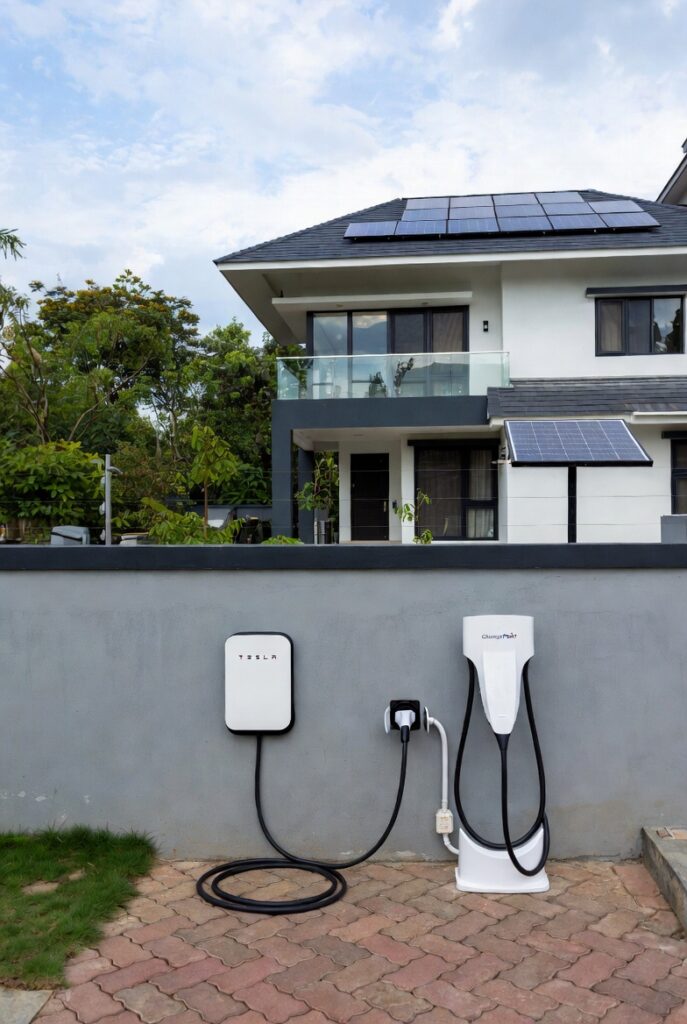
Image: Solar-integrated home EV charging with Tesla. (Alt text: solar EV charging home setup Tesla Wall Connector ChargePoint 2026)
Installation and Compatibility in India
Both require a certified electrician for safe setup on 240V circuits. In India, ensure compliance with ARAI standards.
- Tesla: Hardwired; integrates with Powerwall for solar/V2H.
- ChargePoint: Plug-in option easier for renters.
Compatible with most EVs; Tesla needs J1772-to-Tesla adapter (~₹5,000).
Image: EV charger installation diagram at home. (Alt text: EV charger installation process home India 2026)
User Reviews and Real-World Performance
From X and forums: Tesla users praise speed (4.8/5 on Tesla site), while ChargePoint scores 4.7/5 for app reliability. In hot Indian climates, both handle well with IP ratings.
Which Should You Choose in 2026?
Go for Tesla Wall Connector if you’re all-in on Tesla ecosystem. Choose ChargePoint Home Flex for flexibility across EVs. Both excel in home charging efficiency.
Explore more on Clean Energy Bazaar. What’s your pick? Comment below!
Tags: Tesla Wall Connector vs ChargePoint Home Flex, best home EV charger comparison, Tesla charger India, ChargePoint Flex review 2026, EV home charging guide