If you have been putting off installing a home EV charger, you may have missed a significant opportunity.
The federal Alternative Fuel Vehicle Refueling Property Credit, known as Section 30C, expired on June 30, 2026. This credit covered 30% of the cost of buying and installing a home EV charger, up to a maximum of $1,000. For anyone who completed an installation after that date, the federal tax credit is no longer available.
This guide on home charger installation 101: did you miss the June 30 federal tax credit deadline? provides the complete, honest analysis. It covers what the 30C credit actually was, how much you could have saved, what changed and why, and most importantly, what you can do now to reduce the cost of installing a home EV charger without the federal credit.
What Was the 30C Federal EV Charger Tax Credit?
The Credit That Made Home Charging More Affordable
The basics:
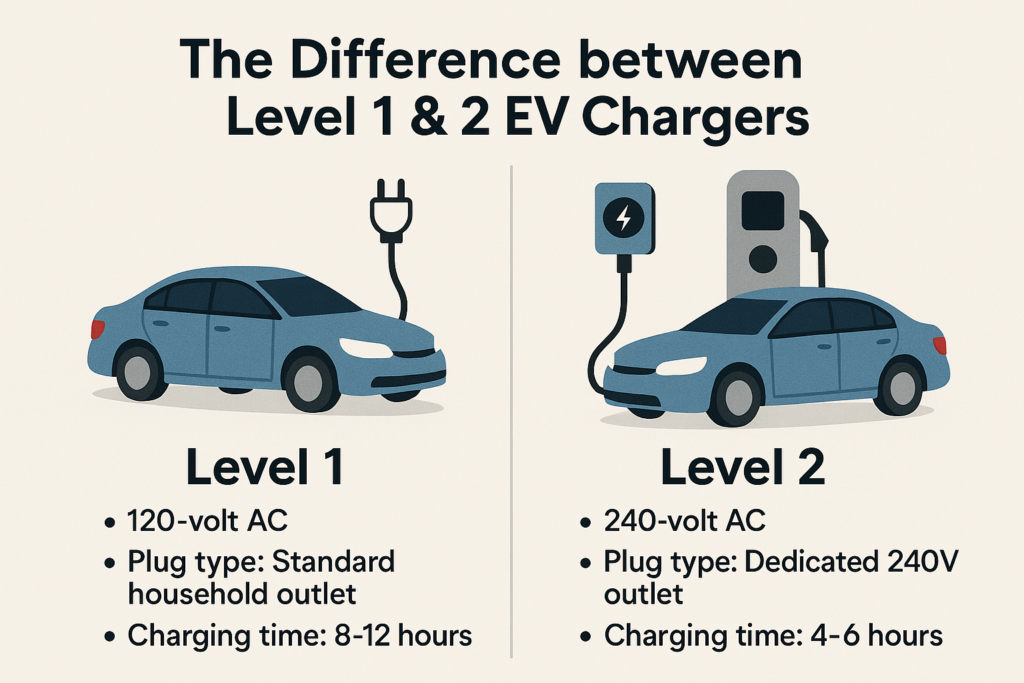
The 30C tax credit, officially called the Alternative Fuel Vehicle Refueling Property Credit, was a federal incentive for individuals and businesses to install EV charging equipment. For homeowners, the credit covered 30% of the total cost of purchasing and installing a qualifying Level 2 AC (240-volt) home charger, up to a maximum credit of $1,000.
What it covered:
The credit applied to the full cost of the charging station and installation, including:
- The charger hardware itself
- Electrical upgrades and wiring
- Building permit fees
- Labor costs for installation
The eligibility rules:
To qualify, the charger had to be placed in service by June 30, 2026. The installation also had to be in a qualifying census tract, as determined by the 30C Tax Credit Eligibility Locator tool from Argonne National Laboratory. Not every location qualified, which was a significant limitation that many homeowners were unaware of.
The One Big Beautiful Bill Act change:
The credit’s expiration was not an accident. The One Big Beautiful Bill Act, signed on July 4, 2025, contained several provisions on energy tax credits. The budget reconciliation bill eliminated the vehicle credits after September 30, 2025, and the charger credits after June 30, 2026. This was a deliberate policy choice to roll back federal support for electric vehicle adoption.
The Math: How Much Did You Lose?
The Real Cost of Missing the Deadline
The potential savings:
For a typical home EV charger installation, the numbers could have been significant. Consider a standard installation:
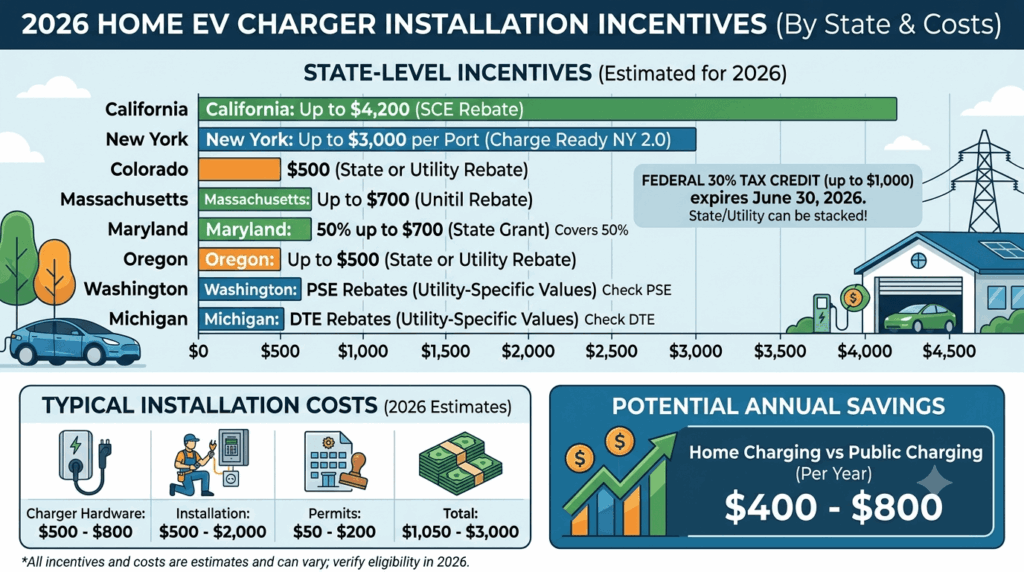
- Charger hardware: $500 to $800 for a quality Level 2 charger
- Installation and electrical work: $500 to $2,000 depending on panel capacity and wiring distance
- Permits: $50 to $200
A typical installation costing $1,500 to $2,500 would have qualified for a federal tax credit of $450 to $750. For more complex installations requiring panel upgrades, the savings could have reached the full $1,000 maximum.
The lost opportunity:
For the average homeowner who missed the deadline, the lost savings amount to approximately $500 to $1,000. While not a fortune, it is a meaningful sum that could have offset the upfront cost of going electric.
The bigger picture:
The expiration of the 30C credit is part of a broader federal withdrawal from EV support. The $7,500 federal EV purchase tax credit and the $4,000 used EV credit also expired in 2025. The message to consumers is clear: the federal government is no longer subsidizing the EV transition. State and local governments, along with utilities, have been left to fill the gap.
What to Do Now: Your Options After the Deadline
The Honest Assessment of What Remains
Option 1: Check if you already claimed the credit
If you completed your charger installation before June 30, 2026, you may still be able to claim the credit on your 2026 tax return. The credit is claimed using IRS Form 8911, and you will need to keep receipts and documentation of your installation costs.
If you installed a charger in 2025 or earlier, you can still claim the credit on your 2025 tax return (if you haven’t already). The credit was available for property placed in service through June 30, 2026, so any installation completed before that date is eligible.
Option 2: Look for state rebates and tax credits
Many states have stepped up to fill the gap left by the federal government. While the federal credit is gone, state-level incentives can still significantly reduce the cost of home charger installation.
Option 3: Check your local utility for rebates
Electric utilities across the country offer rebates for home charger installation. These can range from $100 to over $4,000 depending on the utility and the program.
Option 4: Consider time-of-use electricity rates
Even without installation rebates, many utilities offer special EV charging rates that significantly reduce the cost of charging overnight. These time-of-use rates can save hundreds of dollars per year compared to standard residential rates. The savings over the life of the vehicle can far exceed the upfront cost of the charger.
State-by-State Home Charger Incentives
What Is Still Available in 2026
California: Up to $4,200 from Southern California Edison
Southern California Edison’s Charge Ready Home Rebate offers up to $4,200 for installing a Level 2 EV charger. Pacific Gas and Electric also offers rebates for EV chargers with adjustable amperage.
New York: Up to $3,000 per port
New York’s EV Make-Ready program offers rebates of $3,000 per charging port for residential installations. Disadvantaged communities may receive an additional $1,000 per Level 2 EV charger. Some installations may qualify for up to 100% rebate coverage.
Colorado: $500 rebate
Colorado residential customers are eligible for a $500 rebate toward the installation of an at-home Level 2 charger. Income-qualified residents may receive additional support.
Massachusetts: Up to $700 from Unitil
Unitil offers a rebate of up to $700 for a Level 2 charger and any necessary electric upgrades.
Maryland: 50% of costs up to $700
Maryland’s Residential Electric Vehicle Supply Equipment Rebate Program offers 50% of eligible costs, with supporting documentation, up to a maximum of $700.
Oregon: Up to $500 from Lane Electric
Lane Electric offers a $500 cash rebate for a qualifying Level 2 charger. Northern Wasco County PUD offers $250.
Washington: PSE rebates
Puget Sound Energy offers rebates on Level 2 EV chargers purchased through their marketplace.
Michigan: DTE Energy rebates
DTE Energy offers a rebate for installing a Level 2 charger when you buy or lease an EV and enroll in an eligible electric rate.
Utility Incentives: The Hidden Savings
What Your Local Power Company Might Offer
Beyond state programs, many utilities offer their own EV charger incentives. These can include:
Charger installation rebates:
Many utilities offer direct rebates for purchasing and installing Level 2 home chargers. These can range from $100 to over $4,200 depending on the utility and the program. The best way to find out what is available is to check your utility’s website or call their customer service line.
Time-of-use electricity rates:
Many utilities offer special EV charging rates that significantly reduce the cost of charging overnight. These rates can save hundreds of dollars per year compared to standard residential rates. The savings over the life of the vehicle can far exceed the upfront cost of the charger.
Make-Ready programs:
Some utilities offer “make-ready” programs that cover the cost of electrical infrastructure upgrades needed for EV charging. These programs can cover panel upgrades, wiring, and other electrical work that would otherwise be expensive.
How to find your utility’s program:
- Go to your utility’s website and search for “EV charger rebate” or “electric vehicle incentives.”
- Check the Alternative Fuels Data Center’s database of state and utility incentives.
- Call your utility’s customer service line and ask about EV charging incentives.
The Honest Assessment: Should You Still Install a Home Charger?
The Case for Going Ahead Without the Federal Credit
The cost-benefit analysis:
Even without the federal tax credit, installing a home charger is usually a smart financial decision for EV owners. Consider the math:
- Public charging costs: $0.30 to $0.65 per kWh at public stations
- Home charging costs: $0.10 to $0.20 per kWh (depending on your electricity rate)
- Annual savings for 12,000 miles: $400 to $800 per year
Over five years, the savings can exceed $2,000 to $4,000, far more than the typical $1,500 to $2,500 cost of installation. Even without the federal credit, the payback period is typically 2 to 4 years.
The convenience factor:
Beyond the financial math, home charging offers convenience that public charging cannot match. No more sitting at charging stations for 30 to 60 minutes. No more worrying about whether the charger will be occupied or broken. Just plug in when you get home and wake up to a full battery every morning.
The charger credit is gone, but the need remains:
The federal credit was a nice bonus, but it was never the primary reason to install a home charger. The real value is the convenience, the time savings, and the long-term operating cost savings. The federal credit made the math slightly better, but the math was already good.
The verdict:
If you own an EV or are planning to buy one, installing a home charger is still a smart decision. The federal credit is gone, but state rebates, utility incentives, and the ongoing savings from home charging still make it worthwhile. Do not let the expiration of a $1,000 tax credit stop you from making a decision that could save you thousands of dollars over the life of your vehicle.
What This Means for Today’s EV Buyers
The Practical Implications
If you already installed a charger before June 30, 2026:
You can still claim the credit on your 2026 tax return. Keep your receipts and documentation. File IRS Form 8911 with your tax return.
If you are planning to install a charger now:
The federal credit is gone, but you still have options:
- Check your state for rebates and tax credits
- Check your utility for incentives and time-of-use rates
- Factor the full cost into your EV purchase decision
- Consider the long-term savings from home charging
If you are buying an EV and cannot install a home charger:
Public charging is more expensive than home charging. In some markets, public charging costs have risen to the point where the per-kilometre cost of an EV can match or exceed that of a fuel-efficient petrol car. If you cannot charge at home, do the math carefully before buying.
If you are in a state with strong incentives:
States like California, New York, Colorado, and Massachusetts offer substantial rebates that can cover a significant portion of your installation costs. In some cases, the state and utility incentives combined can exceed the value of the expired federal credit.
Internal Links: Further Reading on Clean Energy Bazaar
The home charger installation 101: did you miss the June 30 federal tax credit deadline? guide connects to the EV market and policy guides on cleanenergybazaar.com.
For the 2026 EV buyer’s guide covering state incentives that can apply to charger installation, our 2026 EV buyer’s guide: a state-by-state incentive checklist for the US guide covers the full incentive landscape. For the US EV sales slump guide covering the federal policy changes that eliminated the charger credit, our US EV sales slump 25% – policy uncertainty and the hybrid pivot guide covers the One Big Beautiful Bill Act changes. For the used EV market guide covering the broader EV market context, our used EV market heats up: are they the best investment after federal credits vanished? guide covers the market conditions that make home charging more valuable. For the EV vs. ICE cost guide covering the operating cost advantages, our EV vs. ICE: 5-year cost of ownership post-Middle-East oil price spikes guide covers the fuel savings that make home charging compelling.
Final Thoughts
Home charger installation 101: did you miss the June 30 federal tax credit deadline? The honest answer is that if you did not complete your installation before that date, you missed out on a tax credit worth up to $1,000.
The 30C federal EV charger tax credit expired on June 30, 2026. It covered 30% of the cost of buying and installing a home EV charger, up to a maximum of $1,000. The One Big Beautiful Bill Act eliminated the credit, part of a broader federal withdrawal from EV support.
But the expiration of the federal credit does not mean home charging is no longer worth it. State rebates and utility incentives can still significantly reduce the cost of installation. California offers up to $4,200. New York offers up to $3,000 per port. Colorado offers $500. Massachusetts offers up to $700. Maryland offers 50% of costs up to $700.
And even without any incentives, home charging still offers substantial savings over public charging. The annual savings from home charging can exceed $400 to $800 per year, meaning the payback period for a home charger is typically 2 to 4 years.
The honest verdict: the federal credit is gone, but home charging is still a smart investment. Check your state and utility for incentives. Factor the full cost into your EV purchase decision. And remember that the convenience of waking up to a full battery every morning is worth something too.