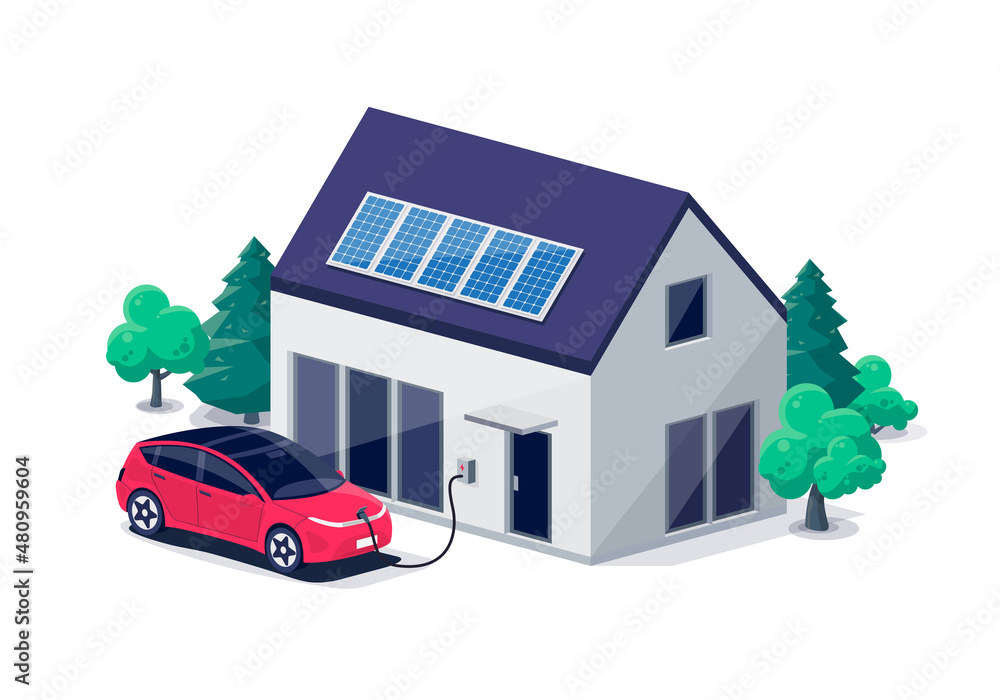
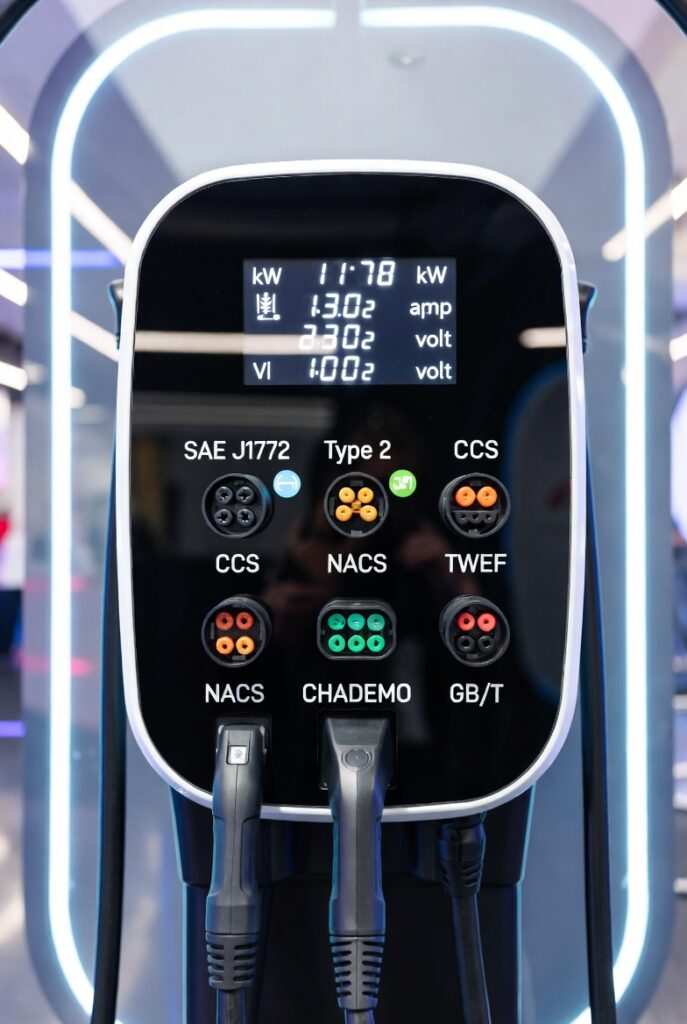
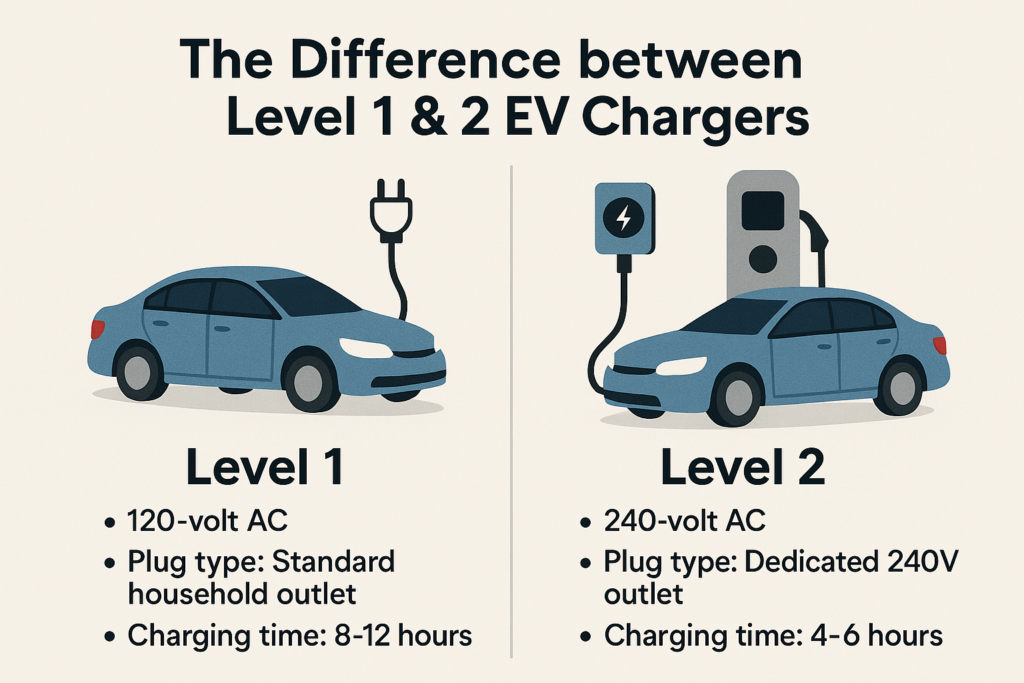
China’s new energy vehicle sales crossed a specific and historically significant threshold in 2025: annual NEV sales exceeding 12 million units, with the accumulated national EV and PHEV fleet surpassing 40 million vehicles. The trajectory toward 20 million annual units by 2027-2028 — a target that has moved from aspiration to reasonable projection given actual sales velocity — creates a question that is simultaneously technical, policy-relevant, and commercially important for every participant in the Chinese EV charging ecosystem this guide series has addressed.
Can China’s electricity grid actually handle the cumulative charging load of a 20-million-unit annual EV sales pace, layered onto an already substantial installed fleet, concentrated in the major eastern coastal cities that already operate at high grid utilisation rates?
This guide on target 20 million units can China’s grid handle the EV load in 2026 provides the complete, honest grid capacity analysis — the aggregate electricity demand that China’s current and projected EV fleet creates, how this demand distributes across China’s diverse regional grids, the specific infrastructure investments that State Grid and Southern Grid are making to accommodate EV load, the smart charging mechanisms that are the primary engineering solution to load management rather than simply building more infrastructure, and the honest assessment of where genuine grid stress exists versus where “can the grid handle it?” concerns are substantially overestimated.
The Aggregate EV Load — The Numbers That Actually Matter
From Vehicle Units to Electricity Consumption
The translation from EV fleet size to grid load requires specific assumptions about charging behaviour that the headline unit numbers don’t contain:
Annual electricity consumption per EV:
The electricity consumption of China’s EV fleet is not uniform — it spans from the Wuling Mini EV’s approximately 1,200 kWh/year for typical low-mileage urban use to the NIO ET7 Long Range at approximately 5,000-6,000 kWh/year for high-mileage owners. The fleet average, weighted by the actual composition of China’s EV fleet, is approximately:
Passenger EV average annual consumption: 2,800-3,500 kWh/year
Commercial EV average annual consumption (logistics vehicles, taxis): 15,000-45,000 kWh/year
The fleet composition that determines aggregate load:
China’s approximately 40 million+ installed EV fleet (accumulated through 2025) comprises approximately:
Passenger EVs: approximately 34-36 million vehicles
Commercial EVs (trucks, buses, logistics vehicles): approximately 4-6 million vehicles
The aggregate annual electricity consumption:
35 million passenger EVs × 3,100 kWh/year average = 108.5 TWh/year
5 million commercial EVs × 25,000 kWh/year average = 125 TWh/year
Total EV fleet electricity consumption: approximately 233.5 TWh/year
The scale reference that contextualises this number:
China’s total electricity generation in 2024: approximately 9,500 TWh
EV fleet’s share of total generation: approximately 2.5%
The honest framing: At 2.5% of total generation, China’s current EV fleet does not represent a grid-threatening demand increase in aggregate national terms. The question is not whether China has enough electricity — it unambiguously does — but whether the electricity can be delivered at the right place, at the right time, through the right grid infrastructure.
The Projected Additional Load From 20 Million Annual Sales
The incremental grid impact of scaling from current sales to 20 million annual units:
Current situation (approximately 12 million annual sales, 40+ million installed fleet)
20 million annual sales scenario (approximately 100 million installed fleet by 2030 based on trajectory)
Incremental annual electricity demand at 100 million fleet:
Assuming similar fleet composition proportions:
~85 million passenger EVs × 3,100 kWh = 263.5 TWh/year
~15 million commercial EVs × 25,000 kWh = 375 TWh/year
Total: 638.5 TWh/year — approximately 2.7× current fleet consumption
As a percentage of China’s projected 2030 generation (approximately 12,000-14,000 TWh):
638.5 TWh ÷ 13,000 TWh = 4.9% of total generation
The updated honest framing: Even at 100 million fleet vehicles and 20 million annual sales, EVs represent under 5% of China’s projected total electricity generation. The aggregate national energy supply is not the constraint — which brings us to where the real constraints actually lie.
Where Grid Stress Actually Exists — The Geographic and Temporal Reality
The Distribution Problem — Not Enough Everywhere at the Same Time
The grid management challenge is not aggregate capacity — it is distribution and timing:
China’s national grid connects generation (heavily concentrated in the northwest and southwest where coal, hydro, wind, and solar resources are located) with consumption (heavily concentrated in the eastern coastal manufacturing and population centres). The existing high-voltage transmission infrastructure has been expanded substantially, but the last-mile distribution infrastructure — the medium and low-voltage networks that deliver electricity from substations to buildings and ultimately to EV charging points — is where EV load creates the most acute stress.
The specific stress points that utilities have documented:
Urban residential distribution transformer overloading:
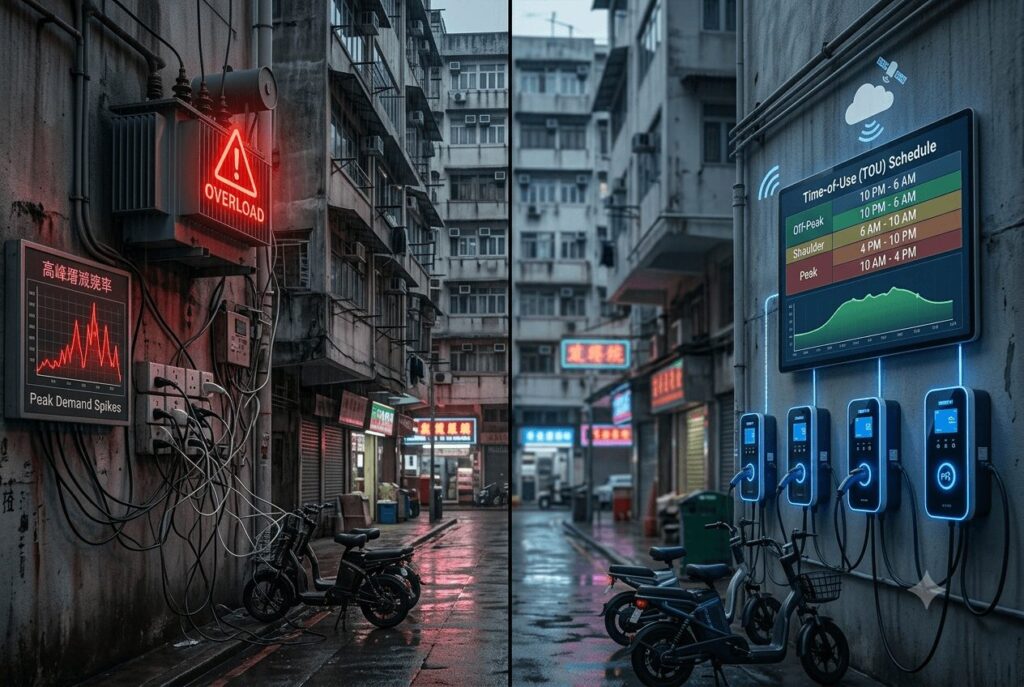
China’s residential distribution infrastructure in older urban areas (buildings constructed before approximately 2005) was designed for household electricity consumption of 2-4 kW peak per household — appliances, lighting, and some air conditioning. The addition of 1-3 EV charging circuits per household, each drawing 7 kW, can increase the peak demand on a residential distribution transformer by 50-200% if charging is uncoordinated.
As covered in our load balancing guide’s technical foundation, the distribution transformer serving a typical Chinese urban apartment block (typically 30-100 households) was originally rated at perhaps 300-630 kVA. At 100% EV adoption with uncoordinated overnight charging, the potential peak demand from EV charging alone could reach 700-2,100 kVA — well beyond the transformer’s capacity.
This is the specific infrastructure stress that makes load management the most critical single technical intervention in China’s EV grid integration programme.
Peak demand concentration during valley rate windows:
As covered throughout our TOU savings guides, China’s TOU pricing creates a specific grid stress scenario: valley rate periods (typically 11pm-7am/8am) create financial incentives for EV owners to charge simultaneously during these windows. If TOU pricing successfully shifts a large proportion of EV charging to the valley window — which is its explicit purpose — it risks creating a new demand peak within the valley window itself, particularly problematic in cities where large numbers of EVs charge simultaneously.
This is the fundamental paradox of TOU pricing applied at scale: the financial incentive that distributes demand away from the existing peak creates a secondary peak in the valley window as the financially-incentivised charging demand concentrates.
The solution that China’s utilities are implementing: Smart TOU pricing with sub-valley rate structures that create incentives for spreading charging across the valley window rather than all beginning at the window’s opening, combined with OCPP-based direct control that allows utilities to stagger charging starts across a neighbourhood’s EV fleet.
Geographic distribution mismatches:
China’s EV adoption is heavily concentrated in specific cities and regions — Shenzhen, Shanghai, Beijing, Hangzhou, Chengdu — while grid infrastructure investment historically concentrated on industrial load centres rather than the specific residential distribution infrastructure that EV charging requires. This creates situations where cities with the highest EV adoption rates have the oldest residential distribution infrastructure most in need of upgrade.
Shenzhen specifically — as China’s highest-EV-adoption city by registration proportion — has invested significantly in residential distribution infrastructure upgrade specifically for EV charging support. SGCC’s Shenzhen operations have documented specific distribution transformer upgrade programmes targeting the residential compounds with highest EV density.
China’s Grid Infrastructure Response
What SGCC and Southern Grid Are Actually Doing
The investment commitment:
State Grid Corporation of China has publicly committed to specific investment in EV charging-related grid infrastructure, with plans covering both the transmission infrastructure (high-voltage backbone) and the distribution infrastructure (the residential and commercial last-mile networks where most EV charging load occurs).
Distribution transformer upgrade programme:
SGCC has implemented a systematic programme to identify and upgrade distribution transformers in high-EV-density residential areas — prioritising the specific transformers where EV charging load threatens overload, based on smart meter data that identifies actual EV charging demand patterns at the distribution transformer level.
The programme operates through SGCC’s provincial grid companies, with priority determined by:
- Current EV registration density per distribution transformer service area
- Current transformer utilisation rate (transformers already operating above 75% capacity rated as highest priority)
- Historical overload incidents
- Planned residential compound EV charging installation approvals in the service area
Smart meter deployment for EV load visibility:
A prerequisite for distribution-level EV load management is visibility — knowing which distribution transformers are experiencing EV charging load and when. SGCC has deployed advanced smart meters (智能电表) as part of its AMI (Advanced Metering Infrastructure) programme, with meter data feeding into the distribution management system at 15-minute granularity — providing the load visibility needed to identify stress points and manage demand response interventions.
The dedicated EV charging tariff and programme infrastructure:
As covered throughout our TOU savings guides and local rebates guide, SGCC has developed a specific residential EV charging tariff structure (居民充电分时电价) that creates the financial incentives for demand shifting covered in those guides. The tariff infrastructure is part of the broader demand management toolkit rather than purely a billing mechanism.
The Smart Charging Solution — The Primary Engineering Response
Why Smart Charging Is More Important Than Building More Infrastructure
The infrastructure build-out approach versus the smart charging approach:
One approach to EV grid integration is to simply build sufficient generation and transmission capacity to handle peak EV charging demand — this approach treats EV charging load like any other load growth and responds with supply-side investment. China is doing some of this, but the more cost-effective and more rapidly deployable response is demand-side management through smart charging.
The fundamental insight:
Most EV charging in China occurs overnight, when the vehicle is at home for 8-10 hours. During this window, a 40 kWh battery needing a 20-80% charge requires 24 kWh delivered at a minimum of 2.4 kWh/hour — meaning even a 3.3 kW connection would complete this charge in 7.3 hours. A 7 kW connection completes it in 3.4 hours, leaving 4.6-6.6 hours of flexible timing within the overnight window.
This flexibility — the fact that EV charging doesn’t need to happen at a specific time but only within a window — is the resource that smart charging management exploits. By distributing the start times of EV charging sessions across the overnight window rather than having all vehicles begin charging at 11pm simultaneously, the effective peak demand of the same aggregate charging volume can be dramatically reduced.
The quantified impact of smart charging coordination:
Modelling conducted by SGCC research teams and independently by Chinese academic institutions has shown that coordinated smart charging — distributing charging start times across the overnight valley window using a combination of financial incentives and direct control — can reduce EV charging peak demand by 40-60% compared to uncoordinated simultaneous charging, without reducing total energy delivered.
For a neighbourhood with 1,000 EVs charging overnight without coordination: potential peak demand 5,000-7,000 kW
Same 1,000 EVs with coordinated smart charging: effective peak demand 2,000-2,800 kW
This is why OCPP compliance matters at the grid level, not just at the individual charger level:
As covered in our connectivity guide and technology trends guide’s discussion of OCPP 2.0, the OCPP communication standard that this guide series consistently recommends for residential chargers is not primarily a consumer feature — it is the communication infrastructure that allows grid operators to implement coordinated demand management across large numbers of distributed residential chargers. A city’s residential EV charging fleet that is predominantly OCPP-compliant can be managed as a coordinated resource; a fleet of non-OCPP chargers cannot.
The push from SGCC and from municipal governments for OCPP-compliant residential charger installation — the same push that motivates the demand response income covered in our local rebates guide — is fundamentally a grid stability investment expressed through financial incentives to individual consumers.
The Regional Grid Analysis — Where the Real Differences Are
The Diversity of China’s Regional Grid Situations
A single national answer to “can China’s grid handle the EV load” obscures a dramatically varied regional picture:
The most stressed regional grids:
Jiangsu Province — one of China’s most densely populated, most industrialised provinces, with high EV adoption in Nanjing, Suzhou, and Wuxi, combined with existing peak industrial load that already tests provincial grid capacity during summer air conditioning peaks. SGCC Jiangsu has documented specific distribution transformer overload incidents during concurrent summer peak (HVAC) and EV evening charging periods that have required emergency demand management interventions.
Guangdong Province (Southern Grid) — highest absolute EV registration numbers in China given Guangdong’s population and economic size, combined with Southern Grid’s existing challenges in meeting peak summer demand in a province where air conditioning load is substantial and year-round. Southern Grid Guangdong has invested specifically in EV-charging-related distribution infrastructure, but the scale of deployment challenge is larger than any other Chinese province.
The relatively well-positioned regional grids:
Sichuan Province — abundant hydropower capacity (the basis for Chengdu’s low valley electricity rates covered throughout our cost calculator guides) means Sichuan’s grid has substantially more headroom for EV load growth than eastern coastal provinces. Chengdu’s EV adoption growth imposes charging demand that Sichuan’s hydropower capacity accommodates with relatively limited stress.
Yunnan Province — similar to Sichuan, Yunnan’s vast hydropower resources (the province exports significant electricity to Guangdong and other coastal provinces) mean local EV adoption growth creates no meaningful generation capacity constraint, though distribution infrastructure in rural areas requires the same upgrade investment as other provinces.
The northeast China challenge:
Harbin, Changchun, and the northeast provinces face a specific compound grid challenge: EV charging efficiency reduction in extreme cold (covered in our winter charging guide) means northeast Chinese EV owners consume more electricity per kilometre driven during winter months than owners in milder climates, increasing per-vehicle demand on a regional grid that simultaneously experiences domestic heating load peaks during the same cold periods. The winter heating demand peak and the cold-weather-amplified EV charging demand peak coincide in ways that require specific management attention in northeast provincial grids.
The Generation Mix Evolution — The Clean Energy Dimension
How China’s Generation Mix Affects EV Grid Integration
The generation mix question that EV grid load analysis cannot ignore:
The question “can China’s grid handle EV load” has an environmental dimension beyond the capacity question: what is the actual carbon intensity of the electricity that EVs are consuming, and how does this compare with the petrol consumption they are replacing?
China’s 2026 generation mix (approximate):
Coal: approximately 54% of electricity generation (declining but still dominant)
Hydropower: approximately 14%
Wind: approximately 10%
Solar: approximately 8%
Nuclear: approximately 5%
Gas and other: approximately 9%
The carbon intensity implication:
At this generation mix, the carbon intensity of Chinese electricity is approximately 470-520 gCO₂/kWh — meaning a Chinese EV charging from the average grid produces approximately 147-162 gCO₂/km of travel (at 300 Wh/km average efficiency) versus the approximately 180-200 gCO₂/km of a typical Chinese petrol passenger vehicle.
The direction of travel:
China’s renewable energy capacity addition has been the largest in the world for multiple consecutive years. The coal proportion of generation has been declining as renewable capacity adds more generation than demand growth requires from coal. By 2030, modelling from NDRC and State Grid suggests the coal proportion could fall to 40-45% with corresponding improvement in grid carbon intensity.
The timing advantage of smart charging for carbon optimisation:
The same smart charging coordination that provides grid stability benefits also enables carbon optimisation — scheduling EV charging preferentially during periods of high renewable generation (midday solar peaks, overnight wind generation) and away from periods when coal plants must meet residual demand. This is a secondary benefit of smart charging coordination that becomes increasingly valuable as renewable generation’s share increases and its temporal variability requires demand flexibility to absorb it efficiently.
The V2G Dimension — EVs as Grid Resources
How 20 Million EVs Changes From Grid Load to Grid Asset
The bidirectional relationship:
As covered in our V2G and battery storage guides, the direction of thinking about EVs and the grid is evolving from “EVs as load to be managed” toward “EVs as a distributed energy resource that the grid can access.” A fleet of 40 million Chinese EVs with bidirectional charging capability represents an aggregate storage capacity of approximately 2,000-3,000 TWh — orders of magnitude larger than China’s current grid-connected stationary storage.
The current V2G status in the grid context:
China’s current V2G deployment, as covered in our dedicated V2G guide, remains primarily pilot-stage for residential applications. However, State Grid and Southern Grid have both expanded V2G pilot programmes specifically in the cities covered in our demand response guides — Shanghai, Beijing, Shenzhen — with the explicit intent of developing the operational frameworks for large-scale V2G deployment.
The grid stability value at scale:
If 10% of China’s installed EV fleet participates in demand response V2G programmes by 2030 — 10 million vehicles at an average 10 kWh available for grid export — this represents 100 GWh of distributed flexible storage, equivalent to approximately 50 large-scale battery storage facilities. The grid value of this flexibility, at typical demand response compensation rates, represents tens of billions of yuan annually — the income that makes individual EV owners’ V2G participation financially attractive as covered in our technology trends guide.
The Honest Assessment — What Chinese EV Owners Should Actually Understand
Separating Real Grid Concerns From Manufactured Anxiety
The grid concerns that are real and relevant to individual Chinese EV owners:
Distribution transformer overloading in specific older residential compounds: This is the specific, documentable, immediate-term grid stress that the smart charging recommendations throughout this guide series address. The load balancing guidance, the TOU scheduling, the OCPP compliance recommendations — all of these are responses to a real grid stress that affects real distribution infrastructure in specific Chinese cities.
Peak demand concentration if TOU pricing succeeds “too well”: The paradox that highly successful TOU incentives create a valley-period peak is a genuine policy design challenge that grid operators are managing through sub-valley pricing tiers and OCPP-based coordination — a real problem with real engineering solutions being actively implemented.
Northeast winter compound peak: The coincidence of space heating demand and cold-amplified EV charging demand in northeast China represents specific regional grid stress that requires specific regional solutions including more aggressive smart charging coordination during winter peaks.
The grid concerns that are substantially overstated:
National aggregate electricity supply: At 2.5% of total generation currently and under 5% at full 20-million-annual-sales fleet scale, the aggregate electricity supply constraint is not a binding concern for China’s EV adoption trajectory. China is adding renewable generation faster than EV adoption is adding load — the generation capacity question is not the binding constraint.
Urban grid collapse: The dramatic framing that sometimes appears — “China’s cities will black out as EVs proliferate” — is not supported by the actual grid capacity data, the smart charging investments being made, or the operational practices being developed. Urban grid stress is real but manageable with the smart charging tools being deployed, not a categorical infrastructure failure scenario.
What This Means for Individual EV Charging Decisions
The Practical Implications From Grid Analysis for Individual Owners
OCPP compliance is a grid contribution, not just a personal financial decision:
The recommendation throughout this guide series to specify OCPP-compliant chargers — justified by demand response income and TOU optimisation benefits — also serves a grid stability function that, at aggregate scale, is the primary engineering mechanism for EV load management. When individual owners choose OCPP-compliant chargers, they are participating in the distributed demand management infrastructure that makes grid stability achievable without disproportionate hard infrastructure investment.
TOU scheduling is the single highest-impact individual action for grid stability:
Every Chinese EV owner who configures TOU charging correctly — scheduling overnight charging during the valley window, using the car timer as backup — contributes to the aggregate demand distribution that allows the valley window’s unused grid capacity to absorb EV charging load. This is not a minor individual action; at 40 million vehicles, each individual scheduling decision aggregates into a nationally significant demand management outcome.
The specific advice for owners in stressed grid areas:
Owners in older residential compounds in high-EV-density areas — the specific scenario covered in our load balancing guide — should specifically ensure their installation includes proper load management provisions (CT clamp monitoring, current reduction capability) as a contribution to their building’s distribution transformer management alongside the personal financial benefits this provides.
Internal Links — Further Reading on Clean Energy Bazaar
The target 20 million units can China’s grid handle the EV load in 2026 guide is the grid infrastructure companion to the technology, financial, and product guides throughout this content cluster.
For the load balancing guide that covers the distribution transformer stress at individual installation level that this guide addresses at national scale, our load balancing EV chargers 2026 avoid tripping breakers in old Chinese apartment blocks guide covers every load management solution. For the TOU savings guide that establishes the individual financial case for the demand management behaviour that serves grid stability at scale, our time-of-use EV charging savings smart chargers that exploit cheaper night rates in China guide covers every tariff structure. For the technology trends guide covering V2G deployment that transforms EVs from grid load to grid resource, our upcoming EV charger trends 2026-2027 V2G solid-state batteries and what to buy now in China guide covers every emerging grid integration technology. For the connectivity guide covering OCPP’s role as the grid communication infrastructure that enables coordinated demand management, our best smart connectivity WiFi 5G digital yuan payments in Chinese smart chargers guide covers every connectivity specification. For the BESS guide covering the solar and battery storage integration that contributes to local grid stabilisation alongside EV charging, our battery energy storage systems BESS combining solar storage EV charging in China guide covers the complete integrated energy system. And for the winter charging guide that covers the northeast China compound peak scenario identified as a genuine regional grid stress in this analysis, our winter EV charging guide 2026 cold weather performance for Harbin -30C vs wet Shanghai guide covers every cold-climate consideration.
Final Thoughts
The target 20 million units can China’s grid handle the EV load in 2026 question deserves — and this guide has provided — a specific, differentiated, honest answer rather than either the alarmist “no, the grid can’t handle it” narrative or the dismissive “don’t worry about it” reassurance.
The national aggregate answer: yes, China has sufficient and growing electricity generation capacity to power a 20-million-annual-sales EV fleet, and the proportion of total generation this represents (under 5% at full fleet scale) is not a constraint on the energy transition.
The distribution infrastructure answer: specific, identifiable stress exists in specific locations — older residential distribution transformers in high-EV-density urban areas, regional grids in provinces where EV adoption has concentrated fastest, and northeast China’s winter compound peak scenario. These are real, manageable, and being actively addressed through a combination of infrastructure investment and smart charging technology deployment. They are not national grid failure scenarios.
The smart charging answer: the primary engineering mechanism that allows China to accommodate 20 million annual EV sales without disproportionate grid infrastructure investment is smart charging coordination — OCPP-compliant chargers that can receive demand management signals, TOU pricing that creates individual financial incentives aligned with aggregate grid management objectives, and V2G capability that progressively converts the EV fleet from a managed load into a distributed grid resource. Every individual charger purchase decision that includes OCPP compliance and TOU scheduling contributes to this outcome.
The direction of travel is unambiguous: China’s grid is becoming cleaner, more flexible, and better equipped to manage EV load with each passing year of renewable capacity addition and smart charging deployment. The 20-million-unit target, on the current trajectory, is something China’s grid can handle — not effortlessly, not without specific infrastructure investment in specific stress points, and not without the smart charging management that this entire guide series has recommended as a standard feature for every home EV charging installation.