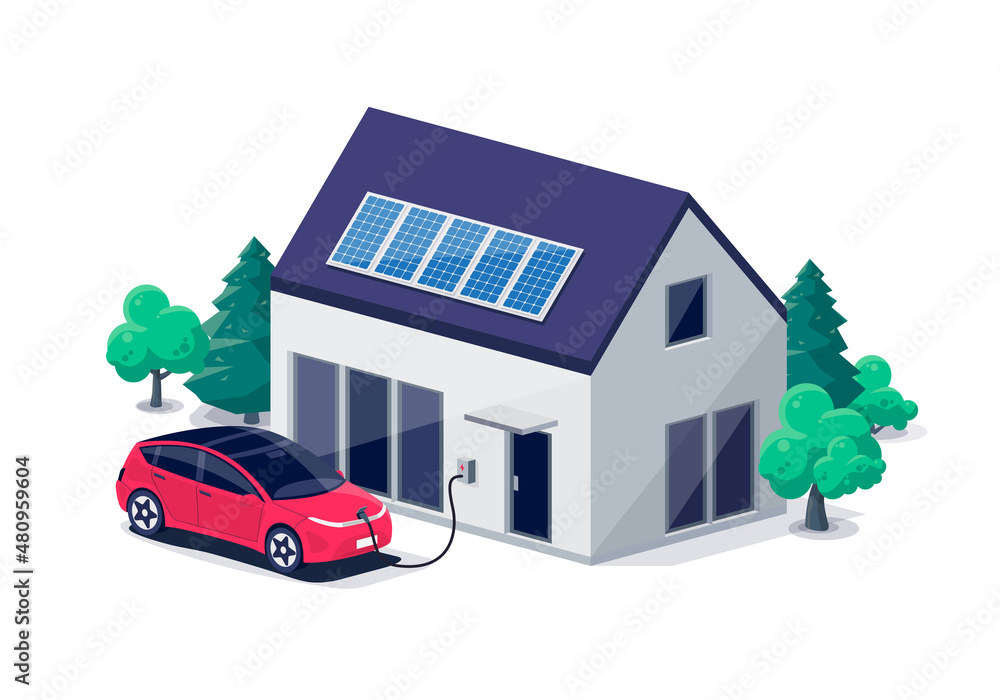
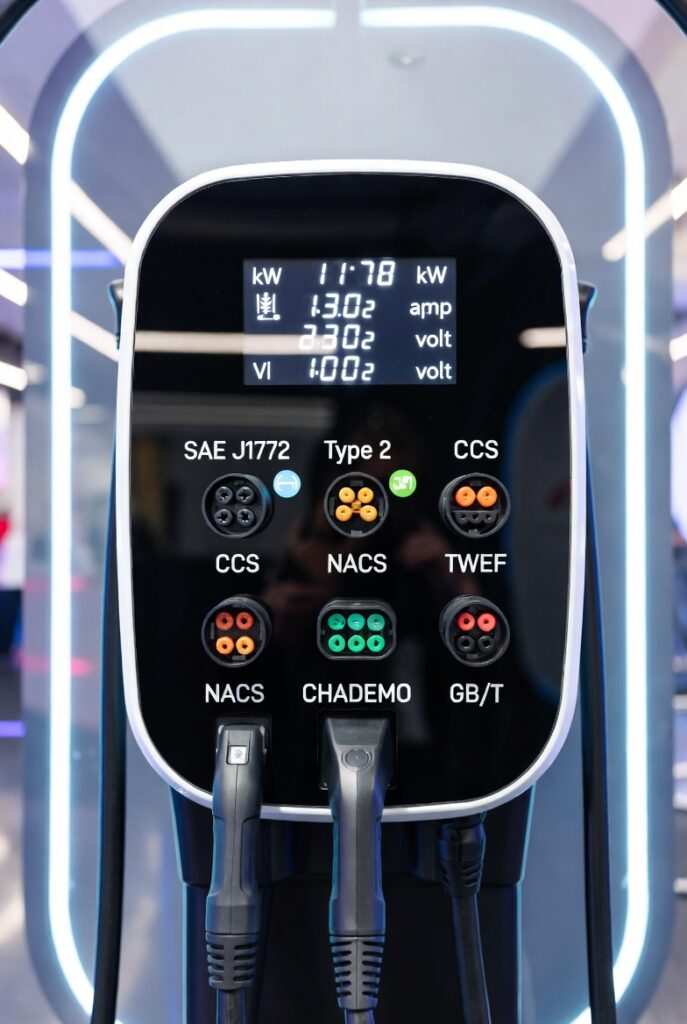
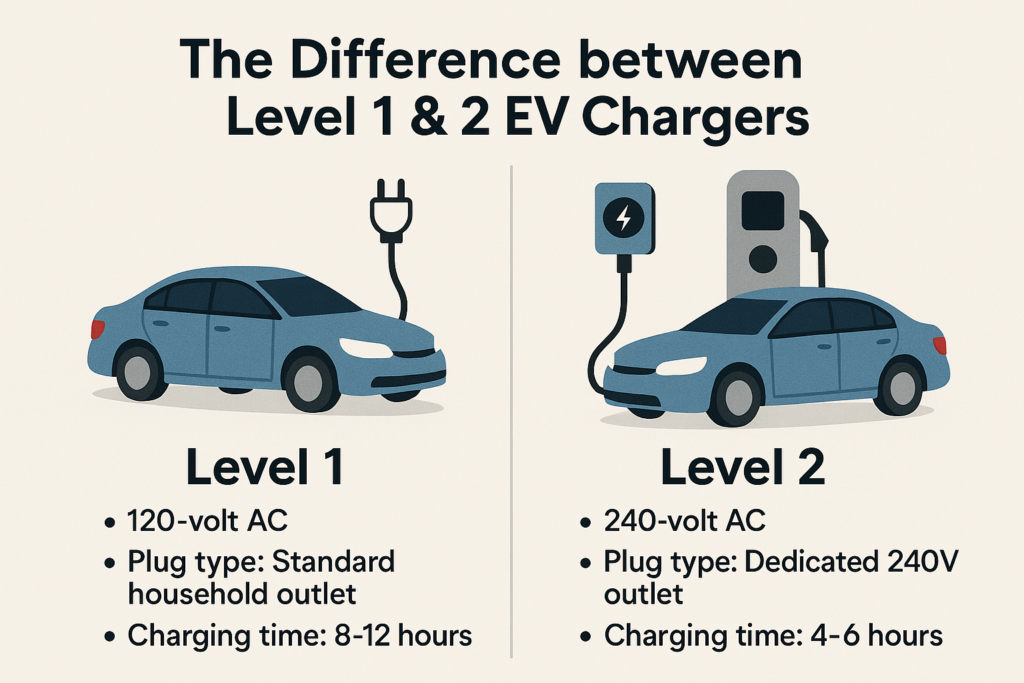
Here is the single most important financial number in Chinese home EV ownership in 2026.
¥1,670.
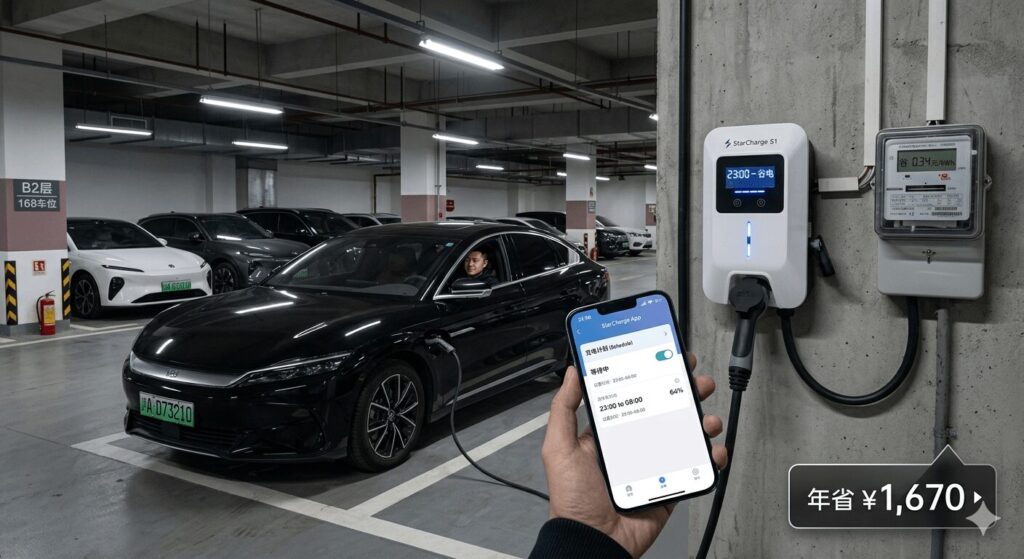
That is the annual electricity saving available to a Shanghai EV owner driving 20,000 km per year who charges at the overnight valley rate (¥0.34/kWh, 11pm-8am) instead of charging immediately when they arrive home in the evening at blended peak and flat rates (approximately ¥0.75/kWh average).
It is not a marginal saving. It is not a theoretical maximum achievable only under ideal conditions. It is the straightforward mathematical result of charging the same vehicle, the same distance, the same battery, at a lower electricity price — achieved by a timer that delays the start of charging by a few hours.
Over five years at 20,000 km annually, this single saving compounds to ¥8,350 — more than the combined cost of the home charger hardware and its installation. The entire home charging setup pays for itself in electricity savings, with years of net financial benefit ahead.
And yet a significant proportion of Chinese EV owners — including owners who have already installed smart home chargers specifically for TOU scheduling — are not capturing this saving. Their smart charger sits installed and functional, its TOU scheduling feature unconfigured, charging the vehicle at full evening rates because nobody told them the setup takes five minutes and the annual return is ¥1,670.
This guide on time-of-use EV charging savings smart chargers that exploit cheaper night rates in China covers everything needed to understand, capture, and maximise this saving — the TOU tariff structure across China’s major cities, the specific smart chargers that deliver the most reliable TOU scheduling, the configuration process that takes five minutes, and the advanced optimisation strategies that push annual savings beyond the ¥1,670 baseline.
Understanding China’s Time-of-Use Electricity Pricing
What TOU Pricing Is and Why It Exists
Time-of-use (TOU) electricity pricing — called 居民分时电价 (residential time-differentiated pricing) in Chinese — charges different rates for electricity at different times of day based on grid demand conditions.
The economic logic: electricity is cheaper to generate when demand is low (overnight, when factories and offices are closed and most people are sleeping) and more expensive when demand is high (morning and evening when air conditioning, cooking, and industrial loads all peak simultaneously).
TOU pricing passes this cost variation to consumers — incentivising energy use to shift to low-demand periods. For EV charging, which requires several hours of sustained power delivery that can be scheduled flexibly, TOU pricing creates an enormous financial opportunity.
China’s National TOU Mandate
The National Development and Reform Commission (NDRC) issued guidance in 2021 requiring provincial electricity companies to implement residential TOU pricing with meaningful peak-valley differentials. This mandate produced a national framework:
Three pricing tiers:
- 峰电 (Peak): High-demand daytime and evening periods
- 平电 (Flat): Mid-demand daytime periods
- 谷电 (Valley): Low-demand overnight periods (typically 11pm-8am)
National minimum differential requirement: The NDRC guidance specifies minimum ratios between peak and valley rates — ensuring the valley rate discount is meaningful rather than cosmetic. In most provinces, the peak-to-valley ratio is at least 3:1.
The Valley Rate Window by City
The specific times and rates vary by province and city. This is the complete reference for China’s major EV markets:
Shanghai (上海):
| Period | Hours | Rate |
|---|---|---|
| Peak (峰) | 8:00-11:00, 18:00-21:00 | ¥0.87/kWh |
| Flat (平) | 11:00-18:00, 21:00-23:00 | ¥0.67/kWh |
| Valley (谷) | 23:00-8:00 | ¥0.34/kWh |
| Valley window duration | 9 hours |
Beijing (北京):
| Period | Hours | Rate |
|---|---|---|
| Peak (峰) | 10:00-15:00, 18:00-21:00 | ¥0.85/kWh |
| Flat (平) | 7:00-10:00, 15:00-18:00, 21:00-23:00 | ¥0.65/kWh |
| Valley (谷) | 23:00-7:00 | ¥0.30/kWh |
| Valley window duration | 8 hours |
Shenzhen (深圳) / Guangdong:
| Period | Hours | Rate |
|---|---|---|
| Peak (峰) | 9:00-12:00, 19:00-22:00 | ¥0.78/kWh |
| Flat (平) | 12:00-19:00, 22:00-23:00 | ¥0.58/kWh |
| Valley (谷) | 23:00-9:00 | ¥0.33/kWh |
| Valley window duration | 10 hours |
Guangzhou (广州):
| Period | Hours | Rate |
|---|---|---|
| Peak (峰) | 10:00-12:00, 14:00-19:00 | ¥0.75/kWh |
| Flat (平) | Various | ¥0.55/kWh |
| Valley (谷) | 23:00-8:00 | ¥0.32/kWh |
Chengdu (成都) — Sichuan hydropower advantage:
| Period | Hours | Rate |
|---|---|---|
| Peak (峰) | 8:00-11:00, 18:00-21:00 | ¥0.70/kWh |
| Flat (平) | 11:00-18:00, 21:00-23:00 | ¥0.55/kWh |
| Valley (谷) | 23:00-8:00 | ¥0.25/kWh |
Chengdu has the lowest valley rate of any major Chinese city — reflecting Sichuan’s abundant overnight hydropower generation that pushes overnight marginal electricity costs to extremely low levels.
Wuhan (武汉) / Hubei:
| Period | Hours | Rate |
|---|---|---|
| Peak (峰) | 8:00-11:00, 17:00-22:00 | ¥0.76/kWh |
| Flat (平) | Various | ¥0.56/kWh |
| Valley (谷) | 23:00-7:00 | ¥0.31/kWh |
Hangzhou (杭州):
| Period | Hours | Rate |
|---|---|---|
| Peak (峰) | 8:00-11:00, 17:00-21:00 | ¥0.75/kWh |
| Flat (平) | Various | ¥0.55/kWh |
| Valley (谷) | 23:00-8:00 | ¥0.28/kWh |
The Hangzhou valley rate of ¥0.28/kWh is among the lowest in eastern China — driven by Zhejiang province’s significant hydropower and pumped storage capacity deployed overnight.
The Annual TOU Saving — City by City, Vehicle by Vehicle
The Calculation Methodology
Annual electricity consumption formula: Annual kWh = Annual km ÷ Vehicle efficiency (km/kWh) × Charging efficiency factor (1.10-1.15)
Without TOU (blended rate calculation): Assumed arrival: 7pm, immediate charging Rate mix: 40% peak, 60% flat Effective blended rate: (0.40 × peak + 0.60 × flat)
With TOU valley rate charging: 100% charging at valley rate
Annual Savings by City for BYD Han EV Long Range (76.9 kWh, 18 kWh/100km real-world)
20,000 km/year consumption: 20,000 ÷ 18 × 100 × 1.12 = 4,074 kWh/year
| City | Blended Rate | Valley Rate | Annual Without TOU | Annual With TOU | Annual Saving |
|---|---|---|---|---|---|
| Shanghai | ¥0.750 | ¥0.34 | ¥3,056 | ¥1,385 | ¥1,671 |
| Beijing | ¥0.730 | ¥0.30 | ¥2,974 | ¥1,222 | ¥1,752 |
| Shenzhen | ¥0.670 | ¥0.33 | ¥2,730 | ¥1,344 | ¥1,386 |
| Guangzhou | ¥0.650 | ¥0.32 | ¥2,648 | ¥1,304 | ¥1,344 |
| Chengdu | ¥0.600 | ¥0.25 | ¥2,444 | ¥1,019 | ¥1,426 |
| Wuhan | ¥0.640 | ¥0.31 | ¥2,607 | ¥1,263 | ¥1,344 |
| Hangzhou | ¥0.630 | ¥0.28 | ¥2,567 | ¥1,141 | ¥1,426 |
The Beijing finding is striking: At ¥0.30/kWh valley rate, Beijing produces the highest absolute annual TOU saving (¥1,752/year) despite having lower absolute electricity rates than Shanghai — because Beijing’s valley rate is the lowest among major Chinese cities at current published tariffs.
Annual Savings for Different Vehicles and Mileage Levels
Shanghai TOU saving (¥0.75 blended vs ¥0.34 valley = ¥0.41/kWh differential):
| Vehicle | Efficiency | Annual mileage | Annual kWh | Annual TOU Saving |
|---|---|---|---|---|
| Wuling Mini EV | 12 kWh/100km | 15,000 km | 1,875 kWh | ¥769 |
| BYD Dolphin | 14 kWh/100km | 20,000 km | 3,111 kWh | ¥1,276 |
| BYD Han EV LR | 18 kWh/100km | 20,000 km | 4,074 kWh | ¥1,670 |
| BYD Seal LR | 18 kWh/100km | 20,000 km | 4,074 kWh | ¥1,670 |
| NIO ET5 (75kWh) | 17 kWh/100km | 20,000 km | 3,822 kWh | ¥1,567 |
| NIO ET5 (75kWh) | 17 kWh/100km | 30,000 km | 5,733 kWh | ¥2,351 |
| Zeekr 001 Perf | 20 kWh/100km | 25,000 km | 5,556 kWh | ¥2,278 |
| Xiaomi SU7 Max | 19 kWh/100km | 20,000 km | 4,253 kWh | ¥1,744 |
| Li Auto L9 EREV | 10 kWh/100km electric | 20,000 km electric | 2,444 kWh | ¥1,002 |
The high-mileage EV owner finding: For a NIO ET5 owner driving 30,000 km/year in Shanghai, TOU scheduling saves ¥2,351/year — an annual saving that pays for a new StarCharge S1 home charger every 5 months. For this owner, configuring TOU on installation day is more financially urgent than any other action in their EV ownership.
How Smart Chargers Capture TOU Savings — The Three Mechanisms
There are three ways to access valley rate electricity for EV charging. Understanding all three prevents the mistake of paying for smart charger features that replicate what the vehicle already provides.
Mechanism 1: Smart Charger App TOU Scheduling
How it works: The smart charger’s app allows setting a charging schedule — start time, end time, target SOC. The charger delays charging until the configured start time regardless of when the vehicle is plugged in.
Configuration: Open charger app → Scheduled Charging → Set start: 23:00 → Set end: 08:00 (or target SOC)
Advantages:
- Charger-level control independent of vehicle settings
- Energy monitoring shows actual electricity consumption and cost
- Integration with smart home ecosystems (Xiaomi Mi Home, Huawei HarmonyOS)
- Can be overridden for immediate charging with one tap
Best products for TOU scheduling (reliability ranked):
1. StarCharge S1 (¥899-¥1,099): The most reliable TOU scheduling implementation in the Chinese market by owner review volume. Schedule adherence is consistently reported as accurate — charges start within 1-2 minutes of scheduled time. The 谷电计划 (valley electricity plan) feature in the StarCharge app is one of the most-used features in China’s residential charging market.
2. Xiaomi EV Charger (¥1,099-¥1,999): HyperOS/Mi Home integration delivers TOU scheduling through voice command (小爱同学) and scene automation. For Xiaomi ecosystem users, this is the most seamlessly integrated TOU scheduling available — setting departure time in the Mi Home app automatically configures optimal TOU scheduling.
3. Autel MaxiCharger (¥1,299-¥2,499): Reliable scheduling with dual-band WiFi that reduces connectivity failures in congested urban environments. For owners in dense Beijing or Shanghai high-rises where 2.4 GHz WiFi congestion causes scheduling failures, the dual-band advantage reduces missed TOU windows.
4. Huawei FusionCharge (¥1,800-¥4,500): AI-enhanced TOU scheduling that goes beyond fixed windows — learning departure patterns, forecasting electricity prices in dynamic pricing pilot areas, and coordinating TOU charging with solar generation. The most sophisticated TOU implementation available but requires Huawei ecosystem for full value.
5. TELD Smart Home Charger (¥799-¥1,299): Reliable basic TOU scheduling integrated with TELD’s public charging network app — useful for owners who use TELD public charging and want unified home + public energy management.
Mechanism 2: Vehicle Built-In Charging Timer
How it works: Most Chinese EVs sold from 2020 onward have built-in charging timers in the vehicle app — allowing the owner to set a charging start time independently of the charger.
Available on:
- BYD vehicles: BYD app → Charging → Scheduled Charging
- NIO vehicles: NIO app → Charging → Schedule
- Xpeng vehicles: Xpeng app → Charging → Timer
- Tesla China: Tesla app → Charging → Set Departure Time
- Xiaomi SU7: HyperOS → Charging Schedule
- Li Auto: Li Auto app → Charging → Timer
The critical implication: For vehicles with reliable built-in timers, a basic non-smart charger (ChargeWay CW-J7032 at ¥580-¥780) achieves identical TOU savings to a smart charger at ¥899-¥1,499.
When does the smart charger TOU scheduling add value over the car timer?
| Scenario | Car Timer | Smart Charger TOU | Smart Charger Advantage |
|---|---|---|---|
| Fixed overnight schedule, simple tariff | ✅ Adequate | ✅ Equivalent | Convenience only |
| Dynamic pricing (Octopus Agile equivalent) | ❌ Can’t optimise | ✅ Optimises dynamically | Real financial value |
| Departure time varies daily | ⚠️ Manual update needed | ✅ Auto-adjusts | Convenience value |
| Energy monitoring needed | ❌ No data | ✅ Full session data | Monitoring value |
| Smart home scene integration | ❌ Not available | ✅ Mi Home/HarmonyOS | Ecosystem value |
| Multiple EVs on one charger | ❌ Per-car only | ✅ Charger-level management | Coordination value |
For standard fixed-window TOU tariffs: The car timer captures identical TOU savings to a smart charger. The smart charger premium buys convenience, monitoring, and ecosystem integration — not additional TOU savings.
Mechanism 3: Dedicated EV Meter Auto-Enrollment
As covered in our professional installation costs guide, the dedicated EV charging meter installed during the standard Chinese home charger installation process is automatically enrolled in TOU pricing in most cities.
What this means: When the State Grid or Southern Grid installs the dedicated EV meter, TOU pricing is applied to that meter by default — the owner doesn’t need to apply separately for TOU. The meter records separate peak, flat, and valley consumption for accurate billing.
Verification: Check the first electricity bill for the dedicated EV meter. It should show three separate consumption entries (peak/flat/valley). If it shows only a single flat rate: contact the utility immediately to confirm TOU enrollment on the dedicated meter.
The TOU Configuration Guide — Charger by Charger
StarCharge S1 TOU Setup
Step 1: Download and open the 星星充电 app (iOS/Android) Step 2: Register account and pair with charger via QR code scan Step 3: Navigate to: 充电计划 → 定时充电 Step 4: Select 谷电计划 (Valley Electricity Plan) Step 5: Set start time: 23:00 (or your city’s valley start) Step 6: Set end time: 08:00 (or your city’s valley end) Step 7: Set target SOC: 80% (recommended for daily use) Step 8: Enable schedule: Toggle to ON Step 9: Verify: The app shows “scheduled charging active”
Emergency override: If you need to charge immediately outside the scheduled window: App home screen → Charge Now → Enter immediate session
Annual TOU saving confirmation: App → Statistics → Monthly Report shows charged kWh split by time period. Confirm the vast majority of consumption is in the valley period.
Xiaomi EV Charger TOU Setup (HyperOS/Mi Home)
Via Mi Home app: Step 1: Open Mi Home → Add device → Scan charger QR code Step 2: Charger appears in Mi Home device list Step 3: Tap charger → Settings → Charging Schedule Step 4: Enable scheduled charging → Set valley window for your city Step 5: Set target SOC: 80%
Via voice command (小爱同学): “小爱,设置每天晚上11点开始充电” (Xiaoqi, set charging to start every night at 11pm) The Mi Home automation updates the schedule immediately.
Via Departure Time scene: Mi Home → Automation → Create scene → “Departure time tomorrow 7am” → Actions: “Charge car to 80% before 7am using valley rate”
This departure-time integration is the most elegant TOU implementation — changing departure time automatically recalculates the optimal charging start time.
Autel MaxiCharger TOU Setup
Step 1: Download Autel Charge app Step 2: Register and pair charger (Bluetooth pairing for initial setup) Step 3: App → My Charger → Schedule Step 4: Add schedule → Start: 23:00, End: 08:00 Step 5: Target charge level: 80% Step 6: Save and enable
Autel-specific feature — Electricity Rate Setup: App → Settings → Electricity Rate → Enter peak, flat, valley rates for your city. This enables accurate electricity cost tracking in the Autel app — showing real yuan cost per session rather than just kWh.
For Beijing owners (valley: ¥0.30, peak: ¥0.85): After entering rates, the app’s session cost display becomes accurate — confirming TOU scheduling is working by showing low-cost sessions during the valley window.
Huawei FusionCharge AI TOU Setup
The Huawei AI TOU approach is departure-time based rather than fixed window:
Step 1: FusionSolar app → EV Charging → Settings Step 2: Set departure time schedule (not a charging start time — Huawei’s AI calculates the optimal start) Step 3: Enable AI charging mode Step 4: Set electricity pricing: Enter your city’s peak/flat/valley rates
The AI’s TOU optimisation: Huawei’s AI calculates: given the current SOC, departure time, and current electricity pricing, the latest possible start time that ensures target SOC is reached by departure — maximising time in valley rate window while completing before departure.
For a Shanghai owner departing at 7:30am with the car at 25% SOC:
- Required charging: 25% to 80% = 55% of 76.9 kWh = 42.3 kWh
- At 6.2 kW effective: 6.8 hours needed
- Latest possible start: 7:30am – 6.8 hours = 12:42am
- Since valley rate starts at 11pm: AI starts charging at 11pm for full valley rate session
- Completion: 5:48am — well before departure
For an owner departing at 7:30am with the car at 60% SOC:
- Required charging: 60% to 80% = 20% of 76.9 kWh = 15.4 kWh
- At 6.2 kW: 2.5 hours needed
- Latest possible start: 7:30am – 2.5 hours = 5:00am
- AI schedules charging to start at 5:00am — within valley rate window
- Completion: 7:30am exactly
The AI “charges as late as possible” within the valley window — reducing the time the battery spends at high SOC (marginally better for longevity) while ensuring completion before departure.
The Advanced TOU Strategies — Beyond Basic Scheduling
Strategy 1: The Minimum SOC Override
The problem it solves: Occasionally you arrive home with unexpectedly low battery (took a detour, forgot to charge at work) and your TOU schedule would start charging at 11pm. But the departure is at 6am and the battery is at 8% — the overnight window doesn’t provide enough time.
The solution: Every major smart charger allows setting a minimum SOC threshold below which charging starts immediately regardless of schedule.
Configuration: StarCharge: App → Settings → Minimum Battery → Set to 20% Xiaomi: Mi Home → Charger → Safety settings → Minimum SOC override: 20% Autel: App → Schedule Settings → Emergency charge threshold: 20%
Effect: If vehicle SOC is below 20% when plugged in, charging starts immediately at whatever rate electricity costs at that time. If SOC is above 20%, the TOU schedule governs.
Annual electricity cost of this safety feature: Emergency charging events (battery below 20% at plug-in): approximately 3-5 times per year for most owners. Per-event additional electricity cost versus valley rate: approximately ¥3-¥6. Annual additional cost: ¥15-¥30.
The ¥15-¥30 cost of occasional emergency charging is trivially small — never delay safety charging to save a few yuan.
Strategy 2: The Multi-Rate Optimisation for Hangzhou and Chengdu
Hangzhou (¥0.28/kWh valley) and Chengdu (¥0.25/kWh valley) have the lowest valley rates of any major Chinese city. For owners in these cities, the valley rate advantage is even more pronounced than the table above suggests — because these cities’ flat rates are also competitive, making the optimal strategy slightly different from cities with higher flat rates.
Hangzhou advanced TOU strategy: The ¥0.47/kWh peak-valley differential (¥0.75 peak – ¥0.28 valley) is the second-highest in this comparison after Beijing. Any charging in the peak window is expensive relative to valley.
The Hangzhou “never peak” strategy: Configure the charger’s minimum SOC override at 15% — very low. This means almost all charging occurs in the valley window. Only genuine emergencies (below 15% at plug-in) trigger peak-rate charging.
Annual saving from “never peak” vs occasional peak charging (Hangzhou, 20,000 km/year): Standard approach (5 peak sessions/year): ¥1,426 + ¥25 (5 sessions × ¥5 each) = ¥1,451/year total electricity cost “Never peak” approach: ¥1,141/year valley rate
Wait — the saving is already captured in the baseline TOU calculation. The refinement is ensuring the minimum SOC override is set low enough that it’s only triggered by genuine emergencies rather than by the charger being plugged in at 10pm at 22% SOC.
Strategy 3: The Departure Time Coordination for Large Battery Owners
The problem for large-battery EV owners (NIO ET5 100 kWh, Zeekr 001 100 kWh): The 20-80% charge at 7 kW takes approximately 8.6 hours. The valley window (11pm-8am in Shanghai) is 9 hours. If the owner arrives home at 10pm with 20% battery, there is only 1 hour of buffer before the valley window closes at 8am.
At 11pm start, completion at 7:36am — just within the window. But if there are any connectivity interruptions, scheduling delays, or the owner charged to more than 20% at a public charger on the way home, the timing gets tighter.
The large battery TOU strategy: Set the charger’s target SOC to 85% rather than 80% — providing slightly more buffer within the valley window at the cost of a marginally longer charge time.
OR:
Accept that on high-consumption days (arriving home with 10-15% battery), the charge will extend slightly past 8am into the flat rate period — costing approximately ¥1.50-¥3.00 in flat-rate electricity versus a full valley-rate session. This is a trivial cost.
The practical large battery recommendation: Don’t over-engineer the scheduling. The vast majority of charging sessions fit within the 9-hour valley window. On the occasional long-range day where the battery is very low, the minor overage into flat-rate territory costs almost nothing.
Strategy 4: The Multi-Vehicle TOU Coordination
For households with two EVs and one or two home chargers:
Two-charger scenario: Both chargers on separate circuits and meters. Configure each independently with TOU scheduling starting at 11pm. If both vehicles are plugged in, both charge from 11pm — combined load: 12-14 kW (two 6-7 kW charges).
Check panel capacity: In most Chinese apartments with two dedicated EV circuits (unusual but possible in newer premium developments), the panel is sized to handle both. Confirm with your electrician that dual simultaneous charging is within panel capacity.
Single-charger scenario: One charger serves both vehicles sequentially. Configure TOU schedule for the vehicle that needs more charging first (lower SOC), starting at 11pm. When first vehicle completes charging, unplug and plug in second vehicle. Second vehicle charges in the remaining valley window.
The automated sequential charging approach: Some smart home ecosystems (Xiaomi Mi Home, Huawei HarmonyOS) can automate sequential charging through scenes:
- Scene 1: “Vehicle 1 reaches 80% → send notification to owner”
- Owner manually swaps vehicles in the valley window
Full automation of two-vehicle sequential charging is not yet standard in Chinese home charging apps — manual swap is the current approach.
Strategy 5: Dynamic Pricing Integration for Advanced Savers
What dynamic pricing is: Some Chinese cities — particularly Shenzhen in the electricity market reform pilot — are trialling day-ahead dynamic pricing where electricity rates change every 30 minutes based on grid conditions rather than following a fixed three-tier schedule.
The Shenzhen dynamic pricing pilot: In parts of Shenzhen’s electricity market reform zone, some users can access prices that drop below even the standard valley rate during periods of excess renewable generation (overnight wind and solar storage dispatch). Prices as low as ¥0.15-¥0.20/kWh are occasionally available during these periods.
The smart charger advantage for dynamic pricing: A basic charger with a fixed 11pm-8am schedule cannot distinguish between a period of ¥0.30/kWh electricity and a period of ¥0.15/kWh electricity within the overnight window. It charges at the first available time.
An AI-capable charger (Huawei FusionCharge, Ampere Time) connected to the electricity pricing API can:
- Wait for the cheapest 4-hour window within the overnight period
- Charge during the cheapest available hours
- Avoid hours that are cheap but not the cheapest
Annual additional saving from dynamic pricing optimisation (Shenzhen pilot users): Estimated ¥150-¥400/year for active dynamic pricing optimisation versus fixed-window valley rate charging.
This is a genuine but modest additional saving — available only in specific cities with dynamic pricing pilots, requiring smart charger API integration with the pricing service.
The Smart Charger TOU Comparison Table
| Charger | TOU Scheduling | Dynamic Pricing | Departure-Time AI | Reliability | Annual TOU Saving (Shanghai, 20k km) |
|---|---|---|---|---|---|
| StarCharge S1 | ✅ Fixed window | ❌ | ❌ | ⭐⭐⭐⭐⭐ | ¥1,670 |
| Xiaomi EV Charger | ✅ Fixed + voice | ❌ | ⚠️ Basic | ⭐⭐⭐⭐⭐ | ¥1,670 |
| Autel MaxiCharger | ✅ Fixed window | ❌ | ❌ | ⭐⭐⭐⭐⭐ | ¥1,670 |
| Huawei FusionCharge | ✅ AI-optimised | ✅ Pilot cities | ✅ Full AI | ⭐⭐⭐⭐⭐ | ¥1,670-1,820 |
| TELD Smart | ✅ Fixed window | ❌ | ❌ | ⭐⭐⭐⭐ | ¥1,670 |
| NIO Home Charger | ✅ Ecosystem | ❌ | ✅ NIO AI | ⭐⭐⭐⭐⭐ | ¥1,670 |
| BYD Smart Charger | ✅ DiLink | ❌ | ⚠️ Basic | ⭐⭐⭐⭐ | ¥1,670 |
| ChargeWay Basic | ❌ (car timer) | ❌ | ❌ | ⭐⭐⭐⭐ | ¥1,670 (via car timer) |
The critical finding in this table: Every charger in this comparison delivers identical ¥1,670/year TOU savings when correctly configured. The differences between premium and budget smart chargers are in reliability, convenience, and ecosystem value — not in the TOU saving itself.
The ¥1,670 annual saving is the same whether you configure it through a ¥899 StarCharge app or a ¥4,500 Huawei FusionCharge AI system. The incremental financial return from premium charger features is in the range of ¥50-¥400/year depending on advanced optimisation capability — meaningful but not transformative.
TOU Savings vs Other EV Cost Savings — The Perspective
To understand the significance of TOU savings, comparing them to other major EV cost decisions provides useful context.
Annual TOU Saving vs Other Savings (Shanghai, BYD Han EV, 20,000 km/year)
| Saving Source | Annual Value |
|---|---|
| TOU scheduling (vs immediate blended rate charging) | ¥1,670/year |
| Switching from public DC charging to home TOU | ¥2,688/year additional |
| Solar divert (5 kWp solar, vs exporting) | ¥300-¥600/year |
| AI departure optimisation (vs basic TOU) | ¥50-¥200/year |
| Demand response programme (OCPP, pilot city) | ¥200-¥800/year |
| Upgrading from 3.3 kW portable to 7 kW hardwired (same TOU) | ¥0/year (same electricity cost) |
The hierarchy is clear: TOU scheduling is by far the most valuable individual saving available in Chinese home EV charging. It is worth ¥1,670/year against a ¥300 smart charger premium over a basic unit. The return on this single feature investment is extraordinary.
Solar divert, AI optimisation, and demand response are real and worth pursuing — but they are refinements on top of the dominant TOU saving, not alternatives to it.
The Most Common TOU Mistakes — Why ¥1,670/Year Stays Uncaptured
Mistake 1: Installing a Smart Charger and Never Configuring TOU
The most expensive mistake in Chinese home EV charging. A smart charger that charges on immediate plug-in rather than valley rate costs ¥1,670/year more than it should — every year — until the schedule is configured.
Prevention: On installation day, before leaving the parking space, open the app and configure the TOU schedule. It takes five minutes. The electrician who installed the charger should assist with this — ask specifically.
Mistake 2: Configuring the Wrong Valley Window
The valley rate window varies by city and occasionally changes when tariffs are updated. A schedule set to 23:00-7:00 in Beijing (where the valley runs 23:00-7:00) is correct. The same schedule in Shenzhen (where the valley runs 23:00-9:00) leaves 2 hours of available valley rate uncaptured.
Prevention: Verify your city’s current valley rate window on your electricity bill or through the 95598 State Grid hotline. Configure the charger to the full valley window, not an approximate one.
Mistake 3: Leaving the Car’s Built-In Timer Active When Using a Smart Charger
Some EV owners configure TOU scheduling on both the smart charger app AND the vehicle’s built-in timer. If the two schedules conflict — the vehicle timer set to start at midnight while the charger schedule starts at 11pm — the vehicle will not accept charge from the charger at 11pm because the vehicle-side timer hasn’t activated.
Prevention: Use either the smart charger’s scheduling OR the vehicle’s built-in timer — not both. For smart charger owners, disable the vehicle’s built-in timer and let the charger manage scheduling.
Mistake 4: Not Enrolling the Dedicated EV Meter in TOU
As noted in the installation guide: the dedicated EV meter should be automatically enrolled in TOU pricing, but this isn’t always confirmed. Check the first electricity bill for the dedicated meter — it should show three separate consumption tiers (峰/平/谷).
If it shows only a single flat rate: call 95598 and request TOU enrollment for the dedicated EV meter.
Cost of this mistake: If charging at valley rate but billed at flat rate due to missing TOU enrollment, you’re paying ¥0.67/kWh (flat) instead of ¥0.34/kWh (valley) despite charging at the correct time. Annual overpayment: ¥1,343/year.
Mistake 5: Setting TOU Schedule but Not Setting a Minimum SOC Override
Without a minimum SOC override, arriving home with 5% battery triggers the TOU schedule — charging starts at 11pm. If departure is at 6:30am, the 5.5-hour window is insufficient to charge a large battery from 5% to 80%.
Prevention: Set minimum SOC override at 20%. This ensures the vehicle always starts charging immediately if critically low — costing ¥3-¥6 in off-peak electricity for peace of mind.
The TOU Return on Investment — The Complete Financial Picture
Smart Charger Purchase Justified Purely by TOU Savings
Scenario: Shanghai BYD Han EV owner, currently using standard socket with Mode 2 cable, no TOU
Current annual electricity cost: 4,074 kWh × ¥0.75 (blended, no TOU) = ¥3,056/year
Option A: Upgrade to StarCharge S1 with TOU (¥999 + ¥1,700 installation = ¥2,699 net after partial subsidy) Annual electricity with TOU: ¥1,385/year Annual saving: ¥1,671/year Payback: 2,699 ÷ 1,671 = 1.6 years
Option B: Keep Mode 2 cable, use car’s built-in timer for TOU (¥0 additional cost) Annual electricity with car timer TOU: ¥1,385/year (same as Option A — identical TOU saving) Annual saving: ¥1,671/year Payback: Immediate (no cost)
The honest recommendation: If the Mode 2 cable and car timer are safe and adequate for daily charging volume, Option B captures the full TOU saving immediately at zero cost. Option A is the correct path when charging speed matters (large battery, high mileage) or when installation is needed anyway for a dedicated circuit.
5-Year TOU Compounding — The Wealth-Building Perspective
Shanghai, BYD Han EV, 20,000 km/year, smart charger with TOU:
| Year | TOU Annual Saving | Cumulative Saving |
|---|---|---|
| Year 1 | ¥1,671 | ¥1,671 |
| Year 2 | ¥1,671 | ¥3,342 |
| Year 3 | ¥1,671 | ¥5,013 |
| Year 4 | ¥1,671 | ¥6,684 |
| Year 5 | ¥1,671 | ¥8,355 |
The 5-year TOU saving (¥8,355) compared to the charger and installation cost (¥2,699): Net financial benefit over 5 years: ¥5,656
This is not an abstraction. This is ¥5,656 that remains in the EV owner’s pocket rather than going to the electricity company — captured by a five-minute app configuration.
Internal Links — Further Reading on Clean Energy Bazaar
The time-of-use EV charging savings smart chargers that exploit cheaper night rates in China guide is the TOU mastery companion to every product recommendation guide in the Chinese market content cluster.
For the complete smart charger AI comparison covering products from Huawei Digital Power to Xiaomi, our best smart EV chargers China 2026 Huawei Digital Power vs Xiaomi vs local innovators guide covers every platform. For the smart feature value analysis that establishes which smart charger features deliver genuine return, our smart EV chargers 2026 AI load balancing vs standard features worth the extra cost in China guide provides the financial framework. For the full home charger comparison covering every major Chinese charger brand’s TOU implementation, our best home EV chargers 2026 top 7 comparison for Chinese homeowners Star Charge Autel guide covers complete specifications. For the rebates guide covering installation subsidies and demand response income that compound with TOU savings, our local utility rebates for EV charging 2026 Shenzhen Shanghai Beijing guide covers every available programme. For the DIY charging guide covering how to capture TOU savings with a car timer and portable EVSE, our DIY EV charger installation 2026 easiest plug and play models for Chinese apartments 220V guide covers every self-install scenario. And for the European equivalent of this TOU guide covering Octopus Go and similar UK tariffs, our time-of-use EV charging savings smart chargers cut bills US and Europe guide provides the international comparison.
Final Thoughts
The time-of-use EV charging savings smart chargers that exploit cheaper night rates in China story is ultimately a simple one — made unnecessarily complex by the marketing noise around smart charger features.
The single action that matters most: Configure TOU valley rate scheduling. Set the start time to your city’s valley rate start (23:00 for most cities). Set a target SOC of 80%. Enable the schedule.
That configuration, taking five minutes, saves ¥1,670/year in Shanghai. ¥1,752/year in Beijing. ¥1,426/year in Chengdu. Year after year, compounding.
Over five years: ¥8,355. Over ten years: ¥16,710. These are not speculative projections — they are the mathematical result of paying ¥0.34/kWh overnight instead of ¥0.75/kWh whenever you plug in.
The smart charger that delivers this saving costs ¥899 (StarCharge S1). The same saving is available from any smart charger in this guide. The same saving is available from a basic charger combined with your car’s built-in timer — at zero additional hardware cost.
The charger’s TOU scheduling feature is the most valuable feature in Chinese home EV charging. It has been available since 2019. Millions of Chinese EV owners have it installed. And a meaningful proportion of them haven’t turned it on.
Turn it on. Configure it for your city’s valley rate window. Set the minimum SOC override at 20%. Verify the first bill shows valley-rate consumption.
Then leave it running — collecting ¥1,670/year quietly, automatically, every year that follows.