Here’s what happens when you take delivery of a new compact EV in Europe in 2026.
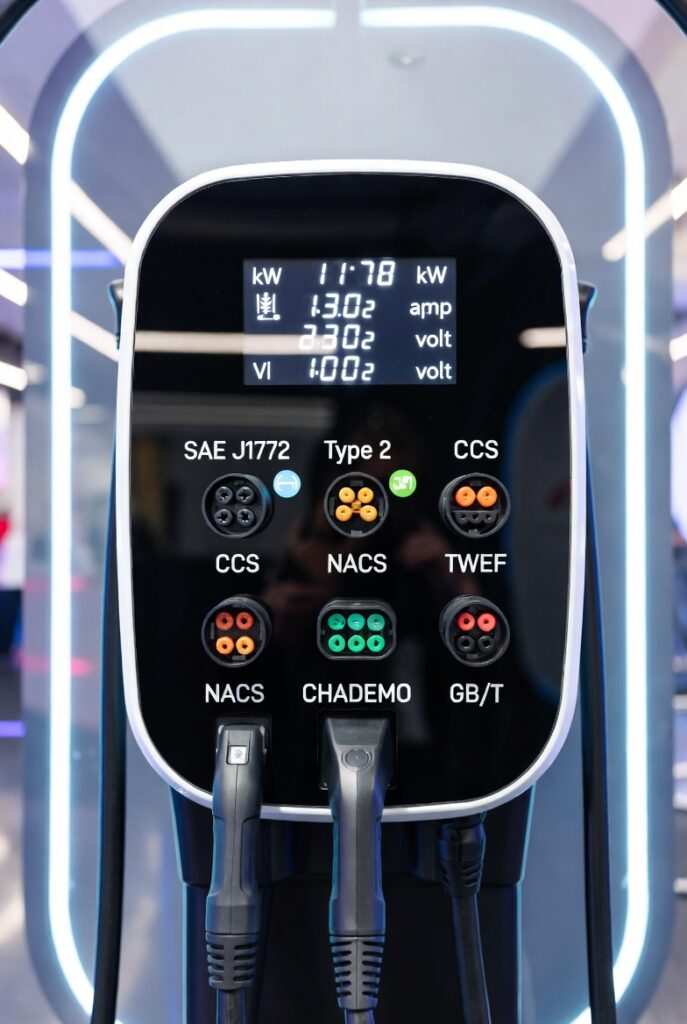
The dealership hands you a Type 2 cable, a Mode 2 portable charger for emergency use, and a vague assurance that “charging is easy.” The handbook mentions AC and DC charging. The spec sheet lists a maximum DC charging speed and a “reduced” AC charging speed. The sales person mentions something about a home charger but isn’t sure which one you need.
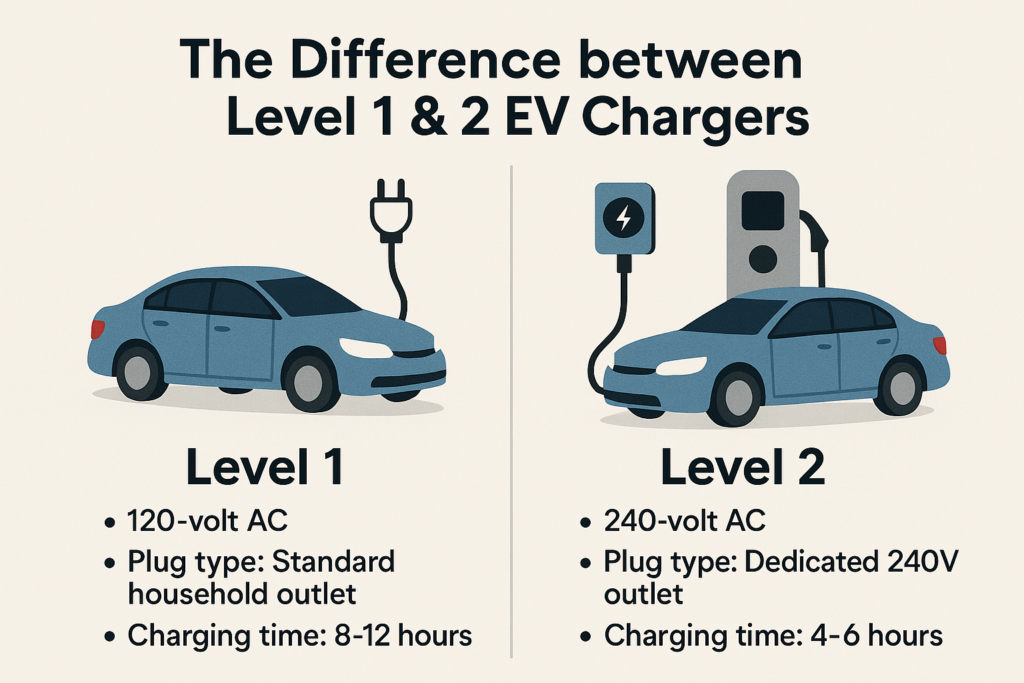
You drive home. You plug into a standard household socket. It’s going to take 36 hours to charge.
You were not told it would take 36 hours.
This charging guide Renault 5 Skoda Enyaq compact EVs Europe 2026 exists because the information gap between “EV delivered” and “EV owner who understands charging” is wider than it should be in 2026 — and compact EV owners face specific charging considerations that large-battery EV guides don’t address. Smaller batteries mean faster full charges but also quicker depletion. Entry-level onboard charger specs mean some compact EVs charge more slowly than their larger siblings. And the price sensitivity of compact EV buyers means overspending on a home charger that exceeds the car’s capability is a real and common mistake.
Let’s fix all of that.
The Compact EV Charging Landscape in Europe 2026 — What’s Actually Changed
Before getting into specific vehicles, it’s worth understanding what’s different about charging compact EVs in Europe in 2026 compared to two years ago.
More compact EVs, more varied specifications. The Renault 5 E-Tech, Skoda Elroq, Citroën ë-C3, Peugeot e-208, Opel Mokka Electric, Fiat Grande Panda Electric, and Volkswagen ID.2 (arriving 2025-2026) all occupy the sub-€35,000 compact EV segment. They have different battery sizes, different onboard AC charger specifications, and different DC fast charging rates — meaning the one-size-fits-all home charger advice that worked when there were only three or four mainstream EVs doesn’t work anymore.
EU charging infrastructure legislation is reshaping public charging. The Alternative Fuels Infrastructure Regulation (AFIR) requires minimum fast charging coverage along major EU road networks from 2025. For compact EV owners this means the public charging network they depend on for longer journeys is improving faster than at any previous point.
Smart charging mandates are spreading. The UK’s smart charging mandate (in force since 2022) is being mirrored by EU member states implementing the EPBD provisions. New home chargers across Europe increasingly must support smart scheduling by default — which changes the entry-level charger market significantly.
Compact EV-specific home charging economics. A smaller battery changes the charging economics in ways worth understanding. A Renault 5 with a 40 kWh battery costs roughly £4-£5 to charge from 0-100% on a standard UK home tariff. A Skoda Enyaq with an 82 kWh battery costs £8-£10. The absolute cost difference between charging overnight on a flat rate versus an off-peak smart tariff is smaller for compact EVs — which changes how strongly the financial case for a smart charger applies.
Renault 5 E-Tech Electric — Charging Specifications and What They Mean
The Renault 5 E-Tech Electric is the most anticipated compact EV launch in Europe in recent years — a genuine revival of an iconic nameplate in electric form, positioned squarely at urban and suburban European drivers.
Renault 5 Battery and Charging Options
Standard Range (40 kWh battery):
- Maximum AC charging rate: 7.2 kW (single-phase, 32A)
- Maximum DC fast charging rate: 80 kW (CCS2)
- Connector: Type 2 (AC), CCS2 (DC)
- Real-world range: approximately 250-280 km in mixed conditions
- Full charge at 7.2 kW: approximately 5.5-6 hours
- Full charge at 3.7 kW (standard household socket Mode 2): approximately 12-13 hours
Long Range (52 kWh battery):
- Maximum AC charging rate: 11 kW (three-phase, 16A per phase) — on higher trim levels
- Maximum DC fast charging rate: 100 kW (CCS2)
- Connector: Type 2 (AC), CCS2 (DC)
- Real-world range: approximately 320-360 km
- Full charge at 11 kW: approximately 5 hours
- Full charge at 7.2 kW: approximately 7-8 hours
What This Means for Home Charger Choice
Standard Range Renault 5 owners: A 7.4 kW single-phase home charger is the right hardware match. The car accepts 7.2 kW maximum on AC — buying an 11 kW or 22 kW three-phase charger delivers identical speed and wastes the additional cost.
Long Range Renault 5 owners with three-phase supply: An 11 kW three-phase charger unlocks the car’s full AC charging capability. At 11 kW, a full charge from 20% takes approximately 4 hours — useful for owners with unpredictable schedules who can’t guarantee overnight charging windows.
Long Range Renault 5 owners with single-phase supply (most UK homes): A 7.4 kW single-phase charger is the right buy regardless of the car’s 11 kW capability. Single-phase supply caps home charging at 7.4 kW — buying three-phase hardware doesn’t help.
Renault 5 Public Charging
The 80 kW DC fast charging on the Standard Range is competitive for the segment — at 80 kW, a 10-80% charge takes approximately 30-35 minutes. The Long Range’s 100 kW DC rate improves this to approximately 28-32 minutes.
In practice, the most relevant public charging scenario for Renault 5 owners is the growing network of 50 kW CCS2 chargers across European motorway services — at 50 kW the Renault 5 Standard Range charges at the station’s maximum rate and adds approximately 150-170 km of range in 30 minutes.
For longer European road trips, Renault’s alliance with Mobilize and partnerships with Ionity and Allego provide reasonably good coverage — though the Renault 5’s 250-280 km real-world range means more frequent charging stops than larger-battery alternatives.
Skoda Enyaq — Charging Specifications and What They Mean
The Skoda Enyaq sits in a slightly different position from the Renault 5 — it’s a compact-to-mid-size SUV rather than a small hatchback, with larger battery options and higher charging speeds that change the home charger calculus significantly.
Skoda Enyaq Battery and Charging Options
Enyaq 60 (59 kWh battery):
- Maximum AC charging rate: 7.2 kW (single-phase, 32A)
- Maximum DC fast charging rate: 135 kW (CCS2)
- Connector: Type 2 (AC), CCS2 (DC)
- Real-world range: approximately 340-380 km
- Full charge at 7.2 kW: approximately 8-9 hours
Enyaq 85 and 85x (82 kWh battery):
- Maximum AC charging rate: 11 kW (three-phase, 16A per phase)
- Maximum DC fast charging rate: 135 kW (CCS2)
- Connector: Type 2 (AC), CCS2 (DC)
- Real-world range: approximately 480-540 km
- Full charge at 11 kW: approximately 8 hours
- Full charge at 7.2 kW: approximately 12 hours
Enyaq RS (82 kWh battery):
- Maximum AC charging rate: 11 kW (three-phase)
- Maximum DC fast charging rate: 175 kW (CCS2)
- Real-world range: approximately 450-500 km
What This Means for Home Charger Choice
Enyaq 60 owners: Same as the Renault 5 Standard Range — a 7.4 kW single-phase home charger is the right match. The 59 kWh battery at 7.2 kW charges fully overnight from 20% in approximately 7-8 hours — adequate for most commuting patterns.
Enyaq 85 and RS owners with three-phase supply: The 11 kW three-phase charger option is genuinely worthwhile here. The 82 kWh battery at 11 kW charges from 20% in approximately 6.5 hours — manageable in a shorter overnight window. At 7.2 kW single-phase the same charge takes 10-11 hours, which is tight for owners who arrive home late.
Enyaq 85 owners in the UK (single-phase): The familiar UK single-phase limitation applies. A 7.4 kW charger is the right buy regardless of the car’s 11 kW capability. A full charge from 20% takes approximately 10-11 hours on 7.2 kW — plan to plug in by 9pm for a 7am departure.
Skoda Enyaq Public Charging
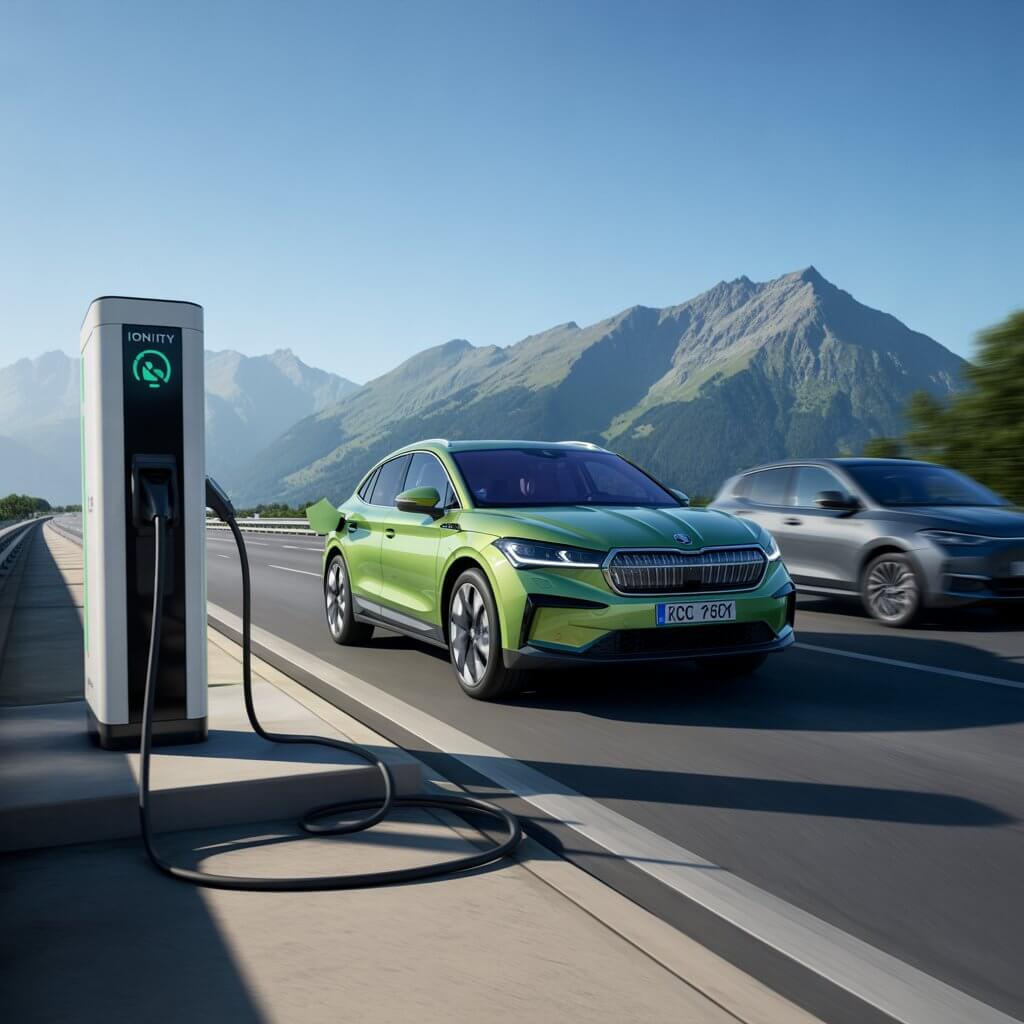
The Enyaq’s 135 kW DC fast charging rate is one of the strongest in the compact-to-mid-size segment. At 135 kW on a compatible Ionity station, a 10-80% charge takes approximately 27-30 minutes for the 82 kWh variants — competitive with much more expensive EVs.
The Enyaq RS’s 175 kW peak charging rate is genuinely impressive for the segment — approaching sports car charging speeds on vehicles under €50,000.
Skoda’s partnership with the IONITY network and integration with the Skoda app’s route planning (which automatically includes charging stops) makes long-distance European travel with the Enyaq more practical than with smaller-battery compact EVs.
Other Key Compact EVs in Europe 2026 — Charging Specs Summary
Citroën ë-C3 and Peugeot e-208
Both the ë-C3 and e-208 are Stellantis platform siblings with similar charging characteristics:
Citroën ë-C3 (44 kWh battery):
- Maximum AC charging rate: 7.2 kW (single-phase)
- Maximum DC fast charging rate: 100 kW (CCS2)
- Full charge at 7.2 kW: approximately 6-7 hours
- Real-world range: approximately 260-290 km
Peugeot e-208 (51 kWh battery, current generation):
- Maximum AC charging rate: 7.2 kW (single-phase)
- Maximum DC fast charging rate: 100 kW (CCS2)
- Full charge at 7.2 kW: approximately 7-8 hours
- Real-world range: approximately 300-340 km
Home charger implication: Both accept 7.2 kW maximum AC. A 7.4 kW single-phase home charger is the correct specification — no three-phase hardware needed or useful.
Volkswagen ID.2 (2025-2026 Launch)
Volkswagen’s entry-level compact EV entering the market in late 2025 and early 2026:
VW ID.2 (estimated specs based on confirmed information):
- Maximum AC charging rate: 11 kW (three-phase) — on higher variants; 7.2 kW on base
- Maximum DC fast charging rate: 125 kW (CCS2) — estimated
- Battery: approximately 38-56 kWh depending on variant
- Connector: Type 2 (AC), CCS2 (DC)
Home charger implication: Base ID.2 owners should buy a 7.4 kW single-phase charger. Higher variant ID.2 owners with three-phase supply can benefit from 11 kW charging — the same calculation as the Renault 5 Long Range.
Opel/Vauxhall Mokka Electric
Mokka Electric (54 kWh battery):
- Maximum AC charging rate: 7.4 kW (single-phase)
- Maximum DC fast charging rate: 100 kW (CCS2)
- Full charge at 7.4 kW: approximately 7-8 hours
- Real-world range: approximately 300-330 km
Home charger implication: Single-phase 7.4 kW is the correct and complete specification. No three-phase consideration needed.
Fiat Grande Panda Electric
Grande Panda Electric (45 kWh battery):
- Maximum AC charging rate: 7.2 kW (single-phase)
- Maximum DC fast charging rate: 100 kW (CCS2)
- Full charge at 7.2 kW: approximately 6-7 hours
- Real-world range: approximately 260-290 km
Home charger implication: Same as the ë-C3 — 7.4 kW single-phase is the correct match.
MG4 Electric
MG4 Standard (51 kWh battery):
- Maximum AC charging rate: 7.2 kW (single-phase)
- Maximum DC fast charging rate: 117 kW (CCS2)
- Full charge at 7.2 kW: approximately 7-8 hours
- Real-world range: approximately 300-340 km
MG4 Long Range (64 kWh battery):
- Maximum AC charging rate: 11 kW (three-phase)
- Maximum DC fast charging rate: 140 kW (CCS2)
- Full charge at 11 kW: approximately 6-7 hours
- Real-world range: approximately 380-420 km
Home charger implication: Standard MG4 — 7.4 kW single-phase. Long Range MG4 — 11 kW three-phase if you have the supply; 7.4 kW single-phase if not.
The Home Charger Decision for Compact EV Owners — A Simple Framework
Here’s the honest framework for compact EV owners choosing a home charger in Europe in 2026. It’s simpler than most guides make it:
Step 1: Find Your Car’s Maximum AC Charging Rate
Check your owner’s manual or the manufacturer’s website for your specific variant’s “maximum AC charging power.” This is either 7.2 kW (single-phase) or 11 kW (three-phase). Most compact EVs in 2026 are 7.2 kW. Some higher variants are 11 kW.
Step 2: Find Your Home’s Supply Type
Single-phase or three-phase. If you don’t know, check your electricity meter or call your electrician. Most UK homes are single-phase. Many continental European homes — particularly in the Netherlands, Germany, Belgium, and Scandinavia — have three-phase as standard.
Step 3: Match the Charger to the Lower of the Two
Your effective home charging speed is the lower of your car’s maximum AC rate and your home’s supply capability:
- Car accepts 7.2 kW + single-phase home = 7.2 kW effective — buy a 7.4 kW single-phase charger
- Car accepts 11 kW + single-phase home = 7.2 kW effective — buy a 7.4 kW single-phase charger (the 11 kW capability is unused at home)
- Car accepts 7.2 kW + three-phase home = 7.2 kW effective — buy a 7.4 kW single-phase charger (three-phase hardware is wasted)
- Car accepts 11 kW + three-phase home = 11 kW effective — buy an 11 kW three-phase charger
The majority of compact EV owners in Europe — including most UK owners — will land in scenario one: 7.4 kW single-phase is the right and complete answer.
Best Home Chargers for Compact EVs in Europe 2026
For 7.4 kW Single-Phase Installations (Most Compact EV Owners)
Wallbox Pulsar Plus 7.4 kW — Best Overall for Most Compact EV Owners
Price: £649-£799 (UK); €699-€849 (Europe) Max Power: 7.4 kW (single-phase) Connector: Type 2 tethered or untethered Smart Features: App control, scheduled charging, solar integration, bidirectional ready Warranty: 2 years OZEV Approved: Yes
The Wallbox Pulsar Plus is the best all-round home charger for the majority of compact EV owners in the UK and Europe — consistent smart features, mature app, wide installer network, and bidirectional charging readiness that future-proofs the installation.
For Renault 5, ë-C3, e-208, Mokka Electric, and Fiat Grande Panda Electric owners specifically, the 7.4 kW single-phase version delivers the exact maximum their cars accept — buying anything more powerful is wasted expenditure.
One consideration for compact EV owners: The Wallbox Pulsar Plus costs £649-£799 for a charger that will deliver 7.4 kW to a car with a 40-54 kWh battery. The full charge from 20% on any of these vehicles takes 5-7 hours. Is the premium smart feature set worth £649-£799 when the charging task is inherently simpler than for a large-battery vehicle? For owners who genuinely use smart tariff scheduling, solar integration, or energy monitoring — yes. For owners who just want to plug in and charge — the Easee One or Rolec WallPod at lower cost may be sufficient.
Myenergi Zappi 7.4 kW — Best for Solar-Owning Compact EV Drivers
Price: £699-£849 (UK); €749-€899 (Europe) Max Power: 7.4 kW (single-phase) or 22 kW (three-phase) Connector: Type 2 tethered Smart Features: Solar divert (Eco/Eco+ modes), app control, scheduled charging Warranty: 3 years OZEV Approved: Yes
For compact EV owners with solar panels, the Myenergi Zappi is the right home charger — full stop, same as for large-battery EV owners.
The financial case for the Zappi is actually stronger for compact EV owners in one specific way: compact EVs are predominantly used for urban and suburban commuting with predictable daily mileage and predictable charging patterns. A Renault 5 owner who commutes 40 km daily and plugs in every evening has a very consistent daily charging demand — typically 10-15 kWh to replace the day’s consumption. A solar system generating 4 kWh of daily surplus covers 25-40% of that demand in Eco+ mode without grid use. The predictability of the charging cycle makes solar divert more consistently effective than for variable-use vehicles.
Over a 7-year ownership period, a UK compact EV owner with a 3.5 kWp solar system saving approximately £200 annually through Zappi’s Eco+ mode saves £1,400 — more than covering the Zappi’s entire cost.
Easee One — Best Value for Compact EV Owners Who Want Smart Features Without Premium Price
Price: £549-£649 (UK); €499-€649 (Europe) Max Power: 7.4 kW (single-phase) or 22 kW (three-phase) Connector: Type 2 untethered socket Smart Features: App control, scheduled charging, energy monitoring, dynamic load balancing Warranty: 3 years OZEV Approved: Yes
The Easee One is the best value smart charger for compact EV owners who want scheduling and energy monitoring without paying Wallbox or Hypervolt prices.
At £549-£649 — £100-£150 less than the Wallbox Pulsar Plus — the Easee One delivers comparable smart features including dynamic load balancing that prevents breaker trips when other appliances are running. The 3-year warranty is better than the Wallbox’s 2-year coverage. The untethered socket design means the cable is the wearing component rather than the installed unit — relevant for compact EV owners who may change vehicles within the charger’s lifespan.
For budget-conscious compact EV buyers who still want smart charging capability, the Easee One is the most compelling option in the European market.
Ohme Home Pro — Best for UK Compact EV Owners on Octopus Agile
Price: £699-£799 (UK) Max Power: 7.4 kW (single-phase) Connector: Type 2 tethered Smart Features: Smart tariff API integration, dynamic scheduling, energy monitoring, solar divert Warranty: 2 years OZEV Approved: Yes
The Ohme Home Pro’s direct API integration with Octopus Agile — the UK’s most dynamic smart tariff with 30-minute pricing — is particularly valuable for compact EV owners for one specific reason: compact EVs with smaller batteries can be fully charged during a single cheap Agile pricing window.
A Renault 5 Standard Range needing 15 kWh to top up from 20% can complete that charge in approximately 2 hours at 7.4 kW. On Octopus Agile, a 2-hour cheap window at 5p/kWh rather than the standard 24p/kWh saves approximately £0.57 per session — roughly £200 annually for daily charging. The Ohme’s dynamic scheduling automatically finds and uses these cheap windows without manual intervention.
For compact EV owners on Octopus Agile specifically, the Ohme Home Pro’s tariff optimisation delivers more consistent savings than any other charger on this list.
Rolec WallPod EV Home — Best Budget UK Option for Compact EV Owners
Price: £449-£549 (UK unit only) Max Power: 7.2 kW (single-phase) Connector: Type 2 tethered Smart Features: Basic scheduling, app control Warranty: 3 years OZEV Approved: Yes
For compact EV owners in the UK whose priority is reliable everyday charging at the lowest possible net cost, the Rolec WallPod EV Home is the honest recommendation.
At £449-£549 before the £350 OZEV grant for eligible flat owners, the effective unit cost drops to £99-£199. For a Renault 5 Standard Range or Citroën ë-C3 owner who just wants to plug in every night and wake up to a full battery — without apps, solar integration, or energy monitoring — the Rolec WallPod delivers exactly that at minimum cost.
The 3-year warranty matches premium alternatives. OZEV eligibility for flat owners makes the net cost compelling. The lack of sophisticated smart features is the trade-off — for flat-rate electricity tariff users who don’t benefit from TOU scheduling, it’s not a meaningful trade-off.
For 11 kW Three-Phase Installations (Higher-Variant Compact EV Owners With Three-Phase Supply)
Easee One (Three-Phase) — Best Value Three-Phase for Compact EVs
Price: €499-€649 (Europe) Max Power: 22 kW (three-phase) — delivers 11 kW to cars with 11 kW onboard charger Connector: Type 2 untethered
The Easee One’s three-phase version is the best value option for continental European compact EV owners — Renault 5 Long Range, MG4 Long Range, higher-variant ID.2 — with three-phase supply and 11 kW onboard charger capability. Dynamic load sharing between multiple Easee units makes it particularly strong for households with more than one EV.
Wallbox Pulsar Plus (Three-Phase) — Best Overall Three-Phase for Compact EVs
Price: €699-€849 (Europe) Max Power: 22 kW (three-phase) Connector: Type 2 tethered or untethered
The same strong overall recommendation as the single-phase version — mature app, wide installer network, bidirectional readiness — in the three-phase format that unlocks full 11 kW charging for capable compact EVs.
The Public Charging Picture for Compact EVs in Europe 2026
Home charging covers 80-90% of charging for most compact EV owners. But the public charging picture matters for the 10-20% of occasions when you need to charge away from home — and compact EVs have specific public charging characteristics worth understanding.
AC Public Charging — Where Compact EVs Charge Slowly
Most European town centre public chargers are 7.2-22 kW AC units — the kind you find in car parks, supermarkets, and town centres. For compact EV owners:
- A Renault 5 Standard Range at a 22 kW three-phase public AC charger charges at 7.2 kW — because the car’s onboard charger limits AC input regardless of what the station offers
- A Skoda Enyaq 85 at the same 22 kW station charges at 11 kW — because its onboard charger accepts three-phase input
This is the practical consequence of compact EV AC charging limitations at public stations: compact EVs don’t benefit from high-power AC stations the way larger EVs with 11 kW or 22 kW onboard chargers do. A 45-minute shopping stop at a 22 kW AC charger adds 40-45 km to a Renault 5 but 80-90 km to a Skoda Enyaq 85.
DC Fast Charging — Where Compact EVs Perform Surprisingly Well
Despite the AC charging limitation, modern compact EVs in 2026 have DC fast charging rates that compare favourably with much more expensive vehicles:
- Renault 5 Long Range: 100 kW — 10-80% in approximately 30 minutes
- Skoda Enyaq 85: 135 kW — 10-80% in approximately 27-30 minutes
- MG4 Long Range: 140 kW — 10-80% in approximately 25-28 minutes
- Citroën ë-C3: 100 kW — 10-80% in approximately 26 minutes
- Peugeot e-208: 100 kW — 10-80% in approximately 25 minutes
These DC charging rates mean motorway journey charging stops for compact EV owners are manageable — a 30-minute charge at a 50+ kW motorway charger adds 150-200 km of range depending on the vehicle and conditions.
The practical constraint for compact EV owners on longer journeys is range, not charging speed. A Renault 5 Standard Range’s 250-280 km real-world range means charging stops every 180-200 km in conservative driving — more frequent than a Skoda Enyaq 85’s 450-500 km range. Plan routes with charging stops every 150-200 km for confident compact EV road trips.
Ionity, Allego, and FastNed — Which Networks Work Best for Compact EVs
Ionity: 350 kW peak capacity, CCS2 compatible — but compact EVs rarely use more than 100-135 kW of that capacity. Ionity works for compact EVs but you’re paying premium pricing for infrastructure your car underutilises. Better to use Ionity when it’s the most convenient option rather than seeking it out specifically.
Allego: Mixed 50-350 kW stations across the Netherlands, Belgium, Germany, and France. The 50 kW CCS2 stations are more relevant for compact EVs and more affordable than ultra-high-power stations.
FastNed: Strong presence in the Netherlands and expanding across Europe. Mix of 50-300 kW stations. Subscription pricing makes it cost-effective for frequent users. Works reliably with all CCS2 vehicles including compact EVs.
Lidl Charge, REWE, and Supermarket Charging: Free or low-cost AC charging at supermarkets across Germany, Netherlands, Belgium, and increasingly France. For compact EV owners doing weekly shopping trips, 45-60 minutes at a 7.2-22 kW AC supermarket charger adds 40-80 km of range at minimal or zero cost — worth building into regular routines.
Smart Charging and Compact EVs — Does the Financial Case Stack Up?
This is the honest question that most compact EV charging guides avoid: given the smaller battery size of compact EVs, does the financial case for a smart charger hold up?
The TOU Scheduling Case for Compact EVs
For a Renault 5 Standard Range with a 40 kWh battery, daily charging typically replaces 10-15 kWh (representing 60-90 km of driving). On Octopus Go (UK), charging at 7.5p/kWh overnight versus 24p/kWh during the day saves approximately £0.25-£0.40 per session — roughly £90-£145 annually for daily charging.
For a Skoda Enyaq 85 with an 82 kWh battery and the same daily mileage, the electricity cost and saving is similar because the kWh consumed per day depends on mileage, not battery size.
Conclusion: The TOU scheduling savings for compact EVs are similar in absolute terms to larger EVs for the same mileage. A smart charger pays back its premium within 3-5 years for consistent TOU tariff users regardless of battery size.
The Solar Divert Case for Compact EVs
As covered in the Zappi section, solar divert is particularly effective for compact EVs with predictable commuting patterns. The consistent daily charging demand makes solar matching more reliable than for variable-use vehicles.
Conclusion: The Myenergi Zappi makes sense for compact EV owners with solar panels — the financial case is strong regardless of battery size.
The “Just Schedule It Manually” Case
Some compact EV owners make the case that sophisticated smart charging hardware is unnecessary — just set your car’s built-in charging timer to charge overnight and you get most of the TOU benefit without a smart charger premium.
This is partially valid. The Renault 5 and Skoda Enyaq both have built-in charging timers that can be set through the car’s app. For owners on simple overnight flat-rate tariffs (Octopus Go’s fixed 7.5p overnight window), the car’s built-in timer captures most of the savings without a smart charger.
For owners on dynamic tariffs (Octopus Agile’s 30-minute pricing), the car’s built-in timer is too blunt — only a smart charger with real-time tariff API integration captures the optimal charging windows.
The OZEV Grant and European Subsidies for Compact EV Owners
Compact EV buyers are more price-sensitive than premium EV buyers — which makes the grant situation particularly relevant.
UK OZEV Grant
Flat owners: £350 off OZEV-approved charger and installation. All chargers listed in this guide qualify. Confirm eligibility with an OZEV-registered installer before purchase.
House-owning homeowners: Not currently eligible for the EVHS. Consider whether the Rolec WallPod’s low base price plus installation (£449-£549 unit, £150-£300 installation = £600-£850 all-in) represents better value than a more feature-rich charger at higher cost without grant support.
European National Subsidies
France (ADVENIR): Up to €960 for individual apartment installations, €300-€500 for individual houses. Highly relevant for Renault 5 owners given France’s status as the car’s home market.
Netherlands (SEEH): 30% of installation cost up to €1,500. Applies to compact EVs including Renault 5 and Skoda Enyaq.
Germany (KfW): Subsidised financing rather than direct grants. Less impactful for smaller-cost compact EV charger installations than for larger infrastructure projects.
Italy (Bonus Colonnine): 80% of purchase and installation cost up to €1,500. One of the most generous in Europe — Italian compact EV buyers should prioritise claiming this before the application window closes.
For the full breakdown of every European EV charging incentive scheme, our EV home charging incentives Europe 2026 guide covers every country’s scheme honestly in one place.
Common Mistakes Compact EV Owners Make With Charging
Mistake 1: Buying a three-phase charger for a single-phase home The most expensive and most common mistake. A 22 kW three-phase charger delivers 7.4 kW on a UK or single-phase European home supply. You’ve paid a premium for nothing. Always confirm your supply type before purchasing.
Mistake 2: Buying a charger rated higher than your car’s AC acceptance rate Buying an 11 kW charger for a Renault 5 Standard Range that accepts 7.2 kW maximum. The charger delivers 7.2 kW regardless of its 11 kW rating. A less expensive 7.4 kW charger delivers identical speed.
Mistake 3: Assuming your car’s AC charging rate is the same as its DC charging rate The Renault 5 Standard Range has a 7.2 kW AC rate and an 80 kW DC rate. These are completely different specifications for completely different charging scenarios. DC fast charging speed doesn’t affect which home charger you need.
Mistake 4: Not using the car’s built-in charging timer for simple tariffs Before buying a smart charger specifically for scheduled charging, check whether your Renault 5 or Skoda Enyaq’s built-in app timer handles your tariff adequately. For simple overnight window tariffs, it often does — saving the smart charger premium for features that genuinely add value over the car’s built-in capability.
Mistake 5: Ignoring Mode 2 cable range anxiety The Mode 2 portable charger included with your compact EV delivers 2.3-3.7 kW from a standard household socket. For a Renault 5 Standard Range, a full charge from empty takes 12-13 hours. This is adequate for many compact EV owners with low daily mileage and guaranteed overnight parking — before spending on a home charger installation, confirm that the included cable genuinely doesn’t meet your needs.
Mistake 6: Forgetting about charging away from home in the total cost calculation For compact EV owners who live in urban areas near reliable public charging, the combination of occasional DC fast charging and home Level 1 on the Mode 2 cable covers many usage patterns without a dedicated home charger installation. This isn’t the right choice for everyone — but for London flat dwellers near a Lidl Charge or Pod Point network, it’s a legitimate option before committing to the full home charger installation cost.
What to Expect From Charging as a Compact EV Owner — Setting Realistic Expectations
This section exists because compact EV owners sometimes arrive with expectations shaped by petrol car ownership that need adjusting for EV reality — and compact EV charging has specific characteristics worth understanding clearly.
You will charge more frequently than large-battery EV owners. A Renault 5 Standard Range’s 250-280 km real-world range means charging every 2-3 days for a typical commuter driving 80-100 km daily. A Skoda Enyaq 85 at 450-500 km might charge every 5-6 days for the same commuter. More frequent charging is normal for compact EVs — it’s not a fault.
You will rarely charge to 100% and rarely drop below 20%. Most EV owners quickly learn to charge to 80-90% for daily use (preserving battery longevity) and charge again when below 20-30% (maintaining buffer range). On a compact EV, this means the actual usable daily swing is approximately 40-60% of the battery — 16-24 kWh on a Renault 5 Standard Range.
Home charging covers most of your needs. For compact EV owners with home charging, the vast majority of charging happens at home overnight. Public charging is for longer journeys and occasional top-ups — not a primary charging method.
Winter range is noticeably lower. Compact EVs’ smaller batteries mean winter range reduction (typically 20-30% in cold weather) has a more significant practical impact than on large-battery EVs. A Renault 5’s 250-280 km summer range becomes 175-200 km in cold winter conditions. Plan accordingly for winter journeys.
Internal Links — Further Reading on Clean Energy Bazaar
The charging guide Renault 5 Skoda Enyaq compact EVs Europe 2026 covers home and public charging for European compact EV owners. Here’s the broader context.
For the full European home charger market comparison covering Wallbox, Easee, Hypervolt, Myenergi Zappi and more, our best Level 2 EV chargers UK Europe 2026 guide covers every major option honestly. For the detailed three-way comparison between Wallbox, Zappi, and Andersen, our Wallbox vs Myenergi Zappi vs Andersen smart charger Europe 2026 comparison goes deeper on every relevant difference. For understanding every grant and subsidy available for European EV charger installation, our EV home charging incentives Europe 2026 guide covers every country in one place. For apartment-dwelling compact EV owners navigating building permission challenges, our apartment EV charging solutions 2026 guide covers rights, permissions and practical solutions. For understanding every spec on a charger listing before you buy, our guide to understanding EV charger specs 2026 translates everything into plain language. And if you’re also considering the Volkswagen ID.4 or ID.3, our best EV charger Volkswagen ID.4 ID.3 Europe US guide covers the VW-specific charging picture in full.
Final Thoughts
The charging guide Renault 5 Skoda Enyaq compact EVs Europe 2026 has a simpler core answer than most charging guides for larger vehicles: the majority of compact EV owners in the UK and Europe need a 7.4 kW single-phase home charger — and choosing which 7.4 kW charger is about smart features, solar integration, warranty, and installer network rather than charging speed.
The honest summary by situation:
- Most UK compact EV owners: Wallbox Pulsar Plus 7.4 kW — best overall with bidirectional readiness
- UK compact EV owners with solar: Myenergi Zappi — solar divert pays for itself
- UK compact EV owners on Octopus Agile: Ohme Home Pro — best dynamic tariff integration
- European compact EV owners wanting best value: Easee One — competitive price, 3-year warranty
- European compact EV owners with three-phase and 11 kW car: Easee One three-phase or Wallbox Pulsar Plus three-phase
- UK flat owners on tight budget: Rolec WallPod after OZEV grant — £99-£199 effective unit cost
- Compact EV owners with solar across Europe: Myenergi Zappi — the answer regardless of battery size
Don’t overspend on a charger that exceeds your car’s AC charging capability. Don’t buy three-phase hardware for a single-phase home. And don’t pay for smart features you won’t use — but do pay for the ones you will.