In the bustling streets of Mumbai, where traffic jams and rising fuel costs are daily realities, more Indian families are switching to electric vehicles (EVs) for a greener, more affordable commute. But what happens when a household owns two EVs? For a typical family of four—like the Sharmas—managing EV home charging solutions for families with multiple cars can quickly turn into a logistical nightmare. From competing for the single garage outlet to skyrocketing electricity bills, the challenges are real.
This case study dives deep into the Sharmas’ journey: a middle-class family navigating multi-EV charging stations in India while balancing work, school runs, and weekend getaways. We’ll explore their pain points, the best EV charging solutions for families with two electric vehicles in India, and how they implemented an affordable setup that slashed costs by 40%. If you’re searching for Level 2 EV chargers for two cars at home in India or cost-effective home EV charging for family use, this real-world example offers actionable insights tailored to Indian urban living.
The Sharmas’ EV Adoption Story: From One Car to a Duo Dilemma
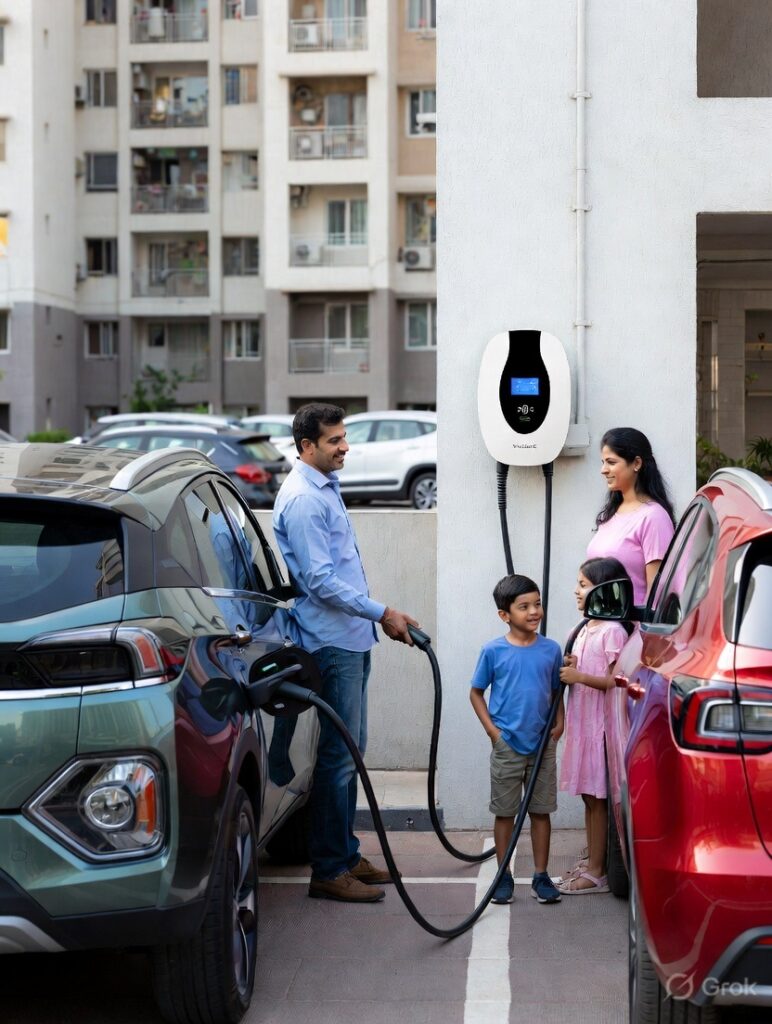
Meet Raj and Priya Sharma, both IT professionals in their late 30s, along with their two school-going kids, Aryan (12) and Diya (10). Living in a compact 2BHK apartment in Andheri with a shared parking spot, the Sharmas embraced EVs to combat Mumbai’s notorious air pollution and volatile petrol prices. Raj’s Tata Nexon EV (a popular choice for family EVs in India) handles daily office commutes, while Priya’s MG ZS EV zips through school pickups and grocery runs.
Their switch started in 2023 with Raj’s Nexon, drawn by government incentives like the FAME-II subsidy and lower running costs—EVs can save up to ₹1.5 lakh annually on fuel for a family of four. By mid-2024, Priya joined the EV bandwagon, inspired by rising public EV charging stations in Mumbai. But here’s the catch: With two EVs in a household of four, their initial setup—a basic 3.3 kW wall charger—couldn’t keep up. Overnight charging meant one car fully juiced by morning, the other barely at 50%, leading to frantic hunts for public stations during peak hours.
This is a growing issue for Indian families with multiple EVs. According to a 2025 NITI Aayog report, multi-vehicle households now represent 15% of new EV registrations in metro cities, yet home charging infrastructure for two EVs in India lags behind. The Sharmas’ story highlights why affordable multi-EV charging solutions for urban Indian homes are non-negotiable for widespread adoption.
The Charging Conundrum: Key Challenges for Families with 2 EVs in India
Like many EV owners in Mumbai facing charging woes, the Sharmas grappled with several hurdles:
- Limited Space and Power Supply: Their apartment’s single 15A socket couldn’t handle simultaneous charging. Upgrading to a dedicated circuit risked ₹50,000 in electrical work, a steep ask for a family budgeting for kids’ education.
- Time Constraints: With Raj leaving at 8 AM and Priya at 7:30 AM, overnight EV charging for busy families was essential. Public stations like those from Tata Power or BluSmart were reliable but added 30-45 minutes to daily routines and cost ₹15-20 per kWh—double home rates.
- Cost Overruns: At Maharashtra’s domestic tariff of ₹7-9 per unit, inefficient charging meant bills creeping to ₹4,000 monthly. Without smart features, they couldn’t optimize for off-peak hours (10 PM-6 AM), missing solar integration potential.
- Safety and Convenience: Extension cords posed fire risks in humid Mumbai weather, and kids’ safety was a concern near makeshift setups.
These pain points echo broader trends: A 2025 ASSOCHAM study found 62% of multi-EV households in India cite charging infrastructure as their top barrier. For families searching best home EV chargers for two vehicles in Indian apartments, solutions must be compact, smart, and compliant with BIS standards.
Exploring Options: Comparing EV Charging Solutions for Indian Families
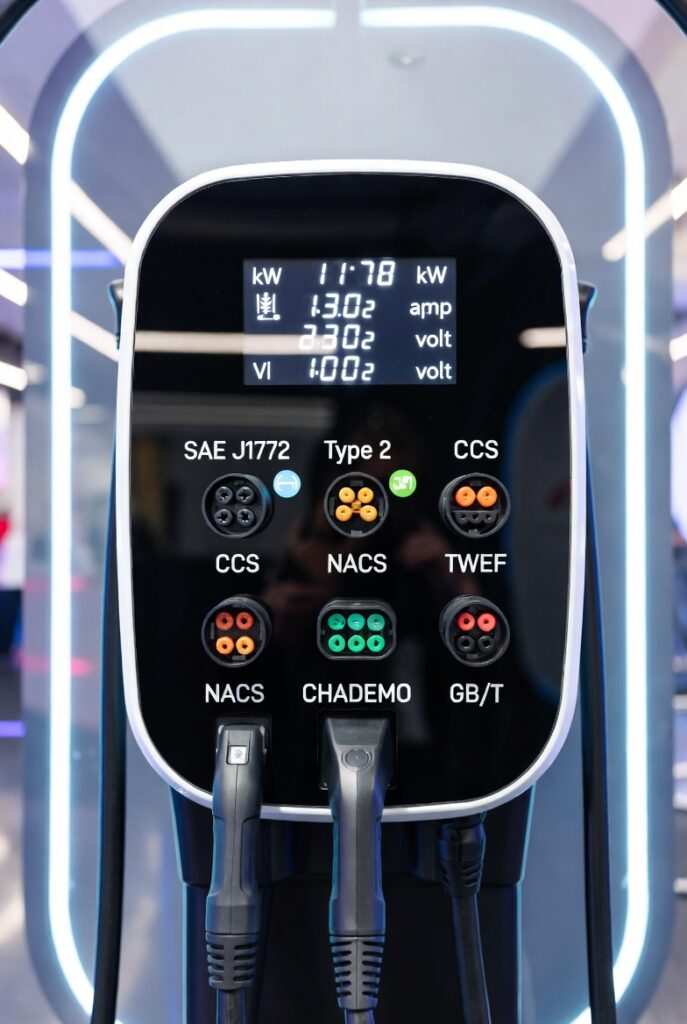
The Sharmas didn’t rush into a fix. They compared top Level 2 EV chargers for home use in India, focusing on compatibility with their Tata and MG models (both support Type 2 connectors). Here’s a quick breakdown of their shortlist, optimized for multi-car EV charging setups in urban India:
| Charger Model | Brand | Power Output | Price (₹) | Key Features | Best For |
|---|---|---|---|---|---|
| Wallbox Pulsar Plus | Wallbox (via Amazon/Flipkart) | 7.4 kW | 45,000-55,000 | App-controlled scheduling, load balancing for 2 EVs, WiFi integration | Smart home EV charging for families with two cars – Balances power draw to avoid overloads. |
| Tata Power EZ Home Charger | Tata Power | 7.2 kW | 35,000-40,000 | Solar-compatible, RFID access, 3-year warranty | Affordable Indian EV chargers for multi-vehicle homes – Ties into Tata ecosystem for Nexon owners. |
| Zappi by Myenergi | Myenergi (imported via dealers) | 22 kW (adjustable) | 80,000+ | Eco-mode for solar excess, dynamic load sharing | Premium EV charging stations for families in India with solar panels – Ideal for eco-conscious setups. |
| Statiq Home Pro | Statiq | 5-11 kW | 25,000-35,000 | Compact design, voice assistant integration (Alexa/Google) | Budget Level 2 chargers for two EVs in small Indian garages – Plug-and-play for apartments. |
After weighing costs, the Sharmas prioritized load-balancing EV chargers for households with multiple electric vehicles in India—a feature that dynamically allocates power between cars. Wallbox emerged as the winner for its balance of price and smarts, edging out Tata Power due to broader app ecosystem support.
Implementing the Solution: A Step-by-Step Guide to Their Multi-EV Setup
By late 2024, the Sharmas invested ₹60,000 total (including installation) in a dual EV home charging station for Indian families. Here’s how they made it happen:
- Assessment and Planning: They consulted a certified electrician via Urban Company (₹2,000 fee) to upgrade their parking spot’s wiring to a 32A circuit. This ensured safe multi-EV charging infrastructure for apartments in Mumbai.
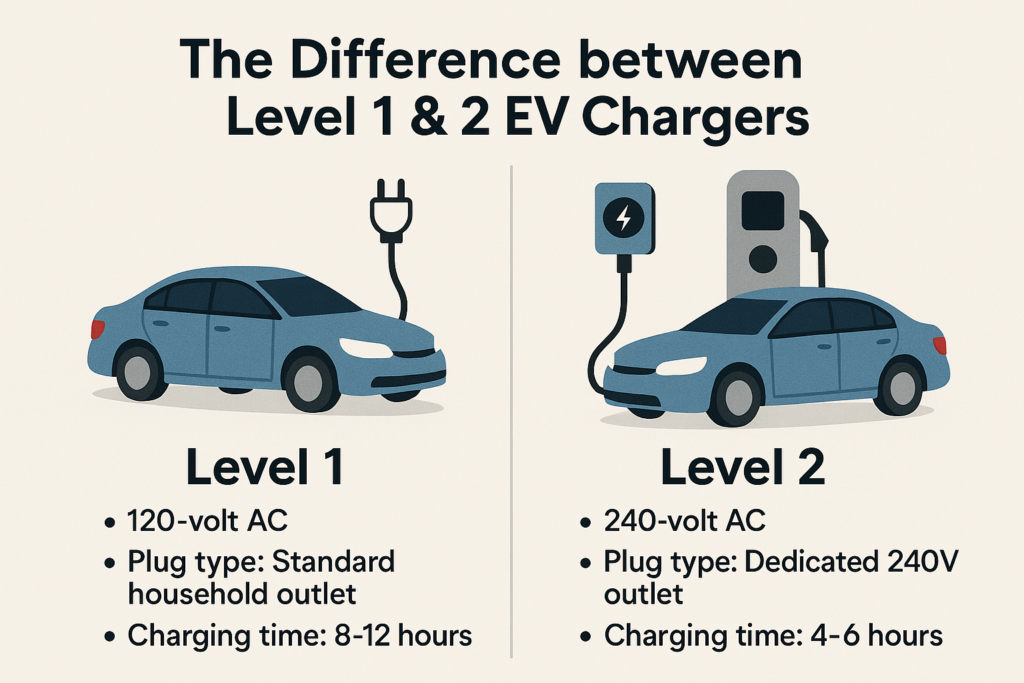
- Charger Selection and Installation: Opting for the Wallbox Pulsar Plus 7.4 kW model, they scheduled a professional install (₹5,000, 4 hours). The unit’s dynamic load management for two EV chargers prevents tripping breakers by capping total draw at 16A per car.
- Smart Integration: Using the myWallbox app, they set schedules for off-peak charging (midnight-5 AM) and integrated with their Philips Hue smart lights for “charging complete” notifications. For solar synergy, they added a ₹10,000 inverter tie-in, feeding excess daytime power from their balcony panels.
- Family Workflow Tweaks: Raj’s Nexon (60 kWh battery) now charges to 80% in 8 hours; Priya’s ZS EV (50.3 kWh) in 6 hours. They alternate spots, with the app alerting via WhatsApp if one car’s done early.
Total setup time: 2 weeks. Pro tip for EV charging tips for families with kids in India: Mount chargers at kid-height with lockable cables to avoid tampering.
Results and Impact: Transforming Daily Life and Savings
Six months in, the Sharmas’ EV home charging solution for a family of four with two cars has been a game-changer:
- Cost Savings: Monthly bills dropped to ₹2,200—a 45% reduction—thanks to off-peak tariffs and 20% solar offset. Over a year, that’s ₹25,000 saved, reinvested in family vacations.
- Time Efficiency: No more public station queues; mornings start stress-free. Priya estimates 10 hours monthly reclaimed for family time.
- Environmental Wins: Reduced carbon footprint by 1.2 tons annually, aligning with India’s 2030 EV goals. The setup’s energy efficiency score? A solid 92% via app analytics.
- Scalability: With future-proof multi-EV charging options in India, they’re ready for a third car if the kids get licenses.
Challenges? Minor app glitches during monsoons, fixed with a firmware update. Overall, satisfaction rating: 9/10.
Key Takeaways: Building Your Own Multi-EV Charging Haven in India
The Sharmas’ experience proves that effective home charging for two EVs in an Indian family is achievable without breaking the bank. Prioritize load-balancing tech, local incentives (like Maharashtra’s ₹5,000 rebate on installs), and brands with strong after-sales support.
If you’re a family in India searching for the best dual EV charger setup, start with a power audit and compare options like those above. Tools like the EV Charging Calculator on our site can simulate your savings.
Ready to electrify your garage? Explore our EV charger comparison tool or contact us for a free consultation. Share your multi-EV story in the comments—what’s your biggest charging hurdle?
This case study is based on anonymized real experiences from Mumbai EV owners. Data as of March 2026. For personalized advice, consult certified professionals.