India’s climate throws everything at EV chargers: scorching 45°C+ summers in Rajasthan and Delhi, heavy monsoon downpours in Mumbai and Kerala, humid coastal conditions in Chennai, and occasional dust storms or foggy winters in the north. A charger that fails during peak monsoon or summer heatwave can leave you stranded or force expensive repairs.
The key to reliability lies in understanding IP (Ingress Protection) and IK (Impact Protection) ratings — the international standards that tell you exactly how well a charger is sealed against dust, water, and physical knocks.
What Do IP and IK Ratings Actually Mean?
IP Rating (Ingress Protection) – two digits after “IP”
- First digit (0–6): Protection against solids (dust, dirt)
- 5 = Dust-protected (limited ingress, no harmful deposit)
- 6 = Dust-tight (complete protection)
- Second digit (0–9): Protection against liquids (water, rain)
- 4 = Splashing water from any direction
- 5 = Water jets (low pressure)
- 6 = Powerful water jets
- 7 = Temporary immersion (up to 1 m for 30 min)
- 8 = Continuous immersion (deeper/longer – rare for chargers)
IK Rating (Impact Protection) – measures resistance to mechanical impacts
- IK08 = 5 joules (equivalent to a 1.7 kg object dropped from 30 cm) – good for wall-mounted chargers
- IK10 = 20 joules – vandal-resistant level (very tough)
For Indian homes and apartments, aim for minimum IP65 + IK08 for outdoor or semi-exposed wall-mounted chargers. Anything lower risks failure during heavy rain or dust.
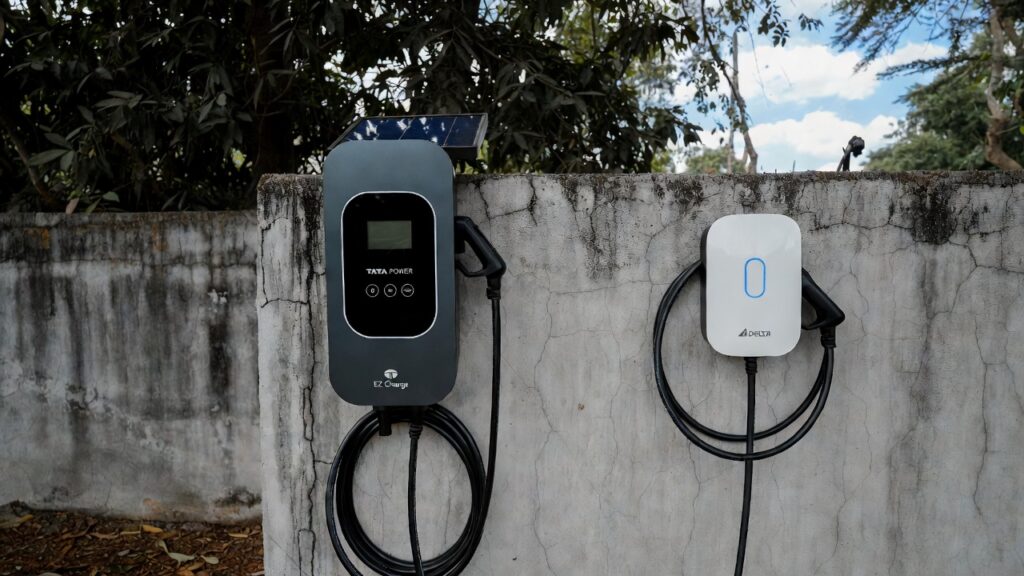
Tata Power EZ Charge and Delta AC Mini mounted on a weathered compound wall – both rated IP65+, handling Bengaluru’s monsoon and summer dust effectively.
Recommended Weatherproof Ratings for Different Indian Scenarios
| Location / Exposure | Recommended Minimum Rating | Why It Matters in India | Typical Charger Examples |
|---|---|---|---|
| Fully outdoor wall (open parking) | IP65 / IK08 or higher | Direct rain, dust, UV exposure, accidental knocks | Tata Power EZ Charge, Delta AC Mini, Exicom Spin |
| Semi-covered (balcony, carport) | IP55–IP65 / IK08 | Splashing rain, high humidity, occasional dust | Bolt.Earth Home, Magenta ChargeGrid Home |
| Indoor / covered garage | IP54–IP55 / IK07 | Dust from vehicles, occasional water spill | Victron Energy, Zeconex basic models |
| Coastal cities (high salt + humidity) | IP66 / IK09+ | Corrosion from salt spray | Delta Wallbox (higher-end), Exicom premium |
| Extreme heat (Rajasthan, MP summers) | IP65 + good ventilation | Prevents overheating of internals | Tata Power, Delta (fanless or smart-cooled) |
Top Weatherproof EV Chargers in India (2026)
- Tata Power EZ Charge (7.4 kW & 11 kW)
- Rating: IP65 / IK08
- Excellent for outdoor use in most Indian cities
- UV-resistant casing, sealed connectors
- Proven in heavy Bengaluru/Kerala monsoons
- Price: ₹38,000–₹68,000
- Delta AC Mini / Delta Wallbox
- Rating: IP65 / IK10 (some variants IK09)
- Fanless design for dust-prone areas
- Superior heat dissipation – ideal for 40–45°C summers
- Price: ₹45,000–₹75,000
- Exicom Spin / iVory series
- Rating: IP65–IP66 / IK08–IK10
- Robust build, corrosion-resistant coating
- Popular in coastal and industrial areas
- Price: ₹50,000–₹95,000
- Bolt.Earth Home Charger
- Rating: IP55 / IK08
- Good for semi-covered parking
- Affordable and reliable in moderate rain/dust
- Price: ₹32,000–₹55,000
- Victron Energy EV Charger
- Rating: IP65 / IK08+
- Premium build quality, excellent for extreme conditions
- Best for large homes with exposed installations
- Price: ₹80,000+
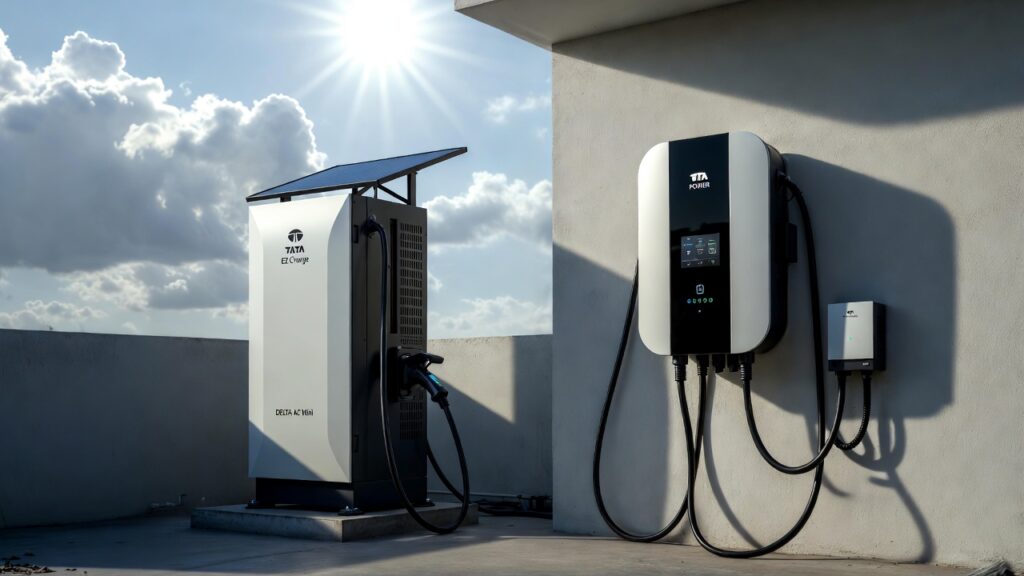
Delta AC Mini and Tata Power EZ Charge under bright sunlight – demonstrating heat-resistant performance and weatherproof construction suitable for Indian rooftops and open parking.
Quick Buying Tips for Extreme Indian Weather
- Never settle for IP54 or lower if the charger will face direct rain or heavy dust.
- Look for UV-stabilized plastic and sealed glands on cable entries.
- Choose fanless designs in dusty/hot regions to avoid clogged filters.
- Add a canopy or rain shield if mounting in very exposed areas (even IP65 benefits from it).
- Check warranty terms – most reputable brands cover weather-related failures only if installed per guidelines.
- Type-B RCCB + Surge Protection – mandatory in 2026 NBC guidelines for outdoor chargers.
Final Verdict for 2026 Buyers
For most Indian homes (especially Bengaluru, Mumbai, Pune, Hyderabad): IP65 + IK08 is the sweet spot — reliable, future-proof, and widely available.
- Best all-rounder: Tata Power EZ Charge (proven across climates, great app)
- Best for extreme heat/humidity: Delta AC Mini (fanless, rugged)
- Best value: Bolt.Earth (if parking is semi-covered)
Planning to install an outdoor or semi-outdoor charger? Share your city, exact mounting location (open wall / balcony / covered), and whether it’s monsoon-heavy or dust-heavy — I’ll recommend the most durable option for your setup.