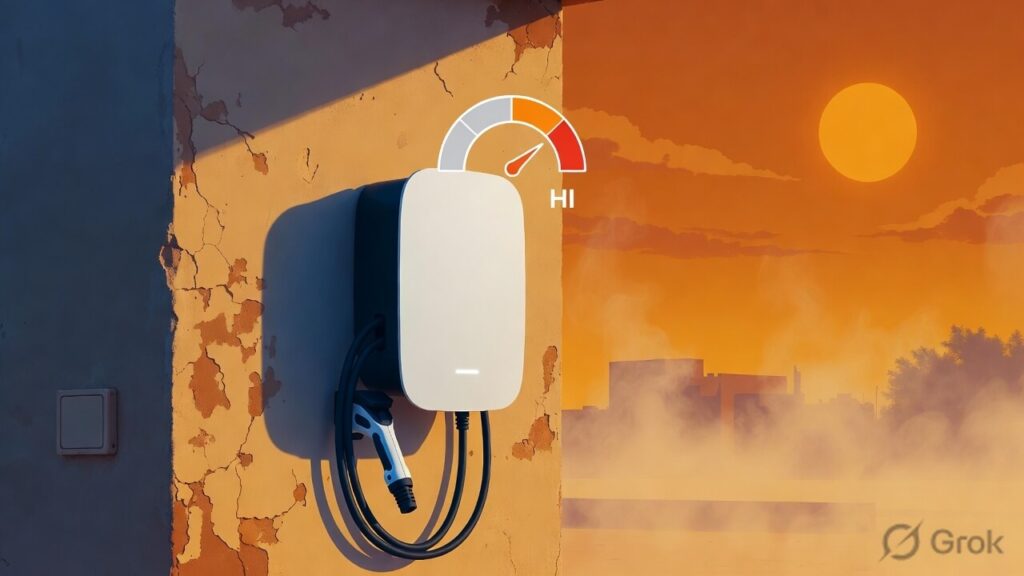
India’s summers are unforgiving. With temperatures regularly breaching 42°C–48°C across states like Rajasthan, Gujarat, Telangana, and Maharashtra, your electric vehicle charger faces one of the most demanding thermal environments on earth. While EV adoption in India has surged past 1.5 million units, a silent concern looms for millions of EV owners: what happens to your charger when the mercury climbs?
This guide breaks down everything you need to know about EV charger thermal management in India — from how heat impacts charging speed and safety, to which chargers handle Indian summers best, and actionable tips to protect your investment.
In This Article
- 1. Why Thermal Management Matters for EV Chargers in India
- 2. How Extreme Heat Affects EV Charger Performance
- 3. Understanding Thermal Runaway vs Thermal Throttling
- 4. Types of EV Chargers and Their Heat Tolerance
- 5. Best EV Chargers for Indian Summer Conditions (Buying Factors)
- 6. Top Warning Signs Your EV Charger Is Overheating
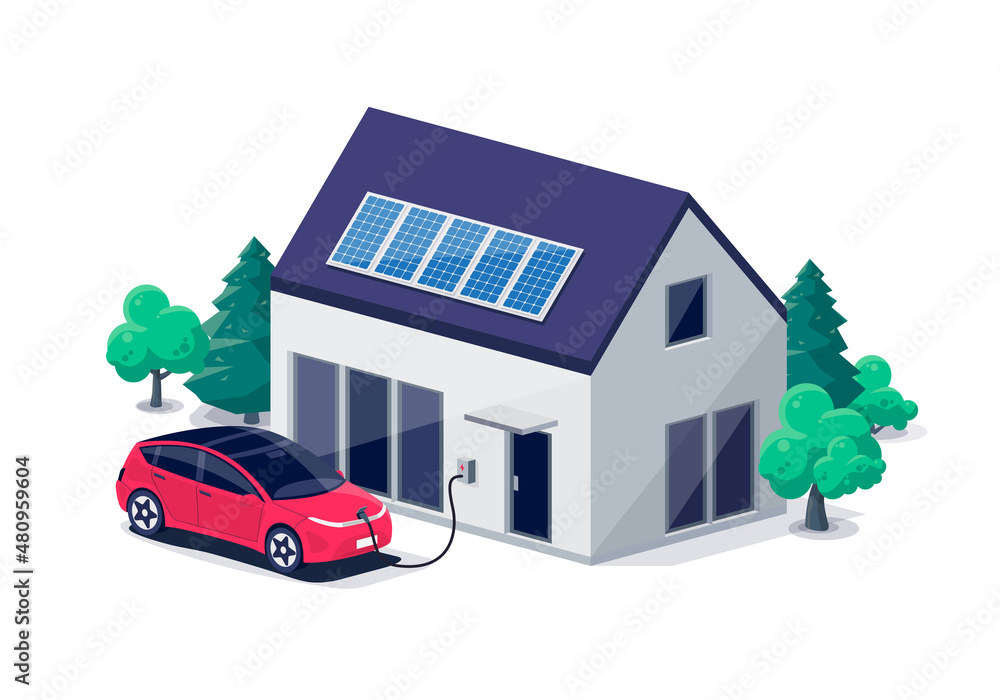
- 7. How to Install a Home EV Charger to Minimise Heat Exposure
- 8. Do’s and Don’ts: Charging Your EV in Indian Summer
- 9. Public Charging in Summer: What to Watch For
- 10. FAQs: EV Charger Heat Problems in India
1. Why Thermal Management Matters for EV Chargers in India
Thermal management refers to how a device controls its own operating temperature under load and in ambient heat. For EV chargers, this is critical because power electronics — MOSFETs, IGBTs, capacitors, and transformers — are all sensitive to temperature. When an EV charger heats up beyond its design threshold, it doesn’t just slow down. It can:
- Reduce charging current to protect internal components (thermal throttling)
- Shut down completely to prevent damage (thermal cutoff)
- Degrade faster over time, shortening product lifespan
- In rare cases, pose a fire or electrical safety risk
In temperate countries, ambient temperatures rarely exceed 30°C, so charger thermal management is a relatively minor concern. In India, however, chargers regularly operate in 40°C+ environments — sometimes in direct sunlight on a terrace or in an open parking lot — pushing them well past their comfort zone.
💡 India-Specific Stat: Cities like Nagpur, Churu, and Ahmedabad regularly see summer temperatures between 45°C–50°C. A charger rated for “up to 45°C” ambient operation is already at its limit before you even start charging.
2. How Extreme Heat Affects EV Charger Performance
Let’s get specific. Here’s what actually happens inside a charger when ambient temperatures rise:
a) Reduced Charging Speed
Most AC home chargers (Level 2) and DC fast chargers (CCS2/CHAdeMO) implement thermal throttling — automatically reducing output power when internal temperatures hit a threshold. A 7.2 kW home charger might throttle down to 5 kW or even 3.3 kW on a hot afternoon. This directly translates to longer charging times during India’s peak summer hours (12 PM – 4 PM).
b) Component Degradation
Electrolytic capacitors — key components in every EV charger — follow a well-known rule of thumb: every 10°C rise in operating temperature roughly halves their lifespan. A charger running at 60°C internally (not uncommon in Indian summers) will degrade far faster than one operating at 40°C. This is why you might find imported chargers rated for European climates failing prematurely in India.
c) Ground Fault and Insulation Issues
High temperatures combined with humidity (especially during pre-monsoon months in coastal cities like Mumbai, Chennai, and Kochi) can degrade cable insulation over time. This creates a higher risk of ground faults, which a good EVSE should detect and trip on instantly.
3. Understanding Thermal Runaway vs. Thermal Throttling
Two terms you’ll often hear in EV charging discussions — and it’s important to distinguish them:
Thermal Throttling (Safe, Automatic)
This is a designed safety feature. When the charger’s internal temperature sensors detect overheating, the controller reduces power output to lower heat generation. Your car continues charging — just slower. This is normal and expected in hot climates. Good chargers communicate this via their app or LED indicators.
Thermal Runaway (Dangerous, Must Be Prevented)
Thermal runaway is a failure mode, more relevant to EV batteries than the charger itself. However, a malfunctioning or low-quality charger that doesn’t throttle properly can supply excessive current or voltage, which can trigger thermal runaway in the battery. This is one reason buying a certified charger (BIS-approved for India) matters enormously.
Key Takeaway: Thermal throttling = charger protecting itself (good). Thermal runaway = catastrophic failure (rare but dangerous). A quality charger with proper BMS communication should prevent the latter entirely.
4. Types of EV Chargers and Their Heat Tolerance in India
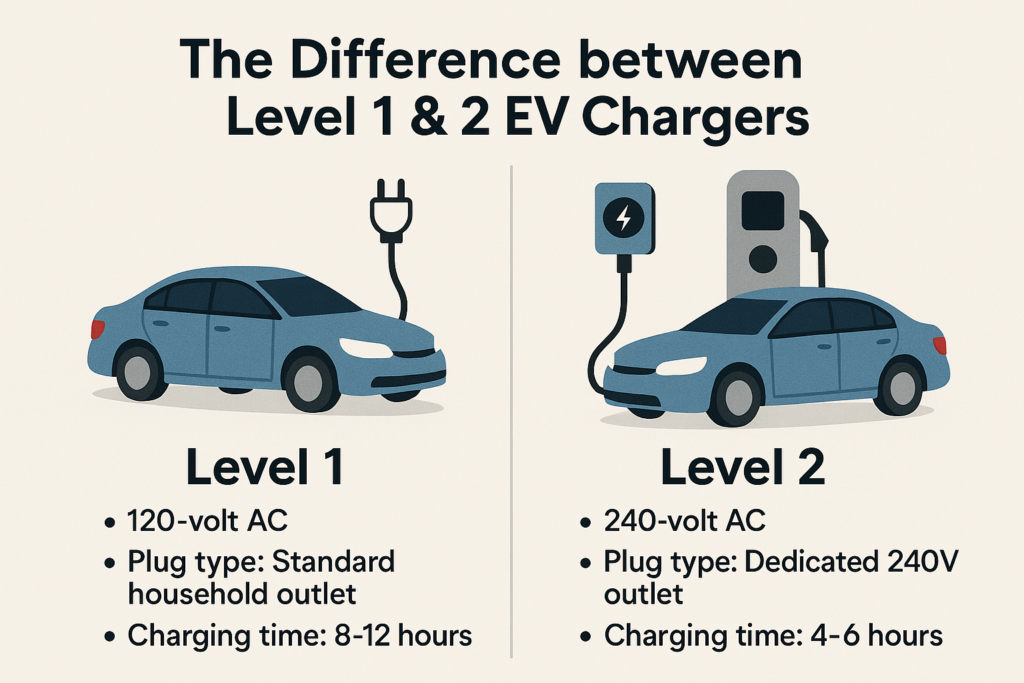
Level 1 — Standard 15A / 5A Portable Charger (Slow Charger)
These are the cables that come bundled with most EVs in India (Tata Nexon EV, MG ZS EV, etc.). They typically output 1.5–2.3 kW. Because the power levels are low, heat generation is minimal, making these relatively tolerant of Indian summer conditions. However, charging a full battery can take 8–16 hours — not ideal if your car isn’t plugged in overnight.
Level 2 — AC Wall Box / Home Charger (3.3 kW – 22 kW)
This is the sweet spot for Indian home EV charging. Units like the Tata Power EV Home Charger, Statiq Home Box, and Exicom home chargers fall here. Most are rated for ambient temperatures up to 40°C–55°C. The key differentiator in Indian summer is whether the unit is:
- IP65 or higher rated (protection against dust and water/humidity)
- Equipped with active cooling (fan) or passive cooling (heatsink design)
- Certified by BIS (Bureau of Indian Standards) under IS 17017
- Capable of communicating thermal status via app or indicator
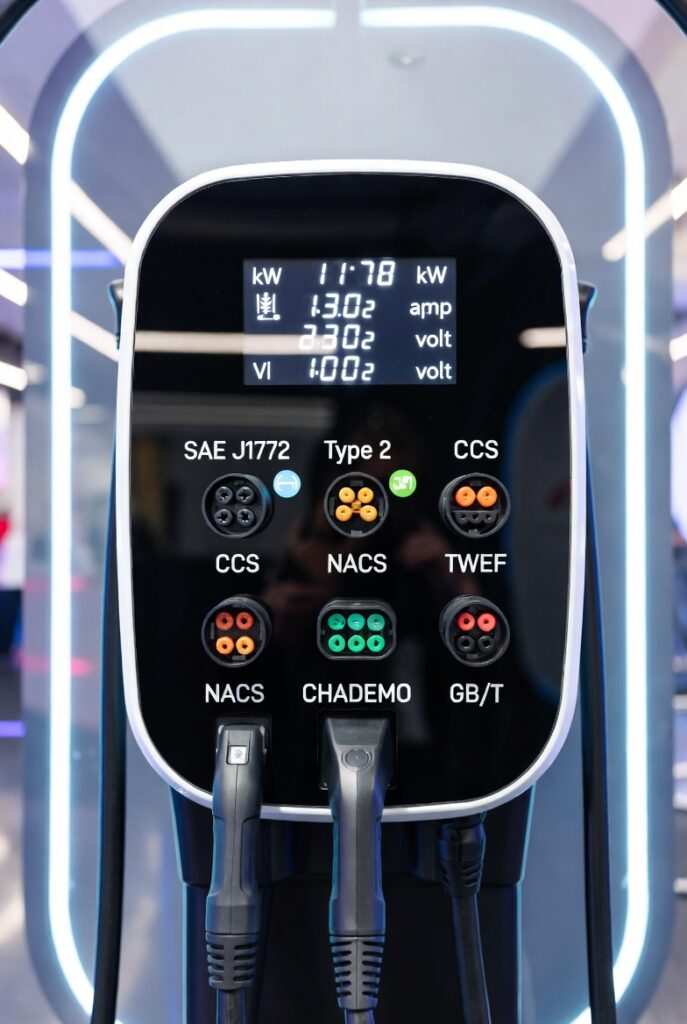
Level 3 — DC Fast Chargers (30 kW – 150 kW+)
DC fast chargers at public stations (Tata Power, ChargeZone, Statiq, Zeon, BPCL Pulse) generate significant heat. Commercial units are typically liquid-cooled or have powerful active cooling systems built in. The thermal challenge here is less about the charger failing and more about the charging cable — liquid-cooled cables at 150 kW+ stations can handle the heat better than air-cooled ones.
5. Key Factors When Buying an EV Charger for Indian Summer Conditions
If you’re in the market for a home EV charger in India and want it to last through multiple summers, evaluate these specific factors — most of which are rarely covered in standard product listings:
1. Ambient Temperature Rating
Look for chargers rated to at least 50°C ambient operation. Anything rated only to 40°C is marginal for interior Indian cities. Check the product datasheet, not just the marketing page.
2. IP Rating (Ingress Protection)
A minimum of IP54 is acceptable; IP65 is ideal. India’s combination of dust (especially in north and central India) and humidity (coastal states) makes this critical for longevity.
3. Active vs. Passive Cooling
Active cooling (fan-assisted) handles sustained high-power charging better in hot climates. However, fans introduce moving parts that can fail or clog with dust. Premium units use intelligent fan control — spinning only when needed. Passive heatsink designs work well for 3.3–7.4 kW outputs if the thermal design is generous.
4. BIS Certification (IS 17017)
The Bureau of Indian Standards has specific standards for EV chargers. A BIS-certified charger has been tested for electrical safety under Indian conditions. Always verify the certification — don’t rely solely on the manufacturer’s claim.
5. Smart Thermal Monitoring & App Connectivity
Premium chargers from brands like Exicom, Okaya, and Delta Electronics offer app-based monitoring where you can see real-time charger temperature, schedule charging for cooler hours (overnight), and receive alerts if the unit throttles or trips.
6. Cable Quality and Heat Resistance
The charging cable — especially the connector end — is often the weakest thermal link. Look for cables with temperature-resistant jacket materials (rated to at least 90°C) and robust locking connectors that won’t loosen due to thermal expansion cycles.
7. Warranty Terms for Indian Climate
Some charger warranties have exclusions for “extreme temperature” damage. Read the fine print. India-focused brands with local service networks are better options than imported units that lack local support.
6. Top Warning Signs Your EV Charger Is Overheating
Don’t wait for a failure — watch for these signs that your charger is struggling with heat:
- Charging speed suddenly drops in the afternoon but recovers at night
- The charger unit feels excessively hot to the touch (uncomfortably warm on the casing)
- Frequent mid-session interruptions during summer months
- Error codes on the charger display or in the companion app related to temperature
- Burning smell or discoloration around the cable connection point
- The charger LED flashes amber or red during charging (check your manual)
- Your EV’s estimated charging completion time keeps extending unexpectedly
⚠️ If you notice a burning smell or visible discoloration, stop using the charger immediately and consult the manufacturer or a certified electrician. Do not attempt to diagnose electrical faults yourself.
7. How to Install a Home EV Charger to Minimise Heat Exposure in India
The installation location of your home charger has a massive impact on its thermal performance. Follow these guidelines:
Avoid South and West-Facing Walls
These receive the most direct afternoon sun in India. A charger mounted on a south-facing outdoor wall in Hyderabad in May is essentially baking under direct radiation for 6+ hours a day. North or east-facing walls are significantly cooler.
Install in a Shaded Location
If outdoor installation is unavoidable, build or use an existing shade structure. Even a simple GI sheet canopy overhead can reduce ambient temperature at the charger location by 8–12°C compared to full sun exposure.
Consider Indoor or Covered Parking
Basement parking or a covered garage is the ideal installation location — ambient temperatures here are typically 5–10°C lower than outdoors, even in peak summer.
Maintain Clearance Around the Unit
Follow manufacturer recommendations for clearance (usually 20–30 cm on all sides). This allows natural convection to carry heat away. Don’t install flush against a wall with no gap, especially if it’s an east/west-facing masonry wall that absorbs and re-radiates heat.
Use UV-Resistant Enclosures for Outdoor Installs
If your charger doesn’t come with a built-in UV-rated enclosure, consider a secondary protective cover. UV degradation of plastic housings is a real issue in Indian summers and can void warranties.
8. Do’s and Don’ts: Charging Your EV in Indian Summer
✅ DO:
- Charge overnight (10 PM – 6 AM) when ambient temperatures are lowest — most EV companion apps support scheduled charging
- Use your car’s pre-conditioning feature (available in Tata Nexon EV, MG ZS EV, BYD Atto 3) to cool the battery before charging
- Park in shade before plugging in — a hot battery charges slower and throttles faster
- Keep your charger firmware updated — manufacturers push thermal management improvements via OTA updates
- Check the charger and cable for signs of wear at the start of each summer season
❌ DON’T:
- Don’t charge at 100% target SOC during peak heat hours — charge to 80% and top up overnight
- Don’t leave the connector exposed to direct sun when not in use — UV and heat degrade the plastic and seals
- Don’t ignore thermal throttling alerts — investigate the root cause rather than dismissing them
- Don’t use a damaged or kinked cable — heat accelerates insulation breakdown in damaged spots
- Don’t block ventilation slots on the charger unit
9. Public EV Charging in Indian Summer: What to Watch For
Public charging networks like Tata Power EZ Charge, ChargeZone, Statiq, and Zeon are expanding rapidly in India. But summer introduces specific challenges at public stations:
Charger Availability Drop
High-temperature shutdowns at poorly maintained stations mean some chargers go offline during peak afternoon hours. Plan your route with a buffer — don’t arrive at a station with minimal SoC on a summer afternoon assuming all chargers are functional.
Queue Times at Working Chargers
When some units trip from heat, the remaining working chargers bear higher utilization. Longer queues are common at highway DC fast chargers (NH44, NH48 corridors) during summer afternoons.
Exposed Connector Hygiene
Public connectors left in direct sun can reach 60–70°C surface temperature. Use gloves or wait 2–3 minutes for the connector to cool before handling. Most modern connectors have temperature sensors that prevent connection if too hot.
Check the App Before You Arrive
Tata Power, ChargeZone, and Statiq apps show real-time charger status. Filter for working chargers and note which ones have AC cooling (usually indicated by “Fast Charger” or higher kW ratings) — these are more likely to be operational in summer heat.
10. FAQs: EV Charger Heat Problems in India
Q: Is it safe to charge my EV in 45°C heat in India?
A: Yes, if your charger is rated for those conditions and installed correctly. The charger will thermal throttle (reduce speed) to protect itself and your car. Avoid charging in direct afternoon sun and prefer overnight charging in extreme heat.
Q: Why does my EV charge slower in summer afternoons?
A: Thermal throttling. Both your EV’s battery management system (BMS) and the charger independently reduce charging rates when temperatures are high. This is normal protective behaviour, not a fault.
Q: Which EV charger brand is best for Indian summer conditions?
A: Indian brands like Exicom, Statiq, and Okaya design specifically for Indian climate conditions and carry BIS certifications. Delta Electronics and ABB also have strong India-specific variants. Always check the ambient temperature rating in the spec sheet.
Q: Can I install my EV charger outdoors in India?
A: Yes, with the right unit. Ensure it has at minimum IP65 rating, is UV-resistant, and is rated for your city’s peak ambient temperature. Avoid south/west facing walls. A shade canopy significantly extends charger life.
Q: My charger gets hot to the touch in summer. Should I be worried?
A: A warm casing is normal during charging — chargers dissipate heat through their enclosure. If it’s uncomfortably hot (can’t hold your hand on it for 3 seconds), that warrants investigation. Check placement, ventilation, and whether the unit is throttling.
Q: Does Indian summer heat permanently damage EV charger components?
A: Repeated thermal stress does accelerate component aging, particularly capacitors and connectors. This is why proper installation location, BIS certification, and scheduled off-peak charging all matter for long-term reliability.
Q: Do DC fast chargers at public stations overheat in summer?
A: Commercial DC fast chargers have robust cooling systems, but high ambient temperatures and high utilization can cause them to trip or throttle. This is more common at older or poorly maintained stations. Apps like ChargeZone and Tata Power show real-time status.
Conclusion: Don’t Let the Indian Summer Undermine Your EV Charging Experience
India’s extreme summer heat is a genuine engineering challenge for EV chargers — but it’s one that can be managed with the right knowledge. By choosing a charger rated for Indian conditions, installing it thoughtfully, and adopting smart summer charging habits, you can enjoy reliable, efficient EV charging year-round.
The long-term cost of ignoring thermal management is real: premature component failure, shorter product lifespan, and potential safety risks. The investment in a quality, climate-appropriate charger pays for itself many times over.
Use our charger comparison tool to filter EV chargers by ambient temperature rating, IP rating, and BIS certification — and find the best option for your city and home setup.