EV charging

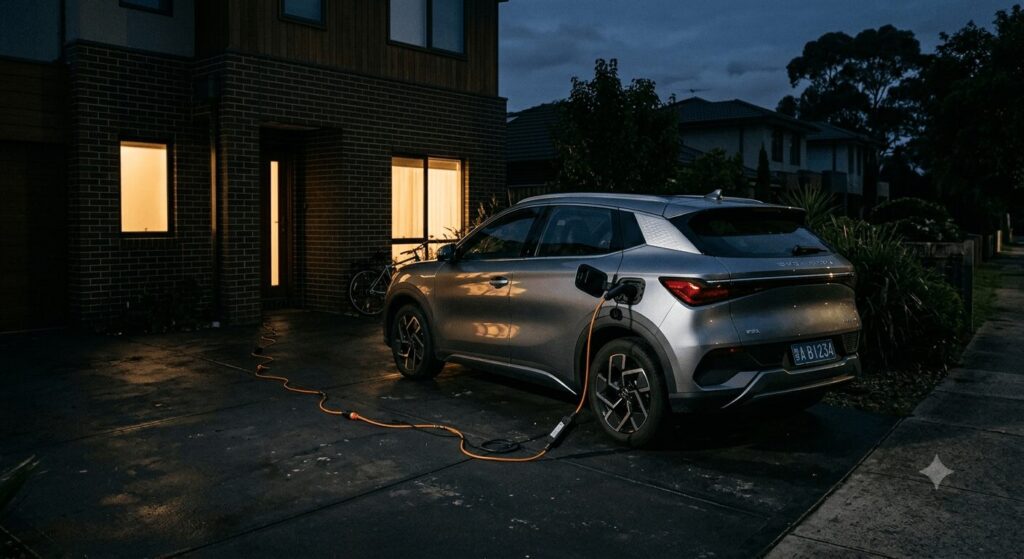
Black home EV charging station mounted on the exterior wall of a typical Bengaluru house with terracotta tiled roof, connected to a sleek dark-colored electric SUV in the driveway, demonstrating real-world home EV charger installation setup for Indian households in 2026
EV charging

True Cost of Ownership: 5-Year Analysis of Top EV Charger Models in India

As electric vehicles continue to gain momentum across India in 2026, especially in bustling cities like Bengaluru, one question stands out for prospective and current EV owners: **What is the true cost of ownership for home EV chargers over 5 years?**

Many buyers focus solely on the initial purchase price, but the **real 5-year cost of owning a home EV charger in India** includes installation, maintenance, electricity usage, and potential long-term savings compared to public charging. With home charging remaining the most economical option—often 50-70% cheaper than public stations—this detailed analysis helps you evaluate popular Level 2 AC chargers (7-7.4 kW range) ideal for Indian households.

In Bengaluru and Karnataka, where BESCOM tariffs hover around ₹7-10 per kWh (with off-peak benefits possible), smart home chargers deliver significant value through features like scheduling and load balancing. Our 5-year breakdown assumes moderate usage: approximately 2,000 kWh annually (suitable for 10,000-12,000 km driving at typical EV efficiency), average electricity at ₹8-9/kWh, standard 3-year warranties, and minimal post-warranty maintenance of ₹1,200-2,000/year.

Top contenders in the **best home EV chargers India 2026** market include:

– **Bolt.Earth Home Charger (7.2 kW)** — Often the budget leader with strong compatibility.
– **Tata Power EZ Charge (7.4 kW)** — Seamless integration for Tata/Nexon.ev owners and app-based controls.
– **Exicom Spin/Harmony (7.2-7.4 kW)** — Reliable smart features and solar readiness.
– **Statiq Wallbox (7.4 kW)** — Excellent for apartments with load-sharing capabilities.
– **ABB Terra AC (7 kW)** — Premium durability for long-term reliability.

Upfront costs in 2026 typically range from ₹35,000-₹70,000 for the charger itself, plus ₹8,000-₹15,000 for professional installation (including wiring and potential panel upgrades in older homes). Electricity dominates operational expenses but varies by state and time-of-day tariffs—home charging still crushes public DC fast chargers costing ₹18-22/kWh.

This **5-year TCO analysis of top EV charger models in India** reveals that affordable yet feature-rich options like Bolt.Earth or Tata Power often deliver the lowest total ownership cost, frequently under ₹1.4-1.5 lakh over five years (including ~₹80,000-₹90,000 in electricity). Premium models justify higher entry prices through better build quality, extended warranties, and energy management that can slash bills further when paired with solar.

Whether you’re searching for the **lowest 5-year true cost of ownership home EV charger Bengaluru** or a detailed **comparison of home EV charger TCO India 2026**, understanding these factors ensures you invest wisely in sustainable driving. Dive into the full article for model-specific breakdowns, tables, and tips to minimize your costs!

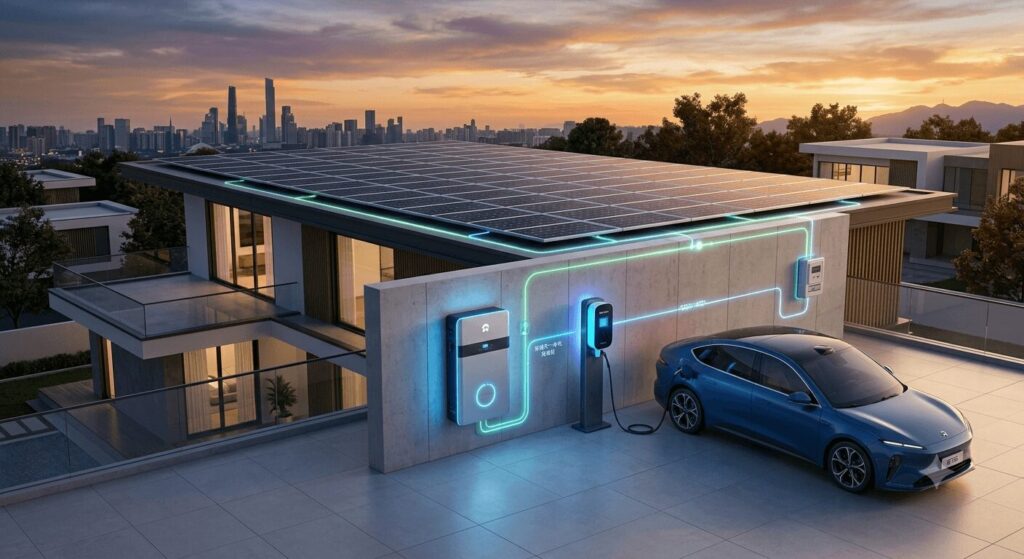
Suburban Bengaluru neighborhood showing energy-efficient Indian homes with rooftop solar PV systems and wall-mounted upcoming EV chargers featuring bidirectional V2G, wireless-ready, and AI-smart charging displays connected to electric cars and scooters
EV charging

Upcoming EV Charger Technologies in India 2026: What’s Worth Waiting For?

As India’s EV market accelerates—with over 3 million registrations in 2026 and ambitious targets under PM E-DRIVE—homeowners in Bengaluru, Mumbai, Delhi, and across urban India are eyeing the next wave of charging tech. Current chargers work well for basics, but **upcoming EV charger technologies in India 2026** like bidirectional V2G, wireless charging, ultra-fast DC, AI-optimized smart systems, and advanced solar integration promise to eliminate range anxiety, cut bills dramatically, and turn your EV into a grid asset.

If you’re planning a home setup or upgrade, is it worth waiting for these **cutting-edge EV charger advancements in India 2026-2030**? Absolutely, especially if you have rooftop solar, face frequent outages, or want future-proof savings. Here’s a sneak peek into the innovations set to transform home charging:

### 1. Bidirectional V2G – Charge Your Home from Your EV
**Vehicle-to-Grid (V2G) technology in India 2026** lets EVs discharge power back to your home during blackouts or peak tariffs, or even sell excess to the grid. Pilots in Delhi and Kerala (by ISGF, IIT Bombay, and KSEB) show EVs storing daytime solar power and feeding it back at night—potentially saving 20-30% on bills while supporting grid stability.

### 2. Wireless & Ultra-Fast Charging
Imagine parking over a pad for cable-free charging (**wireless EV charging innovations in India 2026**), or getting 80% charge in 10-20 minutes via **ultra-fast EV chargers in India 2026** (350 kW+). These reduce hassle in humid climates and long drives.

### 3. AI-Powered Smart & Solar-Integrated Systems
**AI-powered EV chargers in India 2026** predict your usage, optimize off-peak/solar charging, enable dynamic pricing, and integrate V2G seamlessly—lowering costs and boosting uptime. Brands like Enphase, Bolt.Earth, Tata Power, and Exicom are gearing up with solar-priority, bidirectional models.

These technologies align perfectly with India’s renewable push and grid challenges, making them ideal for Bengaluru villas, apartments, or fleet owners.

Don’t settle for yesterday’s charger—future-proof your setup. Dive into our full guide on **best future EV charging innovations worth waiting for in India** to compare timelines, models, costs, and incentives. Read now: [Upcoming Charger Technologies: What’s Worth Waiting For?](https://cleanenergybazaar.com/upcoming-charger-technologies-whats-worth-waiting-for/)

Which 2026 tech excites you most—V2G, wireless, or AI smarts? Drop your thoughts below! ⚡🚗 #EVChargingIndia #V2GIndia #FutureEVTech #SolarEVCharging #BengaluruEV #ElectricVehiclesIndia

EV charging

Load Management Systems: Best EV Chargers That Balance Home Electrical Use in India 2026

As electric vehicles (EVs) gain momentum on Indian roads—with registrations surpassing 2.3 million in 2025 and projections accelerating into 2026—home charging has become essential for urban families in cities like Bengaluru, Mumbai, and Delhi. Yet, many Indian households face a common challenge: limited electrical capacity (often 5-15 kW connections) combined with high-demand appliances like ACs, geysers, and induction stoves. This can lead to tripped breakers, overloaded circuits, or the need for expensive panel upgrades.
Enter load management systems for home EV chargers in India—smart technology that dynamically balances your home’s electricity use to ensure safe, efficient charging without disruptions. These systems, also known as dynamic load balancing EV chargers for Indian homes, monitor real-time power consumption and automatically adjust charging speed. When household demand spikes (e.g., during evening cooking or AC usage), the charger scales back; during low-demand periods or with excess solar power, it ramps up for faster charging.
Why Load Management Matters for Indian Homes in 2026
In a country with variable grid reliability and time-of-use tariffs, dynamic load management in home EV charging India delivers key advantages:

Prevents Overloads & Avoids Costly Upgrades — No more blackouts when running multiple appliances; ideal for apartments and older homes with 32-63A supplies.
Maximizes Savings — Optimizes off-peak charging and solar integration, potentially cutting electricity bills by 20-30% through smart energy allocation.
Supports Solar-Powered Charging — Prioritizes excess rooftop solar energy, reducing grid dependency and enhancing sustainability for eco-conscious Bengaluru homeowners.
Enables Multi-EV or Shared Charging — Perfect for families with two EVs or housing societies, distributing power intelligently across chargers.

Brands like Exicom Spin AC offer built-in dynamic load management with app control and solar readiness, while Victron EV Charging Stations excel in seamless inverter integration for hybrid solar setups. Bolt.Earth and Tata Power EZ Charge provide affordable, scalable options with strong nationwide support, making them popular choices for best smart EV chargers with load management features in India.

EV charging

Wi-Fi vs Cellular vs Bluetooth Chargers: A Comprehensive Connectivity Comparison for EV Owners in India

As electric vehicles zoom past one million registrations in India, the real game-changer isn’t just faster charging—it’s smarter connectivity. If you’re Googling “Wi-Fi vs cellular vs Bluetooth chargers connectivity comparison for Indian EV owners” or “best smart EV charger connectivity options in India 2026,” you’re not alone. With brands like Tata Power EZ Charge, Ather Grid, Delta, ABB, and emerging players like Uno Minda rolling out connected wallboxes and portable units, choosing the right tech can save you money, prevent downtime, and unlock app-based control.
In bustling Bengaluru apartments or remote highway dhabas, connectivity determines whether you can remotely start/stop charging during peak tariffs, monitor energy use to cut BESCOM bills, or receive OTA updates without hassle. Wi-Fi shines for cost-free home setups with stable broadband, offering seamless integration with smart apps for scheduling and solar optimization. Cellular (4G/5G) delivers rock-solid reliability nationwide—ideal for public stations or fleet operators in areas with patchy Wi-Fi—though it comes with modest SIM data costs. Bluetooth keeps things simple and offline for budget buyers, perfect for short-range phone control in garages with no internet.
But which wins for reliable EV charger connectivity in Indian homes and businesses 2026? The answer depends on your location, budget, and usage. Urban EV drivers in metros often prefer Wi-Fi for affordability, while commercial networks lean toward cellular for uninterrupted remote management. Hybrids combining multiple options (Wi-Fi + cellular fallback) are gaining traction too.
Dive into our in-depth Wi-Fi vs cellular vs Bluetooth EV chargers comparison below to find the perfect fit for your Tata Nexon EV, MG ZS EV, or Ather 450X—complete with pros, cons, real India examples, and a handy comparison table.

EV charging

Comparing OLA Electric Hypercharger Network with Ather Grid and Other EV Charging Providers in India: A 2026 Guide

In India’s booming electric two-wheeler market, reliable charging infrastructure remains a top priority for riders battling range anxiety in bustling cities like Bengaluru, Mumbai, and Delhi. As of February 2026, OLA Electric’s Hypercharger network promises ultra-fast charging—delivering up to 75 km of range in just 15 minutes for models like the OLA S1 Pro—while Ather Energy’s expansive Ather Grid leads with over 4,700 charging points across 300+ cities, offering unmatched accessibility and reliability. This detailed 2026 comparison of OLA Hypercharger vs Ather Grid network in India breaks down coverage, charging speeds, costs, and real-world user experience to help you choose the best EV charging stations for OLA electric scooters or Ather 450X in major Indian cities.

EV charging

Vehicle-to-Grid (V2G) Compatible Chargers: Future-Proof Your Purchase in India

In 2026, as India’s EV adoption accelerates—with models like the Tata Nexon EV leading the charge—forward-thinking owners are shifting from simple plug-in charging to truly smart, bidirectional solutions. Vehicle-to-Grid (V2G) compatible chargers let your electric vehicle do more than just receive power: they enable it to store excess solar energy during the day and feed electricity back to your home (Vehicle-to-Home/V2H) or the grid during peak hours, turning your EV into a valuable energy asset.
Imagine parking your Tata Nexon EV at your Bengaluru home, topping it up cheaply with rooftop solar during off-peak times, then using its battery to power appliances during evening blackouts or even earn credits by exporting energy to the grid. Recent pilots in Delhi and Kerala (led by ISGF, Tata Power, and BSES) have proven AC-based V2G works reliably in Indian conditions, with potential cost savings of 30-40% on electricity bills and up to ₹8,000–₹12,000 monthly for fleet operators.
As grid regulations evolve and bidirectional chargers become more accessible, investing in a V2G compatible home charger in India 2026 future-proofs your setup. Whether you’re integrating with solar panels or preparing for dynamic pricing tariffs, this technology supports India’s renewable goals while giving you energy independence and real financial returns.
Ready to compare the best V2G options for Tata Nexon and other popular EVs? Dive into our full guide below to choose the right bidirectional charger for your home today.

EV charging

Professional EV Charger Installation in India: What Electricians Look for in Different Types of Chargers

Planning to install an EV charging station at home in Bengaluru or any Indian city? Professional EV charger installation is more than just plugging in a unit—it’s about ensuring safety, optimal performance, and compliance with Indian electrical standards. Certified electricians specializing in home EV charger installation carefully evaluate your property’s electrical capacity, wiring quality, earthing system, and site suitability before recommending the right charger type—whether it’s a reliable Level 2 AC charger for daily use or provisions for future DC fast charging upgrades. In this guide, we break down exactly what electricians look for in different EV chargers across India, helping you avoid costly mistakes, electrical hazards, and non-compliant setups while maximizing your EV’s charging efficiency.

EV charging

DIY Installation Guide: Which EV Chargers Are Easiest to Self-Install in India

Setting up home charging for your electric vehicle doesn’t have to mean calling an expensive electrician or dealing with complex wiring. In cities like Bengaluru, Mumbai, and Delhi, thousands of EV owners (Tata Nexon EV, MG Windsor EV, Ather 450X, and more) are opting for easy DIY EV charger installation at home in India using portable Level 1 chargers or simple plug-and-play Level 2 models. With just a standard 15-amp socket, basic tools, and 30–60 minutes of effort, you can enjoy convenient overnight charging without permanent modifications—saving ₹5,000–15,000 in installation costs. This step-by-step DIY installation guide for EV chargers in India highlights the easiest self-install EV chargers available in 2026, safety must-knows for Indian 220–240V homes, and real-user tips to get your setup running safely and reliably.

EV charging

Urban vs Rural EV Charging Solutions in India: Different Needs Explained

As India accelerates toward 30% electric vehicle adoption by 2030, the divide between urban EV charging infrastructure in cities like Delhi, Mumbai, and Bengaluru and rural EV charging solutions in villages has never been more apparent. Urban areas demand fast DC chargers, smart networks, and high-density public stations to tackle traffic congestion and range anxiety during daily commutes. In contrast, rural India relies on solar-powered EV charging stations, battery swapping networks, and off-grid innovations to overcome unreliable electricity and vast geographical spreads.
This detailed comparison explores the unique challenges — from grid strain in metros to power shortages in remote areas — and the best tailored solutions driving India’s green mobility revolution. Whether you’re searching for the best EV charging options for urban apartments in India or affordable solar EV charging for rural villages, discover how customized infrastructure is bridging the gap.

EV charging

Urban vs Rural EV Charging Solutions in India: Understanding Different Needs and Challenges

As India races toward its ambitious target of **30% electric vehicle penetration by 2030**, the disparity in **EV charging infrastructure between urban and rural areas** remains one of the biggest hurdles to widespread adoption. In bustling metros like Bengaluru, Delhi, and Mumbai, drivers enjoy dense networks of fast-charging stations in malls, offices, and residential societies. In contrast, rural and semi-urban regions often grapple with sparse coverage, unreliable grids, and the need for off-grid innovations like solar-powered solutions.

This urban-rural divide in India’s EV charging landscape stems from fundamental differences in population density, daily travel patterns, electricity access, and economic priorities. Urban EV charging solutions in India prioritize speed, convenience, and high utilization to support short commutes and busy lifestyles. Rural EV charging infrastructure in India, however, focuses on reliability, affordability, and sustainability to enable long-distance travel, agricultural use, and last-mile connectivity in areas with limited grid reliability.

As of early 2026, India boasts over 39,000 public charging points (with projections continuing to grow under schemes like PM E-DRIVE), yet the distribution tells a clear story: Tier-1 cities still host a significant share, while Tier-3 towns and rural stretches have seen encouraging expansion but face persistent gaps. For instance, urban hubs benefit from fast DC chargers (50 kW+), home AC units, and app-integrated networks from providers like Tata Power, Bolt.Earth, and Statiq. Rural areas, meanwhile, increasingly turn to solar EV charging stations with battery energy storage systems (BESS), portable battery swapping models, and highway corridor deployments to overcome weak power infrastructure and low EV density.

Understanding these **differences between urban and rural EV charging needs in India** is essential for EV owners, policymakers, and businesses alike. Urban users search for “best fast EV charging stations in Bengaluru” or “public EV charging near apartments in Delhi,” while rural adopters seek “solar-powered EV charging for villages in India” or “affordable rural EV charging solutions with battery swapping.” Bridging this gap through targeted policies, renewable integrations, and private investments will be key to making electric mobility truly inclusive across the country.

Whether you’re an urban commuter dodging traffic or a rural entrepreneur eyeing cost savings on fuel, the right charging solution can transform your EV experience. Explore our in-depth comparison below to discover tailored options for every Indian road.

Scroll to Top