EV charging

Three EV charging levels shown side by side — a standard household outlet, a Level 2 home wall box and a DC fast charger at a highway station — illustrating the core comparison in our EV charging guide 2026 Level 1 vs Level 2 vs DC Fast for electric vehicle owners in the US and Europe
EV charging

The Ultimate EV Charging Guide 2026: Level 1 vs Level 2 vs DC Fast Charging — Differences in US and Europe Explained Honestly

Nobody explains EV charging properly when you buy your first electric vehicle. You drive home with a cable you don’t fully understand and a vague sense you should figure this out before the battery hits zero. This EV charging guide 2026 Level 1 vs Level 2 vs DC Fast breaks down everything that actually matters — how fast each charging level really is in the real world, what the difference between US and European charging standards means for you, where NACS and CCS2 stand in 2026, and which charging setup makes sense for your driving life. Whether you’re buying your first EV in the US or switching to electric in Europe, this is the one guide you need to read before you plug in for the first time.

Home EV charger unit placed next to a warranty document and Indian rupee notes, illustrating why every buyer should do a thorough EV charger warranty comparison India before spending ₹15,000 to ₹80,000 on a home or commercial charging unit
EV charging

Shocking Truth About EV Charger Warranty Comparison India: Which Brands Actually Offer the Best Coverage in 2026

Most people buying an EV charger in India spend hours comparing charging speeds and prices. Almost nobody reads the warranty terms — until something fails at month 25 on a 2-year warranty and they realise their coverage excluded the exact fault they needed it to cover. This EV charger warranty comparison India guide breaks down exactly what Tata Power, Ather, Statiq, Exicom, Magenta, Charzer and ABB Terra actually cover — and more importantly, what they don’t. From voltage fluctuation exclusions to service network gaps in tier-2 cities, here’s everything you need to know before you spend ₹15,000 to ₹80,000 on a home or commercial EV charger in India.

Person plugging a CCS2 DC fast charging connector into an electric car at a highway charging station in India, a real world scenario covered in our EV charger troubleshooting guide India for Tata, Hyundai and MG electric vehicle owners
EV charging

EV Charger Troubleshooting Guide India: Common Issues With Type 2, CCS2, CHAdeMO and AC Chargers Explained

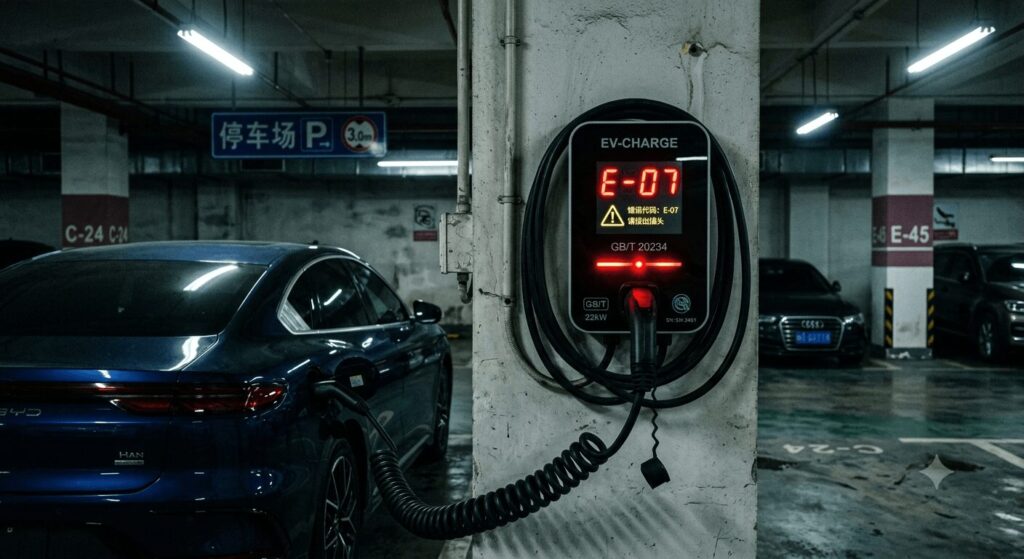
Pulled up to a charging station, plugged in, and nothing happened? You’re not alone. EV charger problems at public stations in India are common enough that every EV owner eventually needs to know how to troubleshoot one. This EV charger troubleshooting guide India covers the most frequent issues across every major charger type — AC slow chargers, Type 2, CCS2 and CHAdeMO — with step-by-step fixes, common error codes explained, and a clear breakdown of when to call the charging operator versus when to call your dealer. Whether your home charger has stopped responding or a highway DC fast charger keeps cutting out after two minutes, here’s exactly what to check before you waste an hour on hold with customer support.

Certified electric vehicle technician inspecting the battery and undercarriage of a white electric SUV on a hydraulic lift at an authorised service centre, illustrating EV maintenance requirements in India for Tata, Hyundai and MG electric vehicle owners
EV charging

EV Maintenance Requirements in India: 7 Surprising Things Nobody Tells You When Comparing Service Needs Across Brands

Lower maintenance is one of the biggest reasons people switch to an EV in India. No engine oil, no timing belt, no fuel system cleanups — sounds straightforward. But EV maintenance requirements in India vary more across brands than most buyers realise, and some of those differences only show up 18 months into ownership. This guide compares actual service schedules, annual costs, and real-world service experiences across Tata, MG, Hyundai, Ola Electric, and Ather — so you know what you’re signing up for before you buy, not after.

Electric car charging at a DC fast charger on an Indian national highway during Diwali with festive lights in the background
EV charging

EV Charging During Holidays in India 2026: How to Manage Increased Electric Vehicle Use During Festivals and Long Weekends

Planning an EV road trip during Diwali, a long weekend, or any major Indian festival? EV charging during holidays in India is a different beast compared to a regular Tuesday drive. Charging queues get longer, some stations go offline under load, and the highways fill up faster than the infrastructure can handle. This guide covers everything you need — the best-covered highway corridors, how to cut wait times, model-specific tips for Nexon EV, MG ZS, Creta Electric and more, and what to do when your planned charger is down. Plan right, and a holiday EV road trip is genuinely enjoyable. Wing it, and you’re Googling “EV charger near me” at a dhaba on NH48.

Realistic EV charger overheating India editorial photo of a white electric car charging in a cool shaded covered garage in India, EV cable plugged in, dappled sunlight and shadows falling across the vehicle, with blurred view of bright hot sunny street visible outside the garage entrance, contrasting cool shade and harsh summer heat, shallow depth of field
EV charging

EV Charger Overheating India: The Critical Guide to Thermal Management — Protect Your Charger This Summer

ndia’s summers don’t just test your patience — they test your EV charger. With temperatures routinely crossing 45°C in cities like Nagpur, Ahmedabad, and Churu, your home charger is operating in one of the harshest thermal environments on earth. Most EV owners focus on range anxiety, but there’s a quieter concern that surfaces every April: why is my car charging slower in the afternoon, and is my charger quietly cooking itself?
The answer lies in thermal management — the set of design choices, safety features, and installation decisions that determine whether your EV charger thrives or struggles through an Indian summer. From thermal throttling that cuts your 7.2 kW charger down to 3 kW on a hot afternoon, to the installation wall direction that could be silently shortening your charger’s lifespan, this guide covers everything Indian EV owners need to know — and what to look for before buying your next charger.

Technician installing Tata Power EZ Charge 7.4 kW AC wallbox in Mumbai apartment society parking garage, high-rise residential buildings in background, multiple electric vehicles parked nearby, representing home EV charging setup preparation for road trips in India 2026
EV charging

Case Study: Road Trip Enthusiast’s Home and Mobile Charging Kit – Navigating India’s EV Road Trips in 2026

In the evolving world of India’s electric mobility, **EV road trip charging kit India 2026** is a game-changer for enthusiasts who refuse to let range anxiety limit their adventures. This case study follows Raj, a Mumbai-based sales executive and avid road-tripper, who transformed his Mahindra XUV400 EV (with its 456 km ARAI range) into a reliable long-haul machine using a smart hybrid setup: a powerful home wallbox for full pre-trip top-ups and a portable/mobile kit for on-the-go flexibility.

Raj’s pre-2026 Mumbai-to-Goa trips (800–650 km via NH-66 coastal or NH-48 via Pune) were stressful—relying solely on public DC fast chargers led to 4+ unplanned stops, queues at highways, and 4 extra hours of downtime. In 2026, with highway networks growing (over 5,000 public points nationwide, including ~200 on NH-48 and 8–11 on NH-66 stretches), he built a **portable EV charger for Indian highway travel** kit that cuts costs, reduces stops, and boosts enjoyment.

**Raj’s Winning Setup**:
– **Home Foundation**: Zeon 11 kW AC wallbox (Type-2, IP65, app-controlled scheduling) mounted in his Bandra society garage (~₹40,000–50,000 installed). Charges the XUV400 to 100% overnight in 6–8 hours at residential rates (₹6–9/kWh), adding ~₹150–200 per full charge and ensuring 80–100% SoC start with buffer.
– **Portable Essentials**: JuiceBox 32A portable EVSE (~₹15,000–20,000) for 7.7 kW output from any 15A socket (dhabas, hotels, or friends’ homes)—adds 30–50 km/hour during breaks.
– **Emergency Backup**: EcoFlow Delta 2 portable power station (1 kWh, solar-compatible, ~₹50,000) delivers 50–100 km trickle range in rural outages or blackouts.
– **Planning Tools**: PlugShare/ChargeMOD apps for real-time station locator, wallet top-ups, and route optimization (e.g., 200–250 km legs with productive stops at cafés).

**Real Results on Mumbai-Goa**:
– **Prep**: Home Zeon full charge pre-departure.
– **En Route**: One 20-min DC top-up (Tata Power Pune, ₹100 for 200 km), portable JuiceBox at Lonavala dhaba (1-hour lunch → 50 km added), EcoFlow for a 30-min rural power dip (30 km saved).
– **Arrival**: 80% battery left, total charging cost ~₹450 vs. ₹5,000+ petrol equivalent, trip time down to 12 hours from 16.

This **EV road trip charging kit comparison India highways** approach delivered 40% annual savings on trips, zero stress, and 5,000+ km/year of joyful driving. For Mumbai enthusiasts planning Goa, Jaipur, or longer hauls, the key is blending reliable home Level 2 charging with portable backups—especially as networks expand under NHEV pilots and state incentives.

Read the full case study for Raj’s exact kit breakdown, cost ROI, route tips (NH-48 vs. NH-66), and alternatives like Tata Power or Statiq portables. Struggling with your own setup? Use our free tool: input your EV (Mahindra XUV400, Tata Nexon EV), route, and needs for personalized charger matches.

Scroll to Top