In the rapidly evolving world of electric vehicles (EVs) in India, choosing the right charger isn’t just about power output—it’s also about connectivity. If you’re searching for a “Wi-Fi vs cellular vs Bluetooth chargers connectivity comparison,” you’ve come to the right place. This guide dives deep into how these technologies enable smart features in EV chargers, helping you make an informed decision for your home or commercial setup. Whether you’re an EV enthusiast in Bengaluru, Mumbai, or Delhi, understanding the “best connectivity options for EV chargers in India” can enhance your charging experience, from remote monitoring to seamless app integration.
As India’s EV market surges—thanks to government incentives like FAME-II and growing adoption of models from Tata, MG, and Hyundai—smart chargers with advanced connectivity are becoming essential. But which is better: Wi-Fi-enabled EV chargers, cellular-connected ones, or Bluetooth-based systems? We’ll break it down, including pros, cons, and real-world applications tailored to Indian users. By the end, you’ll know how to select the “most reliable EV charger connectivity for Indian homes” or businesses.
What Are Connectivity Options in EV Chargers?
Before we compare “Wi-Fi vs cellular vs Bluetooth for EV charging stations,” let’s clarify what connectivity means in this context. Modern EV chargers aren’t just plugs; they’re smart devices that connect to the internet or your smartphone for features like:
- Remote start/stop charging via apps.
- Real-time energy usage tracking.
- Over-the-air (OTA) firmware updates.
- Integration with smart home systems like Google Home or Alexa.
- Payment processing for public chargers.
In India, where power grids can be unreliable and data plans vary, the choice of connectivity impacts reliability, cost, and ease of use. Popular brands like Tata Power EZ Charge, ABB, and Delta offer models with these options. If you’re wondering about “EV charger connectivity types explained for beginners,” think of it as how your charger “talks” to the world: locally (Bluetooth), wirelessly at home (Wi-Fi), or anywhere via mobile networks (cellular).
Wi-Fi Connectivity in EV Chargers: Pros, Cons, and Use Cases
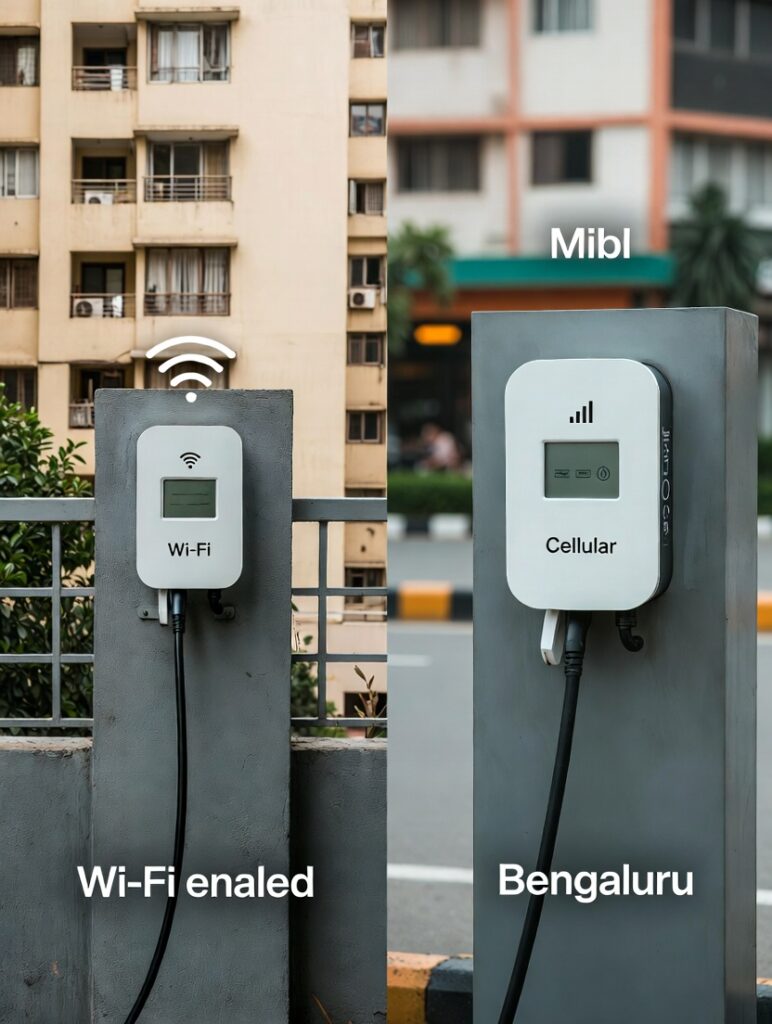
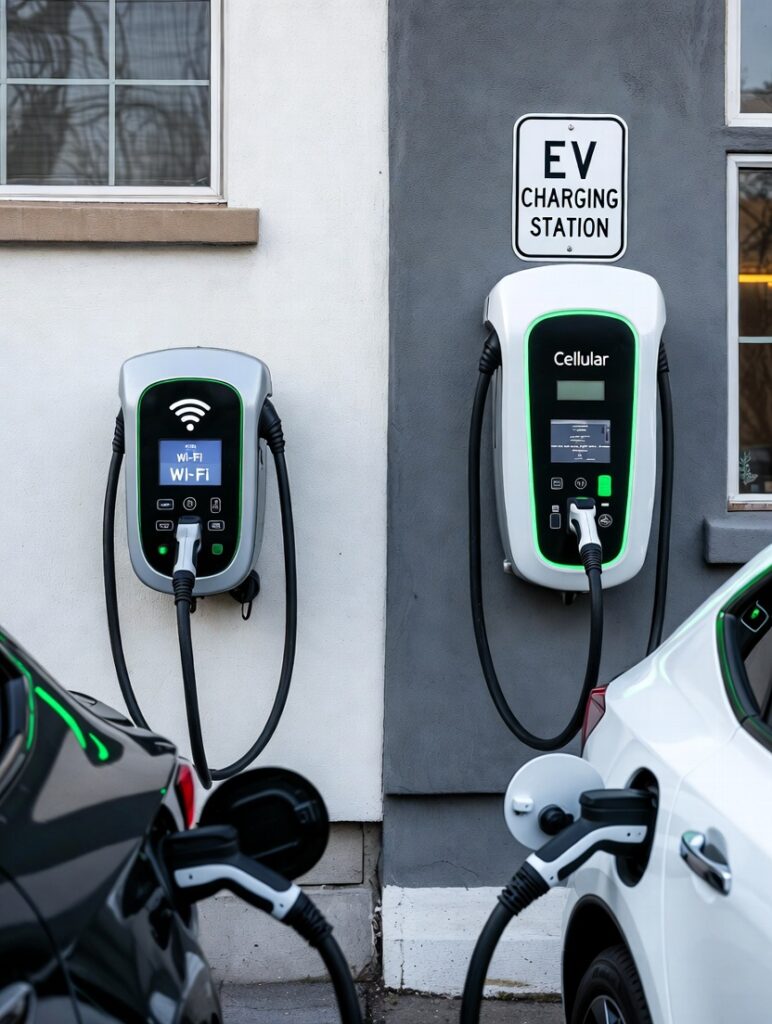
Wi-Fi is one of the most common connectivity options for “home EV chargers with Wi-Fi in India.” It uses your home or office wireless network to connect the charger to the internet, enabling app control and data syncing.
Advantages of Wi-Fi Enabled EV Chargers
- Cost-Effective Operation: No ongoing data fees—once set up, it relies on your existing broadband. Ideal for “affordable Wi-Fi EV chargers for Indian apartments.”
- High-Speed Data Transfer: Perfect for downloading updates or streaming live charging stats without lag.
- Seamless Integration: Works well with smart home ecosystems. For instance, you can schedule charging during off-peak hours via apps like the Tata Power app.
- Energy Management: Many Wi-Fi chargers integrate with solar panels, helping users optimize for “Wi-Fi connected EV chargers with renewable energy in India.”
Disadvantages of Wi-Fi for EV Charging
- Range Limitations: Wi-Fi signals can weaken in large homes or outdoor setups, leading to connectivity drops— a common issue in India’s sprawling villas.
- Dependency on Internet: If your Wi-Fi goes down (hello, monsoon outages!), so does remote access.
- Security Concerns: Vulnerable to hacking if not secured properly, though modern chargers use encryption.
In India, models like the MG ZS EV’s compatible Wi-Fi chargers are popular for urban users. If you’re looking for “best Wi-Fi EV chargers under 50,000 INR,” options from Schneider Electric offer great value.
Real-World Application in India
Imagine parking your Nexon EV in your garage in Bengaluru. With a Wi-Fi charger, you can monitor charging via your phone while working from home, ensuring you never overcharge during peak tariff times set by BESCOM.
Cellular Connectivity in EV Chargers: Pros, Cons, and Use Cases
For those needing “reliable cellular-connected EV chargers in remote areas of India,” cellular (often 4G/5G) uses SIM cards to connect directly to mobile networks, bypassing Wi-Fi altogether.
Advantages of Cellular EV Chargers
- Ubiquitous Coverage: Works anywhere with cellular signal—perfect for “cellular vs Wi-Fi EV chargers for rural India” where broadband is spotty.
- Independence from Local Networks: No Wi-Fi setup needed; great for public stations or fleet management.
- Enhanced Reliability: Less prone to local outages; if one tower fails, it switches seamlessly.
- Advanced Features: Supports geofencing and real-time alerts, useful for “commercial EV charging stations with cellular connectivity in India.”
Disadvantages of Cellular for EV Charging
- Ongoing Costs: Requires a data plan (e.g., from Jio or Airtel), adding monthly expenses—around 200-500 INR.
- Signal Dependency: In areas with poor coverage, like hilly regions in Himachal or dense urban blackspots, it might falter.
- Battery Drain on Charger: Cellular modems consume more power, though minimal in modern units.
Brands like Ather Energy incorporate cellular in their fast chargers, ideal for “cellular-enabled public EV chargers in Mumbai.” For businesses, this means easy integration with OCPP (Open Charge Point Protocol) for multi-site management.
Real-World Application in India
Picture a delivery fleet in Delhi using Mahindra eVerito vehicles. Cellular chargers allow operators to track usage remotely via apps, optimizing routes and reducing downtime—even during power cuts.
Bluetooth Connectivity in EV Chargers: Pros, Cons, and Use Cases
Bluetooth is the simplest option for “Bluetooth vs Wi-Fi EV chargers for short-range control in India,” focusing on direct, short-distance communication between your phone and the charger.
Advantages of Bluetooth EV Chargers
- Ease of Setup: No internet required—just pair via app. Great for “budget Bluetooth EV chargers for beginners in India.”
- Low Power Consumption: Efficient for basic tasks like starting a charge session.
- Offline Functionality: Works without data or Wi-Fi, ideal for garages with no signal.
- Security: Limited range (about 10-30 meters) reduces hacking risks.
Disadvantages of Bluetooth for EV Charging
- Limited Range: You must be nearby to control it—not suitable for remote monitoring.
- Basic Features Only: Lacks advanced integrations like OTA updates or cloud syncing.
- Compatibility Issues: Not all phones support the latest Bluetooth versions, though common in India.
Entry-level chargers from brands like Plugzio use Bluetooth for “affordable home EV chargers with Bluetooth in Kolkata,” keeping things simple for first-time EV owners.
Real-World Application in India
For a small apartment in Chennai with a Hyundai Kona Electric, a Bluetooth charger lets you initiate charging from your balcony without needing complex setups.
Head-to-Head Comparison: Wi-Fi vs Cellular vs Bluetooth for EV Chargers in India
To help you decide on the “ultimate connectivity comparison for EV chargers in Indian market,” here’s a detailed breakdown:
| Feature | Wi-Fi | Cellular | Bluetooth |
|---|---|---|---|
| Range | Home/Office Wi-Fi coverage (up to 100m) | Nationwide cellular network | Short-range (10-30m) |
| Cost | Low (no data fees) | Medium (SIM plan required) | Lowest (no ongoing costs) |
| Reliability in India | Good in urban areas; poor in outages | Excellent with 4G/5G; spotty in remote areas | High for local use; no remote access |
| Features | Advanced (app, smart home integration) | Full (remote monitoring, payments) | Basic (start/stop, status check) |
| Best For | Home users with stable internet | Commercial/public stations | Budget-conscious beginners |
| Popular Models in India | ABB Terra AC (Wi-Fi) | Delta DC Wallbox (Cellular) | Schneider Evlink (Bluetooth option) |
| SEO Tip: Long-Tail Keyword | “Wi-Fi EV chargers for apartments in Bangalore” | “Cellular EV chargers for highways in India” | “Bluetooth EV chargers under 20,000 INR” |
This table highlights why “choosing between Wi-Fi, cellular, and Bluetooth for EV charging connectivity” depends on your needs. For instance, if you’re in a metro city with reliable broadband, Wi-Fi wins for cost savings. In contrast, cellular shines for “EV charger connectivity options for Indian businesses” managing multiple sites.
Factors to Consider When Choosing Connectivity for Your EV Charger in India
- Location: Urban? Go Wi-Fi. Rural? Cellular is key for “reliable EV charging in remote Indian villages.”
- Budget: Factor in installation (Wi-Fi: 5,000-10,000 INR; Cellular: higher due to SIM).
- EV Model: Ensure compatibility—e.g., Tesla adapters often prefer Wi-Fi.
- Future-Proofing: With 5G rollout, cellular could become the “future of EV charger connectivity in India.”
- Regulations: Comply with ARAI standards and BIS certifications for safety.
Also, consider hybrid options: Some chargers like those from Siemens offer Wi-Fi with cellular fallback.
Conclusion: Which Connectivity Wins for Indian EV Owners?
In the “Wi-Fi vs cellular vs Bluetooth chargers connectivity comparison,” there’s no one-size-fits-all. Wi-Fi offers affordability for homes, cellular provides unmatched reach for commercials, and Bluetooth keeps it simple for basics. For most Indian users, starting with a “Wi-Fi enabled EV charger for home use in India” is a smart bet, especially with rising broadband penetration.
Ready to upgrade? Check out our comparisons on the best EV chargers in India or contact local installers. If you have questions like “how to install Wi-Fi EV chargers in Indian homes,” drop a comment below. Drive green, stay connected!