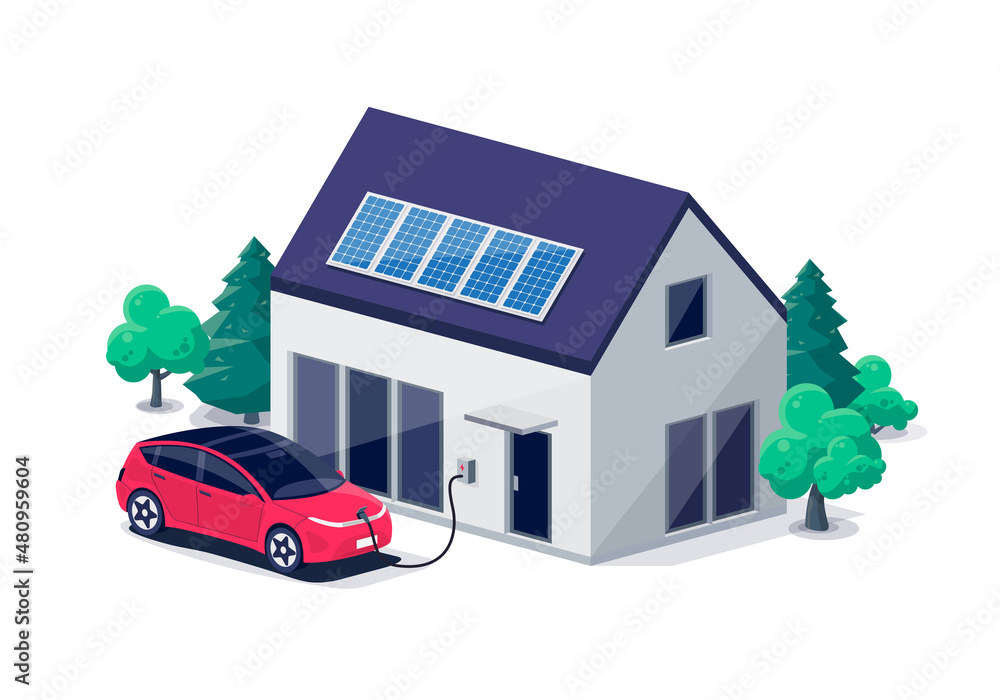
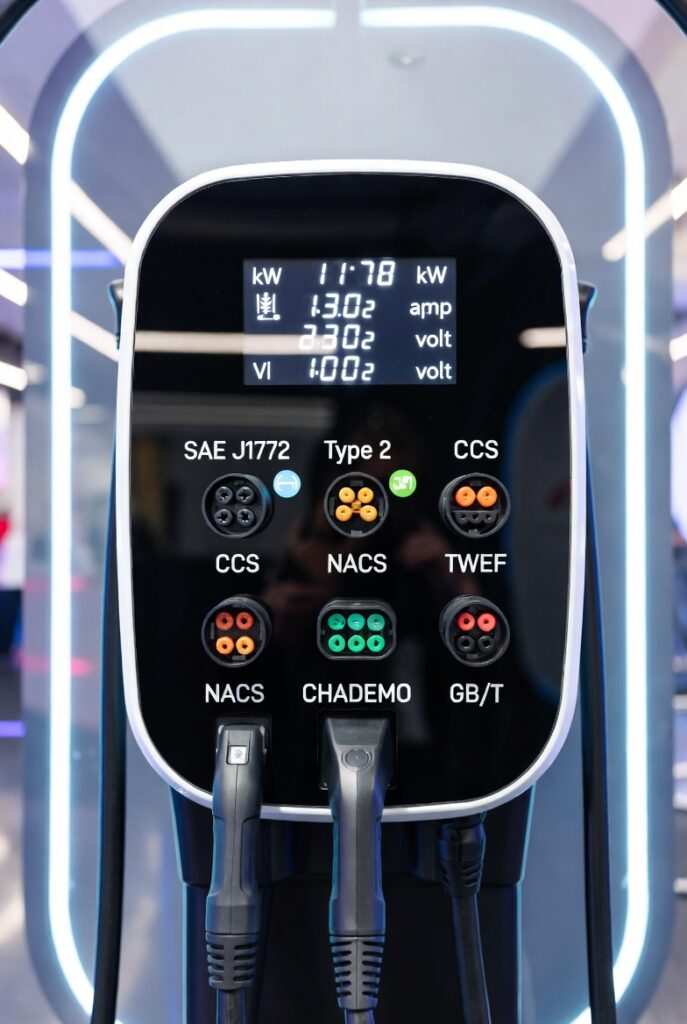
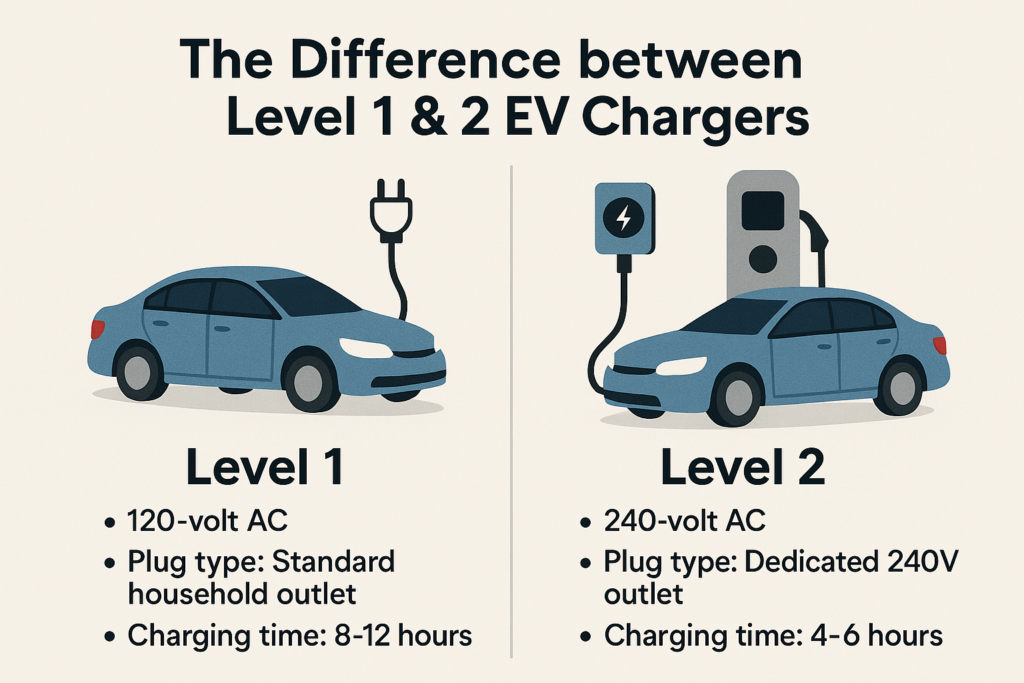
Rooftop solar + home EV charging is now one of the smartest financial decisions in India. With electricity tariffs averaging ₹7–10/unit and solar generation peaking during daytime when most people aren’t driving, you can charge your EV almost for free during the day or drastically reduce night-time grid bills.
In 2026, several Indian EV chargers support direct solar integration — either through built-in solar MPPT controllers, smart load management, or compatibility with popular hybrid inverters (like Growatt, Luminous, Microtek, Tata Power Solar, etc.).
This guide covers:
- How solar + EV charging actually works in Indian homes
- Best compatible chargers available in 2026
- Real cost savings examples
- Installation tips & common mistakes to avoid
How Solar-Powered EV Charging Works in India
There are three main ways to integrate solar with your EV charger:
- Direct DC solar charging (rare, mostly commercial)
- Solar → Hybrid Inverter → Home AC grid → EV charger (most common setup)
- Smart solar-aware chargers that prioritize solar power and dynamically switch to grid only when needed
Most Indian homes use setup #2 or #3 because they already have (or plan to install) a hybrid/on-grid solar system with 3–10 kW capacity.
Key requirement: Your EV charger must support dynamic load management or solar excess charging so it only draws surplus solar power instead of pulling from the grid when solar is available.
Top Solar-Compatible Home EV Chargers in India (2026)
Here are the chargers that Indian homeowners and installers most frequently recommend for seamless solar integration:
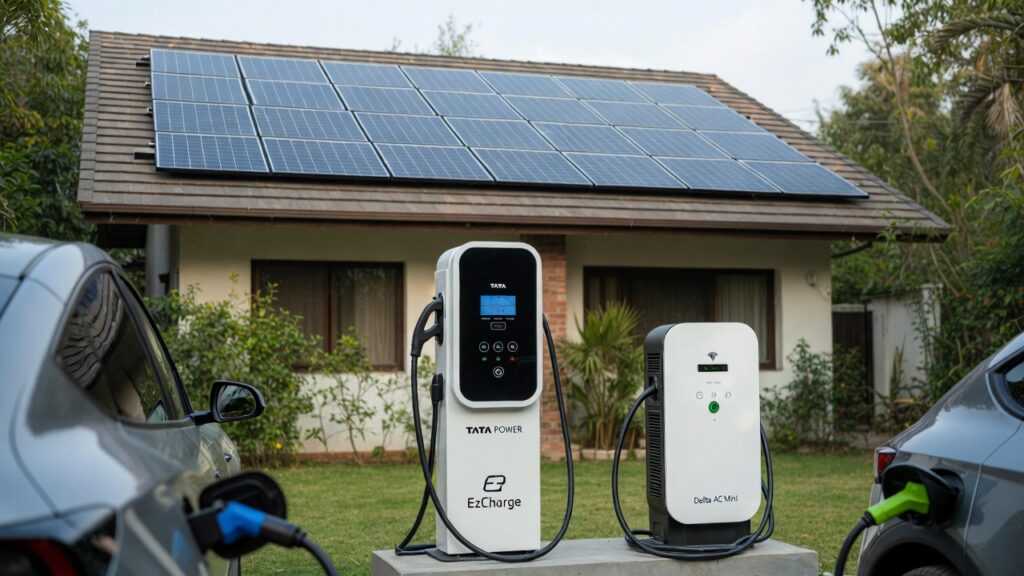
- Tata Power EZ Charge (7.4 kW & 11 kW models)
- Built-in solar priority mode in newer firmware
- Works perfectly with Tata Power Solar hybrid inverters
- App shows real-time solar vs grid usage for EV charging
- OCPP 1.6 compliant + dynamic load balancing
- Price: ₹38,000–₹68,000
- Best for: Tata Nexon EV, Tiago EV, Punch EV owners with Tata solar systems
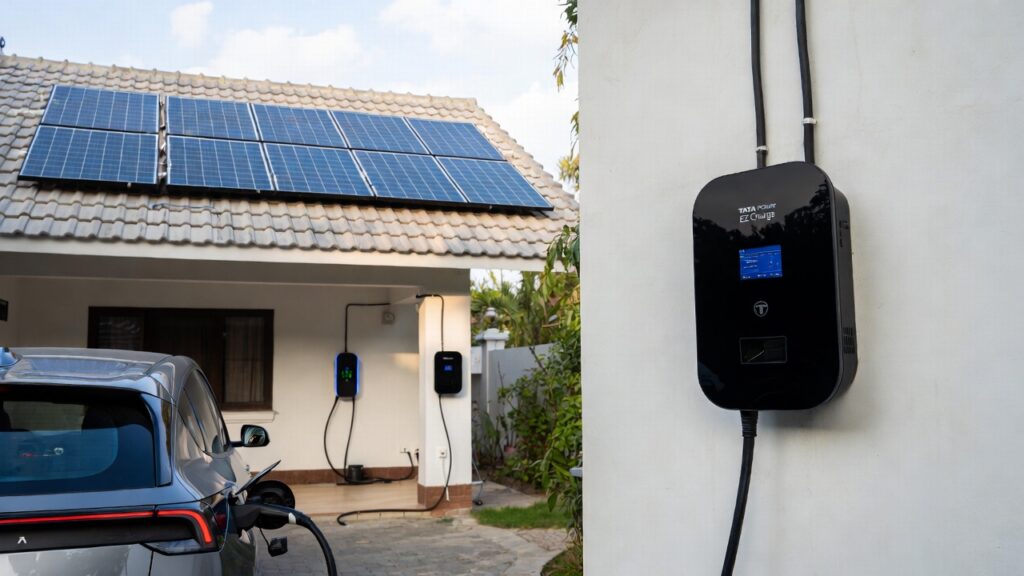
Tata Power EZ Charge mounted under typical Indian rooftop solar panels
- Delta AC Mini / Delta Wallbox (7.4 kW)
- Excellent solar integration via Modbus communication with many hybrid inverters
- Supports “solar-only” or “solar + grid” modes
- Very reliable in high-temperature Indian conditions
- Price: ₹45,000–₹75,000
- Best for: Premium setups with Growatt, Sofar, GoodWe, or Luminous inverters
Delta charger integrated with rooftop solar on a Bengaluru home
- Exicom Spin / Exicom iVory (7.4–22 kW)
- Native support for solar excess charging via app & cloud
- Can be configured to charge only when solar generation > house load + set minimum kW
- Popular among large homes with 8–15 kW solar arrays
- Price: ₹50,000–₹95,000
- Bolt.Earth Home Charger (7.4 kW)
- Solar-aware scheduling via Bolt app
- Works well when paired with third-party energy monitors (Emporia, Sense, or Indian brands like Genus)
- Affordable entry point for solar + EV
- Price: ₹32,000–₹55,000
- Victron Energy EV Charger (new India models)
- Best-in-class solar integration (Victron ecosystem native)
- Full compatibility with Victron MultiPlus/Quattro inverters + Cerbo GX
- Zero-export or excess solar charging out of the box
- Price: ₹80,000+ (premium segment)
Other mentions: Magenta ChargeGrid Home, Zeconex Solar Edition, Kazam smart chargers (firmware updates in 2026 improved solar logic).
Real Cost Savings Example (Bengaluru, 2026)
- 5 kW rooftop solar system generating ~20–22 units/day
- Tata Nexon EV, 50–80 km daily driving (~12–18 kWh needed)
- Without solar: ~₹120–180/day grid charging (₹10/unit)
- With solar-priority charger: ~70–90% of charging from solar → ₹20–50/day
- Monthly savings: ₹3,000–5,000
- Payback on charger upgrade: 12–24 months
Installation Tips for Solar + EV in India
- Install the charger close to the inverter output (minimize AC cable losses)
- Use a separate energy meter or CT clamp to monitor solar export vs house consumption
- Enable “solar-only” or “excess solar” mode in the charger app
- Add a smart plug / relay if your charger doesn’t have native solar logic
- Get DISCOM net-metering approval (most states allow EV charging under solar export)
- Use Type-B RCCB + SPD for safety (mandatory in 2026 NBC guidelines)
Quick Decision Guide
| Your Setup | Best Charger Match | Approx. Extra Cost for Solar Features |
|---|---|---|
| Tata Power Solar + Tata EV | Tata Power EZ Charge | ₹0 (built-in) |
| Growatt / Luminous / Microtek inverter | Delta AC Mini | ₹5,000–10,000 |
| Victron / SMA / Fronius ecosystem | Victron Energy Charger | ₹20,000+ |
| Generic / budget solar system | Bolt.Earth or Exicom | ₹0–8,000 |
| Want maximum solar utilization | Any OCPP + third-party monitor | ₹10,000–15,000 (monitoring) |
Final Recommendation (2026)
If you already have (or plan) rooftop solar, don’t buy a basic dumb charger. Choose one with solar-priority mode, dynamic power adjustment, and app-based solar monitoring — it can cut your EV running cost to under ₹0.5–1/km.
Top 3 picks for most Indian homes right now:
- Tata Power EZ Charge (easiest if you have Tata solar)
- Delta AC Mini (most versatile with third-party inverters)
- Bolt.Earth (best value + solar scheduling)
Planning to add solar + EV charger in Bengaluru or your city? Drop your solar capacity (kW), inverter brand, and EV model in the comments — I’ll recommend the exact setup that gives you maximum free solar kilometres.
Related Reads
- Best 5–10 kW Rooftop Solar Systems for EV Homes in India 2026
- How to Get Net-Metering Approval for EV Charging in Karnataka