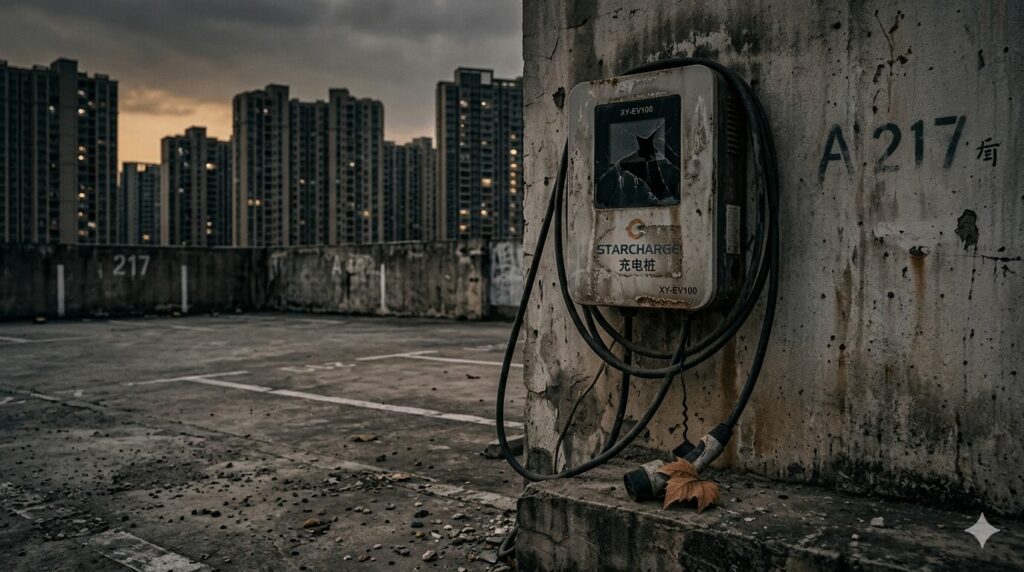
A featured illustration for the zombie pile crisis 2026 how to avoid dead chargers from liquidated Chinese brands guide, depicting an abandoned, dust-covered EV charger with a dead screen and tangled cable mounted on a residential parking area wall at dusk.
Uncategorized

The ‘Zombie Pile’ Crisis 2026: How to Avoid Dead Chargers from Liquidated Chinese Brands — The Honest Complete Guide

The zombie pile crisis 2026 how to avoid dead chargers from liquidated Chinese brands is the underappreciated risk every Chinese EV owner faces when buying a home charger. This honest, complete guide covers what actually happens when a charger manufacturer fails, the documented failures already affecting owners, the critical cloud-dependent vs cloud-optional architecture distinction, a five-factor due diligence framework for assessing brand survival probability, and a brand-by-brand risk tier assessment for Huawei, Xiaomi, StarCharge, TELD, BYD, NIO, and every other major Chinese charger brand, so you can buy a charger that will still work in five years.

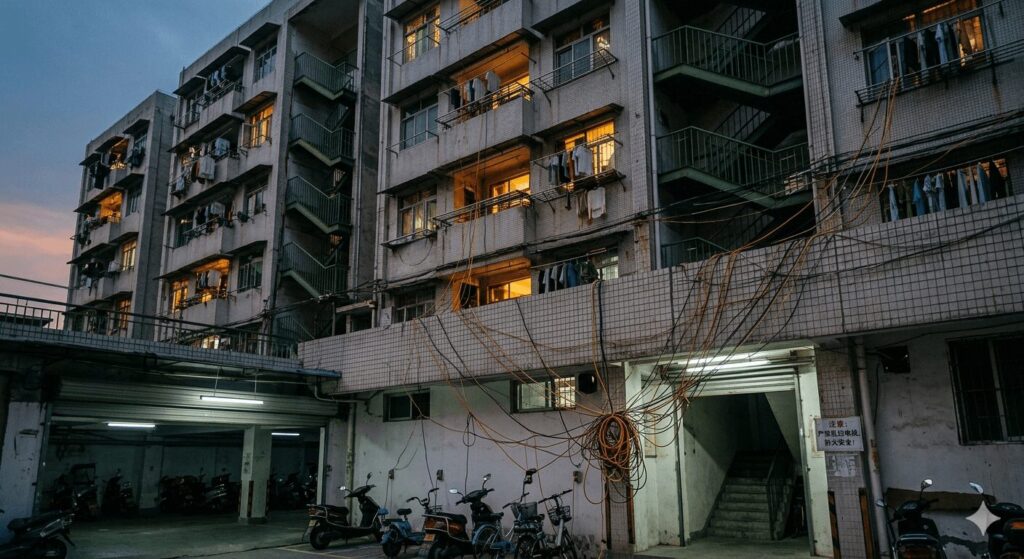
China apartment flywire charging is it safe legal solutions for lower ground parking — a realistic documentary photograph showing multiple electrical extension cords dangling from apartment balconies and windows, running down the building exterior and across walkways to electric vehicles parked in the basement-level parking area, with tangled cables near a fire escape entrance highlighting the safety and legal concerns examined in this comprehensive 2026 guide for Chinese EV owners.
EV charging

China Apartment ‘Flywire’ Charging: Is it Safe? Legal Solutions for Lower Ground Parking 2026 — The Honest Complete Guide

China apartment flywire charging is it safe legal solutions for lower ground parking— this is the question haunting thousands of Chinese EV owners in older residential compounds who’ve resorted to running charging cables from balconies and windows down to basement parking spaces. This complete guide cuts through the fear-mongering and dismissive “just don’t do it” advice to deliver an honest, evidence-based assessment: what actually goes wrong with flywire charging (the specific failure mechanisms, not vague warnings), the real legal status under Chinese fire safety and building regulations, documented fire incident patterns from Chinese authorities, and — most crucially — the five legitimate alternatives that solve the same problems without the safety and legal exposure. From escalating物业 refusals through regulatory channels, to certified extension cables with proper RCCB protection for genuine short-distance cases, to collective basement infrastructure projects that transform a building’s worth of individual flywire risks into one properly engineered solution, this guide provides a practical path forward for every EV owner facing lower ground parking charging challenges in 2026.

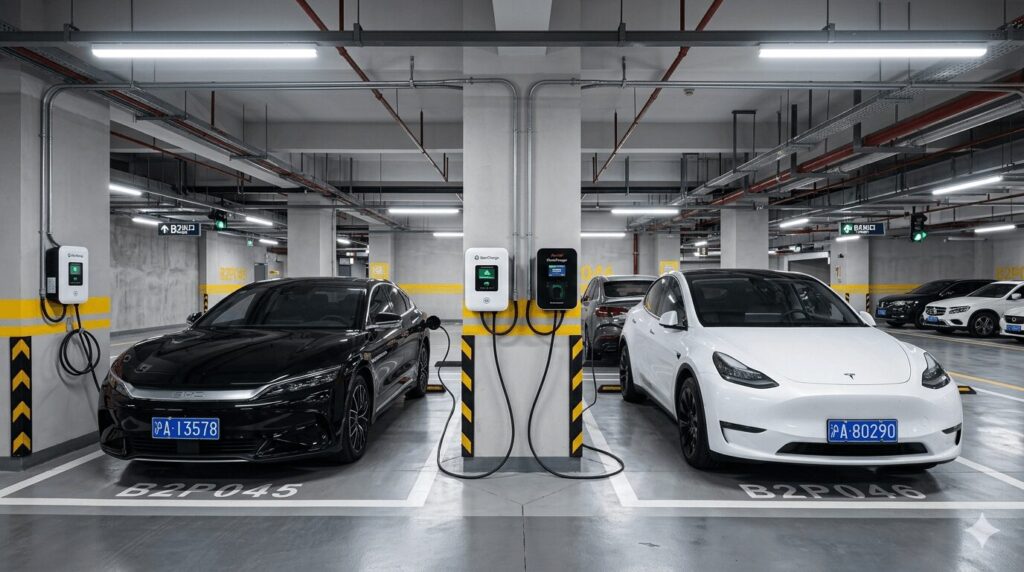
Case study Shanghai family with two EVs BYD and Tesla charging setup in a high-rise—a sleek black BYD Han EV and white Tesla Model Y charge simultaneously on adjacent parking spaces in a Changning District underground car park, with StarCharge and Autel wall-mounted chargers connected and operational
EV charging

Case Study: Shanghai Family with Two EVs – BYD and Tesla Charging Setup in a High-Rise 2026 — The Honest Complete Guide

When a Shanghai family bought their second electric vehicle in 2024, they knew home charging would be essential—but navigating the 物业 approval process, State Grid applications, and technical challenges of installing two chargers in a high-rise apartment building proved more complex than expected. This case study Shanghai family with two EVs BYD and Tesla charging setup in a high-rise documents every step of their six-month journey: from the initial 物业 enquiry in October 2024 to the fully operational dual charging system running today. With a BYD Han EV and Tesla Model Y sharing adjacent parking spaces in a Changning District high-rise, the Li family overcame WiFi connectivity issues, load management challenges, and panel capacity constraints to achieve a net investment of just ¥4,330 after subsidies—delivering ¥5,393 in annual savings with a 10-month payback period. Read the complete account of their installation costs, government subsidies, operational lessons, and the six critical takeaways for any dual-EV household in China considering home charging.

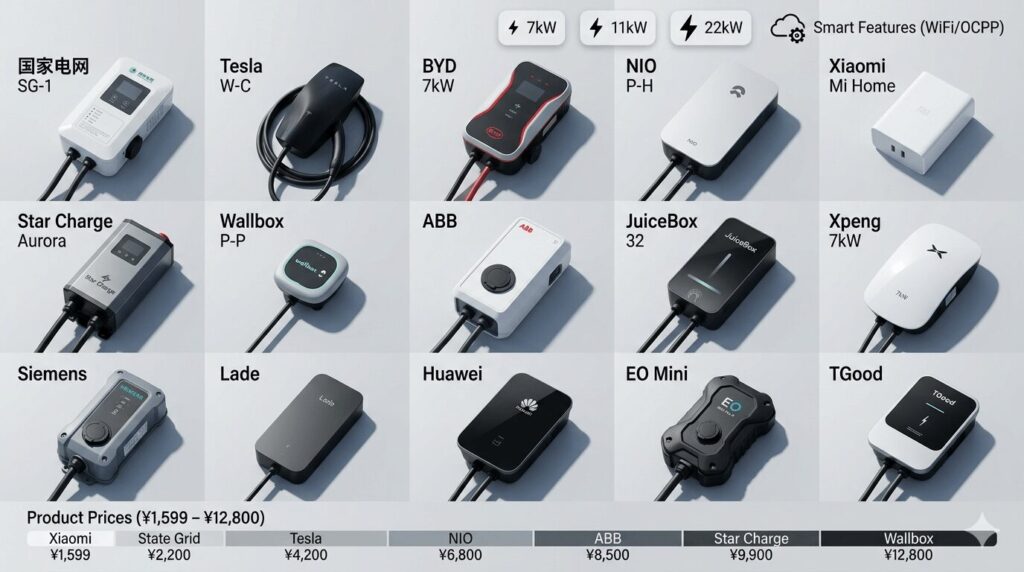
visual side-by-side: 15 top EV chargers 2026 – China market compared — grid display of State Grid, Tesla, BYD, NIO, Xiaomi, Star Charge, Wallbox, and Huawei home chargers with power ratings and price comparison chart.
EV charging

Visual Side-by-Side: 15 Top EV Chargers 2026 – China Market Compared

Choosing the wrong home EV charger costs you time, money, and smart features you will wish you had later. This comprehensive guide delivers a visual side-by-side: 15 top EV chargers 2026 – China market compared across power output (7kW, 11kW, 22kW, and 20kW DC), smart capabilities (WiFi, OCPP, TOU scheduling, RFID), price (¥1,599 to ¥12,800), and best-use scenarios. From State Grid’s reliable workhorses and BYD’s budget-friendly OEM units to NIO’s premium ecosystem, Xiaomi’s Mi Home integration, Tesla’s design benchmark, and Star Charge’s OCPP-compliant smart home champions — every charger is reviewed in detail. Complete installation cost tables, a decision framework for seven common owner scenarios, and the four mistakes that derail most charger purchases. Whether you own a BYD Han, Tesla Model 3, NIO ET5, Xiaomi SU7, or any other Chinese EV, this comparison tells you exactly which charger to buy and why. The annual fuel saving versus petrol (¥10,000+) pays for any charger on this list within the first year — often within three months.

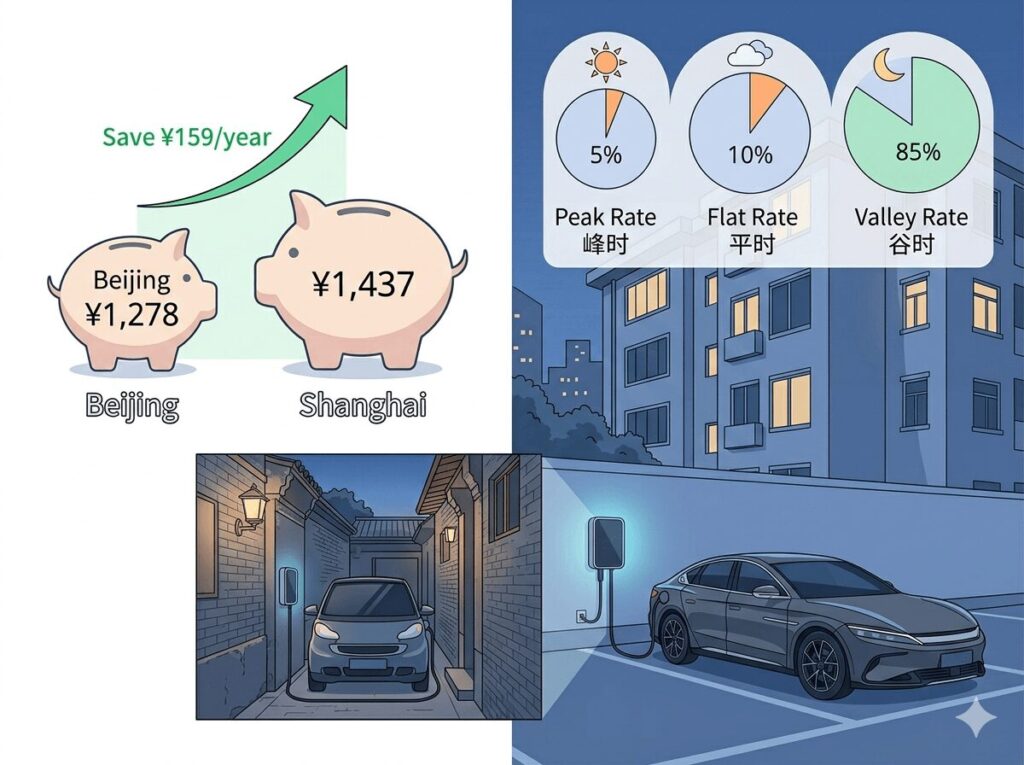
home EV charging cost calculator factor in tiered electricity rates Beijing vs Shanghai — illustration showing a BYD Han EV plugged into a home charger at night with TOU valley rate display, alongside Beijing and Shanghai skyline comparison.
EV charging

Home EV Charging Cost Calculator: Factor in Tiered Electricity Rates (Beijing vs Shanghai) 2026 — The Honest Complete Guide

For Chinese EV owners, the difference between guessing your electricity bill and knowing it comes down to one tool. This guide presents the home EV charging cost calculator factor in tiered electricity rates Beijing vs Shanghai — an interactive tool that moves beyond generic estimates to deliver your precise annual electricity cost, cost per kilometre, and true savings versus petrol. Using real 2026 TOU tariffs, vehicle efficiency data, and your specific charging mix (valley, flat, peak), the calculator reveals why Beijing owners save ¥159/year over Shanghai despite higher peak rates, why Chengdu’s hydropower makes it China’s cheapest EV city at just ¥0.053/km, and how even imperfect TOU adherence still delivers massive savings. Complete reference tables for BYD Han, NIO ET5, Wuling Mini EV, and Porsche Taycan — plus tiered pricing explanations, effective rate analysis, and the five mistakes that throw off most calculations. If you own an EV in China or are planning to install a home charger, this is the electricity cost reality check you need for 2026.

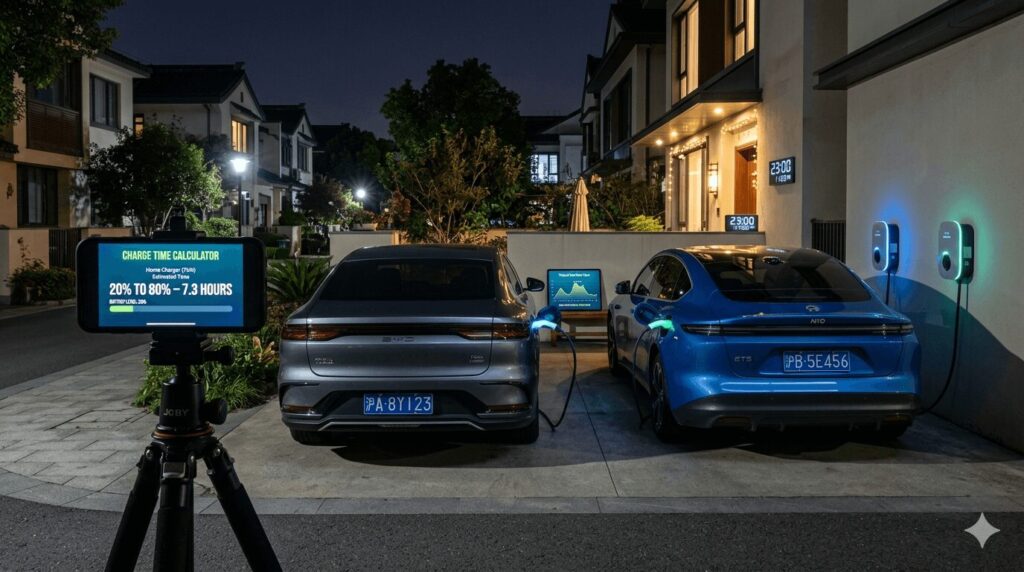
EV charge time calculator 2026 how long to full for your Chinese EV BYD to NIO shown on a smartphone beside a BYD Han and NIO ET5 charging overnight at home in Shanghai, demonstrating 7 kW AC charging fitting within the 9-hour valley window.
EV charging

EV Charge Time Calculator 2026: How Long to Full for Your Chinese EV (BYD to NIO) — The Honest Complete Guide

How long does it really take to charge your BYD, NIO, or other Chinese EV from home or on the road? Most guides give vague answers, but this complete guide offers an EV charge time calculator 2026 how long to full for your Chinese EV BYD to NIO that factors in your exact battery size, starting SOC, target SOC, and charger type. Inside, you’ll find an interactive calculator, detailed reference tables for AC home charging (7 kW, 11 kW) and public DC fast charging (50 kW to 400 kW), plus practical planning for TOU valley windows, cold weather adjustments, and vehicle-specific insights—so you can plan your charging around your life, not the other way around.

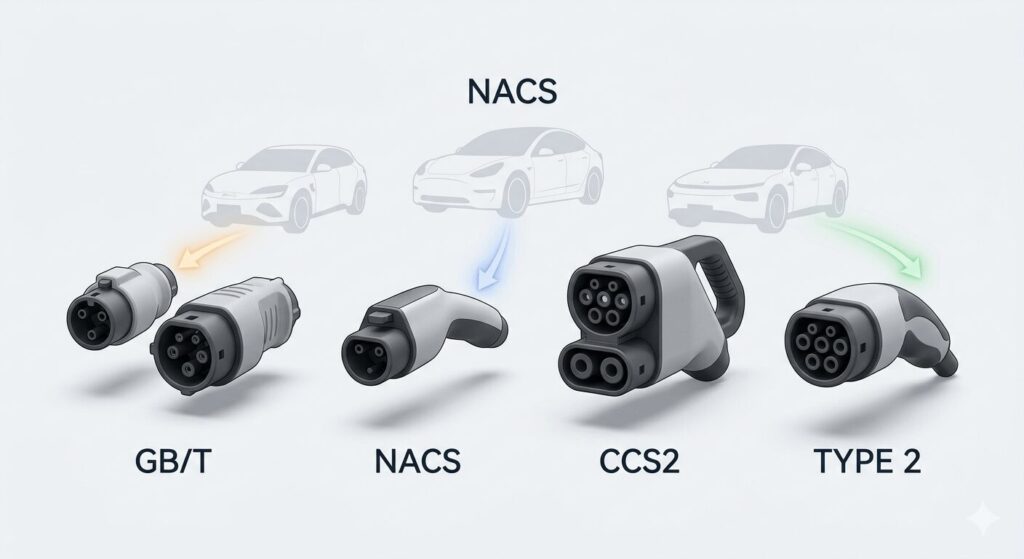
Interactive EV charger selector tool: GB/T vs NACS – find your match for Tesla/BYD/Xpeng — featured comparison diagram showing four major connector standards with vehicle matching guide
EV charging

Interactive EV Charger Selector Tool: GB/T vs NACS – Find Your Match for Tesla/BYD/Xpeng

Which EV charger connector does your car actually need in 2026? This complete interactive EV charger selector tool: GB/T vs NACS – find your match for Tesla/BYD/Xpeng walks you through every major standard, vehicle-by-vehicle compatibility, and adapter scenario. From China-made Teslas using GB/T (not NACS) to BYD exports needing CCS2, this guide delivers a systematic 3-step framework to determine exactly what charger or adapter you require — whether you’re charging at home in Shanghai, traveling to Europe, or importing a vehicle. No guesswork. Just clear connector answers.

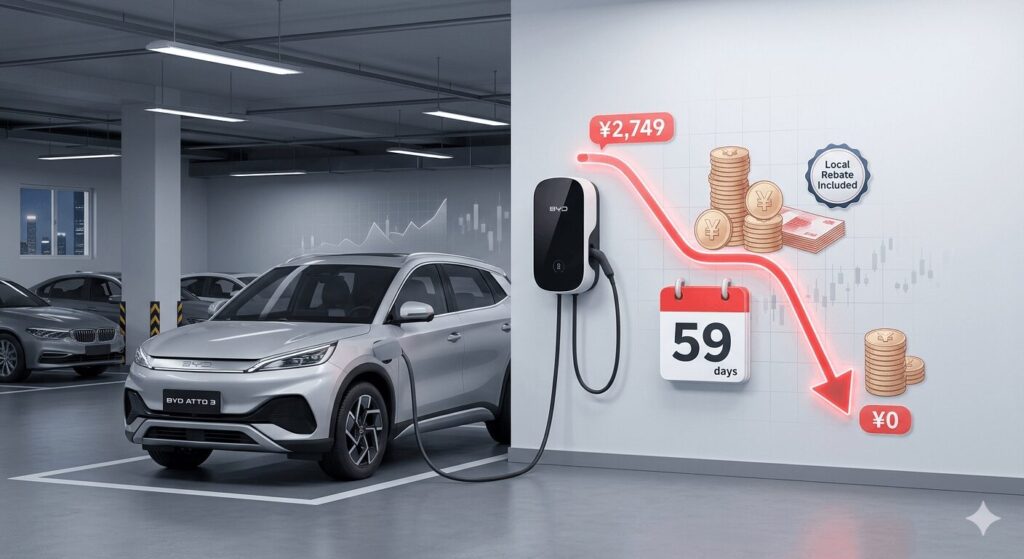
EV home charger ROI calculator 2026 when it pays off with local rebates included — comparison image showing public DC charging at ¥1.80/kWh versus home valley rate charging at ¥0.33/kWh with 89-day payback for Shenzhen villa owner
EV charging

EV Home Charger ROI Calculator 2026: When It Pays Off with Local Rebates Included — The Honest Complete Guide

What’s the real return on installing an EV home charger in China? This complete EV home charger ROI calculator 2026 when it pays off with local rebates included breaks down 12 real-world scenarios—from Shanghai to Chengdu, BYD to NIO. Discover how city subsidies, public charging costs, and your annual mileage can deliver payback in as little as 59 days, with 5-year returns over ¥30,000. No fluff. Just honest math for Chinese EV owners.

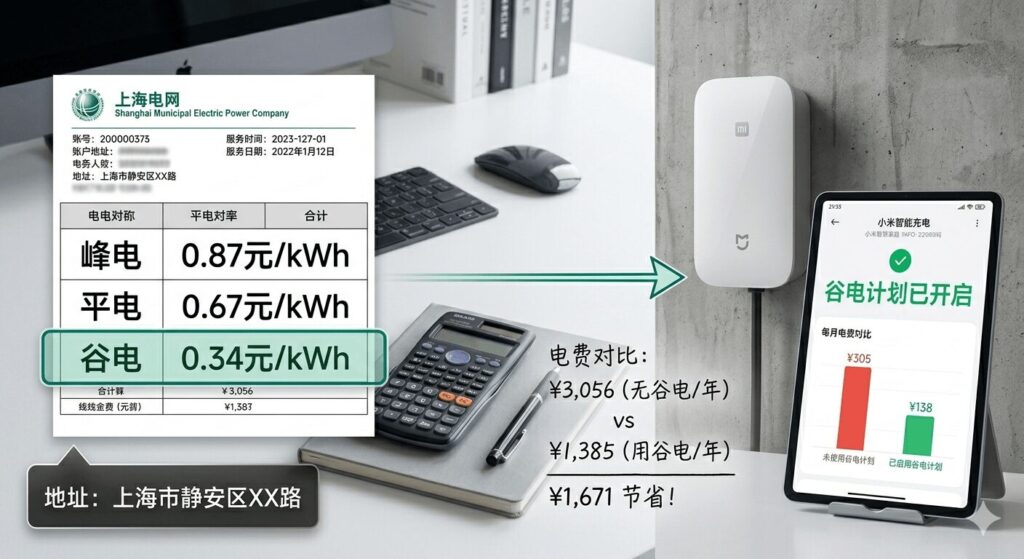
time-of-use EV charging savings smart chargers that exploit cheaper night rates in China – State Grid electricity bill showing Shanghai valley rate 0.34 yuan per kWh with Xiaomi EV charger and Mi Home valley plan enabled alongside calculator showing annual saving 1671 yuan
EV charging

Time-of-Use EV Charging Savings: Smart Chargers That Exploit Cheaper Night Rates in China 2026 — The Honest Complete Guide

Most Chinese EV owners with smart chargers are leaving over ¥1,600 per year on the table – not because their equipment can’t capture the saving, but because they never configured the one feature that matters most. This complete guide to time-of-use EV charging savings smart chargers that exploit cheaper night rates in China breaks down every city’s valley window (Shanghai ¥0.34/kWh, Beijing ¥0.30/kWh, Chengdu ¥0.25/kWh), compares which smart chargers actually deliver reliable scheduling, and walks through the five-minute setup that turns a ¥899 charger into ¥1,670 in annual savings. Whether you use a StarCharge S1, Xiaomi EV Charger, or just your car’s built-in timer, the same maths applies – and this guide proves why TOU scheduling is the single most valuable feature in Chinese home EV charging today.

Scroll to Top