Author name: editoradmin

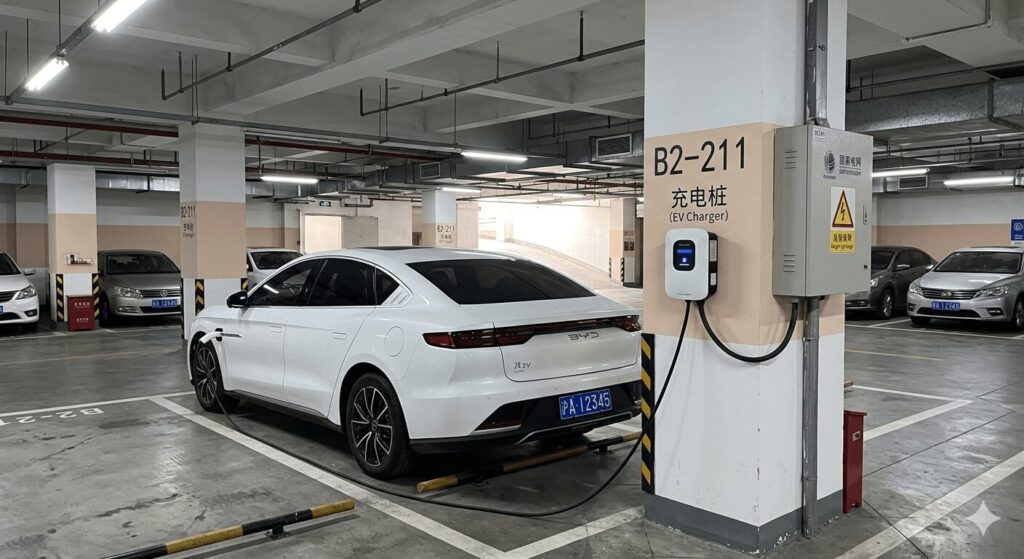
Best budget EV chargers under ¥2,000 2026 Chinese options that actually work — a BYD Han charging from a compact wall-mounted home charger in a Shanghai apartment parking garage, showing affordable overnight charging in real-world conditions
EV charging

Best Budget EV Chargers Under ¥2000 2026 Chinese Options That Actually Work — The Honest Complete Guide

Looking for the best budget EV chargers under ¥2,000 2026 Chinese options that actually work? Most Chinese EV buyers do not need a ¥4,500 premium charger. They need a reliable 7 kW unit that charges safely overnight and captures valley rate savings without catching fire or losing app support.

This honest guide separates the genuinely good budget options from the dangerous false economies. We identified the specific chargers under ¥2,000 that deliver certified safety (genuine GB/T), TOU scheduling, and real-world reliability — from the market-leading StarCharge S1 for most owners, to the IP65 Autel Basic for outdoor parking, to the Xiaomi Basic for SU7 and Mi Home users. These are the best budget EV chargers under ¥2,000 2026 Chinese options that actually work — no marketing hype, no unsafe Taobao specials. Just certified hardware that pays back its installation cost in under 14 months.
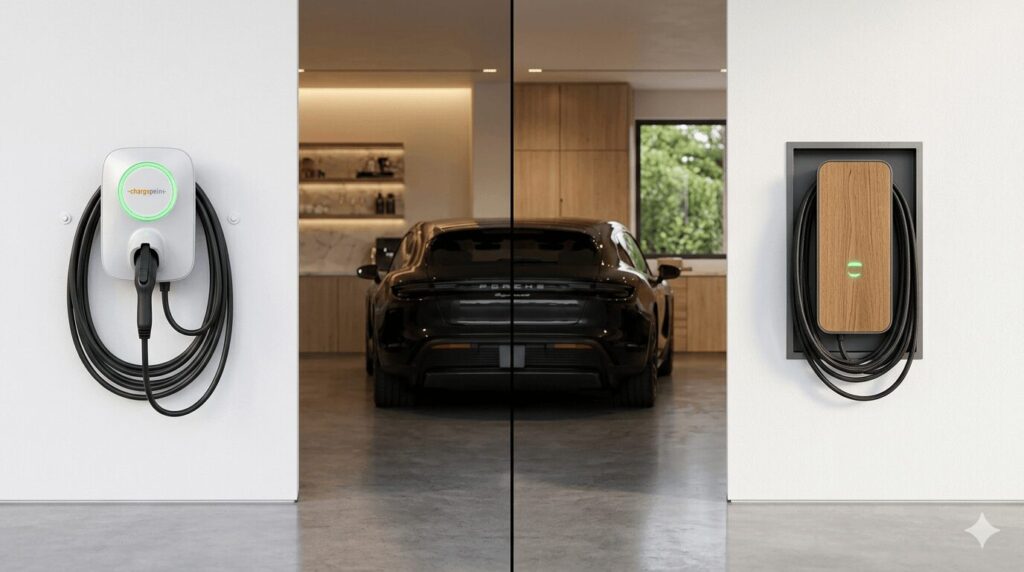
Luxury chargers ChargePoint imported vs local premium brands Andersen style worth the premium split comparison showing white ChargePoint plastic charger on left and aluminium wood recessed local charger on right in luxury villa garage
EV charging

Luxury Chargers: ChargePoint (Imported) vs Local Premium Brands (Andersen Style) – Worth the Premium?

Luxury chargers: ChargePoint (imported) vs local premium brands (Andersen style) – worth the premium? The imported ChargePoint Home Flex delivers an excellent app and global brand recognition, but at ¥8,000-¥12,000 for a plastic housing with no warranty or local support in China. Local premium brands like La Poste and VillaCharge offer genuine aluminium, solid wood, and tempered glass construction with semi-recessed installation, full customisation, and enforceable 2-5 year warranties. This honest guide compares design quality, material costs, app functionality, installation integration, and 5-year total ownership expenses. The verdict depends entirely on whether you value daily visual beauty or accept functional plastic with import risk.

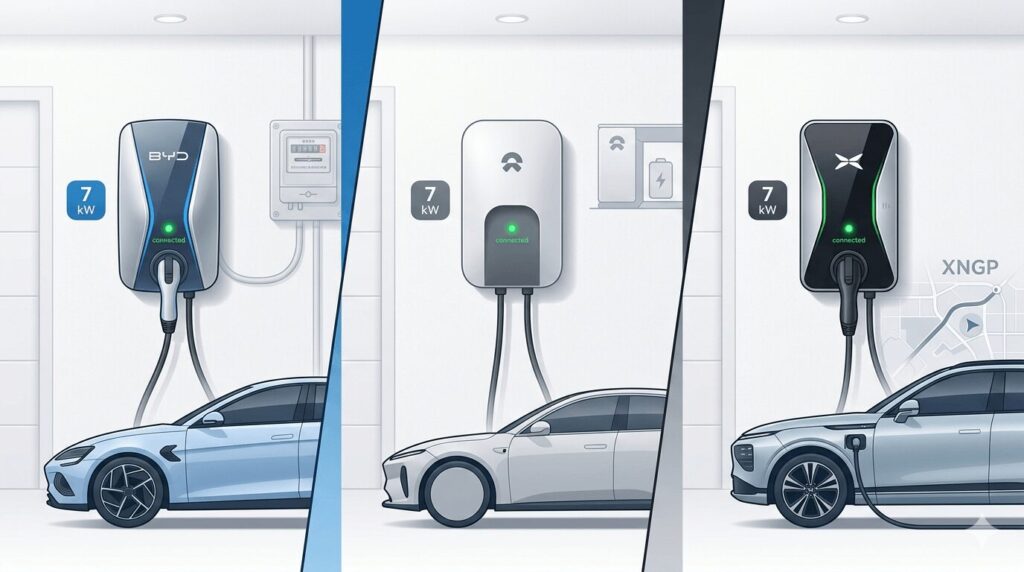
Comparison infographic for BYD vs NIO vs Xpeng which EV maker sells the best home charging bundle in 2026 showing three home chargers on a garage wall with BYD Seal, NIO ET5, and Xpeng G9 vehicle silhouettes
EV charging

BYD vs NIO vs Xpeng: Which EV Maker Sells the Best Home Charging Bundle in 2026? — The Honest Complete Guide

Choosing between China’s top electric vehicle brands involves more than just the car itself. In BYD vs NIO vs Xpeng which EV maker sells the best home charging bundle in 2026, the answer depends on hardware quality, installation support, app integration, and real out-of-pocket costs. While NIO often offers a zero-cost, concierge-level service that includes proactive 物业 coordination, BYD delivers genuine value through Blade Battery optimisation for Seal and Han EV owners. Xpeng, meanwhile, stands out for XNGP users with seamless S4 supercharger integration. This complete guide compares every programme honestly, revealing when a manufacturer bundle saves you money—and when buying a third-party charger like StarCharge or Autel is the smarter financial move.

Tesla Universal Wall Connector vs Star Charge vs Autel 2026 China market comparison
EV charging

Tesla Universal Wall Connector vs Star Charge vs Autel 2026 China Market Comparison — The Honest Complete Guide

Choosing the wrong home charger in China means paying more for features you don’t need or dealing with 物业 delays. This honest guide compares the Tesla Universal Wall Connector (China-spec), the market-leading StarCharge S Series, and the premium Autel MaxiCharger across every spec that actually matters in 2026. From IP65 weather protection for Guangzhou monsoon rains to -30°C cold weather performance for Harbin winters, and 4-year warranties versus OCPP future-proofing, here’s the complete breakdown. Discover which charger saves you ¥1,670/year on TOU tariffs, which one gets 物业 approval the fastest, and the exact scenario where each brand wins—so you can buy the right GB/T charger the first time.

Visual comparison of smart EV chargers 2026 AI load balancing vs standard features worth the extra cost in China for villa and apartment owners.
EV charging

Smart EV Chargers 2026 AI Load Balancing vs Standard Features Worth the Extra Cost in China — The Honest Complete Guide

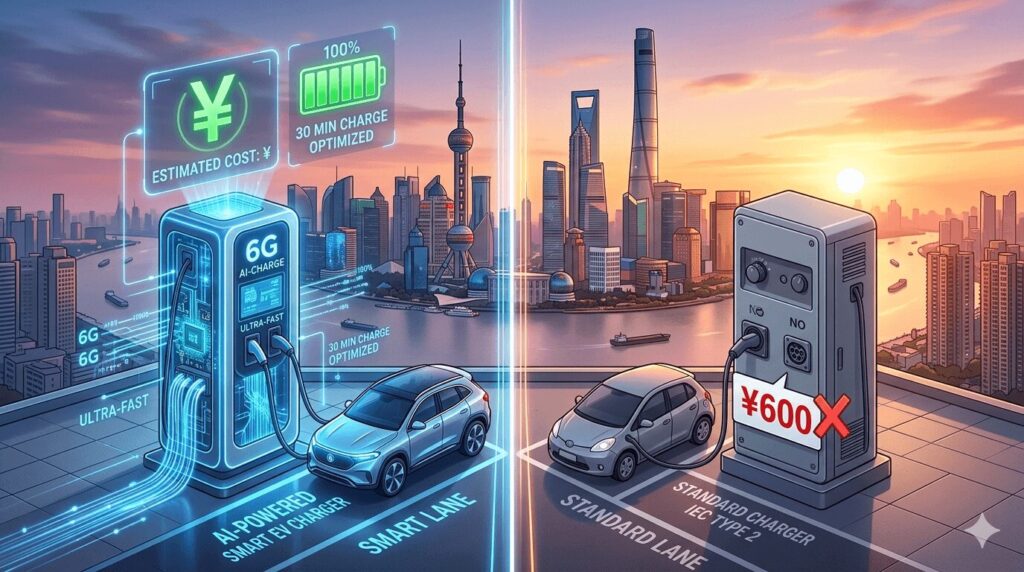
Tired of paying for smart charger features you don’t actually need in China? This honest 2026 guide calculates the real financial return on AI load balancing, TOU scheduling, solar integration, and more. Discover why TOU charging saves ¥1,670/year (2-month payback) while AI load balancing is often useless for apartment owners. We reveal exactly which smart features are worth the premium for villa vs. apartment owners, and which are just expensive tech for tech’s sake. Stop overspending. Use our feature-value matrix to buy the perfect GB/T charger for your home and budget.

best smart EV chargers China 2026 Huawei Digital Power vs Xiaomi vs local innovators comparison chart showing three modern home charging units on a smart home background
EV charging

Best Smart EV Chargers China 2026: Huawei Digital Power vs Xiaomi vs Local Innovators — The Honest Complete Guide

Most Western EV charger guides completely miss what’s happening in China. In 2026, the world’s most advanced home EV chargers aren’t coming from Europe or the US—they’re being built by Huawei, Xiaomi, and AI-first Chinese startups.

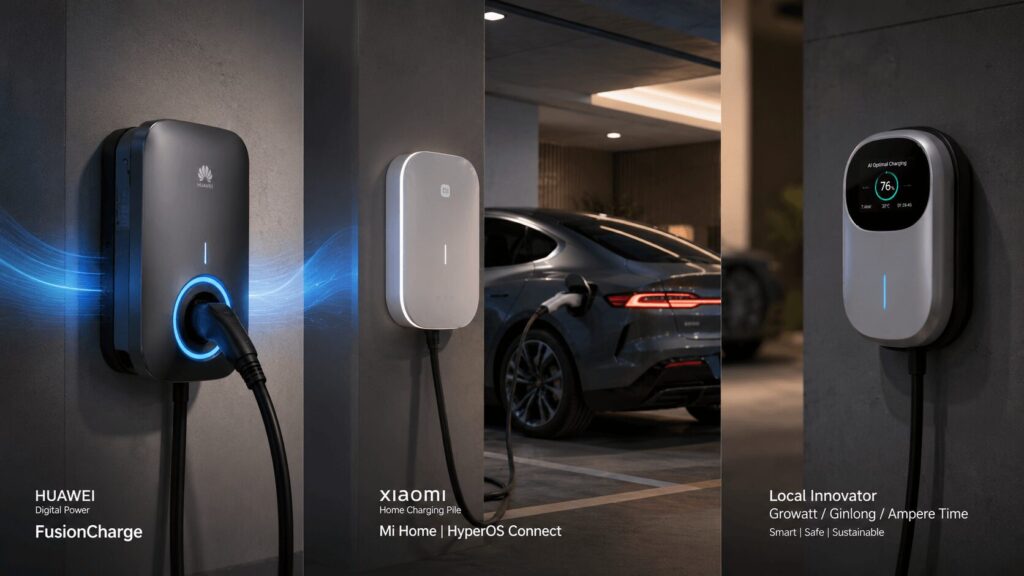
This honest, no-hype guide compares the top smart chargers in China side-by-side: Huawei Digital Power’s AI-driven energy optimization (Level 4 predictive scheduling), Xiaomi’s HyperOS ecosystem for SU7 owners, Growatt’s solar-native integration, Ginlong Solis’s IP66 hardware, CATL’s cell-level battery health tech, and emerging disruptor Ampere Time.

You’ll get real annual savings calculations, honest limitations of each system (no charger is perfect), and a clear decision framework based on your existing smart home ecosystem, vehicle type, and installation environment. If you’re a Chinese EV owner—or anywhere else tracking where smart charging is headed—this is the advanced guide you’ve been looking for.

best home EV chargers 2026 top 7 comparison for Chinese homeowners Star Charge Autel — featured image showing two wall-mounted home EV chargers in a Chinese residential parking garage with apartment and villa context
EV charging

Best Home EV Chargers 2026: Top 7 Comparison for Chinese Homeowners Star Charge Autel and More — The Honest Complete Guide

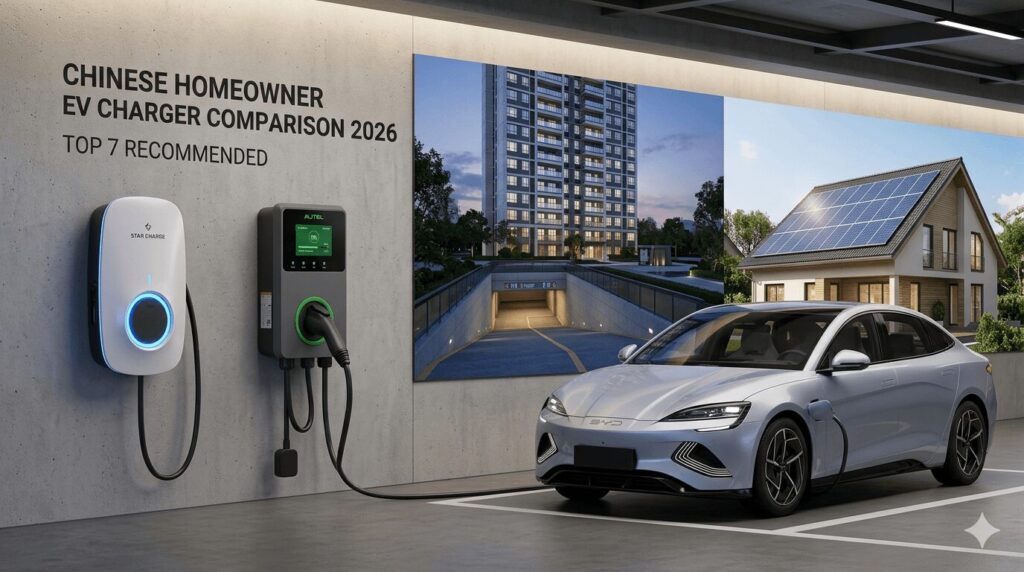
Searching for the best home EV chargers 2026 top 7 comparison for Chinese homeowners Star Charge Autel but tired of paid rankings and vague specs? This honest, no-placement guide compares every major GB/T charger—StarCharge, Autel, NIO, BYD, TELD, Sungrow, and Schneider—on real criteria that matter in China: TOU savings, IP ratings, app quality, winter performance, solar integration, and 5-year true cost. Whether you drive a NIO, BYD, Tesla, or Xpeng—or just want the best value 7kW charger for your apartment or villa—you’ll get a clear winner for your exact situation. No fluff. No hidden favourites. Just the comparison Chinese EV owners actually need.

Find the right EV charger for your home China edition — five‑question selector flowchart comparing basic vs smart TOU home chargers with pricing.
EV charging

Find the Right EV Charger for Your Home China Edition 2026 — The Honest Complete Buying Guide

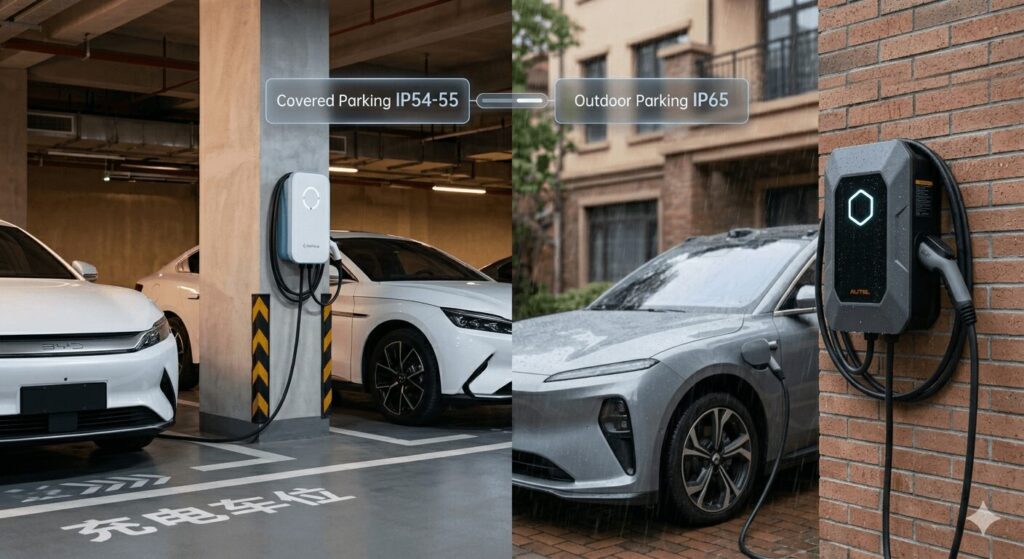
Most Chinese EV owners buy the wrong home charger—not because it’s bad, but because they start with the hardware instead of their parking space, their building’s electrical supply, and the 物业 approval process. This guide on finding the right EV charger for your home China edition walks you through every real-world decision: single-phase vs three‑phase, 7 kW vs 11 kW, smart TOU scheduling vs basic charging, and exactly how to navigate property management in 2026. No generic advice. Just a five‑question selector, real cost breakdowns, and the one mistake that costs you thousands in missed electricity savings. If you drive a BYD, NIO, Tesla, Xpeng, or Li Auto and want a home charger that actually works for your situation, start here.

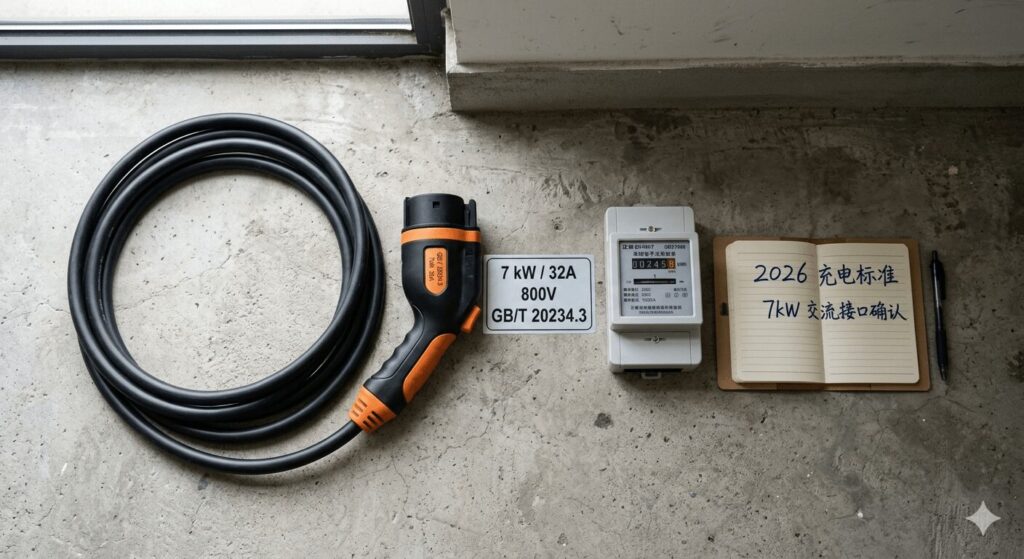
understanding EV charger specs 2026 kW amps 800V architecture and the new GB standards featured image showing a GB/T charging connector with technical specification sticker, Chinese electrical meter, and 2026 charging standard notebook
EV charging

Understanding EV Charger Specs 2026: kW, Amps, 800V Architecture and the New GB Standards — The Honest Complete Guide

Confused by EV charger specs like kW, amps, 800V, and the new GB/T standards? You’re not alone. Most EV owners just plug in and hope for the best—until they hit a public charger and can’t figure out why their car is charging so slowly.

This plain-language guide cuts through the marketing hype. You’ll learn why your home charger’s kW rating isn’t the full story, how 800V architecture affects (and doesn’t affect) your daily charging, and exactly what the updated Chinese GB standards and ChaoJi mean for you. Whether you drive a BYD, NIO, Xpeng, or any other EV, these five core principles will help you buy smarter, charge faster, and finally decode that confusing spec sheet.

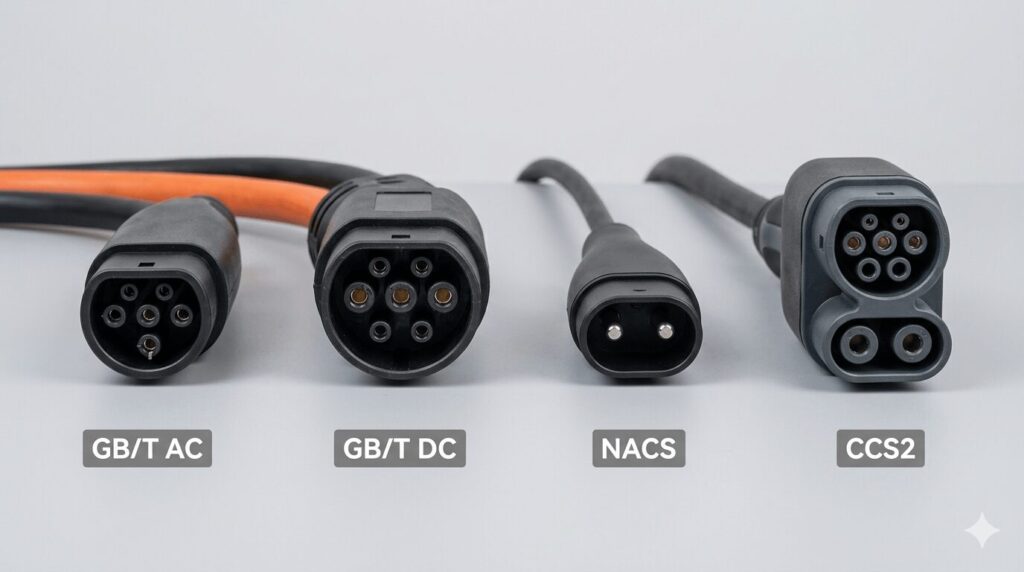
GB/T vs NACS vs CCS which EV charger plug do you actually need in China in 2026 — side by side comparison of the four main connector standards: Chinese GB/T AC, Chinese GB/T DC, NACS, and CCS2
EV charging

GB/T vs NACS vs CCS: Which EV Charger Plug Do You Actually Need in China in 2026? — The Honest Complete Guide

Wondering if your EV will actually charge when you plug in somewhere in China? You’re not alone.

Here’s the reality that catches most drivers off guard: China uses its own mandatory GB/T charging standard—not the NACS plug Tesla uses in North America, and not the CCS2 connector found on European EVs.

So what happens when you ship your US Tesla to Shanghai? Or bring your European VW ID.4 to Beijing? Or drive your Chinese BYD from Shenzhen to Hong Kong?

This complete 2026 guide breaks down exactly which adapters work (and which definitely don’t), why Chinese Tesla Superchargers won’t fit your North American Tesla, and the one connector you actually need for daily driving in China—whether you’re a local resident, an expat, or a Chinese national buying an EV abroad.

Plus: specific adapter recommendations, the honest truth about DC fast charging for imported EVs, and what ChaoJi means for your next EV purchase.

Scroll to Top