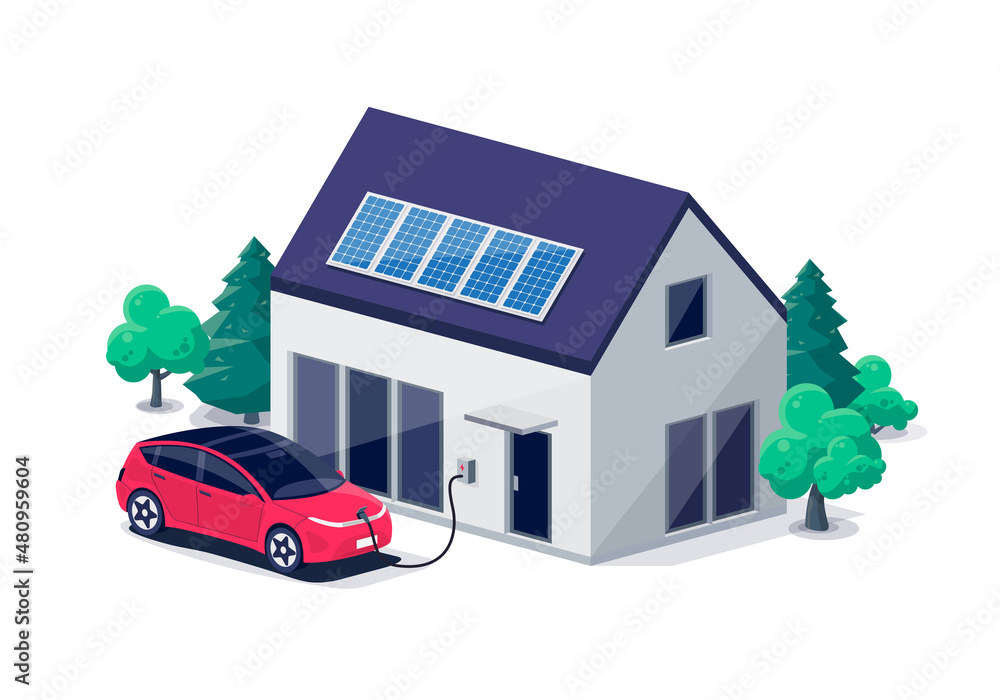
As the world shifts towards clean energy, electric vehicle (EV) chargers play a pivotal role in sustainable mobility. For Indian consumers eyeing global options, understanding the nuances between European and American charger brands can help make informed decisions. Whether you’re comparing EV chargers for home use or public infrastructure, this guide breaks down the key differences, focusing on technology, standards, and market fit. With India’s EV market booming—projected to reach 10 million units by 2030—insights into these international brands can guide your clean energy choices.
Overview of EV Charger Brands
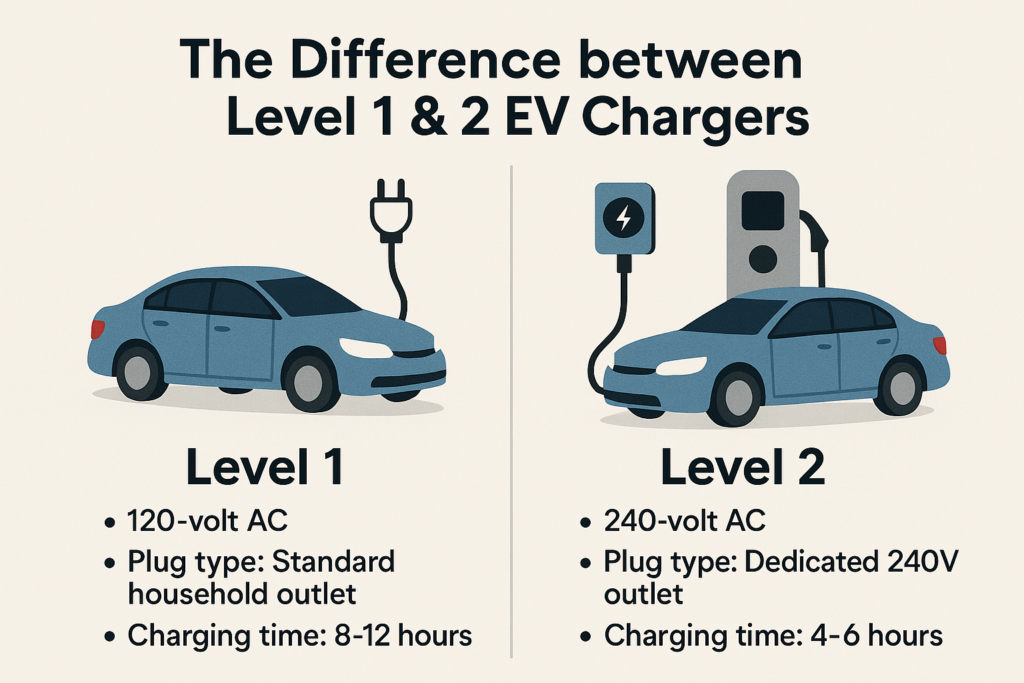
EV chargers come in various types, including Level 1 (slow), Level 2 (medium), and DC fast chargers. European brands often emphasize efficiency and integration with renewable energy, while American brands prioritize rapid charging and widespread networks. These differences stem from regional power grids, regulations, and consumer needs.
Popular European Charger Brands
Europe leads in EV adoption, with over 3 million public charging points as of 2025. Brands like ABB, Siemens, and EVBox dominate, known for compact designs that blend into urban environments. These chargers support three-phase power, allowing faster AC charging up to 22 kW.
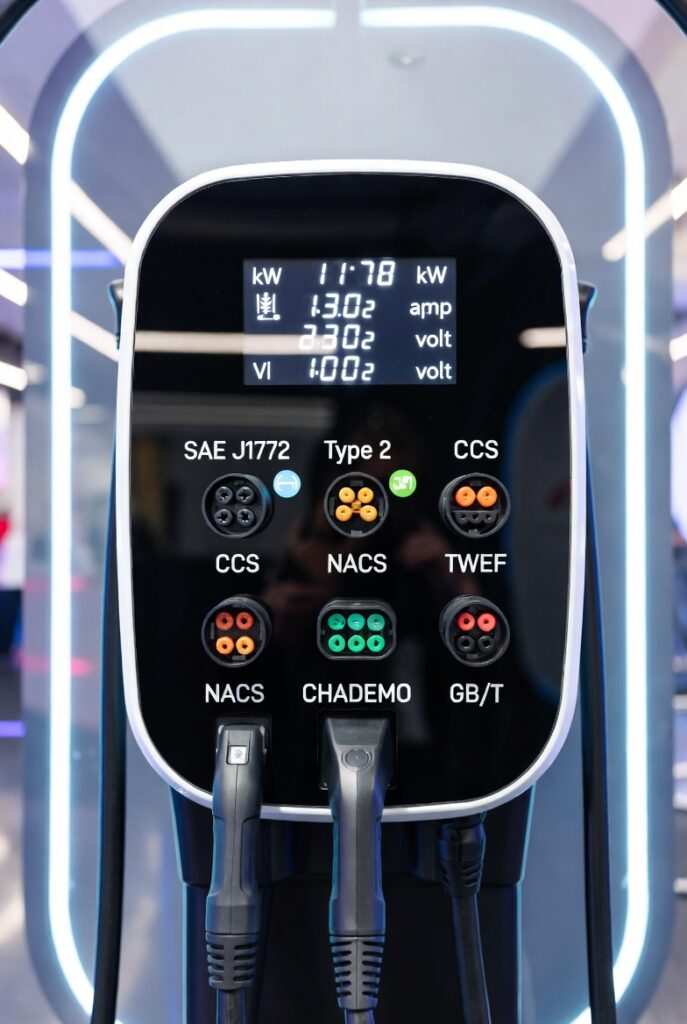
For instance, ABB’s Terra series offers high-reliability DC fast chargers, ideal for highways. Siemens focuses on smart grid integration, while EVBox provides user-friendly home solutions. European standards mandate Type 2 connectors for AC and CCS2 for DC, ensuring compatibility across the EU.
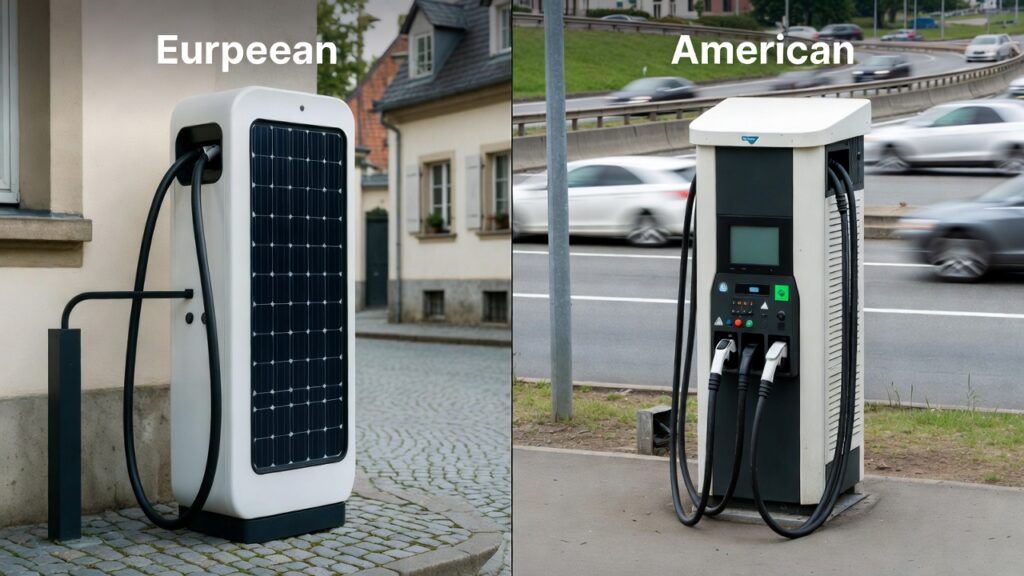
Visualizing European setups shows sleek, solar-integrated stations that promote clean energy.
Many European chargers require users to bring their own cables, promoting portability but adding a layer of user responsibility.
Popular American Charger Brands
In the US, brands like ChargePoint, Electrify America, and Tesla lead the market, emphasizing fast-charging infrastructure with up to 350 kW DC power. ChargePoint boasts the largest network, with app-based payments and attached cables for convenience. Electrify America, backed by Volkswagen, focuses on ultra-fast stations, while Tesla’s Superchargers use the NACS connector, now adopted by others like Ford and GM.
American chargers typically use J1772 (Type 1) for AC and CCS1 for DC, with a shift towards NACS for better compatibility. Designs are often larger and more robust, suited for vast highways.
American stations highlight accessibility, with built-in cables and RFID/app payments.
Key Differences Between European and American Charger Brands
The core distinctions arise from electrical systems, regulations, and market priorities. Here’s a detailed comparison:
| Aspect | European Brands | American Brands |
|---|---|---|
| Connector Types | Type 2 (AC), CCS2 (DC) – Supports three-phase power. | J1772/Type 1 (AC), CCS1 or NACS (DC) – Single-phase dominant. |
| Power Levels | Up to 22 kW AC; focuses on high-power AC for homes. | Up to 350 kW DC; emphasizes fast charging for long trips. |
| Design and Size | Compact, aesthetic, blends with surroundings. | Larger, durable for diverse climates. |
| Cables | User-supplied for flexibility. | Attached to stations for ease. |
| Infrastructure Focus | Extensive AC networks; EU directives standardize. | Fast-charging highways; multiple standards evolving. |
| Payment Methods | Plug & Charge gaining traction; apps and cards. | RFID, apps dominant; network-specific. |
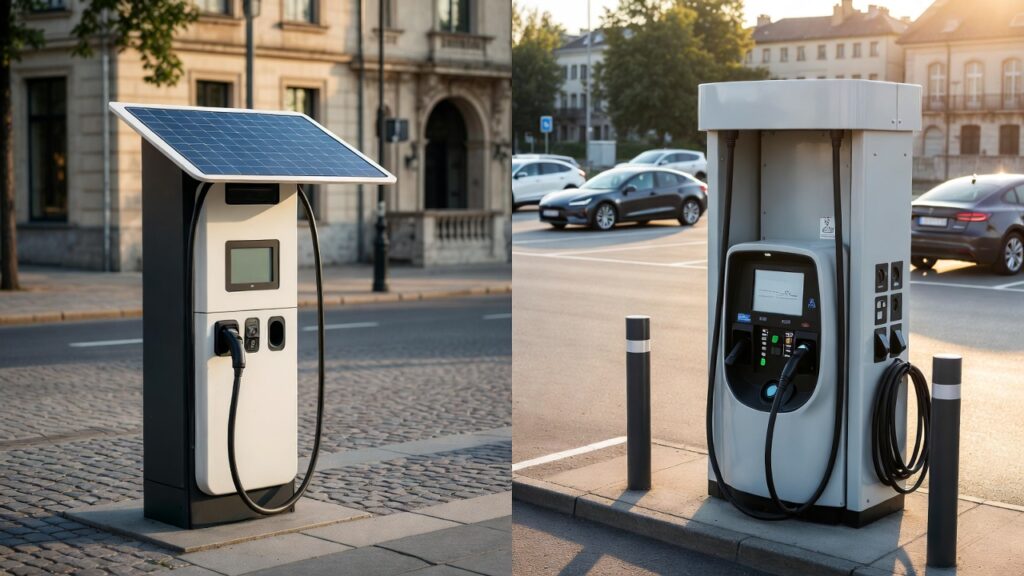
These variations reflect Europe’s 230V/50Hz grid versus America’s 120V/60Hz, influencing charging speeds and compatibility.
Implications for the Indian EV Market
India’s clean energy push aligns more with European standards, adopting Type 2 and CCS2 for most chargers. Brands like ABB (European) are already prominent here, offering efficient solutions for urban density. American brands like Tesla are entering, but adapters may be needed for compatibility. For Indian buyers, European chargers might offer better value in three-phase homes, while American fast chargers suit highways. Compare prices—European models start at ₹50,000, American around ₹60,000—factoring in installation and incentives under FAME-II.
Conclusion: Which is Better for You?
Choosing between European and American charger brands depends on your needs: opt for European for efficient AC charging and compact design, or American for rapid DC speeds and convenience. As India accelerates towards net-zero, both offer valuable clean energy options. Explore our comparison tools to find the best EV charger for your setup, and stay updated on global trends for smarter decisions.