Electric vehicles (EVs) are transforming transportation, but one of the most confusing aspects for new and experienced owners alike is deciphering charger specifications. Terms like kW, amps, voltage, and various connector types appear on product listings, station signs, and vehicle manuals. Getting these right helps you choose the optimal charging solution, estimate charging times, and avoid compatibility issues.
This guide breaks down the key elements of EV charger specifications in a clear, practical way.
What Do These Terms Actually Mean?
EV charging boils down to how quickly and safely electrical energy transfers to your vehicle’s battery. Here’s what each specification represents:
- kW (Kilowatts) — The most important number for charging speed. It measures power delivery rate — how much energy the charger supplies per hour. Higher kW = faster charging (more range added per hour). Example: A 7 kW charger adds roughly 25–30 miles of range per hour for most EVs, while a 150 kW DC fast charger can add 100+ miles in 20–30 minutes (depending on the vehicle).
- Amps (Amperage or Current) — Measures electrical current flow, like water volume through a pipe. Higher amps allow more power (when combined with voltage). Common residential Level 2 chargers run 32–48 amps. DC fast chargers often exceed 200–500 amps.
- Voltage (Volts) — Electrical “pressure” pushing current through the circuit, like water pressure in a hose. Higher voltage enables higher power without excessive current (which reduces heat and cable size needs).
- Level 1: 120V (standard U.S. household outlet)
- Level 2: 208–240V (U.S./North America) or 230–400V (Europe/three-phase)
- DC fast charging: 400–1000V
The basic power formula ties them together:
Power (kW) = Voltage (V) × Current (A) ÷ 1000
Example: A 240V Level 2 charger at 40 amps delivers 240 × 40 ÷ 1000 = 9.6 kW.
EV Charging Levels: How kW, Amps, and Voltage Fit In
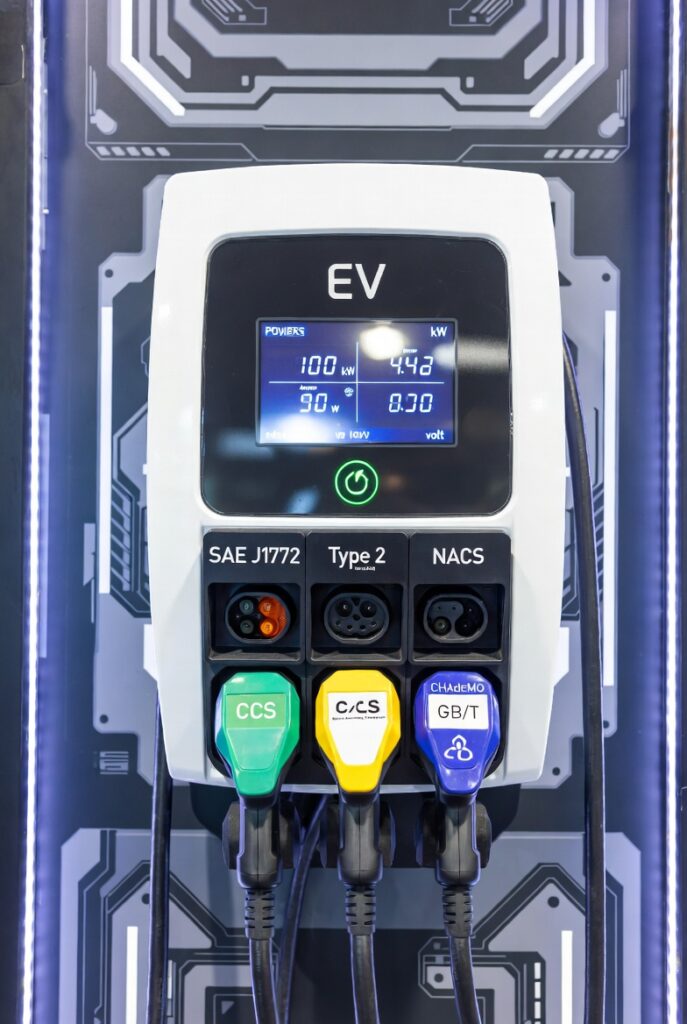
EV charging divides into three main levels, each with typical specs:
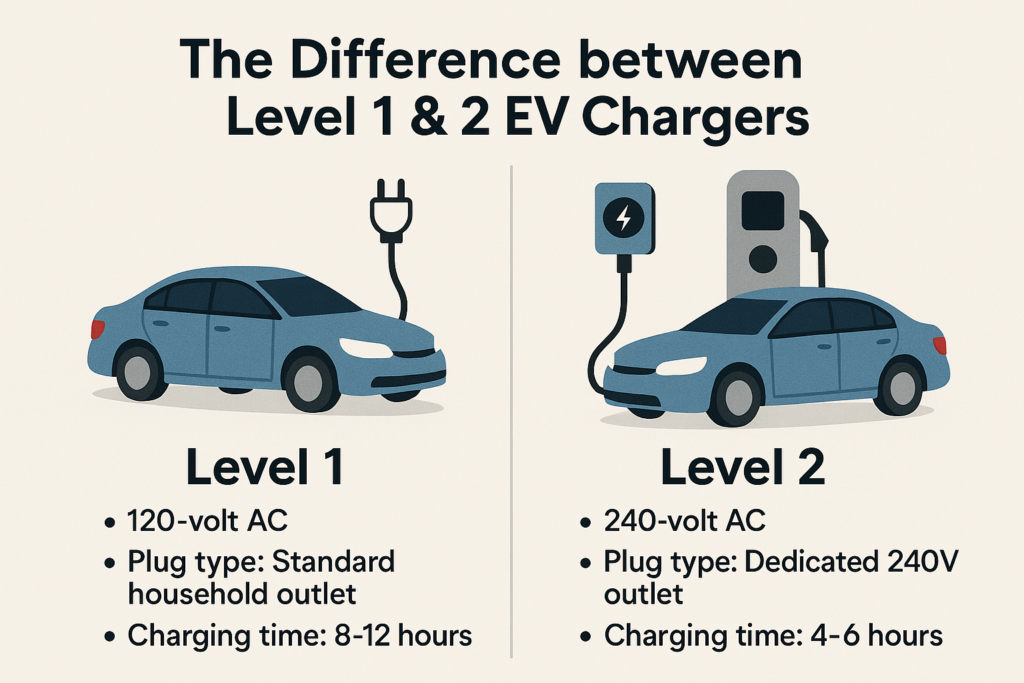
- Level 1 (Slow AC Charging)
- Voltage: 120V AC
- Amps: 8–16A
- Power: 1–2 kW (typically ~1.9 kW max)
- Use: Standard household outlet — convenient but slow.
- Speed: 3–5 miles of range per hour. Full charge for a 60–100 kWh battery takes 40–60+ hours. Ideal for plug-in hybrids or overnight top-ups if you drive little.
- Level 2 (Fast AC Charging)
- Voltage: 208–240V AC (single-phase in North America; up to 400V three-phase in Europe)
- Amps: 16–80A (most home units 30–48A)
- Power: 3.3–19.2 kW (common home: 7.2–11.5 kW)
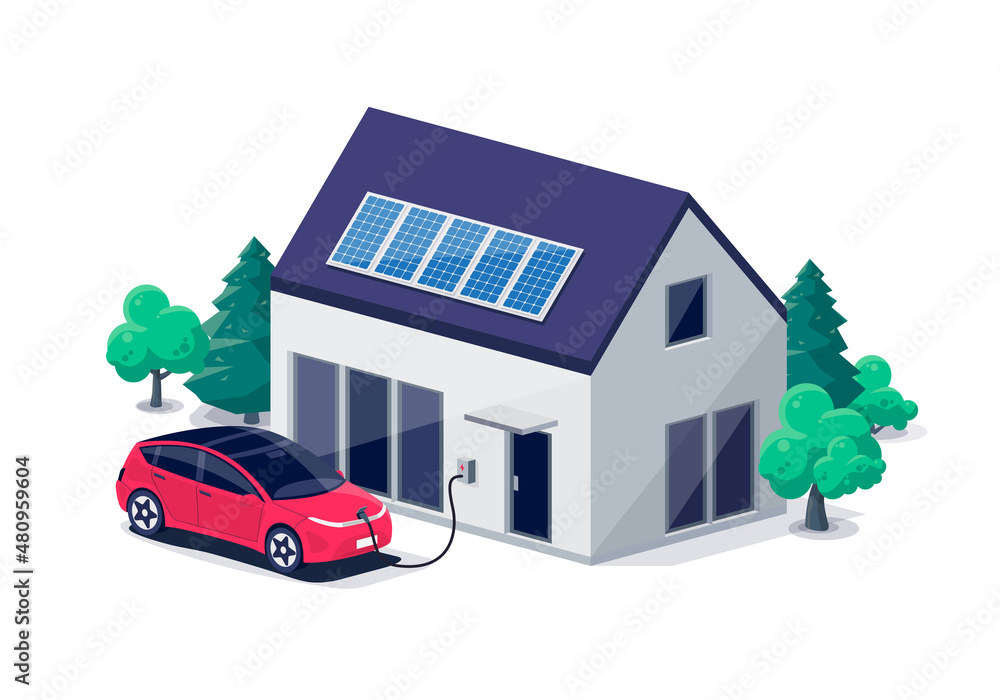
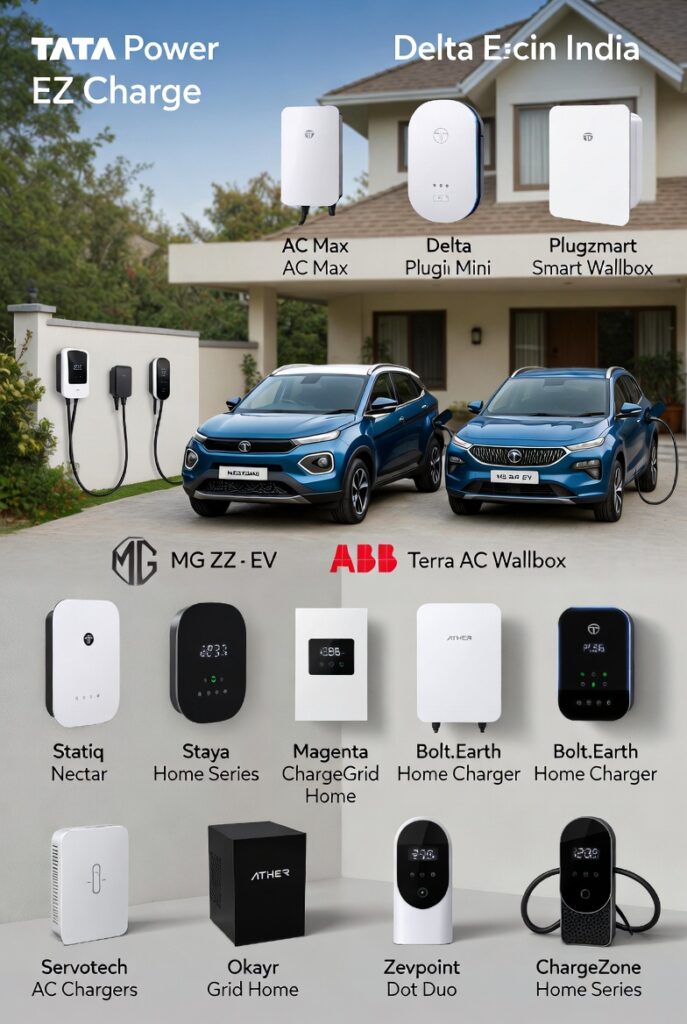
- Use: Home, workplace, public stations.
- Speed: 20–60+ miles per hour. Overnight full charge for most EVs. This level suits daily driving needs for most owners.
- DC Fast Charging (Level 3 / Rapid Charging)
- Voltage: 400–1000V DC
- Amps: 100–500A+
- Power: 50–350+ kW (newer stations reach 350–500 kW)
- Use: Highway stops, fleets. Bypasses the vehicle’s onboard charger for direct battery feed.
- Speed: 100–250+ miles in 20–45 minutes (to 80%). Limited by vehicle acceptance rate (many EVs cap at 150–250 kW).
Connector Types: The Physical Plug and Compatibility
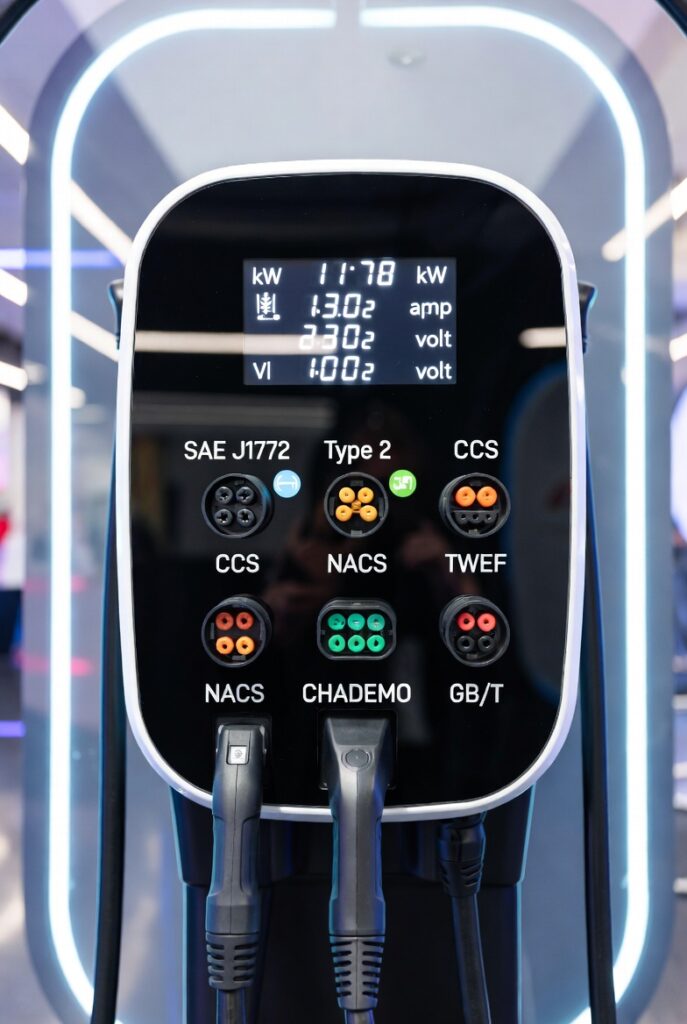
The connector determines what charger works with your EV. Major types include:
- SAE J1772 (Type 1) — North America’s standard AC connector (5 pins). Used for Level 1 and Level 2. Max ~19.2 kW (80A at 240V). Many non-Tesla EVs use this for AC.
- Type 2 (Mennekes) — Dominant in Europe and parts of Asia for AC. Supports single- and three-phase, up to ~22 kW (or higher in some setups).
- CCS (Combined Charging System)
- CCS1 (Combo 1) — North America: J1772 + two DC pins below. Supports AC and DC fast (up to 350+ kW). Dominant non-Tesla DC standard.
- CCS2 (Combo 2) — Europe: Type 2 + DC pins. Similar high-power DC capabilities.
- NACS (North American Charging Standard / Tesla Connector) — Tesla’s compact plug (now SAE J3400). Supports AC (up to ~19 kW) and DC (up to 250–500+ kW on Superchargers). Adopted by Ford, GM, Rivian, Volvo, and many others starting 2025–2026. Tesla vehicles include adapters for older standards.
- CHAdeMO — Japan’s DC fast standard (mostly Nissan/Mitsubishi legacy vehicles). Up to 400 kW in some versions, but phasing out in favor of CCS/NACS outside Japan.
- GB/T — China’s standard (separate AC and DC versions). Up to 250+ kW DC. Not common outside China.
In North America (2026), expect heavy NACS and CCS1 presence, with adapters bridging gaps. Always verify your vehicle’s inlet and use certified adapters.
Why Understanding These Specs Matters
- Match charger kW to your EV’s onboard charger limit (e.g., many Level 2 max out at 11 kW even if the station offers more).
- Higher voltage DC chargers future-proof for 800V+ architectures (e.g., Porsche Taycan, Hyundai Ioniq 5).
- Amps affect home installation — a 48A charger needs a 60A breaker and proper wiring.
- Connector mismatch means no charging (or unsafe adapters).
Mastering kW, amps, voltage, and connectors empowers smarter decisions — whether installing a home charger or planning road trips.
Stay tuned to our EV charging blog for more guides on home setups, fast-charging networks, and cost comparisons! What charger spec confuses you most? Share in the comments.